
Conan Campbell
Solar Financing Near Me: How to Find Local Lenders & the Best Deals

This gallery contains 1 photo.
Skip the Lender Search, Start With a Quote
Local lenders can only quote you a rate once they know the loan amount, and that starts with a real system price. A quote for your home gives you the number to bring to any lender.
Disclosure: we may earn a commission if you switch or request a quote through this link, at no extra cost to you. It never changes which plan or company we recommend. How we make money.
Thinking about going solar but not sure how to pay for it? It can feel like a big step, especially with the upfront costs. But don’t worry, there are plenty of ways to finance solar panels, and finding the right option near you is key to making it affordable. This guide will help you sort through the different choices, from your local bank to installer deals, so you can find the best fit for your home and your wallet. Let’s figure out how to make solar financing near me work for you.
Key Takeaways
- When looking for solar financing near me, check with your local bank or credit union first. They might offer better rates than national companies, especially credit unions that focus on community projects.
- Be cautious with installer financing, especially ‘0% interest’ deals. Always compare the installer’s cash price to their financed price to see if costs are inflated.
- Home Equity Lines of Credit (HELOCs) can be a good option if you have equity in your home, often providing lower interest rates than unsecured loans.
- Government rebates and incentives can significantly lower the amount you need to borrow, making your solar loan more manageable.
- Understand how owning vs. leasing solar panels affects your home’s financing. Owned systems are generally viewed favorably by lenders, while leases can complicate mortgages.
Exploring Local Solar Financing Options
So, you’re thinking about going solar, which is awesome! But then comes the big question: how do you pay for it? It can feel a bit overwhelming at first, especially with all the different ways to finance a system. The good news is, you don’t have to go it alone. There are plenty of local options out there, and understanding them is the first step to finding the best deal for your home.
Understanding Your Local Solar Financing Near Me Landscape
When you start looking for solar financing, it’s easy to get lost in all the national programs and big-name lenders. But often, the best deals are closer than you think. Your local banks, credit unions, and even some community-focused organizations might have specific programs or a better understanding of your local market. Think about it: they’re invested in your community, and that can translate into more flexible terms or even slightly better rates than you might find with a giant, faceless corporation.
- Start with your current bank: You already have a relationship there, which can sometimes make things smoother. See what they offer for home improvement loans or green energy projects.
- Check out local credit unions: These are member-owned and often prioritize community benefit. They might have specialized solar loans with competitive rates.
- Look into community programs: Some towns or regions have specific initiatives or grants for renewable energy that can lower your overall cost.
Key Factors When Comparing Solar Loans
Not all solar loans are created equal. When you’re comparing different offers, it’s super important to look beyond just the monthly payment. You need to see the whole picture to make sure you’re getting a good deal that won’t cost you a fortune in the long run.
Here are some things to keep an eye on:
- Interest Rate: This is a big one. Is it fixed or variable? What’s the actual percentage? Even a small difference can add up to thousands over the life of the loan.
- Loan Term: How long do you have to pay it back? A longer term means lower monthly payments, but you’ll likely pay more interest overall. A shorter term means higher payments but less interest paid.
- Fees: Are there any origination fees, closing costs, or prepayment penalties? Make sure you know about all the extra costs involved.
- Total Cost: Add up all the payments, including interest and fees, to get the total amount you’ll pay for the system. This is the number that really matters.
When comparing financing options, always ask for the total cost of the loan over its entire term. This figure will give you a clear picture of what you’ll actually pay for your solar system beyond the initial price tag.
Navigating the Solar Financing Process
Getting approved for a solar loan isn’t usually as complicated as buying a house, but it does take a few steps. Being prepared can make the whole thing go much smoother.
- Get Quotes: First, you need to know how much you need to borrow. Get detailed quotes from a few reputable solar installers. Make sure you ask for the ‘cash price’ of the system, not just the financed price.
- Check for Incentives: Look into any local, state, or federal rebates or tax credits available for solar. These can significantly reduce the amount you need to finance.
- Gather Your Financials: Have your income information, credit score details, and details about your home (like equity if you’re considering a HELOC) ready.
- Apply: Approach lenders with your quotes and incentive information. Be ready to discuss your energy savings projections. This shows them it’s a smart investment.
- Compare Offers: Don’t just take the first offer. Lay out all the loan terms side-by-side and pick the one that makes the most sense for your budget and financial goals.
Leveraging Traditional Lenders for Solar Power
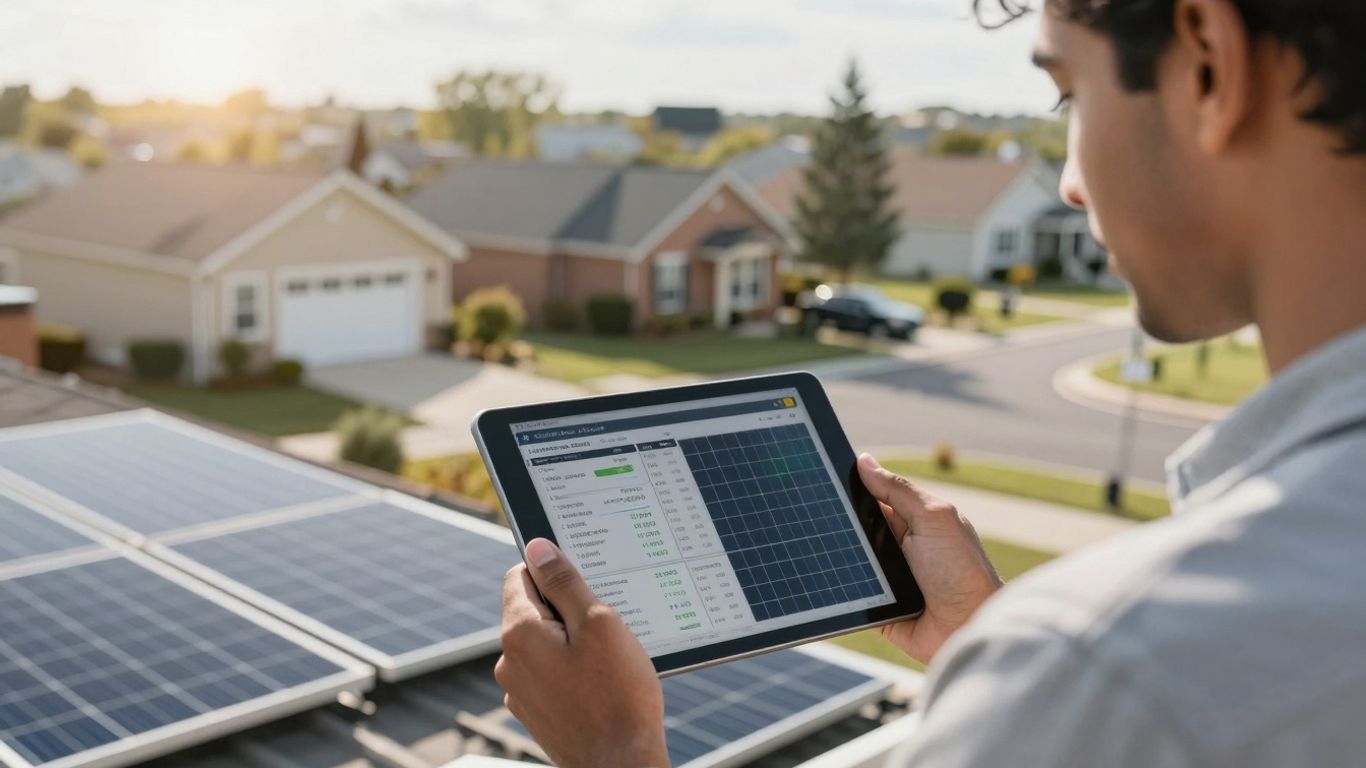
When you’re looking into solar, don’t forget about the banks and credit unions you already work with. They can be a solid place to start, especially if you’ve built a good relationship with them over time. Think of them as your first line of defense for getting a loan.
Working With Your Existing Bank for Solar Loans
Your current bank might have options that fit your solar project. They often have “green” loan programs designed for energy-efficient upgrades. While these might sound special, they’re often just standard personal loans with a slightly better interest rate. It’s worth asking about them.
- Ask about “green” or “eco-friendly” loans: Some banks specifically market these for home improvements like solar.
- Inquire about personal loans: Even if there isn’t a dedicated green loan, a standard personal loan could work. Just be sure to compare the rates.
- Discuss your home improvement plans: Frame your solar installation as a way to increase your home’s value and lower your monthly expenses. Providing your installer’s quote and estimated energy savings can help.
When talking to your bank, try to present your solar project as a smart investment. Showing them how it will increase your property value and reduce your utility bills can make them more receptive to offering favorable loan terms. It’s not just about borrowing money; it’s about financing an upgrade that pays for itself.
Credit Unions: A Community-Focused Alternative
Local credit unions are another great option to explore. Since they’re member-owned, they often focus more on community benefit and might offer more competitive rates or flexible terms than big banks. They sometimes have specific loan products tailored for solar installations.
- Check for membership requirements: You’ll usually need to be a member to get a loan.
- Ask about “green” or “solar” loans: Many credit unions are ahead of the curve on these types of loans.
- Compare rates and terms: Even if you’re already a bank customer, a credit union might surprise you with a better deal.
Credit unions can sometimes be more flexible with their lending criteria, which can be helpful if you don’t have a long credit history or if your financial situation is a bit unique. Their local focus means they might understand your community’s needs better.
Home Equity Lines of Credit for Solar Investments
If you own a home and have built up some equity, a Home Equity Line of Credit (HELOC) can be a very attractive option for financing solar. It’s essentially a line of credit secured by your home’s value. This often comes with lower interest rates compared to unsecured loans.
- Understand the collateral: Your home is used as security for the loan.
- Check current interest rates: HELOC rates are often variable, tied to the prime rate.
- Determine your borrowing limit: This will depend on how much equity you have in your home.
A HELOC can be a smart move because it typically offers lower interest rates than a personal loan. However, it’s important to remember that your home is on the line, so make sure you’re comfortable with that arrangement and can manage the payments comfortably. It’s a significant financial commitment.
When considering a HELOC, be sure to compare the interest rates and fees with other loan options. While the rates are often lower, the total cost over the life of the loan can still add up. It’s a good idea to get quotes from a few different lenders, including your current bank and any credit unions you’re a member of.
Solar Installer Financing: Convenience and Considerations
Many solar companies make it super easy to finance your new solar setup right through them. They often partner with finance companies to offer packages that bundle everything together. It sounds pretty straightforward, right? You get a quote, they handle the installation, and the financing is all part of the deal. This can be a big plus if you just want a simple, one-stop solution.
Evaluating Installer Financing Packages
When an installer presents their financing plan, it’s smart to look beyond just the monthly payment. Ask for the total cash price of the system too. This way, you can figure out the actual cost of the financing they’re offering. Sometimes, what looks like a great deal might have hidden costs or a higher overall price compared to getting a loan elsewhere.
Here’s a quick way to compare:
- Cash Price: The price of the system if you paid upfront.
- Financed Price: The total amount you’ll pay over the life of the loan, including interest.
- Loan Term: How many years you’ll be paying.
- Monthly Payment: The amount you pay each month.
The Truth Behind ‘0% Interest’ Solar Deals
That “0% interest” offer sounds amazing, and sometimes it really is. But it’s important to know how these deals usually work. Often, the “0% interest” is baked into a higher overall system price. So, while you’re not paying interest, you might be paying more for the panels and installation itself. It’s like getting a “free” appetizer with a meal that costs a bit more than it should.
Always ask for the system’s cash price. This is the number you need to compare apples to apples with other financing options. If the installer won’t give you a clear cash price, that’s a red flag.
Comparing Installer Offers to Traditional Loans
Don’t just take the installer’s financing at face value. It’s a good idea to shop around. Get quotes from your own bank or a local credit union. You might find that a traditional loan, even with a small interest rate, ends up being cheaper overall because the principal loan amount is lower. It takes a little more effort, but saving money in the long run is usually worth it.
Here’s a quick comparison table to help you think it through:
| Feature | Installer Financing (Example) | Traditional Loan (Example) | Notes |
|---|---|---|---|
| Interest Rate | Often advertised as 0% | Varies (e.g., 5-10%) | Check if 0% is built into a higher price. |
| Total Cost | Potentially higher | Potentially lower | Compare total paid over loan term. |
| Application Ease | Very easy, bundled | May require more steps | Installer financing is often quicker. |
| Flexibility | Limited to installer’s terms | More options available | Banks may offer better terms. |
Maximizing Your Solar Investment with Smart Financing
So, you’ve decided to go solar. That’s awesome! But before you sign on the dotted line for that shiny new system, let’s talk about making sure your financing plan actually works for you in the long run. It’s not just about getting the panels on your roof; it’s about making sure the money side of things makes sense for your wallet.
Calculating the True Cost of Solar Financing
This is where a lot of people get tripped up. You see a monthly payment, and it seems manageable. But have you looked at the total cost over the life of the loan? It’s easy to get excited about a ‘0% interest’ deal from an installer, but sometimes that ‘deal’ is baked into a higher overall system price. Always ask for the cash price of the system so you can compare apples to apples.
Here’s a quick way to think about it:
- Principal Amount: The actual cost of the solar system.
- Interest Rate: How much the lender charges you to borrow money.
- Loan Term: How many years you’ll be paying it off.
- Total Paid: Principal + Total Interest Paid.
The lowest monthly payment isn’t always the cheapest option overall. Sometimes, a slightly higher monthly payment over a shorter term can save you thousands in interest.
How Rebates and Incentives Impact Your Loan
Government rebates, tax credits, and local incentives can seriously cut down the upfront cost of your solar system. This is fantastic news because it means you might need to borrow less money, or maybe you can pay off the loan faster. It’s like getting a discount before you even start paying interest.
- Federal Tax Credits: These can offset a significant portion of your system’s cost when you file your taxes.
- State/Provincial Rebates: Many regions offer direct cash rebates for installing solar.
- Local Utility Programs: Some power companies have their own incentives.
Always factor these in before you finalize your loan. If you get a rebate after you’ve already borrowed the full amount, you’ll just have extra cash to put towards paying down the loan principal faster, saving you interest.
Ready to take the next step? solar financing near me and see your personalized options.
The Long-Term Value of Owned Solar Systems
When you own your solar system outright (or have paid off your loan), you’re essentially getting free electricity from the sun. Think about how much you spend on electricity now. That money could be going into your pocket instead. Plus, studies show that homes with owned solar systems often sell for more than comparable homes without them. Buyers see the value in those lower, predictable energy bills.
Owning your solar panels means you get to keep all the savings and the increased home value. It’s an investment that pays you back over time, not just in electricity bill reductions, but also in your property’s market appeal. It’s a win-win for your finances and the planet.
It’s really about looking at the whole picture. Don’t just focus on the immediate monthly payment. Consider the total cost, how incentives affect what you need to borrow, and the long-term benefits of owning a system that generates your own power.
Financing Solar During Home Construction or Renovation
Planning to build a new home or give your current one a major facelift? Integrating solar panels into these projects can be a smart move, but it requires a different approach to financing than adding solar to an existing, finished house. You’ll want to make sure the costs are rolled into your overall construction or renovation budget.
Integrating Solar into Construction Mortgages
If you’re building a new home from the ground up, your construction mortgage is the most straightforward place to include solar panel costs. Lenders typically disburse funds in stages as the building progresses. By including the solar installation as part of the initial construction plan, it can be factored into the total loan amount. This means the solar system is financed at your mortgage’s interest rate, which is usually lower than other loan types. It’s important to have detailed quotes from solar installers ready when you apply for your construction loan so the lender can assess the full project cost.
Using HELOCs for Solar Installations
For major renovations on an existing home, a Home Equity Line of Credit (HELOC) can be a flexible option. You can draw funds from the HELOC as needed to cover the solar installation costs during the renovation phase. Often, you’ll pay interest only on the amount you’ve drawn during this period. Once the renovation is complete and you move to regular payments, the HELOC converts to a standard repayment schedule. Rates for HELOCs are typically tied to the prime rate, so they can fluctuate.
Refinancing Your Mortgage for Solar Upgrades
Another route for existing homes undergoing renovation is refinancing your current mortgage. This allows you to tap into your home’s equity to get a lump sum for the solar installation. While refinancing might offer lower interest rates compared to a HELOC, it can involve more upfront costs like appraisal fees and closing costs. You’ll also need to consider any penalties if you’re breaking a fixed-rate mortgage term early. It’s a good idea to compare the total cost of refinancing against other options to see what makes the most financial sense for your specific situation.
When incorporating solar into a construction or renovation project, clear communication with your lender is key. Make sure they understand the full scope of the project, including the solar component, from the outset to avoid any surprises that could delay your financing or construction timeline.
Understanding How Solar Affects Property Financing
So, you’re thinking about putting solar panels on your roof, or maybe you’re eyeing a house that already has them. That’s great! But before you get too far down the road, it’s important to know how these systems can change things when it comes to getting a mortgage or refinancing your home. Lenders look at solar installations in a few different ways, and it really matters whether you own the panels outright, lease them, or have a power purchase agreement.
Owned Solar Systems and Mortgage Approval
If you buy your solar panels outright, lenders generally see them as a home improvement, kind of like a new kitchen or a better roof. This usually adds value to your property without causing major headaches for your mortgage. It’s an asset, not a debt. The main thing here is making sure the appraisal reflects the added value accurately. Sometimes, appraisers might not be totally up-to-date on how much solar adds, so it’s good to have your ducks in a row with documentation.
Challenges Posed by Leased Solar Panels
Leasing solar panels is where things can get a bit tricky. When you lease, you’re signing a long-term contract, often 15 to 25 years, with monthly payments. This lease essentially creates a lien on your property. Most mortgage lenders aren’t big fans of this. They want their mortgage to be the primary lien, and a solar lease can complicate that. Many lenders might refuse to approve a mortgage on a home with a solar lease unless that lease is paid off or transferred to the new owner before closing. The monthly payment also counts against your debt-to-income ratio, which can affect how much you can borrow.
Power Purchase Agreements and Lender Perspectives
Power Purchase Agreements (PPAs) are pretty similar to leases from a lender’s point of view. With a PPA, you agree to buy the electricity the panels produce, but you don’t actually own the equipment. The PPA company owns the panels and maintains a lien on your property. This means you run into the same issues as with a lease: the lien position and the ongoing payment obligation can make lenders hesitant. It’s not impossible to get a mortgage with a PPA, but it often requires extra steps and clear communication with all parties involved.
Here’s a quick rundown of how different solar setups are viewed:
- Owned Systems: Generally viewed positively, adding property value.
- Leased Systems: Can be a significant hurdle; lenders may require payoff or transfer.
- PPAs: Similar to leases; the system isn’t owned by you, creating lender concerns.
When you’re applying for a mortgage or refinancing, being upfront with your lender about any solar installations is super important. Surprises during the appraisal or title search can delay or even derail your deal. It’s always better to discuss it early so you know exactly where you stand and what needs to be done.
Wrapping Up Your Solar Financing Search
So, finding the right financing for your solar panels might take a little digging, but it’s definitely doable. We’ve looked at banks, credit unions, and even installer financing, each with its own pluses and minuses. Remember Dave’s story? He found a much better deal by looking beyond the obvious options and talking to his local credit union. Don’t just jump at the first offer, especially those ‘0% interest’ deals that might hide extra costs. Get a few quotes, compare them carefully, and think about what makes the most sense for your wallet and your home long-term. With a little effort, you can lock in a smart loan that makes going solar a financially sound choice.
Frequently Asked Questions
What’s the difference between a solar loan from a bank and one from an installer?
A bank loan is a more traditional loan, like one for a car or a home. Installer financing is often offered by the company putting in your solar panels. It might seem easier because it’s all in one place, but sometimes these deals have hidden costs or higher interest rates compared to what a bank or credit union might offer. It’s always smart to compare offers.
For a reference point, our review sets out a national credit union’s solar loan rates and membership terms in full rather than in summary.
Can I get a loan for solar panels if I don’t have a lot of money saved?
Yes, there are several ways to finance solar panels even if you don’t have a lot saved. You can look into loans from banks or credit unions, or sometimes installers offer special payment plans. Programs that offer rebates or grants can also lower the total amount you need to borrow.
What is a Home Equity Line of Credit (HELOC) and how can it help with solar?
A HELOC is like a credit card for your home. If you own your home and have paid off some of your mortgage, you can borrow against that owned part. This can be a good way to pay for solar panels because the interest rates are often lower than other types of loans, and you can borrow the money as you need it during the installation.
What does ‘0% interest’ solar financing really mean?
While ‘0% interest’ sounds amazing, it’s important to look closely. Sometimes, the price of the solar system itself might be higher to make up for the lack of interest. It’s like getting a free gift with a purchase, but the purchase price is inflated. Always compare the total cost over time, not just the monthly payment.
How do solar panels affect my mortgage if I want to sell my house?
If you *own* your solar panels outright, they usually make your house more attractive to buyers and can even increase its value. However, if you *lease* your solar panels or have a Power Purchase Agreement (PPA), it can make selling your house more complicated. Lenders might be hesitant because the lease or PPA is a long-term contract tied to the house that needs to be handled.
Are there local programs or incentives that can help me pay for solar?
Absolutely! Many towns, cities, and states offer special programs, rebates, or tax credits to encourage people to go solar. These can significantly lower the total cost of your system. You should check your local government’s website or ask solar installers if they know about any available incentives in your area.
Local lenders are one route among several. See also reading a solar loan quote properly and how solar loans work, start to finish.
Ready to Start Saving on Your Energy Bills?
Get a free, no-obligation quote from trusted local providers in under 2 minutes.
No obligation • Free estimates • Takes under 2 minutes
Want real quotes before you decide how to pay for it?
A loan only makes sense once you know what the system will actually cost. If your electric bill runs above $150 a month and your roof gets decent sun, a personalized quote gives you real numbers to put into any loan comparison. Quotes are available nationwide.
Solar Home Financing: How to Pay for Panels Without Breaking the Budget

Find Out What Fits Your Budget
The right way to pay for solar depends on your monthly bill and what you can put down. A quote for your home shows the real cost so you can see what actually fits.
Disclosure: we may earn a commission if you switch or request a quote through this link, at no extra cost to you. It never changes which plan or company we recommend. How we make money.
Thinking about going solar for your home? It’s a great idea for saving money and the planet. But the upfront cost can seem like a lot. Don’t worry, though. There are actually quite a few ways to pay for solar panels without emptying your bank account. This article breaks down the different solar home financing options available, so you can find the best fit for your budget.
Key Takeaways
- You can get solar home financing through banks, credit unions, or directly from solar installers. Each has its own pros and cons.
- Home Equity Lines of Credit (HELOCs) can be a good option if you have equity in your home, often offering lower interest rates.
- Installer financing might seem easy with ‘0% interest’ offers, but be sure to check if the system price is inflated to cover the financing cost.
- Look into local and state rebates or grants. These can significantly reduce the amount you need to finance.
- Always compare different loan terms, interest rates, and the total cost of ownership before deciding on your solar home financing.
Exploring Your Solar Home Financing Options
So, you’re thinking about going solar. That’s awesome! It’s a big step towards saving money on electricity and helping the planet. But let’s be real, the upfront cost can seem pretty daunting. Most home solar systems can run anywhere from $15,000 to $30,000, depending on how big you need it and where you live. The good news is, you don’t necessarily need a pile of cash sitting around to make it happen. There are several ways to pay for solar panels without emptying your bank account. The key is understanding these options and picking the one that fits your financial situation best.
Understanding the Appeal of Solar Financing
Why is financing solar so popular? Well, it makes a big purchase much more manageable. Instead of paying a huge sum all at once, you can spread the cost out over time. This often means your monthly solar payments are less than what you were paying for electricity before. Plus, many systems are designed to pay for themselves through energy savings. It’s a way to get into solar energy without an initial investment, which is a big deal for many homeowners.
Navigating the Landscape of Solar Loans
When you start looking into financing, you’ll find a few main categories. You’ve got your traditional banks and credit unions, financing options offered directly by the solar installers, and sometimes, local government programs. Each has its own set of pros and cons. It’s not a one-size-fits-all situation, so taking the time to compare is really important. You might find that a loan from your local credit union is a better deal than what an installer offers, even if the installer’s offer sounds good at first glance.
Our review shows what that comparison looks like in practice, down to Credit Human’s APR ranges and the membership requirement most homeowners overlook.
Key Considerations for Solar Home Financing
Before you sign anything, there are a few things you should keep in mind. Always ask for the cash price from installers, not just their financing offer. This helps you see if they’ve marked up the price to cover their financing costs. Also, look into any rebates or incentives available in your area; these can significantly lower the amount you need to borrow. Finally, think about the total cost over the life of the loan, not just the monthly payment. A lower monthly payment might end up costing you more in the long run due to higher interest rates or longer terms.
Getting solar panels can increase your home’s value. Studies show that homes with solar systems can sell for more, as potential buyers appreciate the long-term savings on electricity bills. It’s an investment that can pay off in more ways than one.
Here are some common financing avenues to explore:
- Solar Loans: These are loans specifically for solar installations, often offered by banks, credit unions, or specialized solar financing companies. They can be secured (like a home equity loan) or unsecured.
- Home Equity Lines of Credit (HELOCs): If you have equity in your home, a HELOC can be a good option, often with lower interest rates than personal loans.
- Installer Financing: Many solar companies partner with lenders or offer their own financing plans, sometimes including attractive interest rates. Just be sure to compare these carefully against other options.
- Green Personal Loans: Some banks offer personal loans tailored for energy-efficient home improvements, which might come with slightly better terms.
Leveraging Traditional Lenders for Solar Investment
When you’re looking to finance solar panels, don’t forget about the banks and credit unions you already work with. They often have options that can be quite competitive, especially if you’ve built up some history with them.
Partnering with Banks and Credit Unions
Your existing bank or credit union is a good place to start. They know you and might be more willing to work with you on a loan for solar. Big banks often have “green” loan programs, though sometimes these are just regular loans with a slightly different name. Credit unions, on the other hand, are member-owned and sometimes focus more on community projects, which could mean better terms for solar installations. It’s worth checking out both.
- Major Banks: Look into their eco-friendly loan options. These might be personal loans or lines of credit. They can be convenient, but sometimes the rates aren’t as good as other options.
- Credit Unions: These often provide more personalized service and might offer more competitive rates, especially for green projects. You’ll usually need to become a member first.
- Negotiation Tip: When you talk to your bank, don’t just ask for a loan. Explain that you’re making a home improvement that will increase its value and lower your energy bills. Show them your solar quotes and estimated savings. This makes it look like a smart investment.
Home Equity Lines of Credit for Solar
If you own your home and have built up some equity, a Home Equity Line of Credit (HELOC) can be a really good way to finance solar. It’s basically a loan secured by your home’s value. This usually means lower interest rates compared to unsecured loans. You can often draw money as you need it, which is handy if your project has phased costs. The main downside is that your home is the collateral, so you need to have enough equity built up. This can be a hurdle for newer homeowners.
HELOCs typically have variable interest rates tied to the prime rate. While this can be an advantage if rates fall, it also means your payments could increase if rates go up. It’s important to understand this risk before committing.
Green Personal Loans for Energy Upgrades
Some banks offer specific personal loans designed for energy-efficient upgrades, sometimes called “green loans.” While they sound special, they’re often just standard personal loans with a small discount on the interest rate. These are unsecured, meaning your home isn’t directly on the line, but the interest rates can be higher than with a HELOC. You might see rates anywhere from 7% to 12% or more, depending on your credit score. These can be a good option if you don’t have much home equity or prefer not to use your home as collateral. Just be sure to compare the rates and terms carefully against other financing methods. Many lenders are hesitant to offer mortgages for homes with leased solar panels, often requiring the lease to be paid off or transferred first, which can complicate property sales [4ebb].
Evaluating Installer-Provided Solar Financing
Many solar installation companies make it easy to get financing right through them. It’s a convenient package deal where they handle the quote, the installation, and the loan all at once. They usually team up with third-party lenders to make this happen. You might see ads for “0% interest” financing, which sounds great, but it’s important to look closer.
The Convenience of Bundled Packages
Going with an installer’s financing means you’re dealing with one company for the whole project. This can simplify things, especially if you’re not keen on shopping around for loans separately. They present it as a complete solution, taking the guesswork out of paying for your new solar setup. It feels like a straightforward path from deciding you want solar to having it on your roof.
Understanding “0% Interest” Offers
That “0% interest” deal sounds like a dream, right? It often means the installer has built the cost of the financing into the overall price of the system. So, while you’re not paying interest, you might be paying a higher price for the panels and installation itself. It’s like getting a “free” gift with purchase that actually just inflates the main item’s cost. Always ask for the system’s cash price so you can compare apples to apples.
Here’s a quick way to check if a “0% interest” offer is really a good deal:
- Get the Cash Price: Ask the installer for the price of the solar system without any financing.
- Get a Loan Quote Elsewhere: See what a bank or credit union would charge you for a loan for that cash price.
- Compare Total Costs: Add up the monthly payments and any fees for the installer’s offer versus the loan you got elsewhere. See which one ends up costing you less over the life of the loan.
Comparing Installer Quotes and Cash Prices
When you get a quote from an installer that includes financing, make sure you also get the price if you were to pay cash. This is key. Sometimes, the “0% interest” offer comes with a significantly higher price tag than if you paid upfront or secured your own loan. You want to know the real cost of the equipment and installation, separate from the financing costs.
It’s easy to get caught up in the excitement of a “0% interest” offer, but remember that financing costs are often hidden within the total price of the solar system. Always compare the installer’s financed price against their cash price and against loan offers from traditional lenders to find the most cost-effective solution for your budget.
Let’s look at a hypothetical comparison:
| Feature | Installer’s “0%” Offer | Your Own Loan (e.g., Credit Union) |
|---|---|---|
| System Price | $25,000 | $21,000 |
| Loan Amount | $25,000 | $21,000 |
| Interest Rate | 0% | 6.5% |
| Loan Term | 10 Years | 10 Years |
| Monthly Payment | ~$208 | ~$220 |
| Total Paid (10 yrs) | $25,000 | ~$26,400 |
In this example, even though the installer’s offer has no interest, the higher initial system price means you end up paying more overall compared to getting a lower cash price and a loan from a credit union. Always do the math!
Maximizing Savings with Solar Incentives
So, you’re thinking about solar panels, which is great! But the upfront cost can feel like a big hurdle. Luckily, there are a bunch of incentives out there designed to make it much more affordable. Think of these as discounts or credits that chip away at the total price, making your investment in clean energy even smarter. It’s all about reducing that initial financial burden so you can start seeing savings sooner.
Exploring State and City Rebates
Many states and even individual cities offer their own programmes to encourage solar adoption. These can come in the form of direct rebates, where you get a certain amount of money back after purchasing your system, or sometimes as tax credits. It really pays to do your homework here, as these programs can vary a lot from one place to another. Some might offer a set dollar amount, while others are calculated based on the size of your system.
- Check your state energy office: Many have dedicated pages detailing available solar incentives.
- Look into your local municipality’s website: Smaller, local grants can sometimes be found.
- Ask your solar installer: They often have a good handle on what incentives are currently available in your area.
For example, several states run rebates calculated on system capacity, paid per watt installed. It is these kinds of programmes that can significantly lower your out-of-pocket expenses. You might even be able to combine these with other financing options, which is a huge plus.
Combining Grants with Solar Loans
This is where things get really interesting. Imagine getting a grant that reduces the total cost of your solar system, and then financing the remaining amount with a loan. This means your loan principal is smaller from the start, leading to lower monthly payments and less interest paid over time. It’s a powerful way to make solar accessible even if you don’t have a huge amount of cash saved up. Some state and utility programmes have offered 0% interest options, which is excellent for keeping costs down.
The key is to find incentives that reduce the upfront cost before you secure financing. This strategy minimizes the amount you need to borrow, ultimately saving you money on interest payments and making your solar investment more financially attractive.
Ready to take the next step? solar home financing and see your personalized options.
The Role of Net Metering Programs
Net metering is a billing mechanism that credits solar energy system owners for the electricity they add to the grid. When your solar panels produce more electricity than your home is using, the excess power is sent back to the utility grid. Your utility company then gives you credit for this excess energy, which can be used to offset your electricity bill during times when your panels aren’t producing enough power (like at night or on cloudy days). This effectively turns your electricity meter into a two-way street, allowing you to get paid for the clean energy you generate.
- Full Retail Rate Credit: The best net metering programs credit you at the full retail price for the electricity you send back. The rules vary a lot by state, and in some places the credit is worth noticeably less than the retail rate.
- Time-of-Use Credits: Some programs might offer different rates depending on the time of day, reflecting the actual market value of electricity.
- Annual Reconciliation: Often, any excess credits are reconciled annually, though some programs might have different reconciliation periods.
These programs are a major reason why solar makes financial sense, even without large upfront grants. They provide a steady stream of savings or credits that contribute to paying off your system over time. It’s a crucial part of the overall financial picture for any homeowner considering solar power.
Developing Your Solar Financing Action Plan
Okay, so you’ve looked at the different ways to pay for solar panels, and maybe you’re feeling a little overwhelmed. That’s totally normal! It’s not like buying a new toaster. But don’t worry, we can break it down into manageable steps. Think of this as your roadmap to getting those panels on your roof without stressing your bank account.
Gathering Solar Installation Quotes
Before you can figure out how much you need to borrow, you need to know the actual cost of the system. This means getting quotes from a few different solar companies. Don’t just go with the first one you talk to. Aim for at least two or three. When you get these quotes, make sure they’re detailed. Ask for the “cash price” this is what the system costs if you pay for it upfront. Sometimes, the “0% interest” deals offered by installers actually have a higher cash price built in to cover their financing costs. Knowing the real cash price helps you compare apples to apples later on.
Here’s what to look for in a quote:
- System Size: Measured in kilowatts (kW).
- Equipment: Specifics on the panels and inverter brand.
- Total System Cost: The full price before any incentives.
- Estimated Energy Production: How much electricity the system is expected to generate annually.
- Warranty Information: Details on panel and installer warranties.
Researching Local and Federal Incentives
This is where you can really bring down the amount you need to finance. State and city governments often offer incentives to encourage solar adoption. These can come in the form of rebates, grants, or tax credits. You’ll need to do a bit of digging on your local government’s website. Look for terms like “solar rebates,” “energy efficiency grants,” or “renewable energy incentives.” Sometimes these programs have specific requirements or deadlines, so it’s good to get this information early. Even a few hundred dollars back can make a difference in your loan amount.
Remember that incentives can change, and sometimes programs get cancelled. It’s always best to check the most current information available from official government sources.
Negotiating with Financial Institutions
Once you have your solar quotes and a clear idea of available incentives, it’s time to talk to lenders. Don’t just accept the first loan offer you get. If you have a good relationship with your bank or a local credit union, start there. Ask them specifically about “green loans” or loans for energy efficiency upgrades. A Home Equity Line of Credit (HELOC) can also be a great option if you have equity in your home, often coming with lower interest rates than personal loans. Be prepared to show them your solar quotes and the estimated savings on your energy bills. The more information you have, the better you can negotiate for the best possible interest rate and loan terms. Don’t be afraid to mention offers you’ve received from other institutions to see if they can match or beat them. Getting multiple loan offers is key to finding the most affordable financing.
Making the Smart Solar Home Financing Decision

So, you’ve explored your options, gotten quotes, and maybe even snagged some incentives. Now comes the part where you actually pick the money plan that works best for your wallet. It’s not just about the lowest monthly payment, though that’s definitely important. You need to look at the whole picture to make sure you’re not overpaying in the long run.
Comparing Loan Terms and Interest Rates
This is where you really need to put on your detective hat. Different lenders will offer different interest rates and loan lengths. A loan with a super low monthly payment might actually cost you more over time because the interest rate is higher or the loan term is longer. Always ask for the Annual Percentage Rate (APR), which includes fees and gives you a clearer idea of the true cost.
Here’s a quick way to see how different rates can add up:
| Loan Amount | Interest Rate | Loan Term (Years) | Total Interest Paid |
|---|---|---|---|
| $20,000 | 5% | 10 | $5,300 |
| $20,000 | 7% | 10 | $7,700 |
| $20,000 | 5% | 15 | $8,500 |
See? Even a couple of percentage points can make a big difference over the life of the loan. Don’t be afraid to shop around and ask for the best rate they can offer.
Calculating Total Cost of Ownership
Think beyond just the loan payments. You need to figure out the total cost of owning your solar system for its expected lifespan, which is usually 25 years or more. This includes:
- The total amount you’ll pay back on your loan (principal + interest).
- Any maintenance costs (though solar panels typically require very little).
- The cost of any necessary inverter replacements down the line.
Then, compare that total cost to how much you expect to save on your electricity bills over those same 25 years. The goal is for your savings to significantly outweigh the total cost of the system.
It’s easy to get caught up in the excitement of going solar, but remember this is a big financial decision. Take your time, do the math, and don’t feel pressured into a deal that doesn’t feel right. Your future self will thank you for making a well-informed choice.
Choosing the Best Fit for Your Budget
Ultimately, the best financing plan is the one that you can comfortably afford without straining your monthly budget. Consider your current income, any upcoming expenses, and your comfort level with debt. If a slightly higher monthly payment means a shorter loan term and less interest paid overall, that might be the smarter move. Or, if you prefer the lowest possible monthly outlay, a longer term might be better, as long as you’ve factored in the total interest. It’s all about finding that sweet spot that makes solar energy achievable for you.
Making Solar a Reality for Your Home
So, while that big federal loan might be gone, it doesn’t mean going solar is out of reach. We’ve seen there are actually quite a few ways to pay for panels without needing a massive pile of cash upfront. Whether it’s working with your local bank, checking out credit union deals, or even looking at what installers offer, there are options. It might take a little more digging than before, but getting solar power for your home is still totally doable. Think about those lower electricity bills and the boost to your home’s value. It’s a smart move for your wallet and the planet.
Frequently Asked Questions
What’s the main reason people finance solar panels?
The biggest reason is the upfront cost. Solar panel systems can cost a lot initially, often between $15,000 and $30,000. Financing helps spread this cost over time, making it easier to afford without paying everything at once. Plus, the money you save on electricity bills can help pay off the loan.
Are there different ways to get a loan for solar panels?
Yes, there are several ways! You can look into loans from your own bank or credit union, sometimes called ‘green loans.’ Solar companies might also offer financing plans, and some local governments have programs or rebates that can help lower the cost or provide loan options.
What’s the deal with ‘0% interest’ financing from installers?
While ‘0% interest’ sounds great, it’s important to look closely. Often, the installer includes the cost of this ‘free’ financing by raising the total price of the solar system. It’s like getting a discount that’s already built into a higher price. Always ask for the ‘cash price’ to compare fairly.
Can I combine different ways to pay for solar panels?
Absolutely! You can often combine savings from government rebates or grants with a loan. For example, a rebate might reduce the amount you need to borrow, making your loan smaller and easier to manage. It’s smart to see what incentives are available in your area.
How do I know which financing option is best for me?
The best option depends on your situation. Compare the total cost of each loan, including interest and fees, over the entire time you’ll be paying it off. Think about your budget, how much you can afford each month, and if you have equity in your home that could help you get a better loan rate.
Will solar panels increase my home’s value?
Yes, studies show that homes with solar panels often sell for more than similar homes without them. Buyers see the benefit of lower electricity bills in the future, which makes your home more attractive and valuable.
Budget-first readers usually pair this with the best financing routes for homeowners and financing strategies for first-time buyers.
Ready to Start Saving on Your Energy Bills?
Get a free, no-obligation quote from trusted local providers in under 2 minutes.
No obligation • Free estimates • Takes under 2 minutes
Want real quotes before you decide how to pay for it?
A loan only makes sense once you know what the system will actually cost. If your electric bill runs above $150 a month and your roof gets decent sun, a personalized quote gives you real numbers to put into any loan comparison. Quotes are available nationwide.
Solar Loan Guide: How It Works, Pros/Cons & Best Places to Apply

Ready to See Loan Options From Real Installers?
This guide covers how solar loans work. The next step is getting quotes from installers so you can compare real offers, not just estimates.
Disclosure: we may earn a commission if you switch or request a quote through this link, at no extra cost to you. It never changes which plan or company we recommend. How we make money.
Thinking about putting solar panels on your roof? It’s a great idea for saving money on electricity and helping the planet. But, let’s be real, those panels cost a good chunk of change upfront. That’s where a solar loan comes in. It’s basically a loan to help you pay for your solar system, letting you spread the cost out over time. We’re going to break down how these loans work, what you need to qualify, and where you can find the best deals. Stick around, and we’ll help you figure out if a solar loan is the right move for your home.
Key Takeaways
- A solar loan lets you finance your solar panel system, paying it off in monthly installments instead of a big upfront cost.
- You’ll typically need a decent credit score (around 640+), proof of stable income, and often need to be a homeowner to qualify for a solar loan.
- Options range from secured loans (using your home as collateral, lower rates) to unsecured loans (no collateral, higher rates), and specialized solar loans often have unique benefits.
- Watch out for extra fees like ‘dealer markups’ that can significantly increase the loan amount; always compare the total cost, not just the interest rate.
- Consider lenders like traditional banks, credit unions, and specialized solar financing companies, but also look into government programs for potential benefits.
Understanding Solar Loans
Thinking about going solar but not sure how to pay for it? A solar loan might be just the ticket. Basically, it’s a loan specifically for putting solar panels on your home. Instead of paying a big chunk of cash upfront, you borrow the money and pay it back over time, usually with interest. This makes solar power way more accessible for a lot of people who can’t just drop tens of thousands of dollars all at once.
What Is a Solar Loan?
A solar loan is pretty much what it sounds like: a loan designed to cover the costs of a solar energy system for your home. This includes the panels themselves, inverters, batteries (if you get them), and even the installation labor. The idea is to spread out the expense over several years, making it a more manageable financial decision. You own the system from day one, which is a big plus because it means you can take advantage of tax credits and incentives.
How Solar Loans Work
Getting a solar loan usually follows a few steps. First, you’ll get quotes from solar installers to know the total project cost. Then, you’ll shop around for lenders. Many lenders offer pre-qualification, which is a quick check that doesn’t hurt your credit score, letting you see what rates and loan amounts you might get. Once you find a lender you like, you’ll formally apply, providing documents like proof of income and details about the solar installation contract. If approved, the lender disburses the funds, often directly to the installer. You then start making regular payments back to the lender.
Here’s a general breakdown of the process:
- Get Solar Quotes: Figure out how much your system will cost from a few different installers.
- Shop for Loans: Compare interest rates, terms, and fees from various lenders.
- Pre-Qualify: See what you might be approved for without impacting your credit.
- Apply: Submit your application with all necessary documentation.
- Installation: Once approved and funded, your solar system is installed.
- Repay: Make your monthly loan payments.
Key Benefits of Solar Loans
Why choose a loan over other options? Well, for starters, you own the solar system outright from the moment it’s installed. This is a pretty big deal. It means you’re eligible for all the federal, state, and local tax credits and incentives available, which can significantly reduce your overall cost. Plus, owning the system means you benefit from any increase in your home’s value. Unlike leases or power purchase agreements (PPAs), where a third party owns the system and gets the tax benefits, with a loan, those savings are yours to keep. It’s a straightforward way to invest in renewable energy and potentially lower your electricity bills for years to come.
Navigating Solar Loan Requirements
While Leases Have Lower Upfront Costs, Solar Loans Provide 40% Higher Long-Term Savings By Year 10. Source: Energy Board.
So, you’re thinking about getting solar panels and need a loan to make it happen. That’s smart! But before you get too excited about those sunny savings, let’s talk about what lenders actually look for. It’s not just about wanting solar; they need to be sure you can pay the loan back. Think of it like applying for any other big loan, but with a few solar-specific twists.
Credit Score Expectations
Your credit score is a big deal here. It’s basically a snapshot of how you’ve handled debt in the past. Lenders use it to guess how likely you are to pay them back on time. Generally, a higher score means better loan terms and lower interest rates.
Here’s a rough idea of what different lenders might expect:
- Prime Lenders/Specialized Solar Companies: Often look for scores of 720 and up for their best deals.
- Traditional Banks & Credit Unions: Might be okay with scores in the 640-660 range, especially if you’re already a customer.
- Alternative Lenders/Some Government Programs: Sometimes go as low as 580, but expect higher interest rates and fees.
If your score isn’t quite where you want it, don’t despair. Some lenders offer options, or you might need to work on improving your credit before applying.
Income and Debt-to-Income Criteria
Beyond your credit score, lenders want to see that you have a steady income and aren’t already drowning in debt. They’ll look at your Debt-to-Income (DTI) ratio. This is simply your total monthly debt payments divided by your gross monthly income. Most lenders prefer this ratio to be below 40-50%.
They’ll also want proof of stable income, usually for the last two years. If you’re self-employed, be ready to provide tax returns and bank statements. Retirement income like Social Security or pensions is usually fine, too.
Lenders want to make sure you can comfortably handle another monthly payment on top of your existing bills. It’s all about assessing your ability to repay the loan over its lifespan.
Home Ownership and Property Details
Most solar loans are tied to your home. This means you generally need to own your home outright or have a significant amount of equity in it, especially for secured loans. Lenders will want to verify your ownership, usually through property deeds or mortgage statements.
They’ll also check:
- Property Type: Is it a single-family home, condo, etc.?
- Property Condition: Is the home in good shape and well-maintained?
- Insurance: You’ll need homeowners insurance that covers the solar system.
- Permits and HOA: Ensure your local area and Homeowners Association allow solar installations.
Sometimes, especially with secured loans, the amount you can borrow might be limited by your home’s equity. It’s a good idea to have all your property documents handy when you start applying.
Exploring Different Solar Loan Options
So, you’re thinking about going solar, which is awesome! But the upfront cost can feel like a big hurdle. Luckily, there are several ways to finance your solar panel system, and understanding these options is key to making the best choice for your wallet and your home. It’s not just one-size-fits-all, and different types of loans come with their own set of pros and cons.
Secured Versus Unsecured Solar Loans
This is a pretty big distinction. Secured loans mean you’re putting something up as collateral, usually your house or the solar system itself. Because the lender has that backup, they often offer lower interest rates and longer repayment periods, sometimes up to 25 years. The flip side? If you can’t make payments, you risk losing that collateral. Unsecured loans, on the other hand, don’t require collateral. This means less risk for you if things go south financially, but you’ll typically see higher interest rates and shorter loan terms, often just a few years. Approval might also be quicker with unsecured loans.
Solar-Specific Loans Versus Personal Loans
Some lenders offer loans made just for solar installations. These can be really handy because they might have features tailored to solar projects, like allowing deferred payments until you get your tax credits or even paying the installer directly. However, watch out for potentially higher “dealer fees” that can inflate the loan amount. A general personal loan might be an alternative. While they offer more flexibility in how you use the money, they usually come with less favorable interest rates and don’t have those solar-specific perks. It’s a trade-off between specialized features and general usability.
Home Equity Financing for Solar
If you own your home and have built up some equity, tapping into that can be a really cost-effective way to finance solar. Home equity loans give you a lump sum with a fixed interest rate, and the interest might even be tax-deductible since it’s considered a home improvement. Home Equity Lines of Credit (HELOCs) are a bit different; they work more like a credit card where you can draw funds as needed during the installation. These often have variable rates, which can be lower initially, and offer more flexibility in repayment. Generally, home equity financing tends to have some of the lowest rates available for solar projects, making it a popular choice for many homeowners. You can explore options for home equity financing to see if it fits your situation.
Evaluating Solar Loan Terms and Fees
So, you’re thinking about getting a solar loan. That’s great! But before you sign on the dotted line, we really need to talk about the nitty-gritty: the terms and fees. It’s not just about the interest rate; there’s more to it than meets the eye, and some of these details can really change how much you end up paying over the life of the loan.
Typical Loan Terms and Payment Structures
Most solar loans come with a few standard features. You’ll usually see fixed interest rates, which means your rate won’t change over time, making budgeting easier. Payments are typically made monthly, and the interest is calculated simply. A big plus is that many solar loans don’t have penalties if you decide to pay them off early. This is super handy if you get a tax credit or just want to be debt-free sooner. Loan terms can vary a lot, often ranging from 2 to 12 years for unsecured loans, and sometimes up to 25 years for secured options like home equity loans. A longer term means lower monthly payments, but you’ll pay more interest overall. A shorter term means higher monthly payments, but you’ll save money in the long run.
Here’s a quick look at how loan terms can affect your costs:
| Loan Term | Monthly Payment | Total Interest Paid |
|---|---|---|
| Shorter (e.g., 7 years) | Higher | Lower |
| Longer (e.g., 20 years) | Lower | Higher |
Understanding Hidden Fees and Dealer Markups
This is where things can get a little tricky. Some companies, especially solar installers, might add on extra fees that aren’t always obvious. These are often called “dealer fees” or “origination fees.” The Consumer Financial Protection Bureau (CFPB) has pointed out that these fees can sometimes inflate the loan amount by 30% or even more compared to what you’d pay if you just bought the system outright. It’s really important to ask about these upfront. You might also see documentation fees for processing paperwork, or late payment fees if you miss a due date. Always ask for a full breakdown of all potential charges before agreeing to anything.
Always ask for a detailed breakdown of all fees associated with the loan. Don’t be afraid to question anything that seems unclear or unusually high. Understanding these costs upfront is key to avoiding surprises later on.
Ready to take the next step? best solar loan and see your personalized options.
Calculating the Total Cost of Ownership
To really get a handle on whether a solar loan is a good deal, you need to look at the total cost. This isn’t just the amount you borrow. You have to factor in the principal and all the interest you’ll pay. Then, add in any fees, like origination or documentation fees. On the flip side, you’ll want to subtract any incentives you get, like federal tax credits, and estimate the electricity savings you’ll see over the system’s lifespan. Sometimes, solar panels can even increase your home’s value, which is another factor to consider. By looking at the whole picture, you can make a much more informed decision about the long-term financial impact. For example, many states run their own low-rate loan programmes through a green bank or state energy office, and those are usually cheaper than anything an installer will put in front of you.
Comparing Top Solar Loan Providers
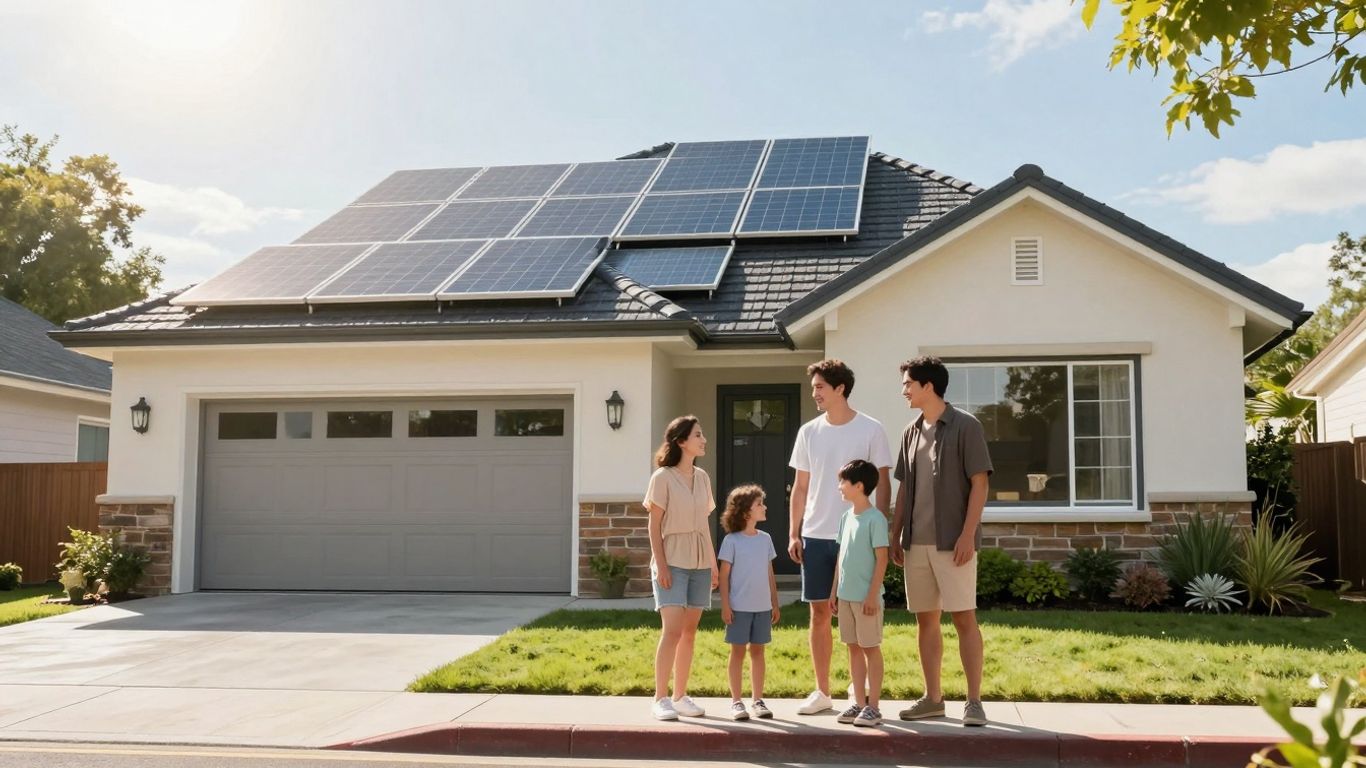
Standard Bank And Absa Currently Lead The Market With Green Energy Concessions For 2026 Bondholders.
Alright, so you’ve decided a solar loan is the way to go. Now comes the part where you figure out who to get that loan from. It’s not just one big pool of lenders out there; there are a few different types of places you can turn to, each with its own quirks.
Traditional Banks and Credit Unions
Your usual suspects, like big banks and local credit unions, do offer solar loans. Sometimes, if you’re already a customer, you might get a slightly better deal or at least a smoother process. They often have competitive rates, especially if you have a solid credit history. However, they might not be as specialized in solar as other options, so the loan terms might be more generic.
Some are more specialised than that reputation suggests. Credit Human runs a dedicated solar loan product, and our review covers its rates and approval requirements.
- Light-Stream by Truist: Known for having no fees and requiring good credit, they offer a wide range of loan amounts and terms. They even have a rate beat program.
- Truist Bank: Good for existing customers, they also offer home equity options and have physical branches if you prefer that.
- Local Credit Unions: Many credit unions are getting into the solar game. They often have a community focus and can offer competitive rates, especially for members. Some even have specific clean energy loan programs.
Specialized Solar Loan Companies
Then there are companies that only do solar financing. These guys are the specialists. They understand the ins and outs of solar projects, which can sometimes mean more tailored loan products. They often work closely with solar installers, which can streamline the whole installation process. Just be aware that some might have higher dealer fees baked into the loan, so always read the fine print.
- Mosaic: This company is all about solar financing. They have various loan products designed specifically for solar and work directly with installers. They even offer bridge loans to help you cover costs while waiting for tax credits.
- Sunlight Financial: Another big player focused on solar. They use technology to speed up approvals and have a network of contractors they work with.
When you’re comparing lenders, don’t just look at the interest rate. You need to factor in all the fees, like origination fees or dealer markups, which can significantly increase the total cost of your solar system. Always ask for a full breakdown of all charges.
Government-Backed Solar Financing Programs
Don’t forget about government programs! These can sometimes offer more flexible requirements, especially if your credit score isn’t perfect. They might have lower interest rates or longer repayment terms. It’s worth checking what’s available in your area, as these programs can be a great way to make solar more affordable. You can often find information on these through local government websites or by asking your solar installation company.
- FHA Loans: Specifically, the 203(k) rehabilitation loan can be used for energy-efficient upgrades, including solar panels. These often have more lenient credit score requirements.
- VA Solar Financing: If you’re a veteran, there might be specific financing options available through the Department of Veterans Affairs.
Remember, it’s a good idea to get quotes from a few different types of providers to see who offers the best combination of rates, terms, and fees for your specific situation.
Maximizing Your Solar Loan Investment
So, you’re thinking about getting solar panels and a loan to go with it. That’s a big step, and a smart one if you do it right. It’s not just about getting the panels on your roof; it’s about making sure the loan you get actually helps you save money in the long run. Let’s break down how to make your solar loan work best for you.
Solar Loans and Tax Credits Explained
The federal solar investment tax credit (ITC) used to let you deduct 30% of your system cost from your federal taxes. It ended on 31 December 2025 and does not apply to a system you buy or finance in 2026. It’s important to know how this works with your loan. Some solar loans might let you defer payments until you can claim the credit, which can really help with upfront costs. Others might require you to pay from the start. Always ask your lender about this. Understanding how and when you’ll receive your tax credit is key to maximizing your savings.
Here’s a quick look at how tax credits can impact your loan:
- Federal Solar Tax Credit (ITC): Ended 31 December 2025. A 2026 purchase does not qualify. A lease or PPA still can, because the solar company owns the system and claims it.
- State and Local Incentives: Many states and cities offer additional rebates or credits. These vary widely, so research what’s available in your area.
- Loan Structure: Some loans are designed to let you benefit from the tax credit sooner, potentially reducing your loan principal or providing a rebate.
When a Solar Loan Makes Financial Sense
Getting a solar loan makes the most sense when the money you save on electricity bills, plus any incentives you get, outweighs the total cost of the loan (including interest and fees). It’s a calculation you’ll want to do carefully. If you can pay cash for your solar system, that’s usually the cheapest option overall because you avoid interest. But for most people, a loan is the way to go. You want to look for loans with competitive interest rates and reasonable terms. A shorter loan term means higher monthly payments but less interest paid over time, while a longer term means lower monthly payments but more interest overall.
The real win with a solar loan is when the system pays for itself faster than you’re paying off the loan, and you start seeing pure savings. It’s about turning a big upfront cost into a manageable monthly payment that eventually leads to free, clean energy.
Avoiding Predatory Solar Lending Practices
Unfortunately, not all solar loan offers are created equal. Some companies might try to tack on huge fees or offer loans with really high interest rates that eat up your savings. It’s super important to read the fine print. Watch out for:
- High Dealer Fees: These are often hidden costs added by the installer or lender, sometimes adding 20-30% to the loan amount. Always ask for the
Wrapping It Up
So, going solar with a loan seems like a pretty solid plan for a lot of folks. It lets you get those energy savings rolling without needing a huge pile of cash upfront. Just remember to do your homework. Compare those rates, watch out for sneaky fees (seriously, read the fine print) and make sure you’re picking a lender that fits your financial picture. Whether it’s a big bank, a credit union, or a solar-specific company, there are options out there. Taking the time to find the right loan means you’ll be well on your way to a sunnier, cheaper energy future for your home.
Frequently Asked Questions
What exactly is a solar loan and how does it help me?
Think of a solar loan as a special kind of loan that helps you pay for solar panels for your home. Instead of paying a lot of money all at once, you can borrow what you need and pay it back over time with monthly payments. It’s a way to get solar power without needing all the cash upfront, and you get to own the panels from the start.
What kind of credit score do I need to get a solar loan?
Most companies that offer solar loans like to see a credit score of at least 640. If you have a score of 720 or higher, you’ll likely get the best interest rates. Some places might work with scores a bit lower, but the rates might be higher.
How do solar loans work with those solar tax credits I hear about?
Solar loans and tax credits are separate but work well together. You make your regular loan payments each month. Then, when you file your taxes, you can claim the federal tax credit (which is a good chunk of the cost!). Many people use the money they get back from the tax credit to make a big payment on their loan, but you don’t have to.
Are there any hidden costs I should watch out for with solar loans?
Yes, definitely! Some companies might add extra fees that aren’t obvious. These are sometimes called ‘dealer fees’ or ‘markups,’ and they can make the loan cost much more than the actual price of the panels. Always ask for a clear breakdown of all the fees before you sign anything.
What’s the difference between a solar loan and just getting a regular personal loan?
Solar loans are made just for solar panel systems. They might have special features, like letting you wait to start payments until you get your tax credit. Regular personal loans can be used for anything, but they might have higher interest rates and don’t have those solar-specific perks.
Can I use my home’s value to get a loan for solar panels?
Yes, you can! Loans like home equity loans or HELOCs let you borrow against the value of your home. These often have lower interest rates than other loans, but remember, your home is used as security, so you need to be sure you can make the payments.
The guide pairs naturally with which solar loan types you can qualify for and the main solar panel financing options explained.
Ready to Start Saving on Your Energy Bills?
Get a free, no-obligation quote from trusted local providers in under 2 minutes.
No obligation • Free estimates • Takes under 2 minutes
Want real quotes before you decide how to pay for it?
A loan only makes sense once you know what the system will actually cost. If your electric bill runs above $150 a month and your roof gets decent sun, a personalized quote gives you real numbers to put into any loan comparison. Quotes are available nationwide.
Colorado Solar Tax Credit: Incentives, Eligibility & How to Claim
See What Solar Costs at Your Colorado Address
Colorado adds state incentives on top of the federal tax credit. A local quote shows the real starting price for your roof before those numbers are applied.
Disclosure: we may earn a commission if you switch or request a quote through this link, at no extra cost to you. It never changes which plan or company we recommend. How we make money.
Thinking about putting solar panels on your Colorado home? That’s a smart move, not just for the environment, but for your wallet too. There are some pretty good incentives out there, especially if you’re looking at the federal tax credit. It can really cut down the initial cost. We’ll break down what you need to know about the colorado solar tax credit and other ways to save money when you go solar.
Key Takeaways
- [2026 Update] The 30% federal Residential Clean Energy Tax Credit (IRC § 25D) was repealed by the One Big Beautiful Bill Act (signed July 4, 2025). Colorado homeowners who purchase solar after December 31, 2025 are no longer eligible. A lease or PPA still offers indirect savings via the installer’s § 48E commercial ITC. See the update box below for details.
- To claim the federal credit, you’ll need to fill out IRS Form 5695 along with your tax return.
- Colorado offers additional savings through sales and property tax exemptions on solar systems, meaning you won’t pay sales tax on the panels or extra property tax for adding them.
- Net metering in Colorado is a big deal; it means your utility company credits you for extra electricity your panels send back to the grid, potentially lowering your bills significantly.
- [2026: Now Expired for Purchases] The 30% federal residential solar tax credit (IRC § 25D) was repealed for systems installed after December 31, 2025 by the One Big Beautiful Bill Act. If you’re purchasing solar in 2026, this credit is no longer available to you.
⚠️ 2026 Update: Federal Solar Tax Credit Repealed for Purchases
The 30% federal Residential Clean Energy Tax Credit (IRC § 25D) was repealed by the One Big Beautiful Bill Act, signed July 4, 2025. If you purchase a solar system outright (cash or loan) after December 31, 2025, you are no longer eligible for this federal credit. It wasn’t phased out gradually; it was repealed outright for new residential purchases.
Is there still a federal solar benefit in 2026? Yes, indirectly, through a lease or Power Purchase Agreement (PPA). The installer can still claim the § 48E commercial Investment Tax Credit (30%) and typically passes those savings to you through lower monthly rates, often 20 to 40% below your current utility rate, with no money down. Just keep in mind that with a lease/PPA you won’t own the system, so state tax credits and property tax exemptions that require ownership won’t apply to you.
For most Colorado homeowners buying solar in 2026, the real incentives are the state-level programs outlined below.
Understanding the Federal Solar Tax Credit
So, you’re thinking about going solar in Colorado? That’s awesome! One of the biggest perks, and honestly, the one that gets a lot of people excited, is the federal tax credit. It’s officially called the Residential Clean Energy Tax Credit, but most folks just call it the solar tax credit. Basically, it’s a way for the government to say, ‘Hey, thanks for investing in clean energy!’ and give you a break on your taxes.
What is the Residential Clean Energy Tax Credit?
This credit is a percentage of the cost of your solar energy system that you can subtract directly from the amount of federal income tax you owe. It’s not a refund where they send you money back if you don’t owe taxes, but rather a reduction of your tax bill. [Repealed for 2026+ purchases] The 30% residential credit (IRC § 25D) was repealed by the One Big Beautiful Bill Act for systems installed after December 31, 2025. For 2026 purchases, this credit is no longer available. This includes not just the panels themselves, but also things like installation labor, permitting fees, and even sales tax on the equipment. It’s a pretty significant incentive to make the switch to solar.
The federal credit has gone. Your Colorado incentives have not.
The 30% federal solar credit ended on 31 December 2025, so a system you buy or finance in 2026 does not qualify for it. Colorado’s own incentives still apply, and they are what a 2026 quote should be built on. A lease or PPA is the one route that still carries the federal credit, because the solar company owns the system and claims it.
How the Credit Reduces Your Tax Liability
[Historical Example, No longer applicable to 2026 purchases] Previously, if you installed a $20,000 solar system, the 30% federal credit meant $6,000 off your tax bill. That credit was repealed by the One Big Beautiful Bill Act for systems installed after December 31, 2025. Colorado homeowners purchasing solar in 2026 will not receive this federal savings.
What happens if the credit is more than what you owe? Say you only owed $4,000 in taxes that year. You’d use the $4,000 to bring your tax bill to zero. The good news is, you don’t lose the rest of the credit. The remaining $2,000 can be rolled over to the next tax year. This rollover provision is really helpful because it means you can still benefit from the full credit amount even if your tax liability is lower in the year you install the system. You can carry over unused credits for up to five years, and there’s no income limit on how much you can roll over.
Eligibility Requirements for the Federal Credit
To qualify for this federal incentive, there are a few key things you need to keep in mind:
- You must own your home: Renters generally can’t claim this credit, though there might be some exceptions for certain multi-family dwellings or if you own the property but lease out the home.
- The system must be installed on your main home: This includes your primary residence or a second home. It needs to be located in the United States.
- The system must be new or put into service for the first time: You can’t claim the credit for a system that was previously used or has already been claimed for a credit.
- Installation dates matter: The credit percentage can change over time. For systems installed before January 1, 2026, the credit was 30%. The credit was repealed by the One Big Beautiful Bill Act for installations after December 31, 2025. After that, the percentage is scheduled to decrease annually until the program’s expiration.
It’s important to remember that this credit applies to the year the system is installed and placed in service. So, if you sign a contract in one year but the installation isn’t completed and operational until the next, the tax year of installation is what counts for claiming the credit. This timing can be a bit tricky, so paying attention to your installation timeline is key.
Claiming this credit is a big part of making solar affordable, so understanding these basics is a great first step.
Claiming Your Colorado Solar Tax Credit
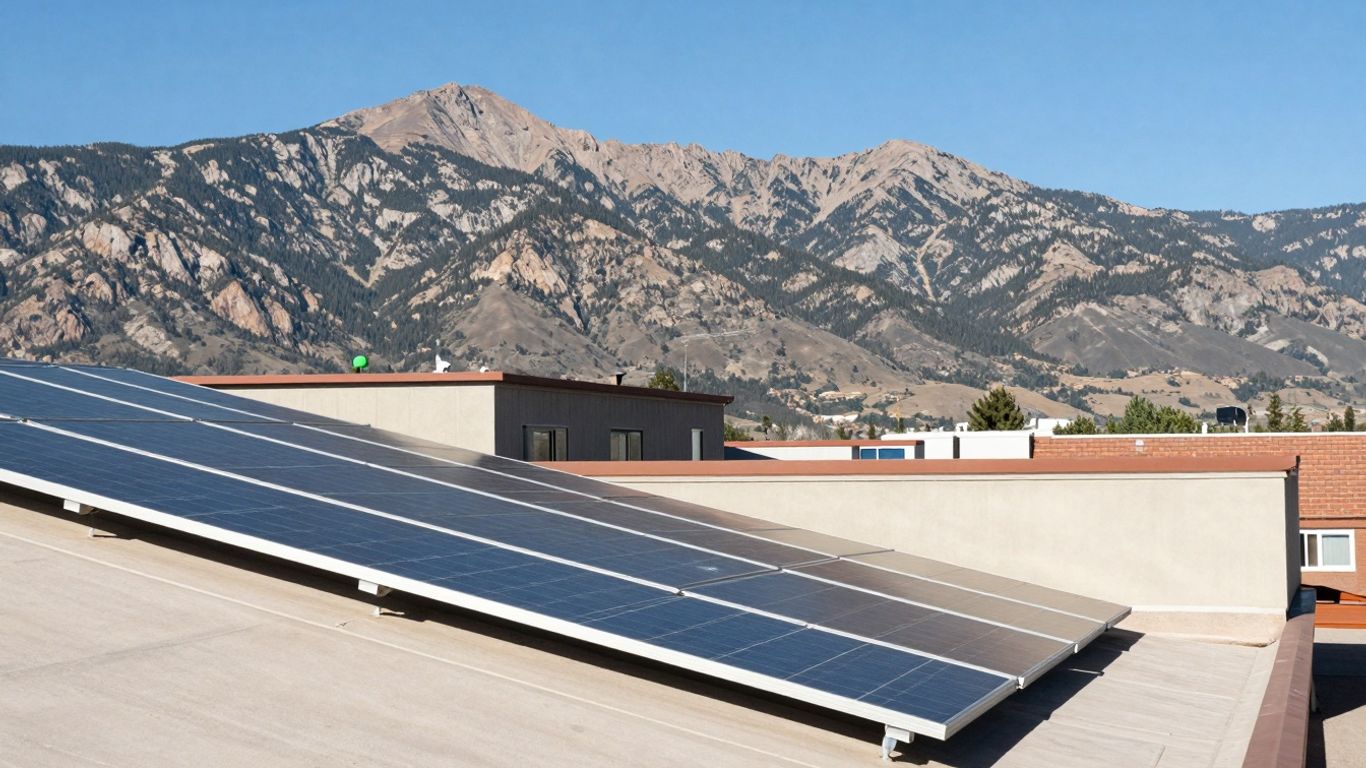
So, you’ve decided to go solar in Colorado. That’s awesome! Now comes the part where you actually get to claim that sweet federal tax credit. It’s not exactly like finding money on the street, but it’s pretty close. This credit is a fantastic way to lower your tax bill, but you’ve got to do it right.
Required IRS Forms for Tax Filings
To get your federal solar tax credit, you’ll need to fill out a specific form. It’s called IRS Form 5695. This is the official document where you’ll detail your solar system costs and calculate the credit amount you’re eligible for. Don’t skip this step, or you won’t get the credit.
Steps to Claim the Federal Incentive
Claiming the credit involves a few straightforward steps. Make sure you have all your paperwork from the solar installation company handy before you start. This usually includes invoices and proof of purchase.
- Gather Your Documents: Collect all receipts and invoices related to your solar system purchase and installation. This is super important.
- Complete IRS Form 5695: You can download this form directly from the IRS website. Fill it out carefully, entering the costs associated with your solar energy system. This form is used to calculate the credit amount you are eligible for.
- File Your Federal Tax Return: Attach the completed Form 5695 to your annual federal income tax return (Form 1040). If you’re filing electronically, there will be a section to input the information from the form.
- Reduce Your Tax Liability: The calculated credit amount will directly reduce the amount of federal income tax you owe. If the credit is more than what you owe, the excess amount can be rolled over to future tax years.
Remember, the solar tax credit is a non-refundable credit. This means it can reduce your tax liability to $0, but you won’t get any of the remaining credit back as a refund. However, any unused credit can be carried forward for up to five years, which is a pretty sweet deal.
Consulting a Tax Professional
Look, taxes can be confusing, and solar credits add another layer. While Form 5695 is designed to be filled out by homeowners, it’s always a good idea to have a professional double-check your work. A tax advisor can help you make sure you’re claiming the maximum credit you’re entitled to and that you’re following all the IRS rules. They can also advise on how the credit interacts with other tax benefits or deductions you might be eligible for. It’s a small investment that can save you a lot of headaches and potentially more money in the long run. You can find tax professionals who specialize in renewable energy credits to get the most accurate advice for your situation.
Colorado State and Local Solar Incentives
Beyond the federal tax credit, Colorado rolls out the welcome mat for solar energy with a variety of state and local incentives. These programs are designed to make solar more affordable and accessible for homeowners across the state, helping Colorado reach its clean energy goals.
State-Level Tax Exemptions for Solar
Colorado offers some pretty sweet tax breaks that can add up. First off, there’s the solar property tax exemption. This means that if you install solar panels, your property taxes won’t go up because of that added value. So, you get the benefit of a more valuable home without the tax hike. Then, there’s the sales and use tax exemption. When you buy your solar system, you won’t have to pay state sales tax on it. This can save you a good chunk of change right off the bat, depending on the system’s cost.
Local Utility Rebates and Programs
Many local utility companies and specific programs in Colorado offer additional rebates and incentives. These can vary quite a bit depending on where you live and which utility provider you have. Some popular ones include:
- Xcel Energy Solar*Rewards: For eligible, income-qualified customers, Xcel Energy offers upfront rebates. This program can provide a significant discount on your installation costs.
- Holy Cross Energy: If you’re a customer of Holy Cross Energy, you might be eligible for upfront rebates based on the size of your solar system. They offer different rates per kilowatt (kW) for smaller and larger systems.
- EnergySmart Colorado: This organization partners with various local entities to provide rebates for qualifying homeowners. It’s worth checking their website to see if you’re eligible.
- Black Hills Energy: This utility offers a per-kilowatt-hour (kWh) payment for the electricity your solar panels produce for the first 10 years, provided your system is 25 kW or smaller.
It’s a good idea to check directly with your local utility provider to see what specific programs are available in your area. These local incentives can sometimes be combined with other offers, making your solar investment even more attractive.
Understanding Net Metering Benefits
Net metering is a big deal for solar owners in Colorado. Basically, when your solar panels produce more electricity than your home is using at any given moment, that excess power is sent back to the grid. Your utility company then credits your account for that energy. These credits are typically applied at the full retail rate, meaning you get compensated for the electricity you send back as if you were buying it from the utility.
Here’s how it generally works:
- Excess Generation: Your solar panels generate more power than your home needs.
- Export to Grid: The extra power flows back to the utility grid.
- Account Credits: Your utility credits your account for the exported energy, usually at the full retail price per kWh.
- Bill Reduction: These credits reduce your monthly electricity bill.
- Rollover: If you have more credits than you use in a billing cycle, they usually roll over to the next month. At the end of the year, some utilities might pay out remaining credits, though policies can vary, especially with smaller municipal utilities.
This system is fantastic because it maximizes your savings, potentially offsetting a large portion, if not all, of your electricity costs. It’s a key reason why solar is so financially sensible in Colorado.
Maximizing Your Solar Investment in Colorado
So, you’re thinking about going solar in Colorado? That’s a smart move, especially with all the incentives out there. But how do you make sure you’re getting the most bang for your buck? It’s not just about slapping panels on your roof; it’s about timing, understanding the rules, and maybe even thinking about a battery. Let’s break down how to really make your solar system pay off.
Ready to take the next step? Colorado solar incentives and see your personalized options.
Impact of the Inflation Reduction Act
The big news for solar in recent years has been the Inflation Reduction Act (IRA). This act really boosted the federal solar tax credit, making it a much bigger deal for homeowners. [Repealed, 2026 Update] The Inflation Reduction Act originally extended the 30% residential solar credit through 2032, but the One Big Beautiful Bill Act (signed July 4, 2025) repealed IRC § 25D for systems installed after December 31, 2025. Colorado homeowners purchasing solar in 2026 can no longer claim this federal credit. It’s not a refund, mind you, but it directly lowers the amount of tax you owe. This extended credit period gives you more time to plan and install your system without feeling rushed.
Financing Options for Solar Systems
Paying for solar upfront with cash is great if you can swing it, but it’s not the only way. There are a few other options to consider:
- Solar Loans: Many banks and credit unions offer specific loans for solar installations. These often come with competitive interest rates, and you still own the system, so you can claim all the tax credits.
- Home Equity Loans/Lines of Credit (HELOCs): If you have equity in your home, you might be able to use a home equity loan or HELOC to finance your solar project. The interest might even be tax-deductible, similar to a mortgage.
- Solar Leases or Power Purchase Agreements (PPAs): With these, you don’t own the system. A third party installs and owns it, and you pay a monthly fee to use the electricity it generates (lease) or buy the power it produces at a set rate (PPA). While these can lower your monthly bills, you typically don’t qualify for the federal tax credit or other ownership-based incentives.
Choosing the right financing can significantly affect your overall savings and how quickly your system pays for itself. It’s worth looking into all the options to see what fits your financial situation best.
Importance of Installation Timelines
When you installed your solar system is what matters now. The Residential Clean Energy Tax Credit was 30% for systems placed in service by 31 December 2025. The One Big Beautiful Bill Act repealed it after that date, so the old step-down to 26% and 22% never happens. A Colorado homeowner buying in 2026 gets no federal credit.
- 2025 Deadline: Systems must be installed and placed in service by December 31, 2025, to qualify for the full 30% credit. If your system is installed on January 1, 2026, or later, you might not get the full benefit, depending on future legislation.
- Interconnection: The “placed in service” date is usually when your utility company approves your system and allows it to connect to the grid. This process can sometimes take a few weeks or even months, so don’t wait until the last minute.
- Planning Ahead: Getting quotes, signing contracts, and scheduling installation all take time. There is no longer a federal deadline to race, since the residential credit ended on 31 December 2025, but Colorado utility rebate programmes do run out of funding each year, so it is still worth starting early.
Key Considerations for Solar Tax Credit Eligibility
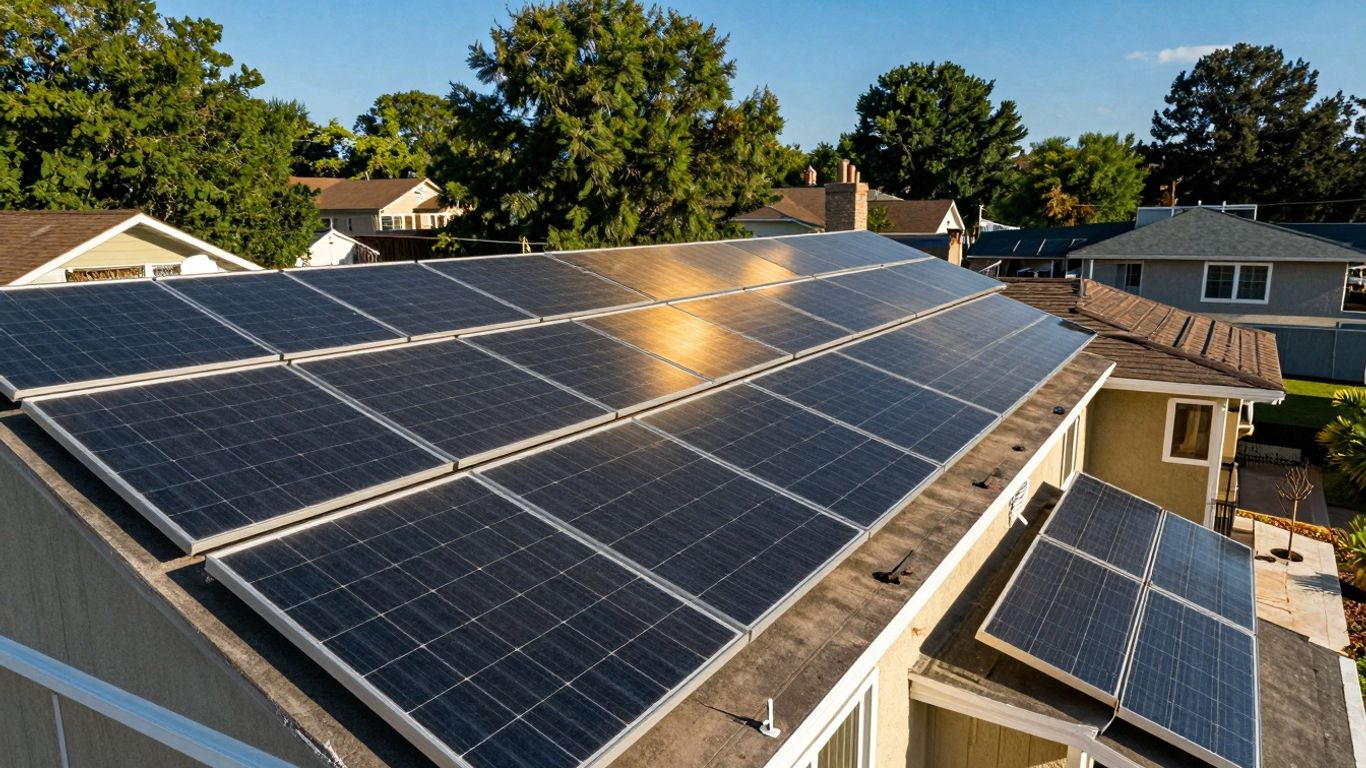
So, you’re thinking about going solar in Colorado and want to make sure you get that sweet federal tax credit? Awesome! But before you get too excited, there are a few things you really need to nail down. It’s not just about slapping panels on your roof; there are some specific rules to follow.
System Ownership vs. Leasing
This is a big one, and honestly, it trips a lot of people up. To claim the federal solar tax credit, you absolutely must own your solar panel system. If you’re leasing your panels or have a Power Purchase Agreement (PPA) where someone else owns the system and you just buy the power it generates, you’re out of luck for the federal credit. The ownership piece is non-negotiable. It’s like trying to claim a discount on a car you don’t actually own. It just doesn’t work.
Installation Dates and Credit Percentages
When your solar system was installed is what decides this. Systems placed in service between 2022 and 31 December 2025 qualify for the full 30%. Anything installed after that date does not, because the credit was repealed rather than reduced. If you installed in 2025 you can still claim it on that year’s return.
| Installation Period | Credit Percentage | Notes |
|---|---|---|
| January 1, 2022 to Dec 31, 2025 | 30% | Repealed for anything installed after this date. |
| January 1, 2023 to Dec 31, 2023 | 30% | Applies to systems installed in this year. |
| January 1, 2024 to Dec 31, 2024 | 30% | Applies to systems installed in this year. |
| January 1, 2025 to Dec 31, 2025 | 30% | Last year to claim the full 30% credit for new installations. |
| After December 31, 2025 | 0% | Credit expires for new systems installed after this date. |
Rollover Provisions for Unused Credits
What if your tax bill isn’t high enough to cover the full amount of the solar tax credit in the year you install your system? Don’t sweat it! The IRS lets you roll over any unused credit to the following tax years. This is super helpful because it means you won’t lose out on the money you’re owed. You can keep carrying that credit forward until it’s all used up. The current rules don’t put a strict time limit on how long you can roll it over, which is pretty great. Just remember, you’ll need to file IRS Form 5695 each year you claim the credit, including any rolled-over amounts.
It’s really important to keep all your documentation from the solar installation. This includes invoices, proof of payment, and any permits. You’ll need these details when you fill out IRS Form 5695 to claim the credit. Without proper records, you might have trouble proving your eligibility, and that’s the last thing you want when trying to save money.
Wrapping It Up
So, going solar in Colorado looks pretty good, right? You’ve got the federal tax credit, which is a big chunk of change off the price of your system, plus state and local programs that can help even more. Don’t forget about net metering, which basically means your electric company acts like a bank for the extra power your panels make. It’s a lot to take in, but the savings add up. Just remember that the big federal credit has an end date, so if you’re thinking about it, now’s the time to really look into it. Talking to a local solar installer and a tax pro is probably a smart move to make sure you get all the benefits you’re eligible for.
Frequently Asked Questions
What is the federal solar tax credit?
The federal solar tax credit, also known as the Residential Clean Energy Tax Credit, let you reduce the income tax you owed by a percentage of your solar panel system cost. It ended on 31 December 2025. It’s like a discount on your taxes for installing solar power!
How much is the federal solar tax credit?
It was 30% of the system cost, so a $10,000 system meant a $3,000 credit. It ended on 31 December 2025, and a 2026 purchase does not qualify.
Who can get the federal solar tax credit?
Generally, if you own your home and pay federal income taxes, you can claim the credit. The solar system needs to be installed on a home you own in the United States. You can’t claim it if you lease your solar panels.
How do I claim the federal solar tax credit in Colorado?
To claim the credit, you’ll need to fill out a specific form called IRS Form 5695 when you file your federal income taxes. It’s a good idea to keep all your paperwork from the solar installation handy, and maybe even talk to a tax expert to make sure you fill it out correctly.
What happens if my tax credit is more than what I owe in taxes?
If the amount of your tax credit is more than the taxes you owe for that year, you don’t lose the extra amount! You can roll over the remaining credit to the following tax years. This means you can use it to lower your tax bill for up to five years.
Are there other solar incentives in Colorado besides the federal credit?
Yes! Colorado has other great programs. Some cities or utility companies offer rebates or discounts. Plus, Colorado has tax exemptions that mean you won’t pay sales tax on your solar system, and you won’t have to pay extra property tax for adding solar panels to your home.
Ready to Start Saving on Your Energy Bills?
Get a free, no-obligation quote from trusted local providers in under 2 minutes.
No obligation • Free estimates • Takes under 2 minutes
Get a Second Quote for Your Colorado Home
Installer pricing can vary a lot, even with the same incentives available. A second quote gives you a number to compare before those incentives are applied.
Solar Loan Calculator: Estimate Monthly Payments & Total Cost
Turn Your Estimate Into Real Quotes
A calculator gives you a starting number. Request quotes from solar installers to see what your actual system and payments would look like.
Disclosure: we may earn a commission if you switch or request a quote through this link, at no extra cost to you. It never changes which plan or company we recommend. How we make money.
Thinking about getting solar panels for your home? It’s a big step, and figuring out the costs can feel overwhelming. That’s where a solar loan calculator comes in handy. This tool helps you get a clear picture of what you’ll be paying each month and over the long haul. We’ll break down how to use one and what to look out for, so you can make a smart decision about financing your solar energy system.
Key Takeaways
- A solar loan calculator helps estimate monthly payments and total costs for a solar panel system financed through a loan.
- You’ll need to input details like the system’s total price, your down payment, the interest rate, and the loan’s length.
- The calculator shows your estimated monthly payment, the total interest you’ll pay, and the overall cost of the loan.
- It’s useful for comparing different loan offers and seeing how factors like interest rates and loan terms affect your payments.
- By understanding the numbers, you can better assess if going solar with a loan makes financial sense for your household.
Understanding Your Solar Loan Calculator
What a Solar Loan Calculator Does
So, you’re thinking about getting solar panels for your home. That’s great! But then comes the money part, and it can feel a bit overwhelming. This is where a solar loan calculator comes in handy. It’s basically a tool that helps you figure out the financial side of things before you commit. You plug in some basic info, and it spits out estimates for your monthly payments, how much you’ll pay back over time, and even how much you might save on your electricity bills. It takes a lot of the guesswork out of the equation, making it easier to see if financing solar is the right move for your budget.
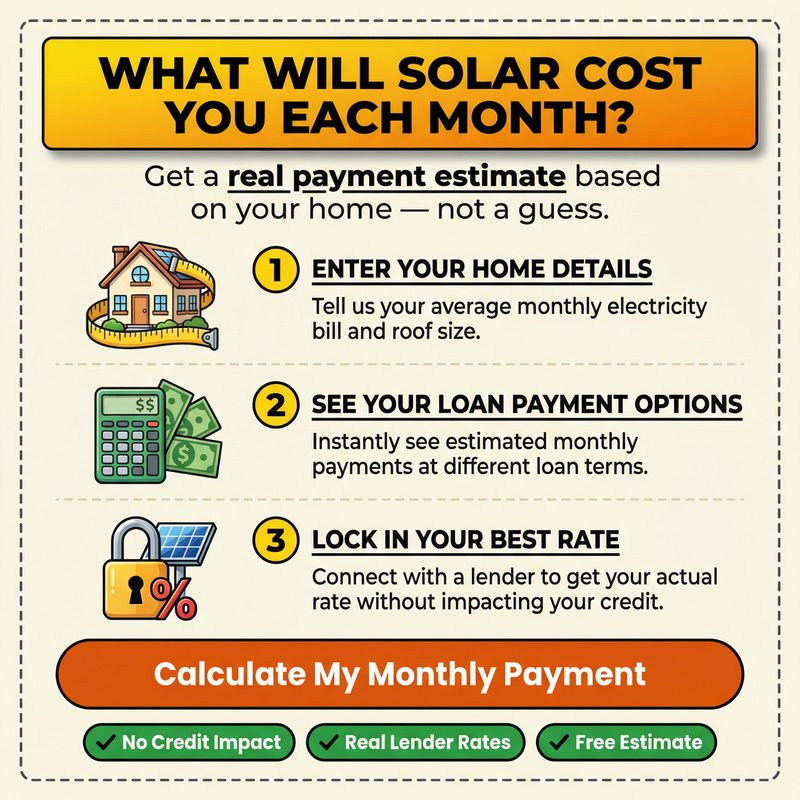
Key Inputs for Accurate Estimates
To get the most useful numbers from a solar loan calculator, you’ll need to provide some specific details. The more accurate your inputs, the better the estimate will be. Here’s what you’ll typically need:
- Total System Cost: This is the price of the solar panels, inverters, mounting hardware, and installation labor. You can usually get this from a solar installer’s quote.
- Loan Amount: This is the amount you plan to borrow. It might be the full system cost, or it could be less if you’re making a down payment.
- Interest Rate: This is the annual interest rate your lender is offering on the loan. It’s a big factor in your monthly payments and total cost.
- Loan Term: This is the length of time you have to repay the loan, usually measured in years (e.g., 10, 15, or 20 years).
- Down Payment (if any): The amount of money you pay upfront before taking out the loan.
- Estimated Fees: Some loans come with origination fees or other charges that add to the total cost.
Benefits of Using a Solar Loan Calculator
Using a solar loan calculator offers several advantages when you’re exploring financing options for solar panels:
- Budgeting Made Easier: Get a clear picture of what your monthly payments might look like, helping you determine if it fits within your household budget.
- Comparing Options: You can often adjust the inputs to see how different loan terms or interest rates affect your payments and overall cost, allowing you to compare offers from various lenders.
- Understanding Total Commitment: See the total amount you’ll repay over the life of the loan, including all the interest, so there are no surprises down the road.
- Assessing Savings Potential: Some calculators can help you estimate when your energy savings will start to outweigh your loan payments, giving you a sense of the long-term financial benefit.
Calculators are great for getting a ballpark figure. They help you understand the financial commitment involved in going solar with a loan. It’s like having a financial roadmap before you start the journey, showing you the potential costs and benefits.
Estimating Your Monthly Solar Payments
So, you’re thinking about solar panels, and the big question is, ‘How much will this actually cost me each month?’ That’s where understanding your loan payments comes in. It’s not just about the sticker price of the panels; it’s about how you’re financing them.
Calculating Principal and Interest
At its core, your monthly payment is made up of two parts: the principal (the actual amount you borrowed) and the interest (the cost of borrowing that money). The calculator helps break this down. You’ll see how much of your payment goes towards paying down the loan itself and how much is just interest. The goal is to have as much of your payment as possible go towards the principal over time.
The Impact of Loan Term on Payments
This is a big one. The loan term, or how many years you have to pay back the loan, directly affects your monthly payment. A shorter term means higher monthly payments but less interest paid overall. A longer term means lower monthly payments, which might be easier on your budget right now, but you’ll end up paying more in interest over the life of the loan. It’s a trade-off.
Here’s a quick look at how term length can change things, assuming a $30,000 loan at 5% interest:
Example: a $25,000 solar loan at 6.99% APR.
| Loan Term (Years) | Estimated Monthly Payment | Total Interest Paid |
|---|---|---|
| 10 | $290.14 | $9,816.80 |
| 15 | $224.57 | $15,422.60 |
| 20 | $193.67 | $21,480.80 |
Adjusting for Down Payments and Fees
Don’t forget about the down payment! Putting more money down upfront reduces the amount you need to borrow, which lowers your monthly payments and the total interest you’ll pay. Also, keep an eye out for any loan origination fees or other charges. These can add to the total cost, so it’s good to know what they are upfront. A good solar loan calculator will let you input these details to get a more realistic picture. You can use a tool like this to estimate the financial commitment associated with installing solar panels.
When you’re looking at loan options, it’s easy to get caught up in just the monthly payment. But remember to also consider the total interest you’ll pay over the entire loan period. Sometimes, a slightly higher monthly payment on a shorter loan can save you a significant amount of money in the long run.
Assessing the Total Cost of Solar Financing
Total Interest Paid Over the Loan’s Life
When you take out a loan for solar panels, the sticker price isn’t the whole story. You’ve got to think about the interest you’ll be paying for years to come. This is the extra money the lender makes on top of the original amount you borrowed. The longer your loan term, the more interest you’ll likely end up paying, even if your monthly payments seem lower. It’s like buying a car on a 7-year loan versus a 4-year loan, the monthly payments are less on the longer term, but you pay way more interest overall. Understanding the total interest is key to seeing the true cost of your solar investment.
Accounting for Installation and System Costs
Beyond the loan itself, remember that the price of the solar system includes more than just the panels. You’re paying for the equipment, sure, but also for the design, the installation labor, permits, and sometimes even things like battery storage. These costs get rolled into the loan amount. So, when you’re looking at the total cost, make sure you know what’s included in that initial system price. Sometimes, there are also ongoing maintenance costs or potential repair expenses down the line that aren’t part of the loan but add to the overall expense of owning a solar system.
Understanding the Role of Incentives
This is where things can get a bit more interesting, and potentially cheaper! Government incentives, like tax credits and local rebates, can significantly reduce the amount you actually pay for your solar system. For example, a federal tax credit might let you deduct a percentage of the system’s cost from your taxes. These incentives can either lower the upfront cost of the system (meaning you borrow less) or be applied later to reduce your overall out-of-pocket expenses. It’s really important to factor these in because they can change the total cost picture dramatically.
Here’s a quick look at how incentives might affect your total cost:
- Federal Solar Tax Credit: Typically covers a percentage of the system cost. This reduces your taxable income.
- State and Local Rebates: These vary widely by location and can offer a direct cash rebate or a reduction in your system’s price.
- Performance-Based Incentives (PBIs): Some areas pay you based on the amount of electricity your system generates.
It’s easy to get caught up in the monthly payment number, but looking at the total cost over the life of the loan, including all the fees and interest, gives you a much clearer picture of your financial commitment. Don’t forget to subtract any incentives you’ll receive, as they directly lower your actual expense.
Leveraging the Solar Loan Calculator for Decision Making
Ready to take the next step? solar loan calculator and see your personalized options.
Projecting Long-Term Energy Savings
This is where it gets exciting. Your solar panels aren’t just a big purchase; they’re an investment. The calculator can help you estimate how much you’ll save on your electricity bills each month. Then, you can compare that saving to your estimated monthly loan payment. The goal is for your solar savings to eventually outweigh your loan costs.
Here’s a simple way to think about it:
- Estimate your current monthly electricity bill.
- Use the calculator to find your estimated monthly solar loan payment.
- Estimate your new monthly electricity bill after solar (this will be much lower).
- Calculate the difference between your old and new bills. That’s your estimated monthly savings.
If your monthly savings are higher than your monthly loan payment, you’re likely on the right track. You can also project this out over the life of the loan to see the total potential savings.
Validating Financial Feasibility
Ultimately, the calculator helps you answer the big question: “Can I afford this, and is it worth it?” It takes the guesswork out of the financial side of going solar. By plugging in all the numbers, system cost, loan details, potential savings, and even incentives. You get a clearer picture of the overall financial impact.
It’s easy to get caught up in the idea of clean energy, which is great, but you still need to make sure it makes financial sense for your household. The calculator provides concrete numbers, not just hopes and dreams, to help you make a sound decision. It shows you the actual cost over time and how it stacks up against your energy savings.
Navigating Solar Loan Variables
When you’re looking at solar loans, it’s not just a one-size-fits-all situation. Several factors can really change the numbers, so understanding them helps you make a smarter choice. Think of it like adjusting the settings on a thermostat, small changes can make a big difference in comfort, or in this case, your wallet.
Interest Rate Fluctuations
The interest rate is a big one. It’s the cost of borrowing the money. Even a small difference in the percentage can add up over the life of the loan. For example, a 5% rate on a $30,000 loan over 20 years will cost you less in total interest than a 7% rate on the same loan amount and term. It’s always worth shopping around for the best rate you can get, as lenders offer different terms based on your creditworthiness and market conditions.
Here’s a quick look at how different rates can affect your total interest paid:
The same $25,000 loan over 20 years, at three different rates. The rate matters more than most people expect.
| Loan Amount | Loan Term | Interest Rate | Monthly Payment | Total Interest Paid |
|---|---|---|---|---|
| $25,000 | 20 years | 5% | $164.98 | $14,595.20 |
| $25,000 | 20 years | 7% | $193.82 | $21,516.80 |
| $25,000 | 20 years | 9% | $224.93 | $28,983.20 |
Remember, the advertised interest rate isn’t always the final rate you’ll get. Lenders consider your credit score, income, and debt-to-income ratio. A higher credit score usually means a lower interest rate, saving you money.
Loan Term Flexibility
The loan term is simply how long you have to pay back the loan. You can usually choose terms ranging from 5 to 25 years. A shorter term means higher monthly payments, but you’ll pay less interest overall because you’re borrowing the money for less time. A longer term means lower monthly payments, which can be easier on your budget, but you’ll end up paying more interest over the years.
Consider these options for a $30,000 loan at 7% interest:
- Shorter Term (e.g., 10 years): Higher monthly payments, but significantly less total interest paid.
- Medium Term (e.g., 15 years): A balance between monthly payment affordability and total interest.
- Longer Term (e.g., 25 years): Lower monthly payments, but the highest total interest paid.
Impact of Tax Credits and Rebates
Don’t forget about incentives! The federal solar tax credit, for instance, can significantly reduce your tax liability, effectively lowering the overall cost of your solar system. Many states and local utilities also offer rebates or performance-based incentives. These can sometimes be applied directly to reduce the amount you need to finance, or they can be claimed later to pay down the loan principal faster or offset your monthly payments.
- Federal Solar Tax Credit: Currently, this allows you to deduct a percentage of the system cost from your federal taxes.
- State and Local Rebates: These vary widely by location and can offer upfront discounts or cash back.
- Performance-Based Incentives (PBIs): You get paid for the energy your system produces over time.
Understanding how these incentives work and when you’ll receive them is key to accurately calculating your true out-of-pocket cost and the overall financial picture of your solar investment.
Wrapping Up Your Solar Investment
So, you’ve crunched the numbers with the solar loan calculator. Hopefully, it gave you a clearer picture of what going solar might actually cost you each month and over the long haul. Remember, these calculators are great for getting a ballpark idea, but they aren’t a crystal ball. Your actual loan terms and energy savings could be a bit different. Still, using this tool is a smart first step to see if solar fits your budget and if it’s a good move for your home. It helps you get ready for those conversations with installers and lenders, armed with a better understanding of the financial side of things. Good luck with your solar journey!
Frequently Asked Questions
What exactly does a solar loan calculator do?
Think of a solar loan calculator as your financial GPS for going solar. It’s a super helpful online tool that helps you figure out how much installing solar panels will cost if you take out a loan. You plug in some basic info, like the total price of the solar setup and the loan’s interest rate, and it gives you a good idea of what your monthly payments might look like and the total amount you’ll end up paying over time. It’s a great way to get a clear picture before you commit.
Once you have an estimate, check it against a lender’s published terms rather than an average. Our review lists the APR ranges and eligibility rules Credit Human applies.
What information do I need to use a solar loan calculator?
To get the most accurate estimate, you’ll want to have a few key details ready. This usually includes the total cost of your solar panel system, the amount you plan to borrow, the interest rate you expect to get on the loan, and how long you want the loan to last (like 10, 15, or 20 years). Sometimes, you might also need to know about any down payment you plan to make or any upfront fees.
How does the loan term affect my monthly payments?
The loan term is basically how long you have to pay back the loan. If you choose a longer loan term, your monthly payments will be lower because you’re spreading the cost over more months. However, a longer term also means you’ll pay more interest overall. On the flip side, a shorter loan term means higher monthly payments, but you’ll save money on interest in the long run.
Can incentives like tax credits change my loan cost?
Absolutely! Government incentives, like tax credits and rebates, can significantly lower the total cost of your solar system. Many calculators can factor these in. The 30% federal credit used to do exactly this, but it ended on 31 December 2025. Do not let a calculator or a sales quote subtract it from a 2026 purchase. State and local incentives may still apply. It’s smart to see how these savings play into your calculations.
Is a solar loan calculator accurate for my specific situation?
These calculators are fantastic for giving you a really good estimate and helping you compare options. However, they’re usually for estimation purposes only. The actual loan offer you get from a lender might have slightly different numbers based on your credit history, specific loan terms, and any additional fees. It’s always best to get a personalized quote from a lender once you have a solid idea of what you’re looking for.
How can I use the calculator to decide if solar is right for me?
The calculator is a powerful tool for making smart decisions! You can use it to compare different loan offers side-by-side, see how changing the loan term or interest rate affects your budget, and even estimate how much you might save on your electricity bills over time. By comparing your estimated loan payments with your projected energy savings, you can figure out if going solar makes financial sense for your household.
An estimate is a starting point. Next come paying for panels without wrecking your budget and the best financing routes for homeowners.
Ready to Start Saving on Your Energy Bills?
Get a free, no-obligation quote from trusted local providers in under 2 minutes.
No obligation • Free estimates • Takes under 2 minutes
Want real quotes before you decide how to pay for it?
A loan only makes sense once you know what the system will actually cost. If your electric bill runs above $150 a month and your roof gets decent sun, a personalized quote gives you real numbers to put into any loan comparison. Quotes are available nationwide.
Loan for Solar: Step-by-Step to Compare Lenders & Offers
Compare Lenders Alongside Installer Quotes
Lender offers only tell half the story. Get quotes from local solar installers so you know the system price before you pick a loan.
Disclosure: we may earn a commission if you switch or request a quote through this link, at no extra cost to you. It never changes which plan or company we recommend. How we make money.
Thinking about getting solar panels for your home? That’s great! It’s a big step towards saving money on electricity and helping the environment. But the cost can seem like a lot upfront. Don’t worry, though. There are ways to finance it, and this guide will walk you through how to compare your options so you get the best deal on a loan for solar. We’ll break down where to look, what to watch out for, and how to make sure you’re saving money in the long run.
Key Takeaways
- A specialized loan for solar can be a good way to finance your system, often with better terms than a regular personal loan.
- Look beyond your main bank; credit unions and installer financing are also worth exploring, but always check the fine print.
- Compare interest rates (APR), monthly payments, and any extra fees carefully to understand the total cost of borrowing.
- Don’t forget about incentives like federal tax credits and local rebates, as these can significantly lower the amount you need to finance.
- Using a spreadsheet to compare all your loan offers side-by-side is the best way to make an informed decision and find the most affordable option.
Understanding Your Solar Loan Options
So, you’re thinking about going solar, which is awesome! But then you hit the wall: how do you actually pay for it? It can feel like a lot, with all the different ways to finance a solar panel system. You don’t want to end up paying way more than you have to, or worse, miss out on some sweet tax breaks. Let’s break down what’s out there so you can figure out the best path for your home and your wallet.
What Is a Specialized Solar Loan?
A specialized solar loan is basically a loan created just for putting solar panels on your roof. Think of it like a car loan, but for sunshine power. These loans are often offered by lenders who know the solar game, and they usually come with pretty decent interest rates and terms that make sense for a big purchase like this. Unlike just grabbing a personal loan, these are designed to work with solar projects, sometimes even lining up payments with when you might get tax credits back. This means you can get the panels installed without a giant pile of cash upfront, and still own your system outright.
Key Features of Solar Financing
Solar financing isn’t all the same. There are a few things that make these loans stand out:
- Interest Rates & APR: You’ll see rates that can be pretty low, especially if you have good credit. Always look at the Annual Percentage Rate (APR), though, because that includes fees and gives you a clearer picture of the total cost.
- Loan Terms: These loans can stretch out for a long time, often 10 to 25 years. This helps keep your monthly payments manageable, and you can try to match them up with how much you expect to save on electricity.
- Deferred Payments: Some loans let you put off payments for a bit, often until you get your federal tax credit. This can be a nice breather when you’re first getting started.
- Fees: Keep an eye out for things like origination fees. Sometimes, solar companies might roll these into the loan, which can make the advertised interest rate look lower than it really is.
It’s really important to know what you’re signing up for. A loan that looks good on paper might have hidden costs or terms that don’t work for you long-term. Always read the fine print.
Comparing Solar Loans to Traditional Loans
So, how do these solar-specific loans stack up against the usual ways people borrow money?
- Home Equity Loans/Lines of Credit (HELOCs): If you own your home and have built up some equity, these can be a great option. They’re secured by your house, so the interest rates are often lower than unsecured loans. The downside? Your home is on the line if you can’t pay.
- Cash-Out Refinancing: This is similar to a home equity loan but involves replacing your current mortgage with a new, bigger one. You get the difference in cash. It can be good if current mortgage rates are lower than what you have now, but it also means you’re extending your mortgage term.
- Personal Loans: These are unsecured, meaning your house isn’t collateral. That’s a plus if you’re worried about risking your home. However, because they’re riskier for the lender, the interest rates are usually higher than for secured loans like home equity options.
Basically, specialized solar loans are designed to be a good middle ground, often offering competitive rates without the immediate risk of using your home as collateral, and with terms tailored for solar projects. But comparing them to your home equity options or even a good personal loan is always a smart move.
Exploring Lender Categories for Solar Financing
So, you’ve decided to go solar, which is awesome! But now comes the part that can feel a little tricky: figuring out where to get the money. It’s not just one type of place that offers solar loans anymore. The market has really grown, and there are a few different kinds of lenders you can check out. Each has its own vibe and set of rules, so it pays to look around.
Approaching Your Bank or Credit Union
Your regular bank or local credit union is often the first place people think of for a loan. They know you, and sometimes that can work in your favor. Banks might offer what are sometimes called “green” personal loans, which are basically standard personal loans but marketed for energy-efficient upgrades. They might shave off a tiny bit of interest, maybe a quarter or half a percent, but don’t expect miracles. The interest rates can still be pretty high, especially for unsecured loans, often landing between 7% and 12% or even more, depending on your credit score.
For a concrete example at the lower end of that range, our review lists the APRs, terms and approval requirements Credit Human publishes.
It’s really important to frame your conversation with your bank correctly. Instead of just asking for a loan, explain that you’re making a home improvement that will boost its value and lower your monthly bills. Show them your installer’s quote and your estimated energy savings. This makes it sound like a smart investment, not just another debt.
Credit unions are a bit different. Since they’re member-owned, they often have a stronger focus on helping the community and supporting projects like solar. Some credit unions even have specific “green loans” designed just for solar installations. Their rates can sometimes be a bit better than big banks, maybe a point or two lower, because their goal isn’t solely profit. The downside? You usually have to be a member, and their reach is local, so you’ll need to find one that serves your area. They can also be more flexible with their lending rules.
Investigating Solar Installer Financing
Many of the bigger solar companies have their own financing options, or they partner with finance companies. This can be super convenient because it bundles everything (the quote, the installation, and the loan) into one package. You might see ads for “0% interest” financing. It sounds great, but it’s crucial to understand the details. Sometimes, this “0%” is only for a short period, or the actual cost is built into the system price in ways that aren’t immediately obvious. These companies often work with third-party lenders, so it’s still a good idea to compare their offers with what you can get elsewhere. You want to make sure you’re not missing out on better terms just because it’s easy.
Considering Community-Focused Credit Unions
As mentioned before, credit unions are worth a special look. They often have a community-first approach. Some have been pioneers in offering specific loans for renewable energy projects. These aren’t just generic loans; they’re often structured with solar installations in mind.
Here’s a quick rundown of why they stand out:
- Member-Owned Structure: Their primary goal is to serve their members, not just maximize shareholder profits.
- Community Mandate: Many have a stated mission to support local environmental initiatives.
- Potentially Better Rates: Because their focus is broader than just profit, they can sometimes offer more competitive interest rates compared to traditional banks.
When you’re looking at financing, remember that solar systems can be categorized differently by lenders. Whether the system is owned outright, leased, or under a power purchase agreement can affect how a loan is viewed, especially if you’re also dealing with a mortgage. Understanding these distinctions is key to getting the right loan for your situation. Lenders categorize solar panel systems in specific ways.
It’s a good idea to talk to a few different types of lenders. Don’t just go with the first option you find. Comparing offers from your bank, a credit union, and even your installer’s financing partner will help you find the best deal for your new solar setup.
Evaluating Loan Offers and Terms
So, you’ve got a few loan offers in hand. That’s great! But now comes the part where you really need to put on your thinking cap and compare them. It’s not just about the monthly payment; there’s more to it than meets the eye. Let’s break down what you should be looking at.
Analyzing Interest Rates and APR
This is probably the first thing everyone checks, and for good reason. The interest rate is the percentage the lender charges you for borrowing money. But don’t stop there. You also need to look at the Annual Percentage Rate, or APR. The APR includes the interest rate plus any fees associated with the loan, spread out over the loan’s life. This gives you a more accurate picture of the total cost of borrowing.
Here’s a quick rundown:
- Interest Rate: The base cost of borrowing.
- APR: Interest rate + fees. Always compare APRs when looking at different loans.
- Fixed vs. Variable: A fixed rate stays the same for the entire loan term, offering predictability. A variable rate can go up or down, which can be risky.
Assessing Monthly Payments and Loan Terms
Your monthly payment needs to fit comfortably into your budget. A lower monthly payment might seem appealing, but if the loan term is super long, you could end up paying a lot more in interest over time. Think about how long you want the loan to last. Solar loans can range from 10 to 25 years. It’s a good idea to match your loan term with your expected energy savings to keep your cash flow positive.
Here’s what to consider:
- Loan Term: How many years will you be paying off the loan?
- Monthly Payment: Can you afford this amount every month, even if your budget gets tight?
- Total Interest Paid: A longer term usually means more interest paid overall.
Understanding Additional Fees and Charges
This is where lenders can sometimes hide extra costs. Always ask for a full breakdown of all fees. Some common ones include:
- Origination Fees: A fee charged for processing the loan application.
- Prepayment Penalties: Fees if you decide to pay off the loan early. This is important if you think you might get a windfall and want to pay down the loan faster.
- Late Fees: What happens if you miss a payment?
- Dealer Fees: Sometimes, solar installers bundle fees into the loan. Make sure you know what these are and if they’re inflated.
Be sure to get everything in writing. Verbal agreements don’t hold up, and you don’t want any surprises down the road. A loan offer should clearly state the interest rate, APR, loan term, monthly payment, and all associated fees. If something isn’t clear, ask for clarification before signing anything.
Maximizing Savings with Incentives and Rebates
So, you’re looking into solar, which is awesome! But let’s be real, the upfront cost can feel like a lot. The good news is, there are ways to bring that price down, and it’s not just about finding the cheapest loan. We’re talking about government programs and local deals that can make a big difference. Don’t skip this step. It could save you thousands.
Leveraging Federal Solar Tax Credits
While the main federal solar tax credit has changed, it’s always worth checking current federal programs. These credits can directly reduce the amount of tax you owe, effectively lowering the overall cost of your solar installation. Keep good records of your system’s cost and installation details, as you’ll need them for your tax filing.
Investigating Local and State Rebates
This is where things get really interesting, as state and city programmes can offer significant savings. Think of them as direct discounts on your solar project. These programs vary wildly by location, so you’ll need to do some digging.
Here’s a general idea of what you might find:
- Rebates based on system size: Some utilities and states pay a set amount per watt installed, usually capped at a total figure. Your installer will know the current cap where you live, and it is worth checking it against the programme’s own page before you sign.
- Direct installation cost reductions: Certain programs might offer a percentage off the total installation cost.
- Property tax incentives: Some municipalities allow you to finance solar through your property taxes, which can come with favorable rates and terms.
- Sales tax exemptions: In some states you will not pay sales tax on solar equipment, which is a nice chunk of savings right away.
It’s a bit of a patchwork, so checking your state energy office website and your local city or county offices is key. These programs can change, so stay updated.
Ready to take the next step? compare solar lenders and see your personalized options.
Reducing Your Loan Principal with Grants
Beyond tax credits and rebates, keep an eye out for grants. Grants are essentially free money for your solar project. They might be offered by utility companies, environmental organizations, or specific government initiatives. Sometimes, these grants can be used to directly pay down the principal of your solar loan, meaning you borrow less and pay less interest over time. Several state energy offices run rebates of this kind, and they can usually be combined with financing, directly reducing the amount you need to borrow.
The landscape of incentives is always shifting. What’s available today might not be tomorrow, and new programs pop up regularly. Make it a habit to check official government and utility websites for your specific region. Don’t rely on outdated information; always verify the details and eligibility requirements for any program you’re considering.
Comparing Loan Offers with a Detailed Spreadsheet
So, you’ve gotten a few loan offers. That’s great! But now comes the part where you really need to roll up your sleeves and look at the numbers. It’s easy to get swayed by a low monthly payment, but that doesn’t always mean it’s the cheapest deal in the long run. This is where a good old-fashioned spreadsheet comes in handy. It’s your best friend for seeing the whole picture.
Gathering All Loan Offer Details
Before you can compare apples to apples, you need all the facts for each loan. Think of this as collecting all your ingredients before you start cooking. You’ll want to jot down:
- Loan Amount: The total amount you’re borrowing.
- Interest Rate: The stated yearly rate.
- APR (Annual Percentage Rate): This includes the interest rate plus most fees, giving you a more accurate cost.
- Loan Term: How many years or months you have to pay it back.
- Monthly Payment: The amount you’ll pay each month.
- Origination Fees: Any upfront fees charged to set up the loan.
- Other Fees: Look out for things like late fees, prepayment penalties, or administrative charges.
- Total Cost of Borrowing: This is the total amount you’ll pay back, including interest and all fees, over the life of the loan.
It’s also a good idea to get the actual cash price from your solar installer. Sometimes, financing deals, especially those advertised as “0% interest,” might have that cost baked into a higher system price. Comparing the loan amount against the installer’s cash price will reveal this.
Comparing Key Financial Metrics
Now, let’s put that information into your spreadsheet. You’ll want columns for each loan offer and rows for each detail. This visual layout makes it much easier to spot differences. A table can really help here:
| Feature | Lender A (Bank) | Lender B (Credit Union) | Lender C (Installer Fin.) |
|---|---|---|---|
| Loan Amount | $25,000 | $25,000 | $30,000 |
| Interest Rate | 8.5% | 6.5% | 0% (Advertised) |
| APR | 8.9% | 6.7% | 9.5% (Includes fees) |
| Loan Term (Years) | 15 | 12 | 10 |
| Monthly Payment | $246.19 | $250.48 | $250.00 |
| Origination Fee | $0 | $1,250 | $0, a $5,000 dealer fee is built into the price instead |
| Total Interest Paid | $19,314.20 | $11,069.12 | $0 advertised, but you financed $5,000 more for the same system |
Remember, the lowest monthly payment isn’t always the best deal. Lender C has the lowest advertised interest rate, but when you factor in the higher loan amount and other fees, their APR is actually quite high, and the total cost could be more. You can use online calculators to help determine the total interest paid over the life of the loan for each offer.
Calculating Total Cost of Borrowing
This is the big one. The total cost of borrowing is what you’ll actually pay for the privilege of financing your solar system. It’s the sum of all your monthly payments plus any upfront fees, minus the original loan amount. For example, if your total payments over the loan term add up to $40,000 and you borrowed $30,000, the total cost of borrowing is $10,000.
When comparing offers, always look at the total amount you’ll repay. A slightly higher monthly payment over a shorter term might actually save you thousands compared to a lower monthly payment stretched out over many years. Don’t just focus on what fits your budget today; think about the overall financial impact.
By laying everything out clearly, you can make an informed decision that saves you money not just now, but for years to come.
Making Your Final Solar Loan Decision
Balancing Affordability and Long-Term Value
So, you’ve gathered all the numbers, crunched them in your spreadsheet, and now you’re staring at a few different loan offers. It’s easy to get caught up in just the monthly payment, right? A lower monthly payment sounds great on the surface, but it might mean you’re paying a lot more interest over the life of the loan. It’s really about finding that sweet spot between what you can comfortably afford each month and the total cost of the loan down the road. Think about your budget, can you handle a slightly higher payment now for significant savings later? Or do you need the absolute lowest payment possible to make it work? This decision is personal, and there’s no single right answer for everyone.
Considering Your Home Equity Options
Sometimes, the best loan isn’t a dedicated solar loan at all. If you’ve built up a good amount of equity in your home, you might have other options that could be even better. A Home Equity Line of Credit (HELOC) or a cash-out refinance could offer lower interest rates than some specialized solar loans, especially if your credit is strong. These options use your home as collateral, which usually means the lender sees less risk and can offer better terms. However, remember that you’re putting your home on the line, so make sure you’re confident in your ability to repay.
Here’s a quick look at how these might compare:
| Financing Type | Typical Interest Rate | Loan Term (Years) | Collateral Required | Notes |
|---|---|---|---|---|
| Solar Loan | 5% to 15% | 10 to 25 | Usually None | Often installer-specific, may have fees |
| HELOC | 7% to 12% | Variable (5-20) | Home Equity | Flexible access to funds, variable rates |
| Cash-Out Refinance | 6% to 10% | 15 to 30 | Home Equity | Replaces existing mortgage, fixed rates |
Choosing the Best Financing Path
After weighing everything, it’s time to make the call. Don’t rush this. Look back at your spreadsheet, revisit your budget, and think about your long-term goals for your home and your finances. Did one lender offer a slightly higher rate but with no hidden fees and a great customer service reputation? Did another have a slightly lower rate but require you to pay a hefty origination fee? These details matter. It’s not just about the numbers; it’s about the overall deal and what makes you feel most secure.
Ultimately, the ‘best’ financing path is the one that aligns with your financial comfort level, maximizes your savings over time, and allows you to confidently move forward with your solar installation. Don’t be afraid to ask lenders for clarification on any terms you don’t fully understand. A little extra time spent now can save you a lot of money and headaches later.
Consider these final points before signing:
- Prepayment Penalties: Can you pay off the loan early without being charged extra? This is important if you anticipate having extra funds in the future.
- Customer Reviews: What are other people saying about this lender? Look for consistent positive feedback on their service and transparency.
- Installer Relationship: Does the lender have a good working relationship with your chosen installer? This can sometimes smooth out the installation process.
By carefully considering these aspects, you can confidently select the financing that best suits your needs and helps you achieve your solar energy goals.
So, What’s the Takeaway?
Getting solar power for your home is a big step, and figuring out the money part can feel like a puzzle. But remember Dave, my neighbor? He found a way, and you can too. It might take a little digging, comparing rates from your bank, a credit union, or even looking at what installers offer. Don’t just grab the first deal that sounds good, especially those “0% interest” ones that might hide extra costs. By laying out your options, checking the numbers carefully, and asking questions, you can find a loan that actually saves you money in the long run. It’s totally doable to get a great deal and start enjoying cleaner, cheaper energy.
Frequently Asked Questions
What’s the difference between a solar loan and a regular loan?
Think of a solar loan as a special type of loan made just for solar panels. Regular loans can be used for anything, but solar loans are specifically for solar energy systems. They often have better terms, like lower interest rates or longer payback times, because they’re designed to help you save money on electricity.
Are solar loans a good idea if I can get 0% financing from an installer?
Sometimes, installer financing with 0% interest sounds great, but it’s important to check the total price. Installers might increase the price of the solar system to make up for the 0% interest. It’s wise to compare the installer’s ‘0% deal’ with a loan from a bank or credit union to see which one truly costs less overall.
How do solar tax credits work with loans?
Solar tax credits, like the federal one, let you subtract a percentage of your solar system’s cost from your taxes. This can be a big help! Some loans might let you defer payments until you get your tax credit, which can lower your loan amount and make payments easier at first.
Should I use a home equity loan or a personal loan for solar panels?
It depends! A home equity loan uses your house as a guarantee and usually has lower interest rates, but it puts your home at risk if you can’t pay. A personal loan doesn’t use your house as collateral but typically has higher interest rates. If you have a lot of equity in your home and are comfortable with the risk, a home equity loan might be cheaper. Otherwise, a personal loan could be safer.
Why should I compare offers from different lenders?
Just like shopping for anything else, comparing loan offers is key! Different banks, credit unions, and financing companies will offer different interest rates, loan lengths, and fees. By comparing, you can find the loan that saves you the most money over time, even if it’s not the one with the lowest monthly payment.
What is APR and why is it important for solar loans?
APR stands for Annual Percentage Rate. It’s not just the interest rate; it includes most of the fees associated with the loan. Looking at the APR gives you a clearer picture of the total cost of borrowing the money. A lower APR generally means a cheaper loan.
The comparison gets easier once you know typical solar loan APRs in California and what actually moves your solar loan APR.
Ready to Start Saving on Your Energy Bills?
Get a free, no-obligation quote from trusted local providers in under 2 minutes.
No obligation • Free estimates • Takes under 2 minutes
Want real quotes before you decide how to pay for it?
A loan only makes sense once you know what the system will actually cost. If your electric bill runs above $150 a month and your roof gets decent sun, a personalized quote gives you real numbers to put into any loan comparison. Quotes are available nationwide.
Solar Lease vs Loan: Which Saves More Over 5 to 25 Years?

Run the Real Numbers for Your Roof
Lease versus loan depends on your roof size, your bill, and how long you’ll stay in the home. A local quote gives you actual pricing to plug into either comparison.
Disclosure: we may earn a commission if you switch or request a quote through this link, at no extra cost to you. It never changes which plan or company we recommend. How we make money.
Thinking about getting solar panels for your home? That’s great! But before you jump in, you’ve got a big decision to make: should you lease them or buy them? It sounds simple, but there’s a lot to consider, especially when you look at the money side of things over the long haul. We’re talking about 5, 10, even 25 years down the road. This isn’t just about what your monthly bill looks like right now; it’s about which choice actually puts more money back in your pocket over time. Let’s break down the solar lease vs loan options so you can figure out what makes the most sense for your wallet and your home.
Key takeaways
- The rule that used to settle this argument is gone. The 30% federal credit for homeowners who buy ended on 31 December 2025.
- A lease or PPA can still carry that credit, because the solar company owns the system and claims it. Whether any of it reaches your monthly payment is a question for the quote, not the brochure.
- Buying still wins over a long enough horizon, because the payments stop and the power does not. It now takes longer to get there.
- Over five years a lease often looks better. Over twenty-five, ownership usually does. The crossover point is personal, which is why a fixed table cannot answer it for you.
- The two numbers that decide it are how long you will stay in the house and what the quote actually says. Not a national average.
What changed in 2026, and why old comparisons are wrong
For most of the last decade this comparison had an easy answer. A buyer got 30% of the system cost back from the federal government. A lessee got nothing. That gap did most of the work in every lease-versus-loan article on the internet, including the earlier version of this one.
The One Big Beautiful Bill Act, signed on 4 July 2025, repealed Section 25D for anything installed after 31 December 2025. A homeowner who buys or finances panels today gets no federal residential credit at all.
The credit did not disappear from solar entirely. It moved. Under Section 48E a company that owns a system can still claim it, which means the firm behind a lease or a PPA can. Some pass part of that through in a lower monthly payment. Some keep it. You cannot tell from an advert, and you should not assume either way.
So the honest position in 2026 is that the tax argument no longer picks a winner. It has stopped favouring the buyer and started favouring whoever owns the panels.
The four questions that actually decide it
Work through these in order. By the fourth you will usually know.
1. How long will you be in this house?
This is the big one, and most people answer it too optimistically.
A loan puts a large cost in front of you now and pays it back slowly through lower bills. If you sell before that has played out, you hand the remaining benefit to the next owner. A lease has no upfront cost, so leaving early costs you less, though you will need to transfer the agreement or buy it out.
Under about five years, a lease is usually the safer answer. Over fifteen, ownership almost always is. In between, it depends on the rest of this list.
2. Can you carry the whole cost now?
Before 2026 you could treat roughly a third of the system as money coming back at tax time. That is no longer true. Whatever the quote says, that is the amount you are financing.
Check what that does to the monthly payment before you sign, not after. If a lender still shows a balloon payment you are expected to cover with a tax credit, ask them in writing which rule they are relying on. That structure was built for a credit that no longer exists for homeowners.
3. Who do you want responsible when something breaks?
Under a lease, the solar company owns the equipment and is on the hook for maintenance, inverter replacement and monitoring. That has real value, and it is the part of a lease that people underrate.
When you own, it is yours. Panels are reliable and usually carry a twenty-five year performance warranty, but inverters typically need replacing once during that period, and that is a cost nobody puts in the sales presentation.
4. What happens when you sell?
An owned system usually adds value and is simply part of the house. A leased system is a contract the buyer has to agree to take over, and some walk away rather than inherit a twenty-year commitment with an escalator in it.
Ask any lease provider two things before signing: what the transfer process is, and what the buyout costs at year five, ten and fifteen. Get both in writing.
What a lease really costs
Three clauses do most of the damage, and none of them show up in the headline monthly figure.
- The escalator. Most leases raise the payment every year, commonly by around 3%. Over twenty years that compounds into a much larger number than the one you were quoted. If your utility rate rises more slowly than the escalator, your savings shrink each year and can eventually go negative.
- Early termination. Leaving before the term ends usually means buying the system outright or paying out the remaining payments. Find out which.
- The term itself. Twenty to twenty-five years is normal. That is a long time to be tied to one company’s service standards.
We go through these in detail in escalators, buyouts and the true cost of a lease, and the difference between the two arrangements in PPA versus lease.
What a loan really costs
The advertised rate is rarely the whole story.
- The dealer fee. A low advertised APR is often paid for by a fee folded into the amount you borrow. Always ask for the cash price of the same system, then compare. The gap is the fee.
- The term. A twenty-five year solar loan produces a comfortable monthly payment and a very large total. Run the total, not the monthly.
- Where it sits. A home equity loan is usually cheaper than a dealer-arranged solar loan, but it is secured against your house.
The solar loan calculator will show you the lifetime cost of a quote, including what the fee does to it.
Run it on your own numbers
There is no national answer to this question, and any article that gives you one is guessing at your tax position, your utility rate, your quote and how long you plan to stay. Those four inputs move the answer by years.
Put your own figures in instead. The calculator compares buying outright, financing and leasing over the full term, using your quote rather than an average.
Compare your own quote, not a national average
Enter the numbers from the quote in front of you and see buying, financing and leasing side by side across the whole term.
So which one
If you are staying put, can carry the cost, and want the payments to end one day, buy. Ownership is still the better long-run outcome, and the repeal of the credit lengthened the wait rather than removing the advantage.
If you may move within about five years, do not have the tax appetite or the credit score for good loan terms, or you simply do not want to own the equipment, lease. That is a legitimate answer and not a consolation prize.
What has changed is that the second group is bigger than it was in 2025, and anyone still telling you the tax credit makes buying obvious has not updated their page.
Frequently asked questions
Can I still get the 30% federal tax credit if I buy solar in 2026?
No. Section 25D was repealed for systems installed after 31 December 2025. If your system was placed in service before that date you can still claim it on that year’s return. If a salesperson includes it in a 2026 quote, ask them in writing which rule they are relying on.
Does the tax credit still apply to a lease or PPA?
The solar company can claim it, because it owns the system, under a different section of the tax code. Whether any of that reaches your monthly payment depends on how the company prices its offer. Ask.
Does buying still save more than leasing?
Over a long enough period, usually yes, because loan payments end and lease payments do not. The repeal of the credit pushed the break-even point out by several years, so the answer now depends much more on how long you stay in the house.
When is leasing the better choice?
When you may move within about five years, when your credit or tax position makes a good loan hard to get, or when you would rather someone else be responsible for maintenance and inverter replacement.
What should I check before signing a lease?
The annual escalator, the buyout cost at year five, ten and fifteen, the early termination terms, and the transfer process if you sell. Get all four in writing before you sign.
What should I check before signing a loan?
Ask for the cash price of the same system. The difference between that and the financed amount is the dealer fee. Then compare the total repaid over the full term, not the monthly payment.
Once you have a quote in hand, put it through the comparison before you make a decision.
Ready to Start Saving on Your Energy Bills?
Get a free, no-obligation quote from trusted local providers in under 2 minutes.
No obligation • Free estimates • Takes under 2 minutes
Want real quotes before you decide how to pay for it?
A loan only makes sense once you know what the system will actually cost. If your electric bill runs above $150 a month and your roof gets decent sun, a personalized quote gives you real numbers to put into any loan comparison. Quotes are available nationwide.
Solar Loan Rates: What to Expect + Tips to Get the Lowest APR

Want Quotes Before You Compare Loan Rates?
Loan rates are only part of the cost picture. Request quotes from solar installers to see real system pricing before you commit to a lender.
Disclosure: we may earn a commission if you switch or request a quote through this link, at no extra cost to you. It never changes which plan or company we recommend. How we make money.
Thinking about putting solar panels on your roof? That’s great! It’s a big step towards saving money and helping the environment. But how do you pay for it? A solar loan is a popular way to go. However, not all loans are created equal, and the interest rate you get can make a big difference over time. We’re going to break down what you can expect with solar loan rates and how to snag the best deal possible.
Key Takeaways
- Typical solar loan interest rates can range widely, but aiming for something below 6% is generally a good goal.
- Your credit score is a major factor; a higher score usually means a lower APR, making it easier to get approved and save money.
- Secured loans (like those using home equity) and larger down payments often lead to better solar loan rates because they reduce lender risk.
- Always look at the Annual Percentage Rate (APR), which includes fees, not just the interest rate, to understand the true cost of the loan.
- Shopping around with multiple lenders and considering a co-signer can significantly help you secure lower solar loan rates.
Understanding Solar Loan Rates
So, you’re thinking about going solar, which is awesome! But before you get those panels on your roof, you’ve gotta figure out how you’re going to pay for them. That’s where solar loans come in, and understanding the interest rates is a big part of the puzzle. It’s not just about the sticker price of the panels; it’s about the total cost over time, and that’s heavily influenced by your loan’s Annual Percentage Rate, or APR.
What Are Typical Solar Loan Interest Rates?
When you’re looking at solar loans, you’ll see a range of interest rates. Generally, these rates are pretty competitive, especially when you compare them to other ways of borrowing money, like personal loans or credit cards. For unsecured solar loans, you might see rates anywhere from around 3% to 6% APR. It’s not uncommon to find rates below 6%, and honestly, that’s a good target to aim for. Some lenders might even go a bit higher, up to 17% or more, but those are usually less ideal.
It’s interesting how some companies keep their advertised APRs low. They often do this by adding something called a “dealer fee.” This fee is basically baked into the loan, allowing the lender to make their profit while still showing you a lower monthly payment. It’s a bit of a balancing act.
On the flip side, secured solar loans, which use something like your home as collateral, might have slightly different rate structures. Some credit unions, for instance, might not have that dealer fee but could have APRs that are a bit higher, maybe in the 7% to 8% range. It really depends on the lender and the type of loan.
Our Credit Human review works through exactly that trade-off, putting the dealer fee and the APR side by side for a credit-union loan.
Factors Influencing Your Solar Loan APR
Why do some people get a 4% APR and others get a 9% APR for the same solar system? A few things play a big role:
- Your Credit Score: This is probably the biggest one. Lenders see your credit score as a measure of how likely you are to pay back the loan. A higher score usually means a lower interest rate. If your score is below 650, you might be looking at rates above the average.
- Loan Type (Secured vs. Unsecured): As we touched on, secured loans, where you put up collateral, often come with lower rates because they’re less risky for the lender. Unsecured loans don’t have collateral, so they might carry a slightly higher rate.
- Down Payment Amount: Putting more money down upfront shows the lender you’re serious and reduces the amount you need to borrow. This can often lead to a better interest rate.
- Loan Term Length: Longer loan terms (like 20 or 25 years) can sometimes have lower interest rates, but you’ll end up paying more interest overall. Shorter terms might have higher rates but less total interest paid.
- Dealer Fees: Some loans have these “hidden” fees that can affect the overall cost, even if the advertised APR looks good.
The Impact of Inflation on Solar Loan Rates
Inflation is a bit of a tricky beast when it comes to loans. When inflation is high, the cost of everything goes up, including the cost for lenders to borrow money themselves. To keep up, they often raise interest rates on new loans. So, if inflation is on the rise, you might find that solar loan rates are also creeping up. It’s one of those things that can make getting a loan now seem more appealing than waiting.
It’s always a good idea to check current rates because they can change pretty quickly, especially with economic shifts like inflation. What looks like a good deal today might be different next month. Keep an eye on the news and lender websites to stay informed about where rates are heading.
Understanding these basics will help you when you start comparing different solar loan offers. Don’t just look at the monthly payment; dig into that APR and consider all the factors that went into it.
Key Factors Affecting Your Solar Loan APR
So, you’re looking into getting solar panels and need a loan. That’s great! But before you sign on the dotted line, it’s super important to understand what makes your Annual Percentage Rate (APR) tick. It’s not just about the interest rate you see advertised; a bunch of things can nudge that number up or down, and knowing them can save you a good chunk of change.
Credit Score Requirements for Solar Loans
Your credit score is probably the biggest player here. Lenders use it to figure out how risky it might be to lend you money. Think of it like a report card for how you handle debt. A higher score generally means you’re a safer bet, and lenders are more willing to offer you a lower APR. If your score is on the lower side, say in the 600s, working on improving it before you apply can make a huge difference. Paying down credit card balances and making sure you never miss a payment are solid ways to boost that score.
Secured Versus Unsecured Solar Loans
This is a big one. A secured loan usually means you’re using an asset, like your home’s equity, as collateral. Because the lender has something to fall back on if you can’t pay, they often offer lower interest rates. An unsecured loan, on the other hand, doesn’t have collateral. It’s based purely on your creditworthiness. While easier to get sometimes, unsecured loans typically come with higher APRs to compensate for the increased risk to the lender.
The Role of Down Payments in Loan Rates
Just like with a car or a house, putting more money down upfront can really help with your solar loan. A larger down payment shows the lender you’re serious and committed to the investment. It also means you’re borrowing less money, which naturally reduces the lender’s risk. Because of this, you’ll often find that a bigger down payment can lead to a lower APR. It’s a win-win: you borrow less, and you might get a better rate.
When you’re comparing loan offers, don’t just look at the advertised interest rate. Always ask for the APR, which includes fees and other costs. This gives you a much clearer picture of the true cost of borrowing.
Strategies for Securing Lower Solar Loan Rates
Improve Your Credit Score Before Applying
Think of your credit score as your financial report card. Lenders use it to figure out how likely you are to pay back a loan. A higher score generally means a lower interest rate. If your score isn’t where you’d like it, focus on improving it before you even start looking for loans. Paying down credit card balances and making sure all your payments are on time can make a big difference. It might take a little effort, but a better score can save you a good chunk of money over the life of your solar loan.
Shop Around for Multiple Loan Quotes
Don’t just take the first offer you get. Different lenders have different ideas about risk, and that means their interest rates can vary quite a bit. It’s a good idea to get quotes from at least two or three different lenders. This way, you can compare not just the interest rates but also the fees and terms to find the best overall deal for your situation. It’s like comparing prices for anything else. You want to make sure you’re getting the most bang for your buck.
Consider a Co-signer for Your Loan
If your credit score is a bit low or you just want to try and snag an even better rate, bringing in a co-signer could be a smart move. A co-signer is someone who agrees to be responsible for the loan if you can’t make the payments. If they have a strong credit history and a good score, it can make the lender feel more comfortable and potentially offer you a lower interest rate. Just make sure your co-signer understands the commitment they’re making.
When comparing loan offers, don’t just look at the interest rate. Sometimes, a loan with a slightly higher interest rate but no or low fees can end up costing you less overall than a loan with a super low rate but hefty origination or dealer fees. Always ask for the total cost of the loan, including all fees, over the entire term.
Here’s a quick look at factors that can influence your rate:
- Credit Score: Higher scores usually mean lower rates.
- Loan Type: Secured loans (backed by collateral) often have lower rates than unsecured loans.
- Down Payment: A larger down payment can signal commitment and potentially lower your rate.
- Loan Term: Shorter terms might have higher monthly payments but less interest paid overall. Longer terms mean lower monthly payments but more interest over time.
Navigating Solar Loan Terms and Fees
Okay, so you’ve found a solar loan that looks pretty good. But before you sign on the dotted line, we really need to talk about the fine print. It’s not just about the interest rate; there are other costs and details that can really change how much you end up paying.
Understanding Dealer Fees and Origination Costs
Think of dealer fees, sometimes called origination fees or initiation fees, as a charge from the lender for setting up your loan. It’s like a processing fee, but it can sometimes be a pretty big chunk of the total loan amount, maybe even up to 30%. This fee isn’t standard across the board, so it varies a lot from one lender to another. It’s super important to ask about this upfront. If this fee is too high, it might make more sense to look into other loan types, like a home equity loan or a personal loan that doesn’t have these extra charges.
Fixed vs. Variable Interest Rates for Solar
When you’re looking at interest rates, you’ll usually see two main types: fixed and variable. A fixed rate means your interest rate stays the same for the entire life of the loan. This is generally the safer bet because your monthly payment won’t change, making budgeting easier. A variable rate, on the other hand, can go up or down depending on market conditions. If rates go up, your monthly payment will too, which can be a nasty surprise. For most people, a fixed-rate loan is the way to go to keep things predictable.
Ready to take the next step? lowest solar APR and see your personalized options.
Choosing Between Long and Short Loan Terms
Solar loans typically range from 10 to 20 years, but you might see options for longer or shorter periods. Here’s the breakdown:
- Longer Loan Terms (e.g., 20-25 years):
- Lower monthly payments.
- You’ll pay more interest over the life of the loan.
- Can help match your monthly solar savings to your energy bill.
- Shorter Loan Terms (e.g., 10-15 years):
- Higher monthly payments.
- You’ll pay less interest overall.
- You’ll own your system outright sooner.
The best term for you really depends on your budget and how quickly you want to see maximum savings. Some people prefer lower monthly payments to start saving right away, while others want to pay off the loan faster to save more money in the long run. It’s also good to know that most solar loans don’t penalize you for paying them off early, which is a nice bonus if you get some extra cash from tax credits or other sources.
It’s also worth asking if your loan covers battery storage. Some loans are just for the panels and installation, and you might need a separate loan for a battery.
Maximizing Savings with Solar Financing

Calculate Your Monthly Solar Repayments Based On The Current 2026 Prime Lending Rate Of 10.25%.
So, you’re thinking about going solar, which is awesome! But how do you pay for it without breaking the bank? That’s where smart financing comes in. It’s not just about getting the panels on your roof; it’s about making sure the whole deal makes financial sense for you in the long run. The goal is to lower your electricity bills significantly while keeping your overall costs as low as possible.
The Importance of the Annual Percentage Rate (APR)
When you’re looking at solar loans, the interest rate is a big deal, but the Annual Percentage Rate, or APR, tells an even bigger story. Think of APR as the total yearly cost of borrowing money. It includes not just the interest rate but also any fees the lender charges, like origination fees. A loan with a seemingly low interest rate might actually cost you more if it has high fees, making its APR higher. Always compare the APRs when you’re getting quotes from different lenders. It’s the most honest way to see which loan is truly cheaper.
Here’s a quick breakdown of what APR covers:
- Interest Rate: The basic cost of borrowing.
- Origination Fees: Fees charged by the lender to process your loan.
- Other Lender Fees: Any other charges associated with getting the loan.
Understanding the APR is key because it gives you a clearer picture of the total cost of your solar loan. Don’t just focus on the advertised interest rate; dig into the APR to make sure you’re getting the best deal possible.
Leveraging Tax Deductions for Solar Loan Interest
Good news! The interest you pay on a solar loan might be tax-deductible. This can be a nice little bonus that helps offset the cost of your system. The federal solar tax credit, for instance, lets you deduct a percentage of your solar installation costs from your federal taxes. While this credit directly reduces your tax bill, some homeowners might also be able to deduct the interest paid on their solar loan, depending on specific tax laws and your individual financial situation. It’s always a good idea to chat with a tax professional to see if you qualify for these deductions. They can help you figure out how to claim them properly and maximize your savings.
Comparing Total Loan Costs Beyond Interest Rates
It’s easy to get caught up in just the monthly payment or the interest rate, but you need to look at the whole picture. What’s the total amount you’ll pay back over the life of the loan? This includes the principal amount, all the interest, and any fees. Sometimes, a loan with a slightly higher interest rate but no fees might end up being cheaper overall than a loan with a lower interest rate that charges a hefty origination fee. You should also consider the loan term. A longer term means lower monthly payments, but you’ll likely pay more interest over time. A shorter term means higher monthly payments, but you’ll pay less interest overall. It’s a trade-off, and what’s best depends on your budget and how quickly you want to be debt-free.
Here’s a simple way to think about it:
- Loan Term: How long you have to repay the loan.
- Total Interest Paid: The sum of all interest charges over the loan’s life.
- Total Fees: All other costs associated with the loan.
By adding these up, you get the true cost of your solar financing. This helps you make a more informed decision about which loan is the best fit for your financial goals.
Where to Find Solar Loans
Interest Rates Remain Competitive With Concessions Of Up To 0.20% For Green Energy Bondholders.
So, you’ve decided to go solar, which is awesome! Now comes the part where you figure out how to pay for it. Luckily, there are more ways to finance a solar setup than ever before. You don’t have to have a pile of cash just sitting around to make the switch.
Popular Solar Loan Providers
When you start looking around, you’ll see a few names pop up a lot. Companies like Mosaic, Sunlight Financial, and GoodLeap are pretty common. They often work with solar installers, so your installer might bring them up. These guys usually have a range of loan amounts and can be a good starting point. It’s smart to check out at least one or two of these big players in addition to any options your installer suggests.
Exploring Options with Your Bank or Credit Union
Don’t forget about the place where you already do your banking. Your local credit union or a big bank like Wells Fargo might have specific solar loan products. Sometimes, financing through your existing bank can get you a better deal, maybe a lower interest rate or more flexible terms, just because you’re already a customer. It’s worth asking them what they can do.
Here’s a quick look at some places you might find solar loans:
- Specialized Solar Lenders: Companies focused solely on solar financing (like Mosaic, Sunlight Financial, Good-Leap).
- Your Local Bank or Credit Union: They might have personal loans or specific energy-efficient home improvement loans.
- National Banks: Some larger banks offer solar-specific loan programs.
- Installer Partnerships: Your solar installer will likely have preferred lenders they work with.
When you’re comparing loan offers, don’t just look at the interest rate. Some lenders might have a low rate but charge a bunch of fees that end up making the loan more expensive overall. Always ask for the total cost of the loan, including all fees, to get the real picture.
Wrapping It Up
So, getting a solar loan might seem a bit complicated with all the rates and fees to think about. But honestly, it’s totally doable. Remember to check your credit score first, and don’t just go with the first offer you get. Shopping around is key, and sometimes putting down a bit more upfront can really help lower those interest rates. Also, keep an eye out for those dealer fees. They can sneak up on you! By doing a little homework and comparing your options, you can find a solar loan that fits your budget and helps you start saving money on your energy bills sooner rather than later. It’s a big step, but a smart one for your wallet and the planet.
Frequently Asked Questions
What’s a typical interest rate for a solar loan?
Interest rates for solar loans can swing quite a bit, usually landing anywhere between roughly 4% and 17%. The sweet spot, and what most people aim for, is generally below 6%. Getting a lower rate means you’ll pay less money over time and can pay off your system faster.
Can I get a solar loan with a lower credit score?
Yes, it’s often possible to get a solar loan even if your credit score isn’t perfect. While scores above 650 give you the most options and best rates, many lenders work with scores in the 550-650 range. If your score is below 550, you might need to offer a larger down payment or consider a secured loan.
What’s the difference between APR and interest rate?
The interest rate is just one part of how much a loan costs. The Annual Percentage Rate (APR) is a bigger picture number because it includes the interest rate PLUS any fees associated with the loan, like origination or dealer fees. APR gives you a more honest look at the total cost of borrowing.
Are there fees I should watch out for with solar loans?
Definitely! Some solar loans have ‘dealer fees’ that can be as high as 30% of the loan cost. These fees can sometimes cancel out the benefit of a low interest rate. Always ask about these fees upfront and compare the financed price to the cash price of the solar system.
Is the interest I pay on a solar loan tax deductible?
Good news! The interest you pay on a solar loan is generally tax deductible, similar to interest on other home improvements. This can help lower your overall tax bill, adding another layer of savings to your solar investment.
Should I choose a long or short loan term for my solar panels?
It depends on your budget! Shorter terms mean higher monthly payments but less total interest paid over time, saving you more in the long run. Longer terms mean lower monthly payments, which can make it easier to ‘break even’ sooner if your monthly savings from solar match your loan payment.
To sanity-check those figures, compare typical solar panel loan rates compared and comparing terms, APRs and monthly payments.
Ready to Start Saving on Your Energy Bills?
Get a free, no-obligation quote from trusted local providers in under 2 minutes.
No obligation • Free estimates • Takes under 2 minutes
Want real quotes before you decide how to pay for it?
A loan only makes sense once you know what the system will actually cost. If your electric bill runs above $150 a month and your roof gets decent sun, a personalized quote gives you real numbers to put into any loan comparison. Quotes are available nationwide.
South Carolina Solar Tax Credit: Incentives, Eligibility & How to Claim
See What Solar Costs at Your South Carolina Address
South Carolina offers a state tax credit on top of the federal one. A local quote shows the real starting price for your home before either credit is applied.
Get My South Carolina Solar Quote
Disclosure: we may earn a commission if you switch or request a quote through this link, at no extra cost to you. It never changes which plan or company we recommend. How we make money.
Thinking about putting solar panels on your South Carolina home? That’s a smart move, especially with the incentives available. You’ve probably heard about the South Carolina solar tax credit, and maybe the federal one too. It can feel a little confusing trying to figure out how it all works, who qualifies, and what paperwork you actually need. But don’t worry, it’s not as complicated as it might seem. Let’s break down how you can get the most out of these credits and make going solar even more affordable.
Key Takeaways
- South Carolina offers a state solar tax credit worth 25% of your system’s cost, helping to lower your state income tax.
- To claim the South Carolina solar tax credit, you’ll need to fill out state tax form TC-38 and have all your installation receipts ready.
- There’s an annual limit on the state credit ($3,500 or 50% of tax liability, whichever is less), but unused amounts can be carried forward for up to 10 years.
- [2026 Update] The 30% federal Residential Clean Energy Tax Credit (IRC § 25D) was repealed by the One Big Beautiful Bill Act (signed July 4, 2025). South Carolina homeowners who purchase solar after December 31, 2025 are no longer eligible. A lease or PPA still offers indirect savings via the installer’s § 48E commercial ITC. See the update box below for details.
- Make sure your solar system meets specific requirements, like being installed in South Carolina and adhering to installation standards, to be eligible for these tax credits.
⚠️ 2026 Update: Federal Solar Tax Credit Repealed for Purchases
The 30% federal Residential Clean Energy Tax Credit (IRC § 25D) was repealed by the One Big Beautiful Bill Act, signed July 4, 2025. If you purchase a solar system outright (cash or loan) after December 31, 2025, you are no longer eligible for this federal credit. It wasn’t phased out gradually; it was repealed outright for new residential purchases.
Is there still a federal solar benefit in 2026? Yes, indirectly, through a lease or Power Purchase Agreement (PPA). The installer can still claim the § 48E commercial Investment Tax Credit (30%) and typically passes those savings to you through lower monthly rates, often 20 to 40% below your current utility rate, with no money down. Just keep in mind that with a lease/PPA you won’t own the system, so state tax credits and property tax exemptions that require ownership won’t apply to you.
For most South Carolina homeowners buying solar in 2026, the real incentives are the state-level programs outlined below.
Understanding The South Carolina Solar Tax Credit
South Carolina’s Generous State Solar Incentive
Thinking about putting solar panels on your roof in South Carolina? That’s a smart move, and the state wants to help you out. One of the biggest perks is the South Carolina Solar Tax Credit. It’s a pretty sweet deal that can really cut down the upfront cost of going solar. Basically, the state gives you a credit for a good chunk of what you spend on a solar energy system. This isn’t just a small discount; it’s a dollar-for-dollar reduction on the taxes you owe. It makes solar a much more reachable option for a lot of folks.
The federal credit has gone. Your South Carolina incentives have not.
The 30% federal solar credit ended on 31 December 2025, so a system you buy or finance in 2026 does not qualify for it. South Carolina’s own incentives still apply, and they are what a 2026 quote should be built on. A lease or PPA is the one route that still carries the federal credit, because the solar company owns the system and claims it.
How The State Solar Tax Credit Works
So, how does this credit actually work? It’s a 25% credit based on the total cost of your solar setup. This includes everything, the panels, the inverters, the installation labor, all of it. But, there are a couple of important things to keep in mind. The credit has a yearly limit, and if your total credit amount is more than you can use in one year, you can carry over the leftover amount for up to 10 years. This is great because it means you won’t lose out on any of the credit you’re entitled to, even if your system is large.
Let’s say you install a solar system that costs $20,000. The state credit would be 25% of that, which is $5,000. Depending on how much state income tax you owe that year, you might use the full $5,000, or you might only be able to use a portion of it. If you can’t use it all, the rest just rolls over to the next year.
Maximizing Savings With Combined Incentives
This state credit is fantastic on its own, but it gets even better when you combine it with other incentives. The most significant one is the Federal Solar Investment Tax Credit (ITC). When you stack the South Carolina credit with the federal one, you can potentially cover a really large percentage of your solar system’s cost. It’s not uncommon for homeowners to recoup over half of their investment through these tax credits alone. This makes the switch to solar much more financially appealing.
Combining the state and federal tax credits can significantly lower your out-of-pocket expenses for a solar installation. It’s a powerful duo that makes renewable energy more accessible and affordable for South Carolina residents and businesses alike.
Eligibility Requirements For The Solar Tax Credit
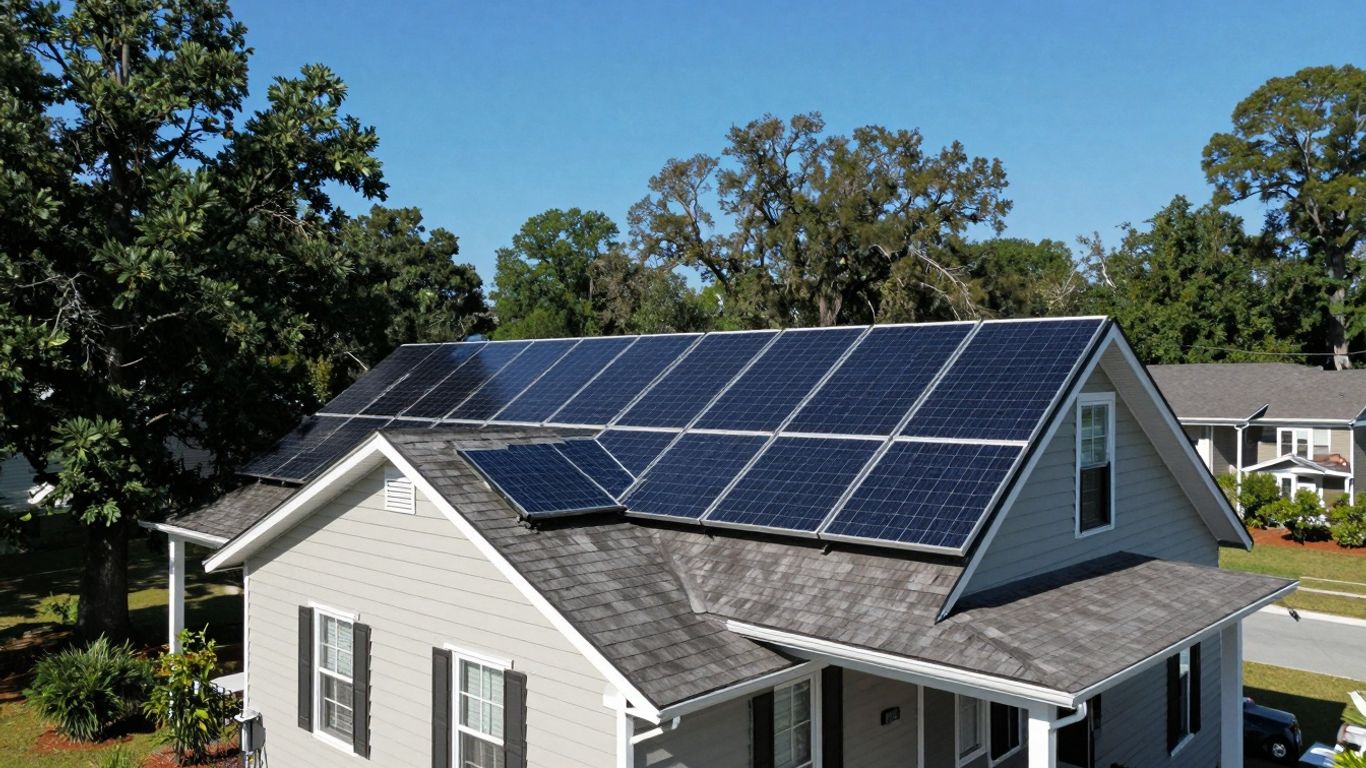
So, you’re thinking about going solar in South Carolina and want to snag that sweet tax credit? Awesome! But before you start dreaming about lower electricity bills, let’s make sure you fit the bill for the state’s solar tax credit. It’s not super complicated, but there are a few key things you need to get right.
System Location And Installation Standards
First off, the solar setup has to be physically located in South Carolina. No out-of-state panels getting you a state tax break, sorry! It needs to be installed on property you own. This could be your main home, a vacation spot, or even your business. The system must also meet all the usual safety, performance, and quality standards that are in place. Think of it like getting a building permit, everything needs to be up to snuff.
New Systems And Warranties
This credit is for new solar energy systems. You can’t claim it for used equipment or systems that have been around for a while. Plus, the system needs to come with a warranty. The state requires it to be at least five years long. This just gives you some peace of mind that the equipment is built to last and the installer stands behind their work.
Permitting And Code Compliance
Just like any construction project, your solar installation needs to follow the rules. You’ll need to have all the necessary permits secured before installation, and the whole setup must comply with local building codes. This ensures everything is installed safely and correctly. Basically, if it’s up to code and permitted, you’re on the right track.
It’s important that the solar system is fully installed and operational within the tax year you plan to claim the credit. This means it’s not just sitting in the garage; it’s actively generating power and connected to your home or business.
Claiming Your South Carolina Solar Tax Credit
So, you’ve decided to go solar in South Carolina. That’s fantastic! Now comes the part where you actually get that sweet, sweet tax credit. It’s not exactly complicated, but you do need to pay attention to the details to make sure you get every dollar you’re entitled to. The key is having all your paperwork in order before you file.
Required State Tax Forms
To claim the South Carolina solar tax credit, you’ll need to fill out a specific form. This is the official way the state knows you’re applying for this particular incentive. The form you’re looking for is South Carolina Form TC-38, officially called the “Solar Energy, Small Hydropower, or Geothermal Tax Credit.” You’ll attach this to your regular state income tax return.
Necessary Supporting Documentation
Just filling out the form isn’t quite enough. The state wants proof that you actually installed a solar system and what it cost you. Think of it like this: you’re showing them the receipts for your solar investment. You’ll need to keep records of:
- Contracts and Invoices: These should detail the total cost of your solar system, including equipment, labor, and any associated fees.
- Permits: Proof that your installation met all local and state requirements.
- System Specifications: Documentation about the solar panels and equipment installed, often including certifications.
- Proof of Payment: Receipts or bank statements showing you paid for the installation.
It’s a good idea to keep copies of everything for your own records, too. You never know when you might need them down the line.
Consulting a Tax Professional
Look, taxes can be tricky, and solar credits add another layer. While you can certainly tackle this on your own, many homeowners find it really helpful to talk to a tax professional, especially one who knows about renewable energy credits. They can make sure you’re filling out Form TC-38 correctly and that you’re not missing any other potential deductions or credits. Plus, it’s an investment in making sure you get the maximum benefit without any headaches.
Annual Limits And Carryforward Provisions
Understanding The Annual Credit Cap
So, you’ve got your solar system all set up and ready to go, and you’re looking forward to those sweet tax credits. But hold on a sec, there’s a limit to how much you can claim each year. For the South Carolina solar tax credit, the amount you can claim is capped at $3,500 annually, or 50% of your total tax liability for that year, whichever number is smaller. This means that even if your system qualifies for a larger credit based on its cost, you won’t be able to take it all in one go if it exceeds these limits. It’s a way to spread out the benefit and also to manage the state’s overall incentive budget. Keep in mind that the statewide annual limit for all taxpayers combined is $2.5 million.
What happens if your solar tax credit is more than what you can use in a single year? That’s where the carryforward provision comes in handy. If you have any unused portion of the credit because of those annual limits, you’re allowed to carry it forward. This means you can apply that leftover credit to your taxes in future years. You’ve got a pretty generous window to do this, up to 10 years. So, if you install a larger system that generates a credit bigger than your annual tax bill or the $3,500 cap, don’t worry about losing out. That credit just rolls over until you can use it up.
Strategic Tax Planning For Larger Systems
Because of these annual caps and the carryforward rules, planning is key, especially if you’re looking at a bigger solar setup. You probably won’t be able to claim the full credit for a large system in just one tax year. Instead, you’ll need to think about how to spread that credit out over several years to get the most benefit. This often involves working closely with your tax advisor. They can help you figure out the best way to time your claims and make sure you’re not missing out on any potential savings. It’s all about making smart moves to maximize your investment in solar energy over the long haul.
Ready to take the next step? South Carolina solar incentives and see your personalized options.
Federal Solar Investment Tax Credit (ITC)
How The Federal ITC Works
So, you’re thinking about going solar in South Carolina? That’s awesome! Besides the state’s own sweet deal, there’s a big federal incentive that can really knock down the cost. It’s called the Federal Solar Investment Tax Credit, or ITC for short. Basically, it lets you subtract a chunk of your solar system’s cost directly from the taxes you owe the government.
[2026 Update: Credit Repealed for Purchases] The Federal Solar ITC (IRC § 25D) was repealed for residential purchases after December 31, 2025 by the One Big Beautiful Bill Act. Historically, homeowners could claim 30% of total installed costs, panels, battery storage, labor, permits, and sales tax. That direct benefit is no longer available to South Carolina homeowners purchasing solar in 2026.
Here’s a quick rundown of how it works:
- It’s a direct credit: This isn’t a deduction that lowers your taxable income; it’s a credit that directly reduces your tax bill. If you owe $5,000 in taxes and have a $4,000 ITC, you’ll only owe $1,000.
- Covers a lot: Think of it as covering the price of the equipment, installation, and all those little fees that add up.
- Long-term availability: The 30% rate is in place for a good while, giving you plenty of time to plan your solar project.
[2026 Update] Despite being extended and improved by the Inflation Reduction Act in 2022, the residential solar ITC (IRC § 25D) was repealed by the One Big Beautiful Bill Act, signed July 4, 2025, for residential purchases after December 31, 2025. South Carolina homeowners buying solar in 2026 cannot claim this credit directly.
Claiming The Federal Credit
Alright, so you’ve got your solar system up and running. How do you actually get that 30% back? It’s done when you file your federal income taxes. You’ll need to fill out a specific form, IRS Form 5695, which is titled “Residential Energy Credits.” You’ll report the total cost of your solar installation on this form, and it will calculate the credit amount for you.
Make sure you keep all your paperwork organized. This includes:
- Invoices from your solar installer.
- Receipts for any equipment purchased.
- Permit documentation.
- Contracts related to the installation.
These documents are your proof if the IRS ever asks for them. If the credit you’re eligible for is more than the taxes you owe for that year, don’t worry. You can carry over the unused portion of the credit to future tax years. This is super helpful if you have a large system or a lower tax liability in a given year. You can typically carry it forward for up to five years, though it’s always a good idea to check the latest IRS guidelines or talk to a tax pro.
Federal Credit Expiration
[2026 Update] The Federal ITC was extended and improved by the Inflation Reduction Act, but it was subsequently repealed for residential purchases by the One Big Beautiful Bill Act (signed July 4, 2025), effective for systems installed after December 31, 2025. After that, the percentage is set to decrease gradually. It will drop to 26% for systems installed in 2023 and then to 22% in 2024, before expiring entirely at the end of 2024. So, if you’re looking to get the maximum 30% federal benefit, it’s wise to get your system installed and operational before the end of 2022. Keep in mind that these dates can sometimes shift with new legislation, so staying informed is key.
Maximizing Your Solar Investment In South Carolina
Combining State And Federal Credits
So, you’re thinking about going solar in South Carolina? That’s great! One of the best ways to make your solar system even more affordable is by stacking the incentives. The South Carolina state solar tax credit is already a pretty sweet deal, but when you combine it with the federal Solar Investment Tax Credit (ITC), you can significantly cut down the upfront cost of your system. It’s like getting a double discount on clean energy. This combination makes solar much more accessible for homeowners and businesses looking to save money and help the environment.
Other Available Solar Incentives
Beyond the state and federal tax credits, keep an eye out for other potential savings. While tax credits reduce your tax bill, there might be other programs or local initiatives that offer direct rebates or grants. Sometimes, utility companies have their own incentives for customers who install solar. It’s worth doing a little digging to see if there are any other programs you qualify for. These can add up and make your solar investment even more attractive.
Long-Term Energy Savings
Going solar isn’t just about the initial savings from tax credits; it’s a long-term investment in your home and your wallet. Once your system is up and running, you’ll start seeing a noticeable drop in your electricity bills. The real magic happens over the lifespan of your solar panels, which can last 25 to 30 years or even longer. Plus, with net metering, any excess electricity your panels generate gets sent back to the grid, earning you credits that further reduce your monthly bills. It’s a smart way to take control of your energy costs and enjoy predictable expenses for decades to come.
Here’s a quick look at how the incentives can stack up:
- South Carolina State Solar Tax Credit: Up to 25% of the system cost.
- Federal Solar Investment Tax Credit (ITC): [Repealed for 2026+ purchases] The 30% residential ITC (IRC § 25D) was repealed by the One Big Beautiful Bill Act for systems installed after December 31, 2025. A solar lease/PPA may still provide indirect savings via the installer’s § 48E commercial ITC.
- Potential Utility or Local Rebates: Varies by provider and location.
Remember that the annual state tax credit has a cap, and any unused portion can be carried forward. This means for larger systems, you might need to spread the credit over a few years. Planning ahead with your tax professional is key to getting the most out of these benefits.
Wrapping It Up: Your Solar Savings in South Carolina
So, there you have it. Going solar in South Carolina looks pretty good, especially with those tax credits. You can knock a good chunk off the price tag with both the federal and state incentives, which really adds up. It might seem like a bit of paperwork, but honestly, saving that much money on your energy costs for years to come? Totally worth it. Just make sure you’ve got all your ducks in a row with the right forms and receipts. If you’re on the fence, now might be the time to look into it seriously. It’s a smart move for your wallet and the planet.
Frequently Asked Questions
What is the South Carolina Solar Tax Credit?
The South Carolina Solar Tax Credit is a program that lets you subtract 25% of the cost of your solar energy system from the taxes you owe to the state. It’s a great way to make solar power more affordable for your home or business.
Who can get the South Carolina Solar Tax Credit?
To qualify, you need to install a new solar energy system in South Carolina on your home or business. The system must meet certain standards, have a warranty, and be properly permitted and installed according to local rules.
How do I claim the South Carolina Solar Tax Credit?
You’ll need to fill out a specific state tax form, called Form TC-38, and send it in with your state tax return. Make sure to keep all your receipts and paperwork for the solar installation, as you’ll need them as proof.
Is there a limit to how much South Carolina Solar Tax Credit I can get?
Yes, there’s a limit. You can claim up to $3,500 each year, or 50% of the taxes you owe, whichever is less. If you have more credit than you can use in one year, you can carry it over to future years for up to 10 years.
Can I use the state solar tax credit with the federal one?
Absolutely! You can combine the South Carolina state tax credit with the Federal Solar Investment Tax Credit (ITC). This can help you save a significant amount, potentially covering over half the cost of your solar system.
When does the South Carolina Solar Tax Credit expire?
Good news! Currently, there’s no set end date for the South Carolina state solar tax credit. This means you can take advantage of it for years to come, though the federal credit has an expiration date.
Ready to Start Saving on Your Energy Bills?
Get a free, no-obligation quote from trusted local providers in under 2 minutes.
No obligation • Free estimates • Takes under 2 minutes
Get a Second Quote for Your South Carolina Home
Installer pricing can vary a lot, even with the same credits available. A second quote gives you a number to compare before those credits are applied.
Loan for Solar Panels: Best Loan Types (and How to Qualify)

Find Out What You’d Actually Be Financing
Qualifying for a loan is easier once you know the real system cost for your roof. A local quote gives you that number before you start comparing loan types.
Disclosure: we may earn a commission if you switch or request a quote through this link, at no extra cost to you. It never changes which plan or company we recommend. How we make money.
Thinking about getting solar panels for your home? That’s awesome! It’s a big step towards saving money and helping the environment. But, let’s be real, those panels aren’t exactly cheap upfront. Luckily, there are a bunch of ways to finance them. You might be wondering, ‘What’s the best loan for solar panels?’ Well, it really depends on where you live and what you qualify for. We’ve rounded up some of the top options out there to help you figure it out.
Key Takeaways
- PACE programs let you pay for solar upgrades through your property taxes, making it easy to add to your home’s value.
- A Home Equity Line of Credit (HELOC) uses your home’s equity as collateral, potentially offering lower interest rates.
- State green banks and energy offices run some of the cheapest solar loans in the country, and most people have never heard of them.
- Credit unions built for clean energy lend larger amounts over longer terms than a bank will, without using your house as collateral.
- There is no federal tax credit for a 2026 purchase, so whatever you borrow is what you pay.
- Lease-to-own and Power Purchase Agreements (PPAs) are alternatives where you don’t own the panels outright but still benefit from solar energy, often with little to no upfront cost.
1. Property-Assessed Clean Energy (PACE) Programs
Check availability first. Residential PACE has shrunk. As of 2026 it runs in California and Florida only. Missouri closed its residential programme in August 2024. If you are not in one of those two states, this route is not open to you and you can move on to the next one.
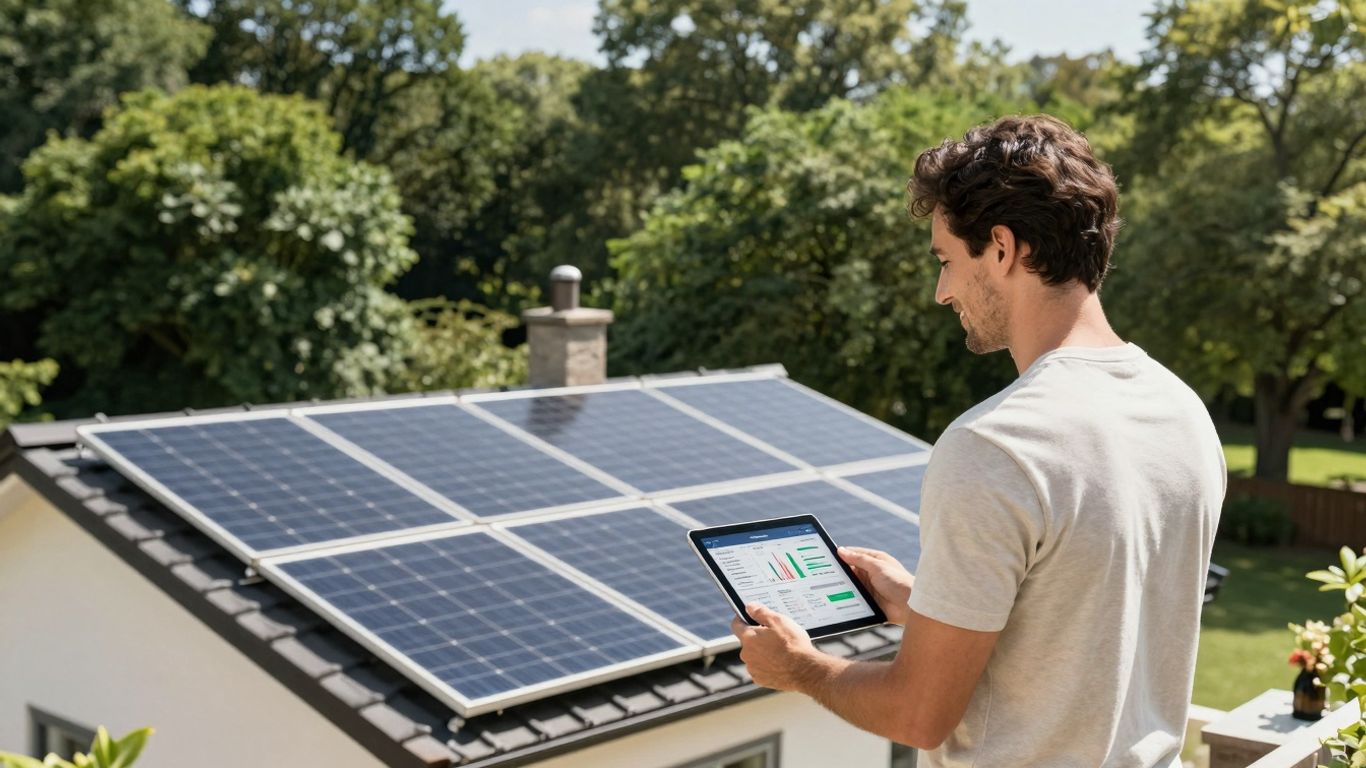
Visualizing How A Solar Panel Loan Can Lead To Net-Positive Monthly Savings Within Five Years.
Property-Assessed Clean Energy, or PACE, programs are a way to finance energy-efficient upgrades, including solar panels, where the cost is added to your property tax bill. This means the loan is tied to the property, not to you personally, which can make it easier to qualify and transfer if you sell your home.
Residential PACE is run at state and county level, and it has contracted rather than spread. Two states offer it in 2026, and within them it still depends on your county having opted in, so confirm before you plan around it.
Credit unions are the other route worth checking alongside municipal programmes. We look at what one national credit union asks for on credit score and membership in our Credit Human review.
Here’s how they generally work:
- Assessment: Your property is assessed to see if it qualifies for the program.
- Installation: You work with an approved contractor to install your solar panels or other eligible upgrades.
- Repayment: The cost of the project is repaid over a set number of years through your regular property tax installments.
- Transferability: If you sell your home, the remaining balance of the PACE assessment can be transferred to the new owner.
Limits and terms vary by programme. Repayment periods commonly run to 20 years and sometimes 30, and the amount you can borrow is usually tied to your property value and existing equity rather than your income. Check the terms with your county assessor or the programme administrator directly, not with the contractor selling you the system.
PACE programs can be a really straightforward way to pay for solar if your municipality offers one. Because the assessment is on the property, it often bypasses some of the stricter credit checks you might face with other types of loans. It’s like making your house pay for its own upgrade over time.
2. Home Equity Line of Credit (HELOC)
A Home Equity Line of Credit, or HELOC, is a flexible loan that lets you borrow against the equity you’ve built up in your home. Think of it like a credit card, but for a much larger amount and secured by your house. You get a credit limit, and you can draw funds as needed, paying interest only on what you use. This can be a good option for solar panel installation if you have a significant amount of equity in your home and want the flexibility to draw funds over time.
The main advantage of a HELOC is its adaptability; you can borrow, repay, and borrow again up to your credit limit. This makes it useful if your solar project has multiple phases or if you want to cover unexpected costs that might pop up during installation.
Here’s a quick look at how it generally works:
- Accessing Funds: You can usually access your HELOC funds through checks, online transfers, or a special card. It’s not a lump sum like a traditional loan.
- Interest Rates: HELOCs often have variable interest rates, meaning they can go up or down based on market conditions. This can be a risk if rates climb significantly.
- Repayment: During a draw period, you might only need to make interest payments. After that, you enter a repayment period where you pay back both principal and interest.
Qualifying for a HELOC typically involves a good credit score, a stable income, and a low debt-to-income ratio. Lenders will also look at how much equity you have in your home, the difference between your home’s value and what you owe on your mortgage. Generally, you’ll need to have at least 20% equity to qualify.
While a HELOC offers great flexibility, remember that your home is collateral. If you can’t make payments, the lender could foreclose on your house. It’s important to have a solid plan for repayment and to only borrow what you’re confident you can pay back.
3. State Green Banks and State Energy Office Loans
These are the cheapest loans most homeowners never find, because they are not advertised by installers. A state green bank borrows at public rates and lends the money on to households, so the rate is usually well below a dealer offer and there is no dealer fee buried in it.
Two examples of how they work:
- Connecticut Green Bank, Smart-E Loan. Up to $50,000, unsecured, no closing costs. Solar is around 6.99% APR over 5 to 10 years, or roughly 7.49% to 7.99% over 12 to 15 years. It is delivered through local credit unions and community lenders, and those partners will look at scores from about 580.
- Michigan Saves. $1,000 to $50,000, unsecured, a fixed rate capped at 7% APR, and terms up to 180 months. You have to use one of their authorised contractors, which is a constraint but also a filter.
Most states have something. The names differ and so do the terms, so search for your own state’s green bank or energy office before you accept any installer’s financing.
4. Clean Energy and Community Credit Unions
Some credit unions exist specifically to lend for clean energy, and they will go further than a bank on both size and term.
Clean Energy Credit Union, as an example, lends up to $125,000 at a fixed rate with terms out to 20 years. Their everyday solar loan starts around 7.50% APR on a 12-year term, 8.00% on 15 years and 8.25% on 20 years, and those figures already include a 2% discount for paying by automatic transfer.
The appeal is that it is unsecured. Your house is not collateral, so a missed payment is a credit problem rather than a foreclosure problem. You will need to join the credit union, which is usually a small one-off step.
5. Cash-Out Refinance
If you have owned your home for a while and mortgage rates have moved in your favour, refinancing for more than you owe and taking the difference in cash can be the cheapest money available. Mortgage rates are normally below any solar loan rate.
Two catches. You are spreading a 25-year asset over a 30-year mortgage, so you may still be paying for the panels after they have been replaced. And closing costs are real, typically a few thousand dollars, so this only makes sense if the rate on the whole loan improves, not just the extra part.
6. Unsecured Personal Loans
Any bank, credit union or online lender will write you a personal loan, and you can spend it on anything. Rates are higher than a green bank or a secured loan, often in the low double digits, and terms are shorter, usually five to seven years.
It is worth having as a comparison anyway. If an installer’s financing costs more than a plain personal loan from your own bank, that tells you exactly how large the dealer fee is.
7. Installer and Dealer Financing
This is what most people are offered, because the installer earns on it. GoodLeap, Mosaic, Dividend and Sunlight Financial are the names you will see on the paperwork.
It is convenient and the approval is quick. The cost is hidden in the price rather than the rate. A headline 2.99% is paid for by a dealer fee, often 15% to 20% of the system, folded into the amount you borrow. You do not see it as a fee, you see it as a bigger number to repay.
The one question that exposes it: ask for the cash price of the same system, in writing. The gap between that and the financed amount is the fee. Then compare that total against a green bank or credit union offer for the cash price.
8. Utility On-Bill Financing
Some electric utilities and rural electric cooperatives will finance efficiency and solar work and collect the repayment through your monthly electricity bill. Rates are often low or zero because the programme exists to reduce demand rather than to earn money.
Availability is patchy and usually depends on your specific utility rather than your state, so it is worth ten minutes on your provider’s website. Read whether the obligation stays with the property or with you when you move.
9. What the End of the Federal Credit Changed
Until the end of 2025 a buyer could treat roughly 30% of the system as money coming back at tax time, and lenders built products around that, including balloon payments due once the credit landed.
Section 25D was repealed for anything installed after 31 December 2025. A homeowner who buys or finances in 2026 gets no federal residential credit. Whatever the quote says, that is the amount you are financing.
Two practical consequences. If a lender still shows a balloon payment you are expected to cover with a tax credit, ask in writing which rule they are relying on. And if a salesperson subtracts 30% from your 2026 quote, they are either out of date or hoping you are.
The credit did not disappear from solar altogether. It moved to whoever owns the system, which is why the next option is worth a closer look than it used to be.
10. Lease-to-Own and Power Purchase Agreements
Sometimes, buying solar panels outright just isn’t in the cards. That’s where lease-to-own and Power Purchase Agreements (PPAs) come in. Think of it like leasing a car, but for your roof. You get the benefits of solar power without the big upfront cost.
With a lease, you pay a fixed monthly fee to use the solar system installed on your property. A PPA is a bit different; you pay for the electricity the panels generate, usually at a set rate. The company that owns the panels handles installation and maintenance, which is a pretty sweet deal.
These agreements typically last between 10 to 25 years. At the end of the term, you usually have a few options: you can buy the system, extend the agreement, or have it removed. It’s important to know what these options are before you sign anything.
Here’s what you should really pay attention to:
- Agreement Length: How long are you locked in?
- End-of-Term Options: What happens when the contract is up? Can you buy it? Extend it?
- Cost vs. Savings: Does the monthly payment make sense compared to how much you expect to save on electricity bills?
- Moving: What happens if you sell your house? Leases aren’t always transferable, so you’ll need to understand the terms for breaking the agreement.
It’s a good idea to have a lawyer or a financial advisor look over any lease or PPA documents before you commit. They can help you spot any tricky clauses or make sure the deal is truly beneficial for you.
Wrapping Up Your Solar Panel Financing Journey
So, getting solar panels for your home is definitely a big step, and figuring out the money part can seem a bit much at first. We’ve looked at different ways to pay for it, from specific government programs to loans you can get from your bank. Remember to check out what’s available in your area, because things like PACE programs or local energy efficiency loans can make a big difference. Don’t forget about options like leases or PPAs if buying outright isn’t in the cards right now, but be sure to read the fine print on those. Ultimately, finding the right loan means looking at interest rates, repayment terms, and what fits your budget best. It might take a little digging, but getting those panels up and running is totally worth it for the long run.
Frequently Asked Questions
What is a PACE program?
PACE stands for Property-Assessed Clean Energy. It’s a way to finance green upgrades like solar panels. The loan is usually paid back through your property taxes, making it easier to manage.
How does a HELOC work for solar panels?
A Home Equity Line of Credit (HELOC) lets you borrow money using the value of your home. You can use this line of credit to pay for solar panels, and you pay it back over time, often with flexible payment options.
What’s the difference between a lease and a Power Purchase Agreement (PPA)?
With a lease, you pay to use the solar panels on your roof. With a PPA, a company installs panels on your property, and you buy the electricity they produce at a set price. Both let you get solar with little to no upfront cost.
Are there loans specifically for energy efficiency upgrades?
Yes! Many places offer special loans for things like solar panels and other energy-saving improvements. These often have lower interest rates and longer payback periods.
How do I qualify for these solar loans?
Qualification usually depends on your credit score, income, and whether you own your home. Some programs might have specific requirements, so it’s good to check with each one.
What happens if I sell my house with a solar loan?
This depends on the loan type. Some loans, like PACE, are tied to the property and transfer to the new owner. Others might need to be paid off when you sell. Always check the loan agreement.
Qualifying is one half of it. The other half is the main solar panel financing options explained, and getting a solar loan from a credit union.
Ready to Start Saving on Your Energy Bills?
Get a free, no-obligation quote from trusted local providers in under 2 minutes.
No obligation • Free estimates • Takes under 2 minutes
Want real quotes before you decide how to pay for it?
A loan only makes sense once you know what the system will actually cost. If your electric bill runs above $150 a month and your roof gets decent sun, a personalized quote gives you real numbers to put into any loan comparison. Quotes are available nationwide.
Recent Posts
- Pennsylvania electricity supplier complaints: How to document, file, and resolve a billing dispute
- What happens when my electricity contract ends in Pennsylvania? A practical guide
- Pennsylvania electricity early termination fees: what to check before canceling your contract
- Power to Choose in Texas: How to compare electricity plans and rates
- How to read your Texas energy bill: A plain-English guide to every charge and fee