North Carolina Solar Incentives: The Honest Post-Tax-Credit 2026 Guide
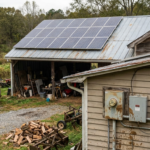
North Carolina solar incentives in 2026 are easier to understand once you separate tax rules, utility billing, and sales claims. Start with your power use and the terms of any quote before you decide whether a system belongs on your roof.
See These North Carolina Incentives Applied to Your Home
Tax rules and utility billing work differently depending on your address. Get a quote that reflects your actual situation before you decide.
Disclosure: we may earn a commission if you switch or request a quote through this link, at no extra cost to you. It never changes which plan or company we recommend. How we make money.
The Hard Truth About North Carolina Solar Incentives in 2026
The incentives that matter are not all paid in the same way. A tax credit affects a tax return, a property-tax rule affects an assessment, and utility export terms affect an electric bill.
Keep those categories separate when you compare proposals. A long list of program names is not a substitute for showing how each item changes your own costs.
The Federal Solar Tax Credit (Section 25D) Has Officially Ended
The Internal Revenue Service says the Residential Clean Energy Credit equals 30% of the cost of new qualified clean-energy property installed from 2022 through December 31, 2025. A system put in service after that date falls outside the time window stated on the IRS page.
You may still find pages that describe a later schedule. The U.S. Department of Energy page says a PV system installed from 2022 through 2032 receives a 30% tax credit, but the IRS page governs the individual tax credit.
For a 2026 purchase, build your budget without a federal residential credit unless tax guidance tied to your situation says otherwise. A sales estimate should not treat an old search result as money already available to you.
EnergizeNC and North Carolina’s “Solar for All” Program Explained
EnergizeNC and the federal Solar for All effort are intended to broaden solar access for low- and moderate-income households. Program eligibility, timing, locations, and the type of assistance can be narrow, so read the active program materials before you include support in a project budget.
This is not the same as an offer for universal no-cost equipment. A legitimate program should identify the administrator, the eligibility rules, the application path, and what happens after any program support is applied.
Active State Benefits: NC Property Tax Abatement for Solar Systems
North Carolina’s property-tax treatment for residential solar is designed to keep a solar improvement from increasing the taxable value of the home. Ask your county tax office how it records the installation and what paperwork it needs, because the local assessment process is where the rule becomes real for your property.
Duke Energy Net Metering and Solar Buyback Rates
Net metering and solar buyback terms determine how your utility accounts for electricity your system sends back to the grid. They can affect the value of surplus generation, especially when your panels produce more power than your building uses at that moment.
Duke Energy’s tariff and program terms, not a salesperson’s summary, should be the starting point for this analysis. Check the current rate schedule, export treatment, billing periods, and equipment requirements before you assume midday exports offset later purchases.
Duke Energy rebates and customer programs can change by service area and enrollment terms. Treat them as separate from net-metering credits, and confirm the active program before adding it to your estimate.
The wider electricity market also changes why bill reduction matters. In a U.S. Energy Information Administration forecast for 2025, national residential electricity prices averaged 16.8 cents per kilowatt-hour, a reminder that your utility rate and usage profile deserve as much attention as panel output.
Exposing “Free Solar Panels” and Financing Traps in North Carolina
A solar pitch can sound simple because it compresses several contracts into one monthly payment. Slow it down, then compare the equipment price, finance charge, expected utility credits, and maintenance responsibilities as separate items.
Why the “Duke Energy Free Solar Panel Program” is a Marketing Myth
“Free panels” usually describes a payment arrangement, a promotion, or an offer that depends on signing another agreement. Panels, labor, financing, and the right to system benefits all have a cost somewhere in the transaction.
An installer’s use of the Duke Energy name does not explain who owns the equipment, who receives export credits, or what you will pay over the term.
Ask for the full contract package before agreeing to anything. It should make clear whether the offer is a purchase, lease, power purchase agreement, or loan, and it should describe the conditions that can change the payment.
Exposing the “1.99% APR” Solar Loan Trap and Hidden Dealer Fees
A low stated annual percentage rate does not settle the cost question. Some solar loans include a dealer fee that is added to the amount borrowed, which can raise the contract price even while the advertised rate looks attractive.
Request two versions of the quote: a cash price for the same equipment and an itemized financed price. Then compare the amount financed, interest rate, payment schedule, total of payments, prepayment terms, and every fee paid to a lender or dealer.
The U.S. Department of Energy says its former tax-credit framework could cut the average rooftop system’s installation cost by more than $7,500. That historical figure is not a reason to bury financing fees in a 2026 proposal.
The ChooseMyPower Strategy: Cut Your NC Power Bill First
Before you buy solar panels, lower the electricity demand that your system would otherwise need to cover. This reduces the risk of paying for capacity that your building no longer needs after basic improvements.
Five Easy Energy Optimization Steps to Shrink Your Energy Waste
Focus first on practical changes that address repeatable waste. They often improve comfort as well as bill control.
- Replace inefficient lighting as bulbs fail, starting with the rooms used most often.
- Use a programmable or smart thermostat schedule that matches when the building is occupied.
- Seal obvious gaps around doors, windows, and utility penetrations.
- Service heating and cooling equipment so it can move air and manage temperature as intended.
- Turn off or control idle electronics and review large loads such as water heating, laundry, and pool equipment.
Measure the effect through your bills or interval data before you size a system. A single month tells little, while a full seasonal record shows the loads a solar design must address.
Stop Installer Overbuilding: Right-Size and Save Thousands
Right-sizing means matching anticipated production to the electricity you expect to use after efficiency work, not simply covering the highest bill you have ever received. It also means recognizing that export compensation may differ from the rate you pay when you draw electricity from the grid.
Ask the installer to provide the proposed system size, annual production estimate, assumptions about roof orientation and shade, and the expected treatment of surplus electricity. Compare that model with a second design based on your reduced usage, and ask why the larger system adds value.
Estimate Your Real Post-Credit North Carolina Solar Savings
Start with a clean baseline: the electricity you buy now, the rates and fees on your bill, and the changes you expect after efficiency work. Then compare a cash solar price with a solar loan offer using the full financed amount instead of the advertised payment alone.
Model production conservatively using the roof’s direction, shade, usable area, and local weather. Match it against Duke Energy’s current billing and export rules, then add program benefits only after you confirm eligibility and written terms.
Finally, review the ownership structure. A purchase, financed purchase, lease, and power purchase agreement can allocate payments, utility credits, maintenance, and property rights in very different ways.
The best solar decision is one you can explain line by line: what you pay, what your utility credits, and which assumptions have to hold for the system to meet your goal. Before you compare solar proposals, compare electricity plans to see whether a better power plan can lower the bill you are trying to solve.
FAQ
Is the 30% federal solar tax credit still active in North Carolina for 2026?
The Internal Revenue Service states that the Residential Clean Energy Credit covers qualified property installed through December 31, 2025. A 2026 budget should not add the credit unless tax guidance for your facts supports it.
Can I get free solar panels through Duke Energy in NC?
Read any such offer as a contract proposal, not a description of equipment with no cost. Confirm the seller’s relationship to Duke Energy, the ownership structure, and every payment obligation in writing.
How does the NC property tax abatement work for residential solar?
The state property-tax treatment is intended to prevent a residential solar improvement from raising taxable home value. Your county tax office can confirm how the installation should be recorded.
How do I spot hidden dealer fees in my North Carolina solar quote?
Ask for an itemized cash price and a separate financed price for identical equipment. Compare the financed amount with the cash price, then inspect every lender, dealer, and prepayment term.
What efficiency upgrades should I make before sizing a solar system?
Address lighting, thermostat schedules, air leaks, heating and cooling maintenance, and controllable large loads first. Use the resulting bills to guide a solar size estimate.
Own Your North Carolina Home
Homeowners can request information on home energy financing programs as another way to plan the cost. It is only a request, not a purchase.
Recent Posts
- Pennsylvania electricity supplier complaints: How to document, file, and resolve a billing dispute
- What happens when my electricity contract ends in Pennsylvania? A practical guide
- Pennsylvania electricity early termination fees: what to check before canceling your contract
- Power to Choose in Texas: How to compare electricity plans and rates
- How to read your Texas energy bill: A plain-English guide to every charge and fee