Net Metering 3.0: The Honest Post-Tax-Credit 2026 Guide
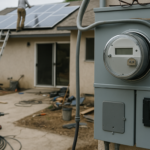
Net Metering 3.0 changed solar math in California. A solar-only quote that once looked simple can now leave too much daytime production going back to the grid for far less value than the electricity you later buy.
See How Net Metering 3.0 Affects Your Bill
Export values changed, so the math that worked a few years ago may not apply to your roof anymore. Get a quote that accounts for the current rules.
Disclosure: we may earn a commission if you switch or request a quote through this link, at no extra cost to you. It never changes which plan or company we recommend. How we make money.
The practical question is no longer how many panels fit. It is how much power your building uses, when it uses it, what you can shift, and whether storage earns its place in the plan.
What is Net Metering 3.0 (and Why It Ruined Traditional Solar Economics)
For customers of PG&E, Southern California Edison, and San Diego Gas & Electric, Net Energy Metering 3.0 moves new solar customers to the Net Billing Tariff. You still receive compensation when your system sends electricity to the grid, but the value of those exports is no longer treated like a simple retail-rate offset.
That distinction changes how you should read a proposal. The reduced value of daytime exports means a large surplus can be less valuable than using that electricity in your home or holding it for the evening.
The Death of the 1-to-1 Export Credit in California
Under the older mental model, a kilowatthour sent out during the day could be thought of as a close stand-in for a kilowatthour bought later. NEM 3.0 breaks that assumption because export compensation varies by time, while retail charges and household demand follow a different pattern.
This is why a production estimate alone is incomplete. Ask for an hourly view that shows expected generation, your load, battery charging and discharging, grid imports, and grid exports across representative seasons.
Why Solar Without a Battery No Longer Makes Sense Under NEM 3.0
A battery can capture a portion of the midday solar that would otherwise be exported, then serve your home when solar output falls and your demand remains. That raises self-consumption, which is central to the NEM 3.0 calculation.
That does not make every battery size sensible. Storage has a cost, a usable capacity, a power limit, and operating losses, so the value comes from matching its use to your actual load rather than adding the largest unit offered.
Solar without storage can still be technically workable. It calls for a tougher review of your load timing, export assumptions, and the price difference between the smaller system and the solar-plus-battery alternative.
The Brutal 2026 Reality: High Battery Costs Meet No Federal Tax Credit
Battery storage can improve how solar works under NEM 3.0, yet it also turns a panel quote into a more complex financing decision. Evaluate the equipment price, cash price, loan principal, total repayment, expected operating role, and any local or utility program separately.
The federal credit also belongs in the timing discussion. The answer for a system placed in service after the eligibility period is different from the answer a salesperson might have given under earlier rules.
The Federal Solar Tax Credit (Section 25D) Has Officially Ended
The Internal Revenue Service states that the Residential Clean Energy Credit equaled 30% of the cost of new qualified home clean-energy property installed from 2022 through December 31, 2025. For a new system placed in service in 2026, build the comparison from the full purchase cost rather than reducing it by a federal residential credit.
The U.S. Department of Energy solar tax credit overview describes an earlier federal schedule. For current homeowner eligibility, use the IRS page because the agency administers the credit.
State, local, and utility programs use their own rules and deadlines. Verify the program administrator, eligible equipment, application timing, and whether a benefit is available before you treat it as part of the system’s economics.
How to Spot Installer “Low APR” Loan Traps and Hidden Dealer Fees on Batteries
A low stated annual percentage rate does not tell you the whole financing cost. A loan can include a dealer fee in the principal, which can make the financed price much higher than the cash price for the same equipment.
Request two proposals built from identical equipment and scope: one cash proposal and one loan proposal. Each should list the equipment, installation, permits, main-panel work if needed, battery capacity, warranties, lender name, principal, payment schedule, term, total of payments, and every fee.
- Compare the cash price with the loan principal before you look at the monthly payment.
- Ask whether the stated rate applies to the full principal after dealer fees are added.
- Check whether a payment assumption depends on a tax credit or incentive that your installation date cannot use.
- Keep a copy of the final scope so a smaller battery, fewer panels, or excluded electrical work does not appear after signing.
The ChooseMyPower Strategy: Defeat NEM 3.0 by Cutting Waste First
The least expensive solar production is often the electricity your home no longer needs. Reducing waste before sizing equipment can lower both the energy target and the battery duty required after sunset.
Start with bills, interval data when available, and a walkthrough of the building. Then use a solar proposal to meet the improved load, not last year’s avoidable consumption.
Five Easy Efficiency Steps to Trim 10 to 15% Off Your Power Bill First
Use the heading as a prompt to investigate your own load, because the effect of each measure depends on the building, climate, equipment condition, and daily habits. The objective is simple: remove persistent waste before you buy equipment designed to cover it.
- Replace frequently used inefficient lighting with LEDs and use controls where rooms are often empty.
- Turn off or schedule standby loads such as entertainment equipment, office devices, and chargers that run continuously.
- Set a thermostat schedule that matches occupancy, then check whether heating or cooling runs when no one is home.
- Seal obvious gaps around doors, windows, ducts, and penetrations after checking for moisture or ventilation issues.
- When major heating, cooling, or water-heating equipment reaches replacement time, compare efficient electric options with the demand profile they create.
Stop Installer Overbuilding: Right-Size Your Battery and Solar Array to Save Thousands
Right-sizing begins with what you want the system to do. A battery intended to shift solar into the evening has a different design target from a battery intended to carry selected loads during an outage.
Give each bidder the same recent usage history and the same written priorities. Ask for a base case, a smaller alternative, and a larger alternative, with assumptions for self-consumption, exports, grid purchases, usable battery capacity, and future load changes clearly separated.
Do not treat panel count as a scorecard. An oversized array may create more low-value exports, while an oversized battery may sit underused; a better fit can preserve capital for roof work, electrical upgrades, efficiency, or other needs.
Calculate Your Real 2026 California Solar Savings Unbiasedly
Use a comparison that starts with your own rate plan, historical usage, roof conditions, and expected schedule. Model at least one case with solar only and one case with storage, then make the export assumptions visible instead of burying them in a single savings total.
Review the result against current bills, not a national average. The U.S. Energy Information Administration projected a U.S. residential electricity price of 16.8 cents per kilowatthour for 2025, but a California bill depends on the tariff, utility territory, usage timing, and fixed charges that apply to you.
For each case, inspect the cash price, financing cost, expected production, energy use, export value, battery pattern, and any confirmed program benefit. Clear inputs let you judge the tradeoff without handing the decision to a sales projection.
When you are ready to compare the electricity side of the decision, use ChooseMyPower’s plan comparison to review available plan options for your area.
FAQ
How much does NEM 3.0 actually pay California homeowners for exported solar energy?
Export compensation depends on the applicable tariff and the time electricity reaches the grid. Review the hourly export assumptions in a proposal against your utility’s current Net Billing Tariff materials.
Do California homeowners still get a federal tax credit for solar and batteries in 2026?
The Internal Revenue Service limits the stated Residential Clean Energy Credit period to qualified property installed through December 31, 2025. Price a new 2026 installation without that federal residential credit.
Can I install solar panels without a battery under Net Metering 3.0?
Yes, but the economics depend more heavily on how much solar you use as it is generated and how much you export. Compare a solar-only case with a storage case using the same load and tariff assumptions.
How do I check if my solar and battery quote contains hidden dealer fees?
Ask for the cash price and a full loan disclosure that identifies the principal, term, total of payments, lender, and every fee. Compare that full loan amount with the cash proposal for the same scope.
What home efficiency upgrades shrink my future solar and battery size the most?
Focus on recurring loads shown by your bills and interval data, especially cooling, heating, water heating, lighting, and always-on devices. Fixing unnecessary consumption before design gives the system a smaller and clearer job.
Homeowner Rethinking Your Solar Plan
If you own your home, you can request information on home energy financing programs to compare against other options. This is a request, not a purchase.
Recent Posts
- Pennsylvania electricity supplier complaints: How to document, file, and resolve a billing dispute
- What happens when my electricity contract ends in Pennsylvania? A practical guide
- Pennsylvania electricity early termination fees: what to check before canceling your contract
- Power to Choose in Texas: How to compare electricity plans and rates
- How to read your Texas energy bill: A plain-English guide to every charge and fee