blogs
New Mexico Solar Tax Credit: Incentives, Eligibility & How to Claim

See What Solar Costs at Your New Mexico Address
New Mexico offers state incentives on top of the federal tax credit. A local quote shows the real starting price for your home before those numbers are applied.
Disclosure: we may earn a commission if you switch or request a quote through this link, at no extra cost to you. It never changes which plan or company we recommend. How we make money.
Thinking about getting solar panels in New Mexico? That’s great! The Land of Enchantment has some pretty sweet deals to help you out. You can actually save a good chunk of money thanks to different tax credits and exemptions. It’s not just about saving the planet; it’s about saving your wallet too. Let’s break down how you can take advantage of the New Mexico solar tax credit and other benefits.
Key Takeaways
- New Mexico offers a state solar tax credit, the New Solar Market Development Tax Credit (NSMDTC), which can reduce your tax payment by up to 10% of the system cost, capped at $6,000.
- [2026 Update] The 30% federal Residential Clean Energy Tax Credit (IRC § 25D) was repealed by the One Big Beautiful Bill Act (signed July 4, 2025). New Mexico homeowners who purchase solar after December 31, 2025 are no longer eligible. A lease or PPA still offers indirect savings via the installer’s § 48E commercial ITC. See the update box below for details.
- New Mexico provides a sales tax exemption on solar equipment, meaning you don’t pay state sales tax on those purchases.
- Your property taxes won’t go up just because you installed solar panels; the added value from the system is excluded from property tax assessments.
- To claim the New Mexico solar tax credit, you’ll need to purchase and install a system, get it inspected and certified, and then apply through the Energy, Minerals and Natural Resources Department before filing with the Taxation and Revenue Department.
⚠️ 2026 Update: Federal Solar Tax Credit Repealed for Purchases
The 30% federal Residential Clean Energy Tax Credit (IRC § 25D) was repealed by the One Big Beautiful Bill Act, signed July 4, 2025. If you purchase a solar system outright (cash or loan) after December 31, 2025, you are no longer eligible for this federal credit. It wasn’t phased out gradually; it was repealed outright for new residential purchases.
Is there still a federal solar benefit in 2026? Yes, indirectly, through a lease or Power Purchase Agreement (PPA). The installer can still claim the § 48E commercial Investment Tax Credit (30%) and typically passes those savings to you through lower monthly rates, often 20 to 40% below your current utility rate, with no money down. Just keep in mind that with a lease/PPA you won’t own the system, so state tax credits and property tax exemptions that require ownership won’t apply to you.
For most New Mexico homeowners buying solar in 2026, the real incentives are the state-level programs outlined below.
Understanding The New Mexico Solar Tax Credit
The New Solar Market Development Tax Credit
New Mexico offers a pretty sweet deal for folks looking to go solar with its New Solar Market Development Tax Credit (NSMDTC). This credit is designed to help lower your state income tax bill when you install a solar thermal or solar photovoltaic system. It can cover up to 10% of the cost of buying and installing your system, but there’s a cap of $6,000 per taxpayer each year. So, if you’re thinking about putting solar panels on your house, business, or even your farm, this is definitely something to look into.
To qualify for this credit, you need to be a taxpayer in New Mexico, not claimed as a dependent by someone else, and the solar system must have been installed on property you own. The clock starts ticking on March 1, 2020, which is when this particular credit went into effect. It’s a great way for the state to encourage cleaner energy use.
The federal credit has gone. Your New Mexico incentives have not.
The 30% federal solar credit ended on 31 December 2025, so a system you buy or finance in 2026 does not qualify for it. New Mexico’s own incentives still apply, and they are what a 2026 quote should be built on. A lease or PPA is the one route that still carries the federal credit, because the solar company owns the system and claims it.
Eligibility For The State Solar Tax Credit
So, who gets to take advantage of this New Mexico solar tax credit? Pretty much anyone who buys and installs a solar system on their property in the state. This includes homeowners, businesses, and even agricultural operations. The main things to remember are:
- You must be a New Mexico taxpayer and not someone else’s dependent.
- The solar system (either thermal or photovoltaic) needs to be installed on property you own.
- The installation date must be on or after March 1, 2020.
It’s important to note that the year you can claim the credit is the year your system passes its final inspection by the local building code authority. This usually happens after the system is fully installed and operational.
Claiming The New Mexico Solar Tax Credit
Claiming the New Mexico solar tax credit involves a few steps, and it’s mostly handled electronically these days. Your solar installer will likely play a big role in getting the ball rolling.
- Purchase and Install: First things first, you need to buy and install your solar energy system.
- Get Your Paperwork: Your contractor will provide you with the necessary documents, which usually include invoices for equipment and labor, and details about the system.
- Apply for Eligibility: You, or more commonly your installer, will submit an application to the New Mexico Energy, Minerals and Natural Resources Department (EMNRD). This is where they check if your system meets the requirements.
- Receive Your Certificate: If your application is approved, EMNRD will send you a Certificate of Eligibility. This is the golden ticket!
- File Your Taxes: Finally, you’ll use this certificate when you file your New Mexico state income taxes with the Taxation and Revenue Department to claim your credit.
Applications are processed on a first-come, first-served basis, so it’s a good idea to get your paperwork in order promptly after installation. You’ll typically get a notice that your application has been received, and then the certificate usually arrives via email within a few weeks.
Keep in mind that not all costs associated with going solar are eligible for the tax credit. Things like your own unpaid labor, costs for unrelated property improvements, research, or financing fees won’t count towards the credit amount. It’s all about the direct costs of the solar system itself.
Leveraging Federal Solar Incentives
The Residential Clean Energy Credit
When you’re looking at the big picture of making your home solar-powered, don’t forget about what the federal government offers. The main federal incentive for homeowners is called the Residential Clean Energy Credit. Think of it as a thank you from Uncle Sam for going green. This credit lets you deduct a significant portion of your solar system’s cost directly from your federal taxes. It’s designed to encourage more people to adopt clean energy, which is a win-win for everyone.
Federal Tax Credit Limits And Future Changes
The good news is that for the most part, there isn’t a cap on how much you can claim with the Residential Clean Energy Credit. The percentage you can claim has been pretty steady, but it’s good to know about potential changes. For installations completed before January 1, 2026, the credit was 30% of system cost. This credit was repealed for installations after that date. After that, the percentage is scheduled to decrease.
Here’s a quick look at the planned changes:
- 2024 to 2025 (historical): 30% of the system cost, last year this was available for residential purchases
- 2026 onwards (repealed): No federal credit available for residential solar purchases. Repealed by the One Big Beautiful Bill Act, signed July 4, 2025.
It’s always a smart move to install your system sooner rather than later to get the most benefit.
How The Federal Solar Tax Credit Works
Claiming the federal solar tax credit is pretty straightforward, but it does involve a specific tax form. You’ll need to fill out IRS Form 5695, which is specifically for residential energy credits. This form will help you calculate the exact amount you can deduct. Once you’ve completed it, you’ll attach it to your annual federal income tax return, typically Form 1040. Your tax preparer will be familiar with this process, but it’s good to be aware of the steps involved. It’s not a rebate that you get back in cash right away; it’s a reduction in the amount of tax you owe for the year.
Remember, this federal credit applies to the costs associated with your solar energy system, including the panels, inverters, and installation labor. Make sure you keep all your receipts and documentation from your installer.
Additional New Mexico Solar Benefits
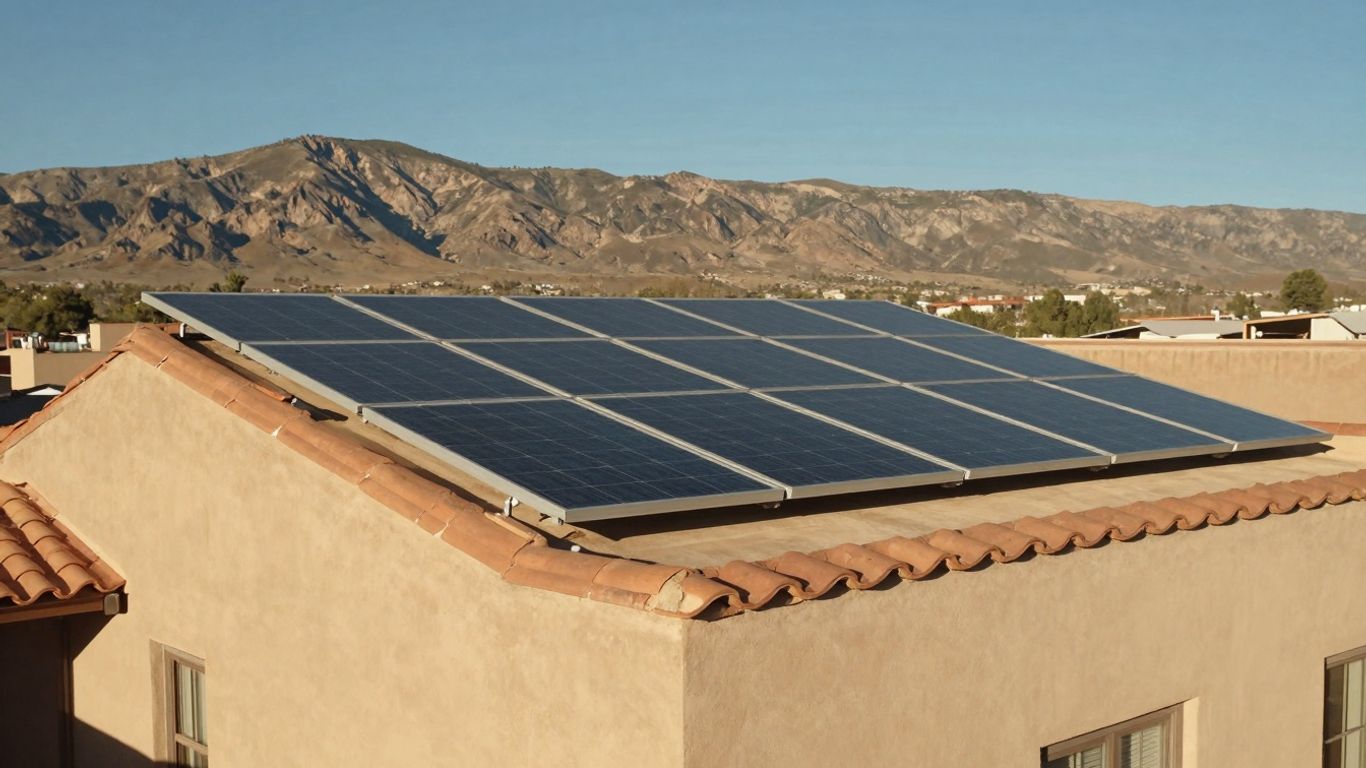
Access Your 10% State Incentive With The New Mexico Solar Tax Credit Program.
New Mexico Sales Tax Exemption For Solar
When you’re looking at the total cost of going solar, every little bit saved adds up. One of the nice perks in New Mexico is that you don’t have to pay state sales tax on solar equipment. This means you can save a good chunk of money right off the bat, as the state’s sales tax rate is 5%. So, if you’re buying a system that costs, say, $20,000, that’s an extra $1,000 you get to keep in your pocket. It’s a straightforward way the state encourages people to adopt solar energy.
Property Tax Exemption For Solar Installations
This one’s a big deal for homeowners. Usually, when you make improvements to your home, like adding a solar panel system, your property taxes might go up because your home’s value increases. However, New Mexico has a law that says the added value from a solar installation doesn’t count towards your property taxes. So, even though your home is now worth more thanks to your solar panels, you won’t see a jump in your property tax bill because of it. This exemption helps ensure that the investment you make in solar doesn’t lead to higher ongoing homeownership costs.
Sustainable Building Tax Credit Overview
Beyond the direct solar tax credits, New Mexico also offers a tax credit for building sustainably. If your home meets certain green building standards, and solar is a big part of that, you might be eligible for this credit. The amount can vary based on the size of your property and how it’s certified. It’s a way to reward homeowners who are committed to making their entire home as energy-efficient and environmentally friendly as possible. To qualify, your home typically needs to be certified by a recognized green building organization.
- Certification Process: Your home needs to be certified by a group like the U.S. Green Building Council.
- Credit Amount: The credit can be as much as $6.50 per square foot of your property.
- Eligibility: This credit is for homes built or significantly renovated with sustainable practices, including solar energy systems.
It’s worth looking into how your solar installation fits into the broader picture of sustainable building practices in New Mexico. Sometimes, combining different incentives can lead to even greater savings over time.
Key Steps To Claim Your New Mexico Solar Tax Credit
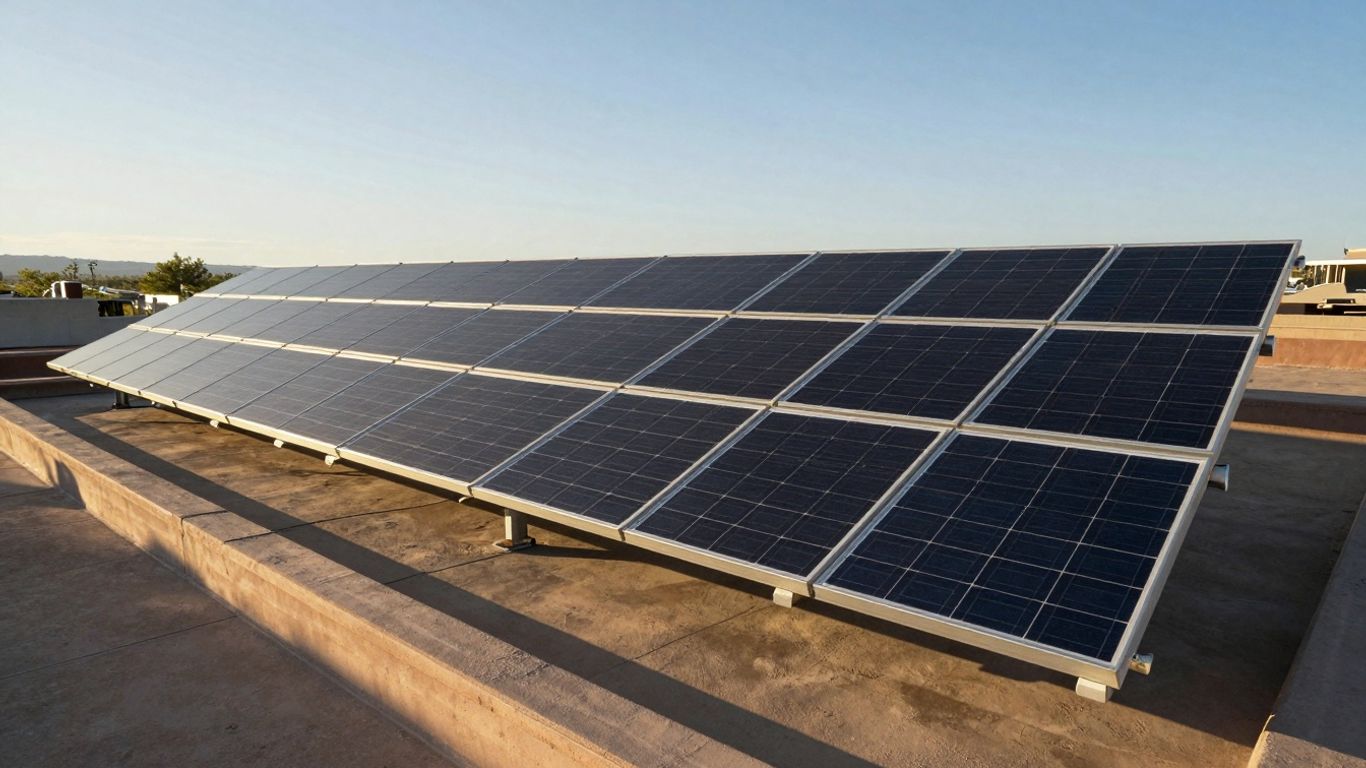
Maximizing Energy Efficiency And Savings With The New Mexco Solar Tax Credit.
So, you’ve decided to go solar in New Mexico, awesome! Now comes the part where you actually get that sweet tax credit. It’s not exactly complicated, but you do need to follow a few steps to make sure you get your money back. Think of it like assembling furniture; you gotta read the instructions.
Purchasing And Installing Your Solar System
First things first, you need to actually buy and install a solar energy system. This means getting the panels, the inverter, and all that jazz put onto your property. It needs to be an operating system, or at least really close to being done. The state wants to see that you’ve made a real investment here. This is the foundation for everything else, so make sure you’re working with a reputable installer.
Ready to take the next step? New Mexico solar rebates and see your personalized options.
Gathering Required Documentation
This is where things can get a little tedious, but it’s super important. You’ll need a bunch of paperwork from your installer. This usually includes things like:
- Itemized invoices showing the cost of equipment, materials, and labor.
- A report from the building code authority confirming a successful inspection of your system.
- Technical specifications for your solar setup.
- A statement of understanding from your contractor.
Keep all of this organized; it’s going to be your golden ticket.
Submitting Your Application For Eligibility
Once you have all your documents, you’ll need to apply for the tax credit itself. This isn’t done with the tax department just yet. You’ll submit your application electronically to the Energy, Minerals and Natural Resources Department (EMNRD). They’re the ones who will review your paperwork and decide if your system is eligible for the credit. If everything checks out, they’ll send you a certificate of eligibility. This certificate is proof that you qualify for the state tax credit.
Filing With The Taxation And Revenue Department
With your certificate of eligibility in hand, you’re ready for the final step: filing your taxes. You’ll need to report this credit to the New Mexico Taxation and Revenue Department. Your tax preparer will know exactly which forms to use, but generally, you’ll be attaching this information to your state tax return. For the federal credit, you’ll use IRS Form 5695, Residential Energy Credits, when you file your federal taxes. It’s a good idea to have your tax professional guide you through this part to make sure you claim the full amount you’re entitled to.
Remember, the year your system passes its final inspection is the year it’s considered installed for tax credit purposes. So, pay attention to those inspection dates!
It’s a multi-step process, for sure, but totally doable. Just stay on top of your paperwork and follow the instructions from the state agencies. You’ll be enjoying those savings before you know it.
Important Considerations For Solar Tax Credits
Eligible Costs For The Solar Tax Credit
When you’re figuring out how much you can claim for the New Mexico solar tax credit, it’s not just about the price tag of the panels. The state looks at the whole system. This generally includes things like the solar panels themselves, the inverters that convert the power, any battery storage you install, and all the necessary wiring. Even some special roof tiles that generate electricity can count. However, don’t expect to claim costs for things that aren’t directly part of the solar setup. For instance, if you have to reinforce your roof to handle the weight of the panels, that structural work probably won’t be eligible. Also, keep in mind that any costs you didn’t pay for, like if a part of the system was donated, or expenses for things like research or financing, won’t count towards the credit. It’s all about the direct costs of the solar energy system itself.
Understanding Certification And Inspection
Getting your solar system officially recognized is a big step before you can claim any tax credits. In New Mexico, the date your system is considered ‘installed’ for tax credit purposes is usually the date when a local building authority gives it an approved inspection. This means your system needs to meet all the local building codes and safety standards. Your installer will typically handle scheduling this inspection. Once it passes, you’ll get a certification or approval document. This is super important because it’s often the key piece of evidence you’ll need to show the state that your system is up and running correctly and qualifies for the credit. Without this official sign-off, you might run into trouble when you try to claim your tax savings.
Transferability Of The New Mexico Credit
Here’s something interesting about the New Mexico solar tax credit: it can sometimes be transferred to someone else. This isn’t something most homeowners do, but it’s a possibility, especially in business situations. The law allows for this credit to be sold or transferred. While the state has an overall annual cap on the total credits it will issue, which is $12 million, it’s pretty rare for that limit to be reached. This transferability feature is more of a safeguard for the state’s budget than something most individuals will utilize. For the average homeowner, the focus will be on claiming the credit directly for their own tax liability.
Applying for solar tax credits can feel like a puzzle, with different pieces for federal and state incentives. It’s easy to get lost in the paperwork and deadlines. Taking the time to understand exactly what costs are covered and what official approvals you need can save you a lot of headaches later on. Don’t just assume everything related to your solar project is eligible; double-check the specifics.
Wrapping It Up
So, if you’re thinking about putting solar panels on your New Mexico home in 2026, there’s still a solid case for going solar, but the incentive picture has changed. The 30% federal residential tax credit (IRC § 25D) was repealed for purchases after December 31, 2025. However, New Mexico still offers its own state tax credit, plus sales tax exemptions on equipment, and if you choose a lease or PPA, the installer’s § 48E commercial ITC passes savings to you through lower monthly rates. Make sure you keep all your paperwork and understand which incentives apply to your specific situation (purchased vs. leased system).
Frequently Asked Questions
What is the New Mexico Solar Tax Credit?
The New Mexico Solar Market Development Tax Credit (SMDTC) is a state program that helps lower the cost of installing solar power for your home or business. It can reduce your state tax bill by up to 10% of the system’s cost, but not more than $6,000.
Who can get the New Mexico Solar Tax Credit?
You can get this credit if you own the property where you install a solar energy system. This applies to homes, businesses, and farms. You need to have purchased and installed the system after March 1, 2020, and it must be certified by the state after an inspection.
How much money can I get from the state solar tax credit?
The credit is for 10% of the total cost of your solar system, including equipment and installation. However, there’s a limit of $6,000 per year for each taxpayer. So, you’ll get the smaller amount between 10% of the cost and $6,000.
Do I also get a federal tax credit for solar panels?
Yes, absolutely! [2026 Update] The federal Residential Clean Energy Credit (IRC § 25D) was repealed for systems installed after December 31, 2025 by the One Big Beautiful Bill Act. If you’re purchasing solar in 2026, you can’t claim this federal credit directly. However, going with a lease or PPA means the installer can claim the § 48E commercial ITC and pass savings to you through lower monthly rates.
What documents do I need to claim the solar tax credit?
You’ll need proof of owning the property, bills showing the cost of equipment and labor, a report from the building inspection, and technical details about your system. Your solar installer will help you gather most of these important papers.
Can I get free solar panels in New Mexico?
While you can’t get completely free solar panels, New Mexico offers several ways to significantly lower the cost. You can use the state solar tax credit, the federal solar tax credit, and you also don’t have to pay sales tax on solar equipment, which saves you even more money.
Ready to Start Saving on Your Energy Bills?
Get a free, no-obligation quote from trusted local providers in under 2 minutes.
No obligation • Free estimates • Takes under 2 minutes
Get a Second Quote for Your New Mexico Home
Installer pricing can vary a lot, even with the same incentives available. A second quote gives you a number to compare before those incentives are applied.
Dividend Solar Loan Review: Rates, Terms, Fees & Alternatives
See If a Dividend Loan Fits Your System
Dividend’s rates and fees only make sense once you know what your system would cost. A local quote gives you that number before you apply anywhere.
Disclosure: we may earn a commission if you switch or request a quote through this link, at no extra cost to you. It never changes which plan or company we recommend. How we make money.
Thinking about getting solar panels for your home? It’s a big step, and figuring out how to pay for it can be confusing. One option you might see is a dividend solar loan. This review breaks down what you need to know about these loans, including how they work, what to watch out for, and how they stack up against other ways to finance your solar project. We’ll cover the details so you can make a good choice for your budget and your home.
Key Takeaways
- Dividend’s Empower Loan is a solar loan option that requires no down payment and allows financing up to $120,000, needing a credit score of at least 660. Loan terms are typically 12 or 20 years.
- While Dividend advertises a network of installers and automated payments, some customers report issues with system functionality and loan transferability when selling their homes.
- Dividend solar loans are secured by the solar system itself, meaning the lender has a claim on the equipment if payments aren’t made. This is different from unsecured loans offered by some other lenders.
- Alternatives like Energy Loan Network (ELN) and LightStream offer different loan structures, rates, and credit score requirements, with ELN often working through credit unions for potentially better rates.
- When considering any dividend solar loan, it’s important to look closely at all fees, understand the total cost over the loan term, and compare it with other financing methods like personal loans or home equity lines of credit.
Understanding Dividend Solar Loan Options
When you’re looking into financing for a solar panel system, Dividend Solar presents a specific loan product called the EmpowerLoan. It’s designed to make going solar more accessible, especially if you don’t have a lot of cash saved up for a down payment.
Dividend’s Empower Loan Details
The Empower Loan is a secured loan, meaning it’s backed by the solar system itself. This often helps in getting approved and can sometimes lead to better terms. A big plus is that it typically requires zero down payment, which is a huge hurdle removed for many homeowners wanting to switch to solar. Dividend works with a large network of installers, and they often present this financing option directly during the quoting process. You can get loan amounts up to $120,000, which should cover most residential solar installations. They aim for a straightforward online process, so you can get a credit decision quickly.
Loan Amounts and Credit Score Requirements
As mentioned, you can borrow up to $120,000 with the Empower Loan. This is a pretty substantial amount, covering a wide range of system sizes and costs. However, to qualify, you’ll generally need a minimum credit score of 660. This isn’t the absolute highest requirement out there, but it does mean that if your credit is significantly lower, you might need to explore other options or work on improving your score first. It’s always a good idea to check your credit report before applying to see where you stand.
Interest Rates and Repayment Terms
Interest rates with Dividend can vary. They typically fall somewhere between 3.49% and 6.99%, but this depends heavily on your credit history and the specific installer you work with. The loan terms are usually either 12 or 20 years. A 12-year term means higher monthly payments but less interest paid overall. A 20-year term lowers your monthly payment, making it more budget-friendly month-to-month, but you’ll end up paying more in interest over the life of the loan. It’s a trade-off between immediate affordability and long-term cost.
Choosing the right loan term is a balancing act. Shorter terms mean you pay off the system faster and pay less interest, but your monthly payments will be higher. Longer terms make the monthly payments easier on your wallet, but the total interest paid over the years adds up significantly. Think about your current budget and how much you’re comfortable paying each month versus how much you want to save on interest in the long run.
Dividend Solar Loan Features and Benefits
Zero Down Payment Options
One of the biggest hurdles for many homeowners looking to go solar is the upfront cost. Dividend aims to make solar ownership more accessible by offering what they call the “EmpowerLoan.” This loan structure often means you don’t have to put any money down to get your solar system installed. It’s a pretty sweet deal because it removes that initial financial barrier, letting you start saving on electricity bills right away without a large cash outlay. This can be a game-changer for families trying to manage their budgets while also wanting to invest in renewable energy.
Accredited Installer Network
Dividend doesn’t install solar panels themselves. Instead, they work with a network of solar installation companies. They vet these installers, so you’re generally working with professionals who have met certain standards. This network is pretty extensive, covering many states. Having a list of approved installers means you don’t have to search far and wide for someone qualified to do the job. They’ve already done some of the legwork for you, connecting you with businesses that can handle the installation process.
Automated Payments and No Prepayment Penalties
When it comes to paying back your loan, Dividend makes it pretty straightforward. They typically set up automated payments from your bank account. This means you don’t have to remember to write a check or log in every month. It just happens. It’s a nice way to avoid late fees and keep your loan in good standing without much effort. Plus, if you decide you want to pay off your loan early, you generally won’t get hit with any extra charges. This “no prepayment penalty” clause gives you flexibility. If you get a bonus at work or just have some extra cash, you can put it towards your loan and save on future interest payments without worrying about penalties.
Getting solar panels can feel like a big commitment, both financially and logistically. Features like zero down payments and automated payments are designed to simplify the process. They help make the transition to solar feel less daunting and more like a manageable upgrade for your home. It’s all about making solar ownership a realistic goal for more people.
Dividend Solar Loan Customer Experiences
Challenges with System Functionality
Some customers have reported significant issues with their solar systems not working as expected, even after a considerable amount of time. One homeowner in San Diego, CA, financed a $64,700 loan in 2023 and stated that their solar system had never worked. Despite consistent payments, they faced a “runaround” from the company, with no resolution for two years. This situation led them to stop payments and face calls from the billing department, highlighting a disconnect between payment demands and system functionality.
Loan Transferability Issues
Selling a home with a Dividend solar loan can present unexpected hurdles. A customer in Ramona, CA, found that Dividend stated their loan could not be transferred to the new buyers, even with buyers possessing excellent credit scores (750-800). Multiple calls to Dividend yielded the same response without a clear explanation, leading to frustration and a feeling of unprofessional customer service. This lack of transparency regarding loan transferability has been a sticking point for homeowners looking to sell.
Customer Service Feedback
Feedback on Dividend’s customer service is mixed, with several reviews pointing to a lack of transparency and ethical concerns. One common complaint involves loan terms that seem to increase over time, despite consistent payments. A case was reported where a $65,000 loan balance actually increased by $60 due to undisclosed daily interest calculations, with over $50,000 in finance charges accumulating. This lack of clear disclosure about how interest and fees accrue has led some to feel misled, particularly elderly customers who may not fully grasp the long-term financial implications.
The sales representatives who secured the agreement were terminated shortly after the deal was closed, which raises serious concerns about their integrity and training. Nearly two years after making every payment on time, we discovered that her loan balance is actually higher than the original principal. The original loan amount was $65,000, yet despite her consistent payments, the balance has increased by $60 due to undisclosed daily interest (per diem) calculations. To make matters worse, over $50,000 in “finance charges” have been applied, meaning that if the loan runs its full 25-year term, she will have paid an outrageous $115,000, nearly double the original amount.
Other customers have expressed concerns about payments being applied solely to interest, causing the principal balance to remain stagnant or even increase. This has led to strong recommendations to pay off loans quickly if possible and to exercise extreme caution when considering Dividend’s financing options. The company’s BBB rating and customer review scores reflect these widespread concerns about their lending practices and customer support.
Comparing Dividend Solar Loans to Alternatives
So, you’re looking into financing for your solar project and Dividend’s EmpowerLoan is on your radar. That’s great, but it’s always smart to see what else is out there. Think of it like shopping for a car. You wouldn’t just buy the first one you see, right? You’d compare models, prices, and features. Solar financing is no different. Let’s check out a couple of other popular options.
Energy Loan Network (ELN) Offerings
Energy Loan Network, or ELN, is a bit different. They aren’t a direct lender themselves. Instead, they act as a connector, linking homeowners with credit unions that offer solar loans. This can be a good route if you’re looking for potentially competitive rates, as credit unions often have special programs. ELN works with installers too, so it’s a pretty integrated system.
- Broad Availability: ELN is available in all 50 states and Washington D.C., which is a big plus if you’re in a less common area.
- Credit Union Focus: They partner with credit unions, which can mean better terms for you.
- Variety of Projects: Beyond solar, ELN also helps with financing for other energy-efficient home upgrades.
Their typical fixed interest rates often hover around 5.24%, though this can change based on your credit and the specific lender. Loan terms usually range from 8 to 20 years. It’s worth noting that ELN has an A+ BBB rating and really high customer review scores, which is pretty impressive.
LightStream Financial Loan Details
LightStream is another player in the personal loan space that can be used for solar. They’re known for offering unsecured loans, meaning you don’t have to put up your house or solar system as collateral. This can be appealing if you’re hesitant about securing a loan against your property.
- Unsecured Loans: No collateral required, which reduces risk for the homeowner.
- Flexible Use: Funds can be used for a wide range of home improvements, including solar.
- Quick Process: They often advertise a fast application and funding process.
Light Stream’s rates can be quite competitive, especially for borrowers with excellent credit. They don’t typically have the same kind of upfront fees that some solar-specific loans might, but it’s always wise to read the fine print. You’ll want to compare their rates directly against Dividend’s Empower Loan to see which makes more sense for your financial situation.
Ready to take the next step? Dividend Solar alternatives and see your personalized options.
Credit Union and Bank Partnerships
Don’t forget about your local financial institutions! Many credit unions and banks are increasingly offering specialized loans for solar installations. These can sometimes come with lower interest rates than you might find with national solar finance companies, especially if you’re already a member.
Working with a local credit union or bank can sometimes feel more personal. You might be able to sit down with someone and discuss your options face-to-face, which can be helpful when dealing with a big financial decision like solar financing. They might also have programs tailored specifically for energy-efficient upgrades that aren’t widely advertised.
These partnerships can lead to unique loan structures, sometimes with no money down or longer repayment periods. It’s a good idea to check with your current bank or credit union to see what they offer before committing to another lender. They might surprise you with a great deal that fits your needs perfectly.
Key Considerations for Dividend Solar Financing
Thinking about getting solar panels with a loan from Dividend? It’s smart to look at the details before you sign anything. You want to make sure the loan fits your budget and your long-term goals. Let’s break down some important things to keep in mind.
Loan Security and Collateral
Dividend’s EmpowerLoan is typically a secured loan. This means the solar energy system itself acts as collateral. If you can’t make your payments, the lender could potentially take possession of the solar system. It’s important to understand this arrangement. While it can sometimes lead to better interest rates, it also means there’s a risk tied to the equipment. Always check the loan documents to see exactly how the collateral is defined and what happens in case of default. This is a big difference compared to unsecured loans where no specific asset is pledged.
Understanding Dealer Fees and Interest Rates
When you get a solar loan, especially through an installer, there might be “dealer fees” baked into the total loan amount. These fees can sometimes be disguised as a higher upfront price for the solar system. It’s really important to ask your installer exactly what’s included in the price and how much of that is a fee for the financing itself. Dividend’s rates can vary, often falling between 3.49% and 6.99%, but your specific rate depends on your credit and the installer you work with. Always get a clear breakdown of the interest rate and any associated fees. A slightly higher interest rate or hidden fees can add up significantly over the life of a 12 or 20-year loan.
Impact of Loan Terms on Monthly Payments
The length of your loan term directly affects how much you pay each month. Dividend offers terms like 12 or 20 years. A shorter term means higher monthly payments but you’ll pay less interest overall. A longer term means lower monthly payments, which might be easier on your budget, but you’ll end up paying more interest over time. It’s a trade-off between immediate affordability and long-term cost. Think about your current financial situation and your plans for the future when deciding which term works best for you.
Always ask for a full disclosure of all costs associated with the loan, including origination fees, servicing fees, and any other charges. Understanding the total cost of borrowing is just as important as understanding the interest rate.
Navigating Solar Loan Agreements
Signing on the dotted line for a solar loan is a big step, and it’s super important to know exactly what you’re getting into. Think of it like reading the fine print on any major purchase. You wouldn’t buy a car without understanding the loan terms, right? Solar is no different. You’ve got a couple of main structures to consider, and they affect everything from your interest rate to what happens if you can’t make payments.
Secured Versus Unsecured Loan Structures
When you’re looking at solar loans, you’ll mostly see two types: secured and unsecured. It’s not too complicated once you break it down.
- Secured Loans: These are backed by collateral, which usually means your house. Because the lender has something to fall back on if you don’t pay, they often come with lower interest rates. The trade-off? If things go south financially, the lender could potentially take your home. There might also be a bit more paperwork, like a home appraisal, to get these approved.
- Unsecured Loans: These are more like a personal loan or a credit card. There’s no collateral involved, which makes the approval process quicker. However, since the lender takes on more risk, the interest rates are typically higher. You’re not putting your house on the line, but you’ll likely pay more in interest over the life of the loan.
Importance of Loan Term Lengths
The length of your loan, or the term, plays a pretty big role in how much you pay each month and over the entire time you’re paying it off. It’s a balancing act, really.
- Shorter Terms: These mean higher monthly payments, but you’ll pay less interest overall. You’ll be debt-free sooner, which is a nice feeling.
- Longer Terms: These give you lower monthly payments, making the solar system feel more affordable upfront. The catch is that you’ll end up paying more interest over the many years you’re paying off the loan.
Choosing the right loan term is about finding that sweet spot between what you can comfortably afford each month and how much you’re willing to pay in total interest by the time the loan is history. It’s easy to get swayed by a low monthly payment, but always look at the total cost.
Evaluating Overall Cost of Solar Financing
Beyond just the interest rate and the monthly payment, there are other things that add up to the total cost of financing your solar setup. You’ve got to look at the whole picture to really know what you’re signing up for.
- Dealer Fees: Sometimes, the company installing your solar panels might add fees into the loan. These can bump up the total amount you borrow and, consequently, the interest you pay.
- Origination Fees: Some lenders charge a fee just to set up the loan. This is usually a percentage of the loan amount and is often rolled into the total loan principal.
- Prepayment Penalties: Check if there’s a penalty for paying off your loan early. If you get a windfall or want to pay it down faster, these penalties can negate some of your savings.
It’s always a good idea to get a full breakdown of all potential costs before you commit. Ask questions! Make sure you understand how much you’ll pay back in total, not just what your monthly bill looks like.
So, What’s the Verdict on Dividend Solar Loans?
Alright, so we’ve looked at Dividend’s solar loan options. They do offer a way to finance solar without a down payment, which is pretty neat for getting started. But, and it’s a big ‘but,’ the customer reviews we saw paint a pretty concerning picture. We’re talking about people waiting years for their solar to work, getting the runaround, and even facing issues when trying to sell their homes. Plus, that BBB score and the low customer review average? Not exactly confidence-boosting. While the idea of a $0-down loan sounds good, the real-world experiences shared by customers suggest you should really do your homework. It might be worth exploring other options, like those from Energy Loan Network or even looking into credit unions, to see if you can find a smoother path to solar ownership. Always compare those rates, fees, and especially the company’s track record before signing anything.
Frequently Asked Questions
What is the Dividend EmpowerLoan?
The Dividend EmpowerLoan is a type of loan you can get to pay for a solar power system for your home. It’s a loan that’s secured by your solar system, meaning if you don’t pay it back, the lender could take the system. A big plus is that you don’t need to put any money down to get this loan.
How much can I borrow with a Dividend solar loan?
You can borrow up to $120,000 with a Dividend solar loan. To be approved, you generally need a credit score of at least 660. The exact interest rate you get will depend on your credit history and the installer you work with, but they usually fall between 3.49% and 6.99%.
What are the repayment options for Dividend solar loans?
Dividend offers two main choices for paying back your solar loan: you can choose a 12-year plan or a 20-year plan. You don’t have to worry about extra charges if you decide to pay off the loan early, and they can set up automatic payments so you don’t miss a due date.
Are there any fees associated with Dividend solar loans?
While Dividend advertises no prepayment penalties, it’s important to understand that solar loans can sometimes come with ‘dealer fees.’ These fees are often built into the loan’s interest rate or principal amount. Always ask your installer for a clear breakdown of all costs involved.
What happens if I want to sell my house with a Dividend solar loan?
Some homeowners have reported issues when trying to sell their house with a Dividend loan. Dividend has stated that the loan cannot be transferred in some cases, even if the new buyers have good credit. This can make selling your home more complicated.
Are there alternatives to Dividend solar loans?
Yes, there are other options! You can look into financing through the Energy Loan Network (ELN), which often works with credit unions and may offer good rates. LightStream Financial is another option, though their interest rates can be higher. Local credit unions and banks also sometimes have special solar loan programs.
For context on how Dividend sits against the rest of the market, see what happened to the Mosaic solar loan and how Tesla solar financing compares.
Credit Human is one of the more established of those, and a useful direct comparison against Dividend. Our review covers Credit Human’s solar loan rates, fees and eligibility.
Ready to Start Saving on Your Energy Bills?
Get a free, no-obligation quote from trusted local providers in under 2 minutes.
No obligation • Free estimates • Takes under 2 minutes
Want real quotes before you decide how to pay for it?
A loan only makes sense once you know what the system will actually cost. If your electric bill runs above $150 a month and your roof gets decent sun, a personalized quote gives you real numbers to put into any loan comparison. Quotes are available nationwide.
Solar Loan Interest Rates: What Impacts Your APR (and How to Lower It)

See What a Loan on Your Home Would Actually Look Like
Your credit, loan term, and system size all move your APR. A local quote gives a real system cost so a lender can quote you an actual rate, not a range.
Disclosure: we may earn a commission if you switch or request a quote through this link, at no extra cost to you. It never changes which plan or company we recommend. How we make money.
Thinking about getting solar panels for your home? That’s great! But before you sign on the dotted line, let’s talk about the money part. Specifically, the interest rates on solar loans. It can seem a bit confusing with all the numbers and terms, but understanding what affects your solar loan interest rates and how you might get a better deal is super important. We’ll break down what APR really means, why some loans have fees that change the game, and how you can end up with a loan that saves you money in the long run.
Key Takeaways
- The Annual Percentage Rate (APR) gives you a clearer picture of your loan’s total cost than just the interest rate alone, because it includes fees.
- Loans with lower fees and slightly higher interest rates can sometimes be a better deal overall than loans with very low interest but high fees, especially since solar loan fees can’t be refinanced.
- Your credit score is a big deal when it comes to getting good solar loan interest rates; a better score usually means a lower rate.
- Shopping around and comparing offers from different lenders is one of the best ways to find lower solar loan interest rates.
- While interest rates have gone up recently, understanding the different types of solar loans and their associated fees can still help you find a financing option that works for your budget.
Understanding Solar Loan Interest Rates
The Role of Annual Percentage Rate (APR)
When you’re looking at loans for solar panels, you’ll see a lot of talk about interest rates. But here’s a little secret: the interest rate isn’t the whole story. What you really need to pay attention to is the Annual Percentage Rate, or APR. Think of APR as the total cost of borrowing money, all rolled into one number. It includes not just the interest you’ll pay over the life of the loan, but also any fees that come with it. So, a loan with a seemingly low interest rate might actually end up costing you more if it has a bunch of hidden fees. It’s the APR that gives you the clearest picture of what you’ll actually pay.
Interest Rates Versus Fees: A Crucial Distinction
This is where things can get a bit tricky with solar loans. Sometimes, lenders offer a loan with a really low interest rate, which sounds great, right? But then they tack on what are called “dealer fees.” These fees can be pretty substantial, and they’re often built into the loan amount. This means you’re paying interest on those fees too, which can really add up over time. On the flip side, you might see a loan with a higher interest rate but very few, or even no, fees. It sounds counterintuitive, but sometimes that higher-interest, low-fee loan can actually be cheaper in the long run because you’re not paying interest on a big chunk of fees.
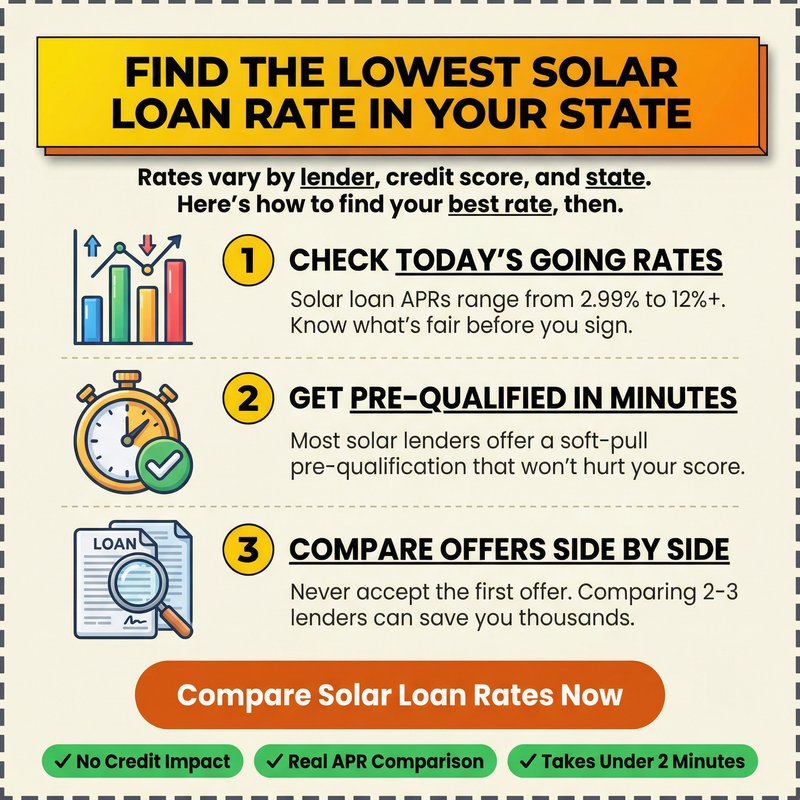
Here’s a quick way to think about it:
- Low Interest Rate + High Fees: Might look good at first, but fees inflate the total cost.
- High Interest Rate + Low Fees: Can be more affordable overall because the total borrowed amount is lower.
Current Trends in Solar Loan Interest Rates
Things have changed a bit in the solar loan market lately. A few years ago, you might have found loans with super low interest rates. But with changes in the economy, interest rates in general have gone up, and that includes solar loans. In the latter half of 2024, for example, the most common interest rate you’d see quoted was around 8.49%, often for a 20-year loan. It’s not uncommon to see rates in the 6% and higher range now. What’s interesting, though, is that while interest rates have climbed, there’s been a growing trend towards loans with lower fees. This shift means that even with higher interest rates, the overall cost of some loans might be more manageable than they were when high fees were common, even with lower advertised rates.
The solar loan landscape is evolving. While low interest rates are always appealing, it’s the APR that truly tells the story of your loan’s total cost. Understanding the interplay between interest rates and fees is key to making a smart financial decision for your solar investment.
Factors Influencing Your Solar Loan Interest Rate
So, you’re looking into solar loans and wondering why some people get better rates than others. It’s not just random chance; a few key things play a big part in what interest rate you’ll be offered. Understanding these can really help you get a better deal.
The Impact of Your Credit Score
This is probably the biggest one. Lenders look at your credit score like a report card for how you handle money. A higher score shows you’re a reliable borrower, meaning you’re less likely to miss payments. Because of this, lenders feel more comfortable offering you a lower interest rate. Think of it this way: if you have a history of paying bills on time and managing debt well, a bank sees you as a safer bet. Someone with a lower score might have missed payments or carried high balances, making them a riskier borrower. That risk comes with a higher price tag, a higher interest rate.
- Excellent Credit (740+): You’ll likely qualify for the lowest rates available.
- Good Credit (670-739): You’ll probably get competitive rates, but maybe not the absolute best.
- Fair Credit (580-669): Expect higher rates, as lenders see more risk.
- Poor Credit (Below 580): Getting approved might be tough, and rates will be significantly higher, if available at all.
Your credit score isn’t just a number; it’s a direct reflection of your financial habits. A good score can save you thousands over the life of a loan, while a poor one can make the entire project much more expensive, or even unattainable.
The Significance of Loan Term Length
When you take out a solar loan, you’ll have to decide how long you want to take to pay it back. That’s the loan term. Generally, longer loan terms mean lower monthly payments. That sounds good, right? But here’s the catch: over a longer period, you’ll end up paying more in total interest. Lenders often charge a slightly higher interest rate for longer terms because there’s more time for things to go wrong, and more interest for them to collect. Shorter terms usually come with lower interest rates but higher monthly payments. It’s a trade-off between immediate affordability and long-term cost.
| Loan Term | Typical Interest Rate Impact | Monthly Payment | Total Interest Paid |
|---|---|---|---|
| 5 Years | Lower | Higher | Lower |
| 10 Years | Medium | Medium | Medium |
| 20 Years | Higher | Lower | Higher |
How Lender Strategies Affect Rates
Different companies have different ways of doing business, and this really shows up in their loan products. Some lenders focus on offering very low interest rates but then load up the loan with fees. Others might have slightly higher interest rates but keep the fees really low. It’s important to look at the Annual Percentage Rate (APR), which includes both the interest rate and all the fees, to get the real cost of the loan. Sometimes, a loan with a higher interest rate but minimal fees can actually be cheaper overall than one with a super low interest rate but hefty upfront charges. The market is shifting, and you’re seeing more companies offer low-fee, higher-interest loans because they can be more flexible for homeowners, especially if you plan to pay the loan off early or refinance later. It really pays to compare not just the interest rate, but the entire package.
Strategies for Securing Lower Solar Loan Interest Rates
So, you’ve decided to go solar, which is awesome! Now comes the part where you figure out how to pay for it without breaking the bank. Getting a good interest rate on your solar loan can make a big difference in your monthly payments and how much you save over time. It’s not just about finding any loan; it’s about finding the right loan for you.
The Power of Shopping Around for Quotes
Seriously, don’t just take the first offer that comes your way. It’s like buying a car. You wouldn’t buy the first one you see, right? The same goes for solar loans. Different lenders have different rates and fees, and some are way better than others. Take some time to get quotes from a few different places. Most lenders will give you a free quote that’s good for a little while, giving you time to compare.
- Make a list of potential lenders. This could include banks, credit unions, and specialized solar loan companies.
- Gather your financial information beforehand. This will speed up the quote process.
- Compare not just the interest rate, but the APR. Remember, APR includes fees, which can really add up.
Leveraging a Co-signer for Better Terms
If your credit isn’t stellar, or even if it is, bringing in a co-signer can really help. A co-signer is someone who agrees to be responsible for the loan if you can’t make payments. Having a co-signer with a strong credit history can often get you a lower interest rate. It shows the lender that there’s less risk involved, and they’re usually happy to offer better terms because of that.
Improving Your Creditworthiness Before Applying
Your credit score is a big deal when it comes to loan rates. A higher score generally means a lower interest rate. If you have a little time before you need the loan, focus on boosting your credit score. Even small improvements can save you a good chunk of change over the life of the loan.
- Pay down existing debt: Focus on credit card balances and any outstanding loans. Lowering your credit utilization ratio is key.
- Make all payments on time: This is the most basic, yet most important, factor in your credit score.
- Check your credit report for errors: Sometimes, mistakes on your report can unfairly lower your score. Dispute any inaccuracies you find.
It’s easy to get caught up in just the interest rate, but remember to look at the whole picture. Sometimes a loan with a slightly higher interest rate but very low fees can end up costing you less overall than a loan with a super low rate but hefty hidden charges. Always ask about all the fees involved and what they cover.
The Nuances of Solar Loan Fees
Understanding Dealer Fees and Their Impact
When you’re looking at solar loans, you’ll notice something called a “dealer fee” or “finance charge.” This isn’t like a typical loan fee you might see elsewhere. Basically, the company that installs your solar panels works with a lender, and they build this fee into the loan. It can be a pretty big chunk, sometimes 20% to 40% of the total system cost. This fee gets added to the amount you borrow, meaning you’re paying interest on it too.
The main reason these fees exist is to allow the lender to offer a seemingly lower interest rate on the loan itself. It’s a way for them to make their money back and then some, while keeping your monthly payments looking more manageable. Think of it as a trade-off: a lower advertised interest rate in exchange for a higher overall loan amount due to these upfront fees.
Why Low-Fee Loans Can Be Advantageous
While dealer fees are common, they can really add up. A loan with a lower interest rate but a hefty dealer fee might end up costing you more in the long run than a loan with a slightly higher interest rate but minimal or no dealer fees. This is because you’re paying interest on that dealer fee for the entire life of the loan. Loans with lower fees, even if the interest rate is a bit higher, can sometimes be more cost-effective over the 15, 20, or even 25 years you’ll be paying it off. It’s all about looking at the total cost, not just the monthly payment or the advertised APR.
Ready to take the next step? lower your solar APR and see your personalized options.
The Inability to Refinance Dealer Fees
Here’s a tricky part about dealer fees: unlike the interest portion of your loan, you generally can’t get rid of them by refinancing or paying the loan off early. If you decide to refinance your solar loan down the road to get a better rate, the original dealer fee is usually baked into the principal and stays there. Similarly, if you want to pay off your loan ahead of schedule, you’re still paying interest on that initial fee. This makes it really important to understand the full cost of the loan upfront, including all fees, before you sign anything. It’s a one-time charge that impacts your loan for its entire duration.
Navigating the Solar Loan Market
Digital Comparison Of Solar Financing Rates.
The world of solar loans can feel a bit like a maze sometimes, with different companies and terms popping up everywhere. It’s not always straightforward, and understanding where to find the best deal is key. You’ve got your big national lenders, local credit unions, and even financing options directly from the solar installer themselves. Each has its own way of doing things, which means different rates and fees.
To see how one of those compares in practice, our review sets out a credit union’s published solar APR ranges and what moves them.
The Rise of Low-Fee, High-Interest Loans
Lately, there’s been a trend where some lenders offer loans with very few upfront fees. Sounds great, right? But often, this means the interest rate you pay over the life of the loan is higher. It’s like getting a free appetizer but paying more for the main course. You need to look at the total cost, not just the initial price tag. For example, a loan with no origination fee might have an APR that’s a full percentage point higher than one with a small fee. Over 20 years, that difference adds up.
The Importance of Transparency in Financing
This is where things can get tricky. Not all loan agreements are laid out clearly. Some might bury extra charges or make it hard to figure out the true cost of borrowing. Always ask for a full breakdown of all fees and understand exactly what your Annual Percentage Rate (APR) includes. This means looking beyond just the interest rate to see things like origination fees, processing fees, and any other charges. If a lender seems hesitant to provide this information or makes it confusing, it’s a red flag.
Projected Interest Rate Outlook for Solar Loans
Predicting interest rates is always a bit of a guessing game, but generally, they tend to follow broader economic trends. If the Federal Reserve raises its key interest rates, you’ll likely see solar loan rates go up too. Conversely, if rates go down, solar loans might become cheaper. It’s also worth noting that the market is always evolving. New lenders enter, and existing ones adjust their strategies. Staying informed about general economic conditions and keeping an eye on the solar financing landscape can help you time your loan application for potentially better terms.
Maximizing Savings with Your Solar Loan
Using Real-Time Apr Data To Calculate Monthly Savings And Total Loan Costs In The 2026 Market.
Aligning Loan Payments with Energy Savings
So, you’ve got your solar panels, and you’ve got a loan to pay for them. The real trick now is making sure this whole setup actually saves you money, not just costs you more in the long run. The sweet spot is when your monthly loan payment is less than or equal to what you’re saving on your electricity bill each month. If you can hit that mark, you’re basically cash-flow positive from day one. It feels pretty good to have your system paying for itself right out of the gate. But, you gotta watch out. Some companies try to make it look like you’re saving a ton by inflating the system price and then setting the loan payment just below your old bill. It’s like a magic trick, but not the good kind. Always check the numbers to make sure the system price is fair, not just the loan payment.
The Benefits of Early Loan Payoff
Paying off your solar loan faster than scheduled can really cut down on the total interest you end up paying. Think of it like this: the less time the lender has your money, the less interest they can charge you. Even small extra payments can make a difference over the life of the loan. Some loans have prepayment penalties, so it’s important to know if yours does before you start sending in extra cash. If there are no penalties, though, putting a little extra towards the principal whenever you can is a smart move. It’s like giving yourself a discount on the whole project.
Considering Loan Term Length for Long-Term Value
When you’re looking at solar loans, the length of the loan term is a big deal. A shorter term means higher monthly payments, but you’ll pay less interest overall. A longer term means lower monthly payments, which might be easier on your budget right now, but you’ll end up paying more interest over time. It’s a trade-off. You need to figure out what works best for your financial situation. Do you want lower monthly bills now, or do you want to save more money in the long run? It’s not always an easy decision, and it depends on your personal finances and how long you plan to stay in your home.
Here’s a quick look at how loan term can affect your total cost:
| Loan Term (Years) | Estimated Total Interest Paid* |
|---|---|
| 5 | $1,500 |
| 10 | $3,200 |
| 15 | $5,100 |
*These are hypothetical examples and actual interest paid will vary based on APR and loan amount.
Choosing the right loan term is about balancing immediate affordability with long-term savings. Don’t just pick the lowest monthly payment without considering the total interest you’ll be paying over the years. It’s a decision that impacts your finances for a long time.
Wrapping It Up: Your Solar Loan Journey
So, we’ve talked a lot about solar loan interest rates and what goes into them. It’s not just about the number you see first; APR gives you the real picture by including all those fees. Remember, a loan with a slightly higher interest rate but fewer fees might actually save you money in the long run, especially since you’ll likely pay off your loan faster than the full term. Keep an eye on those dealer fees. They’re a sunk cost you can’t get back. Always shop around, compare offers from different lenders, and check your credit score. A little effort upfront can make a big difference in your overall savings. Getting solar is a big step, and understanding your loan is key to making it a smart financial move for your home.
Frequently Asked Questions
What exactly is an APR for a solar loan?
APR stands for Annual Percentage Rate. Think of it as the total cost of borrowing money for your solar panels. It includes not just the interest you pay, but also any fees or extra charges. So, while the interest rate tells you how much extra you pay for the money itself, the APR gives you a clearer picture of the loan’s true cost over time.
Are solar loans with high interest rates always a bad deal?
Not necessarily! Sometimes, loans with a slightly higher interest rate might have much lower fees. These ‘low-fee, high-interest’ loans can actually end up costing you less in the long run than a ‘low-interest, high-fee’ loan. This is because those fees can be tricky and you can’t get them back, even if you pay the loan off early.
What’s the biggest factor that affects my solar loan interest rate?
Your credit score plays a huge role. Lenders see a good credit score as a sign that you’re reliable with money. The better your score, the less risky you appear to them, and the more likely they are to offer you a lower interest rate. It’s worth checking your credit and making any improvements before you apply.
How does the length of the loan term change things?
When you choose a longer loan term, your monthly payments will likely be smaller, which can make them easier to manage. However, over the entire life of the loan, you’ll probably end up paying more in interest. A shorter term means higher monthly payments, but you’ll pay less interest overall and own your solar system sooner.
Is it really worth shopping around for solar loan offers?
Absolutely! Just like you wouldn’t buy the first car you see, don’t take the first solar loan offer you get. Different lenders have different rates and fees. By getting quotes from several companies, you can compare them and find the one that offers you the best deal, potentially saving you thousands of dollars.
Can I pay off my solar loan early, and does it save me money?
Yes, you can usually pay off your solar loan early. If you do this, you’ll save money on interest because you won’t be paying interest for the full loan period. However, remember those tricky ‘dealer fees’ we talked about? You can’t get those back, even if you pay the loan off super fast. That’s another reason why low-fee loans are often a better choice.
Rate mechanics are easier to judge next to real numbers: what solar loan rates to expect and typical solar panel loan rates compared.
Ready to Start Saving on Your Energy Bills?
Get a free, no-obligation quote from trusted local providers in under 2 minutes.
No obligation • Free estimates • Takes under 2 minutes
Want real quotes before you decide how to pay for it?
A loan only makes sense once you know what the system will actually cost. If your electric bill runs above $150 a month and your roof gets decent sun, a personalized quote gives you real numbers to put into any loan comparison. Quotes are available nationwide.
Solar Panel Loan: Compare Terms, APRs & Monthly Payments

Get the Number Behind the Monthly Payment
Loan terms and APRs change your monthly payment, but only once you know the total system cost. A quote for your home gives you that starting number.
Disclosure: we may earn a commission if you switch or request a quote through this link, at no extra cost to you. It never changes which plan or company we recommend. How we make money.
Thinking about getting solar panels for your home? That’s awesome. It’s a big step towards saving money and helping the environment. But, let’s be real, those panels aren’t exactly cheap. Most people don’t just have thousands of dollars lying around. That’s where a solar panel loan comes in handy. It lets you get the system installed without paying everything upfront. But, just like any loan, there are different kinds, and you want to make sure you get the best deal possible. We’re going to break down what you need to know about solar panel loans so you can make a smart choice.
Key Takeaways
- A solar panel loan lets you own your solar system without paying the full cost upfront, often making monthly payments similar to or less than your old electricity bill.
- When comparing solar panel loans, look closely at the loan term length, interest rates, and Annual Percentage Rate (APR), which includes fees.
- Secured loans use collateral like your home, potentially offering lower rates but risking the collateral if you don’t pay. Unsecured loans don’t require collateral but can be harder to get and might have higher rates.
- Specialty solar lenders and some government programs offer financing options, each with its own set of terms and benefits.
- Always compare quotes from multiple lenders, read the fine print carefully, and consider the total cost, not just the interest rate, to find the best solar panel loan for your budget.
Understanding Solar Panel Loan Basics
Reviewing Loan Paperwork Alongside A Completed Rooftop Solar Installation.
Thinking about putting solar panels on your roof but don’t have a pile of cash lying around? You’re not alone. Most folks finance their solar setups, and a solar panel loan is a common way to do it. Basically, it’s a loan specifically for buying and installing a solar energy system for your home. Instead of paying a big chunk upfront, you borrow the money and pay it back over time, usually with interest.
What is a Solar Panel Loan?
A solar panel loan is a type of personal loan designed to cover the costs associated with purchasing and installing a solar energy system. This includes the panels themselves, inverters, mounting hardware, and the labour to put it all in. The idea is to make going solar more accessible by spreading the cost out over several years, making it fit into your monthly budget.
Key Features of Solar Loans
Solar loans can have a few different characteristics you’ll want to get familiar with. They aren’t all the same, so knowing these details helps when you’re comparing your options.
- Loan Term Length: This is how long you have to pay the loan back, typically ranging from 5 to 25 years. A longer term means lower monthly payments, but you’ll likely pay more interest overall. A shorter term means higher monthly payments but less interest paid over the life of the loan.
- Interest Rate vs. APR: The interest rate is the cost of borrowing money. The Annual Percentage Rate (APR) is similar but also includes certain fees associated with the loan, giving you a more complete picture of the total cost of borrowing.
- Secured vs. Unsecured: Most solar loans are unsecured, meaning they aren’t backed by collateral like your house. This can make them easier to get but sometimes means a slightly higher interest rate. Secured loans might have lower rates but put an asset at risk if you can’t make payments.
- Dealer Fees: Sometimes, the company installing your solar panels might add fees to the loan. These can increase the total amount you borrow and pay interest on, so it’s important to know if they’re included.
Benefits of Financing Solar Panels
Why bother with a loan instead of saving up? Well, there are some pretty good reasons.
- Immediate Savings: You can start generating your own electricity and potentially lower your monthly utility bills right away, even while you’re paying off the loan. Sometimes, the savings on your electricity bill can be more than your loan payment.
- Ownership and Incentives: When you own your solar panels (which you do with a loan), you can claim tax credits and other incentives that can significantly reduce your overall cost. Leased systems don’t usually offer this benefit.
- Budget Predictability: A fixed monthly loan payment can be easier to budget for than fluctuating electricity bills, especially with rising energy costs.
Going solar with a loan means you own the system from day one. This ownership is key to taking advantage of things like federal tax credits, which can really cut down on the total expense. Plus, you get to enjoy the benefits of generating your own clean energy without having to pay for the whole system upfront. It’s a way to make a big investment more manageable for your household budget.
Comparing Solar Panel Loan Terms and Rates
When you’re looking into financing for solar panels, it’s easy to get lost in all the numbers. But understanding the loan terms and rates is super important for making sure you get a good deal that fits your budget. It’s not just about the sticker price of the panels; it’s about the long game of paying for them.
Loan Term Lengths Explained
The loan term is simply how long you have to pay back the money you borrowed. Solar loans can range quite a bit, often from 5 years all the way up to 25 years. Think of it like this: a shorter term means bigger monthly payments, but you’ll be debt-free sooner and likely pay less interest overall. A longer term means smaller monthly payments, which can be easier on your wallet month-to-month, but you’ll probably end up paying more interest over the life of the loan.
- Shorter Terms (e.g., 5-15 years): Higher monthly payments, less total interest paid, faster ownership.
- Medium Terms (e.g., 15-20 years): A balance between monthly payment size and total interest.
- Longer Terms (e.g., 20-25 years): Lower monthly payments, more total interest paid, potentially matching energy savings.
It’s a trade-off, really. You want to find a term where the monthly payment is manageable and ideally close to what you’ll save on electricity bills, so you’re not feeling the pinch.
Interest Rates vs. APRs for Solar Loans
This is where things can get a little tricky, and it’s good to know the difference. The interest rate is the basic cost of borrowing money, expressed as a percentage. The Annual Percentage Rate (APR), however, gives you a more complete picture. It includes the interest rate plus any fees associated with the loan, like origination fees or dealer fees. So, while two loans might have the same interest rate, the one with higher fees will have a higher APR, meaning it’s actually more expensive.
Always look at the APR when comparing loans. It’s the true cost of borrowing.
Here’s a general idea of what you might see, though rates change:
| Loan Type | Typical Interest Rate Range | Typical APR Range (including fees) |
|---|---|---|
| Unsecured Solar | 2.99% to 5.99% | 3% to 7% |
| Secured Solar | 5% to 8% | 5% to 8% |
Note: These are general ranges and can vary significantly based on your credit, the lender, and market conditions.
Understanding Dealer Fees and Other Costs
Dealer fees, sometimes called origination fees or finance charges, are a big one to watch out for. These are fees charged by the lender or the installer for setting up the loan. They can sometimes be a percentage of the total loan amount, and they can significantly increase the overall cost of your loan, even if the advertised interest rate looks low. Some lenders might advertise a low interest rate but then tack on a hefty dealer fee, which gets rolled into the loan principal. This means you’re paying interest on that fee too!
Always ask for a full breakdown of all fees before signing anything. Don’t be afraid to question charges that don’t make sense. Sometimes, installers have preferred lenders, and they might get a kickback, which can be passed on to you as a higher fee.
It’s really about looking beyond just the interest rate. A loan with a slightly higher interest rate but no dealer fees might be a better deal than one with a super low rate but a big fee. Reading the fine print and asking lots of questions is your best bet here.
Types of Solar Panel Loans Available
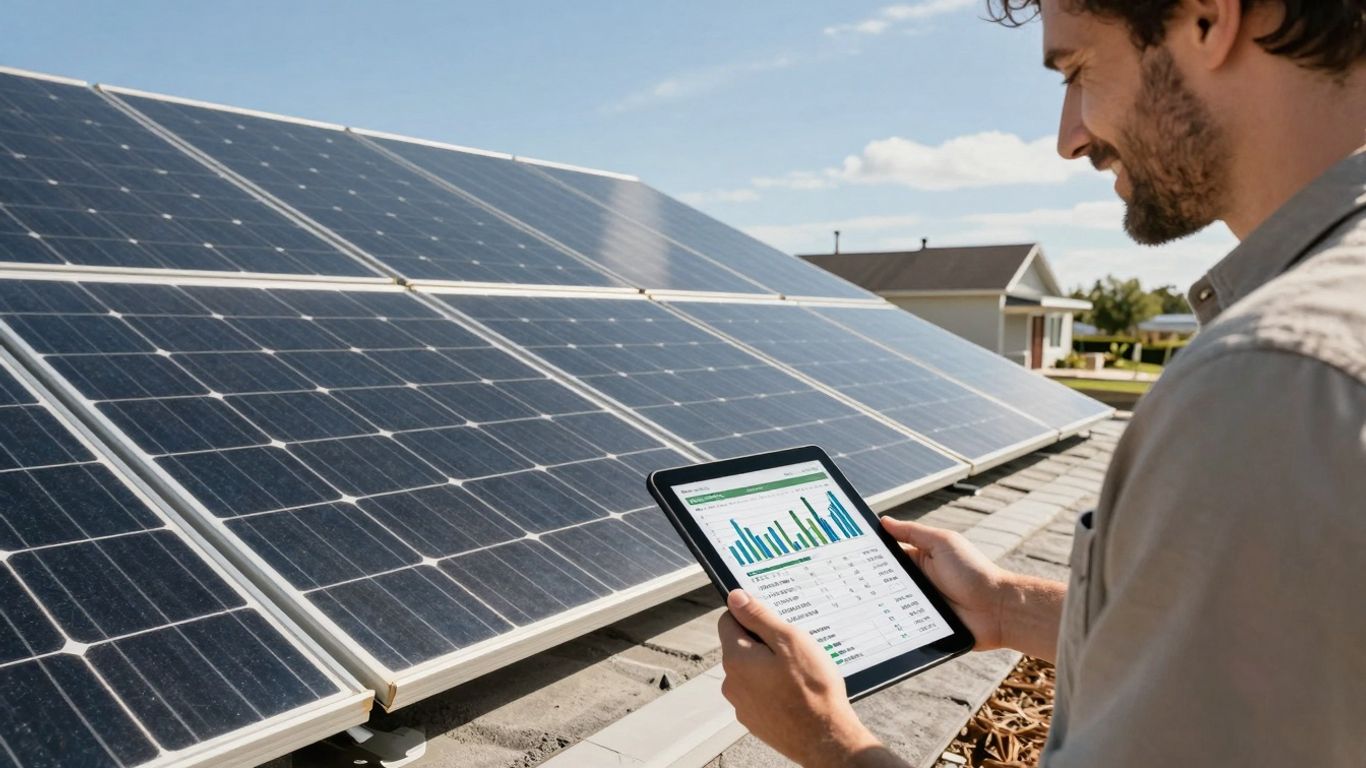
A Homeowner Reviews Solar Performance Data During A Rooftop Installation
When you’re looking into financing solar panels, you’ll find there are a few different ways loans are structured. It’s not just one-size-fits-all, which is good because it means you can find something that fits your situation better. The main ways to categorize these loans are whether they’re secured or unsecured, and if they come from specialty lenders or government programs.
Secured vs. Unsecured Solar Loans
This is a big one. A secured loan means you’re putting something up as collateral. For solar loans, this usually means the solar panel system itself, or sometimes your home. The upside here is that because the lender has something to fall back on if you can’t pay, they often offer lower interest rates. The downside? If you miss payments, they can take the panels or even foreclose on your home. An unsecured loan, on the other hand, doesn’t require collateral. The lender looks at your credit history, income, and other financial factors to decide if they’ll approve you. These can be a bit harder to get approved for, and the interest rates might be a little higher to make up for the added risk for the lender. Most solar-specific loans tend to be unsecured, which is often preferred by homeowners.
Specialty Solar Lenders
These are companies that focus specifically on financing solar energy projects. They often work closely with solar installers, so the loan process can feel pretty integrated with buying and installing your system. You might get a loan offer right on the spot when you’re talking to the sales rep. These lenders understand the solar industry well, so their loan products are often tailored to things like the lifespan of solar equipment and potential incentives. Some big names in this space have partnered with banks to offer these loans nationwide. They can be a convenient option, especially if your installer recommends one.
Government-Backed Solar Financing Options
Beyond private lenders, there are also programs backed by the government that can help finance solar. These often come with benefits like lower interest rates because they’re subsidized by taxpayer money. Examples include programs through the Federal Housing Administration (FHA) that can add the cost of solar to your mortgage, or specific energy-efficient mortgage programs. While these might not always be as straightforward as a dedicated solar loan from a private company, they can offer significant savings if you qualify. It’s worth checking if any federal or state programs are available in your area, as they can sometimes provide a more affordable route to going solar.
Navigating Solar Panel Loan Providers
So, you’ve decided to go solar, which is awesome! Now comes the part where you figure out who’s going to lend you the money. It can feel like a lot, with so many companies out there, but breaking it down makes it way easier. The key is to shop around and not just go with the first option you see.
Ready to take the next step? solar panel loan terms and see your personalized options.
Top Solar Loan Providers
Lots of companies offer solar loans, and some are more popular than others. Installers often work with specific lenders, so you might get a loan offer right when you’re talking about panels. Some of the big names you might hear about include Mosaic, Sunlight Financial, and Good Leap. But don’t stop there! There are also credit unions and even some government programs that can help. It’s a pretty fragmented market, meaning no single company dominates everything, which is good news for you because it means more choices.
Here’s a quick look at some providers and what they’ve offered, though remember rates change:
| Provider | Average Interest Rate (Approx.) | Term Length (Years) |
|---|---|---|
| Mosaic | 5.68% | 20 |
| Sunlight Financial | 5.23% | 20 |
| Good Leap | 3.95% | 25 |
| Dividend Finance | 5.61% | 20 |
| Energy Loan Network | 5.24% | 15 |
| Clean Energy Credit Union | 7.00% | 15 |
How to Choose the Right Lender
When you’re comparing lenders, don’t just look at the interest rate. That’s like buying a car and only looking at the sticker price without checking the gas mileage. You need to consider the whole picture.
- Interest Rate vs. APR: The Annual Percentage Rate (APR) gives you a better idea of the total cost because it includes fees. A low interest rate might look good, but if the APR is high due to fees, it’s not such a great deal.
- Loan Term: How long you have to pay it back affects your monthly payment. Longer terms mean lower monthly payments, but you’ll pay more interest over time. Shorter terms mean higher monthly payments but less interest overall.
- Fees: Watch out for origination fees, dealer fees, or other charges that get rolled into your loan. These can add up quickly. Always ask what fees are included.
- Secured vs. Unsecured: Most solar loans are unsecured, meaning your home isn’t directly on the line if you default. However, it’s always good to know the specifics of the loan agreement.
Before you sign anything, it’s wise to get quotes from several different places. This helps you see the range of options and terms available. Don’t feel pressured to sign on the spot; take your time to review everything carefully.
Comparing Loan Quotes Effectively
Getting multiple quotes is smart, but you need to compare them apples-to-apples. Here’s how:
- List All Costs: Write down the loan amount, interest rate, APR, all fees, and the total repayment amount for each quote.
- Calculate Monthly Payments: See what your monthly payment would be for each loan option.
- Consider the Total Interest Paid: Over the life of the loan, how much interest will you end up paying.
Talking to a trusted financial advisor or even a knowledgeable solar installer can also help you make sense of all the numbers and choose the loan that best fits your financial situation and long-term goals.
Making Informed Solar Panel Loan Decisions
So, you’ve looked at the different types of solar loans and compared rates and terms. Now comes the part where you really need to think about what works for your wallet and your home. It’s not just about getting the panels on your roof; it’s about making sure the financing makes sense long-term.
Evaluating Monthly Payments
This is probably the most obvious thing to look at. You need to figure out what your monthly payment will be and, more importantly, if you can comfortably afford it. Don’t just look at the number the salesperson gives you. Break it down. What’s the actual principal amount you’re borrowing? What’s the interest rate? Are there any fees baked into that monthly payment? Sometimes, a low monthly payment might look good, but it could mean a longer loan term or a higher interest rate over time. It’s a good idea to see if your projected monthly savings on electricity bills will actually cover, or even beat, your new loan payment. Ideally, your solar loan payment should be less than or equal to what you were paying for electricity before.
The Impact of Loan Terms on Your Budget
Loan terms aren’t just numbers on a contract; they directly affect your budget for years to come. A shorter loan term means higher monthly payments but less interest paid overall. A longer term means lower monthly payments, which might be easier on your budget right now, but you’ll end up paying more interest in the long run. Think about your financial goals. Are you planning to move in the next 10 years? A shorter term might be better. Or are you looking to stay put and maximize savings over 25 years? A longer term could work. It’s a balancing act between immediate affordability and total cost.
Here’s a quick look at how different terms can affect the total interest paid (assuming a $30,000 loan at 6% APR):
| Loan Term (Years) | Monthly Payment (Approx.) | Total Interest Paid (Approx.) |
|---|---|---|
| 10 | $333.27 | $9,990.40 |
| 15 | $250.07 | $15,012.60 |
| 20 | $213.31 | $21,194.40 |
| 25 | $193.33 | $27,999.00 |
Maximizing Your Solar Investment
Getting a solar loan is just the first step in making solar panels a good investment. You want to make sure the system itself is high quality and installed correctly. Also, remember those government incentives, like the federal solar tax credit. While it’s often presented as a direct discount, it’s actually a credit on your taxes. This means you need to have enough tax liability to claim it. Some loan agreements might try to “bake in” the expected tax credit, which can sometimes hide the true cost of the loan. Always understand the full price of the system and the loan before any tax credits are factored in.
Be wary of “dealer fees” or “origination fees” that can significantly increase the total amount you borrow. These fees are sometimes hidden within the loan principal and can add a substantial percentage to the cost of your solar system. Always ask for a clear breakdown of all costs involved.
It’s really important to shop around and get multiple quotes. Don’t just go with the first company that knocks on your door. Compare loan terms, interest rates, APRs, and especially those fees. Talking to a few different lenders, including maybe your local credit union, can give you a much clearer picture of what’s available and help you find the best deal for your situation.
Wrapping It Up
So, you’ve looked at the different ways to finance solar panels, and it’s clear there are options out there. Whether you’re eyeing a loan with a short term or a longer one, remember to check the interest rates, any extra fees, and how long you’ll be paying it off. It’s not just about the lowest number you see at first glance. Taking the time to compare what different lenders offer can really make a difference in your wallet over the years. Think about what fits your budget best, and don’t be afraid to ask questions until you feel good about the choice you’re making for your home’s solar future.
Frequently Asked Questions
What exactly is a solar panel loan?
Think of a solar panel loan like any other loan you might get to buy something big, like a car. It’s a sum of money you borrow specifically to pay for solar panels and their installation on your home. You pay this money back over time, usually with a little extra added on as interest.
Do I get to keep my solar panels if I get a loan?
Yes, that’s one of the big pluses! Unlike leasing, when you get a solar loan, you legally own the solar panels from the start. This means you can take advantage of special government programs and tax breaks that can save you money.
What’s the difference between an interest rate and an APR?
An interest rate is just the basic cost of borrowing money. The APR, or Annual Percentage Rate, is a bit more complete. It includes the interest rate plus any extra fees the lender charges. So, the APR gives you a clearer picture of the total yearly cost of your loan.
Are there different kinds of solar loans?
You bet! Some loans are ‘secured,’ meaning they use something like your home or the panels themselves as a guarantee for the lender. Others are ‘unsecured,’ which means they don’t have collateral but might be harder to get. There are also loans from special solar companies, regular banks, and even government programs.
How long do I have to pay back a solar loan?
Loan terms can vary quite a bit. Many solar loans are for 15 to 20 years, but you can sometimes find them for up to 25 years. The idea is often to match your monthly loan payment with the amount you expect to save on electricity each month.
Is it better to get a loan from a solar installer or a bank?
It’s smart to shop around! Solar installers often have special loan programs that can be convenient. However, banks and credit unions might offer different rates and terms. Comparing offers from at least three different places is a really good idea to find the best deal for you.
The same comparison from two other angles: a step-by-step way to compare lender offers, and typical solar loan APRs in California.
We cover one of them in detail, so you have at least one set of published figures to compare the other two against: the Credit Human solar loan, reviewed.
Ready to Start Saving on Your Energy Bills?
Get a free, no-obligation quote from trusted local providers in under 2 minutes.
No obligation • Free estimates • Takes under 2 minutes
Want real quotes before you decide how to pay for it?
A loan only makes sense once you know what the system will actually cost. If your electric bill runs above $150 a month and your roof gets decent sun, a personalized quote gives you real numbers to put into any loan comparison. Quotes are available nationwide.
Indiana Solar Tax Credit: Incentives, Eligibility & How to Claim
See What Solar Costs at Your Indiana Address
Indiana homeowners can use the federal tax credit toward a system. A local quote shows the real starting price for your roof before the credit is applied.
Disclosure: we may earn a commission if you switch or request a quote through this link, at no extra cost to you. It never changes which plan or company we recommend. How we make money.
Thinking about putting solar panels on your Indiana home? That’s cool. It’s a big step, and thankfully, there are ways to make it a bit easier on your wallet. We’re talking about the federal tax credit, plus some other breaks Indiana offers. It can seem a little confusing, but let’s break down what you need to know to get those savings. It’s all about understanding the rules and how to claim what’s yours.
Key Takeaways
- [2026 Update] The 30% federal Residential Clean Energy Tax Credit (IRC § 25D) was repealed by the One Big Beautiful Bill Act (signed July 4, 2025). Indiana homeowners who purchase solar after December 31, 2025 are no longer eligible. A lease or PPA still offers indirect savings via the installer’s § 48E commercial ITC. See the update box below for details.
- You’ll use IRS Form 5695 to claim the federal solar tax credit. Your installer will give you the info you need for this form.
- Indiana also offers a property tax exemption, meaning the added value from your solar panels won’t increase your property taxes.
- You can also get an exemption from sales tax on most solar panel equipment in Indiana, saving you money right when you buy it.
- To get the federal tax credit, you must own your solar system, not lease it. Loans count as ownership, but leases don’t.
⚠️ 2026 Update: Federal Solar Tax Credit Repealed for Purchases
The 30% federal Residential Clean Energy Tax Credit (IRC § 25D) was repealed by the One Big Beautiful Bill Act, signed July 4, 2025. If you purchase a solar system outright (cash or loan) after December 31, 2025, you are no longer eligible for this federal credit. It wasn’t phased out gradually; it was repealed outright for new residential purchases.
Is there still a federal solar benefit in 2026? Yes, indirectly, through a lease or Power Purchase Agreement (PPA). The installer can still claim the § 48E commercial Investment Tax Credit (30%) and typically passes those savings to you through lower monthly rates, often 20 to 40% below your current utility rate, with no money down. Just keep in mind that with a lease/PPA you won’t own the system, so state tax credits and property tax exemptions that require ownership won’t apply to you.
For most Indiana homeowners buying solar in 2026, the real incentives are the state-level programs outlined below.
Understanding the Federal Solar Tax Credit
Saving On Indiana Solar Through State-Mandated Property And Sales Tax Exemptions.
So, you’re thinking about going solar? That’s awesome! One of the biggest helpers in making that happen is the Federal Solar Tax Credit. It’s been around since 2006, and it’s a pretty big deal for anyone looking to put solar panels on their home. Originally called the Solar Investment Tax Credit, or ITC, it got a nice extension thanks to the Inflation Reduction Act, so it’s sticking around for a while.
The federal credit has gone. Your Indiana incentives have not.
The 30% federal solar credit ended on 31 December 2025, so a system you buy or finance in 2026 does not qualify for it. Indiana’s own incentives still apply, and they are what a 2026 quote should be built on. A lease or PPA is the one route that still carries the federal credit, because the solar company owns the system and claims it.
Eligibility Requirements for the Federal Solar Tax Credit
To get this credit, you’ve got to meet a few basic rules. First off, you need to own the home where the solar system is installed, and it has to be in the United States. This applies to regular houses, condos, even mobile homes, as long as it’s your residence. You also have to be the one who actually owns the solar system itself. If you’re leasing your panels, you won’t qualify for this credit. Oh, and you’ve got to have a tax liability, basically, you need to owe some taxes to be able to use the credit. If you buy a new home that already has solar panels, you can claim the credit in the year you move in, as long as you’re the legal owner of the property and the system.
How the Federal Solar Tax Credit Reduces Your Tax Liability
The credit let you deduct part of your solar system cost from your federal income taxes, at 30%, so a $20,000 setup meant $6,000. It ended on 31 December 2025 and a 2026 purchase does not qualify. It’s important to know that this is a non-refundable credit. That means it can reduce your tax bill to zero, but you won’t get any of the remaining credit back as a refund. However, if the credit is more than what you owe in taxes, you can carry over the unused amount to the following years. This rollover can continue for five years, or until the credit is fully used up.
The federal credit is a fantastic way to make solar more affordable, but remember it directly reduces your tax bill, not your overall tax liability. If your tax bill is lower than the credit amount, you’ll only get to use enough credit to bring your tax bill down to zero. The good news is, any leftover credit can be used in future years.
The Declining Value of the Federal Solar Tax Credit
[2026 Update, Now Repealed] The 30% residential solar tax credit (IRC § 25D) was repealed by the One Big Beautiful Bill Act, signed July 4, 2025, ahead of the previously scheduled phase-down. Indiana homeowners who installed solar before January 1, 2026 may still claim the credit for that system. Homeowners purchasing solar in 2026 are no longer eligible for this federal credit.
| Year | Credit Percentage |
|---|---|
| Through 31 Dec 2025 | 30% |
| 2026 onwards | 0%, repealed |
Claiming the Indiana Solar Tax Credit
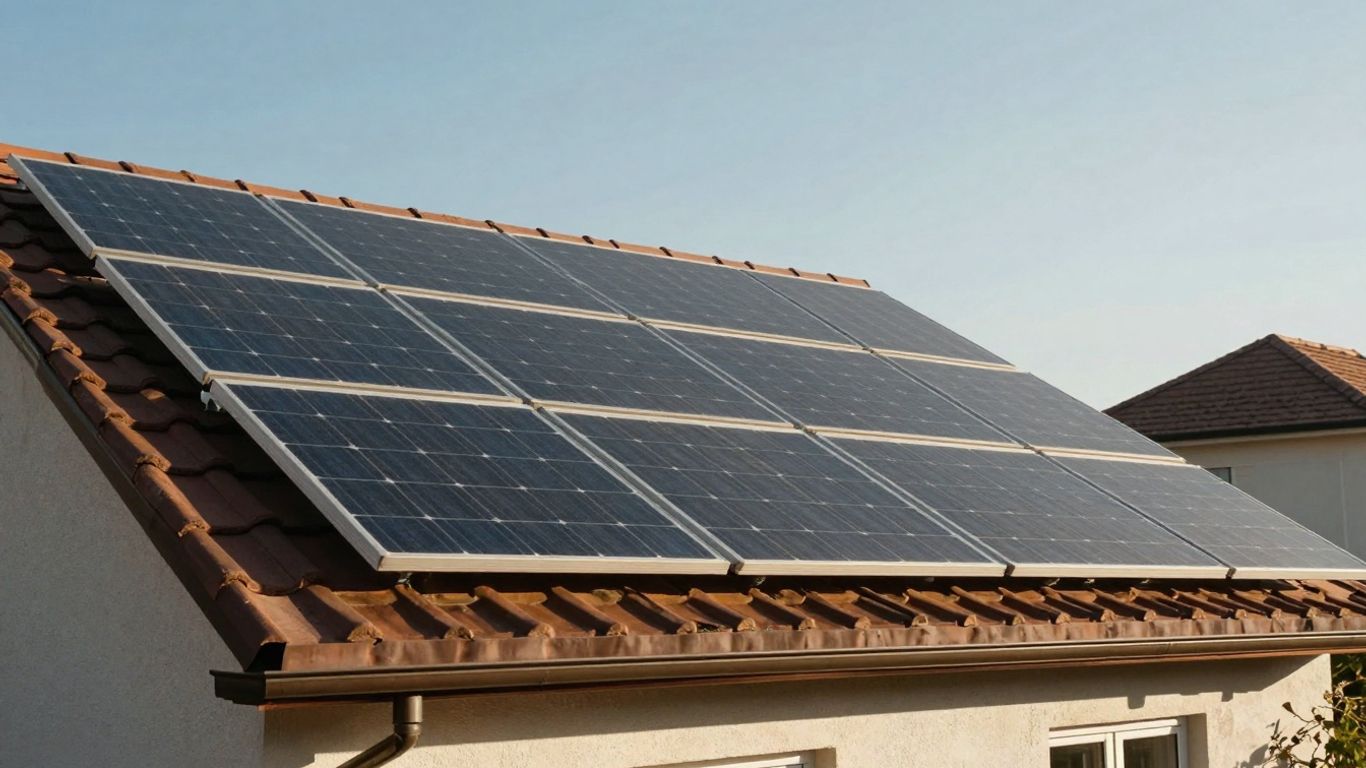
Saving On Indiana Solar Through State-Mandated Property And Sales Tax Exemptions.
So, you’ve gone solar in Indiana, awesome! Now, let’s talk about getting that federal tax credit. It’s not automatic, you know. You’ve got to actually file for it. Think of it like this: you wouldn’t expect your favorite pizza place to just know you want extra cheese, right? You gotta ask for it. Same deal here, but with the IRS.
Gathering Necessary Documentation from Your Installer
First things first, you’ll need some paperwork from the company that put your solar panels up. They’re the ones who know all the nitty-gritty details about your system. You’ll want things like:
- The total cost of your solar energy system.
- Information about the equipment itself, like its capacity and model numbers.
- Proof that the system was installed and placed in service during the tax year you’re claiming the credit for.
Your installer should be pretty used to this, so don’t be shy about asking for what you need. This documentation is your golden ticket to claiming the credit.
Completing IRS Form 5695
This is where the actual claiming happens. You’ll need to fill out IRS Form 5695, which is called the “Residential Clean Energy Credit” form. It might sound a bit intimidating, but it’s really just a way for the IRS to track who’s getting these credits. You’ll use the info from your installer to fill in the blanks. It asks about the cost of your system and other details. Just take your time and fill it out as accurately as possible. If you’re unsure about anything, it’s always a good idea to check the IRS website for their instructions or even chat with a tax professional.
Remember, this credit is for the year the system was installed and placed in service. So, if you got your panels up in late 2024, you’ll claim it on your 2024 taxes, which are usually due in April 2025.
Submitting Form 5695 with Your Tax Return
Once you’ve got Form 5695 all filled out, you don’t just mail it off on its own. Nope, you’ve got to attach it to your main federal tax return, like your Form 1040. Whether you file electronically or send in a paper return, make sure that Form 5695 is tucked in there. It’s like sending in a whole package. You can’t just send a single piece of mail and expect it to count. Double-check everything before you hit send or mail it out. You want to make sure you get that credit applied correctly!
Indiana’s Solar Property Tax Exemption
So, you’ve gone solar in Indiana. That’s awesome! You might be wondering if adding those shiny panels to your roof will bump up your property taxes. Good news: Indiana has a pretty sweet deal for you. The state offers a property tax exemption specifically for the added value your solar system brings to your home. This means that even if your home’s value goes up because of the solar installation, you won’t pay extra property taxes on that increase. It’s a nice little perk that helps make going solar even more affordable in the long run.
Exemption on Increased Property Value
When you install a solar energy system, it’s generally accepted that it can increase your home’s market value. Think about it, who wouldn’t want a home that generates its own clean energy? Studies have shown that homes with solar panels can sell for more than comparable homes without them. In Indiana, the law recognizes this added value but says you shouldn’t be penalized with higher property taxes for making an environmentally friendly upgrade. So, that boost in your home’s worth from the solar panels? It’s exempt from property taxes. This exemption applies year after year, as long as your system is up and running.
Ensuring Unobstructed Sunlight Access
It’s not just about the tax breaks; Indiana also has laws in place to help protect your solar investment. These are often called solar easement laws. Basically, they help make sure that your solar panels can actually get the sunlight they need to work efficiently. Sometimes, a neighbor’s new tree or a planned construction project could cast a shadow over your panels, cutting down on how much electricity you generate. Indiana’s laws allow homeowners to work with their neighbors to create voluntary agreements, called solar easements, to prevent shading issues. This can also be helpful if your homeowner’s association (HOA) has rules that might interfere with your solar setup. It’s all about making sure your solar system can do its job without unnecessary obstacles.
Indiana’s Solar Sales Tax Exemption
When you’re looking at the total cost of going solar, it’s easy to get bogged down in the numbers. But Indiana has a pretty sweet deal that can help shave off a chunk of that price tag right from the start: the solar sales tax exemption. This exemption means you won’t pay the state’s 7% sales tax on many of the key parts that make up your solar energy system.
Think about it, that 7% can add up quickly, especially on a system that might cost thousands of dollars. For instance, on a $28,000 system, avoiding that sales tax could save you close to $2,000. That’s money you can put towards other home improvements or just keep in your pocket.
Which Solar Components Are Exempt
So, what exactly gets a pass on the sales tax? Generally, the items directly involved in generating electricity are exempt. This typically includes:
- Solar modules (the panels themselves)
- Racking systems (what holds the panels in place)
- Inverters (which convert the DC power from the panels to AC power your home can use)
Understanding Limitations of the Sales Tax Exemption
While the exemption is a great perk, it’s not a free-for-all on every single item related to your solar setup. Some components, while necessary for a complete system, might not be covered. These can sometimes include:
- Transformers (though often integrated into inverters, separate ones might be taxed)
- Monitoring equipment (devices that track your system’s performance)
- Battery storage systems (these are usually treated separately and may not be included in this specific exemption)
It’s always a good idea to chat with your solar installer about which specific parts of your chosen system qualify for the exemption. They’ll know the ins and outs and can help you fill out the necessary paperwork, like the Indiana General Sales Tax Exemption Certificate (Form ST-105), to make sure you get the full benefit.
Ready to take the next step? Indiana solar incentives and see your personalized options.
Navigating Solar Ownership and Leases
So, you’re thinking about going solar in Indiana, but maybe you’re not sure if you want to buy the system outright or go with a lease or a loan. It’s a big decision, and how you own your solar setup can really affect whether you can take advantage of those sweet tax credits. Let’s break it down.
Eligibility for System Owners
If you’re buying your solar system with cash or through a loan, you’re generally in a good spot to claim the federal solar tax credit. The key thing is that you must own the system. This means you’re the one on the hook for installation and maintenance, but you also get to reap all the benefits, including the tax credit. It doesn’t matter if you own a house, a condo, or even a mobile home, as long as you own the property where the panels are installed and you have a tax liability to offset. If you’re buying a new home with solar already installed, you can claim the credit too, as long as you’re the legal owner of the property and the system.
Tax Credits for Homeowners and Landlords
Now, what if you’re renting out a property with solar? Things get a little trickier. Generally, if you’re renting out a property, you can’t claim the residential solar tax credit. That credit is for the person living in and owning the home. However, there are some workarounds. If you own a vacation home that you also rent out, you might be able to claim the credit as a business expense. Also, sometimes a renter and landlord can work something out. Maybe the landlord installs solar, and the tenant agrees to a small rent increase to help cover the cost, while the landlord gets the tax credit and the tenant gets lower electricity bills. It’s a win-win if you can make it happen.
Loan Agreements as Proof of Ownership
What if you’re not paying cash for your solar system? Don’t worry, a loan doesn’t automatically disqualify you. A loan agreement from a bank or other lender is perfectly acceptable proof that you own the system. The important part is that you’re taking on the financial responsibility for the system, not just leasing it. Companies that offer solar leases or rental agreements usually retain ownership of the panels, which means you, as the lessee or renter, can’t claim the tax credit. Always check the fine print of any agreement to make sure you understand who owns the system and who is eligible to claim the incentives.
When looking into solar options, it’s smart to compare different companies. Ask about their warranties, how long they’ve been in business, and if their installers are certified. Getting quotes from a few places can help you spot a good deal and avoid one that seems too good to be true. Also, make sure you’re comparing apples to apples, don’t let one company quote you on fancy panels while another quotes you on basic ones and calls it a better deal.
Here’s a quick rundown of ownership types and tax credit eligibility:
- System Ownership:
- Cash Purchase: You own the system. Eligible for tax credits.
- Solar Loan: You own the system. Eligible for tax credits.
- Solar Lease: The solar company owns the system. Not eligible for tax credits by the homeowner.
- Power Purchase Agreement (PPA): The solar company owns and maintains the system, and you pay for the electricity it generates. Not eligible for tax credits by the homeowner.
Remember, even if you’re eligible for the credit, you need to have a tax liability to claim it against. If the credit is more than what you owe in taxes, you can usually roll the unused portion over to the next year for a limited time.
Future of Solar Incentives in Indiana
So, where do Indiana solar incentives stand in 2026? The big federal tax credit that helped so many homeowners go solar has already been repealed. The One Big Beautiful Bill Act (signed July 4, 2025) eliminated the 30% residential solar tax credit (IRC § 25D) for systems installed after December 31, 2025. Indiana homeowners purchasing solar in 2026 will not have access to a direct federal credit, but state-level incentives still apply. Starting January 1, 2026, the federal residential solar tax credit will no longer be available. This means if you’re thinking about going solar and want to take advantage of that 30% credit, you really need to get your system installed before the end of 2025. It’s a pretty significant shift, and it’s why a lot of people are looking to make the move this year.
The Impact of Legislation on Tax Credits
Legislation plays a big role in how these incentives work, and it can change things up. The federal credit, as we just mentioned, is on a scheduled decline. It was set to phase out gradually, but recent legislative actions have accelerated that. This means the landscape for solar savings is shifting faster than some expected. It’s not just about the federal level, either. While Indiana has been pretty consistent with its property and sales tax exemptions for solar, the state government could always adjust these policies down the road. It’s always a good idea to stay informed about any new bills or changes that might affect solar energy in the state.
Potential Changes to Net Metering Policies
Net metering is another area where things could evolve. Right now, net metering policies in Indiana can be a bit tricky, and some argue they make solar less accessible for average homeowners. Basically, net metering is how you get credited for the extra electricity your solar panels send back to the grid. If these policies change, it could affect how much you save on your electricity bills after installing solar. There’s ongoing discussion about how to best compensate solar owners, and future legislation might bring changes. Some groups are pushing for more favorable net metering rules, and there’s also talk about potential rebate programs, especially for lower-income households, possibly through initiatives like the EPA’s Solar For All program. Keep an eye on these developments, as they could significantly impact the financial side of owning solar panels in Indiana.
It’s a good idea to talk to a few different solar installers. They usually know the latest on incentives and can help you figure out exactly what savings you might be looking at based on your specific situation and the current rules. Getting multiple quotes is just smart planning.
Here’s a quick look at the federal tax credit schedule:
| Year | Credit Percentage |
||
| 2024-2032 | 30% ||
| 2033 | 26% ||
| 2034 | 22% ||
| 2035 | 0% ||
Remember, these are federal changes. Indiana’s own property and sales tax exemptions are separate and have their own rules, though they haven’t seen major shifts recently. Still, it pays to stay updated!
Wrapping It Up
So, going solar in Indiana can definitely save you some cash, especially with that federal tax credit. Remember, it’s a 30% credit, but you gotta have a tax bill to use it, and it’s not a refund if it’s more than you owe. Keep an eye on those deadlines, especially for the federal credit which is set to change after 2025. Filling out the right forms, like IRS Form 5695, is key, and your installer can help with that. Plus, Indiana offers some sweet tax exemptions that take the sting out of sales tax and added property value. It might seem like a lot to figure out, but taking advantage of these incentives makes switching to solar a much smarter financial move for your home.
Frequently Asked Questions
What is the Federal Solar Tax Credit and how does it work in Indiana?
The Federal Solar Tax Credit let you subtract 30% of your solar system cost from your federal taxes. It ended on 31 December 2025, so an Indiana homeowner buying in 2026 does not get it. If the credit is more than what you owe in taxes, you can carry over the extra amount to the next year for up to five years. This credit is available for systems installed by the end of 2032.
Do I have to pay extra property tax if my home’s value goes up after installing solar panels in Indiana?
No, you don’t have to worry about that! Indiana has a special rule that says you won’t pay extra property tax on the increased value of your home that comes from having solar panels. It’s a way to encourage people to use solar energy.
Does Indiana charge sales tax on solar panel equipment?
Good news! Most of the parts you need for a solar panel system, like the panels themselves and the equipment that holds them up, are exempt from Indiana’s sales tax. This means you’ll save money right when you buy your system.
Who can claim the Federal Solar Tax Credit?
To get the Federal Solar Tax Credit, you generally need to own your home and have a tax bill to reduce. You also need to own the solar system itself, which means systems you lease usually don’t qualify. If you buy your system with cash or a loan, you can claim the credit.
What happens if my solar tax credit is more than the taxes I owe?
If your solar tax credit is bigger than the amount of taxes you owe for that year, you don’t lose out on the extra amount. You can carry it over to the next year and use it to reduce your taxes then. This can continue for up to five years, helping you get the full benefit of the credit.
Is net metering available for new solar installations in Indiana?
Unfortunately, for new solar panel systems installed after January 2021, Indiana doesn’t offer net metering in the same way it used to. Net metering is a system where you get credits for extra solar energy you send back to the power grid. While it’s not available for new setups now, the state’s rules could change in the future.
Ready to Start Saving on Your Energy Bills?
Get a free, no-obligation quote from trusted local providers in under 2 minutes.
No obligation • Free estimates • Takes under 2 minutes
Get a Second Quote for Your Indiana Home
Installer pricing can vary a lot, even with the same credit available. A second quote gives you a number to compare before the federal credit is applied.
Solar Financing Options: Loans, Leases & Payment Plans Compared

See Real Numbers Before You Pick a Financing Option
Loans, leases, and PPAs all work differently, and the right pick depends on your roof, your bill, and your credit. A quote from a local installer gives you actual costs to run through each option.
Disclosure: we may earn a commission if you switch or request a quote through this link, at no extra cost to you. It never changes which plan or company we recommend. How we make money.
Thinking about putting solar panels on your roof? That’s great! It’s a big step towards saving money on electricity and helping the environment. But, like anything big, it costs money upfront. The good news is there are several ways to pay for it, not just one lump sum. We’re going to look at the main solar financing options out there, like loans, leases, and other plans, to help you figure out what works best for your wallet and your home. It’s all about making a smart choice that pays off.
Key Takeaways
- Owning your solar system through a loan usually means more savings in the long run, often two to three times more than other options.
- Loans let you claim tax credits and can increase your home’s value, plus payments don’t go up over time.
- Leases and Power Purchase Agreements (PPAs) require little to no money down and handle maintenance, but you don’t get tax benefits and long-term savings are usually lower.
- When choosing, think about your budget, how long you plan to stay in your home, and if you want to own the system or just use the power it generates.
- Don’t forget about incentives like tax credits and net metering. They can make a big difference in how much you save, no matter which financing option you pick.
Understanding Your Solar Financing Options
Thinking about putting solar panels on your roof is a big step, and figuring out how to pay for it can feel a little overwhelming at first. It’s not just about the panels themselves; it’s about how you’re going to fund this investment in your home and the planet. Luckily, there are several ways to go about it, each with its own set of pros and cons. The best choice really depends on your personal financial situation and what you hope to get out of going solar. Let’s break down the main ways people finance solar energy systems.
The Appeal of Solar Energy
Why are so many people looking into solar these days? For starters, electricity bills can be a real pain, and solar offers a way to take control of those costs. Plus, there’s the environmental angle, using clean energy from the sun is a pretty good feeling. It’s about saving money over time and doing something good for the environment. Many homeowners also see it as a way to make their homes more valuable.
Key Considerations Before Choosing
Before you even start looking at financing, it’s smart to think about a few things. How much electricity do you actually use? What’s your budget like, not just for today but for the next 10, 20, or even 25 years? How long do you plan to stay in your home? These questions can really guide you toward the right financing path. It’s also worth checking out what tax credits or local rebates might be available, as these can significantly change the numbers.
Here are some points to ponder:
- Your Credit Score: This will heavily influence the types of loans you can get and the interest rates you’ll pay.
- Your Tax Liability: If you have a significant tax bill, you’ll be in a better position to take advantage of tax credits.
- Homeownership Duration: If you plan to move soon, some options might be less ideal than if you’re settled for the long haul.
- Tolerance for Risk: Are you comfortable with potential payment increases over time, or do you prefer a fixed, predictable cost?
Navigating the Landscape of Solar Financing Options
When you start researching, you’ll find a few main categories of financing. You’ve got options where you own the system outright, and then there are options where a third party owns and manages it. Each has its own way of working and its own set of benefits. It’s not a one-size-fits-all situation, so understanding the differences is key to making a smart decision for your home.
Here’s a quick look at what’s generally available:
- Cash Purchase: You pay the full amount upfront. Simple, and often the most cost-effective long-term.
- Solar Loans: You borrow money to buy the system and pay it back over time with interest.
- Solar Leases: You pay a monthly fee to use a system installed on your roof, but you don’t own it.
- Power Purchase Agreements (PPAs): Similar to a lease, but you pay for the electricity the system produces at a set rate, rather than a fixed monthly payment for the equipment.
Choosing how to finance your solar system is a significant decision. It’s easy to get caught up in the excitement of saving money and helping the environment, but taking a moment to really understand the financial mechanics of each option will save you headaches down the road. Think of it like buying a car. You wouldn’t just pick the first one you see without checking the price, the features, and how you’re going to pay for it.
Exploring Solar Ownership Through Loans
When you think about owning your solar setup, a solar loan is probably the first thing that comes to mind. It’s pretty straightforward: you borrow money to buy the system, and then you pay that money back over time. Unlike leases or power purchase agreements where someone else owns the panels on your roof, with a loan, you own them from day one. This means all the benefits, like tax credits and increased home value, are yours.
Benefits of Securing a Solar Loan
Getting a solar loan means you’re taking the ownership route. This usually leads to bigger savings down the road compared to leasing. Plus, you can claim all the available tax credits and incentives, which can really cut down the overall cost. Your home’s value might get a nice bump too, since you’ve added a valuable asset.
- Immediate Ownership: You own the system outright from the start.
- Tax Credit Eligibility: You can claim federal, state, and local incentives.
- Higher Long-Term Savings: Typically, owning solar panels through a loan results in greater savings over the system’s lifespan.
- Increased Home Value: Adding a solar system can make your home more attractive and valuable.
- No Escalating Payments: Your payments are usually fixed, unlike some leases that can go up over time.
One of the biggest pluses of a solar loan is that you get to take advantage of all the government incentives. These can significantly reduce the initial cost of your system, making it a much more attractive investment. It’s like getting a discount before you even start saving on your electricity bills.
Types of Solar Loans Available
There are a couple of main ways solar loans are structured. The first is a secured loan. This is where the loan is backed by an asset you own, like your house. Because the lender has this security, secured loans often come with lower interest rates and longer repayment terms. You can usually get these from banks, credit unions, or sometimes even the solar company itself.
The other type is an unsecured loan. This one isn’t backed by any specific asset. Since it’s a bit riskier for the lender, unsecured loans might have higher interest rates and shorter payback periods. These are often offered by solar companies as a way to make it easier for people to go solar without needing collateral.
Here’s a quick look at what might influence your loan:
| Factor | Details |
|---|---|
| Credit Score | Generally 650+ for the best rates, but varies by lender. |
| Interest Rate | Can range from 4% to 12% or more, depending on your credit and loan type. |
| Loan Term | Typically 5 to 25 years. Longer terms mean lower monthly payments. |
| Down Payment | Some loans require none, others might ask for a small percentage. |
| Lender Type | Banks, credit unions, solar installers, or third-party financiers. |
What to Look For in a Solar Loan
When you’re shopping around for a solar loan, don’t just grab the first offer you see. It’s really worth comparing a few different options. Pay close attention to the interest rate. That’s a big one that affects how much you’ll pay back over time. Also, check out the loan term, which is how long you have to pay it off. A longer term means smaller monthly payments, but you’ll likely pay more interest overall. Some loans might have origination fees or other charges, so read the fine print.
It’s also a good idea to see if the lender has experience with solar projects. They might offer better terms or be more helpful if you have questions specific to solar installations. Some lenders even bundle in services like system monitoring or maintenance plans, which could be convenient. Make sure the monthly payment fits comfortably into your budget, not just now, but for the entire life of the loan. You don’t want to be struggling to make payments years down the line.
Evaluating Solar Leases for Your Home
So, you’re thinking about solar panels but maybe the idea of a big upfront payment feels a bit much. That’s where solar leases come in. They’re a popular choice because they let you get the benefits of solar energy without needing a pile of cash to start. Basically, you agree to pay a monthly fee to a company that owns and maintains the solar system on your roof. It’s kind of like renting the panels.
How Solar Leases Work
With a solar lease, a third-party company installs and owns the solar panels on your property. You then pay them a fixed monthly amount to use the electricity the panels generate. This means you don’t have to worry about buying the equipment, installation costs, or any future maintenance. The lease agreement typically lasts for 20 to 25 years, and during that time, the company is responsible for keeping the system running smoothly. You’ll see a reduction in your electricity bill right away, which is the main draw for many people.
Advantages of Leasing Solar Panels
There are definitely some good points to leasing. For starters, the biggest perk is usually no upfront cost. You can start saving on your electricity bills from day one without a large initial investment. Plus, maintenance and repairs are generally covered by the lease provider, taking a load off your mind. It’s also usually pretty straightforward to transfer the lease to a new homeowner if you decide to sell your house, which can be a big plus.
Here are some of the key benefits:
- Zero Down Payment: Get solar without needing to spend a lot of money upfront.
- Predictable Monthly Costs: Your lease payment is usually fixed, making budgeting easier.
- Maintenance Included: The leasing company handles upkeep and repairs.
- Transferability: The lease can often be passed on to the next owner of your home.
One thing to really watch out for with leases is the annual escalator. This is a clause that allows the lease payment to increase each year, usually by a small percentage. While it’s often designed to keep pace with rising utility rates, it can mean your savings diminish over the life of the lease compared to owning the system outright. It’s important to understand exactly how this works before signing anything.
When a Solar Lease Might Be Ideal
A solar lease could be a great fit for you if you’re looking for immediate savings on your electricity bills and don’t have the funds for a large upfront purchase. It’s also a good option if you prefer not to deal with the responsibilities of system ownership, like maintenance or potential repairs. If you’re not planning on staying in your home for a very long time, say less than 10 years, a lease can be a practical way to benefit from solar without the long-term commitment of ownership. It’s a way to go solar with minimal hassle and immediate financial relief from high utility bills. You can explore solar financing options to see how it compares to other choices.
Power Purchase Agreements: A Different Approach
So, we’ve talked about loans and leases, but there’s another way to get solar power onto your roof without actually buying the panels yourself: a Power Purchase Agreement, or PPA. It sounds a bit formal, but the idea is pretty straightforward. Instead of buying the system, you’re essentially buying the electricity it produces.
Understanding Power Purchase Agreements
With a PPA, a solar company installs and owns the solar panel system on your property. You then agree to buy the electricity that system generates at a set price per kilowatt-hour (kWh). This means you get the benefit of solar power without any of the upfront costs associated with purchasing and installing the equipment. It’s like having your own mini power plant, but someone else handles all the heavy lifting and maintenance.
Here’s a quick rundown of how it typically works:
- Ownership: The solar company owns the panels.
- Installation: They install and maintain the system.
- Payment: You pay for the electricity produced, usually at a rate lower than your utility company charges.
- Contract: You sign a long-term contract, often 15-25 years.
Key Features of PPAs
PPAs have some distinct characteristics that set them apart from leases or loans. For starters, your monthly bill isn’t fixed. It changes based on how much electricity your panels generate. So, on a super sunny summer day, you might use and pay for more power than on a cloudy winter afternoon. This can be a good thing if you’re using a lot of energy when the sun is shining, but it also means your costs can fluctuate.
Most PPA contracts also include an annual price increase, often called an escalator. This is usually a small percentage, like 1.5% to 3.5% per year. While it means your rate goes up a bit each year, it’s generally designed to stay below the rate increases you’d see from your regular utility company. It’s a way for the PPA provider to account for inflation and ensure their investment remains profitable over the long term.
One of the biggest draws of a PPA is that you don’t have to worry about the system breaking down or needing repairs. The company that owns the panels is responsible for all maintenance and upkeep. This takes a lot of the hassle off your plate, allowing you to just enjoy the solar-generated electricity.
Ready to take the next step? solar financing options and see your personalized options.
Comparing PPAs to Leases
When you compare a PPA to a solar lease, the main difference often comes down to how you pay and how your costs change over time. With a lease, you typically pay a fixed monthly amount, regardless of how much electricity the panels produce. This gives you a predictable budget. A PPA, on the other hand, ties your payment directly to the system’s output. If the panels produce less power one month, your bill is lower. If they produce more, your bill is higher.
Here’s a simple way to think about it:
| Feature | Solar Lease | Solar PPA |
|---|---|---|
| Payment Structure | Fixed monthly payment | Payment based on electricity produced (kWh) |
| Cost Predictability | High (fixed monthly cost) | Moderate (varies with production) |
| Maintenance | Included | Included |
| Upfront Cost | Low to none | None |
| Ownership | Third-party owns system | Third-party owns system |
| Tax Credits | Provider claims | Provider claims |
| Annual Increase | Usually a fixed percentage on payment | Usually a fixed percentage on rate per kWh |
While both options let you avoid the large upfront cost of buying solar panels, the PPA offers a payment structure that’s more directly tied to the actual energy you’re getting. It’s a good option if you want to reduce your electricity bills without the commitment of ownership or the fixed monthly cost of a lease. You can explore financing options that might fit your needs.
Making the Right Solar Financing Choice
Assessing Your Financial Situation
Okay, so you’ve looked at loans, leases, and maybe even power purchase agreements. Now what? The first real step is to get honest with yourself about your own money situation. What’s your credit score like? Do you have a decent chunk of savings, or are you more of a ‘pay as you go’ person? Knowing this stuff helps narrow down what’s even possible. For instance, if your credit isn’t stellar, some loan options might be off the table, pushing you towards a lease or PPA. Also, think about how much you can comfortably afford each month. Don’t stretch yourself too thin, even for something as good as solar.
Comparing Long-Term Savings
This is where things get interesting. While a lease might seem cheap upfront, you’re not actually owning the panels. Over 20 or 25 years, that adds up. Loans, on the other hand, mean you own the system eventually. You’ll pay interest, sure, but once the loan is paid off, the electricity is basically free. It’s a bit like buying a house versus renting, one builds equity, the other just costs money month after month.
Here’s a rough idea of how savings can stack up:
| Financing Type | Upfront Cost | Monthly Payment | Long-Term Savings (25 Years) |
|---|---|---|---|
| Cash Purchase | High | Low (None) | Highest |
| Solar Loan | Low to Medium | Medium | High |
| Solar Lease | Very Low | Low to Medium | Low to Medium |
| PPA | Very Low | Variable | Low |
Remember, these are general figures. Your actual savings will depend heavily on your specific system, local electricity rates, and the terms of your agreement. Always run the numbers for your own situation.
Actionable Steps for Decision-Making
So, how do you actually pick one? Here’s a plan:
- Check Your Credit and Tax Status: Get your credit report and see what your score is. Also, figure out your tax liability. This is important if you want to claim tax credits.
- Get Multiple Quotes: Don’t just go with the first company you talk to. Get at least three quotes for loans, leases, and PPAs from different providers. Compare the details, not just the price.
- Read the Fine Print: Seriously, read those contracts. Look for things like escalator clauses (where payments go up over time) and what happens if you need to move or want to get out of the deal early.
- Calculate Total Costs: Add up all the payments you’d make over the life of the contract. Compare this total to the estimated savings from the solar energy produced.
- Think About How Long You’ll Stay: If you plan to move in the next five years, a lease might make more sense than taking out a loan. If you’re in it for the long haul, ownership is usually better.
- Talk to Experts: If you’re still unsure, chat with a solar installer who isn’t tied to just one financing option, and maybe even a financial advisor or tax professional.
Maximizing Solar Investments with Incentives
So, you’re thinking about going solar. That’s awesome! But before you sign on the dotted line, let’s talk about how to make that investment work even harder for you. It’s not just about the panels on your roof; it’s also about the smart financial moves you can make. Taking advantage of available incentives can seriously slash the upfront cost of your solar setup.
Leveraging Tax Credits and Rebates
When you buy a solar system, there are often tax credits and rebates available that can make a big difference. Think of them as a thank you from the government for choosing clean energy. The federal solar tax credit, for instance, lets you deduct a percentage of your system’s cost right off your federal taxes. It’s a pretty sweet deal that helps offset that initial investment. Many states and even local municipalities offer their own incentives too, like cash rebates or additional tax credits. It’s definitely worth digging into what’s available in your specific area.
Here’s a quick rundown of what to look for:
- Federal Solar Investment Tax Credit (ITC): This is a big one, allowing you to claim a percentage of your solar system’s cost. Keep an eye on its status, as it can change.
- State Tax Credits: Many states offer their own credits, often stackable with the federal one.
- Local Rebates: Some cities or utility companies provide direct cash rebates.
- Performance-Based Incentives: Less common now, but some programs pay you based on the energy your system produces.
Researching these incentives thoroughly is key. What’s available can change, and understanding the specifics for your location is crucial for maximizing your savings. Don’t leave money on the table!
The Role of Net Metering
Net metering is another important piece of the puzzle. Basically, when your solar panels produce more electricity than your home is using, that excess power gets sent back to the grid. Net metering allows you to get credit on your electricity bill for that exported energy. The exact rules and rates for net metering vary quite a bit from state to state, and even from utility to utility. Some offer a 1:1 credit, meaning you get full retail value for the power you send back, while others might offer a lower wholesale rate. This can significantly impact how quickly your system pays for itself and the overall long-term savings you see. It’s a good idea to check with your local utility provider to understand their specific net metering policy. You can find more details on how net metering works in your area here.
Community Solar Programs as an Alternative
What if your home isn’t suitable for rooftop solar? Maybe you rent, or your roof is shaded or in bad shape. Don’t worry, community solar programs offer a way for almost anyone to benefit from solar energy. Instead of installing panels on your own home, you subscribe to a share of a larger, local solar farm. You then receive credits on your utility bill for the electricity your share of the farm produces. It’s a fantastic option if rooftop installation isn’t feasible. These programs typically offer savings of around 5-15% on your electricity costs without any upfront installation or maintenance on your part. As of 2025, these programs are available in a growing number of states, making solar power more accessible than ever.
Making the Right Solar Choice for You
So, you’ve looked at loans, leases, and maybe even paying cash for solar. It’s a lot to think about, for sure. But the good news is, there are options out there for pretty much everyone. Whether you want to own your system outright and grab all those tax breaks, or you just want to pay a set monthly fee and forget about maintenance, there’s likely a path that fits your wallet and your life. Take your time, compare the numbers, and don’t be afraid to ask questions. Picking the right way to go solar is a big step, but it’s one that can save you money and help the planet for years to come. You got this.
Frequently Asked Questions
What’s the difference between a solar loan, lease, and PPA?
Think of it like this: a solar loan means you buy the solar panels and own them, just like buying a car with a loan. A solar lease is like renting the panels for a set monthly fee. A Power Purchase Agreement (PPA) is similar to a lease, but instead of paying a flat fee, you pay for the electricity the panels produce, usually at a lower rate than your electric company.
If a loan is the route you are leaning towards, see how the Credit Human solar loan works in practice, including rates, terms and eligibility.
Which solar financing option saves the most money in the long run?
Generally, buying your solar panels with a loan or paying cash upfront leads to the biggest savings over time. This is because you own the system and get to keep all the money you save on electricity bills, plus you can take advantage of tax breaks. Leases and PPAs can save you money too, but you’re essentially paying someone else to own the system.
Do I need good credit to get a solar loan?
Having good credit definitely helps you get better interest rates on a solar loan, making it more affordable. Some lenders might require a credit score of 650 or higher. However, there are sometimes options available even if your credit isn’t perfect, though the terms might not be as good.
What are the benefits of leasing solar panels if I don’t own them?
Leasing solar panels is great if you want to go solar without paying a lot of money upfront. It’s like renting, you get the benefit of lower electricity bills and clean energy without the hassle of buying and maintaining the system. The leasing company usually handles all the upkeep and repairs.
Can I still get tax credits if I don’t buy my solar panels outright?
Usually, you can only get federal tax credits and other incentives if you own the solar system. This means if you choose a solar lease or a PPA, the company that owns the panels gets those tax benefits, not you. That’s one of the main reasons why owning a system often leads to greater long-term savings.
What is community solar and how does it work?
Community solar is a fantastic option if you can’t put solar panels on your own roof (maybe you rent, or your roof isn’t suitable). You subscribe to a share of a larger, local solar farm. You then get credits on your electricity bill for the clean energy your share produces, typically saving you money without any installation at your home.
Two pieces go deeper on the rental side of that comparison: what a solar lease actually commits you to and whether a lease or a loan saves more over 25 years.
Ready to Start Saving on Your Energy Bills?
Get a free, no-obligation quote from trusted local providers in under 2 minutes.
No obligation • Free estimates • Takes under 2 minutes
Want real quotes before you decide how to pay for it?
A loan only makes sense once you know what the system will actually cost. If your electric bill runs above $150 a month and your roof gets decent sun, a personalized quote gives you real numbers to put into any loan comparison. Quotes are available nationwide.
Illinois Solar Tax Credit: Incentives, Eligibility & How to Claim
See What Solar Costs at Your Illinois Address
Illinois has incentives that stack with the federal tax credit. A local quote shows the real starting price for your home before those numbers are applied.
Disclosure: we may earn a commission if you switch or request a quote through this link, at no extra cost to you. It never changes which plan or company we recommend. How we make money.
Thinking about putting solar panels on your Illinois home? That’s great! It’s a big step towards saving money and helping the environment. But let’s be real, the initial cost can seem pretty high. The good news is, there are ways to make it more affordable. This article is all about the Illinois solar tax credit and other incentives that can really help bring down the price. We’ll break down what’s available, who qualifies, and how you can actually get these savings. It’s not as complicated as it sounds, and it’s definitely worth looking into if you’re considering going solar.
Key Takeaways
- [2026 Update] The 30% federal Residential Clean Energy Tax Credit (IRC § 25D) was repealed by the One Big Beautiful Bill Act (signed July 4, 2025). Illinois homeowners who purchase solar after December 31, 2025 are no longer eligible. A lease or PPA still offers indirect savings via the installer’s § 48E commercial ITC. See the update box below for details.
- [2026 Update] The 30% federal Residential Clean Energy Tax Credit (IRC § 25D) was repealed by the One Big Beautiful Bill Act (signed July 4, 2025). Illinois homeowners who purchase solar after December 31, 2025 are no longer eligible. A lease or PPA still offers indirect savings via the installer’s § 48E commercial ITC. See the update box below for details.
- Beyond the federal credit, Illinois has programs like ‘Illinois Shines’ and ‘Solar For All’ that offer additional financial benefits, such as upfront payments or reduced costs, especially for income-eligible residents.
- Homeowners in Illinois can also benefit from property tax exemptions, meaning the added value of your solar system won’t increase your property taxes, and net metering policies that provide credits for excess energy sent back to the grid.
- To claim the federal tax credit, you must own your solar system (not lease it) and file the correct form with your federal tax return. Keeping detailed records of your installation costs is also important.
⚠️ 2026 Update: Federal Solar Tax Credit Repealed for Purchases
The 30% federal Residential Clean Energy Tax Credit (IRC § 25D) was repealed by the One Big Beautiful Bill Act, signed July 4, 2025. If you purchase a solar system outright (cash or loan) after December 31, 2025, you are no longer eligible for this federal credit. It wasn’t phased out gradually; it was repealed outright for new residential purchases.
Is there still a federal solar benefit in 2026? Yes, indirectly, through a lease or Power Purchase Agreement (PPA). The installer can still claim the § 48E commercial Investment Tax Credit (30%) and typically passes those savings to you through lower monthly rates, often 20 to 40% below your current utility rate, with no money down. Just keep in mind that with a lease/PPA you won’t own the system, so state tax credits and property tax exemptions that require ownership won’t apply to you.
For most Illinois homeowners buying solar in 2026, the real incentives are the state-level programs outlined below.
Understanding the Illinois Solar Tax Credit Landscape
When you’re thinking about putting solar panels on your Illinois home, there are a few different ways the state helps you out with the cost. It’s not just one single ‘Illinois Solar Tax Credit,’ but rather a mix of programs and credits that can add up. Note that as of 2026, the federal 30% Residential Clean Energy Tax Credit (IRC § 25D) has been repealed for new purchases. See the update box below for details. Let’s break down the main incentives you’ll find in Illinois today.
The Federal Residential Clean Energy Credit
This is probably the biggest one. The federal government offers a tax credit that covers a good chunk of what you spend on a solar energy system for your home. [2026 Update: Repealed] The 30% federal residential solar tax credit was repealed for purchases after December 31, 2025. See the update box above for current options. This credit applies to things like the panels themselves, the inverters, wiring, and even battery storage if you add that. It’s a one-time credit, meaning you claim it in the tax year after your system is installed. If the credit is more than what you owe in taxes that year, you can usually roll the leftover amount over to future tax years. To claim it, you’ll fill out IRS Form 5695 when you file your federal taxes.
The federal credit has gone. Your Illinois incentives have not.
The 30% federal solar credit ended on 31 December 2025, so a system you buy or finance in 2026 does not qualify for it. Illinois’s own incentives still apply, and they are what a 2026 quote should be built on. A lease or PPA is the one route that still carries the federal credit, because the solar company owns the system and claims it.
Here’s a rough idea of how the federal credit might look based on system size:
| System Size | Estimated Cost | Estimated Federal Tax Credit (30%) |
|---|---|---|
| 5 kW | $15,000 | $4,500 |
| 7 kW (IL Average) | $21,000 | $6,750 |
| 10 kW | $28,500 | $8,550 |
| 15 kW | $40,500 | $12,150 |
Keep in mind these are just estimates, and actual costs can vary. Also, this credit is for systems you own, not lease. You’ll need to have a tax liability to benefit from it, meaning you owe taxes to begin with.
Illinois Shines Program Overview
Illinois Shines, also known as the Adjustable Block Program, is a state-run incentive program designed to make solar more affordable. Instead of a direct tax credit, this program works by providing payments to approved solar installers, who then pass those savings on to you, the homeowner, at the time of installation. It’s essentially a way to reduce the upfront cost of your solar system.
The program aims to encourage solar adoption across the state by offering incentives that are adjusted based on the size of the solar installation and the energy it’s expected to produce. This helps ensure that the incentives are distributed fairly and effectively.
Approved installers are paid based on the expected energy output of the system they install. The incentive amounts can change, so it’s important to work with an installer who is up-to-date on the current rates. This program is a significant factor in making solar a more accessible option for many Illinois residents.
Illinois Solar For All Program Details
This program is specifically aimed at making solar energy accessible to low-income households and communities that have historically been left out of the clean energy transition. If your household income is at or below 80% of the Area Median Income (AMI), you might qualify for significant savings through Solar For All.
This program often provides the largest savings, potentially covering a substantial portion of the solar installation costs. It’s designed to ensure that the benefits of solar energy, like lower electricity bills and cleaner air, are available to everyone in Illinois, not just those who can afford the higher upfront investment. The specifics of how the savings are applied can vary, but it generally works to drastically reduce the out-of-pocket expense for eligible homeowners. It’s definitely worth looking into if you think you might qualify based on your income.
Eligibility Requirements for Solar Incentives
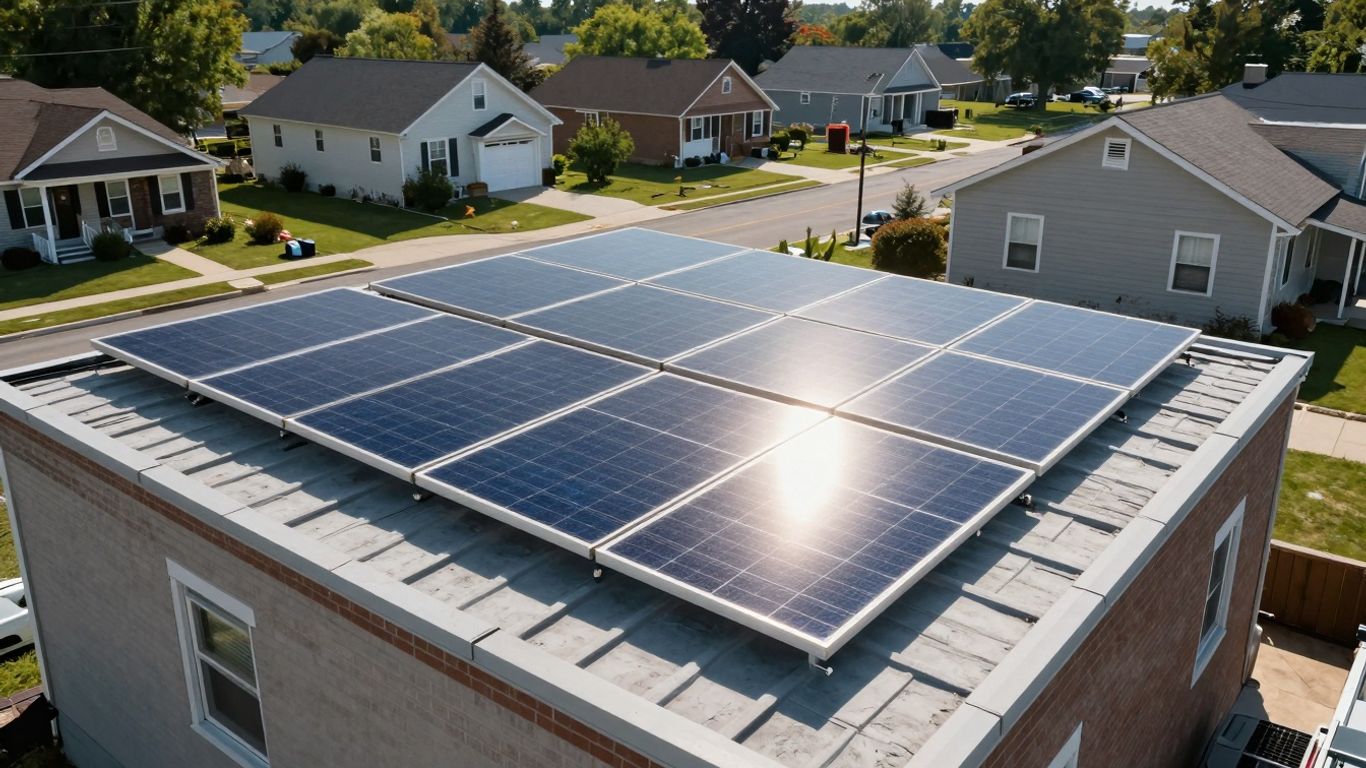
So, you’re thinking about going solar in Illinois and want to know who gets to take advantage of all those sweet tax credits and programs? It’s not a one-size-fits-all situation, unfortunately. There are a few key things you’ll need to check off the list.
Homeownership and Residency Criteria
First off, you generally need to own your home. Renters might be able to get in on some community solar deals, but if you’re looking at installing panels on your own roof, owning the place is usually a must. And it has to be your primary residence, sorry, vacation homes don’t count for most of these incentives. You’ll need to be living in Illinois, too, obviously.
System Ownership and Financing Options
Who owns the solar system matters. If you’re buying the system outright, whether with cash or a loan, you’re typically eligible for the federal tax credit and state incentives. If you’re going the lease or Power Purchase Agreement (PPA) route, the company that owns the system usually claims the tax credits. However, some programs, like Illinois Solar For All, are set up so that even with a lease or PPA, you can still see savings, often through guaranteed bill reductions.
Income Qualifications for Specific Programs
This is where things get a bit more specific. The big federal tax credit doesn’t have income limits, which is great news for most homeowners. But, programs like Illinois Solar For All are specifically designed for lower-income households. To qualify for these, your household income usually needs to be at or below 80% of the Area Median Income (AMI). They’ll likely ask for proof of income, like tax returns or pay stubs, to verify you meet the requirements.
It’s always a good idea to double-check the specific details for each program you’re interested in. Requirements can change, and sometimes there are nuances that could make you eligible or ineligible. Talking directly to the program administrators or a reputable solar installer is the best way to get the most accurate information for your situation.
Maximizing Your Illinois Solar Tax Credit Savings
So, you’re thinking about going solar in Illinois? That’s awesome! It’s a big step, but the good news is there are ways to make it way more affordable. We’re talking about saving a good chunk of change, not just on your electric bills, but upfront too. Let’s break down how to get the most bang for your buck.
Calculating the Value of the Federal Tax Credit
[2026 Update] The Federal Residential Clean Energy Credit (IRC § 25D) was repealed by the One Big Beautiful Bill Act for systems installed after December 31, 2025. Illinois homeowners purchasing solar in 2026 are no longer eligible for this 30% federal credit. The state-level Illinois Shines SRECs and utility rebates below are now the main financial drivers for new solar installations. This credit is a game-changer, but remember, it’s only for systems installed by December 31, 2025. So, if you’re on the fence, now’s the time to jump.
To claim it, you’ll fill out IRS Form 5695 when you file your taxes. It’s important to know that you need to own your system outright or have a solar loan to qualify; leases don’t count. Also, you need to have enough tax liability to use the credit, but the good news is any leftover credit can usually be rolled over to future years. It’s a solid way to bring down that initial investment.
Understanding SREC Payments and Value
Beyond the federal credit, Illinois has its own programs, like Illinois Shines. This program is all about Solar Renewable Energy Credits, or SRECs. Basically, for every megawatt-hour of electricity your solar panels produce, you earn an SREC. The Illinois Shines program pays you upfront for the SRECs your system is expected to generate over 15 years. The amount you get depends on your utility company and your system’s size. Since the value of these credits can change and there’s a limited amount available each year, getting in sooner rather than later means a potentially higher payment. It’s another layer of savings that makes solar even more attractive.
Leveraging Utility Rebates and Other Incentives
Don’t stop at the federal and state programs! Your local utility company might have its own incentives. For example, Ameren and ComEd sometimes offer rebates, especially if your system includes a smart inverter or battery storage. These can add up to significant savings. It’s worth checking with your specific utility provider to see what’s available. Plus, Illinois offers a property tax exemption for solar systems, meaning the increased value of your home from the solar installation won’t be taxed. It’s all about stacking these different incentives to make your solar investment as financially rewarding as possible. You might even qualify for extra support if your project is located in specific areas, like low-income communities.
When you’re looking at the total cost of going solar, it’s easy to get overwhelmed. But by breaking down each incentive, the federal tax credit, SREC payments, utility rebates, and property tax breaks. You can see a clearer picture of your actual out-of-pocket expenses. It’s about smart planning to maximize your savings over the life of your system.
How to Claim Your Illinois Solar Tax Credit
So, you’ve gone solar in Illinois. That’s fantastic! Now comes the part where you actually get to claim that sweet federal tax credit. It’s not super complicated, but you do need to pay attention to the details. Think of it like following a recipe; miss a step, and things might not turn out quite right.
Completing IRS Form 5695
The main document you’ll need is IRS Form 5695, Residential Energy Credits. You can usually find this on the IRS website. This form is where you’ll report the costs associated with your solar installation. Make sure you have all your paperwork from the solar company before you start filling it out. This includes invoices, proof of payment, and details about the equipment installed.
Here’s a quick rundown of what you’ll typically report:
- Cost of the solar panels and related equipment: This includes things like the panels themselves, inverters, mounting hardware, and wiring.
- Installation labor costs: The cost of the professionals who put it all together.
- Any associated sales tax: Don’t forget this part!
It’s important to note that this credit is for the energy-generating equipment itself. It doesn’t cover things like structural improvements to your roof that aren’t directly part of the solar setup.
Submitting Your Tax Return
Once Form 5695 is filled out, you’ll attach it to your annual federal income tax return. This is how you tell the IRS you’re claiming the credit. The credit reduces your overall tax liability, meaning you owe less in taxes. If the credit is more than what you owe, you can carry over the unused portion to future tax years. This is a big plus because it means you won’t necessarily lose out on any of the credit if your tax bill isn’t high enough in the year you install the system.
Remember, the federal tax credit is a one-time thing for your solar installation. While you can carry over unused amounts, the initial claim happens in the tax year following your system’s installation. So, if your panels were installed in 2024, you’ll claim the credit when you file your 2024 taxes in early 2025.
Ready to take the next step? Illinois solar rebates and see your personalized options.
Record Keeping for Solar Installations
This is probably the most important part, and honestly, it’s not that hard if you stay organized. You need to keep good records of everything related to your solar purchase and installation. This is your proof if the IRS ever has questions. What kind of records, you ask?
- Invoices and receipts: Keep every single bill and receipt from your solar installer. These should clearly show the costs of the system and installation.
- Contracts: Your original contract with the solar company is also important.
- Proof of payment: Bank statements or credit card statements showing you paid for the system.
- IRS Form 5695: Keep a copy of the form you submitted, along with your tax return for that year.
Basically, if it has anything to do with your solar project and money, hold onto it. It’s better to have too many records than not enough. This documentation is key to successfully claiming the credit and having it stand up to any scrutiny.
Important Deadlines and Program Changes
When you’re looking into solar tax credits and incentives in Illinois, it’s super important to keep an eye on the clock and any program updates. Things can change, and missing a deadline or a program shift could mean leaving money on the table. It’s not like a one-and-done deal; these programs have timelines and sometimes get tweaked.
The Federal Tax Credit Expiration Date
[2026 Update, Repealed] The Federal Residential Clean Energy Credit (IRC § 25D) was repealed by the One Big Beautiful Bill Act (signed July 4, 2025) for systems installed after December 31, 2025. The scheduled phase-down to 26%/22% never took effect, instead, the credit was eliminated outright for new residential purchases. Illinois homeowners purchasing solar in 2026 are not eligible. If you’re thinking about going solar, getting it installed by the end of 2025 is the best way to get the full 30% benefit. After that, the savings shrink. Remember, you need to buy your system outright or finance it with a loan to qualify; leasing doesn’t count for this federal credit. You can carry over unused credit amounts to future tax years, but it’s wise to check with a tax professional about how long that applies, especially as tax forms can change.
Impact of Program Updates on Savings
Illinois’s own programs, like Illinois Shines (also known as the Adjustable Block Program) and Illinois Solar For All, have their own schedules and rate structures. For Illinois Shines, the rates for Solar Renewable Energy Credits (SRECs) are set for specific blocks of time and tend to decrease slightly each year. This means the sooner you get your system installed and registered, the better the rate you’ll likely secure for the 15-year payment period. The Illinois Solar For All program also has funding cycles and specific rates that can be adjusted. It’s a good idea to check the Illinois Power Agency’s website or contact program administrators regularly for the latest information on rates and availability.
Acting Quickly to Secure Incentives
Because program funding can be limited each year and rates often decline over time, acting promptly is usually the best strategy. For instance, some blocks of funding for Illinois Shines can fill up quickly. If you’re interested in the Illinois Solar For All program, especially for community solar subscriptions or distributed generation projects, there might be waitlists for future funding cycles. Getting your application in or working with an approved vendor sooner rather than later can help ensure you don’t miss out on current incentives before they change or run out. It’s a bit like trying to get concert tickets, the popular ones go fast!
It’s always a good practice to get quotes from multiple installers and understand their timelines for installation and application submission. This way, you can align your project with the most beneficial program deadlines and avoid any last-minute rushes that might lead to mistakes or missed opportunities.
Additional Solar Benefits in Illinois
Beyond the tax credits and direct incentives, Illinois offers a few other perks that make going solar even more appealing. These can add up to significant long-term savings and make your solar investment even sweeter.
Property Tax Exemptions for Solar Systems
When you install solar panels, your home’s value generally goes up. Normally, this increase in value would also mean a higher property tax bill. However, Illinois has a special rule for solar installations. You won’t have to pay extra property tax on the added value your solar system brings to your home. To take advantage of this, you’ll need to file a specific form with your local county assessor. It’s a straightforward way to keep more money in your pocket over the years.
Net Metering Policies in Illinois
Net metering is a billing arrangement that helps you get credit for the extra electricity your solar panels produce. When your system generates more power than your home is using, that excess energy is sent back to the grid. Your utility company then gives you credits for this power, which can be used to offset your electricity bill when your panels aren’t producing enough, like at night or on cloudy days. It’s a great way to maximize the value of the solar energy you generate. Keep in mind that as of January 1, 2025, Illinois has moved to a supply-only net metering model for new installations, which is less beneficial than the previous system. However, if your system was interconnected before that date, you’re grandfathered in for the lifetime of your system. Understanding these net metering policies in Illinois is key to maximizing your savings.
Smart Inverter and Battery Storage Rebates
If you’re looking to add a bit more tech to your solar setup, Illinois offers additional incentives. Customers of Ameren or ComEd can get rebates for installing solar panel systems or battery storage systems that come with smart inverter technology. These rebates are typically a set amount per kilowatt (kW) of solar capacity or per kilowatt-hour (kWh) of energy storage. For example, you might get $300 per kW for a solar inverter and $300 per kWh for battery storage. These systems allow utilities to manage energy flow more effectively, and you get rewarded for it. It’s a nice bonus if you’re considering battery backup or a more advanced system.
While the upfront cost of solar can seem like a lot, these additional benefits, combined with tax credits and programs like Illinois Shines, really help bring the overall cost down. It makes solar a much more accessible and financially sound choice for many homeowners across the state. The state’s commitment to clean energy is evident in these varied support systems.
Here’s a quick look at potential savings from these additional benefits:
| Benefit | Estimated Savings (Varies) |
|---|---|
| Property Tax Exemption | Avoids tax increase on added home value |
| Net Metering | Credits for excess energy sent to the grid |
| Smart Inverter/Battery Rebate | Up to $300/kW (solar) or $300/kWh (battery storage) per system |
Wrapping It Up
So, going solar in Illinois is definitely a big step, but it looks like there are some solid ways to make it easier on your wallet. The federal tax credit is a huge help, but remember, it’s set to change at the end of 2025, so acting sooner rather than later could save you a good chunk of change. Plus, programs like Illinois Shines and others can really bring down the initial cost. It’s worth looking into all your options to see what fits best for your home and your budget. Making the switch to solar is a big decision, but with these incentives, it’s more achievable than you might think.
Frequently Asked Questions
What is the main solar tax credit available in Illinois?
[2026 Update] Illinois doesn’t have its own specific solar tax credit. The federal Residential Clean Energy Credit (IRC § 25D) that used to cover 30% of system costs was repealed by the One Big Beautiful Bill Act (signed July 4, 2025) for systems installed after December 31, 2025. Illinois homeowners purchasing solar in 2026 are no longer eligible for this federal credit. The main financial incentives now are Illinois Shines (SRECs), utility rebates, and the property tax exemption. See the sections above for details.
Who can get the federal solar tax credit?
To get the federal solar tax credit, you generally need to own your home and the solar panel system. You also need to have a federal tax liability, meaning you owe federal income tax. The system needs to be installed on your main home or a second home. Leasing a solar system usually means you can’t claim this credit.
Are there other ways to save money on solar in Illinois besides the federal tax credit?
Yes, absolutely! Illinois offers other programs like ‘Illinois Shines,’ which provides payments based on the solar energy your system is expected to produce. There’s also the ‘Illinois Solar For All’ program, which offers significant savings for lower-income households. Plus, some utility companies, like Ameren and ComEd, offer rebates for installing solar panels and battery storage systems, especially if they have smart inverters.
How do I claim the federal solar tax credit?
Claiming the federal solar tax credit is done when you file your yearly federal income tax return. You’ll need to fill out a specific form called IRS Form 5695. Make sure you keep all your receipts and documents from your solar installation, as you’ll need them to complete the form accurately. It’s a good idea to talk to a tax professional to ensure you do it correctly.
What happens to my property taxes when I install solar panels?
Good news! Illinois offers a property tax exemption for solar energy systems. This means that the increase in your home’s value due to the solar panels won’t be counted when your property taxes are calculated. You’ll need to file a specific form with your local county assessor to make sure you get this benefit.
What is Net Metering in Illinois?
Net metering is a program where your utility company gives you credit for the extra electricity your solar panels send back to the power grid. If you generate more power than you use during sunny times, that excess energy is sent to the grid, and you get a credit on your electricity bill for it. For new installations after January 1, 2025, Illinois has a ‘supply-only’ net metering model, which is a bit different and less valuable than the previous system. However, if your system was connected before that date, you’re likely ‘grandfathered in’ to the older, more beneficial policy.
Ready to Start Saving on Your Energy Bills?
Get a free, no-obligation quote from trusted local providers in under 2 minutes.
No obligation • Free estimates • Takes under 2 minutes
Get a Second Quote for Your Illinois Home
Installer pricing can vary a lot, even with the same incentives available. A second quote gives you a number to compare before those incentives are applied.
Maryland Solar Tax Credit: Incentives, Eligibility & How to Claim

See What Solar Costs at Your Maryland Address
Maryland offers incentives on top of the federal tax credit. A local quote shows what your system would actually cost before those numbers are applied.
Disclosure: we may earn a commission if you switch or request a quote through this link, at no extra cost to you. It never changes which plan or company we recommend. How we make money.
Thinking about putting solar panels on your Maryland home? That’s smart. Maryland has some pretty good deals to help you out, especially when it comes to the Maryland solar tax credit and other incentives. It can really bring down the cost of going solar. But, you gotta know, some of these deals, like the big federal tax credit, have deadlines. So, it’s a good idea to get the lowdown on what’s available and when you need to act.
Key Takeaways
- The federal Residential Clean Energy Tax Credit can cut your solar system cost by 30%, but it’s only for systems installed by December 31, 2025.
- Maryland offers a rebate program, with applications needing to be in before November 30, 2024, and grants for income-eligible homes through the Solar Access Program.
- You can sell Solar Renewable Energy Certificates (SRECs) generated by your system for extra cash, typically earning around $330 annually for a standard system.
- Maryland provides a sales tax exemption on solar systems and some counties offer property tax exemptions for the added value from solar.
- It’s important to understand if you purchase your system or lease it, as this affects your eligibility for certain tax credits like the federal ITC.
⚠️ 2026 Update: Federal Solar Tax Credit Repealed for Purchases
The 30% federal Residential Clean Energy Tax Credit (IRC § 25D) was repealed by the One Big Beautiful Bill Act, signed July 4, 2025. If you purchase a solar system outright (cash or loan) after December 31, 2025, you are no longer eligible for this federal credit. It wasn’t phased out gradually; it was repealed outright for new residential purchases.
Is there still a federal solar benefit in 2026? Yes, indirectly, through a lease or Power Purchase Agreement (PPA). The installer can still claim the § 48E commercial Investment Tax Credit (30%) and typically passes those savings to you through lower monthly rates, often 20 to 40% below your current utility rate, with no money down. Just keep in mind that with a lease/PPA you won’t own the system, so state tax credits and property tax exemptions that require ownership won’t apply to you.
For most Maryland homeowners buying solar in 2026, the real incentives are the state-level programs outlined below.
Understanding The Maryland Solar Tax Credit Landscape
A Rooftop Solar Panel Array Installed On A Flat Roof In A Leafy Neighborhood.
So, you’re thinking about going solar in Maryland? That’s awesome! It’s a big step, and thankfully, the state and federal governments have put some pretty sweet incentives in place to help you out. It can feel a little confusing at first with all the different programs and credits, but let’s break it down.
The federal credit has gone. Your Maryland incentives have not.
The 30% federal solar credit ended on 31 December 2025, so a system you buy or finance in 2026 does not qualify for it. Maryland’s own incentives still apply, and they are what a 2026 quote should be built on. A lease or PPA is the one route that still carries the federal credit, because the solar company owns the system and claims it.
Federal Residential Clean Energy Tax Credit
First off, there’s the big one: the Federal Residential Clean Energy Tax Credit. This is often called the Investment Tax Credit, or ITC. It lets you deduct a good chunk of your solar system’s cost right off your federal taxes. For systems installed before the end of 2025, that’s a 30% credit. It applies to the whole system, panels, installation, everything. Just remember, you have to actually buy your system to get this credit; leasing doesn’t count. Also, you need to have enough tax liability to use the credit, though you can usually roll over unused amounts. It’s a really good deal, but the clock is ticking on this one.
The federal tax credit is a significant financial incentive, but it’s important to be aware of its expiration. Acting sooner rather than later can mean locking in substantial savings on your solar investment.
Maryland’s Renewable Portfolio Standard
Maryland has this thing called a Renewable Portfolio Standard (RPS). Basically, it’s a goal for the state to get a certain percentage of its electricity from clean, renewable sources. Right now, they’re aiming for half by 2030. To help make that happen, they’ve created a system that encourages solar energy production.
The Role of Solar Renewable Energy Certificates (SRECs)
This is where Solar Renewable Energy Certificates, or SRECs, come in. Think of them as credits you earn for generating clean energy. For every megawatt-hour of electricity your solar panels produce, you get one SREC. You can then sell these SRECs on a special market or to energy companies. Prices can vary, but they typically bring in a decent amount of money over time, adding another layer of savings to your solar setup. It’s a smart way Maryland is pushing for more clean energy and helping homeowners like you benefit directly. You can find more details about commercial solar projects and grants on the Maryland Commercial and Canopy Solar Program page.
Here’s a quick look at how the federal credit has been structured:
| Year(s) | Residential Credit | Commercial Credit |
|---|---|---|
| Through 2022 | 26% | 26% |
| 2023 | 22% | 22% |
| 2024 | 0% | 10% |
| 2025 | 30% | 30% |
| After 2025 | N/A | N/A |
Note (2026 Update): The 30% residential solar tax credit (IRC § 25D) was repealed for systems installed after December 31, 2025, by the One Big Beautiful Bill Act (signed July 4, 2025). The percentages shown above are historical. Purchasing homeowners in 2026 are no longer eligible.
Key State-Specific Solar Incentives Available
Maryland really rolls out the red carpet for solar energy, offering several programs that make going solar more affordable. Beyond the federal tax credit, there are some fantastic state-level incentives designed to help you out.
Maryland Residential Clean Energy Rebate Program
This is a pretty straightforward program. If you install a solar system on your primary home, you can get a $1,000 rebate. There are a couple of conditions, though: the system needs to be at least 1 kilowatt (kW) in size, and the installation has to be done by someone certified by the North American Board of Certified Energy Practitioners (NABCEP). It’s important to get your application in before November 30, 2024, as this program has a deadline.
Maryland Solar Access Program Grants
This program is specifically for homeowners who meet certain income requirements. It offers grants to help make solar more accessible to a wider range of residents. It operates on a first-come, first-served basis, so if you think you might qualify, it’s a good idea to look into it sooner rather than later. The Maryland Solar Access Program can provide up to $7,500 in assistance.
Local County and Municipal Solar Programs
Don’t forget to check what your specific county or even your town might offer. Some local governments have their own incentives, like property tax credits for solar installations. These can add up and make a real difference in your overall savings. It’s worth asking your solar installer about any local programs you might be eligible for.
While state and federal incentives are great, local programs can sometimes be the cherry on top. They often target specific community needs or encourage adoption in particular areas, so they’re definitely worth investigating.
Maximizing Your Solar Investment Through Tax Exemptions
So, you’re thinking about going solar in Maryland? That’s awesome! Besides the obvious benefit of lower electricity bills, the state has some pretty sweet tax breaks that can make your solar setup even more affordable. It’s like getting a little thank you from the state for choosing clean energy.
Maryland Solar Property Tax Exemption
One of the cool things about solar panels is that they can actually boost your home’s value. Pretty neat, right? But sometimes, an increase in home value can mean a bump in your property taxes. Maryland gets this, and they’ve got your back. They won’t hike up your property taxes just because you added solar panels. This means you get to enjoy the added home value without the extra tax burden. It’s a win-win.
Exemption from State Sales Tax on Solar Systems
Buying a solar system is a big purchase, and nobody likes paying extra taxes on big purchases. Good news: Maryland exempts solar energy systems from the state sales tax. This means you save a good chunk of money right off the bat, usually around 6% of the system’s cost. So, that money you save on sales tax can go towards other things, or just make your overall investment feel even better.
Here’s a quick look at what you can expect:
- Sales Tax Exemption: You won’t pay state sales tax on your new solar system.
- Property Tax Exemption: In certain counties, the added value from your solar installation won’t increase your property taxes.
It’s always a good idea to double-check with your local county assessor’s office to confirm the specifics of the property tax exemption in your area. Rules can sometimes vary a bit from place to place.
These exemptions, combined with other incentives, really help make solar a smart financial move in Maryland.
Navigating The Claiming Process For Solar Credits
So, you’ve decided to go solar in Maryland. That’s fantastic! Now comes the part where you actually get those tax credits and incentives you’ve earned. It might seem a little daunting, but it’s really just a few steps. The most significant federal incentive is the Residential Clean Energy Tax Credit, often called the ITC. This credit lets you deduct a percentage of your solar system’s cost right off your federal taxes.
Eligibility Requirements for the Federal ITC
Before you start filling out forms, let’s make sure you qualify. The main thing to remember is that this credit is for homeowners who purchase their solar system. This means paying with cash or taking out a solar loan. If you’re leasing your system, you won’t be able to claim the federal credit because you don’t own the equipment.
Here are the key points:
- Ownership is Key: You must own the solar energy system. Leased systems don’t qualify.
- New Systems Only: The credit applies to new solar energy systems installed on your home.
- Primary Residence: The system needs to be installed at your main home in the United States.
- Tax Liability: You need to have a federal tax liability (meaning you owe taxes) to take advantage of the credit. If the credit is more than what you owe in taxes for that year, you can carry over the unused portion to future tax years. The IRS doesn’t set a limit on how long you can carry it over, but it’s always a good idea to check with a tax professional about the latest rules, especially as tax forms can change.
Steps to Claim the Federal Solar Tax Credit
Claiming the federal ITC is done when you file your annual federal income tax return. You’ll need a specific form for this.
- Get Your Documentation: Your solar installer should provide you with all the necessary paperwork detailing the cost of your system and its components. Keep this safe!
- Fill Out IRS Form 5695: This form is specifically for residential energy credits. You’ll report the cost of your solar system and calculate the credit amount. You can usually download this form from the IRS website.
- File Your Taxes: Submit the completed Form 5695 along with your federal tax return (like Form 1040). If you’re using tax software or a tax preparer, they will guide you through this process.
Remember, the federal ITC has an expiration date. To claim the full credit, your system generally needs to be installed and placed in service by December 31, 2025. After that, the credit percentage might decrease or the credit itself could expire, so timing is important.
It’s really about making sure you have the right paperwork from your installer and then correctly reporting it on your taxes. Don’t stress too much if you don’t use the full credit in one year; the IRS lets you roll it over. Just keep an eye on those deadlines!
Understanding System Purchase vs. Leasing
This is a big one when it comes to claiming incentives. When you purchase a solar system, whether outright with cash or through a loan, you own the equipment. This ownership is what allows you to claim tax credits like the federal ITC and potentially other state or local incentives. You’re essentially investing in an asset for your home.
On the other hand, when you lease a solar system, you’re paying a monthly fee to a company that owns and maintains the panels on your roof. Because you don’t own the system, you can’t claim the federal tax credit. The leasing company, as the system owner, is the one eligible for those incentives. While leasing can offer lower upfront costs and predictable monthly payments, it means giving up the direct financial benefits of ownership, like tax credits. It’s a trade-off to consider carefully based on your financial situation and goals.
Ready to take the next step? Maryland solar tax credit and see your personalized options.
Important Deadlines and Future Considerations
When you’re thinking about going solar in Maryland, keeping an eye on deadlines is pretty important. It’s not just about getting the best deal right now, but also about making sure you don’t miss out on any incentives that might change or expire. Plus, knowing what’s coming down the pipeline can help you plan your installation for maximum benefit.
Expiration of the Federal Solar Tax Credit
The federal solar tax credit, officially known as the Residential Clean Energy Tax Credit, has been a big deal for homeowners. It allows you to deduct a percentage of your solar system’s cost from your federal taxes. This credit is currently set to step down in the coming years, so acting sooner rather than later can mean a bigger tax savings. While there’s a possibility of extensions or changes, it’s wise to plan based on the current schedule.
Timing Your Installation for Maximum Benefit
Timing is everything, right? For Maryland homeowners, this means considering a few things:
- Federal Tax Credit Schedule: As mentioned, the federal credit percentage decreases over time. Check the current percentage and the schedule for future reductions to see how it impacts your potential savings.
- State Program Cycles: Programs like the Maryland Solar Access Program (MSAP) often operate on fiscal years with specific application windows. For example, the FY26 MSAP had application periods that have now closed or are closing soon, with new ones opening later. You’ll want to check the MEA website for the most up-to-date information on when applications open and close for the current and upcoming fiscal years.
- Contractor Availability: Popular solar installers can get booked up, especially during peak seasons. Applying early can help you secure a spot with your preferred company and potentially get your system installed within the same calendar or fiscal year for tax and incentive purposes.
Future State-Level Solar Initiatives
Maryland is committed to renewable energy, and that means new programs and updates are always a possibility. The Maryland Energy Administration (MEA) is continually working on initiatives to make solar more accessible. Keep an eye on:
- Updates to Existing Programs: Programs like MSAP are reviewed and updated annually. New funding amounts, eligibility criteria, or application processes might be introduced.
- New Incentive Programs: The state legislature may introduce new bills or programs aimed at further supporting solar adoption, energy storage, or other clean energy technologies.
- Policy Changes: Regulations regarding net metering, grid access, or solar permitting can evolve, potentially affecting the economics of solar installations.
Staying informed about these deadlines and future considerations is key to making the most of your solar investment. It’s a good idea to regularly check the Maryland Energy Administration’s website and consult with your solar installer about the latest program details and timelines. Planning ahead can save you money and ensure a smoother installation process.
Additional Solar Benefits in Maryland
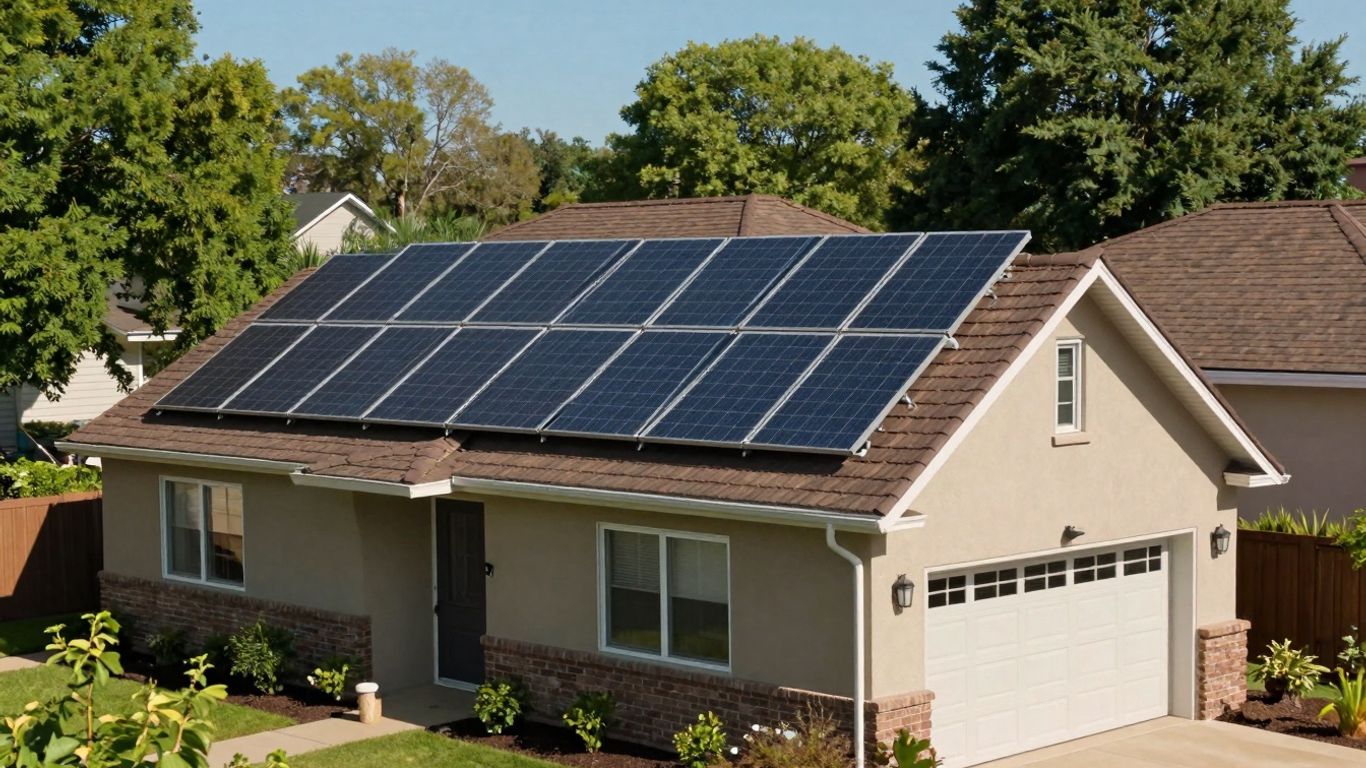
This Image Shows A Home With A Rooftop Solar Array In A Suburban Neighborhood. It Supports Content Explaining How The Maryland Solar Tax Credit Can Reduce The Cost Of Going Solar For Homeowners
Net Metering Policy Explained
So, you’ve got solar panels up and running, and they’re doing a fantastic job generating electricity. But what happens when your panels produce more power than your home can use, especially on those super sunny days? That’s where Maryland’s net metering policy comes in. It’s a pretty neat system that lets you send that excess energy back to the local power grid. And the best part? The utility company will credit you for that electricity at the full retail rate. Think of it as selling your extra sunshine back to the grid. Over time, especially during months with lots of sun, this can really help offset the initial cost of your solar system. It’s a smart way to make sure every bit of energy your panels create is put to good use.
Energy Storage Tax Credits
Beyond just generating solar power, storing it is becoming increasingly important for a stable energy future. If you’re thinking about adding battery storage to your solar setup, Maryland offers a tax credit to help with that. For residential energy storage systems, you can claim a credit for up to 30% of the installation cost. However, there’s a cap on this credit, which is $5,000 for homes. This incentive is designed to encourage homeowners to invest in storage solutions, making their solar power more reliable, even when the sun isn’t shining.
Property Value Increase and Solar
Installing solar panels can be a good investment, not just for your monthly electricity bills, but also for your home’s overall value. Studies have shown that homes with solar systems often sell for more than comparable homes without them. Now, you might be thinking, ‘Will a higher home value mean higher property taxes?’ In Maryland, the state helps ease that concern. The increase in your property’s value that comes specifically from the solar installation is exempt from property taxes. This means you get to enjoy the benefit of a potentially higher home value without the added tax burden. It’s a nice little perk that makes going solar even more appealing.
It’s worth noting that while Maryland offers these great incentives, it’s always a good idea to check the specifics with your installer or the relevant state agencies. Incentive programs can change, and understanding the exact requirements and deadlines is key to maximizing your savings. Don’t leave money on the table because you missed a deadline or didn’t meet a small requirement!
Here’s a quick look at some of the benefits:
- Net Metering: Get credited at the full retail rate for excess energy sent back to the grid.
- Energy Storage Tax Credit: A credit of up to 30% (capped at $5,000) for residential battery storage systems.
- Property Tax Exemption: Your property taxes won’t increase due to the added value from your solar panel system.
- Sales Tax Exemption: You don’t pay state sales tax on the purchase of your solar system.
Wrapping Up Your Maryland Solar Journey
So, going solar in Maryland definitely has its perks. You’ve got a bunch of incentives, like tax credits and rebates, that can really help bring down the initial cost. It’s a smart move for your wallet and the environment. Just remember, some of the best deals, especially that federal tax credit, have deadlines. So, if you’re thinking about making the switch, now’s the time to really look into it and get the ball rolling. Don’t miss out on saving some money while helping the planet.
Frequently Asked Questions
What is the main federal tax credit for solar panels, and when does it end?
The main federal tax credit is called the Residential Clean Energy Tax Credit. It lets you subtract 30% of the cost of your solar panel system from your federal taxes. However, this credit is only for systems put into service before January 1, 2026. So, if you want to get this big discount, you need to have your system installed this year!
Are there state-specific rebates or grants for solar in Maryland?
Yes, Maryland offers a few ways to save! There was a $1,000 rebate program, but it has ended. Now, there’s the Maryland Solar Access Program, which provides grants of up to $7,500 for homes with lower incomes to help make solar more affordable. It’s first-come, first-served, so it’s good to check if you qualify.
Can I sell the extra solar energy my panels produce?
Absolutely! Maryland has a great program called Net Metering. If your solar panels make more electricity than your home uses, the extra power goes back to the electric grid. Your utility company will then give you credit for that energy, which can significantly lower your electricity bill. You can even carry over credits or cash them out once a year.
Do I have to pay sales tax or property tax on my solar system?
Good news! Maryland exempts solar energy systems from sales tax, so you save about 6% right away. Also, in some counties, the increase in your home’s value from adding solar panels is not taxed, meaning your property taxes won’t go up just because you went solar.
What are Solar Renewable Energy Certificates (SRECs) and how do they work?
SRECs are like credits you earn for every megawatt-hour of clean energy your solar panels produce. You can sell these credits to energy companies. It’s a way for the state to encourage more renewable energy. While the price can change, a typical 5 kW system could earn an extra few hundred dollars a year from SRECs.
What’s the difference between buying solar panels and leasing them when it comes to tax credits?
If you want to claim the federal solar tax credit, you generally need to buy your solar panel system outright with cash or a loan. If you choose to lease your panels, you usually won’t be eligible for these tax credits because the leasing company owns the system.
Ready to Start Saving on Your Energy Bills?
Get a free, no-obligation quote from trusted local providers in under 2 minutes.
No obligation • Free estimates • Takes under 2 minutes
Get a Second Quote for Your Maryland Home
Installer pricing can vary a lot, even with the same incentives available. A second quote gives you a number to compare before those incentives are applied.
Solar Panel Financing Options Explained: $0-Down, Loans, Leases & PPAs

Turn These Financing Options Into Real Numbers
$0-down loans, leases, and PPAs each shift what you pay and what you own. A quote for your home shows the actual system cost so you can compare financing options side by side.
Disclosure: we may earn a commission if you switch or request a quote through this link, at no extra cost to you. It never changes which plan or company we recommend. How we make money.
Thinking about putting solar panels on your roof? It’s a great way to save on electricity bills, but the upfront cost can be a real head-scratcher. Luckily, there are several solar panel financing options to consider, even if you don’t have a lot of cash saved up. We’re going to break down the most common solar panel financing options, like zero-down deals, loans, leases, and power purchase agreements. It’s not as complicated as it sounds, and understanding these solar panel financing options can help you make the best decision for your home and your wallet.
Key Takeaways
- Zero-down solar panel financing options mean you can install solar without paying anything upfront, but you’ll still pay over time through loans, leases, or per-kilowatt-hour charges.
- Consider the various solar panel financing options available, as they can accommodate different financial situations and preferences.
- Solar loans let you own the system, qualify for tax credits, and potentially see the most savings long-term, but require good credit.
- Research your local solar panel financing options to ensure you find the best deals and terms.
- Solar leases allow you to use solar power for a fixed monthly fee without owning the system, which can be simpler but offers fewer financial benefits.
- Solar panel financing options can vary widely, so it’s crucial to compare multiple offers before making a decision.
- Power Purchase Agreements (PPAs) mean you pay for the actual electricity the panels produce, often at a set rate, with payments fluctuating based on sunlight and usage.
- Always compare total costs over 20 years, understand contract terms, and get multiple quotes from reputable installers to avoid misleading sales tactics and find the best solar panel financing options for you.
- Explore renewable energy credits and incentives as part of your solar panel financing options.
Understanding Zero-Down Solar Panel Financing Options
So, you’re thinking about solar panels but the big upfront cost is making you pause. You’ve probably heard the term “zero down solar” and wondered if it’s for real. Well, it can be, but it’s super important to know what you’re actually getting into.
What “Zero Down” Truly Means for Solar
Understanding the different solar panel financing options available is essential for making an informed decision regarding solar energy investments.
When a company says “zero down” for solar, it doesn’t mean the panels are free. It just means you don’t have to pay anything out of pocket to get them installed. You’ll still be paying for the system, but it’s spread out over time. Think of it like buying a car with no down payment. You still have to make monthly payments. The big difference here is that you’re paying for electricity generation or the system itself, not just a car. The promise of “zero down” simply shifts the payment from the start to later on.
In addition, familiarizing yourself with the various solar panel financing options can help you maximize savings and benefits.
Distinguishing Legitimate Offers from Scams
- Make sure to evaluate all solar panel financing options before committing to a specific plan.
It’s a jungle out there, and some folks try to pull a fast one. There’s no such thing as truly “free solar” from the government. If someone tells you that, run the other way. Legitimate zero-down options usually fall into a few categories:
The market for solar panel financing options is evolving, with new solutions emerging all the time, so stay informed.
- Solar Loans: You borrow money to buy the system and own it. You make monthly payments, and you can claim tax credits. This is often the best way to go long-term.
- Solar Leases: You pay to use a system installed on your roof, but you don’t own it. The company that owns it gets the tax benefits.
- Consider factors like interest rates and repayment terms when comparing solar panel financing options.
- Power Purchase Agreements (PPAs): Similar to a lease, you agree to buy the electricity the system produces at a set rate, but you don’t own the panels.
Be wary of anyone pushing hard or making unbelievable claims. Always get everything in writing and read it carefully. You can explore different payment plans that can maximize your savings.
Key Structures of No-Money-Down Solar
Familiarizing yourself with available solar panel financing options can empower you to make better financial decisions.
Most legitimate “no-money-down” solar setups fall into one of these main structures:
- By understanding your solar panel financing options, you can negotiate better deals and terms.
- Solar Loans with No Upfront Payment: This is where you get a loan to buy the system, but you don’t pay anything when it’s installed. You start making payments later, often after the system is up and running. You own the system and can take advantage of the federal solar tax credit. As of 2025, interest rates can range from 6% to 16% APR. For example, a 7kW system costing $25,200 might be financed this way. Some lenders might even offer deferred payment periods, so you don’t pay for a few months. It’s a good idea to look into options like TD’s Green Mortgage if you’re looking for incentives.
- Solar Leases: You’re essentially renting the solar panels. You pay a monthly fee to use the electricity they generate. You don’t own the system, so you don’t get the tax credits. The company that owns the panels gets those. It’s simpler upfront but might cost you more over the life of the system.
- Power Purchase Agreements (PPAs): This is like a lease, but instead of paying a flat monthly fee, you pay for the actual amount of electricity the panels produce. The rate is usually fixed or has a small annual increase. Again, you don’t own the system and don’t get the tax benefits.
- Research local solar panel financing options to find the most competitive rates available.
The biggest thing to remember is that “no-cost solar” is usually a misleading term. While you might not pay anything upfront, you will pay over time through loans, leases, or PPAs. Understanding the total cost and who owns the system is key to making the right choice for your home and your wallet.
Ultimately, understanding solar panel financing options is essential for maximizing your investment in solar energy.
It’s important to know that the federal solar tax credit is a big deal, and it’s set to change in the coming years. If you’re looking to install solar, especially with a zero-down option, understanding these financing structures is your first step to saving money on your electricity bills.
Solar panel financing options can also include innovative solutions like community solar programs.
Exploring Solar Loans: Ownership and Savings
Solar loans offer a way to own your solar panel system outright, even if you don’t have a pile of cash ready to go. Think of it like getting a mortgage for your solar setup. You borrow money to buy the system, and then you pay back that loan over time, usually with interest. The big upside here is that you actually own the panels. This means you’re eligible for all the tax credits and incentives out there, which can really cut down on the overall cost. Plus, once the loan is paid off, the electricity those panels generate is basically free for you.
If you want to see what one lender’s terms look like in full, our review covers Credit Human’s solar loan rates, repayment terms and eligibility.
Many homeowners are exploring various solar panel financing options to make clean energy more accessible.
How Solar Loans Function
When you get a solar loan, a lender pays for the solar system upfront. You then make monthly payments to the lender to pay back that amount, plus interest. These loans typically have terms ranging from 10 to 25 years. The interest rate you get depends a lot on your credit score and the current market conditions. It’s important to look at the total cost over the life of the loan, not just the monthly payment. Some loans might have “dealer fees” baked in, which can increase the total amount you borrow without being super clear about it.
By understanding the nuances of solar panel financing options, you can ensure you’re well-prepared for the future.
Eligibility and Credit Requirements
Getting approved for a solar loan usually means you’ll need a decent credit score. Most lenders look for scores of 640 or higher. They’ll also check your debt-to-income ratio and your overall credit history. If your credit isn’t perfect, you might still qualify, but the interest rates could be higher. Some companies might offer loans with lower credit score requirements, but it’s worth investigating if those come with less favorable terms.
Loan Terms, Interest Rates, and Long-Term Value
Here’s a quick look at what you might expect with a solar loan:
- Ownership: You own the system from day one.
- Tax Credits: The 30% federal solar tax credit ended on 31 December 2025 and does not apply to a 2026 purchase. State and local incentives may still apply.
- Home Value: Owned solar systems can increase your home’s market value.
- Savings: After the loan is paid off, your electricity costs drop significantly.
- Predictable Payments: Your monthly loan payment stays the same (unless you refinance).
Let’s say you get a $20,000 solar system financed with a 25-year loan at 8.99% APR. Your monthly payment might be around $198. Over 25 years, you’d pay back about $59,400. Before 2026 a 30% federal tax credit would have taken $6,000 off that. It ended on 31 December 2025, so budget the full amount. This is a significant investment, but owning the system means you reap all the long-term benefits.
When considering a solar loan, always ask for the “cash price” of the system. This helps you understand if there are hidden markups or “dealer fees” included in the loan amount. Transparency is key to making sure you’re getting a fair deal and maximizing your long-term savings.
Navigating Solar Leases: Renting Your System
So, you’re thinking about solar, but the idea of buying a whole system upfront feels like a lot? That’s where solar leases come in. Think of it like renting an apartment instead of buying a house. A solar company installs the panels on your roof, and you pay them a monthly fee to use the electricity they generate. The company owns the system, handles the maintenance, and you get to enjoy lower electricity bills without the big upfront cost.
The Mechanics of a Solar Lease Agreement
When you sign a lease, you’re essentially agreeing to rent the solar equipment for a set period, usually 20 to 25 years. You don’t own the panels, and you don’t get to claim the federal tax credits, the leasing company does. Your payment is typically a fixed monthly amount, though some leases include an “escalator” clause. This means your monthly payment might go up a small percentage each year, usually around 2-3%. It’s important to know this upfront because those small increases add up over two decades.
- Ownership: The solar company owns the system.
- Payment: You pay a fixed monthly fee, potentially with annual increases.
- Maintenance: Usually covered by the leasing company.
- Tax Credits: Claimed by the leasing company, not you.
- Term Length: Typically 20-25 years.
- Evaluate multiple solar panel financing options to determine your best course of action.
Benefits and Drawbacks of Leasing
Your choice of solar panel financing options can have a significant impact on your overall savings.
Leasing is popular because it makes solar accessible without a large initial investment. You can start saving on your electricity bills right away. Plus, you don’t have to worry about repairs or upkeep; that’s the leasing company’s job. It’s a pretty hands-off approach.
However, there are downsides. Since you don’t own the system, you miss out on the significant savings from federal tax credits. Over the life of the lease, especially with those annual increases, you might end up paying more than if you had bought the system. Also, selling your home can get complicated. A new buyer might have to agree to take over your lease, which can sometimes be a hurdle.
The biggest advantage of a lease is the low barrier to entry, making solar a possibility for more homeowners.
When a Solar Lease Might Be Suitable
A lease could be a good fit if:
-
- Explore all available solar panel financing options to ensure you find the best fit for your budget.
- You want to go solar but don’t have the cash for a down payment or a loan.
- You’re not eligible for or don’t want to deal with the complexities of tax credits.
- You prefer predictable monthly payments and don’t want the responsibility of system maintenance.
Educating yourself about solar panel financing options can lead to better financial decisions.
- You don’t plan on moving within the next 20-25 years, or you’re comfortable with the process of transferring the lease to a new homeowner.
It’s really important to read the lease agreement carefully. Understand the total cost over the entire term, including any annual payment increases. Compare this to how much you’d pay for electricity from your utility, and also consider what you might pay with a solar loan or outright purchase. Sometimes, what looks like a good deal upfront can end up costing more in the long run.
Understanding the solar panel financing options available can simplify your decision-making process.
Power Purchase Agreements (PPAs): Paying for Production
Alright, let’s talk about Power Purchase Agreements, or PPAs for short. Think of this as a way to get solar power without actually owning the equipment. A solar company installs and owns the panels on your roof, and you agree to buy the electricity they produce at a set price. It’s like having your own mini power plant, but someone else handles all the heavy lifting and upfront costs.
Understanding PPA Pricing Structures
- Make sure you are aware of all solar panel financing options before signing any contracts.
The main draw of a PPA is that you’re paying for the actual electricity generated, usually at a rate that’s lower than what your local utility company charges. This means your monthly bill should go down. However, it’s not always a simple fixed price. Some PPAs have what’s called an “annual escalator.” This is basically a small, pre-planned increase in the price per kilowatt-hour (kWh) each year. The idea is that this rate will still be lower than the utility’s projected rate increases over time, but it’s something to watch out for.
- Pay-as-you-go: You’re billed based on the actual amount of electricity your solar system produces.
- Predetermined Rate: The price per kWh is set in the contract, often lower than utility rates.
- Be sure to compare the solar panel financing options available in your area before making a decision.
- Annual Escalators: Some contracts include small, yearly price increases to account for inflation and future utility rate hikes.
Variable Payments and Geographic Limitations
Because you’re paying for production, your monthly bill can fluctuate. If your system produces more electricity in a sunny month, you might pay a bit more (though still likely less than your utility bill would have been). Conversely, a cloudy month means less production and a lower bill. It’s a direct link between sunshine and your payment. Also, PPAs aren’t available everywhere. While they’re becoming more common, you’ll need to check if they’re offered in your specific state and even your local area. Utility regulations and local policies play a big role here.
Reviewing your solar panel financing options regularly can help you stay informed about potential savings.
Ready to take the next step? solar panel financing and see your personalized options.
Contractual Terms and Considerations
PPAs usually come with long-term contracts, often 20 to 25 years. This is how the solar company recoups its investment in the system. During this time, the company is responsible for maintaining the system. If something breaks, they fix it. You also won’t get to claim any federal tax credits or incentives, because you don’t own the system, the company does. It’s a trade-off: no upfront cost and no maintenance headaches, but you also don’t build equity in the system or get those immediate tax benefits.
When considering a PPA, it’s really important to read the fine print. Understand the escalator clause, the contract length, and what happens if you decide to sell your home. Some agreements allow you to transfer the PPA to the new owner, while others might require you to buy out the system. Make sure you’re comfortable with the long-term commitment.
Here’s a quick look at what you might expect:
Consider all aspects of solar panel financing options to ensure you make the most informed choice.
| Feature | PPA Details |
|---|---|
| Ownership | Solar company owns the system |
| Upfront Cost | Typically $0 |
| Payment Structure | Pay per kWh produced |
| Maintenance | Covered by the solar company |
| Savings | Usually lower than utility rates |
| Incentives | Not available to homeowner |
| Contract Length | Typically 20-25 years |
| Price Changes | May include annual escalators |
Comparing Solar Panel Financing Options
- Many homeowners are benefiting from exploring different solar panel financing options.
So, you’ve looked into the different ways to get solar panels on your roof without shelling out a ton of cash upfront. Now comes the big question: which one is actually the best fit for you? It’s not a one-size-fits-all situation, and understanding the nitty-gritty details can save you a lot of headaches and money down the road.
Financial Analysis: Cost Over Time
When you’re comparing these options, it’s easy to get caught up in the monthly payment. But honestly, you need to look at the bigger picture, the total cost over the life of the system, usually 20 to 25 years. This is where things get interesting, especially when you factor in things like tax credits and how much electricity you’ll actually be saving.
Let’s break down a hypothetical scenario for a 7kW system in California, producing about 10,500 kWh per year. Keep in mind these numbers are estimates and can change based on your location, system size, and current utility rates.
- Understanding the different solar panel financing options available to you can help maximize savings.
- Exploring various solar panel financing options can lead to better long-term savings.
- Understanding the terms of solar panel financing options is crucial for financial planning.
Being well-informed about solar panel financing options can lead to more educated decisions.
| Financing Option | Estimated Monthly Payment | 20-Year Total Cost | After Tax Credits (if applicable) | Estimated Electricity Savings (20 Yrs) | Net Cost (20 Yrs) |
|---|---|---|---|---|---|
| Solar Loan (8.99% APR) | $198 | $47,520 | $39,960 | $52,500 | $12,540 savings |
| Solar Lease (3% escalator) | $110 to $150 | $30,800 | $30,800 | $52,500 | $21,700 savings |
| PPA ($0.11/kWh, 2% escalator) | $96 to $125 | $26,400 | $26,400 | $52,500 | $26,100 savings |
| Utility Electricity | $175 to $280 | $52,500 | $52,500 | $0 | $0 savings |
As you can see, owning the system through a loan, especially when you can use the federal tax credit, often leads to the most savings over two decades. Leases and PPAs offer lower upfront costs and predictable payments, but you don’t build equity in the system, and the long-term savings are generally less than owning.
Investing time in understanding solar panel financing options can yield significant long-term benefits.
Break-Even Points for Each Option
Knowing when your system starts paying for itself is a big deal. This is the point where the money you’ve saved on electricity bills finally outweighs the total cost you’ve spent on the system and its financing.
- Solar Loans: Typically reach break-even between 10 to 12 years. This is often faster if you can take advantage of tax credits and incentives.
- Solar Leases: Usually take a bit longer, around 12 to 15 years, to break even. Since you’re not paying for the system itself, the “break-even” is more about when your lease payments plus the remaining utility costs are less than what you would have paid without solar.
- Power Purchase Agreements (PPAs): Similar to loans, PPAs often hit the break-even mark between 10 to 12 years. Your payments are tied to production, so as rates increase, your savings become more apparent.
It’s important to remember that these break-even points are estimates. Actual performance can be affected by system degradation, changes in utility rates, and how well the system is maintained. Always ask for projections specific to your home and the equipment being installed.
Choosing the Right Solar Financing for You
So, how do you pick? It really boils down to your personal financial situation, your goals, and how long you plan to stay in your home.
- Go for a Solar Loan if:
- You have a good credit score (usually 640+).
- You want to own your system and build equity.
- You can benefit from federal tax credits and other incentives.
- You plan to stay in your home for at least 10-15 years to see the full savings.
- You don’t mind being responsible for system maintenance (though many loans include warranties).
- Consider a Solar Lease if:
- You don’t qualify for a loan or prefer not to take one on.
- You can’t use tax credits (e.g., low tax liability).
- You want a low or $0 upfront cost and predictable monthly payments.
- You don’t want to worry about system maintenance or repairs.
- You might move within the next 10-15 years (leases are often transferable).
- Understanding the unique solar panel financing options tailored to your needs is essential.
- Look into a PPA if:
-
- They are available in your area (not all states allow them).
- You want $0 upfront cost and prefer to pay only for the electricity produced.
Solar panel financing options are available to suit many different financial situations.
- You don’t mind that your monthly bill can fluctuate based on sunlight and weather.
- You want a lower per-kilowatt-hour rate than your utility offers, without the hassle of ownership.
-
Ultimately, the best way to decide is to get detailed quotes for each option from reputable installers. Compare the total costs, savings projections, and contract terms side-by-side. Don’t be afraid to ask questions until you’re completely comfortable with your choice.
A thorough understanding of your solar panel financing options can enhance your savings potential.
Avoiding Misleading Solar Sales Tactics
Recognizing “No-Cost Solar” Deceptions
Lots of ads talk about “no-cost solar” or “zero-down solar,” and it sounds pretty great, right? Who wouldn’t want free solar panels? But honestly, there’s usually more to it than that. These “no-cost” offers often mean someone else owns the system, like in a lease or a Power Purchase Agreement (PPA). You’re not paying for the panels themselves upfront, but you are paying for the electricity they produce, or for using the system. It’s not truly free; it’s just a different way of paying for power. Always ask who owns the system and what exactly you’re paying for each month.
The Importance of Transparency in Contracts
- Make sure you assess all available solar panel financing options thoroughly before proceeding.
When you’re looking at solar, the contract is everything. If a salesperson is pushing you to sign right away, claiming a deal is ending, or saying you’ll miss out on a rebate that doesn’t exist, that’s a big red flag. A good company will give you time to actually read the contract, ask questions, and understand everything. They should be able to clearly explain who owns the system, who gets the federal tax credit (that 30% Investment Tax Credit), and how your monthly payments work. If they get cagey or give you vague answers about ownership or incentives, that’s a sign they might be hiding something.
Always get everything in writing. Verbal promises don’t hold up, and you need a clear record of what you’re agreeing to, especially when it comes to costs, ownership, and long-term obligations.
Strategies for Obtaining Multiple, Honest Quotes
Don’t just go with the first company that knocks on your door or calls you. It’s smart to shop around and get quotes from at least three different solar providers. This helps you compare not just prices, but also the types of financing they offer, the equipment they use, and their warranties. When you get quotes, pay attention to these details:
Regularly reviewing your solar panel financing options can ensure you make the most informed decision possible.
- System Ownership: Do you own the panels, or is it a lease/PPA?
- Total Cost: What’s the full price of the system if you buy it, and what are the monthly payments for loans, leases, or PPAs?
- Incentives: Who claims the federal tax credit and any state/local rebates? Make sure you understand how these affect your overall cost.
- Contract Length: How long are you locked into a lease or PPA?
- Escalation Clauses: Do lease or PPA payments go up each year? If so, by how much?
Getting multiple quotes helps you spot offers that seem too good to be true and ensures you’re making an informed decision based on solid information, not just sales pressure.
Making the Right Solar Choice for You
So, we’ve looked at the different ways to get solar panels on your roof without paying a ton upfront. Whether you’re leaning towards owning your system with a loan, renting it with a lease, or paying for the power you use through a PPA, each has its own set of pros and cons. It really comes down to what fits your budget, your long-term plans for your home, and how much you want to be involved. Take your time, get a few quotes, and really read the fine print. Choosing the right financing is a big step, but it can lead to years of saving money and using cleaner energy. Good luck!
Ultimately, exploring your solar panel financing options is a key part of the solar purchasing process.
Frequently Asked Questions
What does “$0-down solar” really mean?
When you hear about “$0-down solar,” it means you can get solar panels installed on your home without paying any money upfront. However, it doesn’t mean the panels are free. You’ll still pay for them over time through monthly payments, like a loan, or by paying for the electricity they produce through a lease or a Power Purchase Agreement (PPA).
- It’s important to compare different solar panel financing options to find the best fit for your needs.
What’s the difference between a solar loan, lease, and PPA?
With a solar loan, you borrow money to buy the panels and own them. You get to claim tax credits and keep all the savings after paying off the loan. A solar lease is like renting the panels; you pay a monthly fee to use them, but you don’t own them and can’t claim tax credits. A Power Purchase Agreement (PPA) is similar to a lease, but you pay for the actual electricity the panels make, usually at a set price per kilowatt-hour.
Are there any hidden costs with $0-down solar options?
Sometimes. While $0-down options mean no upfront payment, it’s crucial to read the fine print. Some loans might have higher interest rates, and leases or PPAs often have yearly payment increases (escalators) built into the contract. Always understand the total cost over the life of the agreement.
- Always consider your solar panel financing options carefully before making a decision.
Who benefits most from a solar loan?
Solar loans are often best for homeowners with good credit who want to own their system. Owning the panels means you can take advantage of tax credits, which can significantly lower your costs. Plus, once the loan is paid off, all the energy savings are yours, and owning the system can increase your home’s value.
- Evaluating solar panel financing options can help you determine the best way to maximize your investment.
When might a solar lease or PPA be a better choice?
Leases and PPAs can be good options if you don’t qualify for a loan, can’t use the tax credits (perhaps due to low tax liability), or simply prefer not to own the system. They offer predictable monthly costs (leases) or payments based on energy produced (PPAs) and usually include maintenance, taking the responsibility off your shoulders.
- Understanding your solar panel financing options can clarify your financial responsibilities moving forward.
How can I avoid being tricked by solar sales tactics?
Be wary of offers that sound too good to be true, like “free solar” with no strings attached. Always get quotes from multiple reputable companies, ask for everything in writing, and carefully read all contracts before signing. Understanding the different financing options and what they truly cost over time will help you make a smart decision.
Two companion pieces go further on where to borrow: getting a solar loan from a credit union and local banks, credit unions and online lenders compared.
Ready to Start Saving on Your Energy Bills?
Get a free, no-obligation quote from trusted local providers in under 2 minutes.
No obligation • Free estimates • Takes under 2 minutes
Want real quotes before you decide how to pay for it?
A loan only makes sense once you know what the system will actually cost. If your electric bill runs above $150 a month and your roof gets decent sun, a personalized quote gives you real numbers to put into any loan comparison. Quotes are available nationwide.
What an Energy Broker Actually Does, and When You’re Better Off Without One

Skip the Middleman, Compare Texas Plans Directly
A broker shops plans for you and usually gets paid to do it. You can do the same legwork yourself: compare Texas electricity plans against your own usage and current bill.
Disclosure: we may earn a commission if you switch or request a quote through this link, at no extra cost to you. It never changes which plan or company we recommend. How we make money.
(original: “The Role of Energy Brokers in Today’s Competitive Market” “in today’s competitive market” is a classic AI tell)
If you live in a deregulated state like Texas, you don’t get handed one electricity rate, you pick from dozens of plans, and the gap between the cheapest and the priciest can run a few hundred dollars a year on the exact same house. That’s real money. But comparing 50 plans line by line, reading every fine-print clause, is nobody’s idea of a good evening.
That gap, between the savings sitting there and the hassle of capturing them, is what energy brokers exist to fill. This is a straight look at what a broker actually does, how they get paid (which matters more than it sounds), when one’s worth it, and when you’re better off just comparing the plans yourself.
What a broker actually does
A broker isn’t tied to a single supplier, so they can line up plans from many of them at once and tell you which fits your usage. The real work isn’t finding a low number, anyone can do that. It’s reading the parts that bite later: early-termination fees, “bill credit” plans where the advertised rate only applies if you use exactly 1,000 kWh, and variable rates that look great for two months and then climb.
A good broker saves you the legwork and catches the traps. That’s the honest version of their value. Not magic pricing, fewer mistakes, less time.
How brokers get paid (ask this first)
There are two models. Either you pay the broker a fee, or the supplier pays them a commission baked into your rate. Commission isn’t automatically bad, but it can quietly nudge a broker toward the plan that pays them best rather than the one that’s cheapest for you.
One question settles it: “How are you paid, and does it change depending on which plan I choose?” A broker who answers plainly is worth talking to. One who gets vague isn’t your broker.
When a broker is genuinely worth it
- Your contract is up for renewal and you don’t want to get dumped onto a high month-to-month rate.
- You’re on a variable plan that’s been creeping up and you’ve stopped tracking it.
- You’re short on time and would rather pay a little (or accept the commission) than spend the evening comparing.
- You run a small business with more than one meter, where the math gets fiddly fast.
When you’re better off doing it yourself
Here’s the part a broker won’t lead with: the comparison itself is free. If you’re a single household in a deregulated market and you’re willing to read a plan’s Electricity Facts Label, you can usually match a broker’s result in about 15 minutes, and skip the commission folded into your rate.
That’s exactly what our plan comparison tool is for. Punch in your ZIP, see the real per-kWh cost at your usage level, and you’ve done the broker’s core job yourself.
Compare electricity plans now →
Broker vs. consultant, not the same thing
People mix these up. A broker gets you onto a better plan right now. A consultant audits how you use energy and suggests changes, efficiency upgrades, better metering, solar. Most homeowners need the first. You’d only want the second if your bills are high enough that changing your usage, not just your plan, is where the savings live.
If you do want a broker, pick one who:
- Tells you upfront how they’re paid.
- Compares a real range of suppliers, not the two that pay them.
- Knows your state’s rules (deregulated markets differ a lot).
- Will hand you references without flinching.
FAQ
What does an energy broker do? Compares suppliers, negotiates terms, and gets you onto a competitive plan, so you don’t have to wade through every offer yourself.
How do brokers get paid? Either a direct fee from you or a commission from the supplier. Ask which, before you sign anything.
Are brokers only for businesses? No. Plenty work with single households. But if your situation is simple, a free comparison tool may get you the same result.
Can a broker help with renewable or fixed-rate plans? Yes, many can point you to fixed-rate or green plans. You can also filter for those yourself in a comparison tool.
Bottom line
A broker is a shortcut, not a miracle. If your time is worth more than the 15 minutes it takes to compare, use one, just make sure you know how they’re paid. If you’d rather keep that commission in your own pocket, the comparison does the same job for free.
See your real plan options →
No obligation. Free. Takes about two minutes.
Recent Posts
- Pennsylvania electricity supplier complaints: How to document, file, and resolve a billing dispute
- What happens when my electricity contract ends in Pennsylvania? A practical guide
- Pennsylvania electricity early termination fees: what to check before canceling your contract
- Power to Choose in Texas: How to compare electricity plans and rates
- How to read your Texas energy bill: A plain-English guide to every charge and fee