How to Keep the Solar Panels You Already Have Running at Full Output
Not Sure If Your System Still Makes Sense?
If your panels are older or shaded and losing output despite the upkeep tips above, it may be worth comparing what a new system could do for your home. A local installer can walk through your options and give you real numbers.
Disclosure: we may earn a commission if you switch or request a quote through this link, at no extra cost to you. It never changes which plan or company we recommend. How we make money.
Most solar advice stops at “get it installed.” But panels lose a little output every year on their own, and dirt, shade, or heat can quietly shave 10-25% off what you’re paying for. None of the fixes below are complicated. They’re the difference between a system that hits its payback date and one that drifts past it.
Keep them clean
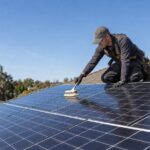
Dust, pollen, and bird droppings block light. Dirty panels lose roughly 5-20% of their output depending on where you live, more in dusty or low-rain areas. A rinse with a garden hose every couple of months, or after a long dry spell, handles most of it. For stuck-on grime, a soft brush and water; skip harsh chemicals, which can damage the coating. If your roof is steep, pay someone, it’s not worth a fall.
Check your best solar option →
Mind the shade
Shade hurts more than dirt, because one shaded panel can drag down a whole string. A branch that throws shadow for even an hour a day shows up in your production numbers. Trim trees back (and remember they grow). If part of your roof is unavoidably shaded, microinverters or power optimizers let each panel work independently so one shaded panel doesn’t sink the rest, worth it on partially-shaded roofs, overkill on clear ones.
Get the angle right
Panels facing true south (northern hemisphere) at a tilt near your latitude capture the most sun. If you’re at 35° latitude, 30-40° is the sweet spot. You can adjust the tilt seasonally, steeper in winter, flatter in summer, but the gain is modest and the effort is real, so most people are better off with a fixed angle a good installer picks for the year-round average. Don’t lose sleep over this one.
Let them breathe
Solar cells run best around 77°F. Above that, output drops about 0.25-0.5% per degree, which adds up on hot afternoons. Panels mounted a few inches off the roof get airflow underneath and run cooler. In a hot climate, a lighter or reflective roof helps too. You’re not going to air-condition your roof, just don’t have panels sitting flat against dark shingles if you can help it.
Watch the numbers
Your system’s monitoring app shows daily and monthly production. Spend the first few months learning what “normal” looks like, then a sudden dip tells you something’s wrong, dirt, a failing inverter, or new shade from a grown tree, before it costs you a season. Set a low-production alert if the app supports it.
Maintain it (lightly)
Panels are low-maintenance, not no-maintenance. An annual once-over catches loose connections, corroded wiring, or a failing inverter that a homeowner wouldn’t spot. Twice a year in harsh climates. Keep a simple log of dates and fixes, it also reassures a buyer if you sell.
Buy quality where it counts
Cheap panels and inverters look good on the quote and worse over 20 years. The inverter especially is worth spending on: a basic string inverter loses ground if any one panel underperforms, while microinverters keep each panel independent. If you’ve got an older, underperforming inverter, replacing just that can recover a surprising amount of output without redoing the whole array.
Use storage and timing to your advantage
A battery doesn’t make panels more efficientbut it stops you from spilling cheap daytime power back to the grid for little credit. Store the surplus, use it at night or during peak-rate hours, and keep some as outage backup. Pair that with simple timing habits, run the dishwasher, laundry, or EV charging midday when your panels are producing, and you capture more of what you generate. LED lighting and efficient appliances cut the demand side at the same time.
Trackers: only sometimes
Sun-tracking mounts follow the sun across the day and can add 20-25% output. But they cost more and have moving parts that need maintenance. They make sense for ground-mounted arrays in high-rate areas with room to spare. For a typical rooftop, the money is better spent elsewhere.
Weatherproof for the long haul
You can’t control the weather, but you can prepare. In hail country, panels with tempered glass or hail-rated coatings are worth it. In snow, clear panels with the right tools, never anything sharp. Make sure your racking is rated for local wind. The point isn’t to fuss over every forecast, just to not get caught out.
Quick reference
| Tip | Benefit | Effort |
|---|---|---|
| Keep panels clean | Recovers 5-20% | Low |
| Reduce shading | Avoids big output drops | Medium |
| Right tilt/angle | More year-round output | Medium |
| Cooling/airflow | Less heat loss | Low |
| Monitor output | Catch faults early | Low |
| Annual maintenance | Prevents costly failures | Medium |
| Quality inverter | Higher lifetime yield | High |
| Battery + timing | Use more of what you make | High |
| Trackers | +20-25% (situational) | High |
| Weatherproofing | Longer lifespan | Medium |
FAQ
How do I make my panels more efficient? Keep them clean, cut shading, get the tilt right, and watch your production numbers.
How often should I clean them? Twice a year, more in dusty or pollen-heavy areas.
Do panels lose efficiency over time? Yes, about 0.5-1% a year. Good care slows it.
Does heat hurt output? Yes. Panels do best around 77°F; output dips slightly for every degree above.
Does a battery make panels more efficient? Not technically, it just lets you use more of the power you already make.
Bottom line
Solar isn’t a set-and-forget purchase. Clean panels, clear sightlines to the sun, a healthy inverter, and smart timing are most of the game, and most of them are free or cheap. Do them and your system earns out faster.
See your solar savings estimate →
No obligation. Free. Takes about two minutes.
Backup option: EcoFlow power stations
Most grid tied solar systems shut off during an outage. A portable battery can keep key items running without a full home battery.
Browse EcoFlow power stationsAffiliate link: we earn a commission if you buy through this link, at no extra cost to you. It does not affect what we recommend.
Wondering If It’s Time to Upgrade?
If your panels are older or were undersized from the start, a fresh quote shows what a new system could look like for your roof. It is a no-obligation quote, not a purchase.
Recent Posts
- Pennsylvania electricity supplier complaints: How to document, file, and resolve a billing dispute
- What happens when my electricity contract ends in Pennsylvania? A practical guide
- Pennsylvania electricity early termination fees: what to check before canceling your contract
- Power to Choose in Texas: How to compare electricity plans and rates
- How to read your Texas energy bill: A plain-English guide to every charge and fee