How a Net Metering Program Works (and How It Values Your Solar Power)
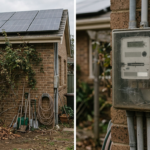
A net metering program is a billing mechanism that credits solar energy system owners for the electricity they add to the grid. When your rooftop panels generate more power than your building consumes, the excess flows out to your utility company. Your utility then applies a financial credit to your account for that exported power.
Find Out What Net Metering Is Worth on Your Roof
Credit rates and rules vary by utility, so the value in this guide may not match your bill exactly. Get a quote that accounts for your actual export credits.
Disclosure: we may earn a commission if you switch or request a quote through this link, at no extra cost to you. It never changes which plan or company we recommend. How we make money.
This mechanism is the financial engine behind most residential and small commercial solar investments. It allows you to offset the cost of the electricity you pull from the grid when the sun is not shining. Understanding how your specific utility values those credits is the most important step in calculating whether solar panels make financial sense for your property.
The daily mechanics of a net metering program
Solar panels only generate electricity during daylight hours, and their production peaks in the middle of the day. Most homes and businesses, however, use electricity differently. A typical home uses the most power in the early morning and the evening, exactly when solar production is low or nonexistent.
To solve this mismatch, utility companies install a bidirectional meter when you connect a solar system to the grid. This meter tracks power flowing in two directions. When you turn on your lights at night, the meter records the electricity you pull from the grid. When the sun is high and your panels produce more than you need, the meter records the excess power flowing out to the grid.
The word “net” refers to the difference between your imports and your exports over a billing cycle. If you import 800 kilowatt-hours (kWh) from the grid at night, but export 600 kWh to the grid during the day, you are only billed for the net difference of 200 kWh. The utility grid effectively acts as a giant, virtual battery for your home, storing your excess midday power so you can use it after dark.
How utility companies value your solar credits
The financial value of a net metering program depends entirely on how your utility prices your exported power. The rules dictate whether your solar investment pays for itself in five years or fifteen years. Broadly, utilities value exported solar power in one of two ways.
Retail rate net metering
Retail rate net metering is the most favorable structure for solar owners. Under this system, the utility credits you for exported power at the exact same rate they charge you to buy it. It is a one-to-one exchange.
If your utility charges you 16 cents for every kWh you pull from the grid, they will credit your account 16 cents for every kWh you send back. A kilowatt-hour exported at noon perfectly cancels out the cost of a kilowatt-hour imported at midnight. In a retail rate system, sizing your solar array to produce 100 percent of your annual electricity usage will generally eliminate your entire energy usage bill.
Avoided cost or wholesale net billing
Many utilities have moved away from retail rate net metering, replacing it with net billing at an avoided cost rate. Under this structure, the utility pays you the wholesale price of electricity. This is roughly what it would cost the utility to buy that same amount of power from a large-scale power plant.
If you pay 16 cents to buy a kWh from the grid, the utility might only credit you 4 or 5 cents for the kWh you export. This creates a significant gap between the price of consuming power and the value of generating it. In a wholesale net billing system, a kilowatt-hour sent to the grid at noon will only cover a fraction of the cost of a kilowatt-hour bought at midnight. To maximize your financial return under this structure, you must consume as much of your own solar power as possible while it is being generated, rather than exporting it.
The impact of time-of-use pricing on your credits
Many utility companies require solar owners to switch to a time-of-use (TOU) rate plan. A TOU plan charges different prices for electricity depending on the time of day. Power is cheap during off-peak hours, like the middle of the night or midday, and expensive during peak hours, typically late afternoon through the evening.
Time-of-use rates complicate the net metering math. Your solar panels will export most of their excess power during off-peak midday hours, earning credits at the cheaper off-peak rate. When the sun goes down, your home will import power during the expensive peak evening hours.
Because your exported power is worth less per kWh than your imported power, a one-to-one volumetric exchange will still leave you with a bill. You might export 500 kWh and import 500 kWh in the same month, but if your imports happened during expensive peak hours, your midday credits will not cover the total evening cost. Adjusting your energy habits, such as running heavy appliances midday, helps maximize the value of your solar production under a TOU plan.
Why net metering rules change across state lines
There is no federal law governing net metering. The rules are determined entirely at the state and local levels. State public utility commissions mandate how investor-owned utilities must compensate solar owners. Because state energy goals and grid capacities vary wildly, net metering programs look completely different depending on where you live.
Some states mandate full retail net metering to encourage rapid solar adoption. Other states have reached their renewable energy targets and are systematically reducing the value of solar credits to shift the financial burden away from non-solar ratepayers. State policies frequently cap the total amount of solar capacity that qualifies for retail net metering. Once that cap is hit, new solar customers are placed on successor tariffs that generally offer lower compensation rates.
Local municipal utilities and rural electric cooperatives operate under different rules than large, investor-owned utilities. A state law mandating retail net metering often exempts these smaller, locally governed energy providers. A homeowner living in city limits might get full retail credit, while a homeowner a mile away on a rural cooperative grid might only receive the wholesale rate. Always verify the specific rules of your exact utility provider rather than relying on a general state policy.
The annual true-up and your remaining credits
Solar production is highly seasonal. A properly sized solar array will generate a massive surplus of electricity during the long, sunny days of spring and summer. During the short, cloudy days of winter, that same array will produce far less power than your building consumes.
To account for this seasonal swing, net metering programs operate on an annual billing cycle that culminates in a true-up bill. During your high-production summer months, your excess credits roll over to the next billing cycle, building up a bank of credits on your account. When winter arrives, your utility automatically applies those banked summer credits to cover your winter energy deficits.
At the end of a 12-month period, the utility performs a true-up to settle the account. If you used more power over the year than you produced, you will owe a lump sum for the remaining balance. If you produced more power over the year than you used, the utility addresses the leftover credits. Utilities handle excess annual credits differently. Some will roll them over indefinitely to the next year. Some will issue you a paper check, but usually at a heavily reduced wholesale rate. Others will simply wipe the credits out, resetting your balance to zero. Sizing your system to produce slightly less than your annual usage prevents you from giving away free power at the end of the true-up cycle.
How battery storage changes the net metering math
The rules of your local net metering program dictate whether a home battery system makes financial sense. Batteries are expensive hardware, and their primary function is to store your excess daytime solar power so you can use it at night.
If your utility offers full retail net metering, the grid already acts as a perfectly efficient, free battery. There is little financial incentive to buy a physical battery to store power because the utility will credit you the full retail value for exporting it. In these areas, batteries are primarily purchased for backup power during grid outages, not for daily financial savings.
If your utility uses wholesale net billing or aggressive time-of-use rates, a home battery becomes a vital financial tool. Instead of exporting your excess midday power for a meager 4 cents, you store it in your battery. When evening arrives and grid power costs 20 cents, you power your home from your battery rather than buying expensive electricity from the utility. Poor net metering policies make battery storage highly valuable.
Questions to ask your utility before installing solar
Before signing a contract for solar panels, you must understand exactly how your utility will treat your system. Requesting the utility’s official net metering tariff document will provide the exact figures and policies governing your connection.
- What is the credit rate? Determine whether exports are credited at the full retail rate, a wholesale rate, or a time-of-use rate.
- Are there fixed monthly fees? Most utilities charge a fixed customer charge or grid connection fee that cannot be offset by solar credits. You will pay this fee every month, even if you produce more power than you use.
- What is the true-up month? Find out when your annual billing cycle resets. A true-up in spring allows you to build credits all summer, while a true-up in autumn means you enter winter with an empty credit bank.
- Are there system size limits? Many utilities will not approve a net metering agreement for a solar array designed to produce more than 110 percent to 120 percent of your historical annual usage.
Frequently asked questions
Do I still get a monthly electric bill with net metering?
Yes. Even if your solar panels offset all your energy usage, you will still receive a monthly statement showing your fixed grid connection fees and your current credit balance.
Can I make a cash profit from a net metering program?
Generating a meaningful cash profit is highly unlikely. Most utilities only pay out excess annual credits at a fraction of the retail rate, and many simply erase excess credits at the end of the year.
Does net metering work during a power outage?
No. Standard grid-tied solar systems automatically shut down during a blackout to prevent your panels from sending live electricity into the power lines while repair crews are working. You will not generate power or earn credits until the grid is restored.
The financial return on a solar investment depends heavily on the policies of your local energy provider. Before committing to a solar installation or signing a new energy contract, take the time to evaluate your options. Use our electricity plan comparison tool to review the available rates and understand how different providers handle solar credits in your area.
Homeowner Curious About Financing a System
If you own your home, this program connects you with financing options to review alongside your net metering numbers. It is a request for information only.
Recent Posts
- Pennsylvania electricity supplier complaints: How to document, file, and resolve a billing dispute
- What happens when my electricity contract ends in Pennsylvania? A practical guide
- Pennsylvania electricity early termination fees: what to check before canceling your contract
- Power to Choose in Texas: How to compare electricity plans and rates
- How to read your Texas energy bill: A plain-English guide to every charge and fee