
Conan Campbell
Solar Financing Options: Loans, Leases & Payment Plans Compared

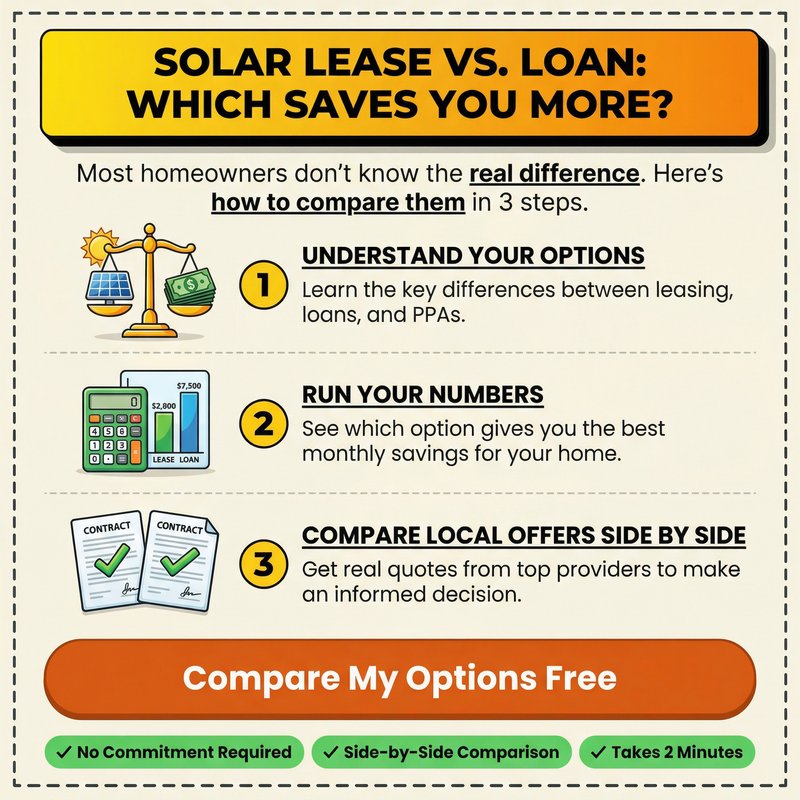
See Real Numbers Before You Pick a Financing Option
Loans, leases, and PPAs all work differently, and the right pick depends on your roof, your bill, and your credit. A quote from a local installer gives you actual costs to run through each option.
Disclosure: we may earn a commission if you switch or request a quote through this link, at no extra cost to you. It never changes which plan or company we recommend. How we make money.
Thinking about putting solar panels on your roof? That’s great! It’s a big step towards saving money on electricity and helping the environment. But, like anything big, it costs money upfront. The good news is there are several ways to pay for it, not just one lump sum. We’re going to look at the main solar financing options out there, like loans, leases, and other plans, to help you figure out what works best for your wallet and your home. It’s all about making a smart choice that pays off.
Key Takeaways
- Owning your solar system through a loan usually means more savings in the long run, often two to three times more than other options.
- Loans let you claim tax credits and can increase your home’s value, plus payments don’t go up over time.
- Leases and Power Purchase Agreements (PPAs) require little to no money down and handle maintenance, but you don’t get tax benefits and long-term savings are usually lower.
- When choosing, think about your budget, how long you plan to stay in your home, and if you want to own the system or just use the power it generates.
- Don’t forget about incentives like tax credits and net metering. They can make a big difference in how much you save, no matter which financing option you pick.
Understanding Your Solar Financing Options
Thinking about putting solar panels on your roof is a big step, and figuring out how to pay for it can feel a little overwhelming at first. It’s not just about the panels themselves; it’s about how you’re going to fund this investment in your home and the planet. Luckily, there are several ways to go about it, each with its own set of pros and cons. The best choice really depends on your personal financial situation and what you hope to get out of going solar. Let’s break down the main ways people finance solar energy systems.
The Appeal of Solar Energy
Why are so many people looking into solar these days? For starters, electricity bills can be a real pain, and solar offers a way to take control of those costs. Plus, there’s the environmental angle, using clean energy from the sun is a pretty good feeling. It’s about saving money over time and doing something good for the environment. Many homeowners also see it as a way to make their homes more valuable.
Key Considerations Before Choosing
Before you even start looking at financing, it’s smart to think about a few things. How much electricity do you actually use? What’s your budget like, not just for today but for the next 10, 20, or even 25 years? How long do you plan to stay in your home? These questions can really guide you toward the right financing path. It’s also worth checking out what tax credits or local rebates might be available, as these can significantly change the numbers.
Here are some points to ponder:
- Your Credit Score: This will heavily influence the types of loans you can get and the interest rates you’ll pay.
- Your Tax Liability: If you have a significant tax bill, you’ll be in a better position to take advantage of tax credits.
- Homeownership Duration: If you plan to move soon, some options might be less ideal than if you’re settled for the long haul.
- Tolerance for Risk: Are you comfortable with potential payment increases over time, or do you prefer a fixed, predictable cost?
Navigating the Landscape of Solar Financing Options
When you start researching, you’ll find a few main categories of financing. You’ve got options where you own the system outright, and then there are options where a third party owns and manages it. Each has its own way of working and its own set of benefits. It’s not a one-size-fits-all situation, so understanding the differences is key to making a smart decision for your home.
Here’s a quick look at what’s generally available:
- Cash Purchase: You pay the full amount upfront. Simple, and often the most cost-effective long-term.
- Solar Loans: You borrow money to buy the system and pay it back over time with interest.
- Solar Leases: You pay a monthly fee to use a system installed on your roof, but you don’t own it.
- Power Purchase Agreements (PPAs): Similar to a lease, but you pay for the electricity the system produces at a set rate, rather than a fixed monthly payment for the equipment.
Choosing how to finance your solar system is a significant decision. It’s easy to get caught up in the excitement of saving money and helping the environment, but taking a moment to really understand the financial mechanics of each option will save you headaches down the road. Think of it like buying a car. You wouldn’t just pick the first one you see without checking the price, the features, and how you’re going to pay for it.
Exploring Solar Ownership Through Loans
When you think about owning your solar setup, a solar loan is probably the first thing that comes to mind. It’s pretty straightforward: you borrow money to buy the system, and then you pay that money back over time. Unlike leases or power purchase agreements where someone else owns the panels on your roof, with a loan, you own them from day one. This means all the benefits, like tax credits and increased home value, are yours.
Benefits of Securing a Solar Loan
Getting a solar loan means you’re taking the ownership route. This usually leads to bigger savings down the road compared to leasing. Plus, you can claim all the available tax credits and incentives, which can really cut down the overall cost. Your home’s value might get a nice bump too, since you’ve added a valuable asset.
- Immediate Ownership: You own the system outright from the start.
- Tax Credit Eligibility: You can claim federal, state, and local incentives.
- Higher Long-Term Savings: Typically, owning solar panels through a loan results in greater savings over the system’s lifespan.
- Increased Home Value: Adding a solar system can make your home more attractive and valuable.
- No Escalating Payments: Your payments are usually fixed, unlike some leases that can go up over time.
One of the biggest pluses of a solar loan is that you get to take advantage of all the government incentives. These can significantly reduce the initial cost of your system, making it a much more attractive investment. It’s like getting a discount before you even start saving on your electricity bills.
Types of Solar Loans Available
There are a couple of main ways solar loans are structured. The first is a secured loan. This is where the loan is backed by an asset you own, like your house. Because the lender has this security, secured loans often come with lower interest rates and longer repayment terms. You can usually get these from banks, credit unions, or sometimes even the solar company itself.
The other type is an unsecured loan. This one isn’t backed by any specific asset. Since it’s a bit riskier for the lender, unsecured loans might have higher interest rates and shorter payback periods. These are often offered by solar companies as a way to make it easier for people to go solar without needing collateral.
Here’s a quick look at what might influence your loan:
| Factor | Details |
|---|---|
| Credit Score | Generally 650+ for the best rates, but varies by lender. |
| Interest Rate | Can range from 4% to 12% or more, depending on your credit and loan type. |
| Loan Term | Typically 5 to 25 years. Longer terms mean lower monthly payments. |
| Down Payment | Some loans require none, others might ask for a small percentage. |
| Lender Type | Banks, credit unions, solar installers, or third-party financiers. |
What to Look For in a Solar Loan
When you’re shopping around for a solar loan, don’t just grab the first offer you see. It’s really worth comparing a few different options. Pay close attention to the interest rate. That’s a big one that affects how much you’ll pay back over time. Also, check out the loan term, which is how long you have to pay it off. A longer term means smaller monthly payments, but you’ll likely pay more interest overall. Some loans might have origination fees or other charges, so read the fine print.
It’s also a good idea to see if the lender has experience with solar projects. They might offer better terms or be more helpful if you have questions specific to solar installations. Some lenders even bundle in services like system monitoring or maintenance plans, which could be convenient. Make sure the monthly payment fits comfortably into your budget, not just now, but for the entire life of the loan. You don’t want to be struggling to make payments years down the line.
Evaluating Solar Leases for Your Home
So, you’re thinking about solar panels but maybe the idea of a big upfront payment feels a bit much. That’s where solar leases come in. They’re a popular choice because they let you get the benefits of solar energy without needing a pile of cash to start. Basically, you agree to pay a monthly fee to a company that owns and maintains the solar system on your roof. It’s kind of like renting the panels.
How Solar Leases Work
With a solar lease, a third-party company installs and owns the solar panels on your property. You then pay them a fixed monthly amount to use the electricity the panels generate. This means you don’t have to worry about buying the equipment, installation costs, or any future maintenance. The lease agreement typically lasts for 20 to 25 years, and during that time, the company is responsible for keeping the system running smoothly. You’ll see a reduction in your electricity bill right away, which is the main draw for many people.
Advantages of Leasing Solar Panels
There are definitely some good points to leasing. For starters, the biggest perk is usually no upfront cost. You can start saving on your electricity bills from day one without a large initial investment. Plus, maintenance and repairs are generally covered by the lease provider, taking a load off your mind. It’s also usually pretty straightforward to transfer the lease to a new homeowner if you decide to sell your house, which can be a big plus.
Here are some of the key benefits:
- Zero Down Payment: Get solar without needing to spend a lot of money upfront.
- Predictable Monthly Costs: Your lease payment is usually fixed, making budgeting easier.
- Maintenance Included: The leasing company handles upkeep and repairs.
- Transferability: The lease can often be passed on to the next owner of your home.
One thing to really watch out for with leases is the annual escalator. This is a clause that allows the lease payment to increase each year, usually by a small percentage. While it’s often designed to keep pace with rising utility rates, it can mean your savings diminish over the life of the lease compared to owning the system outright. It’s important to understand exactly how this works before signing anything.
When a Solar Lease Might Be Ideal
A solar lease could be a great fit for you if you’re looking for immediate savings on your electricity bills and don’t have the funds for a large upfront purchase. It’s also a good option if you prefer not to deal with the responsibilities of system ownership, like maintenance or potential repairs. If you’re not planning on staying in your home for a very long time, say less than 10 years, a lease can be a practical way to benefit from solar without the long-term commitment of ownership. It’s a way to go solar with minimal hassle and immediate financial relief from high utility bills. You can explore solar financing options to see how it compares to other choices.
Power Purchase Agreements: A Different Approach
So, we’ve talked about loans and leases, but there’s another way to get solar power onto your roof without actually buying the panels yourself: a Power Purchase Agreement, or PPA. It sounds a bit formal, but the idea is pretty straightforward. Instead of buying the system, you’re essentially buying the electricity it produces.
Understanding Power Purchase Agreements
With a PPA, a solar company installs and owns the solar panel system on your property. You then agree to buy the electricity that system generates at a set price per kilowatt-hour (kWh). This means you get the benefit of solar power without any of the upfront costs associated with purchasing and installing the equipment. It’s like having your own mini power plant, but someone else handles all the heavy lifting and maintenance.
Here’s a quick rundown of how it typically works:
- Ownership: The solar company owns the panels.
- Installation: They install and maintain the system.
- Payment: You pay for the electricity produced, usually at a rate lower than your utility company charges.
- Contract: You sign a long-term contract, often 15-25 years.
Key Features of PPAs
PPAs have some distinct characteristics that set them apart from leases or loans. For starters, your monthly bill isn’t fixed. It changes based on how much electricity your panels generate. So, on a super sunny summer day, you might use and pay for more power than on a cloudy winter afternoon. This can be a good thing if you’re using a lot of energy when the sun is shining, but it also means your costs can fluctuate.
Most PPA contracts also include an annual price increase, often called an escalator. This is usually a small percentage, like 1.5% to 3.5% per year. While it means your rate goes up a bit each year, it’s generally designed to stay below the rate increases you’d see from your regular utility company. It’s a way for the PPA provider to account for inflation and ensure their investment remains profitable over the long term.
One of the biggest draws of a PPA is that you don’t have to worry about the system breaking down or needing repairs. The company that owns the panels is responsible for all maintenance and upkeep. This takes a lot of the hassle off your plate, allowing you to just enjoy the solar-generated electricity.
Ready to take the next step? solar financing options and see your personalized options.
Comparing PPAs to Leases
When you compare a PPA to a solar lease, the main difference often comes down to how you pay and how your costs change over time. With a lease, you typically pay a fixed monthly amount, regardless of how much electricity the panels produce. This gives you a predictable budget. A PPA, on the other hand, ties your payment directly to the system’s output. If the panels produce less power one month, your bill is lower. If they produce more, your bill is higher.
Here’s a simple way to think about it:
| Feature | Solar Lease | Solar PPA |
|---|---|---|
| Payment Structure | Fixed monthly payment | Payment based on electricity produced (kWh) |
| Cost Predictability | High (fixed monthly cost) | Moderate (varies with production) |
| Maintenance | Included | Included |
| Upfront Cost | Low to none | None |
| Ownership | Third-party owns system | Third-party owns system |
| Tax Credits | Provider claims | Provider claims |
| Annual Increase | Usually a fixed percentage on payment | Usually a fixed percentage on rate per kWh |
While both options let you avoid the large upfront cost of buying solar panels, the PPA offers a payment structure that’s more directly tied to the actual energy you’re getting. It’s a good option if you want to reduce your electricity bills without the commitment of ownership or the fixed monthly cost of a lease. You can explore financing options that might fit your needs.
Making the Right Solar Financing Choice

Assessing Your Financial Situation
Okay, so you’ve looked at loans, leases, and maybe even power purchase agreements. Now what? The first real step is to get honest with yourself about your own money situation. What’s your credit score like? Do you have a decent chunk of savings, or are you more of a ‘pay as you go’ person? Knowing this stuff helps narrow down what’s even possible. For instance, if your credit isn’t stellar, some loan options might be off the table, pushing you towards a lease or PPA. Also, think about how much you can comfortably afford each month. Don’t stretch yourself too thin, even for something as good as solar.
Comparing Long-Term Savings
This is where things get interesting. While a lease might seem cheap upfront, you’re not actually owning the panels. Over 20 or 25 years, that adds up. Loans, on the other hand, mean you own the system eventually. You’ll pay interest, sure, but once the loan is paid off, the electricity is basically free. It’s a bit like buying a house versus renting, one builds equity, the other just costs money month after month.
Here’s a rough idea of how savings can stack up:
| Financing Type | Upfront Cost | Monthly Payment | Long-Term Savings (25 Years) |
|---|---|---|---|
| Cash Purchase | High | Low (None) | Highest |
| Solar Loan | Low to Medium | Medium | High |
| Solar Lease | Very Low | Low to Medium | Low to Medium |
| PPA | Very Low | Variable | Low |
Remember, these are general figures. Your actual savings will depend heavily on your specific system, local electricity rates, and the terms of your agreement. Always run the numbers for your own situation.
Actionable Steps for Decision-Making
So, how do you actually pick one? Here’s a plan:
- Check Your Credit and Tax Status: Get your credit report and see what your score is. Also, figure out your tax liability. This is important if you want to claim tax credits.
- Get Multiple Quotes: Don’t just go with the first company you talk to. Get at least three quotes for loans, leases, and PPAs from different providers. Compare the details, not just the price.
- Read the Fine Print: Seriously, read those contracts. Look for things like escalator clauses (where payments go up over time) and what happens if you need to move or want to get out of the deal early.
- Calculate Total Costs: Add up all the payments you’d make over the life of the contract. Compare this total to the estimated savings from the solar energy produced.
- Think About How Long You’ll Stay: If you plan to move in the next five years, a lease might make more sense than taking out a loan. If you’re in it for the long haul, ownership is usually better.
- Talk to Experts: If you’re still unsure, chat with a solar installer who isn’t tied to just one financing option, and maybe even a financial advisor or tax professional.
Maximizing Solar Investments with Incentives
So, you’re thinking about going solar. That’s awesome! But before you sign on the dotted line, let’s talk about how to make that investment work even harder for you. It’s not just about the panels on your roof; it’s also about the smart financial moves you can make. Taking advantage of available incentives can seriously slash the upfront cost of your solar setup.
Leveraging Tax Credits and Rebates
When you buy a solar system, there are often tax credits and rebates available that can make a big difference. Think of them as a thank you from the government for choosing clean energy. The federal solar tax credit, for instance, lets you deduct a percentage of your system’s cost right off your federal taxes. It’s a pretty sweet deal that helps offset that initial investment. Many states and even local municipalities offer their own incentives too, like cash rebates or additional tax credits. It’s definitely worth digging into what’s available in your specific area.
Here’s a quick rundown of what to look for:
- Federal Solar Investment Tax Credit (ITC): This is a big one, allowing you to claim a percentage of your solar system’s cost. Keep an eye on its status, as it can change.
- State Tax Credits: Many states offer their own credits, often stackable with the federal one.
- Local Rebates: Some cities or utility companies provide direct cash rebates.
- Performance-Based Incentives: Less common now, but some programs pay you based on the energy your system produces.
Researching these incentives thoroughly is key. What’s available can change, and understanding the specifics for your location is crucial for maximizing your savings. Don’t leave money on the table!
The Role of Net Metering
Net metering is another important piece of the puzzle. Basically, when your solar panels produce more electricity than your home is using, that excess power gets sent back to the grid. Net metering allows you to get credit on your electricity bill for that exported energy. The exact rules and rates for net metering vary quite a bit from state to state, and even from utility to utility. Some offer a 1:1 credit, meaning you get full retail value for the power you send back, while others might offer a lower wholesale rate. This can significantly impact how quickly your system pays for itself and the overall long-term savings you see. It’s a good idea to check with your local utility provider to understand their specific net metering policy. You can find more details on how net metering works in your area here.
Community Solar Programs as an Alternative
What if your home isn’t suitable for rooftop solar? Maybe you rent, or your roof is shaded or in bad shape. Don’t worry, community solar programs offer a way for almost anyone to benefit from solar energy. Instead of installing panels on your own home, you subscribe to a share of a larger, local solar farm. You then receive credits on your utility bill for the electricity your share of the farm produces. It’s a fantastic option if rooftop installation isn’t feasible. These programs typically offer savings of around 5-15% on your electricity costs without any upfront installation or maintenance on your part. As of 2025, these programs are available in a growing number of states, making solar power more accessible than ever.
Making the Right Solar Choice for You
So, you’ve looked at loans, leases, and maybe even paying cash for solar. It’s a lot to think about, for sure. But the good news is, there are options out there for pretty much everyone. Whether you want to own your system outright and grab all those tax breaks, or you just want to pay a set monthly fee and forget about maintenance, there’s likely a path that fits your wallet and your life. Take your time, compare the numbers, and don’t be afraid to ask questions. Picking the right way to go solar is a big step, but it’s one that can save you money and help the planet for years to come. You got this.
Frequently Asked Questions
What’s the difference between a solar loan, lease, and PPA?
Think of it like this: a solar loan means you buy the solar panels and own them, just like buying a car with a loan. A solar lease is like renting the panels for a set monthly fee. A Power Purchase Agreement (PPA) is similar to a lease, but instead of paying a flat fee, you pay for the electricity the panels produce, usually at a lower rate than your electric company.
If a loan is the route you are leaning towards, see how the Credit Human solar loan works in practice, including rates, terms and eligibility.
Which solar financing option saves the most money in the long run?
Generally, buying your solar panels with a loan or paying cash upfront leads to the biggest savings over time. This is because you own the system and get to keep all the money you save on electricity bills, plus you can take advantage of tax breaks. Leases and PPAs can save you money too, but you’re essentially paying someone else to own the system.
Do I need good credit to get a solar loan?
Having good credit definitely helps you get better interest rates on a solar loan, making it more affordable. Some lenders might require a credit score of 650 or higher. However, there are sometimes options available even if your credit isn’t perfect, though the terms might not be as good.
What are the benefits of leasing solar panels if I don’t own them?
Leasing solar panels is great if you want to go solar without paying a lot of money upfront. It’s like renting, you get the benefit of lower electricity bills and clean energy without the hassle of buying and maintaining the system. The leasing company usually handles all the upkeep and repairs.
Can I still get tax credits if I don’t buy my solar panels outright?
Usually, you can only get federal tax credits and other incentives if you own the solar system. This means if you choose a solar lease or a PPA, the company that owns the panels gets those tax benefits, not you. That’s one of the main reasons why owning a system often leads to greater long-term savings.
What is community solar and how does it work?
Community solar is a fantastic option if you can’t put solar panels on your own roof (maybe you rent, or your roof isn’t suitable). You subscribe to a share of a larger, local solar farm. You then get credits on your electricity bill for the clean energy your share produces, typically saving you money without any installation at your home.
Two pieces go deeper on the rental side of that comparison: what a solar lease actually commits you to and whether a lease or a loan saves more over 25 years.
Ready to Start Saving on Your Energy Bills?
Get a free, no-obligation quote from trusted local providers in under 2 minutes.
No obligation • Free estimates • Takes under 2 minutes
Want real quotes before you decide how to pay for it?
A loan only makes sense once you know what the system will actually cost. If your electric bill runs above $150 a month and your roof gets decent sun, a personalized quote gives you real numbers to put into any loan comparison. Quotes are available nationwide.
Illinois Solar Tax Credit: Incentives, Eligibility & How to Claim

See What Solar Costs at Your Illinois Address
Illinois has incentives that stack with the federal tax credit. A local quote shows the real starting price for your home before those numbers are applied.
Disclosure: we may earn a commission if you switch or request a quote through this link, at no extra cost to you. It never changes which plan or company we recommend. How we make money.
Thinking about putting solar panels on your Illinois home? That’s great! It’s a big step towards saving money and helping the environment. But let’s be real, the initial cost can seem pretty high. The good news is, there are ways to make it more affordable. This article is all about the Illinois solar tax credit and other incentives that can really help bring down the price. We’ll break down what’s available, who qualifies, and how you can actually get these savings. It’s not as complicated as it sounds, and it’s definitely worth looking into if you’re considering going solar.
Key Takeaways
- [2026 Update] The 30% federal Residential Clean Energy Tax Credit (IRC § 25D) was repealed by the One Big Beautiful Bill Act (signed July 4, 2025). Illinois homeowners who purchase solar after December 31, 2025 are no longer eligible. A lease or PPA still offers indirect savings via the installer’s § 48E commercial ITC. See the update box below for details.
- [2026 Update] The 30% federal Residential Clean Energy Tax Credit (IRC § 25D) was repealed by the One Big Beautiful Bill Act (signed July 4, 2025). Illinois homeowners who purchase solar after December 31, 2025 are no longer eligible. A lease or PPA still offers indirect savings via the installer’s § 48E commercial ITC. See the update box below for details.
- Beyond the federal credit, Illinois has programs like ‘Illinois Shines’ and ‘Solar For All’ that offer additional financial benefits, such as upfront payments or reduced costs, especially for income-eligible residents.
- Homeowners in Illinois can also benefit from property tax exemptions, meaning the added value of your solar system won’t increase your property taxes, and net metering policies that provide credits for excess energy sent back to the grid.
- To claim the federal tax credit, you must own your solar system (not lease it) and file the correct form with your federal tax return. Keeping detailed records of your installation costs is also important.
⚠️ 2026 Update: Federal Solar Tax Credit Repealed for Purchases
The 30% federal Residential Clean Energy Tax Credit (IRC § 25D) was repealed by the One Big Beautiful Bill Act, signed July 4, 2025. If you purchase a solar system outright (cash or loan) after December 31, 2025, you are no longer eligible for this federal credit. It wasn’t phased out gradually; it was repealed outright for new residential purchases.
Is there still a federal solar benefit in 2026? Yes, indirectly, through a lease or Power Purchase Agreement (PPA). The installer can still claim the § 48E commercial Investment Tax Credit (30%) and typically passes those savings to you through lower monthly rates, often 20 to 40% below your current utility rate, with no money down. Just keep in mind that with a lease/PPA you won’t own the system, so state tax credits and property tax exemptions that require ownership won’t apply to you.
For most Illinois homeowners buying solar in 2026, the real incentives are the state-level programs outlined below.
Understanding the Illinois Solar Tax Credit Landscape
When you’re thinking about putting solar panels on your Illinois home, there are a few different ways the state helps you out with the cost. It’s not just one single ‘Illinois Solar Tax Credit,’ but rather a mix of programs and credits that can add up. Note that as of 2026, the federal 30% Residential Clean Energy Tax Credit (IRC § 25D) has been repealed for new purchases. See the update box below for details. Let’s break down the main incentives you’ll find in Illinois today.
The Federal Residential Clean Energy Credit
This is probably the biggest one. The federal government offers a tax credit that covers a good chunk of what you spend on a solar energy system for your home. [2026 Update: Repealed] The 30% federal residential solar tax credit was repealed for purchases after December 31, 2025. See the update box above for current options. This credit applies to things like the panels themselves, the inverters, wiring, and even battery storage if you add that. It’s a one-time credit, meaning you claim it in the tax year after your system is installed. If the credit is more than what you owe in taxes that year, you can usually roll the leftover amount over to future tax years. To claim it, you’ll fill out IRS Form 5695 when you file your federal taxes.
The federal credit has gone. Your Illinois incentives have not.
The 30% federal solar credit ended on 31 December 2025, so a system you buy or finance in 2026 does not qualify for it. Illinois’s own incentives still apply, and they are what a 2026 quote should be built on. A lease or PPA is the one route that still carries the federal credit, because the solar company owns the system and claims it.
Here’s a rough idea of how the federal credit might look based on system size:
| System Size | Estimated Cost | Estimated Federal Tax Credit (30%) |
|---|---|---|
| 5 kW | $15,000 | $4,500 |
| 7 kW (IL Average) | $21,000 | $6,750 |
| 10 kW | $28,500 | $8,550 |
| 15 kW | $40,500 | $12,150 |
Keep in mind these are just estimates, and actual costs can vary. Also, this credit is for systems you own, not lease. You’ll need to have a tax liability to benefit from it, meaning you owe taxes to begin with.
Illinois Shines Program Overview
Illinois Shines, also known as the Adjustable Block Program, is a state-run incentive program designed to make solar more affordable. Instead of a direct tax credit, this program works by providing payments to approved solar installers, who then pass those savings on to you, the homeowner, at the time of installation. It’s essentially a way to reduce the upfront cost of your solar system.
The program aims to encourage solar adoption across the state by offering incentives that are adjusted based on the size of the solar installation and the energy it’s expected to produce. This helps ensure that the incentives are distributed fairly and effectively.
Approved installers are paid based on the expected energy output of the system they install. The incentive amounts can change, so it’s important to work with an installer who is up-to-date on the current rates. This program is a significant factor in making solar a more accessible option for many Illinois residents.
Illinois Solar For All Program Details
This program is specifically aimed at making solar energy accessible to low-income households and communities that have historically been left out of the clean energy transition. If your household income is at or below 80% of the Area Median Income (AMI), you might qualify for significant savings through Solar For All.
This program often provides the largest savings, potentially covering a substantial portion of the solar installation costs. It’s designed to ensure that the benefits of solar energy, like lower electricity bills and cleaner air, are available to everyone in Illinois, not just those who can afford the higher upfront investment. The specifics of how the savings are applied can vary, but it generally works to drastically reduce the out-of-pocket expense for eligible homeowners. It’s definitely worth looking into if you think you might qualify based on your income.
Eligibility Requirements for Solar Incentives
So, you’re thinking about going solar in Illinois and want to know who gets to take advantage of all those sweet tax credits and programs? It’s not a one-size-fits-all situation, unfortunately. There are a few key things you’ll need to check off the list.
Homeownership and Residency Criteria
First off, you generally need to own your home. Renters might be able to get in on some community solar deals, but if you’re looking at installing panels on your own roof, owning the place is usually a must. And it has to be your primary residence, sorry, vacation homes don’t count for most of these incentives. You’ll need to be living in Illinois, too, obviously.
System Ownership and Financing Options
Who owns the solar system matters. If you’re buying the system outright, whether with cash or a loan, you’re typically eligible for the federal tax credit and state incentives. If you’re going the lease or Power Purchase Agreement (PPA) route, the company that owns the system usually claims the tax credits. However, some programs, like Illinois Solar For All, are set up so that even with a lease or PPA, you can still see savings, often through guaranteed bill reductions.
Income Qualifications for Specific Programs
This is where things get a bit more specific. The big federal tax credit doesn’t have income limits, which is great news for most homeowners. But, programs like Illinois Solar For All are specifically designed for lower-income households. To qualify for these, your household income usually needs to be at or below 80% of the Area Median Income (AMI). They’ll likely ask for proof of income, like tax returns or pay stubs, to verify you meet the requirements.
It’s always a good idea to double-check the specific details for each program you’re interested in. Requirements can change, and sometimes there are nuances that could make you eligible or ineligible. Talking directly to the program administrators or a reputable solar installer is the best way to get the most accurate information for your situation.
Maximizing Your Illinois Solar Tax Credit Savings
So, you’re thinking about going solar in Illinois? That’s awesome! It’s a big step, but the good news is there are ways to make it way more affordable. We’re talking about saving a good chunk of change, not just on your electric bills, but upfront too. Let’s break down how to get the most bang for your buck.
Calculating the Value of the Federal Tax Credit
[2026 Update] The Federal Residential Clean Energy Credit (IRC § 25D) was repealed by the One Big Beautiful Bill Act for systems installed after December 31, 2025. Illinois homeowners purchasing solar in 2026 are no longer eligible for this 30% federal credit. The state-level Illinois Shines SRECs and utility rebates below are now the main financial drivers for new solar installations. This credit is a game-changer, but remember, it’s only for systems installed by December 31, 2025. So, if you’re on the fence, now’s the time to jump.
To claim it, you’ll fill out IRS Form 5695 when you file your taxes. It’s important to know that you need to own your system outright or have a solar loan to qualify; leases don’t count. Also, you need to have enough tax liability to use the credit, but the good news is any leftover credit can usually be rolled over to future years. It’s a solid way to bring down that initial investment.
Understanding SREC Payments and Value
Beyond the federal credit, Illinois has its own programs, like Illinois Shines. This program is all about Solar Renewable Energy Credits, or SRECs. Basically, for every megawatt-hour of electricity your solar panels produce, you earn an SREC. The Illinois Shines program pays you upfront for the SRECs your system is expected to generate over 15 years. The amount you get depends on your utility company and your system’s size. Since the value of these credits can change and there’s a limited amount available each year, getting in sooner rather than later means a potentially higher payment. It’s another layer of savings that makes solar even more attractive.
Leveraging Utility Rebates and Other Incentives
Don’t stop at the federal and state programs! Your local utility company might have its own incentives. For example, Ameren and ComEd sometimes offer rebates, especially if your system includes a smart inverter or battery storage. These can add up to significant savings. It’s worth checking with your specific utility provider to see what’s available. Plus, Illinois offers a property tax exemption for solar systems, meaning the increased value of your home from the solar installation won’t be taxed. It’s all about stacking these different incentives to make your solar investment as financially rewarding as possible. You might even qualify for extra support if your project is located in specific areas, like low-income communities.
When you’re looking at the total cost of going solar, it’s easy to get overwhelmed. But by breaking down each incentive, the federal tax credit, SREC payments, utility rebates, and property tax breaks. You can see a clearer picture of your actual out-of-pocket expenses. It’s about smart planning to maximize your savings over the life of your system.
How to Claim Your Illinois Solar Tax Credit
So, you’ve gone solar in Illinois. That’s fantastic! Now comes the part where you actually get to claim that sweet federal tax credit. It’s not super complicated, but you do need to pay attention to the details. Think of it like following a recipe; miss a step, and things might not turn out quite right.
Completing IRS Form 5695
The main document you’ll need is IRS Form 5695, Residential Energy Credits. You can usually find this on the IRS website. This form is where you’ll report the costs associated with your solar installation. Make sure you have all your paperwork from the solar company before you start filling it out. This includes invoices, proof of payment, and details about the equipment installed.
Here’s a quick rundown of what you’ll typically report:
- Cost of the solar panels and related equipment: This includes things like the panels themselves, inverters, mounting hardware, and wiring.
- Installation labor costs: The cost of the professionals who put it all together.
- Any associated sales tax: Don’t forget this part!
It’s important to note that this credit is for the energy-generating equipment itself. It doesn’t cover things like structural improvements to your roof that aren’t directly part of the solar setup.
Submitting Your Tax Return
Once Form 5695 is filled out, you’ll attach it to your annual federal income tax return. This is how you tell the IRS you’re claiming the credit. The credit reduces your overall tax liability, meaning you owe less in taxes. If the credit is more than what you owe, you can carry over the unused portion to future tax years. This is a big plus because it means you won’t necessarily lose out on any of the credit if your tax bill isn’t high enough in the year you install the system.
Remember, the federal tax credit is a one-time thing for your solar installation. While you can carry over unused amounts, the initial claim happens in the tax year following your system’s installation. So, if your panels were installed in 2024, you’ll claim the credit when you file your 2024 taxes in early 2025.
Ready to take the next step? Illinois solar rebates and see your personalized options.
Record Keeping for Solar Installations
This is probably the most important part, and honestly, it’s not that hard if you stay organized. You need to keep good records of everything related to your solar purchase and installation. This is your proof if the IRS ever has questions. What kind of records, you ask?
- Invoices and receipts: Keep every single bill and receipt from your solar installer. These should clearly show the costs of the system and installation.
- Contracts: Your original contract with the solar company is also important.
- Proof of payment: Bank statements or credit card statements showing you paid for the system.
- IRS Form 5695: Keep a copy of the form you submitted, along with your tax return for that year.
Basically, if it has anything to do with your solar project and money, hold onto it. It’s better to have too many records than not enough. This documentation is key to successfully claiming the credit and having it stand up to any scrutiny.
Important Deadlines and Program Changes
When you’re looking into solar tax credits and incentives in Illinois, it’s super important to keep an eye on the clock and any program updates. Things can change, and missing a deadline or a program shift could mean leaving money on the table. It’s not like a one-and-done deal; these programs have timelines and sometimes get tweaked.
The Federal Tax Credit Expiration Date
[2026 Update, Repealed] The Federal Residential Clean Energy Credit (IRC § 25D) was repealed by the One Big Beautiful Bill Act (signed July 4, 2025) for systems installed after December 31, 2025. The scheduled phase-down to 26%/22% never took effect, instead, the credit was eliminated outright for new residential purchases. Illinois homeowners purchasing solar in 2026 are not eligible. If you’re thinking about going solar, getting it installed by the end of 2025 is the best way to get the full 30% benefit. After that, the savings shrink. Remember, you need to buy your system outright or finance it with a loan to qualify; leasing doesn’t count for this federal credit. You can carry over unused credit amounts to future tax years, but it’s wise to check with a tax professional about how long that applies, especially as tax forms can change.
Impact of Program Updates on Savings
Illinois’s own programs, like Illinois Shines (also known as the Adjustable Block Program) and Illinois Solar For All, have their own schedules and rate structures. For Illinois Shines, the rates for Solar Renewable Energy Credits (SRECs) are set for specific blocks of time and tend to decrease slightly each year. This means the sooner you get your system installed and registered, the better the rate you’ll likely secure for the 15-year payment period. The Illinois Solar For All program also has funding cycles and specific rates that can be adjusted. It’s a good idea to check the Illinois Power Agency’s website or contact program administrators regularly for the latest information on rates and availability.
Acting Quickly to Secure Incentives
Because program funding can be limited each year and rates often decline over time, acting promptly is usually the best strategy. For instance, some blocks of funding for Illinois Shines can fill up quickly. If you’re interested in the Illinois Solar For All program, especially for community solar subscriptions or distributed generation projects, there might be waitlists for future funding cycles. Getting your application in or working with an approved vendor sooner rather than later can help ensure you don’t miss out on current incentives before they change or run out. It’s a bit like trying to get concert tickets, the popular ones go fast!
It’s always a good practice to get quotes from multiple installers and understand their timelines for installation and application submission. This way, you can align your project with the most beneficial program deadlines and avoid any last-minute rushes that might lead to mistakes or missed opportunities.
Additional Solar Benefits in Illinois
Beyond the tax credits and direct incentives, Illinois offers a few other perks that make going solar even more appealing. These can add up to significant long-term savings and make your solar investment even sweeter.
Property Tax Exemptions for Solar Systems
When you install solar panels, your home’s value generally goes up. Normally, this increase in value would also mean a higher property tax bill. However, Illinois has a special rule for solar installations. You won’t have to pay extra property tax on the added value your solar system brings to your home. To take advantage of this, you’ll need to file a specific form with your local county assessor. It’s a straightforward way to keep more money in your pocket over the years.
Net Metering Policies in Illinois
Net metering is a billing arrangement that helps you get credit for the extra electricity your solar panels produce. When your system generates more power than your home is using, that excess energy is sent back to the grid. Your utility company then gives you credits for this power, which can be used to offset your electricity bill when your panels aren’t producing enough, like at night or on cloudy days. It’s a great way to maximize the value of the solar energy you generate. Keep in mind that as of January 1, 2025, Illinois has moved to a supply-only net metering model for new installations, which is less beneficial than the previous system. However, if your system was interconnected before that date, you’re grandfathered in for the lifetime of your system. Understanding these net metering policies in Illinois is key to maximizing your savings.
Smart Inverter and Battery Storage Rebates
If you’re looking to add a bit more tech to your solar setup, Illinois offers additional incentives. Customers of Ameren or ComEd can get rebates for installing solar panel systems or battery storage systems that come with smart inverter technology. These rebates are typically a set amount per kilowatt (kW) of solar capacity or per kilowatt-hour (kWh) of energy storage. For example, you might get $300 per kW for a solar inverter and $300 per kWh for battery storage. These systems allow utilities to manage energy flow more effectively, and you get rewarded for it. It’s a nice bonus if you’re considering battery backup or a more advanced system.
While the upfront cost of solar can seem like a lot, these additional benefits, combined with tax credits and programs like Illinois Shines, really help bring the overall cost down. It makes solar a much more accessible and financially sound choice for many homeowners across the state. The state’s commitment to clean energy is evident in these varied support systems.
Here’s a quick look at potential savings from these additional benefits:
| Benefit | Estimated Savings (Varies) |
|---|---|
| Property Tax Exemption | Avoids tax increase on added home value |
| Net Metering | Credits for excess energy sent to the grid |
| Smart Inverter/Battery Rebate | Up to $300/kW (solar) or $300/kWh (battery storage) per system |
Wrapping It Up
So, going solar in Illinois is definitely a big step, but it looks like there are some solid ways to make it easier on your wallet. The federal tax credit is a huge help, but remember, it’s set to change at the end of 2025, so acting sooner rather than later could save you a good chunk of change. Plus, programs like Illinois Shines and others can really bring down the initial cost. It’s worth looking into all your options to see what fits best for your home and your budget. Making the switch to solar is a big decision, but with these incentives, it’s more achievable than you might think.
Frequently Asked Questions
What is the main solar tax credit available in Illinois?
[2026 Update] Illinois doesn’t have its own specific solar tax credit. The federal Residential Clean Energy Credit (IRC § 25D) that used to cover 30% of system costs was repealed by the One Big Beautiful Bill Act (signed July 4, 2025) for systems installed after December 31, 2025. Illinois homeowners purchasing solar in 2026 are no longer eligible for this federal credit. The main financial incentives now are Illinois Shines (SRECs), utility rebates, and the property tax exemption. See the sections above for details.
Who can get the federal solar tax credit?
To get the federal solar tax credit, you generally need to own your home and the solar panel system. You also need to have a federal tax liability, meaning you owe federal income tax. The system needs to be installed on your main home or a second home. Leasing a solar system usually means you can’t claim this credit.
Are there other ways to save money on solar in Illinois besides the federal tax credit?
Yes, absolutely! Illinois offers other programs like ‘Illinois Shines,’ which provides payments based on the solar energy your system is expected to produce. There’s also the ‘Illinois Solar For All’ program, which offers significant savings for lower-income households. Plus, some utility companies, like Ameren and ComEd, offer rebates for installing solar panels and battery storage systems, especially if they have smart inverters.
How do I claim the federal solar tax credit?
Claiming the federal solar tax credit is done when you file your yearly federal income tax return. You’ll need to fill out a specific form called IRS Form 5695. Make sure you keep all your receipts and documents from your solar installation, as you’ll need them to complete the form accurately. It’s a good idea to talk to a tax professional to ensure you do it correctly.
What happens to my property taxes when I install solar panels?
Good news! Illinois offers a property tax exemption for solar energy systems. This means that the increase in your home’s value due to the solar panels won’t be counted when your property taxes are calculated. You’ll need to file a specific form with your local county assessor to make sure you get this benefit.
What is Net Metering in Illinois?
Net metering is a program where your utility company gives you credit for the extra electricity your solar panels send back to the power grid. If you generate more power than you use during sunny times, that excess energy is sent to the grid, and you get a credit on your electricity bill for it. For new installations after January 1, 2025, Illinois has a ‘supply-only’ net metering model, which is a bit different and less valuable than the previous system. However, if your system was connected before that date, you’re likely ‘grandfathered in’ to the older, more beneficial policy.
Ready to Start Saving on Your Energy Bills?
Get a free, no-obligation quote from trusted local providers in under 2 minutes.
No obligation • Free estimates • Takes under 2 minutes
Get a Second Quote for Your Illinois Home
Installer pricing can vary a lot, even with the same incentives available. A second quote gives you a number to compare before those incentives are applied.
Maryland Solar Tax Credit: Incentives, Eligibility & How to Claim

See What Solar Costs at Your Maryland Address
Maryland offers incentives on top of the federal tax credit. A local quote shows what your system would actually cost before those numbers are applied.
Disclosure: we may earn a commission if you switch or request a quote through this link, at no extra cost to you. It never changes which plan or company we recommend. How we make money.
Thinking about putting solar panels on your Maryland home? That’s smart. Maryland has some pretty good deals to help you out, especially when it comes to the Maryland solar tax credit and other incentives. It can really bring down the cost of going solar. But, you gotta know, some of these deals, like the big federal tax credit, have deadlines. So, it’s a good idea to get the lowdown on what’s available and when you need to act.
Key Takeaways
- The federal Residential Clean Energy Tax Credit can cut your solar system cost by 30%, but it’s only for systems installed by December 31, 2025.
- Maryland offers a rebate program, with applications needing to be in before November 30, 2024, and grants for income-eligible homes through the Solar Access Program.
- You can sell Solar Renewable Energy Certificates (SRECs) generated by your system for extra cash, typically earning around $330 annually for a standard system.
- Maryland provides a sales tax exemption on solar systems and some counties offer property tax exemptions for the added value from solar.
- It’s important to understand if you purchase your system or lease it, as this affects your eligibility for certain tax credits like the federal ITC.
⚠️ 2026 Update: Federal Solar Tax Credit Repealed for Purchases
The 30% federal Residential Clean Energy Tax Credit (IRC § 25D) was repealed by the One Big Beautiful Bill Act, signed July 4, 2025. If you purchase a solar system outright (cash or loan) after December 31, 2025, you are no longer eligible for this federal credit. It wasn’t phased out gradually; it was repealed outright for new residential purchases.
Is there still a federal solar benefit in 2026? Yes, indirectly, through a lease or Power Purchase Agreement (PPA). The installer can still claim the § 48E commercial Investment Tax Credit (30%) and typically passes those savings to you through lower monthly rates, often 20 to 40% below your current utility rate, with no money down. Just keep in mind that with a lease/PPA you won’t own the system, so state tax credits and property tax exemptions that require ownership won’t apply to you.
For most Maryland homeowners buying solar in 2026, the real incentives are the state-level programs outlined below.
Understanding The Maryland Solar Tax Credit Landscape
A Rooftop Solar Panel Array Installed On A Flat Roof In A Leafy Neighborhood.
So, you’re thinking about going solar in Maryland? That’s awesome! It’s a big step, and thankfully, the state and federal governments have put some pretty sweet incentives in place to help you out. It can feel a little confusing at first with all the different programs and credits, but let’s break it down.
The federal credit has gone. Your Maryland incentives have not.
The 30% federal solar credit ended on 31 December 2025, so a system you buy or finance in 2026 does not qualify for it. Maryland’s own incentives still apply, and they are what a 2026 quote should be built on. A lease or PPA is the one route that still carries the federal credit, because the solar company owns the system and claims it.
Federal Residential Clean Energy Tax Credit
First off, there’s the big one: the Federal Residential Clean Energy Tax Credit. This is often called the Investment Tax Credit, or ITC. It lets you deduct a good chunk of your solar system’s cost right off your federal taxes. For systems installed before the end of 2025, that’s a 30% credit. It applies to the whole system, panels, installation, everything. Just remember, you have to actually buy your system to get this credit; leasing doesn’t count. Also, you need to have enough tax liability to use the credit, though you can usually roll over unused amounts. It’s a really good deal, but the clock is ticking on this one.
The federal tax credit is a significant financial incentive, but it’s important to be aware of its expiration. Acting sooner rather than later can mean locking in substantial savings on your solar investment.
Maryland’s Renewable Portfolio Standard
Maryland has this thing called a Renewable Portfolio Standard (RPS). Basically, it’s a goal for the state to get a certain percentage of its electricity from clean, renewable sources. Right now, they’re aiming for half by 2030. To help make that happen, they’ve created a system that encourages solar energy production.
The Role of Solar Renewable Energy Certificates (SRECs)
This is where Solar Renewable Energy Certificates, or SRECs, come in. Think of them as credits you earn for generating clean energy. For every megawatt-hour of electricity your solar panels produce, you get one SREC. You can then sell these SRECs on a special market or to energy companies. Prices can vary, but they typically bring in a decent amount of money over time, adding another layer of savings to your solar setup. It’s a smart way Maryland is pushing for more clean energy and helping homeowners like you benefit directly. You can find more details about commercial solar projects and grants on the Maryland Commercial and Canopy Solar Program page.
Here’s a quick look at how the federal credit has been structured:
| Year(s) | Residential Credit | Commercial Credit |
|---|---|---|
| Through 2022 | 26% | 26% |
| 2023 | 22% | 22% |
| 2024 | 0% | 10% |
| 2025 | 30% | 30% |
| After 2025 | N/A | N/A |
Note (2026 Update): The 30% residential solar tax credit (IRC § 25D) was repealed for systems installed after December 31, 2025, by the One Big Beautiful Bill Act (signed July 4, 2025). The percentages shown above are historical. Purchasing homeowners in 2026 are no longer eligible.
Key State-Specific Solar Incentives Available
Maryland really rolls out the red carpet for solar energy, offering several programs that make going solar more affordable. Beyond the federal tax credit, there are some fantastic state-level incentives designed to help you out.
Maryland Residential Clean Energy Rebate Program
This is a pretty straightforward program. If you install a solar system on your primary home, you can get a $1,000 rebate. There are a couple of conditions, though: the system needs to be at least 1 kilowatt (kW) in size, and the installation has to be done by someone certified by the North American Board of Certified Energy Practitioners (NABCEP). It’s important to get your application in before November 30, 2024, as this program has a deadline.
Maryland Solar Access Program Grants
This program is specifically for homeowners who meet certain income requirements. It offers grants to help make solar more accessible to a wider range of residents. It operates on a first-come, first-served basis, so if you think you might qualify, it’s a good idea to look into it sooner rather than later. The Maryland Solar Access Program can provide up to $7,500 in assistance.
Local County and Municipal Solar Programs
Don’t forget to check what your specific county or even your town might offer. Some local governments have their own incentives, like property tax credits for solar installations. These can add up and make a real difference in your overall savings. It’s worth asking your solar installer about any local programs you might be eligible for.
While state and federal incentives are great, local programs can sometimes be the cherry on top. They often target specific community needs or encourage adoption in particular areas, so they’re definitely worth investigating.
Maximizing Your Solar Investment Through Tax Exemptions
So, you’re thinking about going solar in Maryland? That’s awesome! Besides the obvious benefit of lower electricity bills, the state has some pretty sweet tax breaks that can make your solar setup even more affordable. It’s like getting a little thank you from the state for choosing clean energy.
Maryland Solar Property Tax Exemption
One of the cool things about solar panels is that they can actually boost your home’s value. Pretty neat, right? But sometimes, an increase in home value can mean a bump in your property taxes. Maryland gets this, and they’ve got your back. They won’t hike up your property taxes just because you added solar panels. This means you get to enjoy the added home value without the extra tax burden. It’s a win-win.
Exemption from State Sales Tax on Solar Systems
Buying a solar system is a big purchase, and nobody likes paying extra taxes on big purchases. Good news: Maryland exempts solar energy systems from the state sales tax. This means you save a good chunk of money right off the bat, usually around 6% of the system’s cost. So, that money you save on sales tax can go towards other things, or just make your overall investment feel even better.
Here’s a quick look at what you can expect:
- Sales Tax Exemption: You won’t pay state sales tax on your new solar system.
- Property Tax Exemption: In certain counties, the added value from your solar installation won’t increase your property taxes.
It’s always a good idea to double-check with your local county assessor’s office to confirm the specifics of the property tax exemption in your area. Rules can sometimes vary a bit from place to place.
These exemptions, combined with other incentives, really help make solar a smart financial move in Maryland.
Navigating The Claiming Process For Solar Credits
So, you’ve decided to go solar in Maryland. That’s fantastic! Now comes the part where you actually get those tax credits and incentives you’ve earned. It might seem a little daunting, but it’s really just a few steps. The most significant federal incentive is the Residential Clean Energy Tax Credit, often called the ITC. This credit lets you deduct a percentage of your solar system’s cost right off your federal taxes.
Eligibility Requirements for the Federal ITC
Before you start filling out forms, let’s make sure you qualify. The main thing to remember is that this credit is for homeowners who purchase their solar system. This means paying with cash or taking out a solar loan. If you’re leasing your system, you won’t be able to claim the federal credit because you don’t own the equipment.
Here are the key points:
- Ownership is Key: You must own the solar energy system. Leased systems don’t qualify.
- New Systems Only: The credit applies to new solar energy systems installed on your home.
- Primary Residence: The system needs to be installed at your main home in the United States.
- Tax Liability: You need to have a federal tax liability (meaning you owe taxes) to take advantage of the credit. If the credit is more than what you owe in taxes for that year, you can carry over the unused portion to future tax years. The IRS doesn’t set a limit on how long you can carry it over, but it’s always a good idea to check with a tax professional about the latest rules, especially as tax forms can change.
Steps to Claim the Federal Solar Tax Credit
Claiming the federal ITC is done when you file your annual federal income tax return. You’ll need a specific form for this.
- Get Your Documentation: Your solar installer should provide you with all the necessary paperwork detailing the cost of your system and its components. Keep this safe!
- Fill Out IRS Form 5695: This form is specifically for residential energy credits. You’ll report the cost of your solar system and calculate the credit amount. You can usually download this form from the IRS website.
- File Your Taxes: Submit the completed Form 5695 along with your federal tax return (like Form 1040). If you’re using tax software or a tax preparer, they will guide you through this process.
Remember, the federal ITC has an expiration date. To claim the full credit, your system generally needs to be installed and placed in service by December 31, 2025. After that, the credit percentage might decrease or the credit itself could expire, so timing is important.
It’s really about making sure you have the right paperwork from your installer and then correctly reporting it on your taxes. Don’t stress too much if you don’t use the full credit in one year; the IRS lets you roll it over. Just keep an eye on those deadlines!
Understanding System Purchase vs. Leasing
This is a big one when it comes to claiming incentives. When you purchase a solar system, whether outright with cash or through a loan, you own the equipment. This ownership is what allows you to claim tax credits like the federal ITC and potentially other state or local incentives. You’re essentially investing in an asset for your home.
On the other hand, when you lease a solar system, you’re paying a monthly fee to a company that owns and maintains the panels on your roof. Because you don’t own the system, you can’t claim the federal tax credit. The leasing company, as the system owner, is the one eligible for those incentives. While leasing can offer lower upfront costs and predictable monthly payments, it means giving up the direct financial benefits of ownership, like tax credits. It’s a trade-off to consider carefully based on your financial situation and goals.
Ready to take the next step? Maryland solar tax credit and see your personalized options.
Important Deadlines and Future Considerations
When you’re thinking about going solar in Maryland, keeping an eye on deadlines is pretty important. It’s not just about getting the best deal right now, but also about making sure you don’t miss out on any incentives that might change or expire. Plus, knowing what’s coming down the pipeline can help you plan your installation for maximum benefit.
Expiration of the Federal Solar Tax Credit
The federal solar tax credit, officially known as the Residential Clean Energy Tax Credit, has been a big deal for homeowners. It allows you to deduct a percentage of your solar system’s cost from your federal taxes. This credit is currently set to step down in the coming years, so acting sooner rather than later can mean a bigger tax savings. While there’s a possibility of extensions or changes, it’s wise to plan based on the current schedule.
Timing Your Installation for Maximum Benefit
Timing is everything, right? For Maryland homeowners, this means considering a few things:
- Federal Tax Credit Schedule: As mentioned, the federal credit percentage decreases over time. Check the current percentage and the schedule for future reductions to see how it impacts your potential savings.
- State Program Cycles: Programs like the Maryland Solar Access Program (MSAP) often operate on fiscal years with specific application windows. For example, the FY26 MSAP had application periods that have now closed or are closing soon, with new ones opening later. You’ll want to check the MEA website for the most up-to-date information on when applications open and close for the current and upcoming fiscal years.
- Contractor Availability: Popular solar installers can get booked up, especially during peak seasons. Applying early can help you secure a spot with your preferred company and potentially get your system installed within the same calendar or fiscal year for tax and incentive purposes.
Future State-Level Solar Initiatives
Maryland is committed to renewable energy, and that means new programs and updates are always a possibility. The Maryland Energy Administration (MEA) is continually working on initiatives to make solar more accessible. Keep an eye on:
- Updates to Existing Programs: Programs like MSAP are reviewed and updated annually. New funding amounts, eligibility criteria, or application processes might be introduced.
- New Incentive Programs: The state legislature may introduce new bills or programs aimed at further supporting solar adoption, energy storage, or other clean energy technologies.
- Policy Changes: Regulations regarding net metering, grid access, or solar permitting can evolve, potentially affecting the economics of solar installations.
Staying informed about these deadlines and future considerations is key to making the most of your solar investment. It’s a good idea to regularly check the Maryland Energy Administration’s website and consult with your solar installer about the latest program details and timelines. Planning ahead can save you money and ensure a smoother installation process.
Additional Solar Benefits in Maryland
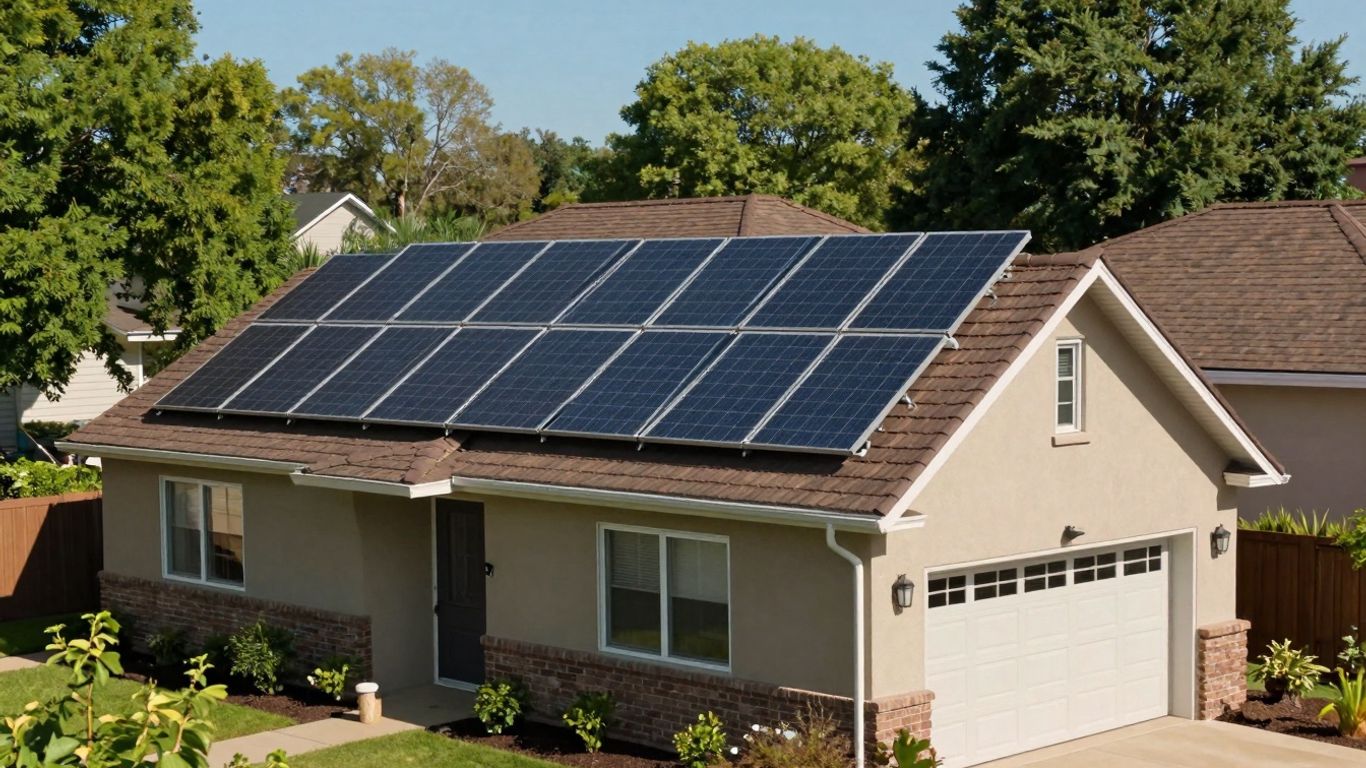
This Image Shows A Home With A Rooftop Solar Array In A Suburban Neighborhood. It Supports Content Explaining How The Maryland Solar Tax Credit Can Reduce The Cost Of Going Solar For Homeowners
Net Metering Policy Explained
So, you’ve got solar panels up and running, and they’re doing a fantastic job generating electricity. But what happens when your panels produce more power than your home can use, especially on those super sunny days? That’s where Maryland’s net metering policy comes in. It’s a pretty neat system that lets you send that excess energy back to the local power grid. And the best part? The utility company will credit you for that electricity at the full retail rate. Think of it as selling your extra sunshine back to the grid. Over time, especially during months with lots of sun, this can really help offset the initial cost of your solar system. It’s a smart way to make sure every bit of energy your panels create is put to good use.
Energy Storage Tax Credits
Beyond just generating solar power, storing it is becoming increasingly important for a stable energy future. If you’re thinking about adding battery storage to your solar setup, Maryland offers a tax credit to help with that. For residential energy storage systems, you can claim a credit for up to 30% of the installation cost. However, there’s a cap on this credit, which is $5,000 for homes. This incentive is designed to encourage homeowners to invest in storage solutions, making their solar power more reliable, even when the sun isn’t shining.
Property Value Increase and Solar
Installing solar panels can be a good investment, not just for your monthly electricity bills, but also for your home’s overall value. Studies have shown that homes with solar systems often sell for more than comparable homes without them. Now, you might be thinking, ‘Will a higher home value mean higher property taxes?’ In Maryland, the state helps ease that concern. The increase in your property’s value that comes specifically from the solar installation is exempt from property taxes. This means you get to enjoy the benefit of a potentially higher home value without the added tax burden. It’s a nice little perk that makes going solar even more appealing.
It’s worth noting that while Maryland offers these great incentives, it’s always a good idea to check the specifics with your installer or the relevant state agencies. Incentive programs can change, and understanding the exact requirements and deadlines is key to maximizing your savings. Don’t leave money on the table because you missed a deadline or didn’t meet a small requirement!
Here’s a quick look at some of the benefits:
- Net Metering: Get credited at the full retail rate for excess energy sent back to the grid.
- Energy Storage Tax Credit: A credit of up to 30% (capped at $5,000) for residential battery storage systems.
- Property Tax Exemption: Your property taxes won’t increase due to the added value from your solar panel system.
- Sales Tax Exemption: You don’t pay state sales tax on the purchase of your solar system.
Wrapping Up Your Maryland Solar Journey
So, going solar in Maryland definitely has its perks. You’ve got a bunch of incentives, like tax credits and rebates, that can really help bring down the initial cost. It’s a smart move for your wallet and the environment. Just remember, some of the best deals, especially that federal tax credit, have deadlines. So, if you’re thinking about making the switch, now’s the time to really look into it and get the ball rolling. Don’t miss out on saving some money while helping the planet.
Frequently Asked Questions
What is the main federal tax credit for solar panels, and when does it end?
The main federal tax credit is called the Residential Clean Energy Tax Credit. It lets you subtract 30% of the cost of your solar panel system from your federal taxes. However, this credit is only for systems put into service before January 1, 2026. So, if you want to get this big discount, you need to have your system installed this year!
Are there state-specific rebates or grants for solar in Maryland?
Yes, Maryland offers a few ways to save! There was a $1,000 rebate program, but it has ended. Now, there’s the Maryland Solar Access Program, which provides grants of up to $7,500 for homes with lower incomes to help make solar more affordable. It’s first-come, first-served, so it’s good to check if you qualify.
Can I sell the extra solar energy my panels produce?
Absolutely! Maryland has a great program called Net Metering. If your solar panels make more electricity than your home uses, the extra power goes back to the electric grid. Your utility company will then give you credit for that energy, which can significantly lower your electricity bill. You can even carry over credits or cash them out once a year.
Do I have to pay sales tax or property tax on my solar system?
Good news! Maryland exempts solar energy systems from sales tax, so you save about 6% right away. Also, in some counties, the increase in your home’s value from adding solar panels is not taxed, meaning your property taxes won’t go up just because you went solar.
What are Solar Renewable Energy Certificates (SRECs) and how do they work?
SRECs are like credits you earn for every megawatt-hour of clean energy your solar panels produce. You can sell these credits to energy companies. It’s a way for the state to encourage more renewable energy. While the price can change, a typical 5 kW system could earn an extra few hundred dollars a year from SRECs.
What’s the difference between buying solar panels and leasing them when it comes to tax credits?
If you want to claim the federal solar tax credit, you generally need to buy your solar panel system outright with cash or a loan. If you choose to lease your panels, you usually won’t be eligible for these tax credits because the leasing company owns the system.
Ready to Start Saving on Your Energy Bills?
Get a free, no-obligation quote from trusted local providers in under 2 minutes.
No obligation • Free estimates • Takes under 2 minutes
Get a Second Quote for Your Maryland Home
Installer pricing can vary a lot, even with the same incentives available. A second quote gives you a number to compare before those incentives are applied.
What an Energy Broker Actually Does, and When You’re Better Off Without One

Skip the Middleman, Compare Texas Plans Directly
A broker shops plans for you and usually gets paid to do it. You can do the same legwork yourself: compare Texas electricity plans against your own usage and current bill.
Disclosure: we may earn a commission if you switch or request a quote through this link, at no extra cost to you. It never changes which plan or company we recommend. How we make money.
(original: “The Role of Energy Brokers in Today’s Competitive Market” “in today’s competitive market” is a classic AI tell)
If you live in a deregulated state like Texas, you don’t get handed one electricity rate, you pick from dozens of plans, and the gap between the cheapest and the priciest can run a few hundred dollars a year on the exact same house. That’s real money. But comparing 50 plans line by line, reading every fine-print clause, is nobody’s idea of a good evening.
That gap, between the savings sitting there and the hassle of capturing them, is what energy brokers exist to fill. This is a straight look at what a broker actually does, how they get paid (which matters more than it sounds), when one’s worth it, and when you’re better off just comparing the plans yourself.
What a broker actually does
A broker isn’t tied to a single supplier, so they can line up plans from many of them at once and tell you which fits your usage. The real work isn’t finding a low number, anyone can do that. It’s reading the parts that bite later: early-termination fees, “bill credit” plans where the advertised rate only applies if you use exactly 1,000 kWh, and variable rates that look great for two months and then climb.
A good broker saves you the legwork and catches the traps. That’s the honest version of their value. Not magic pricing, fewer mistakes, less time.
How brokers get paid (ask this first)
There are two models. Either you pay the broker a fee, or the supplier pays them a commission baked into your rate. Commission isn’t automatically bad, but it can quietly nudge a broker toward the plan that pays them best rather than the one that’s cheapest for you.
One question settles it: “How are you paid, and does it change depending on which plan I choose?” A broker who answers plainly is worth talking to. One who gets vague isn’t your broker.
When a broker is genuinely worth it
- Your contract is up for renewal and you don’t want to get dumped onto a high month-to-month rate.
- You’re on a variable plan that’s been creeping up and you’ve stopped tracking it.
- You’re short on time and would rather pay a little (or accept the commission) than spend the evening comparing.
- You run a small business with more than one meter, where the math gets fiddly fast.
When you’re better off doing it yourself
Here’s the part a broker won’t lead with: the comparison itself is free. If you’re a single household in a deregulated market and you’re willing to read a plan’s Electricity Facts Label, you can usually match a broker’s result in about 15 minutes, and skip the commission folded into your rate.
That’s exactly what our plan comparison tool is for. Punch in your ZIP, see the real per-kWh cost at your usage level, and you’ve done the broker’s core job yourself.
Compare electricity plans now →
Broker vs. consultant, not the same thing
People mix these up. A broker gets you onto a better plan right now. A consultant audits how you use energy and suggests changes, efficiency upgrades, better metering, solar. Most homeowners need the first. You’d only want the second if your bills are high enough that changing your usage, not just your plan, is where the savings live.
If you do want a broker, pick one who:
- Tells you upfront how they’re paid.
- Compares a real range of suppliers, not the two that pay them.
- Knows your state’s rules (deregulated markets differ a lot).
- Will hand you references without flinching.
FAQ
What does an energy broker do? Compares suppliers, negotiates terms, and gets you onto a competitive plan, so you don’t have to wade through every offer yourself.
How do brokers get paid? Either a direct fee from you or a commission from the supplier. Ask which, before you sign anything.
Are brokers only for businesses? No. Plenty work with single households. But if your situation is simple, a free comparison tool may get you the same result.
Can a broker help with renewable or fixed-rate plans? Yes, many can point you to fixed-rate or green plans. You can also filter for those yourself in a comparison tool.
Bottom line
A broker is a shortcut, not a miracle. If your time is worth more than the 15 minutes it takes to compare, use one, just make sure you know how they’re paid. If you’d rather keep that commission in your own pocket, the comparison does the same job for free.
See your real plan options →
No obligation. Free. Takes about two minutes.
Energy Switching Services: How They Lower Your Bill (and Their Limits)

See What a Switch Actually Looks Like for Your Bill
Switching services can point you toward a plan, but only your own usage tells you if it's worth it. Compare current Texas electricity plans against your last bill before you commit to anything.
Disclosure: we may earn a commission if you switch or request a quote through this link, at no extra cost to you. It never changes which plan or company we recommend. How we make money.
Energy bills are one of the least stable costs a household has. Rates move with supply, weather, and politics, and providers love an “introductory” rate that quietly rolls into a pricier one once you stop paying attention. Switching services, sometimes called “trade and save” exist to fight that. They scan the market for a better plan and either move you automatically or lay out the options so you can choose. Here’s how they actually save money, who they help most, and where they fall short.
What these services do
Think of a switching service as a shopper for your energy plan. Some are fully automatic, when your deal expires, they move you to a more competitive one. Others work like a comparison tool: they show you the options and you pick. A few pool lots of customers together to negotiate group rates an individual couldn’t get alone. The common thread is they take a confusing, ever-changing market and make it something you don’t have to babysit.
How they actually lower your bill
- They kill the loyalty penalty. Staying put for years often means quietly paying hundreds more than a new customer. Switching ends that.
- They match the plan to your usage. A small apartment and a big family have different patterns; a good service recommends accordingly instead of one-size-fits-all.
- They keep you off default rates. When a fixed term ends, they stop you rolling onto an expensive standard rate.
- They surface deals you wouldn’t findincluding green plans that are now often competitive on price.
The plan types they’ll point you to
- Fixed-rate: locks your price for a term. Predictable; you won’t benefit if market rates fall.
- Variable: moves with the market. Riskier, can pay off in soft markets.
- Time-of-use: cheaper off-peak (needs a smart meter). Great if you can run laundry, dishwasher, or EV charging at night.
- Green plans: renewable-backed, increasingly price-competitive.
Who gets the most out of them
- High-usage households, where a small per-kWh saving is real money over a year.
- Renters and frequent movers, who’d otherwise get stuck in overpriced contracts.
- Busy or less tech-comfortable peoplewho won’t track the market themselves, automation does it for them.
- Eco-conscious households, who want a renewable plan without paying a premium.
How to choose one
Look for transparent pricing (do they charge you a fee, take a provider commission, or run free?), a real range of suppliers, clear contract tracking, solid reviews, and good data security, you’re handing over your usage data. The best ones keep it simple and don’t drown you in jargon.
The honest limits
These services aren’t magic:
- Over-switching. Some automated tools move you often enough to muddle your billing. Set a threshold, only switch if it saves, say, $100+.
- Not the whole market. Many platforms only show plans from partners, so the “best deal” they show may not be the best deal that exists.
- Exit fees. Leaving a fixed contract early can eat the savings; a good service accounts for this, a careless one won’t.
- Fees of their own. Free platforms exist; others take a cut.
And if your situation is simple, you may not need the service at all, a free comparison tool gets you the same answer in a few minutes and keeps any commission in your pocket.
FAQ
What are switching services? Platforms that find you a cheaper energy plan, sometimes switching you automatically so you never overpay by default.
Do I lose power when I switch? No. The electricity into your home doesn’t change, only the company that bills you.
Are green plans more expensive? Often not anymore, renewables are increasingly price-competitive.
Is switching complicated? No. Modern tools make it a few clicks; the supply isn’t interrupted.
Bottom line
A switching service is worth it if you won’t track the market yourself and you want protection from the loyalty penalty and default rates. Just choose one that’s transparent about how it’s paid and how wide it shops, and remember that for a simple household, a free comparison does the same job.
See your plan options →
No obligation. Free. Takes about two minutes.
The Best Energy Provider for Solar Homes in 2025, It Depends on How You Use Power

Compare Texas Plans Built Around How You Use Power
Solar changes when you draw from the grid and when you don't. Compare Texas electricity plans against your real usage pattern, not just a flat headline rate, before you pick one.
Disclosure: we may earn a commission if you switch or request a quote through this link, at no extra cost to you. It never changes which plan or company we recommend. How we make money.
Once you generate your own power, the question stops being “what’s the cheapest kWh?” and becomes “who gives me the best value for what I produce and what I pull from the grid?” And in 2025 the answer is more personal than it used to be, because the old one-to-one net metering, every exported kWh cancels an imported one, has mostly gone away. Most places now credit your exports at wholesale or time-varying rates, which makes when you export, and whether you have a battery, matter more than how many panels you have.
“Best” depends on your self-consumption ratio
Start with one number: how much of your solar you use on-site versus send to the grid.
- Use most of it yourself (home office, EV charging during sun hours)? Prioritize a low import rate and clean billing. Export credit barely matters to you.
- Export most of it without a battery? You need a generous, predictable export tariff, because your surplus often lands at midday when wholesale prices are low.
- Have a battery? You can play the curve, charge off-peak, discharge or export at peak, so a dynamic/wholesale-indexed plan plus time-of-use imports is where the money is.
Sort yourself into one of those three and most providers eliminate themselves.
Geography decides your options
Providers follow regional rules, so where you live narrows the field before preference does.
- California (NEM 3.0): export credits dropped to avoided-cost rates, much lower and time-dependent. The game is now self-consumption and a battery, not maximizing export. Best provider = best time-of-use structure and storage support, not highest export rate.
- Texas (ERCOT, deregulated): the most choice. Providers offer everything from simple buyback credits to wholesale-indexed plans; some roll credits over or cash them out. Great for battery owners who can target peak prices.
- Regulated states: utility-run net metering or net billing, simpler, often less lucrative, sometimes with export caps or minimum bills.
- (UK readers: the Smart Export Guarantee requires an export tariff but lets providers set terms; Octopus’s dynamic options reward automation.)
Names that tend to come up
Octopus Energy (US and UK) offers dynamic export tied to wholesale rates, strong for battery/automation households. Tesla Electric suits Powerwall owners in Texas, integrating hardware and billing. For people who want predictability, fixed export tariffs trade upside for peace of mind. Where available, virtual power plant programs (e.g. Tesla’s ERCOT participation) add a revenue stream. None of these wins everywhere, they win in the right conditions.
The fine print that quietly changes your bill
- Rollover rules: do unused export credits carry forward, reset monthly, or settle once a year? Big deal for seasonal production.
- Export caps: some plans only credit so much surplus.
- Minimum bills: can wipe out export credits in low-use months.
- Smart-meter / hardware requirements: gatekeep the best dynamic tariffs.
- Cash-out: turns excess credit into actual money rather than a credit you may never use.
How to compare two good options: do the math
Marketing won’t decide this, a worksheet will. Take your 12 months of import kWh, apply each plan’s rates (including time-of-use multipliers), then value your exports (fixed = kWh times rate; dynamic = weight toward midday). Add fees and minimum charges. If you have a battery, estimate the charge-cheap/export-expensive arbitrage conservatively. Run it for a low-production winter month and a high-export summer month to see the volatility. Lowest blended annual cost wins, regardless of the headline.
Find your state’s actual rules
For the US, DSIRE lists net metering, net billing, and incentive rules state by state. Check it before you compare providers, it tells you which game you’re even playing.
FAQ
Is a dynamic export tariff always better? No. It shines if you have a battery or automation to shift exports into high-price windows. Without those, the volatility can cost you.
Should Californians still go solar under NEM 3.0? Yes, but with a battery-and-self-consumption strategy rather than a max-export one.
Where do I find my state’s rules? DSIRE for the US.
Best for Texas Powerwall owners? Tesla Electric integrates tightest; Octopus’s wholesale credits may beat it depending on your export profile. Run your own numbers.
Bottom line
There’s no single “best” provider for solar homes in 2025. The best one is whoever’s rate structure, export policy, and grid programs fit your production and usage, so figure out your self-consumption ratio, check your state’s rules, and run the math on two or three real options. That beats any “top provider” list.
See your solar options →
No obligation. Free. Takes about two minutes.
How to Choose an Electricity Plan That Actually Lowers Your Bill

Compare Texas Electricity Plans Against Your Own Bill
The only way to know if a plan is actually better is to check it against your real usage, not a headline rate. Pull your last bill and compare Texas electricity plans side by side before you switch.
Disclosure: we may earn a commission if you switch or request a quote through this link, at no extra cost to you. It never changes which plan or company we recommend. How we make money.
(original “Residential Energy Solutions: Saving Money with the Right Provider” “solutions” is vague filler)
Electricity is one of the biggest recurring bills most households have, the average US home spends around $1,800 a year on it (about $150/month, per EIA), and in a deregulated state, it’s also one of the few you can actually shop. The problem is the market is built to be confusing: dozens of providers, rate structures that hide the real cost, and “introductory” plans that quietly roll into something pricier. This guide cuts through it: how the provider types differ, what deregulation lets you do, how to read a plan, and the mistakes that cost people money.
The types of providers, plainly
- Traditional utilitiesthe default in regulated areas. Reliable, simple, but no shopping and often not the cheapest.
- Retail providers (REPs)the competitors in deregulated states. More plans, better rates, but you have to read the fine print.
- Renewable providerssolar/wind/hydro-backed plans, sometimes with credits. Not always pricier than they used to be.
- Hybrid plansa mix, often bundled with smart-meter tools.
Knowing which you’re dealing with matters, because picking on autopilot is how people overpay.
What deregulation actually gives you
In states like Texas, New York, Pennsylvania, and Ohio, you choose your provider instead of being stuck with one utility. Competition tends to push prices down and options up, fixed-rate, variable, or green plans. The catch: it only helps if you shop. Stay put out of inertia and you can pay hundreds more than you need to. Deregulation turns your electricity bill from a fixed cost into something you can negotiate by switching.
How to read a plan (it’s not just the rate)
The per-kWh number is one piece. Also check:
- Rate type. Fixed = predictable, good for budgeting. Variable = can save in low-demand months, can spike when you least want it.
- Contract length and exit fees. A great rate with a steep early-termination fee can cost you more than a mediocre rate with none.
- The usage gotcha. Many “low” rates only apply at exactly 1,000 kWh; use more or less and your effective rate jumps. Check the cost at your usage level.
- Renewable options. Often competitively priced now, sometimes with credits.
- Service reputation. Billing errors and bad support quietly eat your savings.
A realistic example (the math, no fairy tale)
Say a Texas household pays about $180/month on an old default rate. After comparing, they move to a fixed-rate plan that pencils out to roughly $138/month at their usage. That’s about $42 a month, right around $500 a year, for fifteen minutes of comparing. No lifestyle change, just a better plan. That’s the whole pitch: the savings come from shopping deliberately, not from anything dramatic.
Then let efficiency do the rest
A better plan lowers the rate; using less power lowers the bill again. The high-leverage ones: seal drafts and improve insulation (heating/cooling is the biggest line item), LED bulbs (up to ~80% less for lighting), Energy Star appliances, and a smart thermostat so you’re not paying to cool an empty house. Small habits, off-peak appliance use, unplugging idle electronics, compound over a year.
Mistakes that cost people money
- Ignoring the fine print (auto-renewals, exit fees, the 1,000-kWh trick).
- Chasing the cheapest headline rate and landing on a provider with terrible billing.
- Picking an off-peak plan when you mostly use power in the evening.
- Never re-checking, rates change, and last year’s good plan may be this year’s overpay.
Provider types at a glance
| Type | Best for | Watch out for |
|---|---|---|
| Traditional utility | Simplicity, no shopping | Often higher cost, few options |
| Retail (REP) | Competitive rates, choice | Fine print, hidden fees |
| Renewable | Lower carbon, possible credits | May cost a little more by area |
| Hybrid | Balance + smart tools | Savings vary by plan |
| Home solar/storage | Long-term independence | High upfront cost |
FAQ
How does switching save money? In deregulated markets you can find lower rates or fixed contracts that beat the default you’re on.
Are renewable plans more expensive? Not always, many are competitive, sometimes with credits.
What should I check before switching? Rate type, contract length, exit fees, the usage level the rate assumes, and the provider’s billing reputation.
How often should I compare? At least once a year, rates and offers change constantly.
Bottom line
Choosing an electricity plan is really about not overpaying out of inertia. Understand the provider types, use deregulation to your advantage, read past the headline rate, and re-check once a year. Pair a good plan with a few efficiency fixes and the savings stack up, without anything dramatic changing in your day.
See your real plan options →
No obligation. Free. Takes about two minutes.
The Future of Renewable Energy: Trends Worth Watching as a Homeowner

Curious How These Trends Apply to Your Home?
Trends are useful, but the numbers that matter are the ones for your roof, your utility rates, and your budget. A local quote turns the big picture into a real plan.
Disclosure: we may earn a commission if you switch or request a quote through this link, at no extra cost to you. It never changes which plan or company we recommend. How we make money.
Renewable energy stopped being a “someday” story a while ago, it’s already cheaper than fossil power in much of the country, and the next few years will change what it costs you at home. Here are the trends actually worth tracking as a homeowner, and one big policy change for 2026 you need to know before you do the math on solar.
Solar keeps getting cheaper
Panel prices have dropped roughly 90% over the past two decades, and install costs keep easing as efficiency and competition improve. In sunny areas the payback period on a system has come down to about 5-7 years. Newer tech, bifacial panels, perovskite cells, should push costs lower and yields higher. For most homeowners, solar is now a numbers decision, not a luxury one.
See what solar costs near you →
The 2026 tax-credit change (read this first)
Here’s the part a lot of older articles get wrong. The 30% federal residential solar tax credit (Section 25D) ended December 31, 2025. If you buy or finance a system in 2026, you don’t get that credit, so any payback math that assumes 30% off is now too optimistic. There’s a nuance worth knowing: lease and PPA providers can still claim the commercial credit (48E) and may pass some of it through in their pricing, which changes the buy-vs-lease comparison. State and local incentives still exist and vary. Bottom line: run your 2026 numbers without 25D, and treat any “30% back” claim as out of date.
Storage is the piece that makes it work
The old knock on renewables is intermittency, what about when the sun’s down? Storage is the answer, and it’s improving fast. Lithium-ion costs keep falling with longer lifespans; solid-state and flow batteries are coming. For a homeowner, a battery means storing daytime solar to use at night or during outages, closer to a self-sufficient home. Tesla, LG, and Panasonic all sell consumer systems now. Storage is what turns solar from “daytime only” into something dependable.
Wind is heading offshore
Wind’s growth is increasingly offshore, where the wind is stronger and steadier. Big projects in Europe, China, and the US are getting larger, and for coastal-state residents the payoff shows up as steadier prices and cleaner air. Floating platforms will open up deeper water over time. You won’t install offshore wind at home, but it helps stabilize the grid you’re on.
EVs are becoming home batteries
EVs are mainstream now, and the interesting part for homeowners is vehicle-to-grid (V2G): a car that can feed power back to your home (or the grid) at peak hours. Charge off your panels by day, draw from the car at night. Pair that with rebates and it changes the household energy math. As V2G spreads, your car becomes an energy asset, not just transport.
Smart grids put you in control
The old grid was one-way. The new one is interactive: smart meters and apps let you see usage in real time, shift appliances to cheaper hours, and, with solar and storage, generate, store, and sometimes sell power back. Microgrids can keep a neighborhood running during outages. The shift is from passive ratepayer to active participant.
Where corporations fit
Apple, Google, Microsoft and big retailers have pushed hard toward running on renewables, which ripples down into cleaner supply chains and, over time, competitive prices on the products you buy. As a consumer it means more genuinely green options, and a way to put your spending behind companies actually doing the work.
Hydrogen: one to watch, not buy yet
Green hydrogen (made with renewable electricity) could decarbonize the hard stuff, steel, shipping, aviation, and eventually touch home heating and backup power. It’s still early and expensive, but investment is accelerating in Europe and Asia. Not a household product today; worth keeping an eye on.
The honest caveats
Progress is real, but so are the hurdles. Grids built decades ago need big upgrades to handle decentralized solar, wind, and storage. Upfront costs still lock out lower-income households without good policy, a real “green divide” risk. And policy itself shifts with elections (see the 25D change above). None of this kills the case for renewables; it just means going in with clear eyes.
FAQ
Biggest trend right now? Falling solar costs and better, cheaper storage.
Will this lower my bill? Over time, yes, cheaper solar and storage plus more ways to generate your own power.
Do I still get a solar tax credit in 2026? Not the 30% residential purchase credit (25D), it ended Dec 31, 2025. Lease/PPA providers may still pass through the commercial credit; check state/local incentives.
Are EVs part of this? Yes, via V2G they can store and share clean energy with your home.
Bottom line
Solar’s cheap, storage is catching up, and the grid is getting smarter, the direction is clear. Just do your 2026 math honestly: no 25D credit for cash/loan buyers, real local incentives, and real payback periods. That’s how you actually benefit instead of banking on outdated numbers.
See what solar costs near you →
No obligation. Free. Takes about two minutes.
See What These Trends Mean for Your Roof
Reading about industry trends is one thing, knowing what solar would actually cost on your home is another. A quote gives you real numbers to compare against what’s coming.
How to Choose an Energy Broker in Texas (and When You Don’t Need One)

When You Don't Need a Broker, Compare Plans Yourself
Texas lets you shop for your own electricity provider without paying anyone to do it for you. Pull up your last bill, know your usage, and compare Texas electricity plans directly against what you're paying now.
Disclosure: we may earn a commission if you switch or request a quote through this link, at no extra cost to you. It never changes which plan or company we recommend. How we make money.
Texas lets you choose your electricity provider, which is great until you’re staring at dozens of plans, each with a different rate, contract length, and fine print designed to make a “cheap” plan cost more than it looks. That’s why some Texans use an energy broker. But brokers vary a lot in quality and honesty, and the wrong one can lock you into a bad contract. Here’s how to pick a good one, what to watch for, and when you’re better off just comparing plans yourself.
What a broker actually does (and doesn’t)
A broker doesn’t generate or sell electricity. They’re a middleman: they look at how you use power and point you to a retail provider (REP) and plan that fits. A good one reads the parts that bite, rate escalators, the usage threshold that makes a “low” rate only apply at exactly 1,000 kWh, early-termination fees, and steers you around them. Think of them as a shortcut through the noise, not a magic source of cheaper power.
Step 1: Check they’re legit
In Texas, REPs are licensed by the Public Utility Commission. Brokers themselves operate more loosely, so do your own check: how long they’ve been at it, real reviews (not just testimonials on their own site), and whether they’ll give you references. A broker who dodges those questions is telling you something.
Step 2: Ask how they get paid, first
This is the one that matters most. Brokers earn either a fee from you or a commission baked into your rate by the provider. Commission isn’t automatically bad, but it can push a broker toward the plan that pays them best. Ask it straight: “How are you paid, and does it change based on which plan I pick?” A clear answer is a good sign. A vague one is your cue to walk.
Step 3: Make sure they compare a real range
A broker who only works with two or three providers isn’t shopping the market for you. The value is in breadth, comparing across many REPs at your actual usage level, not just the ones with the best commission deal.
Step 4: Match the plan to how you actually use power
Fixed-rate plans are predictable and good for budgeting. Variable can win in low-demand months and burn you when prices spike. A decent broker looks at your usage pattern before recommending, rather than pushing one type on everyone.
When you don’t need a broker at all
Here’s the honest part. If you’re a single household and you’re willing to spend fifteen minutes, you can do the broker’s core job yourself, our plan comparison tool shows the real per-kWh cost at your usage level across providers, no commission folded in. A broker earns their keep when your situation is complicated (multiple meters, a small business, an upcoming renewal you’ll otherwise forget) or when your time is genuinely worth more than the legwork.
Red flags
- Won’t explain how they’re paid.
- Pressures you to sign today.
- Only ever recommends one or two providers.
- Can’t or won’t provide references.
- Glosses over exit fees and rate escalators.
Bottom line
A broker in Texas can save you time and steer you past the traps, if they’re transparent about pay and compare widely. If they’re not, or if your situation is simple, the free comparison gets you to the same place. Either way, the goal is the same: don’t get parked on a bad plan by inertia.
See your Texas plan options →
No obligation. Free. Takes about two minutes.
How to Keep the Solar Panels You Already Have Running at Full Output

Not Sure If Your System Still Makes Sense?
If your panels are older or shaded and losing output despite the upkeep tips above, it may be worth comparing what a new system could do for your home. A local installer can walk through your options and give you real numbers.
Disclosure: we may earn a commission if you switch or request a quote through this link, at no extra cost to you. It never changes which plan or company we recommend. How we make money.
Most solar advice stops at “get it installed.” But panels lose a little output every year on their own, and dirt, shade, or heat can quietly shave 10-25% off what you’re paying for. None of the fixes below are complicated. They’re the difference between a system that hits its payback date and one that drifts past it.
Keep them clean
Dust, pollen, and bird droppings block light. Dirty panels lose roughly 5-20% of their output depending on where you live, more in dusty or low-rain areas. A rinse with a garden hose every couple of months, or after a long dry spell, handles most of it. For stuck-on grime, a soft brush and water; skip harsh chemicals, which can damage the coating. If your roof is steep, pay someone, it’s not worth a fall.
Check your best solar option →
Mind the shade
Shade hurts more than dirt, because one shaded panel can drag down a whole string. A branch that throws shadow for even an hour a day shows up in your production numbers. Trim trees back (and remember they grow). If part of your roof is unavoidably shaded, microinverters or power optimizers let each panel work independently so one shaded panel doesn’t sink the rest, worth it on partially-shaded roofs, overkill on clear ones.
Get the angle right
Panels facing true south (northern hemisphere) at a tilt near your latitude capture the most sun. If you’re at 35° latitude, 30-40° is the sweet spot. You can adjust the tilt seasonally, steeper in winter, flatter in summer, but the gain is modest and the effort is real, so most people are better off with a fixed angle a good installer picks for the year-round average. Don’t lose sleep over this one.
Let them breathe
Solar cells run best around 77°F. Above that, output drops about 0.25-0.5% per degree, which adds up on hot afternoons. Panels mounted a few inches off the roof get airflow underneath and run cooler. In a hot climate, a lighter or reflective roof helps too. You’re not going to air-condition your roof, just don’t have panels sitting flat against dark shingles if you can help it.
Watch the numbers
Your system’s monitoring app shows daily and monthly production. Spend the first few months learning what “normal” looks like, then a sudden dip tells you something’s wrong, dirt, a failing inverter, or new shade from a grown tree, before it costs you a season. Set a low-production alert if the app supports it.
Maintain it (lightly)
Panels are low-maintenance, not no-maintenance. An annual once-over catches loose connections, corroded wiring, or a failing inverter that a homeowner wouldn’t spot. Twice a year in harsh climates. Keep a simple log of dates and fixes, it also reassures a buyer if you sell.
Buy quality where it counts
Cheap panels and inverters look good on the quote and worse over 20 years. The inverter especially is worth spending on: a basic string inverter loses ground if any one panel underperforms, while microinverters keep each panel independent. If you’ve got an older, underperforming inverter, replacing just that can recover a surprising amount of output without redoing the whole array.
Use storage and timing to your advantage
A battery doesn’t make panels more efficientbut it stops you from spilling cheap daytime power back to the grid for little credit. Store the surplus, use it at night or during peak-rate hours, and keep some as outage backup. Pair that with simple timing habits, run the dishwasher, laundry, or EV charging midday when your panels are producing, and you capture more of what you generate. LED lighting and efficient appliances cut the demand side at the same time.
Trackers: only sometimes
Sun-tracking mounts follow the sun across the day and can add 20-25% output. But they cost more and have moving parts that need maintenance. They make sense for ground-mounted arrays in high-rate areas with room to spare. For a typical rooftop, the money is better spent elsewhere.
Weatherproof for the long haul
You can’t control the weather, but you can prepare. In hail country, panels with tempered glass or hail-rated coatings are worth it. In snow, clear panels with the right tools, never anything sharp. Make sure your racking is rated for local wind. The point isn’t to fuss over every forecast, just to not get caught out.
Quick reference
| Tip | Benefit | Effort |
|---|---|---|
| Keep panels clean | Recovers 5-20% | Low |
| Reduce shading | Avoids big output drops | Medium |
| Right tilt/angle | More year-round output | Medium |
| Cooling/airflow | Less heat loss | Low |
| Monitor output | Catch faults early | Low |
| Annual maintenance | Prevents costly failures | Medium |
| Quality inverter | Higher lifetime yield | High |
| Battery + timing | Use more of what you make | High |
| Trackers | +20-25% (situational) | High |
| Weatherproofing | Longer lifespan | Medium |
FAQ
How do I make my panels more efficient? Keep them clean, cut shading, get the tilt right, and watch your production numbers.
How often should I clean them? Twice a year, more in dusty or pollen-heavy areas.
Do panels lose efficiency over time? Yes, about 0.5-1% a year. Good care slows it.
Does heat hurt output? Yes. Panels do best around 77°F; output dips slightly for every degree above.
Does a battery make panels more efficient? Not technically, it just lets you use more of the power you already make.
Bottom line
Solar isn’t a set-and-forget purchase. Clean panels, clear sightlines to the sun, a healthy inverter, and smart timing are most of the game, and most of them are free or cheap. Do them and your system earns out faster.
See your solar savings estimate →
No obligation. Free. Takes about two minutes.
Backup option: EcoFlow power stations
Most grid tied solar systems shut off during an outage. A portable battery can keep key items running without a full home battery.
Browse EcoFlow power stationsAffiliate link: we earn a commission if you buy through this link, at no extra cost to you. It does not affect what we recommend.
Wondering If It’s Time to Upgrade?
If your panels are older or were undersized from the start, a fresh quote shows what a new system could look like for your roof. It is a no-obligation quote, not a purchase.
Recent Posts
- Houston Texas electricity plans: How to compare rates, fees, and contract terms
- Time of use electricity plans: How they work, peak hours, and what to check before enrolling
- Residential electricity plans: How to compare rates, contract terms, and fees
- How to set up electricity for a new home: a step-by-step guide
- Texas energy plans comparison: how to compare rates, fees, and contract terms