Home Solar Systems That Help Lower Electric Bills

See What a System Would Cost at Your Home
Start with the rate, then size the system
Every solar quote is built on your current bill. Cut the rate first and the system you need gets smaller and cheaper. Doing it the other way round means paying for panels to cover a bill you were overpaying anyway.
Disclosure: we may earn a commission if you switch or request a quote through this link, at no extra cost to you. It never changes which plan or company we recommend. How we make money.
Available in Texas today. We earn a commission if you switch, at no extra cost to you, and it never changes which plan we show first.
Bill savings depend on your usage and system size. Request quotes from solar installers to get numbers specific to your house.
Electricity bills are one of those monthly expenses that most homeowners feel they have little control over. Even when usage habits are adjusted, bills can still increase due to rising utility rates, seasonal changes, or added household appliances. This is why more families are turning to home solar systems as a long term solution for reducing electricity costs.
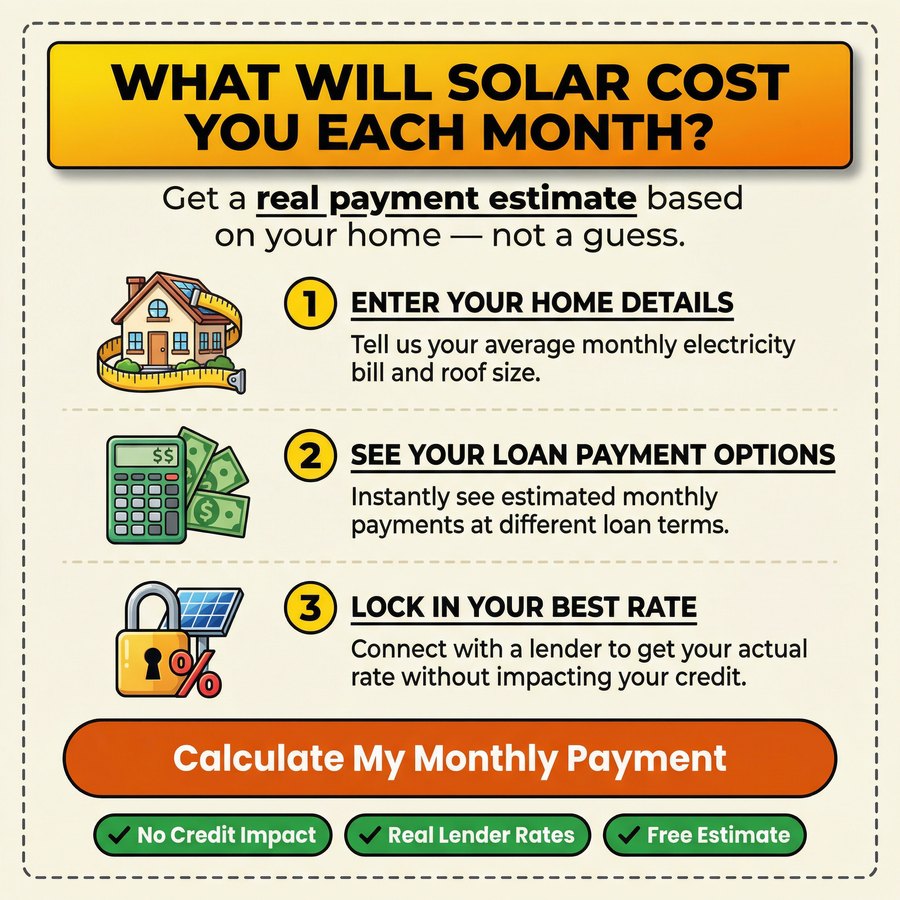
A home solar system allows households to generate their own electricity using sunlight. Instead of relying completely on the electrical grid, homeowners can offset a portion or even a large percentage of their daily energy consumption with solar power. Over time, this reduces monthly bills and creates more predictable energy spending.
What makes solar systems especially appealing is that they do not just reduce costs temporarily. They continue producing energy for many years, which means long term savings can accumulate significantly compared to traditional electricity consumption.
However, not all solar systems are the same. Different configurations, technologies, and system sizes can produce different levels of savings. Some systems are designed for basic electricity offset, while others are built for near full energy independence.
This article explores the most common home solar systems that help lower electric bills, how each system works, their advantages, and what homeowners should consider when choosing one.
Understanding How Home Solar Systems Reduce Electricity Costs
A home solar system reduces electricity bills by generating power directly from sunlight and supplying it to the household. When solar energy is available, it replaces the need to buy electricity from the utility company.
During daylight hours, solar panels produce electricity that can immediately power home appliances such as lights, refrigerators, fans, and air conditioning systems. Any unused energy can either be sent back to the grid or stored in batteries depending on the system type.
The key idea is simple. The more electricity a home produces from solar energy, the less it needs to purchase from the utility provider.
A typical home solar setup includes:
|
Component |
Function |
|
Solar Panels |
Capture sunlight and convert it into electricity |
|
Inverter |
Converts solar power into usable household electricity |
|
Mounting System |
Secures panels on rooftops or ground areas |
|
Electrical Meter |
Tracks energy usage and production |
|
Optional Battery |
Stores excess energy for later use |
Solar savings depend on how much of a household’s electricity demand is covered by solar generation.
Here is a simple comparison:
|
Energy Source |
Effect on Electric Bill |
|
Grid Electricity Only |
Full monthly bill |
|
Partial Solar System |
Reduced monthly bill |
|
Full Solar Coverage |
Very low or minimal bill |
Even partial solar systems can significantly reduce electricity expenses, especially in households with high daytime energy usage.
Many homeowners are surprised to learn that solar systems do not need to power the entire home to make a noticeable difference. Even a system that covers 40 to 70 percent of energy usage can lead to substantial monthly savings.
Grid-Tied Solar Systems for Lower Electricity Bills
Grid-tied solar systems are the most common type of residential solar installation. These systems are connected directly to the local utility grid and work alongside traditional electricity supply.
When solar panels produce electricity, the home uses that energy first. If the system produces more electricity than needed, the excess may be sent back to the grid depending on local policies. At night or during cloudy periods, the home draws electricity from the grid as needed.
This balance allows homeowners to reduce their electricity bills without completely disconnecting from utility services.
A key advantage of grid-tied systems is cost efficiency. Since they do not require battery storage, installation costs are generally lower compared to more advanced systems.
Here are the main benefits of grid-tied solar systems:
- Lower upfront installation cost
- Immediate reduction in electricity bills
- Simple system design and maintenance
- Ability to use grid power when needed
- Potential credits for excess energy sent to the grid
Grid-tied systems are ideal for homeowners who want to reduce electricity bills without investing heavily in storage solutions.
Here is a basic overview of how energy flows in a grid-tied system:
|
Time of Day |
Energy Source |
|
Daytime |
Solar powers home directly |
|
Excess Production |
Sent to grid |
|
Nighttime |
Grid supplies electricity |
|
Cloudy Days |
Combination of solar and grid |
One of the most important advantages is net savings. Even if a home still relies on the grid at night, daytime solar production can significantly reduce overall monthly consumption from the utility provider.
However, grid-tied systems have one limitation. During power outages, they typically shut down for safety reasons. This means homeowners still depend on the grid for backup power unless additional systems are installed.
Despite this, grid-tied solar remains one of the most cost effective ways to lower electricity bills for most households.
Hybrid Solar Systems with Battery Storage
Hybrid solar systems combine the benefits of grid connection and battery storage. These systems are designed to provide greater energy flexibility and higher independence from utility companies.
In a hybrid setup, solar panels generate electricity, which is used to power the home first. Excess energy is stored in batteries instead of being sent entirely to the grid. When solar production is low, the home can use stored energy before relying on grid electricity.
This system gives homeowners more control over when and how they use energy.
Hybrid systems are especially effective in reducing electricity bills because they allow households to avoid high peak electricity rates by using stored energy during expensive periods.
Here are the key benefits of hybrid solar systems:

- Reduced dependence on grid electricity
- Backup power during outages
- Better control over energy usage timing
- Higher self consumption of solar energy
- Protection from rising electricity prices
Hybrid systems are particularly useful for homes with high nighttime energy usage. Instead of buying electricity from the grid at night, homeowners can use stored solar energy.
Here is a comparison of energy usage:
|
Situation |
Grid-Tied System |
Hybrid System |
|
Daytime Usage |
Solar energy used |
Solar energy used |
|
Nighttime Usage |
Grid electricity |
Stored battery energy |
|
Power Outage |
No power |
Backup available |
|
Electricity Bills |
Reduced |
More reduced |
Although hybrid systems cost more due to battery inclusion, they often provide higher long term savings because more solar energy is consumed directly rather than purchased later from the grid.
Hybrid systems also improve energy reliability. In areas where power interruptions are common, batteries ensure that essential appliances remain operational.
Common appliances supported during outages include:
- Lights
- Refrigerators
- Fans
- Internet routers
- Small appliances
For homeowners focused on both savings and energy stability, hybrid systems offer a balanced solution.
Off-Grid Solar Systems for Full Energy Independence
Off-grid solar systems are designed to operate completely independently from the electrical grid. These systems generate, store, and supply all electricity needed for the home.
Unlike grid-tied or hybrid systems, off-grid setups rely heavily on battery storage because there is no backup connection to utility power.
This type of system is usually chosen by homeowners in remote areas or those who want full energy independence.
The main advantage of off-grid systems is complete freedom from electricity bills. Since the home does not use grid electricity at all, monthly utility costs can be eliminated entirely.
Here are the main benefits of off-grid solar systems:
- No monthly electricity bills
- Full energy independence
- Ideal for remote locations
- No reliance on utility companies
- Long term cost savings potential
However, off-grid systems require careful planning because energy must be stored for use during nighttime or low sunlight conditions.
Here is a breakdown of how energy flows:
|
Time Period |
Energy Source |
|
Daytime |
Solar panels power home and charge batteries |
|
Nighttime |
Battery storage powers home |
|
Extended Cloudy Periods |
Stored energy is carefully managed |
Because there is no grid backup, system sizing becomes very important. Homeowners must calculate energy consumption accurately to ensure enough solar panels and batteries are installed.
Common challenges of off-grid systems include:
- Higher initial installation cost
- Need for larger battery storage
- Energy usage management required
- Limited flexibility during extended bad weather
Despite these challenges, off-grid systems offer the highest level of independence. For some homeowners, especially those in rural or isolated areas, this level of autonomy is worth the investment.
Even though upfront costs are higher, long term savings can be significant since there are no ongoing electricity bills.
Choosing the Right Solar System for Lower Electric Bills
Selecting the right solar system depends on household needs, budget, and long term goals. Each system type offers different levels of savings and independence.
Some homeowners prioritize reducing electricity bills as much as possible, while others focus on affordability or backup power.
Here is a simple comparison of all three systems:
|
System Type |
Best For |
Main Advantage |
Main Limitation |
|
Grid-Tied |
Budget conscious homeowners |
Low cost and simple setup |
No backup during outages |
|
Hybrid |
Balanced energy needs |
Savings plus backup power |
Higher upfront cost |
|
Off-Grid |
Full independence seekers |
No electricity bills |
High system complexity |
Before choosing a system, homeowners should consider several important factors:
- Monthly electricity consumption
- Roof space and sunlight exposure
- Budget for installation
- Frequency of power outages in the area
- Long term plans for staying in the home
- Desired level of energy independence
It is also important to evaluate future energy needs. Households often increase electricity usage over time due to new appliances, air conditioning, or home office setups.
A well designed solar system should account for future growth rather than just current consumption.
Here are key questions homeowners should ask before deciding:
- How much of my electricity bill do I want to eliminate
- Do I need backup power during outages
- Am I willing to invest more upfront for higher long term savings
- How long do I plan to stay in this home
- Do I want full independence or partial savings
Understanding these questions helps avoid under sizing or over investing in a system that does not match real needs.
In many cases, homeowners start with grid-tied systems to reduce costs, then later upgrade to hybrid systems by adding battery storage.
This gradual approach allows flexibility while still providing immediate savings.
Solar energy continues to grow as a practical solution for reducing electricity expenses. Whether through grid-tied, hybrid, or off-grid systems, homeowners now have multiple options to control their energy costs more effectively.
In the long run, the right solar system is not just about lowering electricity bills. It is about creating a more stable, predictable, and self sufficient way of powering the home for years to come.
Find out what a system would look like on your roof
The systems that lower bills the most are sized to your actual usage and roof conditions. Homeowners with a monthly bill above $150 and decent sun exposure typically qualify for the most useful quotes.
Recent Posts
- Your Electricity Bill Jumped Because Nobody Told You Your Contract Ended
- Connecticut Solar Incentives: What Actually Applies to Your Roof
- Massachusetts solar incentives: what you can claim and what it is worth
- EnFin Solar Financing: How It Works, What It Costs, and Whether It’s Worth It
- GoodLeap Solar Loan: What It Costs, How It Works, and Whether It Is Worth It