Generator for Whole House Backup: What to Check
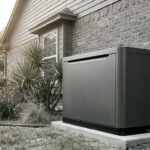
A whole house backup generator is not one simple purchase. It’s a set of decisions about what has to stay powered, how that power reaches your panel, and what proof belongs in an installation quote.
Checking Options Before You Buy a Whole-House Generator?
A permanent standby system is a big investment. A 4Patriots solar generator is a smaller-scale option worth comparing if you mainly need to keep a few essential circuits running.
Disclosure: we may earn a commission if you switch or request a quote through this link, at no extra cost to you. It never changes which plan or company we recommend. How we make money.
ChooseMyPower doesn’t sell or install generator equipment. We built our name on the electricity-plan side of this business, and we apply the same rule everywhere we cover, including generators: rank the real numbers, not the commission. Use the Teaser Test in this guide to check what a generator installer puts in front of you, the same way you’d want any other big home decision checked.
One clarification before we start: a backup generator changes what happens when the grid goes down. It does not change the terms, usage credits, delivery charges, or contract length on your electricity plan once grid power is back. Those are separate decisions with separate paperwork, and we’ll come back to that near the end.
What a Whole House Backup Generator Actually Is
A whole house backup generator is permanently installed and wired into your home’s electrical panel through a transfer switch, so it can pick up some or all of your circuits automatically when utility power drops. That’s different from a portable generator, which you set up outside and connect manually, usually to a limited set of circuits or a few plugged-in devices.
Three broad categories show up in most quotes:
- Standby generators. Permanently installed, fueled by natural gas or propane (some run on diesel), and paired with an automatic transfer switch. This is what most people mean by “whole house generator.”
- Large portable or towable generators. Higher-capacity portable units that can be wired to a subset of circuits through a transfer switch, without a permanent fuel connection.
- Battery and solar-battery backup systems. Stored power plus inverters, with no fuel or exhaust to manage. Runtime depends on battery capacity and whether solar panels are recharging it during the outage.
None of these labels tell you what will actually run in your home. That’s still a load question, which we get to below.
In general terms, here’s the trade-off between them:
- Standby generators start on their own, so they can cover an outage even if nobody is home. They cost more up front and need a permanent fuel connection.
- Portable and towable generators cost less to buy and don’t need a fixed installation, but someone has to set them up, fuel them, and start them, and they shouldn’t be run inside or against the house.
- Battery and solar-battery systems run quietly with no exhaust to manage and no fuel to store, but capacity is limited by the battery, and solar recharge depends on the weather during the outage.
What “Whole House” Must Mean in Writing
“Whole house” is a sales label, not proof that every circuit in your home will run. Treat it as a claim to verify. A serious quote should state what the system is designed to carry and what it leaves out. That’s the evidence you can compare between installers.
| What the quote says | Evidence to request | Why it matters |
|---|---|---|
| “Whole-house coverage” | A written list of the loads or circuits the design assumes | A label is not a load list. |
| “Automatic backup” | The transfer-switch type and a plain-language sequence for an outage and return to grid power | You need to know what changes hands without manual work. |
| “Turnkey installation” | A line-by-line scope covering the electrical work, site work, fuel connection if applicable, permits, inspections, and exclusions | A unit price alone does not show the completed-system scope. |
| “Sized for your home” | The actual load review used for the recommendation | Bedroom count and square footage do not tell you which equipment will run at once. |
This is the Teaser Test: if a claim can’t be tied to a document, a load list, or a defined scope, it’s a headline, not evidence.
Start With the Loads You Need, Not a Generator Size
Start with a written priority list before anyone suggests a capacity. Include medical equipment, refrigeration, a well pump if relevant, communications, lighting, cooling or heating, and work equipment. Then separate what must run from what can wait.
| Priority | Put this on your list | Ask the installer to confirm |
|---|---|---|
| Must run | Essential medical equipment, refrigeration, critical communications, selected lighting, and any home-specific safety load | Which circuits support these loads and whether they can operate together |
| Useful but optional | Cooling or heating equipment, laundry, cooking equipment, and selected receptacles | What the design assumes about simultaneous use |
| Can wait | Loads that are not needed during an outage | Whether the system will shed them or require you to manage them manually |
Two terms come up in almost every sizing conversation: running watts, the power a load needs once it’s already on, and starting watts, the short surge a motor draws when it first kicks on. Appliances with compressors or motors, think well pumps, air conditioners, refrigerators, draw a bigger starting surge than their running watts alone would suggest. A sizing calculation that only adds up “normal” running loads and skips the start-up surge will undersize the system.
| Appliance type | Typical load behavior |
|---|---|
| Well pump, central air conditioner, larger refrigerator or freezer | Motor-driven. Draws a short starting surge above its running watts, then settles lower. |
| Furnace blower, sump pump, garage door opener | Motor-driven on a smaller scale. Still has a starting surge, just a shorter one. |
| Lighting, most electronics, chargers, routers | Steady draw, with little or no starting surge. |
| Electric range, water heater, space heater | Steady but often a high draw for the entire time it’s running. |
Ask your installer for the actual wattage figures for your own appliances, both starting and running, and to show how those numbers add up against the generator size they’re recommending. “It’ll be fine” is not an answer.
The key question is not your home’s bedroom count. It’s what this home will run at the same time. Have a qualified installer or electrician verify the panel, circuits, appliance information, and loads behind the proposal. Run the Teaser Test if a capacity label shows up with no supporting explanation.
What a Cost Breakdown Should Include
Cost is usually the second question, right after “will it run everything I need,” and it’s also where quotes get vague. A generator quote has at least two cost buckets: the equipment itself, and everything it takes to get that equipment safely wired, fueled, and inspected. Installation cost depends on your panel’s condition, how far the unit sits from your fuel source and your panel, local labor rates, and what permitting and inspection your city or utility requires.
Because those variables shift by home and by market, don’t rely on a single number pulled from a website, including this one. Ask the installer to put a written breakdown in front of you before you sign:
- Equipment price, separate from labor
- Site work: pad or mounting, clearances, any concrete or grading
- Electrical work: panel changes, wiring, and the transfer switch itself
- Fuel line work, if the unit runs on natural gas or propane
- Permit fees, and who is responsible for pulling the permit
- What is excluded from the quoted price
A number without that breakdown is a headline, not a quote. Run it through the Teaser Test: if the installer can’t or won’t itemize it, treat the total as unverified.
A Transfer Switch Is Safety Equipment, Not an Add-On
The transfer switch is the part that decides where your home’s power comes from. When it senses utility power has failed, it disconnects your panel, or the circuits tied to it, from the grid, starts the generator, and switches those circuits to generator power once the unit is running. When utility power returns, it switches back and shuts the generator down.
A generator that serves household wiring needs a safe, proper connection method. The Electrical Safety Foundation International says that transfer switches isolate utility power from generator power to prevent potentially deadly backfeed, and that the switch should be installed by a qualified electrician.[3]
“Transfer switches isolate utility power and generator power to prevent backfeeding, which can be deadly.” Electrical Safety Foundation International [3]
Do not improvise here. Put the transfer-switch model, installation responsibility, and permit or inspection responsibility into the quote. Under the Teaser Test, a “whole-house” claim that doesn’t identify the transfer equipment hasn’t shown you the safety-critical part of the system.
What Happens During Installation
“Turnkey installation” sounds simple, but a standby generator install is really several jobs done in sequence:
- Site preparation. A pad or mounting base is set for the unit, with clearances from windows, doors, and property lines.
- Fuel connection. If the unit runs on natural gas or propane, a line is run and connected, sized for the unit’s demand.
- Electrical work. This is where the transfer switch goes in, tied into your main panel, along with any wiring changes the load design calls for.
- Permitting and inspection. Most areas require a permit for this kind of electrical and fuel work, plus an inspection before it’s signed off. Requirements vary by city and utility, so confirm what applies to your address before work starts, not after.
- Startup and testing. The installer starts the system, tests the automatic transfer sequence, and should walk you through what happens in an actual outage.
Ask which of these steps are included in the quoted price and which are billed separately. It’s the same document-over-headline approach as the Teaser Test: “turnkey” is a label, not a scope of work.
Portable Generator Safety Still Applies
Some households considering a generator for whole house backup end up using a portable unit for selected circuits. If that’s part of the plan, don’t carry portable-generator habits into the garage, porch, or any attached structure. The U.S. Consumer Product Safety Commission says portable generators must be used outdoors, at least 20 feet from the home, with exhaust facing away from the home, and it says never to use one inside a house or garage, even with doors or windows open.[1]
Ready.gov also advises outdoor use at least 20 feet from windows, plus carbon-monoxide alarms with battery backup in central locations on every home level.[2] Put the placement rule and alarm check into a written emergency plan instead of trusting memory during a stressful outage.
Situations That Change the Generator Decision
Keep these separate from the generator question itself. They change what’s realistic to install, not what you should ask for.
| Situation | Generator question to answer before you sign |
|---|---|
| Moving soon | Will the property owner, panel, site, and fuel arrangement actually support the system being proposed, or is this a decision for the next owner? |
| Renting | Does the lease and property owner allow a fixed installation, or only a temporary, non-permanent option? |
| Considering solar | Will the backup design and solar equipment work together the way the installer describes, or are you being sold two systems that don’t actually coordinate? |
The Final Check Before You Sign
Before you sign anything, you should be able to point to the written load assumptions, the transfer equipment, the installation scope, what’s excluded, the safety plan, and the professionals responsible for each part. If any of that is missing, that’s the Teaser Test telling you the quote isn’t finished.
If you’re also sorting out your home electricity plan while you handle backup power, that’s a separate document with its own fine print. Compare plans by your actual usage here:
Frequently Asked Questions
What is a whole house backup generator?
It’s a generator permanently installed at your home and wired through a transfer switch, so it can pick up some or all of your electrical circuits automatically when utility power fails. That’s different from a portable generator, which has to be set up, fueled, and started manually for each outage.
Can a portable generator power a whole house?
Generally not the whole house at once. Portable and towable units can be wired to a subset of circuits through a transfer switch, but connecting a portable generator directly to household wiring is dangerous without that switch in place. It’s what keeps generator power and utility power from meeting on the same wires.[3]
How should I size a whole-house generator?
Start with the loads your home must operate during an outage, then have a qualified installer or electrician confirm the panel, circuits, and equipment loads, including starting watts for anything with a motor. Run the Teaser Test if the proposal doesn’t show its assumptions.
What does a whole-house generator installation cost?
It depends on your electrical panel, site conditions, local labor, and what permitting your area requires, which is exactly why a credible quote separates equipment cost from installation cost. Ask for that breakdown in writing rather than relying on a single number from any website, including this one.
What’s the difference between natural gas, propane, diesel, and battery backup?
Natural gas and propane standby units run on a continuous fuel connection. Diesel units store fuel on site in a tank. Battery and solar-battery systems store power instead of burning fuel, so runtime depends on battery capacity and, for solar setups, whether the panels can recharge the battery during the outage.
Can I connect a portable generator to my home’s wiring?
Do not connect it directly to household wiring. The Electrical Safety Foundation International says a transfer switch isolates utility and generator power to prevent backfeed, and that it should be installed by a qualified electrician.[3]
What’s involved in a generator installation?
Site preparation, a fuel connection if the unit isn’t battery-based, electrical work to install the transfer switch, and in most areas a permit and inspection. Ask your installer which of these are included in the quoted price.
Can a generator lower my electric bill?
No. A generator is backup equipment. It does not change your plan’s energy charge, delivery charges, bill-credit rules, or contract terms. Those live in a separate document from your generator quote, and they’re worth reading on their own.
What should I do first if the power goes out?
Report the outage to your electric utility, not just to a neighbor or a social post, and use whatever outage-tracking tool your utility or state offers. The Public Utility Commission of Texas, for example, publishes outage-reporting guidance for Texas customers.[4] A backup generator changes what happens during that outage. It doesn’t change who you call to report it.
Portable option: EcoFlow portable power stations
A whole-house backup setup is a big purchase. A portable power station is the cheaper way to cover essentials only, and EcoFlow’s larger units can be expanded toward whole-home coverage later.
See EcoFlow portable power stationsAffiliate link: we earn a commission if you buy through this link, at no extra cost to you. It does not affect what we recommend.
Portable option: Patriot Power Solar Generator 2500X
A whole-house backup setup is a big purchase. A portable solar generator is the cheaper way to cover essentials only.
Sources
Recent Posts
- Pennsylvania electricity supplier complaints: How to document, file, and resolve a billing dispute
- What happens when my electricity contract ends in Pennsylvania? A practical guide
- Pennsylvania electricity early termination fees: what to check before canceling your contract
- Power to Choose in Texas: How to compare electricity plans and rates
- How to read your Texas energy bill: A plain-English guide to every charge and fee