Solar Panel Financing Strategies For First Time Homeowners

New Homeowner? Start With a Few Quotes
Financing strategies work best when you know real system costs. Request quotes from solar installers to compare your options as a first-time homeowner.
Disclosure: we may earn a commission if you switch or request a quote through this link, at no extra cost to you. It never changes which plan or company we recommend. How we make money.
Buying your first home is already a major financial milestone. Adding solar panels on top of that can feel both exciting and overwhelming. Many first time homeowners love the idea of lowering electricity bills and becoming more energy independent, but the upfront cost of solar installation often creates hesitation.
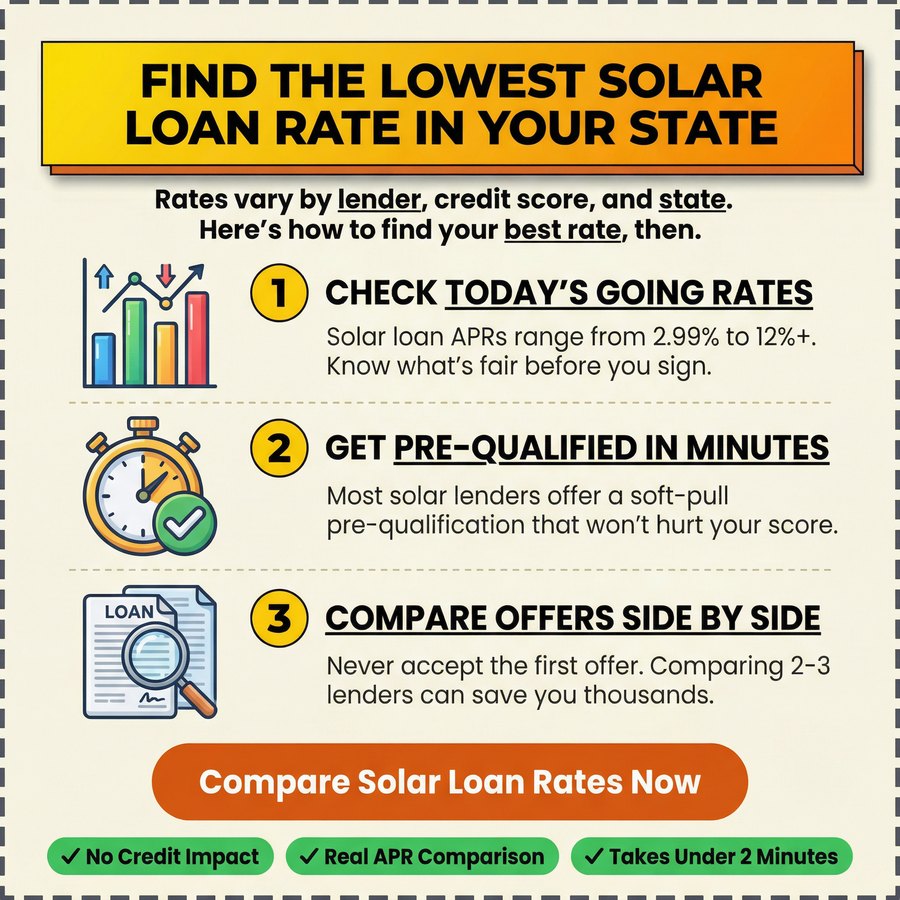
The good news is that solar panel financing has become much more flexible over the past few years. Homeowners now have several ways to install solar systems without paying the entire cost upfront. From solar loans to leases and government incentives, there are financing strategies that can fit different budgets and financial goals.
For a concrete example of one of those loans, see our review of a credit union’s solar loan rates, terms and eligibility requirements.
Still, choosing the wrong financing option can lead to higher long term costs or unnecessary financial pressure. That is why understanding your options before signing any agreement is so important.
In this article, you will learn the most common solar panel financing strategies for first time homeowners, the pros and cons of each approach, and practical tips for making a smart financial decision.
Why Financing Matters for Solar Panel Systems
Solar panels are a long term investment. While they can reduce electricity costs over time, the installation itself often requires a significant upfront expense.
For many first time homeowners, financing makes solar more accessible by spreading the cost across monthly payments rather than requiring a large lump sum.
Here are the main reasons financing plays such a big role:
• Reduces upfront financial pressure
Many homeowners do not want to drain savings immediately after buying a home.
• Makes larger systems affordable
Financing can allow homeowners to install systems that better match their energy needs.
• Improves cash flow management
Monthly payments may be easier to manage than a full upfront purchase.
• Allows earlier energy savings
Instead of waiting years to save enough money, homeowners can start reducing electricity bills sooner.
Here is a table comparing upfront purchase versus financing:
Factor
Cash Purchase
Financing Option
Upfront cost
High
Lower
Monthly payments
None
Yes
Long term savings
Highest potential
Moderate to high
Ownership
Immediate
Depends on financing type
Access to incentives
Usually yes
Depends on agreement
Financial flexibility
Lower initially
Higher initially
For first time homeowners, balancing monthly mortgage costs with solar investment costs is often the biggest challenge.
Most Popular Solar Financing Strategies
There are several financing methods available today, and each one works differently depending on your financial situation and goals.
Solar loans
Solar loans are one of the most popular options because they allow homeowners to own the system while paying over time.
With this setup:
• You borrow money for the installation
• You make monthly loan payments
• You own the solar system after installation
Advantages:
• Ownership of the system
• Access to tax incentives
• Increased home value potential
• Long term savings
Disadvantages:
• Interest costs
• Monthly loan obligations
• Credit approval requirements
Solar leases
With a solar lease, the solar company owns the system while you pay a monthly fee to use the energy generated.
Advantages:
• Very low upfront cost
• Minimal maintenance responsibility
• Predictable monthly payments
Disadvantages:
• No ownership
• Lower long term savings
• Limited access to incentives
• Potential complications when selling the home
Power purchase agreements
A power purchase agreement, often called a PPA, allows homeowners to pay for the electricity generated by the system rather than paying for the panels themselves.
Advantages:
• Little or no upfront cost
• Lower utility bills
• Maintenance often included
Disadvantages:
• No ownership benefits
• Electricity rates may increase over time
• Long contract periods
Home equity financing
Some homeowners use home equity loans or lines of credit to finance solar installations.
Advantages:
• Potentially lower interest rates
• Flexible use of funds
• Possible tax benefits

Disadvantages:
• Uses home as collateral
• Risk if payments are missed
• Requires sufficient home equity
Here is a comparison table of the most common financing methods:
Financing Type
Ownership
Upfront Cost
Monthly Payments
Long Term Savings
Best For
Cash purchase
Yes
High
None
Highest
Homeowners with strong savings
Solar loan
Yes
Moderate
Yes
High
Long term homeowners
Solar lease
No
Low
Yes
Moderate
Lower upfront budget
Power purchase agreement
No
Low
Variable
Moderate
Simplicity focused buyers
Home equity financing
Yes
Moderate
Yes
High
Homeowners with available equity
Each financing strategy has tradeoffs, so the best option depends on your financial priorities.
Important Incentives and Savings Opportunities
One reason solar financing has become more attractive is the availability of incentives that help reduce overall costs.
Federal tax credit
Many homeowners qualify for a federal solar tax credit, which can significantly reduce installation expenses.
State and local incentives
Some areas offer:
• Property tax exemptions
• Utility rebates
• Solar renewable energy credits
• Net metering programs
Energy bill savings
Over time, lower electricity bills can offset part of the financing cost.
Increased property value
Homes with solar systems may become more attractive to buyers, especially in areas with high electricity costs.
Here is a table showing common savings opportunities:
Incentive Type
Potential Benefit
Federal tax credit
Reduced installation cost
Utility rebates
Direct financial savings
Net metering
Credit for excess electricity production
Lower utility bills
Monthly savings
Increased home value
Better resale appeal
Understanding available incentives can help first time homeowners choose a more affordable financing strategy.
How First Time Homeowners Can Choose the Right Financing Option
Choosing the right financing strategy requires more than just looking at monthly payments. You should also consider long term goals and overall financial stability.
• Evaluate your budget carefully
Look at your mortgage, household expenses, and emergency savings before committing to solar payments.
• Think about how long you will stay in the home
Ownership based options often work best for long term homeowners.
• Compare total lifetime costs
A low monthly payment may still cost more over time.
• Understand contract terms fully
Read details about maintenance, warranties, transfer policies, and rate increases.
• Review your credit situation
Loan approval and interest rates often depend on credit scores.
• Get multiple installation quotes
Comparing quotes helps avoid overpaying.
Here are practical tips for first time buyers:
• Avoid rushing into high pressure sales offers
• Ask for full financing breakdowns
• Review projected energy savings carefully
• Understand warranty coverage
• Research the solar installer reputation
• Verify system performance estimates
Here is a simple financing decision guide:
Homeowner Priority
Recommended Financing Option
Lowest long term cost
Cash purchase or solar loan
Lowest upfront investment
Solar lease or PPA
Maximum ownership benefits
Solar loan or cash purchase
Flexibility and simplicity
Solar lease
Long term property investment
Ownership focused financing
Solar financing can be a smart move for first time homeowners when approached carefully. The right strategy allows you to enjoy lower energy bills and long term savings without creating unnecessary financial stress.
Instead of focusing only on getting the cheapest monthly payment, think about the total value of the investment over time. A well planned solar financing decision can support both your financial goals and your long term energy independence.
First-time buyers tend to need when refinancing a solar loan makes sense and estimating your monthly payment and total cost next.
Want real quotes before you decide how to pay for it?
A loan only makes sense once you know what the system will actually cost. If your electric bill runs above $150 a month and your roof gets decent sun, a personalized quote gives you real numbers to put into any loan comparison. Quotes are available nationwide.
Recent Posts
- Your Electricity Bill Jumped Because Nobody Told You Your Contract Ended
- Connecticut Solar Incentives: What Actually Applies to Your Roof
- Massachusetts solar incentives: what you can claim and what it is worth
- EnFin Solar Financing: How It Works, What It Costs, and Whether It’s Worth It
- GoodLeap Solar Loan: What It Costs, How It Works, and Whether It Is Worth It