blogs
Essential Factors to Consider Before Hiring an Energy Broker: Power to Choose is Choose My Power

This gallery contains 1 photo.
So, you’re thinking about getting some help with your business’s energy bills. Maybe you’ve heard about energy brokers and how they can supposedly save you money and hassle. It sounds good, right? But before you jump in and hire someone, it’s smart to know what you’re getting into. This isn’t like picking out a new coffee maker; it’s about your business’s bottom line. We’ll walk through what to look for when hiring an energy broker, so you can make a choice that actually helps.
Key Takeaways
- Understand what an energy broker actually does and what benefits you expect from them before you even start looking.
- Check if the broker has been around for a while and has worked with businesses like yours. Ask for references to see if they’ve done good work before.
- Make sure you know exactly how the broker gets paid and if there are any hidden costs. Get it all in writing so there are no surprises.
- Ask direct questions about their independence, how they pick suppliers, and how they handle contract details to avoid bias and confusion.
- Do your homework by checking their reputation, reviewing what they offer, and even verifying prices yourself if possible.
Understanding the Role of an Energy Broker
So, you’re thinking about bringing in an energy broker to help manage your business’s power and gas needs. That’s a smart move, especially if you’re in a place where the energy market is deregulated. But what exactly does a broker do, and what should you expect? Let’s break it down.

What Benefits Are You Expecting?
Before you even start looking for a broker, it’s good to have a clear idea of what you want to get out of the relationship. Are you primarily looking to slash your energy bills? Maybe you want more predictable costs, so you don’t get hit with surprise spikes. Or perhaps you’re interested in cleaner energy sources and want help finding suppliers that offer them. Knowing your goals helps you find a broker who can actually meet them. It’s not just about finding the cheapest rate; it’s about finding the right rate and contract for your specific situation.
What Do Energy Brokers Actually Do?
Think of an energy broker as your personal guide through the often confusing energy market. They work for you, not directly for the energy suppliers. Their main job is to connect businesses like yours with energy suppliers. They have relationships with many different suppliers and can get quotes from them all. This saves you the headache of contacting each one individually. Brokers also help you understand the nitty-gritty details of energy contracts. These contracts can be full of jargon and complex terms, like capacity charges or transmission fees. A good broker can explain what these mean and how they affect your bill.
- They gather quotes from multiple energy suppliers.
- They help you understand contract terms and conditions.
- They can advise on supplier reliability and financial stability.
- They often assist with the enrollment process.
Navigating the Energy Market
The energy market can be a wild ride. Prices can change by the hour based on supply, demand, and even the weather. For a business owner, keeping up with all of this is a full-time job in itself. That’s where a broker really shines. They’re constantly monitoring the market, understanding trends, and knowing when the best time might be to lock in a price. They can also help you understand different types of energy products – fixed rates, variable rates, green energy options – and figure out which one makes the most sense for your business’s risk tolerance and budget.
The energy market has a lot of moving parts, and it’s easy to get lost if you’re not paying attention. A broker’s job is to keep an eye on those parts for you, so you don’t have to. They act as a buffer between you and the complex world of energy supply agreements.
Evaluating Broker Experience and Qualifications

Years in the Industry
When you’re looking at energy brokers, one of the first things to check is how long they’ve actually been doing this. It’s not just about bragging rights; a longer history usually means they’ve seen a lot of different market ups and downs. Think about it – someone who’s been around for, say, ten years has probably navigated a few energy crises or major price shifts. They’ve likely built relationships with suppliers and have a better feel for what’s a good deal and what’s not. It’s like hiring a mechanic; you’d probably trust the one who’s been fixing cars for decades over the new kid on the block, right? They’ve learned the quirks of the industry.
Experience with Similar Businesses
This is a big one. Does the broker really get your kind of business? If you run a small retail shop, you have different energy needs than a large manufacturing plant or a busy restaurant. A broker who has worked with businesses like yours will already have a sense of your typical energy usage patterns, your peak times, and maybe even some industry-specific regulations you need to be aware of. They won’t have to start from scratch learning about your world. It’s about finding someone who speaks your language, energy-wise.
Track Record and References
Past performance is often a good indicator of future results. Don’t be shy about asking for proof. A solid broker should be able to share success stories or case studies. Better yet, ask for references – actual clients you can talk to. Hearing directly from other businesses about their experience, the savings they achieved, and how the broker handled any issues can be incredibly telling. It’s like checking reviews before buying something online, but with real people.
Licensing and Regulatory Compliance
This might sound a bit dry, but it’s super important. Depending on where you are, energy brokers might need specific licenses or certifications to operate legally. You want to make sure the broker you’re considering is legit and follows all the rules. It’s not just about legality; it often means they’ve met certain standards of knowledge and professionalism. You can usually check this with your state’s public utility commission or a similar regulatory body. It’s a basic check that gives you peace of mind.
Assessing Broker Transparency and Fees
When you’re looking at energy brokers, it’s super important to get a handle on how they get paid and what you’ll actually end up paying. This isn’t just about the sticker price; it’s about making sure there aren’t any surprises down the road. Understanding the fee structure upfront prevents conflicts of interest and ensures you’re getting the best deal for your business.
Understanding Broker Compensation
Brokers can get paid in a few different ways. Sometimes they charge a flat fee for their services, which is pretty straightforward. Other times, they work on commission, meaning they get a cut from the energy supplier once you sign a contract. This commission can be a set amount per kilowatt-hour (kWh) or a percentage of the total contract value. It’s also possible they use a mix of both. Knowing which model they use helps you understand their motivations.
- Per-unit uplift: A small amount added to each kWh you use.
- Fixed fee: A single payment for their service.
- Percentage of contract value: A slice of the total deal.
- Hybrid model: A combination of the above.
Identifying Hidden Costs
Beyond the stated fees, watch out for extra charges. Some brokers might add costs for things like market analysis, contract reviews, or even just for processing your paperwork. These can add up quickly. It’s also worth asking if they get any extra bonuses from suppliers for placing a lot of business with them. This could influence which supplier they recommend, even if it’s not the absolute best for you. Recent legal rulings in the UK have highlighted how businesses can reclaim unfair broker fees from energy contracts due to these hidden commissions, showing how important disclosure is.
Be wary of brokers who create a false sense of urgency, claiming rates will skyrocket tomorrow or that they have exclusive deals. This pressure tactic is often used to rush you into a decision without giving you time to properly compare options or understand the full cost implications.
Ensuring Fee Disclosure in Agreements
Make sure everything is written down. The agreement you sign with the broker should clearly state how they are compensated, any potential additional fees, and how they handle contract language. Don’t be afraid to ask for clarification. If a broker is hesitant to put their fees in writing or explain them clearly, that’s a big red flag.
Avoiding Supplier Bias
This is a big one. If a broker gets paid more by one supplier than another, they might be tempted to steer you towards the higher-paying option, even if it’s not the most cost-effective for your business. Ask them directly if they have preferred suppliers or if they receive different commission rates from different energy companies. An independent broker should be able to present you with a range of options from various suppliers without any bias.
Key Questions for Energy Broker Selection
So, you’ve decided an energy broker might be the way to go for your business. That’s a big step, and honestly, it’s smart to do your homework. Before you sign anything or even get too far down the road, you need to ask some pointed questions. Think of it like hiring someone for your team – you wouldn’t just pick the first person you meet, right? You’d want to know their background, what they’re good at, and how they operate. The same goes for an energy broker. Asking the right questions upfront can save you a lot of headaches and money down the line. It helps you figure out if they’re truly looking out for your best interests or just trying to make a quick buck.
What is Your Brokerage’s Panel Size?
This question gets at how many energy suppliers your potential broker works with. A larger panel generally means they have more options to present to you. More options can translate into better pricing and more tailored contract terms because they aren’t limited to just a few suppliers. It’s like going to a supermarket with a huge selection versus a corner store with only a handful of items. You’re more likely to find exactly what you need at a competitive price when there’s a wider variety available.
Are You Independent or Affiliated?
This is a big one for transparency. An independent broker works with a broad range of suppliers and isn’t tied to any single one. An affiliated broker, on the other hand, might have special relationships or even ownership ties with certain suppliers. This affiliation could potentially influence the recommendations they give you. You want a broker who is truly independent, meaning their primary loyalty is to you, not to a specific energy company. Ask them directly if they receive any special incentives or have preferred partnerships that might affect their advice.
Ready to take the next step? compare local solar installers and see your personalized options.
How Do You Handle Contract Language?
Energy contracts can be dense and full of confusing jargon. A good broker should be able to break down the complex terms and conditions into plain English. They should explain things like fixed versus variable rates, contract length implications, early termination fees, and any clauses that could lead to unexpected costs. Don’t be afraid to ask them to explain specific terms you don’t understand. If they can’t explain it clearly, that’s a red flag.
How Do You Vet Energy Suppliers?
Not all energy suppliers are created equal. Some are massive, established companies, while others might be smaller operations. You need to know that your broker has done their due diligence in selecting the suppliers they work with. Ask about their process for evaluating a supplier’s financial stability, reliability, and customer service history. A reputable broker will have a rigorous vetting process to protect you from potentially unreliable or even scammy suppliers. They should be able to tell you why they trust the suppliers on their list.
Asking these questions isn’t about being difficult; it’s about being smart. You’re entrusting someone with a significant part of your business’s operational costs. Making sure they are transparent, independent, and knowledgeable is key to a successful partnership. It’s about finding someone who can genuinely help you get the best deal and manage your energy needs effectively.
Due Diligence for Broker Engagement
So, you’ve decided to work with an energy broker. That’s a big step, and before you sign anything, it’s smart to do a little homework. Think of it like checking out a contractor before they start work on your house. You want to make sure they’re legit and that they’ll actually do a good job.
Reviewing Service Scope and Value
First off, what exactly are you getting for your money? Brokers can offer a whole range of services, from just finding you a supplier to managing your energy use all year long. Make sure their services line up with what you need. Do you just want a one-time deal, or do you want someone to keep an eye on your bills and help you save energy over time? It’s important to know what’s included.
- Initial contract procurement: Finding and securing a new energy deal.
- Bill validation: Checking your energy bills for errors or overcharges.
- Consumption analysis: Looking at how you use energy to find ways to cut back.
- Ongoing contract management: Keeping track of your contract and reminding you when it’s time to renew.
Checking References and Reputation
Don’t just take their word for it. Ask for references from other businesses they’ve worked with, especially ones similar to yours. A good broker will be happy to share this. Also, do a quick online search. See if there are any reviews or complaints. A solid reputation is a good sign they’re doing things right.
A broker’s track record speaks volumes. Look for consistent positive feedback and a history of helping businesses like yours achieve their energy goals. If they can’t provide references or have a lot of negative feedback, it’s probably best to look elsewhere.
Understanding Contract Terms
This is a big one. You need to read the contract you sign with the broker very carefully. What are their fees? How long is the agreement? What happens if you want to switch suppliers before the contract is up? Make sure everything is clear and in writing. If something doesn’t make sense, ask them to explain it until you get it. Don’t feel rushed into signing.
Verifying Quoted Rates Independently
Sometimes, the rates a broker gives you might not be the absolute best out there. It’s a good idea, if possible, to do a little comparison shopping yourself. Get a quote directly from a supplier or two and see how it stacks up against what the broker is offering. This helps you know if the broker is truly getting you a good deal or just a decent one.
| Service Provided | Broker’s Quote | Direct Supplier Quote | Difference | Notes |
|---|---|---|---|---|
| Electricity Rate (kWh) | $0.15 | $0.145 | $0.005 | Broker rate includes their commission |
| Gas Rate (Therms) | $0.80 | $0.78 | $0.02 | Supplier rate is base price |
| Standing Charge (Daily) | $0.30 | $0.30 | $0.00 | Same for both |
Considering Alternatives to Energy Brokers
While energy brokers can be helpful, they aren’t the only way to manage your business’s energy needs. Sometimes, going it alone or looking at different types of services might be a better fit for your situation. It’s always smart to see what else is out there before committing.
Direct Negotiation with Suppliers
If you’ve got a good handle on the energy market or have a solid relationship with a specific energy supplier, you might consider talking to them directly. This can sometimes get you better rates, especially if you know exactly what you’re looking for, like a particular type of renewable energy. Plus, you cut out the middleman, which means no broker fees.
Here’s a quick look at when direct negotiation makes sense:
- You understand energy pricing and contracts well.
- You have a preferred supplier with competitive offers.
- You want specific renewable energy sources.
- You’ve had bad experiences with brokers before.
- You’ve found suppliers not on a broker’s list with better deals.
Energy Management Solutions
Think of these as a more tech-focused approach. Energy management solutions often provide similar benefits to brokers – like helping you understand complex contracts and finding good deals – but with a big difference: transparency. You usually get a clear breakdown of all costs, fees, and services. Some platforms even offer extra perks like cost forecasting and alerts for good buying opportunities. This can save you time and money, and you stay in control.
These solutions aim to give you back control over your energy spending. They often provide detailed reports and insights, helping you make smarter decisions about your energy purchases without the hidden costs or supplier bias that can sometimes come with using a broker.
Independent Energy Consultancies
These are different from brokers. While brokers typically get paid by suppliers or through commissions, independent consultants usually charge a flat fee or an hourly rate for their advice. They work for you, not for the suppliers. This means their advice is generally unbiased. They can help you understand the market, evaluate supplier offers, and negotiate terms, all while you pay them directly for their time and knowledge. It’s a way to get expert help without the potential conflicts of interest that can sometimes arise with commission-based services.
So, What’s the Takeaway?
Alright, so we’ve talked a lot about energy brokers and what to look out for. It’s not just about finding the cheapest rate, though that’s a big part of it. You really need to know who you’re working with, how they get paid, and if they’re actually looking out for your best interests. Sometimes, going it alone or using a different kind of service might make more sense for your business. The main thing is to do your homework, ask the right questions, and make sure you’re in control of your energy costs, not the other way around. Power to choose is indeed choosing your power, so make it a smart choice.
Frequently Asked Questions
What exactly does an energy broker do?
Think of an energy broker as your guide in the world of electricity and gas. They help businesses figure out their energy needs, find different companies that supply power, and get the best deals on energy contracts. They also help you understand confusing contract details and make sure the power company you choose is reliable.
How do energy brokers get paid?
Energy brokers usually get paid a fee, often included in the energy bill from the supplier. It’s important to ask how they are paid and to make sure the agreement clearly shows any fees. This way, you know exactly what you’re paying for and can be sure you’re getting a good deal.
Why should I consider hiring an energy broker?
Hiring an energy broker can save you time and potentially money. They know the energy market well, can compare many suppliers for you, and negotiate better prices and contract terms than you might get on your own. They also handle the tricky parts of contracts, making the process easier.
Are energy brokers always independent?
Not always. Some brokers might have special deals with certain energy suppliers, which could influence their recommendations. It’s smart to ask if they are independent or work closely with specific companies. This helps you avoid ‘supplier bias’ and ensure you’re getting the best option for your business.
What if I don’t want to use a broker?
You have other choices! You can try to negotiate directly with energy suppliers yourself, especially if you already have good relationships or know what you’re looking for. Another option is an energy management service that offers clear pricing and helps you make smart energy decisions without a traditional broker.
How can I be sure I’m choosing a good energy broker?
To pick a good broker, ask about their experience, especially with businesses like yours. Check their track record and ask for references. Make sure they are clear about their fees and how they get paid. Also, confirm they follow all the rules and regulations. A trustworthy broker will be open and honest about everything.
Ready to Start Saving on Your Energy Bills?
Get a free, no-obligation quote from trusted local providers in under 2 minutes.
No obligation • Free estimates • Takes under 2 minutes
How to Choose a Power Company and a Broker: Power to Choos is Choose My Power

Choosing a power company and a broker might seem like a big task, especially with all the options out there. But it doesn’t have to be complicated. Think of it like picking a phone plan or a streaming service – you want the best deal for your needs. This guide will walk you through how to select a power company and energy broker, focusing on making informed decisions, especially if you’re in Texas. We’ll cover understanding your choices, the steps to pick the right provider, and what to look out for, so you can get the power you need without any hassle.
Key Takeaways
- Understanding energy deregulation means you can pick your power provider, which can lead to better prices and service.
- To choose the right power company and broker, look at your past energy use, compare different suppliers, and check reviews.
- Platforms like Power to Choose and energy brokers both help you find plans, but they work a bit differently. Know when to use each.
- When selecting an energy plan, pay attention to fixed vs. variable rates, contract lengths, and any extra fees to avoid surprises.
- If you’re in Texas, specific resources like Power to Choose can help you find a power company and broker tailored to your needs, maximizing savings.
Understanding Energy Deregulation And Your Choices
What Business Energy Deregulation Means For Consumers
So, what exactly is energy deregulation? Basically, it’s a system where the government steps back and lets different companies compete to sell you electricity and natural gas. Before deregulation, your local utility company pretty much had a monopoly. You didn’t have a choice; you just paid what they charged. Now, in many places, you can actually pick your power provider. This shift opens the door to more competitive pricing and a wider range of plan options. It means you’re not stuck with one provider anymore. You can shop around, compare deals, and find a plan that fits your needs and budget better. It’s all about giving you, the consumer, more control over your energy bills.
How State Laws Impact Your Energy Selection
It’s not the same everywhere, though. The rules about energy deregulation vary quite a bit from state to state. Some states have fully embraced it, allowing you to choose both your electricity and natural gas supplier. Others might only deregulate one or the other. And then there are states that still operate under a regulated system, where your utility company is your only option. This means that before you start looking for a new provider, you really need to know what the laws are in your specific area. It directly affects who you can choose and what kind of plans are even available to you. You can’t just assume the same rules apply everywhere; it’s important to check the specifics for your state’s energy market.
The Benefits of A Competitive Energy Market
When companies have to compete for your business, it usually leads to better outcomes for you. Think about it: if you have multiple choices, you’re going to look for the best deal, right? Energy providers know this. They’re motivated to offer lower prices, more flexible plans, and better customer service to win you over. This competition can lead to significant savings on your energy bills. Plus, it often encourages innovation, with companies offering things like green energy options or special plans tailored to different usage patterns. It’s a system designed to benefit the consumer by driving providers to offer more value.
The energy market can seem complicated, but understanding the basics of deregulation is the first step to making smart choices. It’s about recognizing that you often have options and that taking a little time to compare can pay off.
Here are some key benefits:
- Potential Cost Savings: Competition often drives down prices.
- More Plan Variety: You can find plans that better match your usage habits.
- Improved Customer Service: Providers work harder to keep you happy.
- Access to Green Energy: Many suppliers offer renewable energy options.
Steps To Choose My Power Company And Broker
Alright, so you’ve decided to take the reins and pick your own power company, maybe even use a broker to help. That’s a smart move, especially if you’re looking to save some cash or go a bit greener. But where do you even start? It can feel like a lot, but breaking it down makes it way easier. Let’s get into it.
Analyze Your Past Energy Usage Patterns
First things first, you gotta know how much power you’re actually using. Think of it like checking your pantry before you go grocery shopping – you don’t want to buy stuff you already have plenty of, right? Your past energy bills are your best friend here. Look at them for the last year, if you can. See if you use more power in the summer when the AC is blasting, or in the winter when the heat is on. Maybe you have certain appliances that hog energy at specific times. Understanding these patterns helps you figure out what kind of plan will actually save you money, instead of just guessing.
Here’s a quick look at what to check:
- Monthly Usage: How many kilowatt-hours (kWh) for electricity or thousand cubic feet (Mcf) for natural gas did you use each month?
- Peak Usage Times: Are there specific months or seasons where your usage spikes significantly?
- Daily Habits: Do you use more power during the day or at night?
Knowing your typical energy consumption is the foundation for making any smart choice about your power provider. It stops you from picking a plan that’s way too much or not enough for your needs.
Gather A List Of Available Energy Suppliers
Once you know your usage, it’s time to see who’s actually selling power in your area. This is where deregulation really comes into play. Depending on where you live, there might be a bunch of different companies you can choose from, not just the one your utility company assigns you. You can usually find this info on your state’s public utility commission website or by using online comparison tools. Don’t just stick with the first name you see; cast a wide net.
Compare Supplier Ratings And Reviews
Okay, so you’ve got a list of potential suppliers. Now what? You can’t just pick them out of a hat. You need to see what other people are saying about them. Look for reviews online, check out consumer protection websites, or see if there are any official ratings from state agencies. Are they reliable? Is their customer service any good? Do they have a history of surprise fees? This step is super important to avoid headaches down the road.
Consider Environmental Impact And Green Energy Options
For some folks, how their energy is generated matters. If you’re interested in being more eco-friendly, ask about renewable energy plans. These often come from sources like wind or solar power. While they might sometimes cost a little more, many people find the peace of mind and the positive environmental impact worth it. It’s another way to tailor your energy choice to what’s important to you.
Navigating Power To Choose Vs. Energy Broker Services
So, you’ve decided to take control of your energy bill. That’s a big step! Now, how do you actually go about finding the best deal? You’ve probably seen terms like “Power to Choose” platforms and “energy brokers” thrown around. They sound similar, but they work a little differently, and knowing the difference can save you time and money.
Understanding The Role Of An Energy Broker
Think of an energy broker as your personal energy shopper. They work for you, not a specific power company. Their job is to understand your energy needs – how much you use, when you use it, and what your budget is – and then scour the market for the best plans available from various suppliers. They have access to deals and information that might not be readily advertised to the public. They’re essentially your advocate in the complex energy market.
- Market Knowledge: Brokers know the ins and outs of the energy industry and can spot good deals.
- Time Savings: They do the legwork of contacting suppliers and comparing offers.
- Personalized Service: They tailor recommendations to your specific situation.
- Negotiation: Some brokers can negotiate better rates or terms on your behalf.
How Power To Choose Platforms Work
“Power to Choose” platforms, often run by state-authorized entities or independent comparison websites, are more like online marketplaces. You go to their site, enter your information (like your ZIP code), and they show you a list of available energy suppliers and their plans. It’s a more direct, do-it-yourself approach. You’re the one comparing the rates, contract lengths, and terms side-by-side.
- Transparency: You see the available plans directly.
- Direct Comparison: Easy to line up different offers.
- Self-Service: You control the entire process.
When To Use A Broker Versus A Direct Comparison Site
Choosing between a broker and a “Power to Choose” platform really depends on your comfort level and how much time you have.
- Use a Broker if: You’re busy, find the energy market confusing, have complex energy needs (like a business with multiple locations), or want someone to negotiate on your behalf. They can be particularly helpful if you’re unsure about contract terms or hidden fees.
- Use a Comparison Site if: You have some time to research, feel confident comparing different offers yourself, and want to see all the options laid out clearly. It’s a great way to get a quick overview of what’s available in your area.
Ultimately, both methods aim to help you find a better energy plan. The key is to understand how each one works so you can pick the approach that best suits your needs and preferences. Don’t be afraid to ask questions, no matter which route you take.
Selecting The Right Energy Plan For Your Needs
Okay, so you’ve done your homework and you’re ready to pick an energy plan. This is where things get a little more personal, because what works for your neighbor might not be the best fit for you. It’s all about matching the plan to how you actually use energy.
Fixed Rate Versus Variable Rate Plans Explained
This is probably the biggest decision you’ll make. You’ve got two main flavors here: fixed and variable rates. A fixed rate means you pay the same price per unit of energy, like a kilowatt-hour (kWh), for the entire time your contract is active. Think of it like locking in the price of your groceries for a year. It’s predictable, which is great for budgeting. You know exactly what to expect each month, no surprises.
On the flip side, a variable rate plan means your price can go up or down. It’s usually tied to the wholesale market prices for energy. If the market drops, you might pay less. If it spikes, you could end up paying more. It can be a gamble, but sometimes you can get a really good deal if the market is favorable. For most people, especially if you like knowing what your bills will be, a fixed rate is the way to go.
Understanding Contract Lengths And Terms
Contracts aren’t all the same length. You’ll see options ranging from a few months to several years. Shorter contracts give you flexibility if you think energy prices might drop or if your needs might change. Longer contracts, however, often come with lower per-unit rates because the supplier is locking you in. It’s a trade-off between flexibility and potential savings.
Always read the fine print. What happens if you need to break the contract early? Are there penalties? Does the rate change if you move? These are important questions to ask before you sign anything. You can find a lot of information about different plans and what they entail by checking out supplier details.
Ready to take the next step? find the best energy plan and see your personalized options.
Evaluating Fees And Hidden Charges
This is where some people get tripped up. While the advertised rate might look great, there can be other charges. Some plans have monthly service fees, early termination fees, or even small administrative fees. It’s like buying a car – the sticker price isn’t always the final price.
Here’s a quick rundown of things to look out for:
- Monthly Maintenance Fees: A small charge each month just to have the service.
- Early Termination Fees (ETFs): What you pay if you break your contract before it’s up.
- Late Payment Fees: Standard stuff, but good to know.
- Other Administrative Fees: Sometimes suppliers tack on small charges for various reasons.
It’s really important to get a clear picture of the total cost. Don’t just look at the cents per kWh. Ask for a full breakdown of all potential charges. Sometimes, a slightly higher per-unit rate with no extra fees can actually be cheaper overall than a lower rate with a bunch of add-ons. Make sure you know exactly what you’re signing up for.
Making An Informed Decision For Your Texas Energy Needs
Key Considerations For Choosing A Power Company In Texas
When you’re looking to pick a power company in Texas, it’s not just about the cheapest rate you see advertised. You’ve got to think about what actually makes sense for your home or business. First off, really dig into your past energy bills. How much electricity do you use each month? Are there times of the year when you use way more than others? Knowing this helps you figure out if a fixed rate, where the price per kilowatt-hour stays the same, or a variable rate, which can go up or down, is better for you. Some companies like Gexa Energy, Frontier Utilities, and Rhythm Energy are popular choices, but what’s best depends on your specific situation.
Here are a few things to keep in mind:
- Usage Patterns: Do you use a lot of power during peak hours (usually weekdays, 9 am to 7 pm) or more during off-peak times?
- Contract Length: Are you looking for a short-term commitment or a longer one? Longer contracts sometimes offer lower rates.
- Customer Service: What do other people say about their experience with the company? Are they easy to reach when you have a problem?
- Fees: Always check for any hidden fees, like early termination fees or monthly service charges, that aren’t obvious at first glance.
Understanding your own energy habits is the first step to finding a plan that actually saves you money, rather than just looking good on paper.
How To Select An Energy Broker Specializing In Texas
An energy broker can be a real help, especially in a market as big as Texas. They know the ins and outs of the different plans and providers. Think of them as your guide through all the options. When you’re looking for one, ask if they focus on Texas. They should be able to explain the different types of plans, like fixed versus variable rates, and what contract lengths mean for you. They can also help you compare different suppliers based on things like customer reviews and their commitment to green energy. It’s their job to find a plan that fits your needs and budget, so don’t be afraid to ask them to explain anything you don’t understand.
Maximizing Savings With The Right Energy Plan
Finding the right energy plan is all about matching your usage to the plan’s structure. If you’re home a lot during the day, a fixed-rate plan might give you peace of mind. If you’re out most of the day and can shift your energy use to nights and weekends, a variable rate or a time-of-use plan could lead to bigger savings. It’s also worth looking into companies that offer renewable energy options if that’s something important to you. Remember, the goal is to find a plan that not only has a good rate but also fits your lifestyle and helps you save money over the long haul.
Finalizing Your Energy Contract And Ongoing Support
The Process Of Signing Your Energy Contract
So, you’ve done your homework, compared suppliers, and picked the plan that feels right. Awesome! Now comes the part where you make it official. Signing the contract is usually pretty straightforward. Most companies will send you the agreement electronically. You’ll get a chance to read through everything one last time – think of it as a final check-up. Make sure you understand all the terms before you click that ‘sign’ button. It’s all about making sure there are no surprises down the road. If anything seems unclear, don’t hesitate to reach out to your chosen supplier or broker for clarification. They’re there to help you get it right.
What To Expect During The Switch
Once the contract is signed, the actual switch usually happens behind the scenes. You don’t need to do much, and importantly, your power won’t go out. Your utility company, the one that owns the poles and wires, still handles the delivery of electricity or gas to your home or business. The change is really just about who is supplying the energy and at what price. You’ll typically start seeing the new rates on your bill within one to two billing cycles. It’s a pretty smooth process, honestly. No need to worry about service interruptions.
The Importance Of Ongoing Broker Support
Signing the contract isn’t the end of the road, especially if you’re working with a broker or a service like Power To Choose. The energy market can shift, and what looks like a great deal today might need a second look a year from now. A good broker or platform will keep an eye on things for you. They can alert you when your contract is nearing its end, giving you a heads-up to shop around again before you get automatically renewed at potentially higher rates. They can also help if your energy needs change, like if you expand your business or your usage patterns shift. Think of them as your energy advisor, always looking out for your best interests and helping you keep those savings rolling in.
Wrapping It Up
So, picking an energy company and a broker might seem like a lot, but really, it’s about taking control. You’ve got options out there, whether you’re looking to save a few bucks, go green, or just get a plan that makes sense for you. Don’t just stick with what you’ve always had. Take a look around, compare what’s offered, and remember that finding the right fit now means less hassle and maybe even some savings down the road. It’s your power, after all.
Frequently Asked Questions
What exactly is energy deregulation?
Think of it like this: normally, you have to buy your electricity or gas from just one company in your area. But with deregulation, the government lets different companies sell you energy. This means you get to pick who you buy your power from, kind of like choosing a phone plan.
Will I lose power if I switch companies?
Nope, not at all! The company that brings the power to your house (the utility company) stays the same. Switching companies just changes who you pay for the energy itself. Your lights will stay on, promise!
What’s the difference between a fixed and a variable rate plan?
A fixed rate plan means your price per unit of energy stays the same, no matter what. It’s predictable. A variable rate plan means the price can go up or down depending on what’s happening in the energy market. It can be cheaper sometimes, but also riskier.
How do I know how much energy I usually use?
The easiest way is to look at your past electricity or gas bills. Most companies let you see this information online in your account. This helps you figure out if you use more energy in the summer or winter, for example.
What does an energy broker do?
An energy broker is like a guide. They know the energy market really well and can help you compare different plans and companies. They work for you to find the best deal, often without charging you extra.
Can switching energy companies really save me money?
Yes, often it can! Because companies compete for your business, they offer different prices and plans. By comparing them, you can find a plan that fits your needs and budget better, potentially lowering your monthly bills.
Affiliate Disclosure: This article contains affiliate links. If you click through and make a purchase or request a quote, we may earn a commission at no additional cost to you. We only recommend services we believe provide genuine value. Read our full disclosure policy.
Ready to Start Saving on Your Energy Bills?
Get a free, no-obligation quote from trusted local providers in under 2 minutes.
No obligation • Free estimates • Takes under 2 minutes
How Does Choosing the Right Energy Broker Can Help You Save Money

So, you’re looking to cut down on your business’s energy costs, huh? It can feel like a real puzzle, trying to figure out the best way to get a good deal on electricity and gas. That’s where energy brokers come in. They’re basically the pros who know the energy market inside and out, and they can help you find a plan that actually saves you money. This article will walk you through how to pick the right one, so you don’t end up with a raw deal.
Key Takeaways
- An energy broker acts as your go-between with energy suppliers, helping you find competitive rates and favorable contract terms. Think of them as your personal energy shopper.
- When choosing a broker, look for experience, check their reputation with other businesses, and make sure you understand exactly how they get paid – no surprises!
- Brokers have the inside track on market rates and can negotiate deals you might not be able to get on your own, saving you cash.
- They help you understand confusing contracts and vet suppliers to make sure they’re reliable, taking a big headache off your plate.
- Using a broker can save you time, help fix billing errors, and offer ongoing support, making energy management way simpler for your business.
Understanding the Role of an Energy Broker
What an Energy Broker Does
So, what exactly does an energy broker do? Think of them as your personal guide in the often confusing world of energy supply. They’re the folks who connect you, the energy user, with the companies that actually supply the electricity or natural gas. In places where the energy market is “deregulated,” meaning you can choose your supplier, this is where brokers really shine. They spend their days keeping an eye on market prices, understanding how they move, and figuring out when it’s a good time to buy. They also get to know your specific energy needs – how much you use, when you use it, and what your budget looks like. Their main goal is to find you the best possible deal on your energy supply.
Benefits of Partnering with a Broker
Why bother working with a broker? Well, for starters, they can save you a ton of time. Instead of you trying to call up a dozen different suppliers, comparing their offers, and deciphering the fine print, a broker does that legwork for you. They have relationships with many suppliers, so they can quickly get quotes and present them in a way that makes sense. Plus, they understand the lingo. Energy contracts can be full of confusing terms and conditions, but a broker can help you understand what you’re signing up for. They also help make sure the supplier you choose is reliable and can actually deliver on their promises.
Here are a few key advantages:
- Access to More Options: Brokers work with a wide range of suppliers, giving you a broader selection than you might find on your own.
- Expertise in Contracts: They know how to read and explain complex contract terms, helping you avoid costly mistakes.
- Market Knowledge: Brokers stay updated on market trends, which can help them secure better pricing.
Broker vs. Energy Consultant
It’s easy to mix up energy brokers and energy consultants, but there’s a slight difference. A broker’s primary job is to find you a supplier and negotiate a contract, usually getting paid by the supplier for bringing them a customer. An energy consultant, on the other hand, might offer a wider range of services. They could advise on energy efficiency, help you implement new technologies, or even assist with regulatory compliance. While some brokers might offer consulting services, and some consultants might help with procurement, their core focus tends to differ. A broker is more about the transaction – getting you the best rate. A consultant might be more about long-term strategy and optimization.
When you’re looking at energy options, remember that the market can change quickly. What looks like a good deal today might not be the best in a few months. Brokers are in a position to track these changes and advise accordingly.
Key Factors When Selecting an Energy Broker
So, you’ve decided to bring in an energy broker to help manage your company’s power bills. That’s a smart move, but not all brokers are created equal. Picking the right one can mean the difference between significant savings and just another bill to worry about. It’s like choosing a contractor for your house – you want someone reliable, experienced, and honest.
Experience and Proven Track Record
When you’re looking for someone to handle something as important as your energy supply, you want to know they’ve done it before and done it well. A broker with years in the business likely understands the market’s ups and downs. They’ve probably seen different market conditions and know how to navigate them. Ask about their history, how long they’ve been working with businesses like yours, and what kind of results they’ve achieved.
- Years in the energy market: How long have they been brokering deals?
- Client portfolio: Do they have experience with businesses of your size and industry?
- Success stories: Can they share examples of savings they’ve secured for other clients?
Reputation and Client Testimonials
What are other businesses saying about this broker? Online reviews and testimonials can offer a glimpse into their customer service and reliability. A broker who consistently gets good feedback is usually a safe bet. Don’t be afraid to ask for references directly. Talking to a few of their current or past clients can give you a real feel for what it’s like to work with them. A good broker will be happy to connect you.
A broker’s reputation is built on trust and consistent performance. Look for signs that they prioritize client satisfaction and long-term relationships over quick, one-off deals.
Transparency in Fee Structures
This is a big one. You need to know exactly how the broker gets paid. Some brokers work on commission, earning a fee when a business signs an energy contract with a supplier. This commission structure is a key aspect of how they operate. Others might charge a flat fee or a percentage of the savings. Whatever their model, it needs to be crystal clear from the start. Ask for a detailed breakdown of all potential costs and how they are calculated. You don’t want any surprises on your bill later.
Here’s a quick look at common fee models:
| Fee Structure | Description |
|---|---|
| Commission-Based | Paid by the energy supplier upon contract signing. |
| Fixed Fee | A set amount charged to the client for their services. |
| Percentage of Savings | A portion of the money saved on the energy bill, often after a baseline. |
Understanding these structures helps you compare different brokers fairly and ensures you’re getting a good deal for your money.
How Brokers Secure Better Energy Deals

So, how exactly does an energy broker manage to snag you a better deal on your electricity or gas? It’s not magic, but it does involve a good dose of market know-how and some serious negotiation skills. Think of them as your personal energy market insider.
Access to Competitive Market Rates
Brokers work with a whole bunch of energy suppliers, not just one or two. This means they have a broad view of what’s out there. They’re constantly checking prices and different plans from various companies. This wide reach allows them to find rates that you, as an individual business, might never even see. They know who’s offering what, and when. It’s like having a shopper who can compare hundreds of stores at once instead of you having to visit each one.
Expert Negotiation for Favorable Terms
Once they’ve identified potential suppliers, brokers don’t just accept the first price they see. They use their relationships and understanding of the market to negotiate. This isn’t just about the price per kilowatt-hour; it’s about the whole package. They can push for better contract lengths, fewer hidden fees, or more flexible terms that fit your business better. They know what’s standard and what’s negotiable, which gives them a real edge.
Understanding Your Business’s Usage Patterns
To get the best deal, a broker needs to know your specific needs. They’ll look at how much energy your business uses, when you use it most, and any future plans you might have that could change your consumption. This detailed analysis helps them match you with a supplier and a plan that’s not just cheap, but also the right fit. A plan that’s too rigid or doesn’t account for your peak usage times can end up costing you more in the long run, even if the initial rate looks good.
Brokers act as your advocate in a complex market. They use their industry connections and knowledge to sift through offers, negotiate terms you might not think to ask for, and align your energy plan with your actual usage, all aimed at reducing your overall energy costs.
Navigating Energy Contracts with Expert Guidance
Signing an energy contract can feel like trying to read a foreign language. There are so many terms, conditions, and numbers that it’s easy to get lost. That’s where a good energy broker really shines. They act as your translator and advocate, making sure you understand exactly what you’re agreeing to.
Decoding Complex Contract Language
Energy contracts are often filled with jargon. Words like ‘demand charges,’ ‘ratchet clauses,’ or ‘force majeure’ might pop up. A broker’s job is to break these down into plain English. They’ll explain what each part means for your business and how it could affect your bills. They help you understand the fine print so there are no surprises down the road. This clarity is super important for making a decision you won’t regret.
Supplier Vetting and Reliability
It’s not just about the price; it’s also about who you’re signing with. Brokers have the inside scoop on different energy suppliers. They know which ones have a solid history of reliability, good customer service, and fair practices. They’ll do the homework to check if a supplier is licensed, has positive reviews, and meets industry standards. This vetting process saves you from potentially partnering with a company that might cause headaches later.
Ready to take the next step? save money on your energy bill and see your personalized options.
Customizing Contracts to Business Needs
Every business is different, and so are its energy needs. A one-size-fits-all contract rarely works out best. Your broker will look at your specific usage patterns, your budget, and your long-term goals. They’ll then work with suppliers to tailor a contract that fits. This might mean adjusting the contract length, the type of rate, or even adding specific clauses. The aim is to create an agreement that truly supports your business operations and financial objectives. This kind of personalized approach is something you can’t easily get when dealing directly with suppliers. It’s all part of securing the best possible deal for your company.
Beyond Savings: Additional Brokerage Advantages
Time and Effort Savings
Let’s be honest, managing energy contracts and bills can be a real headache. It takes up valuable time that you could be spending on, you know, running your actual business. When you partner with an energy broker, they pretty much take all that off your plate. They handle the shopping around, the contract details, and even the nitty-gritty of utility bills. This frees you up to focus on what you do best. Think of it like hiring a personal assistant, but for your energy needs.
Ongoing Monitoring and Support
It’s not just about signing a deal and forgetting about it. A good broker sticks around. They’ll keep an eye on your energy usage and market trends. If your contract is coming up for renewal, they’ll be the ones reminding you and helping you find the next best deal. Plus, if any weird issues pop up with your supplier or your bill, they’re your go-to person to sort it out. They have those direct lines to suppliers that you just don’t have on your own.
Utility Bill Audits and Error Correction
Did you know that utility bills can sometimes have mistakes? It happens more often than you’d think. Maybe you’re being overcharged, or there’s a billing error that slipped through the cracks. An energy broker can go through your past bills with a fine-tooth comb. They know what to look for and can often catch these errors, getting you money back or correcting the charges. It’s like having a detective for your electricity and gas statements.
Working with a broker means you’re not alone in the energy market. They act as your advocate, using their knowledge and connections to make sure you’re getting a fair shake. It’s about more than just the price; it’s about having peace of mind and a partner who’s looking out for your business’s best interests long-term.
Avoiding Pitfalls When Choosing a Broker
The Danger of Choosing Based on Price Alone
It’s tempting, right? You see a broker advertising the absolute lowest rate, and your mind immediately goes to the savings. But here’s the thing: the cheapest option isn’t always the best option. Sometimes, those super-low prices come with strings attached, like less-than-stellar customer service or contracts that are tricky to get out of. Focusing solely on the price tag can blind you to other important factors. Think of it like buying a car – the cheapest one might get you from A to B, but it might break down constantly or lack basic safety features. You need a balance between cost and quality service.
The Importance of Thorough Research
Before you sign anything, do your homework. Don’t just take a broker’s word for it. Look into their history. How long have they been around? What do other businesses say about them? Check online reviews, ask for references, and see if they have any industry certifications. A broker who is upfront about their experience and happy to share success stories is usually a good sign. It’s like hiring someone for your team; you want to know they’re qualified and reliable.
Identifying and Understanding Hidden Fees
This is a big one. Some brokers might not be totally upfront about how they get paid, or they might have extra fees tucked away in the fine print. Always, always ask for a clear breakdown of all costs involved. How do they make their money? Is it a commission from the supplier, a fixed fee, or something else? Make sure you understand every single charge before you agree to anything. If a broker seems hesitant to explain their fee structure, that’s a red flag.
- Ask for a detailed fee schedule.
- Clarify who pays the broker (you or the supplier).
- Read the contract carefully for any mention of additional charges.
Don’t let the pressure of finding a deal rush you into a decision. Take your time, ask all the questions, and make sure you’re comfortable with the broker and the terms before you commit. A little bit of effort now can save you a lot of headaches later.
Wrapping It Up
So, picking the right energy broker really matters for your business. A good one can seriously cut down your energy bills and make managing all that complicated stuff way simpler. When you’re looking around, think about how long they’ve been doing this, if they’re good at talking things through, and if other people have had good experiences with them. Do a little digging, ask plenty of questions, and make sure they’re legit. Finding that perfect energy broker means you’ve got a solid partner who’ll keep your energy costs in check for the long haul. It’s a smart move for any business that cares about its bottom line.
Frequently Asked Questions
What exactly does an energy broker do for my business?
Think of an energy broker as your personal guide in the energy world. They work for you to find the best deals on electricity and gas from different energy companies. They compare prices and terms, so you don’t have to, helping you save money and time.
Why should I use a broker instead of just picking an energy supplier myself?
Brokers know the energy market really well and have connections with many suppliers. This means they can often get you better prices and contract terms than you might find on your own. Plus, they handle all the research and paperwork, saving you a lot of hassle.
How do energy brokers actually help me save money?
Brokers have access to special rates because they buy energy in large amounts and negotiate deals. They understand your business’s energy use and can match you with a plan that fits perfectly, often leading to lower bills. They also help you avoid tricky contract clauses that could cost you more.
Are there any costs involved in using an energy broker?
Sometimes brokers charge a fee, but often they are paid by the energy suppliers themselves. This means you might get their expert help for free! It’s important to ask upfront how they get paid so you know exactly what to expect.
What should I look out for when choosing an energy broker?
Make sure the broker has a good reputation and plenty of experience. Always ask for clear explanations of their fees and how they find their deals. Don’t just pick the cheapest option; look for someone trustworthy who understands your needs and is transparent about everything.
Can an energy broker help with more than just finding a new energy plan?
Yes! Many brokers also help you understand your energy bills, check for mistakes or overcharges, and offer advice on how to use less energy. They can be a valuable partner in managing all your energy needs long-term.
Ready to Start Saving on Your Energy Bills?
Get a free, no-obligation quote from trusted local providers in under 2 minutes.
No obligation • Free estimates • Takes under 2 minutes
Commercial Solar Financing: Best Options for Businesses (Loans, PPAs, Leases)

Thinking about putting solar panels on your business property? That’s great! But the big question is usually how to pay for it all. It’s not like you can just pull out your wallet for a massive solar setup. Luckily, there are several ways to finance commercial solar projects, and each one changes how you pay, who owns the equipment, and what kind of savings you’ll see. We’ll walk through the main options for commercial solar financing so you can figure out what makes the most sense for your company.
Key Takeaways
- A Power Purchase Agreement (PPA) lets you buy solar power at a set rate, often lower than utility prices, without paying for installation upfront. You don’t own the system, though.
- A Solar Lease means you pay a fixed monthly fee to use the solar system installed on your roof. Like a PPA, there’s no upfront cost, but you’re paying for the equipment use, not the electricity generated.
- Solar Loans allow your business to own the solar system while spreading the cost over time with monthly payments. You get to claim tax benefits and incentives, potentially leading to better long-term returns.
- A Cash Purchase means you pay for the entire solar system upfront. This gives you full ownership, the best long-term savings, and allows you to take advantage of all available tax credits and incentives.
- Commercial Property Assessed Clean Energy (C-PACE) offers loans for energy upgrades that are repaid through property tax assessments, making it accessible even for businesses with less-than-perfect credit.
Power Purchase Agreement (PPA)
A Power Purchase Agreement, or PPA, is a pretty popular way for businesses to go solar without having to shell out a ton of cash upfront. Basically, a solar company or investor puts up all the money for the solar system – the panels, the inverters, all of it – and installs it on your business’s property. Your business then agrees to buy the electricity that the system generates over a set period, usually 10 to 25 years.
The big draw here is that you typically pay a lower rate per kilowatt-hour (kWh) for this solar electricity than you would for power from the utility company. This means you start saving money on your electricity bills from day one. It also gives you a predictable energy cost for years to come, which is nice for budgeting and planning.
Here’s a quick rundown of how it generally works:
- Developer Owns and Operates: The solar company owns the system, handles all the installation costs, and takes care of maintenance and repairs. You don’t have to worry about fixing anything.
- You Buy the Power: Your business buys the electricity produced by the panels at a pre-agreed rate. This rate is usually lower than your current utility rate.
- Long-Term Contract: You sign a contract for a specific term, like 20 years, agreeing to purchase the power generated.
It’s important to know that with a PPA, you don’t own the solar system. This means you can’t claim things like the Investment Tax Credit (ITC) or depreciation benefits. Those go to the system owner. However, for organizations that can’t take advantage of tax incentives, like some non-profits or government entities, a PPA can still be a really smart move because the savings are passed on through the lower electricity rate.
Think of it like leasing a car. You get to use the car and enjoy the benefits of driving it, but you don’t own it. The leasing company handles the big maintenance stuff, and you pay a monthly fee for the use. With a PPA, you’re essentially ‘leasing’ the solar power generated, not the equipment itself, and the payment is based on how much power you use.
Solar Lease
A solar lease is another way for businesses to go solar without shelling out a ton of cash upfront. Think of it like renting the solar panel system for your building. You pay a set monthly fee to use the equipment, and the company that owns it handles the installation and upkeep.
The main difference from a Power Purchase Agreement (PPA) is that with a lease, you’re paying a fixed amount each month for the system itself, not for the actual amount of electricity it produces. This can make budgeting a bit simpler, as you know exactly what your solar payment will be, regardless of how sunny it is.
Here’s a quick rundown of how it generally works:
- Installation: A third-party company installs the solar panels on your property.
- Monthly Payments: You pay a consistent monthly lease payment for a set term, usually between 6 to 10 years.
- Maintenance: The lease provider typically covers all maintenance and repairs.
- Ownership: You don’t own the system, and you can’t claim tax credits or depreciation benefits. Those usually go to the system owner.
- End of Term: At the end of the lease, you might have options to renew the lease, buy the system at a pre-determined price, or have the system removed.
While leases offer predictable monthly costs and zero upfront investment, they might not always be the most popular choice for businesses compared to PPAs. It can sometimes be trickier to directly compare lease payments to your current utility bills, especially since the payment isn’t tied to your actual energy usage.
One thing to keep in mind is that the financial incentives, like tax credits, usually go to the company that owns the solar system, not to your business. So, while you get the benefit of using the solar power and potentially lower electricity bills, you miss out on those direct tax advantages. It’s worth checking if solar leases are even allowed in your specific state, as not all jurisdictions permit them.
Solar Loans
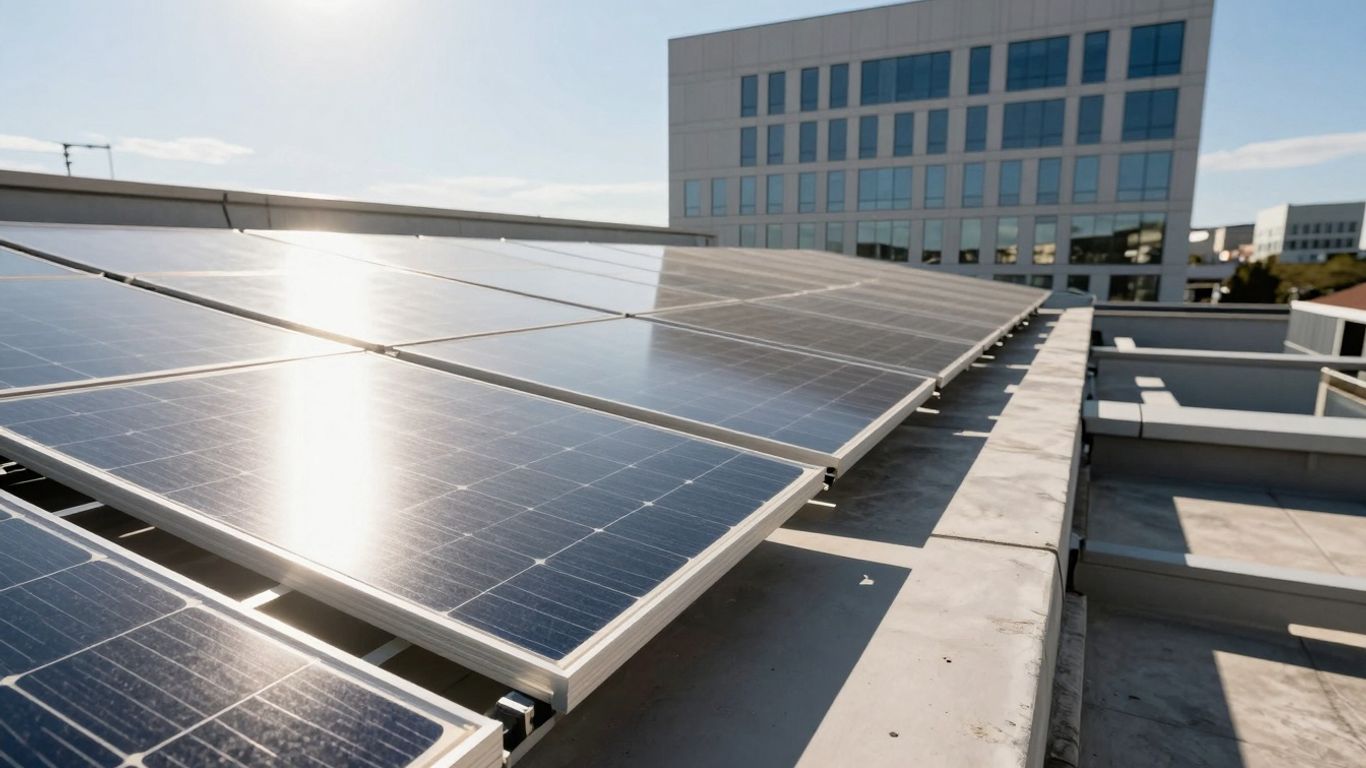
When you go with a solar loan, your business basically takes out a loan to buy a solar energy system, much like you might get a loan for a new piece of equipment or a building upgrade. The lender puts a lien on the solar system itself, but you, the business owner, are the direct owner of everything. This means you get to claim all the good stuff that comes with owning a solar setup.
The biggest perk here is that you own the system outright and can take advantage of the federal Investment Tax Credit (ITC), which lets you deduct a good chunk of the system’s cost from your federal taxes. Other benefits include any state rebates and the income you might get from selling Solar Renewable Energy Credits (SRECs). You’ll also see savings on your electricity bills, of course.
There are a couple of ways these loans can work, especially when it comes to using that ITC refund:
- Split Loan: You get a short-term, interest-free loan for about 30% of the project cost. You pay this off in full once you get your tax refund. The rest of the loan is a standard, longer-term loan with interest.
- Re-amortized Loan: After you get your ITC refund, you make a big payment towards the principal. The loan is then recalculated with a lower monthly payment for the rest of its term.
When you’re shopping around for a solar loan, you’ll find options with fixed or variable interest rates. Fixed rates give you predictable payments, while variable rates can change if the market rates go up or down. Some loans are secured, meaning you’ll need to put up an asset as collateral, while others are unsecured, with the solar equipment itself acting as the guarantee.
Remember, with a solar loan, you’re responsible for the system’s upkeep and any future maintenance costs. If managing that sounds like a hassle, you might want to look at other options like leases or PPAs where someone else handles the operations.
Interest rates and how long you have to pay the loan back can vary a lot. Lenders might include what they call ‘dealer fees’ to cover their administrative work or the risk they’re taking. It’s super important to read all the fine print and understand every single fee before you sign anything. You want to make sure the savings on your electricity bill are more than your monthly loan payment, especially after you factor in all the incentives.
Cash Purchase
So, you’ve got the capital and you’re thinking about going solar. Buying a solar system outright with cash is pretty much the most straightforward way to do it, and honestly, it often ends up being the most profitable in the long run. You pay for the whole thing upfront, and bam – it’s yours. No monthly payments to worry about, just pure energy savings from day one.
What’s really cool about this is you get to claim all the good stuff, like the federal tax credits – that’s a big chunk of the cost right back in your pocket. Plus, there’s depreciation, which is another way to cut down on your business taxes. It’s like the government is giving you a pat on the back for going green. And hey, owning the system outright adds real value to your property. It’s a tangible asset that makes your building worth more.
Here’s a quick rundown of why it’s a solid choice:
- Maximum Long-Term Savings: You’re not paying interest or lease fees, so your savings just keep adding up over the system’s lifespan.
- Full Ownership & Control: It’s your system. You own everything it produces and can decide what to do with any excess energy.
- Tax Advantages: You can take advantage of the Investment Tax Credit (ITC) and accelerated depreciation.
- Increased Property Value: A solar installation is a physical asset that boosts your building’s worth.
Of course, it’s not all sunshine and rainbows. The biggest hurdle is that initial investment. It’s a significant amount of money to put down all at once. You’ll also be the one responsible for any maintenance, though solar systems are pretty low-maintenance these days, and the costs are usually minimal over the years. Most businesses find the payback period is pretty reasonable, often somewhere between 4 to 7 years, after which all the energy is essentially free.
This method is best suited for businesses that have the available cash and want to maximize their return on investment while also taking full advantage of all available tax incentives. It’s a commitment, for sure, but one that pays off handsomely over time.
Commercial Property Assessed Clean Energy (C-PACE)
Commercial Property Assessed Clean Energy, or C-PACE, is a financing tool that lets businesses pay for solar installations and other energy upgrades through their property tax bill. It’s available in many states, and the idea is pretty straightforward: instead of taking out a traditional loan with upfront payments and credit checks, you get a voluntary assessment added to your property taxes. This assessment covers the cost of the solar project, including interest, and is repaid over a long period, often 20 to 30 years.
The biggest draw of C-PACE is that it often requires no money down and can be repaid over a much longer term than typical business loans, making solar more accessible. Because the repayment is tied to the property itself, it can be a good option even if your business has a less-than-perfect credit history. Plus, the assessment automatically transfers to the new owner if you sell the property, which can make it more attractive to buyers.
Here’s a quick look at how it generally works:
- Project Approval: Your solar project gets the green light.
- Financing Secured: A third-party lender provides the capital for the project.
- Installation: The solar system is installed on your property.
- Repayment via Property Taxes: The project cost is added as a special assessment to your annual property tax bill, which you then pay to the lender.
It’s worth noting that C-PACE programs are still relatively new in some areas, so availability and specific rules can vary by state and even by local municipality. If you own your commercial property and plan to stay put for a while, C-PACE is definitely worth looking into.
C-PACE financing is tied to the property, not the business owner. This means if you sell your building, the C-PACE assessment transfers to the new owner. This can be a benefit, as it makes the property more attractive by including a pre-paid energy upgrade.
Wrapping It Up
So, picking the right way to pay for solar for your business really matters. It’s not just about getting panels on the roof; it’s about how it fits your budget now and in the future. Whether you go with a PPA where you just pay for the power, a lease for predictable monthly costs, or buy it outright for the best long-term savings, the main thing is to match it to what your business needs. Think about your money goals, if you can use tax breaks, and what you plan to do down the road. Getting some expert advice can really help sort through the options and make sure you’re making a smart move for your company’s bottom line and its future.
Frequently Asked Questions
What is a Power Purchase Agreement (PPA) for businesses?
A PPA lets your business use solar power without buying the equipment. A company installs and owns the solar panels on your roof. You then buy the electricity they make, usually at a lower price than what your regular power company charges. It’s like paying for the electricity, not the panels themselves.
How is a Solar Lease different from a PPA?
With a solar lease, you pay a set monthly fee to use the solar system that’s installed on your property. Unlike a PPA where you pay for the actual electricity used, a lease payment is fixed, regardless of how much power the system generates. Think of it like renting the solar equipment.
What are Solar Loans for businesses?
A solar loan is like a regular loan but specifically for buying a solar energy system. Your business owns the system from the start, and you pay back the loan over time, usually with interest. This means you can take advantage of tax breaks and own the system outright once the loan is paid off.
Can my business buy solar panels outright with cash?
Yes, a cash purchase means your business pays for the entire solar system upfront. This is the most direct way to own the system and get the best long-term savings because you avoid interest payments and can claim all tax benefits and incentives immediately.
What is C-PACE financing?
C-PACE stands for Commercial Property Assessed Clean Energy. It’s a special type of loan that helps businesses pay for energy-saving upgrades, including solar. The loan is repaid through an extra charge on your property’s tax bill, which can make it easier to qualify for, even with a less-than-perfect credit history.
Which financing option is best for my business?
The best option depends on your business’s financial situation and goals. If you want no upfront costs and immediate savings, a PPA or lease might be good. If you want to own the system and get the highest long-term return, a solar loan or cash purchase is better. C-PACE is a helpful option if you need easier financing terms.
Solar Financing Near Me: How to Find Local Lenders & the Best Deals

This gallery contains 1 photo.
Thinking about going solar but not sure how to pay for it? It can feel like a big step, especially with the upfront costs. But don’t worry, there are plenty of ways to finance solar panels, and finding the right option near you is key to making it affordable. This guide will help you sort through the different choices, from your local bank to installer deals, so you can find the best fit for your home and your wallet. Let’s figure out how to make solar financing near me work for you.
Key Takeaways
- When looking for solar financing near me, check with your local bank or credit union first. They might offer better rates than national companies, especially credit unions that focus on community projects.
- Be cautious with installer financing, especially ‘0% interest’ deals. Always compare the installer’s cash price to their financed price to see if costs are inflated.
- Home Equity Lines of Credit (HELOCs) can be a good option if you have equity in your home, often providing lower interest rates than unsecured loans.
- Government rebates and incentives can significantly lower the amount you need to borrow, making your solar loan more manageable.
- Understand how owning vs. leasing solar panels affects your home’s financing. Owned systems are generally viewed favorably by lenders, while leases can complicate mortgages.
Exploring Local Solar Financing Options
So, you’re thinking about going solar, which is awesome! But then comes the big question: how do you pay for it? It can feel a bit overwhelming at first, especially with all the different ways to finance a system. The good news is, you don’t have to go it alone. There are plenty of local options out there, and understanding them is the first step to finding the best deal for your home.

Understanding Your Local Solar Financing Near Me Landscape
When you start looking for solar financing, it’s easy to get lost in all the national programs and big-name lenders. But often, the best deals are closer than you think. Your local banks, credit unions, and even some community-focused organizations might have specific programs or a better understanding of your local market. Think about it: they’re invested in your community, and that can translate into more flexible terms or even slightly better rates than you might find with a giant, faceless corporation.
- Start with your current bank: You already have a relationship there, which can sometimes make things smoother. See what they offer for home improvement loans or green energy projects.
- Check out local credit unions: These are member-owned and often prioritize community benefit. They might have specialized solar loans with competitive rates.
- Look into community programs: Some towns or regions have specific initiatives or grants for renewable energy that can lower your overall cost.
Key Factors When Comparing Solar Loans
Not all solar loans are created equal. When you’re comparing different offers, it’s super important to look beyond just the monthly payment. You need to see the whole picture to make sure you’re getting a good deal that won’t cost you a fortune in the long run.
Here are some things to keep an eye on:
- Interest Rate: This is a big one. Is it fixed or variable? What’s the actual percentage? Even a small difference can add up to thousands over the life of the loan.
- Loan Term: How long do you have to pay it back? A longer term means lower monthly payments, but you’ll likely pay more interest overall. A shorter term means higher payments but less interest paid.
- Fees: Are there any origination fees, closing costs, or prepayment penalties? Make sure you know about all the extra costs involved.
- Total Cost: Add up all the payments, including interest and fees, to get the total amount you’ll pay for the system. This is the number that really matters.
When comparing financing options, always ask for the total cost of the loan over its entire term. This figure will give you a clear picture of what you’ll actually pay for your solar system beyond the initial price tag.
Navigating the Solar Financing Process
Getting approved for a solar loan isn’t usually as complicated as buying a house, but it does take a few steps. Being prepared can make the whole thing go much smoother.
- Get Quotes: First, you need to know how much you need to borrow. Get detailed quotes from a few reputable solar installers. Make sure you ask for the ‘cash price’ of the system, not just the financed price.
- Check for Incentives: Look into any local, state, or federal rebates or tax credits available for solar. These can significantly reduce the amount you need to finance.
- Gather Your Financials: Have your income information, credit score details, and details about your home (like equity if you’re considering a HELOC) ready.
- Apply: Approach lenders with your quotes and incentive information. Be ready to discuss your energy savings projections. This shows them it’s a smart investment.
- Compare Offers: Don’t just take the first offer. Lay out all the loan terms side-by-side and pick the one that makes the most sense for your budget and financial goals.
Leveraging Traditional Lenders for Solar Power
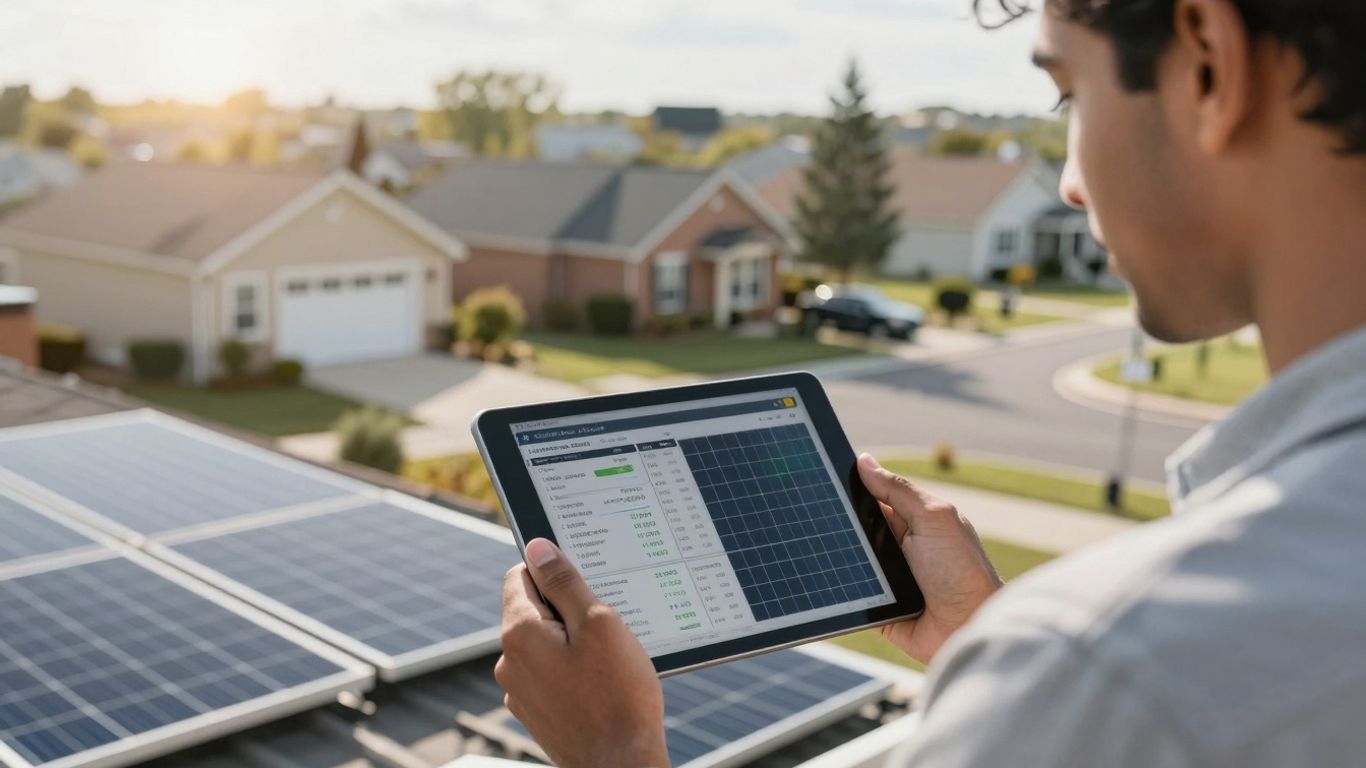
When you’re looking into solar, don’t forget about the banks and credit unions you already work with. They can be a solid place to start, especially if you’ve built a good relationship with them over time. Think of them as your first line of defense for getting a loan.
Working With Your Existing Bank for Solar Loans
Your current bank might have options that fit your solar project. They often have “green” loan programs designed for energy-efficient upgrades. While these might sound special, they’re often just standard personal loans with a slightly better interest rate. It’s worth asking about them.
- Ask about “green” or “eco-friendly” loans: Some banks specifically market these for home improvements like solar.
- Inquire about personal loans: Even if there isn’t a dedicated green loan, a standard personal loan could work. Just be sure to compare the rates.
- Discuss your home improvement plans: Frame your solar installation as a way to increase your home’s value and lower your monthly expenses. Providing your installer’s quote and estimated energy savings can help.
When talking to your bank, try to present your solar project as a smart investment. Showing them how it will increase your property value and reduce your utility bills can make them more receptive to offering favorable loan terms. It’s not just about borrowing money; it’s about financing an upgrade that pays for itself.
Credit Unions: A Community-Focused Alternative
Local credit unions are another great option to explore. Since they’re member-owned, they often focus more on community benefit and might offer more competitive rates or flexible terms than big banks. They sometimes have specific loan products tailored for solar installations.
- Check for membership requirements: You’ll usually need to be a member to get a loan.
- Ask about “green” or “solar” loans: Many credit unions are ahead of the curve on these types of loans.
- Compare rates and terms: Even if you’re already a bank customer, a credit union might surprise you with a better deal.
Credit unions can sometimes be more flexible with their lending criteria, which can be helpful if you don’t have a long credit history or if your financial situation is a bit unique. Their local focus means they might understand your community’s needs better.
Home Equity Lines of Credit for Solar Investments
If you own a home and have built up some equity, a Home Equity Line of Credit (HELOC) can be a very attractive option for financing solar. It’s essentially a line of credit secured by your home’s value. This often comes with lower interest rates compared to unsecured loans.
- Understand the collateral: Your home is used as security for the loan.
- Check current interest rates: HELOC rates are often variable, tied to the prime rate.
- Determine your borrowing limit: This will depend on how much equity you have in your home.
A HELOC can be a smart move because it typically offers lower interest rates than a personal loan. However, it’s important to remember that your home is on the line, so make sure you’re comfortable with that arrangement and can manage the payments comfortably. It’s a significant financial commitment.
When considering a HELOC, be sure to compare the interest rates and fees with other loan options. While the rates are often lower, the total cost over the life of the loan can still add up. It’s a good idea to get quotes from a few different lenders, including your current bank and any credit unions you’re a member of.
Solar Installer Financing: Convenience and Considerations
Many solar companies make it super easy to finance your new solar setup right through them. They often partner with finance companies to offer packages that bundle everything together. It sounds pretty straightforward, right? You get a quote, they handle the installation, and the financing is all part of the deal. This can be a big plus if you just want a simple, one-stop solution.
Evaluating Installer Financing Packages
When an installer presents their financing plan, it’s smart to look beyond just the monthly payment. Ask for the total cash price of the system too. This way, you can figure out the actual cost of the financing they’re offering. Sometimes, what looks like a great deal might have hidden costs or a higher overall price compared to getting a loan elsewhere.
Here’s a quick way to compare:
- Cash Price: The price of the system if you paid upfront.
- Financed Price: The total amount you’ll pay over the life of the loan, including interest.
- Loan Term: How many years you’ll be paying.
- Monthly Payment: The amount you pay each month.
The Truth Behind ‘0% Interest’ Solar Deals
That “0% interest” offer sounds amazing, and sometimes it really is. But it’s important to know how these deals usually work. Often, the “0% interest” is baked into a higher overall system price. So, while you’re not paying interest, you might be paying more for the panels and installation itself. It’s like getting a “free” appetizer with a meal that costs a bit more than it should.
Always ask for the system’s cash price. This is the number you need to compare apples to apples with other financing options. If the installer won’t give you a clear cash price, that’s a red flag.
Comparing Installer Offers to Traditional Loans
Don’t just take the installer’s financing at face value. It’s a good idea to shop around. Get quotes from your own bank or a local credit union. You might find that a traditional loan, even with a small interest rate, ends up being cheaper overall because the principal loan amount is lower. It takes a little more effort, but saving money in the long run is usually worth it.
Here’s a quick comparison table to help you think it through:
| Feature | Installer Financing (Example) | Traditional Loan (Example) | Notes |
|---|---|---|---|
| Interest Rate | Often advertised as 0% | Varies (e.g., 5-10%) | Check if 0% is built into a higher price. |
| Total Cost | Potentially higher | Potentially lower | Compare total paid over loan term. |
| Application Ease | Very easy, bundled | May require more steps | Installer financing is often quicker. |
| Flexibility | Limited to installer’s terms | More options available | Banks may offer better terms. |
Maximizing Your Solar Investment with Smart Financing
So, you’ve decided to go solar. That’s awesome! But before you sign on the dotted line for that shiny new system, let’s talk about making sure your financing plan actually works for you in the long run. It’s not just about getting the panels on your roof; it’s about making sure the money side of things makes sense for your wallet.
Calculating the True Cost of Solar Financing
This is where a lot of people get tripped up. You see a monthly payment, and it seems manageable. But have you looked at the total cost over the life of the loan? It’s easy to get excited about a ‘0% interest’ deal from an installer, but sometimes that ‘deal’ is baked into a higher overall system price. Always ask for the cash price of the system so you can compare apples to apples.
Here’s a quick way to think about it:
- Principal Amount: The actual cost of the solar system.
- Interest Rate: How much the lender charges you to borrow money.
- Loan Term: How many years you’ll be paying it off.
- Total Paid: Principal + Total Interest Paid.
The lowest monthly payment isn’t always the cheapest option overall. Sometimes, a slightly higher monthly payment over a shorter term can save you thousands in interest.
How Rebates and Incentives Impact Your Loan
Government rebates, tax credits, and local incentives can seriously cut down the upfront cost of your solar system. This is fantastic news because it means you might need to borrow less money, or maybe you can pay off the loan faster. It’s like getting a discount before you even start paying interest.
- Federal Tax Credits: These can offset a significant portion of your system’s cost when you file your taxes.
- State/Provincial Rebates: Many regions offer direct cash rebates for installing solar.
- Local Utility Programs: Some power companies have their own incentives.
Always factor these in before you finalize your loan. If you get a rebate after you’ve already borrowed the full amount, you’ll just have extra cash to put towards paying down the loan principal faster, saving you interest.
Ready to take the next step? solar financing near me and see your personalized options.
The Long-Term Value of Owned Solar Systems
When you own your solar system outright (or have paid off your loan), you’re essentially getting free electricity from the sun. Think about how much you spend on electricity now – that money could be going into your pocket instead. Plus, studies show that homes with owned solar systems often sell for more than comparable homes without them. Buyers see the value in those lower, predictable energy bills.
Owning your solar panels means you get to keep all the savings and the increased home value. It’s an investment that pays you back over time, not just in electricity bill reductions, but also in your property’s market appeal. It’s a win-win for your finances and the planet.
It’s really about looking at the whole picture. Don’t just focus on the immediate monthly payment. Consider the total cost, how incentives affect what you need to borrow, and the long-term benefits of owning a system that generates your own power.
Financing Solar During Home Construction or Renovation
Planning to build a new home or give your current one a major facelift? Integrating solar panels into these projects can be a smart move, but it requires a different approach to financing than adding solar to an existing, finished house. You’ll want to make sure the costs are rolled into your overall construction or renovation budget.
Integrating Solar into Construction Mortgages
If you’re building a new home from the ground up, your construction mortgage is the most straightforward place to include solar panel costs. Lenders typically disburse funds in stages as the building progresses. By including the solar installation as part of the initial construction plan, it can be factored into the total loan amount. This means the solar system is financed at your mortgage’s interest rate, which is usually lower than other loan types. It’s important to have detailed quotes from solar installers ready when you apply for your construction loan so the lender can assess the full project cost.
Using HELOCs for Solar Installations
For major renovations on an existing home, a Home Equity Line of Credit (HELOC) can be a flexible option. You can draw funds from the HELOC as needed to cover the solar installation costs during the renovation phase. Often, you’ll pay interest only on the amount you’ve drawn during this period. Once the renovation is complete and you move to regular payments, the HELOC converts to a standard repayment schedule. Rates for HELOCs are typically tied to the prime rate, so they can fluctuate.
Refinancing Your Mortgage for Solar Upgrades
Another route for existing homes undergoing renovation is refinancing your current mortgage. This allows you to tap into your home’s equity to get a lump sum for the solar installation. While refinancing might offer lower interest rates compared to a HELOC, it can involve more upfront costs like appraisal fees and closing costs. You’ll also need to consider any penalties if you’re breaking a fixed-rate mortgage term early. It’s a good idea to compare the total cost of refinancing against other options to see what makes the most financial sense for your specific situation.
When incorporating solar into a construction or renovation project, clear communication with your lender is key. Make sure they understand the full scope of the project, including the solar component, from the outset to avoid any surprises that could delay your financing or construction timeline.
Understanding How Solar Affects Property Financing
So, you’re thinking about putting solar panels on your roof, or maybe you’re eyeing a house that already has them. That’s great! But before you get too far down the road, it’s important to know how these systems can change things when it comes to getting a mortgage or refinancing your home. Lenders look at solar installations in a few different ways, and it really matters whether you own the panels outright, lease them, or have a power purchase agreement.
Owned Solar Systems and Mortgage Approval
If you buy your solar panels outright, lenders generally see them as a home improvement, kind of like a new kitchen or a better roof. This usually adds value to your property without causing major headaches for your mortgage. It’s an asset, not a debt. The main thing here is making sure the appraisal reflects the added value accurately. Sometimes, appraisers might not be totally up-to-date on how much solar adds, so it’s good to have your ducks in a row with documentation.
Challenges Posed by Leased Solar Panels
Leasing solar panels is where things can get a bit tricky. When you lease, you’re signing a long-term contract, often 15 to 25 years, with monthly payments. This lease essentially creates a lien on your property. Most mortgage lenders aren’t big fans of this. They want their mortgage to be the primary lien, and a solar lease can complicate that. Many lenders might refuse to approve a mortgage on a home with a solar lease unless that lease is paid off or transferred to the new owner before closing. The monthly payment also counts against your debt-to-income ratio, which can affect how much you can borrow.
Power Purchase Agreements and Lender Perspectives
Power Purchase Agreements (PPAs) are pretty similar to leases from a lender’s point of view. With a PPA, you agree to buy the electricity the panels produce, but you don’t actually own the equipment. The PPA company owns the panels and maintains a lien on your property. This means you run into the same issues as with a lease: the lien position and the ongoing payment obligation can make lenders hesitant. It’s not impossible to get a mortgage with a PPA, but it often requires extra steps and clear communication with all parties involved.
Here’s a quick rundown of how different solar setups are viewed:
- Owned Systems: Generally viewed positively, adding property value.
- Leased Systems: Can be a significant hurdle; lenders may require payoff or transfer.
- PPAs: Similar to leases; the system isn’t owned by you, creating lender concerns.
When you’re applying for a mortgage or refinancing, being upfront with your lender about any solar installations is super important. Surprises during the appraisal or title search can delay or even derail your deal. It’s always better to discuss it early so you know exactly where you stand and what needs to be done.
Wrapping Up Your Solar Financing Search
So, finding the right financing for your solar panels might take a little digging, but it’s definitely doable. We’ve looked at banks, credit unions, and even installer financing, each with its own pluses and minuses. Remember Dave’s story? He found a much better deal by looking beyond the obvious options and talking to his local credit union. Don’t just jump at the first offer, especially those ‘0% interest’ deals that might hide extra costs. Get a few quotes, compare them carefully, and think about what makes the most sense for your wallet and your home long-term. With a little effort, you can lock in a smart loan that makes going solar a financially sound choice.
Frequently Asked Questions
What’s the difference between a solar loan from a bank and one from an installer?
A bank loan is a more traditional loan, like one for a car or a home. Installer financing is often offered by the company putting in your solar panels. It might seem easier because it’s all in one place, but sometimes these deals have hidden costs or higher interest rates compared to what a bank or credit union might offer. It’s always smart to compare offers.
Can I get a loan for solar panels if I don’t have a lot of money saved?
Yes, there are several ways to finance solar panels even if you don’t have a lot saved. You can look into loans from banks or credit unions, or sometimes installers offer special payment plans. Programs that offer rebates or grants can also lower the total amount you need to borrow.
What is a Home Equity Line of Credit (HELOC) and how can it help with solar?
A HELOC is like a credit card for your home. If you own your home and have paid off some of your mortgage, you can borrow against that owned part. This can be a good way to pay for solar panels because the interest rates are often lower than other types of loans, and you can borrow the money as you need it during the installation.
What does ‘0% interest’ solar financing really mean?
While ‘0% interest’ sounds amazing, it’s important to look closely. Sometimes, the price of the solar system itself might be higher to make up for the lack of interest. It’s like getting a free gift with a purchase, but the purchase price is inflated. Always compare the total cost over time, not just the monthly payment.
How do solar panels affect my mortgage if I want to sell my house?
If you *own* your solar panels outright, they usually make your house more attractive to buyers and can even increase its value. However, if you *lease* your solar panels or have a Power Purchase Agreement (PPA), it can make selling your house more complicated. Lenders might be hesitant because the lease or PPA is a long-term contract tied to the house that needs to be handled.
Are there local programs or incentives that can help me pay for solar?
Absolutely! Many towns, cities, and states offer special programs, rebates, or tax credits to encourage people to go solar. These can significantly lower the total cost of your system. You should check your local government’s website or ask solar installers if they know about any available incentives in your area.
Ready to Start Saving on Your Energy Bills?
Get a free, no-obligation quote from trusted local providers in under 2 minutes.
No obligation • Free estimates • Takes under 2 minutes
Solar Home Financing: How to Pay for Panels Without Breaking the Budget

Thinking about going solar for your home? It’s a great idea for saving money and the planet. But the upfront cost can seem like a lot. Don’t worry, though. There are actually quite a few ways to pay for solar panels without emptying your bank account. This article breaks down the different solar home financing options available, so you can find the best fit for your budget.
Key Takeaways
- You can get solar home financing through banks, credit unions, or directly from solar installers. Each has its own pros and cons.
- Home Equity Lines of Credit (HELOCs) can be a good option if you have equity in your home, often offering lower interest rates.
- Installer financing might seem easy with ‘0% interest’ offers, but be sure to check if the system price is inflated to cover the financing cost.
- Look into local and provincial rebates or grants. These can significantly reduce the amount you need to finance.
- Always compare different loan terms, interest rates, and the total cost of ownership before deciding on your solar home financing.
Exploring Your Solar Home Financing Options
So, you’re thinking about going solar. That’s awesome! It’s a big step towards saving money on electricity and helping the planet. But let’s be real, the upfront cost can seem pretty daunting. Most home solar systems can run anywhere from $15,000 to $30,000, depending on how big you need it and where you live. The good news is, you don’t necessarily need a pile of cash sitting around to make it happen. There are several ways to pay for solar panels without emptying your bank account. The key is understanding these options and picking the one that fits your financial situation best.
Understanding the Appeal of Solar Financing
Why is financing solar so popular? Well, it makes a big purchase much more manageable. Instead of paying a huge sum all at once, you can spread the cost out over time. This often means your monthly solar payments are less than what you were paying for electricity before. Plus, many systems are designed to pay for themselves through energy savings. It’s a way to get into solar energy without an initial investment, which is a big deal for many homeowners.
Navigating the Landscape of Solar Loans
When you start looking into financing, you’ll find a few main categories. You’ve got your traditional banks and credit unions, financing options offered directly by the solar installers, and sometimes, local government programs. Each has its own set of pros and cons. It’s not a one-size-fits-all situation, so taking the time to compare is really important. You might find that a loan from your local credit union is a better deal than what an installer offers, even if the installer’s offer sounds good at first glance.
Key Considerations for Solar Home Financing
Before you sign anything, there are a few things you should keep in mind. Always ask for the cash price from installers, not just their financing offer. This helps you see if they’ve marked up the price to cover their financing costs. Also, look into any rebates or incentives available in your area; these can significantly lower the amount you need to borrow. Finally, think about the total cost over the life of the loan, not just the monthly payment. A lower monthly payment might end up costing you more in the long run due to higher interest rates or longer terms.
Getting solar panels can increase your home’s value. Studies show that homes with solar systems can sell for more, as potential buyers appreciate the long-term savings on electricity bills. It’s an investment that can pay off in more ways than one.
Here are some common financing avenues to explore:
- Solar Loans: These are loans specifically for solar installations, often offered by banks, credit unions, or specialized solar financing companies. They can be secured (like a home equity loan) or unsecured.
- Home Equity Lines of Credit (HELOCs): If you have equity in your home, a HELOC can be a good option, often with lower interest rates than personal loans.
- Installer Financing: Many solar companies partner with lenders or offer their own financing plans, sometimes including attractive interest rates. Just be sure to compare these carefully against other options.
- Green Personal Loans: Some banks offer personal loans tailored for energy-efficient home improvements, which might come with slightly better terms.
Leveraging Traditional Lenders for Solar Investment
When you’re looking to finance solar panels, don’t forget about the banks and credit unions you already work with. They often have options that can be quite competitive, especially if you’ve built up some history with them.
Partnering with Banks and Credit Unions
Your existing bank or credit union is a good place to start. They know you and might be more willing to work with you on a loan for solar. Big banks often have “green” loan programs, though sometimes these are just regular loans with a slightly different name. Credit unions, on the other hand, are member-owned and sometimes focus more on community projects, which could mean better terms for solar installations. It’s worth checking out both.
- Major Banks: Look into their eco-friendly loan options. These might be personal loans or lines of credit. They can be convenient, but sometimes the rates aren’t as good as other options.
- Credit Unions: These often provide more personalized service and might offer more competitive rates, especially for green projects. You’ll usually need to become a member first.
- Negotiation Tip: When you talk to your bank, don’t just ask for a loan. Explain that you’re making a home improvement that will increase its value and lower your energy bills. Show them your solar quotes and estimated savings. This makes it look like a smart investment.
Home Equity Lines of Credit for Solar
If you own your home and have built up some equity, a Home Equity Line of Credit (HELOC) can be a really good way to finance solar. It’s basically a loan secured by your home’s value. This usually means lower interest rates compared to unsecured loans. You can often draw money as you need it, which is handy if your project has phased costs. The main downside is that your home is the collateral, so you need to have enough equity built up. This can be a hurdle for newer homeowners.
HELOCs typically have variable interest rates tied to the prime rate. While this can be an advantage if rates fall, it also means your payments could increase if rates go up. It’s important to understand this risk before committing.
Green Personal Loans for Energy Upgrades
Some banks offer specific personal loans designed for energy-efficient upgrades, sometimes called “green loans.” While they sound special, they’re often just standard personal loans with a small discount on the interest rate. These are unsecured, meaning your home isn’t directly on the line, but the interest rates can be higher than with a HELOC. You might see rates anywhere from 7% to 12% or more, depending on your credit score. These can be a good option if you don’t have much home equity or prefer not to use your home as collateral. Just be sure to compare the rates and terms carefully against other financing methods. Many lenders are hesitant to offer mortgages for homes with leased solar panels, often requiring the lease to be paid off or transferred first, which can complicate property sales [4ebb].
Evaluating Installer-Provided Solar Financing
Many solar installation companies make it easy to get financing right through them. It’s a convenient package deal where they handle the quote, the installation, and the loan all at once. They usually team up with third-party lenders to make this happen. You might see ads for “0% interest” financing, which sounds great, but it’s important to look closer.
The Convenience of Bundled Packages
Going with an installer’s financing means you’re dealing with one company for the whole project. This can simplify things, especially if you’re not keen on shopping around for loans separately. They present it as a complete solution, taking the guesswork out of paying for your new solar setup. It feels like a straightforward path from deciding you want solar to having it on your roof.
Understanding “0% Interest” Offers
That “0% interest” deal sounds like a dream, right? It often means the installer has built the cost of the financing into the overall price of the system. So, while you’re not paying interest, you might be paying a higher price for the panels and installation itself. It’s like getting a “free” gift with purchase that actually just inflates the main item’s cost. Always ask for the system’s cash price so you can compare apples to apples.
Here’s a quick way to check if a “0% interest” offer is really a good deal:
- Get the Cash Price: Ask the installer for the price of the solar system without any financing.
- Get a Loan Quote Elsewhere: See what a bank or credit union would charge you for a loan for that cash price.
- Compare Total Costs: Add up the monthly payments and any fees for the installer’s offer versus the loan you got elsewhere. See which one ends up costing you less over the life of the loan.
Comparing Installer Quotes and Cash Prices
When you get a quote from an installer that includes financing, make sure you also get the price if you were to pay cash. This is key. Sometimes, the “0% interest” offer comes with a significantly higher price tag than if you paid upfront or secured your own loan. You want to know the real cost of the equipment and installation, separate from the financing costs.
It’s easy to get caught up in the excitement of a “0% interest” offer, but remember that financing costs are often hidden within the total price of the solar system. Always compare the installer’s financed price against their cash price and against loan offers from traditional lenders to find the most cost-effective solution for your budget.
Let’s look at a hypothetical comparison:
| Feature | Installer’s “0%” Offer | Your Own Loan (e.g., Credit Union) |
|---|---|---|
| System Price | $25,000 | $21,000 |
| Loan Amount | $25,000 | $21,000 |
| Interest Rate | 0% | 6.5% |
| Loan Term | 10 Years | 10 Years |
| Monthly Payment | ~$208 | ~$220 |
| Total Paid (10 yrs) | $25,000 | ~$26,400 |
In this example, even though the installer’s offer has no interest, the higher initial system price means you end up paying more overall compared to getting a lower cash price and a loan from a credit union. Always do the math!
Maximizing Savings with Solar Incentives
So, you’re thinking about solar panels, which is great! But the upfront cost can feel like a big hurdle. Luckily, there are a bunch of incentives out there designed to make it much more affordable. Think of these as discounts or credits that chip away at the total price, making your investment in clean energy even smarter. It’s all about reducing that initial financial burden so you can start seeing savings sooner.
Exploring Provincial and Municipal Rebates
Many provinces and even individual cities offer their own programs to encourage solar adoption. These can come in the form of direct rebates, where you get a certain amount of money back after purchasing your system, or sometimes as tax credits. It really pays to do your homework here, as these programs can vary a lot from one place to another. Some might offer a set dollar amount, while others are calculated based on the size of your system.
- Check your provincial energy agency: Many have dedicated pages detailing available solar incentives.
- Look into your local municipality’s website: Smaller, local grants can sometimes be found.
- Ask your solar installer: They often have a good handle on what incentives are currently available in your area.
For example, Nova Scotia has had a SolarHomes Program that offers a rebate based on the system’s capacity. It’s these kinds of programs that can significantly lower your out-of-pocket expenses. You might even be able to combine these with other financing options, which is a huge plus.
Combining Grants with Solar Loans
This is where things get really interesting. Imagine getting a grant that reduces the total cost of your solar system, and then financing the remaining amount with a loan. This means your loan principal is smaller from the start, leading to lower monthly payments and less interest paid over time. It’s a powerful way to make solar accessible even if you don’t have a huge amount of cash saved up. Some programs, like the Greener Homes Loan, have even offered 0% interest options, which is fantastic for keeping costs down.
The key is to find incentives that reduce the upfront cost before you secure financing. This strategy minimizes the amount you need to borrow, ultimately saving you money on interest payments and making your solar investment more financially attractive.
Ready to take the next step? solar home financing and see your personalized options.
The Role of Net Metering Programs
Net metering is a billing mechanism that credits solar energy system owners for the electricity they add to the grid. When your solar panels produce more electricity than your home is using, the excess power is sent back to the utility grid. Your utility company then gives you credit for this excess energy, which can be used to offset your electricity bill during times when your panels aren’t producing enough power (like at night or on cloudy days). This effectively turns your electricity meter into a two-way street, allowing you to get paid for the clean energy you generate.
- Full Retail Rate Credit: The best net metering programs credit you at the full retail price for the electricity you send back. This is common in places like British Columbia.
- Time-of-Use Credits: Some programs might offer different rates depending on the time of day, reflecting the actual market value of electricity.
- Annual Reconciliation: Often, any excess credits are reconciled annually, though some programs might have different reconciliation periods.
These programs are a major reason why solar makes financial sense, even without large upfront grants. They provide a steady stream of savings or credits that contribute to paying off your system over time. It’s a crucial part of the overall financial picture for any homeowner considering solar power.
Developing Your Solar Financing Action Plan

Okay, so you’ve looked at the different ways to pay for solar panels, and maybe you’re feeling a little overwhelmed. That’s totally normal! It’s not like buying a new toaster. But don’t worry, we can break it down into manageable steps. Think of this as your roadmap to getting those panels on your roof without stressing your bank account.
Gathering Solar Installation Quotes
Before you can figure out how much you need to borrow, you need to know the actual cost of the system. This means getting quotes from a few different solar companies. Don’t just go with the first one you talk to. Aim for at least two or three. When you get these quotes, make sure they’re detailed. Ask for the “cash price” – this is what the system costs if you pay for it upfront. Sometimes, the “0% interest” deals offered by installers actually have a higher cash price built in to cover their financing costs. Knowing the real cash price helps you compare apples to apples later on.
Here’s what to look for in a quote:
- System Size: Measured in kilowatts (kW).
- Equipment: Specifics on the panels and inverter brand.
- Total System Cost: The full price before any incentives.
- Estimated Energy Production: How much electricity the system is expected to generate annually.
- Warranty Information: Details on panel and installer warranties.
Researching Local and Federal Incentives
This is where you can really bring down the amount you need to finance. Governments, at both the provincial and municipal levels, often offer incentives to encourage solar adoption. These can come in the form of rebates, grants, or tax credits. You’ll need to do a bit of digging on your local government’s website. Look for terms like “solar rebates,” “energy efficiency grants,” or “renewable energy incentives.” Sometimes these programs have specific requirements or deadlines, so it’s good to get this information early. Even a few hundred dollars back can make a difference in your loan amount.
Remember that incentives can change, and sometimes programs get cancelled. It’s always best to check the most current information available from official government sources.
Negotiating with Financial Institutions
Once you have your solar quotes and a clear idea of available incentives, it’s time to talk to lenders. Don’t just accept the first loan offer you get. If you have a good relationship with your bank or a local credit union, start there. Ask them specifically about “green loans” or loans for energy efficiency upgrades. A Home Equity Line of Credit (HELOC) can also be a great option if you have equity in your home, often coming with lower interest rates than personal loans. Be prepared to show them your solar quotes and the estimated savings on your energy bills. The more information you have, the better you can negotiate for the best possible interest rate and loan terms. Don’t be afraid to mention offers you’ve received from other institutions to see if they can match or beat them. Getting multiple loan offers is key to finding the most affordable financing.
Making the Smart Solar Home Financing Decision

So, you’ve explored your options, gotten quotes, and maybe even snagged some incentives. Now comes the part where you actually pick the money plan that works best for your wallet. It’s not just about the lowest monthly payment, though that’s definitely important. You need to look at the whole picture to make sure you’re not overpaying in the long run.
Comparing Loan Terms and Interest Rates
This is where you really need to put on your detective hat. Different lenders will offer different interest rates and loan lengths. A loan with a super low monthly payment might actually cost you more over time because the interest rate is higher or the loan term is longer. Always ask for the Annual Percentage Rate (APR), which includes fees and gives you a clearer idea of the true cost.
Here’s a quick way to see how different rates can add up:
| Loan Amount | Interest Rate | Loan Term (Years) | Total Interest Paid |
|---|---|---|---|
| $20,000 | 5% | 10 | $5,300 |
| $20,000 | 7% | 10 | $7,700 |
| $20,000 | 5% | 15 | $8,500 |
See? Even a couple of percentage points can make a big difference over the life of the loan. Don’t be afraid to shop around and ask for the best rate they can offer.
Calculating Total Cost of Ownership
Think beyond just the loan payments. You need to figure out the total cost of owning your solar system for its expected lifespan, which is usually 25 years or more. This includes:
- The total amount you’ll pay back on your loan (principal + interest).
- Any maintenance costs (though solar panels typically require very little).
- The cost of any necessary inverter replacements down the line.
Then, compare that total cost to how much you expect to save on your electricity bills over those same 25 years. The goal is for your savings to significantly outweigh the total cost of the system.
It’s easy to get caught up in the excitement of going solar, but remember this is a big financial decision. Take your time, do the math, and don’t feel pressured into a deal that doesn’t feel right. Your future self will thank you for making a well-informed choice.
Choosing the Best Fit for Your Budget
Ultimately, the best financing plan is the one that you can comfortably afford without straining your monthly budget. Consider your current income, any upcoming expenses, and your comfort level with debt. If a slightly higher monthly payment means a shorter loan term and less interest paid overall, that might be the smarter move. Or, if you prefer the lowest possible monthly outlay, a longer term might be better, as long as you’ve factored in the total interest. It’s all about finding that sweet spot that makes solar energy achievable for you.
Making Solar a Reality for Your Home
So, while that big federal loan might be gone, it doesn’t mean going solar is out of reach. We’ve seen there are actually quite a few ways to pay for panels without needing a massive pile of cash upfront. Whether it’s working with your local bank, checking out credit union deals, or even looking at what installers offer, there are options. It might take a little more digging than before, but getting solar power for your home is still totally doable. Think about those lower electricity bills and the boost to your home’s value – it’s a smart move for your wallet and the planet.
Frequently Asked Questions
What’s the main reason people finance solar panels?
The biggest reason is the upfront cost. Solar panel systems can cost a lot initially, often between $15,000 and $30,000. Financing helps spread this cost over time, making it easier to afford without paying everything at once. Plus, the money you save on electricity bills can help pay off the loan.
Are there different ways to get a loan for solar panels?
Yes, there are several ways! You can look into loans from your own bank or credit union, sometimes called ‘green loans.’ Solar companies might also offer financing plans, and some local governments have programs or rebates that can help lower the cost or provide loan options.
What’s the deal with ‘0% interest’ financing from installers?
While ‘0% interest’ sounds great, it’s important to look closely. Often, the installer includes the cost of this ‘free’ financing by raising the total price of the solar system. It’s like getting a discount that’s already built into a higher price. Always ask for the ‘cash price’ to compare fairly.
Can I combine different ways to pay for solar panels?
Absolutely! You can often combine savings from government rebates or grants with a loan. For example, a rebate might reduce the amount you need to borrow, making your loan smaller and easier to manage. It’s smart to see what incentives are available in your area.
How do I know which financing option is best for me?
The best option depends on your situation. Compare the total cost of each loan, including interest and fees, over the entire time you’ll be paying it off. Think about your budget, how much you can afford each month, and if you have equity in your home that could help you get a better loan rate.
Will solar panels increase my home’s value?
Yes, studies show that homes with solar panels often sell for more than similar homes without them. Buyers see the benefit of lower electricity bills in the future, which makes your home more attractive and valuable.
Ready to Start Saving on Your Energy Bills?
Get a free, no-obligation quote from trusted local providers in under 2 minutes.
No obligation • Free estimates • Takes under 2 minutes
Solar Loan Guide: How It Works, Pros/Cons & Best Places to Apply

Thinking about putting solar panels on your roof? It’s a great idea for saving money on electricity and helping the planet. But, let’s be real, those panels cost a good chunk of change upfront. That’s where a solar loan comes in. It’s basically a loan to help you pay for your solar system, letting you spread the cost out over time. We’re going to break down how these loans work, what you need to qualify, and where you can find the best deals. Stick around, and we’ll help you figure out if a solar loan is the right move for your home.
Key Takeaways
- A solar loan lets you finance your solar panel system, paying it off in monthly installments instead of a big upfront cost.
- You’ll typically need a decent credit score (around 640+), proof of stable income, and often need to be a homeowner to qualify for a solar loan.
- Options range from secured loans (using your home as collateral, lower rates) to unsecured loans (no collateral, higher rates), and specialized solar loans often have unique benefits.
- Watch out for extra fees like ‘dealer markups’ that can significantly increase the loan amount; always compare the total cost, not just the interest rate.
- Consider lenders like traditional banks, credit unions, and specialized solar financing companies, but also look into government programs for potential benefits.
Understanding Solar Loans
Thinking about going solar but not sure how to pay for it? A solar loan might be just the ticket. Basically, it’s a loan specifically for putting solar panels on your home. Instead of paying a big chunk of cash upfront, you borrow the money and pay it back over time, usually with interest. This makes solar power way more accessible for a lot of people who can’t just drop tens of thousands of dollars all at once.
What Is a Solar Loan?
A solar loan is pretty much what it sounds like: a loan designed to cover the costs of a solar energy system for your home. This includes the panels themselves, inverters, batteries (if you get them), and even the installation labor. The idea is to spread out the expense over several years, making it a more manageable financial decision. You own the system from day one, which is a big plus because it means you can take advantage of tax credits and incentives.
How Solar Loans Work
Getting a solar loan usually follows a few steps. First, you’ll get quotes from solar installers to know the total project cost. Then, you’ll shop around for lenders. Many lenders offer pre-qualification, which is a quick check that doesn’t hurt your credit score, letting you see what rates and loan amounts you might get. Once you find a lender you like, you’ll formally apply, providing documents like proof of income and details about the solar installation contract. If approved, the lender disburses the funds, often directly to the installer. You then start making regular payments back to the lender.
Here’s a general breakdown of the process:
- Get Solar Quotes: Figure out how much your system will cost from a few different installers.
- Shop for Loans: Compare interest rates, terms, and fees from various lenders.
- Pre-Qualify: See what you might be approved for without impacting your credit.
- Apply: Submit your application with all necessary documentation.
- Installation: Once approved and funded, your solar system is installed.
- Repay: Make your monthly loan payments.
Key Benefits of Solar Loans
Why choose a loan over other options? Well, for starters, you own the solar system outright from the moment it’s installed. This is a pretty big deal. It means you’re eligible for all the federal, state, and local tax credits and incentives available, which can significantly reduce your overall cost. Plus, owning the system means you benefit from any increase in your home’s value. Unlike leases or power purchase agreements (PPAs), where a third party owns the system and gets the tax benefits, with a loan, those savings are yours to keep. It’s a straightforward way to invest in renewable energy and potentially lower your electricity bills for years to come.
Navigating Solar Loan Requirements
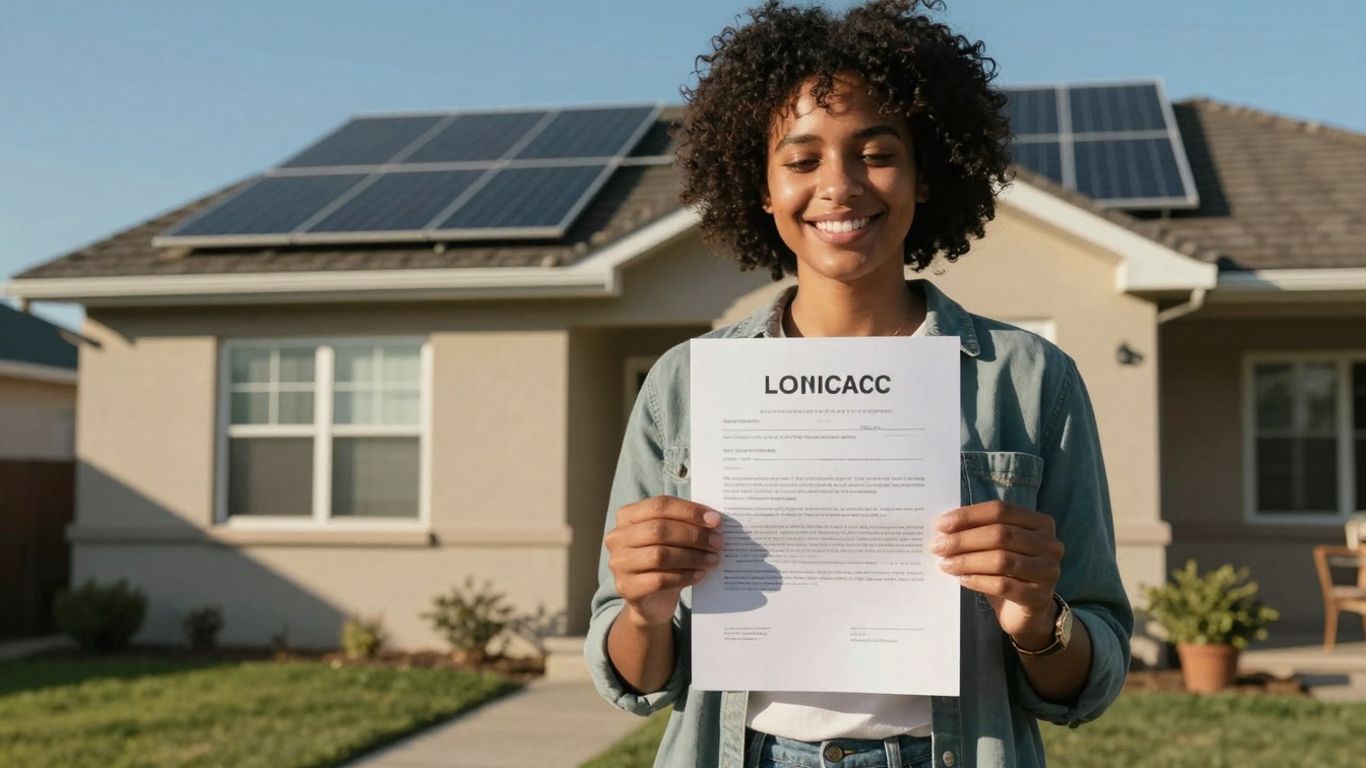
While Leases Have Lower Upfront Costs, Solar Loans Provide 40% Higher Long-Term Savings By Year 10. Source: Energy Board.
So, you’re thinking about getting solar panels and need a loan to make it happen. That’s smart! But before you get too excited about those sunny savings, let’s talk about what lenders actually look for. It’s not just about wanting solar; they need to be sure you can pay the loan back. Think of it like applying for any other big loan, but with a few solar-specific twists.
Credit Score Expectations
Your credit score is a big deal here. It’s basically a snapshot of how you’ve handled debt in the past. Lenders use it to guess how likely you are to pay them back on time. Generally, a higher score means better loan terms and lower interest rates.
Here’s a rough idea of what different lenders might expect:
- Prime Lenders/Specialized Solar Companies: Often look for scores of 720 and up for their best deals.
- Traditional Banks & Credit Unions: Might be okay with scores in the 640-660 range, especially if you’re already a customer.
- Alternative Lenders/Some Government Programs: Sometimes go as low as 580, but expect higher interest rates and fees.
If your score isn’t quite where you want it, don’t despair. Some lenders offer options, or you might need to work on improving your credit before applying.
Income and Debt-to-Income Criteria
Beyond your credit score, lenders want to see that you have a steady income and aren’t already drowning in debt. They’ll look at your Debt-to-Income (DTI) ratio. This is simply your total monthly debt payments divided by your gross monthly income. Most lenders prefer this ratio to be below 40-50%.
They’ll also want proof of stable income, usually for the last two years. If you’re self-employed, be ready to provide tax returns and bank statements. Retirement income like Social Security or pensions is usually fine, too.
Lenders want to make sure you can comfortably handle another monthly payment on top of your existing bills. It’s all about assessing your ability to repay the loan over its lifespan.
Home Ownership and Property Details
Most solar loans are tied to your home. This means you generally need to own your home outright or have a significant amount of equity in it, especially for secured loans. Lenders will want to verify your ownership, usually through property deeds or mortgage statements.
They’ll also check:
- Property Type: Is it a single-family home, condo, etc.?
- Property Condition: Is the home in good shape and well-maintained?
- Insurance: You’ll need homeowners insurance that covers the solar system.
- Permits and HOA: Ensure your local area and Homeowners Association allow solar installations.
Sometimes, especially with secured loans, the amount you can borrow might be limited by your home’s equity. It’s a good idea to have all your property documents handy when you start applying.
Exploring Different Solar Loan Options
So, you’re thinking about going solar, which is awesome! But the upfront cost can feel like a big hurdle. Luckily, there are several ways to finance your solar panel system, and understanding these options is key to making the best choice for your wallet and your home. It’s not just one-size-fits-all, and different types of loans come with their own set of pros and cons.
Secured Versus Unsecured Solar Loans
This is a pretty big distinction. Secured loans mean you’re putting something up as collateral, usually your house or the solar system itself. Because the lender has that backup, they often offer lower interest rates and longer repayment periods, sometimes up to 25 years. The flip side? If you can’t make payments, you risk losing that collateral. Unsecured loans, on the other hand, don’t require collateral. This means less risk for you if things go south financially, but you’ll typically see higher interest rates and shorter loan terms, often just a few years. Approval might also be quicker with unsecured loans.
Solar-Specific Loans Versus Personal Loans
Some lenders offer loans made just for solar installations. These can be really handy because they might have features tailored to solar projects, like allowing deferred payments until you get your tax credits or even paying the installer directly. However, watch out for potentially higher “dealer fees” that can inflate the loan amount. A general personal loan might be an alternative. While they offer more flexibility in how you use the money, they usually come with less favorable interest rates and don’t have those solar-specific perks. It’s a trade-off between specialized features and general usability.
Home Equity Financing for Solar
If you own your home and have built up some equity, tapping into that can be a really cost-effective way to finance solar. Home equity loans give you a lump sum with a fixed interest rate, and the interest might even be tax-deductible since it’s considered a home improvement. Home Equity Lines of Credit (HELOCs) are a bit different; they work more like a credit card where you can draw funds as needed during the installation. These often have variable rates, which can be lower initially, and offer more flexibility in repayment. Generally, home equity financing tends to have some of the lowest rates available for solar projects, making it a popular choice for many homeowners. You can explore options for home equity financing to see if it fits your situation.
Evaluating Solar Loan Terms and Fees
So, you’re thinking about getting a solar loan. That’s great! But before you sign on the dotted line, we really need to talk about the nitty-gritty: the terms and fees. It’s not just about the interest rate; there’s more to it than meets the eye, and some of these details can really change how much you end up paying over the life of the loan.
Typical Loan Terms and Payment Structures
Most solar loans come with a few standard features. You’ll usually see fixed interest rates, which means your rate won’t change over time, making budgeting easier. Payments are typically made monthly, and the interest is calculated simply. A big plus is that many solar loans don’t have penalties if you decide to pay them off early. This is super handy if you get a tax credit or just want to be debt-free sooner. Loan terms can vary a lot, often ranging from 2 to 12 years for unsecured loans, and sometimes up to 25 years for secured options like home equity loans. A longer term means lower monthly payments, but you’ll pay more interest overall. A shorter term means higher monthly payments, but you’ll save money in the long run.
Here’s a quick look at how loan terms can affect your costs:
| Loan Term | Monthly Payment | Total Interest Paid |
|---|---|---|
| Shorter (e.g., 7 years) | Higher | Lower |
| Longer (e.g., 20 years) | Lower | Higher |
Understanding Hidden Fees and Dealer Markups
This is where things can get a little tricky. Some companies, especially solar installers, might add on extra fees that aren’t always obvious. These are often called “dealer fees” or “origination fees.” The Consumer Financial Protection Bureau (CFPB) has pointed out that these fees can sometimes inflate the loan amount by 30% or even more compared to what you’d pay if you just bought the system outright. It’s really important to ask about these upfront. You might also see documentation fees for processing paperwork, or late payment fees if you miss a due date. Always ask for a full breakdown of all potential charges before agreeing to anything.
Always ask for a detailed breakdown of all fees associated with the loan. Don’t be afraid to question anything that seems unclear or unusually high. Understanding these costs upfront is key to avoiding surprises later on.
Ready to take the next step? best solar loan and see your personalized options.
Calculating the Total Cost of Ownership
To really get a handle on whether a solar loan is a good deal, you need to look at the total cost. This isn’t just the amount you borrow. You have to factor in the principal and all the interest you’ll pay. Then, add in any fees, like origination or documentation fees. On the flip side, you’ll want to subtract any incentives you get, like federal tax credits, and estimate the electricity savings you’ll see over the system’s lifespan. Sometimes, solar panels can even increase your home’s value, which is another factor to consider. By looking at the whole picture, you can make a much more informed decision about the long-term financial impact. For example, if you’re in Canada, you might look into the Canada Greener Homes Loan to help offset some of these costs.
Comparing Top Solar Loan Providers

Standard Bank And Absa Currently Lead The Market With Green Energy Concessions For 2026 Bondholders.
Alright, so you’ve decided a solar loan is the way to go. Now comes the part where you figure out who to get that loan from. It’s not just one big pool of lenders out there; there are a few different types of places you can turn to, each with its own quirks.
Traditional Banks and Credit Unions
Your usual suspects, like big banks and local credit unions, do offer solar loans. Sometimes, if you’re already a customer, you might get a slightly better deal or at least a smoother process. They often have competitive rates, especially if you have a solid credit history. However, they might not be as specialized in solar as other options, so the loan terms might be more generic.
- Light-Stream by Truist: Known for having no fees and requiring good credit, they offer a wide range of loan amounts and terms. They even have a rate beat program.
- Truist Bank: Good for existing customers, they also offer home equity options and have physical branches if you prefer that.
- Local Credit Unions: Many credit unions are getting into the solar game. They often have a community focus and can offer competitive rates, especially for members. Some even have specific clean energy loan programs.
Specialized Solar Loan Companies
Then there are companies that only do solar financing. These guys are the specialists. They understand the ins and outs of solar projects, which can sometimes mean more tailored loan products. They often work closely with solar installers, which can streamline the whole installation process. Just be aware that some might have higher dealer fees baked into the loan, so always read the fine print.
- Mosaic: This company is all about solar financing. They have various loan products designed specifically for solar and work directly with installers. They even offer bridge loans to help you cover costs while waiting for tax credits.
- Sunlight Financial: Another big player focused on solar. They use technology to speed up approvals and have a network of contractors they work with.
When you’re comparing lenders, don’t just look at the interest rate. You need to factor in all the fees, like origination fees or dealer markups, which can significantly increase the total cost of your solar system. Always ask for a full breakdown of all charges.
Government-Backed Solar Financing Programs
Don’t forget about government programs! These can sometimes offer more flexible requirements, especially if your credit score isn’t perfect. They might have lower interest rates or longer repayment terms. It’s worth checking what’s available in your area, as these programs can be a great way to make solar more affordable. You can often find information on these through local government websites or by asking your solar installation company.
- FHA Loans: Specifically, the 203(k) rehabilitation loan can be used for energy-efficient upgrades, including solar panels. These often have more lenient credit score requirements.
- VA Solar Financing: If you’re a veteran, there might be specific financing options available through the Department of Veterans Affairs.
Remember, it’s a good idea to get quotes from a few different types of providers to see who offers the best combination of rates, terms, and fees for your specific situation.
Maximizing Your Solar Loan Investment
So, you’re thinking about getting solar panels and a loan to go with it. That’s a big step, and a smart one if you do it right. It’s not just about getting the panels on your roof; it’s about making sure the loan you get actually helps you save money in the long run. Let’s break down how to make your solar loan work best for you.
Solar Loans and Tax Credits Explained
One of the biggest perks of going solar is the tax credits. Right now, the federal solar investment tax credit (ITC) lets you deduct a percentage of the cost of your solar system from your federal taxes. For systems installed through 2032, that’s a nice chunk of change – 30% of the system’s cost. It’s important to know how this works with your loan. Some solar loans might let you defer payments until you can claim the credit, which can really help with upfront costs. Others might require you to pay from the start. Always ask your lender about this. Understanding how and when you’ll receive your tax credit is key to maximizing your savings.
Here’s a quick look at how tax credits can impact your loan:
- Federal Solar Tax Credit (ITC): Currently 30% for systems installed by the end of 2032. This is a direct reduction of your tax liability.
- State and Local Incentives: Many states and cities offer additional rebates or credits. These vary widely, so research what’s available in your area.
- Loan Structure: Some loans are designed to let you benefit from the tax credit sooner, potentially reducing your loan principal or providing a rebate.
When a Solar Loan Makes Financial Sense
Getting a solar loan makes the most sense when the money you save on electricity bills, plus any incentives you get, outweighs the total cost of the loan (including interest and fees). It’s a calculation you’ll want to do carefully. If you can pay cash for your solar system, that’s usually the cheapest option overall because you avoid interest. But for most people, a loan is the way to go. You want to look for loans with competitive interest rates and reasonable terms. A shorter loan term means higher monthly payments but less interest paid over time, while a longer term means lower monthly payments but more interest overall.
The real win with a solar loan is when the system pays for itself faster than you’re paying off the loan, and you start seeing pure savings. It’s about turning a big upfront cost into a manageable monthly payment that eventually leads to free, clean energy.
Avoiding Predatory Solar Lending Practices
Unfortunately, not all solar loan offers are created equal. Some companies might try to tack on huge fees or offer loans with really high interest rates that eat up your savings. It’s super important to read the fine print. Watch out for:
- High Dealer Fees: These are often hidden costs added by the installer or lender, sometimes adding 20-30% to the loan amount. Always ask for the
Wrapping It Up
So, going solar with a loan seems like a pretty solid plan for a lot of folks. It lets you get those energy savings rolling without needing a huge pile of cash upfront. Just remember to do your homework. Compare those rates, watch out for sneaky fees – seriously, read the fine print – and make sure you’re picking a lender that fits your financial picture. Whether it’s a big bank, a credit union, or a solar-specific company, there are options out there. Taking the time to find the right loan means you’ll be well on your way to a sunnier, cheaper energy future for your home.
Frequently Asked Questions
What exactly is a solar loan and how does it help me?
Think of a solar loan as a special kind of loan that helps you pay for solar panels for your home. Instead of paying a lot of money all at once, you can borrow what you need and pay it back over time with monthly payments. It’s a way to get solar power without needing all the cash upfront, and you get to own the panels from the start.
What kind of credit score do I need to get a solar loan?
Most companies that offer solar loans like to see a credit score of at least 640. If you have a score of 720 or higher, you’ll likely get the best interest rates. Some places might work with scores a bit lower, but the rates might be higher.
How do solar loans work with those solar tax credits I hear about?
Solar loans and tax credits are separate but work well together. You make your regular loan payments each month. Then, when you file your taxes, you can claim the federal tax credit (which is a good chunk of the cost!). Many people use the money they get back from the tax credit to make a big payment on their loan, but you don’t have to.
Are there any hidden costs I should watch out for with solar loans?
Yes, definitely! Some companies might add extra fees that aren’t obvious. These are sometimes called ‘dealer fees’ or ‘markups,’ and they can make the loan cost much more than the actual price of the panels. Always ask for a clear breakdown of all the fees before you sign anything.
What’s the difference between a solar loan and just getting a regular personal loan?
Solar loans are made just for solar panel systems. They might have special features, like letting you wait to start payments until you get your tax credit. Regular personal loans can be used for anything, but they might have higher interest rates and don’t have those solar-specific perks.
Can I use my home’s value to get a loan for solar panels?
Yes, you can! Loans like home equity loans or HELOCs let you borrow against the value of your home. These often have lower interest rates than other loans, but remember, your home is used as security, so you need to be sure you can make the payments.
Ready to Start Saving on Your Energy Bills?
Get a free, no-obligation quote from trusted local providers in under 2 minutes.
No obligation • Free estimates • Takes under 2 minutes
Colorado Solar Tax Credit: Incentives, Eligibility & How to Claim

Thinking about putting solar panels on your Colorado home? That’s a smart move, not just for the environment, but for your wallet too. There are some pretty good incentives out there, especially if you’re looking at the federal tax credit. It can really cut down the initial cost. We’ll break down what you need to know about the colorado solar tax credit and other ways to save money when you go solar.
Key Takeaways
- The federal Residential Clean Energy Tax Credit lets you deduct 30% of your solar system’s cost from your federal taxes, but you have to own the system and claim it when you file.
- To claim the federal credit, you’ll need to fill out IRS Form 5695 along with your tax return.
- Colorado offers additional savings through sales and property tax exemptions on solar systems, meaning you won’t pay sales tax on the panels or extra property tax for adding them.
- Net metering in Colorado is a big deal; it means your utility company credits you for extra electricity your panels send back to the grid, potentially lowering your bills significantly.
- The 30% federal solar tax credit is set to expire after December 31, 2025, so if you want to take advantage of it, you’ll need to have your system installed before then.
Understanding the Federal Solar Tax Credit
So, you’re thinking about going solar in Colorado? That’s awesome! One of the biggest perks, and honestly, the one that gets a lot of people excited, is the federal tax credit. It’s officially called the Residential Clean Energy Tax Credit, but most folks just call it the solar tax credit. Basically, it’s a way for the government to say, ‘Hey, thanks for investing in clean energy!’ and give you a break on your taxes.
What is the Residential Clean Energy Tax Credit?
This credit is a percentage of the cost of your solar energy system that you can subtract directly from the amount of federal income tax you owe. It’s not a refund where they send you money back if you don’t owe taxes, but rather a reduction of your tax bill. For systems installed through the end of 2032, this credit is currently set at 30% of the total system cost. This includes not just the panels themselves, but also things like installation labor, permitting fees, and even sales tax on the equipment. It’s a pretty significant incentive to make the switch to solar.
How the Credit Reduces Your Tax Liability
Let’s say you install a solar system that costs $20,000. With the 30% federal tax credit, that’s $6,000 you can claim back on your federal taxes. So, if you owed $7,000 in federal income tax for that year, after claiming the credit, you’d only owe $1,000. Pretty neat, right?
What happens if the credit is more than what you owe? Say you only owed $4,000 in taxes that year. You’d use the $4,000 to bring your tax bill to zero. The good news is, you don’t lose the rest of the credit. The remaining $2,000 can be rolled over to the next tax year. This rollover provision is really helpful because it means you can still benefit from the full credit amount even if your tax liability is lower in the year you install the system. You can carry over unused credits for up to five years, and there’s no income limit on how much you can roll over.
Eligibility Requirements for the Federal Credit
To qualify for this federal incentive, there are a few key things you need to keep in mind:
- You must own your home: Renters generally can’t claim this credit, though there might be some exceptions for certain multi-family dwellings or if you own the property but lease out the home.
- The system must be installed on your main home: This includes your primary residence or a second home. It needs to be located in the United States.
- The system must be new or put into service for the first time: You can’t claim the credit for a system that was previously used or has already been claimed for a credit.
- Installation dates matter: The credit percentage can change over time. For systems installed between January 1, 2022, and December 31, 2032, you get the full 30%. After that, the percentage is scheduled to decrease annually until the program’s expiration.
It’s important to remember that this credit applies to the year the system is installed and placed in service. So, if you sign a contract in one year but the installation isn’t completed and operational until the next, the tax year of installation is what counts for claiming the credit. This timing can be a bit tricky, so paying attention to your installation timeline is key.
Claiming this credit is a big part of making solar affordable, so understanding these basics is a great first step.
Claiming Your Colorado Solar Tax Credit
So, you’ve decided to go solar in Colorado – that’s awesome! Now comes the part where you actually get to claim that sweet federal tax credit. It’s not exactly like finding money on the street, but it’s pretty close. This credit is a fantastic way to lower your tax bill, but you’ve got to do it right.
Required IRS Forms for Tax Filings
To get your federal solar tax credit, you’ll need to fill out a specific form. It’s called IRS Form 5695. This is the official document where you’ll detail your solar system costs and calculate the credit amount you’re eligible for. Don’t skip this step, or you won’t get the credit.
Steps to Claim the Federal Incentive
Claiming the credit involves a few straightforward steps. Make sure you have all your paperwork from the solar installation company handy before you start. This usually includes invoices and proof of purchase.
- Gather Your Documents: Collect all receipts and invoices related to your solar system purchase and installation. This is super important.
- Complete IRS Form 5695: You can download this form directly from the IRS website. Fill it out carefully, entering the costs associated with your solar energy system. This form is used to calculate the credit amount you are eligible for.
- File Your Federal Tax Return: Attach the completed Form 5695 to your annual federal income tax return (Form 1040). If you’re filing electronically, there will be a section to input the information from the form.
- Reduce Your Tax Liability: The calculated credit amount will directly reduce the amount of federal income tax you owe. If the credit is more than what you owe, the excess amount can be rolled over to future tax years.
Remember, the solar tax credit is a non-refundable credit. This means it can reduce your tax liability to $0, but you won’t get any of the remaining credit back as a refund. However, any unused credit can be carried forward for up to five years, which is a pretty sweet deal.
Consulting a Tax Professional
Look, taxes can be confusing, and solar credits add another layer. While Form 5695 is designed to be filled out by homeowners, it’s always a good idea to have a professional double-check your work. A tax advisor can help you make sure you’re claiming the maximum credit you’re entitled to and that you’re following all the IRS rules. They can also advise on how the credit interacts with other tax benefits or deductions you might be eligible for. It’s a small investment that can save you a lot of headaches and potentially more money in the long run. You can find tax professionals who specialize in renewable energy credits to get the most accurate advice for your situation.
Colorado State and Local Solar Incentives
Beyond the federal tax credit, Colorado rolls out the welcome mat for solar energy with a variety of state and local incentives. These programs are designed to make solar more affordable and accessible for homeowners across the state, helping Colorado reach its clean energy goals.
State-Level Tax Exemptions for Solar
Colorado offers some pretty sweet tax breaks that can add up. First off, there’s the solar property tax exemption. This means that if you install solar panels, your property taxes won’t go up because of that added value. So, you get the benefit of a more valuable home without the tax hike. Then, there’s the sales and use tax exemption. When you buy your solar system, you won’t have to pay state sales tax on it. This can save you a good chunk of change right off the bat, depending on the system’s cost.
Local Utility Rebates and Programs
Many local utility companies and specific programs in Colorado offer additional rebates and incentives. These can vary quite a bit depending on where you live and which utility provider you have. Some popular ones include:
- Xcel Energy Solar*Rewards: For eligible, income-qualified customers, Xcel Energy offers upfront rebates. This program can provide a significant discount on your installation costs.
- Holy Cross Energy: If you’re a customer of Holy Cross Energy, you might be eligible for upfront rebates based on the size of your solar system. They offer different rates per kilowatt (kW) for smaller and larger systems.
- EnergySmart Colorado: This organization partners with various local entities to provide rebates for qualifying homeowners. It’s worth checking their website to see if you’re eligible.
- Black Hills Energy: This utility offers a per-kilowatt-hour (kWh) payment for the electricity your solar panels produce for the first 10 years, provided your system is 25 kW or smaller.
It’s a good idea to check directly with your local utility provider to see what specific programs are available in your area. These local incentives can sometimes be combined with other offers, making your solar investment even more attractive.
Understanding Net Metering Benefits
Net metering is a big deal for solar owners in Colorado. Basically, when your solar panels produce more electricity than your home is using at any given moment, that excess power is sent back to the grid. Your utility company then credits your account for that energy. These credits are typically applied at the full retail rate, meaning you get compensated for the electricity you send back as if you were buying it from the utility.
Here’s how it generally works:
- Excess Generation: Your solar panels generate more power than your home needs.
- Export to Grid: The extra power flows back to the utility grid.
- Account Credits: Your utility credits your account for the exported energy, usually at the full retail price per kWh.
- Bill Reduction: These credits reduce your monthly electricity bill.
- Rollover: If you have more credits than you use in a billing cycle, they usually roll over to the next month. At the end of the year, some utilities might pay out remaining credits, though policies can vary, especially with smaller municipal utilities.
This system is fantastic because it maximizes your savings, potentially offsetting a large portion, if not all, of your electricity costs. It’s a key reason why solar is so financially sensible in Colorado.
Maximizing Your Solar Investment in Colorado
So, you’re thinking about going solar in Colorado? That’s a smart move, especially with all the incentives out there. But how do you make sure you’re getting the most bang for your buck? It’s not just about slapping panels on your roof; it’s about timing, understanding the rules, and maybe even thinking about a battery. Let’s break down how to really make your solar system pay off.
Ready to take the next step? Colorado solar incentives and see your personalized options.
Impact of the Inflation Reduction Act
The big news for solar in recent years has been the Inflation Reduction Act (IRA). This act really boosted the federal solar tax credit, making it a much bigger deal for homeowners. It extended the 30% credit for systems installed through 2032, which is huge. This means a larger chunk of your system’s cost, including equipment, labor, and even sales tax, can be deducted directly from your federal taxes. It’s not a refund, mind you, but it directly lowers the amount of tax you owe. This extended credit period gives you more time to plan and install your system without feeling rushed.
Financing Options for Solar Systems
Paying for solar upfront with cash is great if you can swing it, but it’s not the only way. There are a few other options to consider:
- Solar Loans: Many banks and credit unions offer specific loans for solar installations. These often come with competitive interest rates, and you still own the system, so you can claim all the tax credits.
- Home Equity Loans/Lines of Credit (HELOCs): If you have equity in your home, you might be able to use a home equity loan or HELOC to finance your solar project. The interest might even be tax-deductible, similar to a mortgage.
- Solar Leases or Power Purchase Agreements (PPAs): With these, you don’t own the system. A third party installs and owns it, and you pay a monthly fee to use the electricity it generates (lease) or buy the power it produces at a set rate (PPA). While these can lower your monthly bills, you typically don’t qualify for the federal tax credit or other ownership-based incentives.
Choosing the right financing can significantly affect your overall savings and how quickly your system pays for itself. It’s worth looking into all the options to see what fits your financial situation best.
Importance of Installation Timelines
When you install your solar system matters, especially with the federal tax credit. The Residential Clean Energy Tax Credit (formerly the ITC) is currently 30% for systems placed in service by December 31, 2032. However, this percentage is set to decrease over time. For example, it drops to 26% for systems installed in 2033 and then to 22% in 2034. After that, it’s set to expire unless Congress extends it again.
- 2025 Deadline: Systems must be installed and placed in service by December 31, 2025, to qualify for the full 30% credit. If your system is installed on January 1, 2026, or later, you might not get the full benefit, depending on future legislation.
- Interconnection: The “placed in service” date is usually when your utility company approves your system and allows it to connect to the grid. This process can sometimes take a few weeks or even months, so don’t wait until the last minute.
- Planning Ahead: Getting quotes, signing contracts, and scheduling installation all take time. Starting the process well before the end of the year is key to ensuring your system is operational within the qualifying timeframe.
Key Considerations for Solar Tax Credit Eligibility
So, you’re thinking about going solar in Colorado and want to make sure you get that sweet federal tax credit? Awesome! But before you get too excited, there are a few things you really need to nail down. It’s not just about slapping panels on your roof; there are some specific rules to follow.
System Ownership vs. Leasing
This is a big one, and honestly, it trips a lot of people up. To claim the federal solar tax credit, you absolutely must own your solar panel system. If you’re leasing your panels or have a Power Purchase Agreement (PPA) where someone else owns the system and you just buy the power it generates, you’re out of luck for the federal credit. The ownership piece is non-negotiable. It’s like trying to claim a discount on a car you don’t actually own – it just doesn’t work.
Installation Dates and Credit Percentages
When your solar system was installed matters. The percentage of the credit you can claim has changed over the years, and it’s tied to specific dates. The good news is that for systems installed between 2022 and the end of 2032, you can claim a full 30% of the system’s cost. But here’s the kicker: this generous credit is set to expire for new installations after December 31, 2025. So, if you’re planning to install solar, timing is everything to get the maximum benefit.
| Installation Period | Credit Percentage | Notes |
|---|---|---|
| January 1, 2022 – Dec 31, 2032 | 30% | Current rate under the Inflation Reduction Act. |
| January 1, 2023 – Dec 31, 2023 | 30% | Applies to systems installed in this year. |
| January 1, 2024 – Dec 31, 2024 | 30% | Applies to systems installed in this year. |
| January 1, 2025 – Dec 31, 2025 | 30% | Last year to claim the full 30% credit for new installations. |
| After December 31, 2025 | 0% | Credit expires for new systems installed after this date. |
Rollover Provisions for Unused Credits
What if your tax bill isn’t high enough to cover the full amount of the solar tax credit in the year you install your system? Don’t sweat it! The IRS lets you roll over any unused credit to the following tax years. This is super helpful because it means you won’t lose out on the money you’re owed. You can keep carrying that credit forward until it’s all used up. The current rules don’t put a strict time limit on how long you can roll it over, which is pretty great. Just remember, you’ll need to file IRS Form 5695 each year you claim the credit, including any rolled-over amounts.
It’s really important to keep all your documentation from the solar installation. This includes invoices, proof of payment, and any permits. You’ll need these details when you fill out IRS Form 5695 to claim the credit. Without proper records, you might have trouble proving your eligibility, and that’s the last thing you want when trying to save money.
Wrapping It Up
So, going solar in Colorado looks pretty good, right? You’ve got the federal tax credit, which is a big chunk of change off the price of your system, plus state and local programs that can help even more. Don’t forget about net metering, which basically means your electric company acts like a bank for the extra power your panels make. It’s a lot to take in, but the savings add up. Just remember that the big federal credit has an end date, so if you’re thinking about it, now’s the time to really look into it. Talking to a local solar installer and a tax pro is probably a smart move to make sure you get all the benefits you’re eligible for.
Frequently Asked Questions
What is the federal solar tax credit?
The federal solar tax credit, also known as the Residential Clean Energy Tax Credit, lets you reduce the amount of income tax you owe by a certain percentage of the cost of your solar panel system. It’s like a discount on your taxes for installing solar power!
How much is the federal solar tax credit?
Right now, the credit is 30% of the cost of your solar system. This means if your system costs $10,000, you could get a $3,000 credit on your federal taxes. The percentage might change in the future, so it’s good to check the latest rules.
Who can get the federal solar tax credit?
Generally, if you own your home and pay federal income taxes, you can claim the credit. The solar system needs to be installed on a home you own in the United States. You can’t claim it if you lease your solar panels.
How do I claim the federal solar tax credit in Colorado?
To claim the credit, you’ll need to fill out a specific form called IRS Form 5695 when you file your federal income taxes. It’s a good idea to keep all your paperwork from the solar installation handy, and maybe even talk to a tax expert to make sure you fill it out correctly.
What happens if my tax credit is more than what I owe in taxes?
If the amount of your tax credit is more than the taxes you owe for that year, you don’t lose the extra amount! You can roll over the remaining credit to the following tax years. This means you can use it to lower your tax bill for up to five years.
Are there other solar incentives in Colorado besides the federal credit?
Yes! Colorado has other great programs. Some cities or utility companies offer rebates or discounts. Plus, Colorado has tax exemptions that mean you won’t pay sales tax on your solar system, and you won’t have to pay extra property tax for adding solar panels to your home.
Ready to Start Saving on Your Energy Bills?
Get a free, no-obligation quote from trusted local providers in under 2 minutes.
No obligation • Free estimates • Takes under 2 minutes
Solar Loan Calculator: Estimate Monthly Payments & Total Cost

Thinking about getting solar panels for your home? It’s a big step, and figuring out the costs can feel overwhelming. That’s where a solar loan calculator comes in handy. This tool helps you get a clear picture of what you’ll be paying each month and over the long haul. We’ll break down how to use one and what to look out for, so you can make a smart decision about financing your solar energy system.
Key Takeaways
- A solar loan calculator helps estimate monthly payments and total costs for a solar panel system financed through a loan.
- You’ll need to input details like the system’s total price, your down payment, the interest rate, and the loan’s length.
- The calculator shows your estimated monthly payment, the total interest you’ll pay, and the overall cost of the loan.
- It’s useful for comparing different loan offers and seeing how factors like interest rates and loan terms affect your payments.
- By understanding the numbers, you can better assess if going solar with a loan makes financial sense for your household.
Understanding Your Solar Loan Calculator
What a Solar Loan Calculator Does
So, you’re thinking about getting solar panels for your home. That’s great! But then comes the money part, and it can feel a bit overwhelming. This is where a solar loan calculator comes in handy. It’s basically a tool that helps you figure out the financial side of things before you commit. You plug in some basic info, and it spits out estimates for your monthly payments, how much you’ll pay back over time, and even how much you might save on your electricity bills. It takes a lot of the guesswork out of the equation, making it easier to see if financing solar is the right move for your budget.

Key Inputs for Accurate Estimates
To get the most useful numbers from a solar loan calculator, you’ll need to provide some specific details. The more accurate your inputs, the better the estimate will be. Here’s what you’ll typically need:
- Total System Cost: This is the price of the solar panels, inverters, mounting hardware, and installation labor. You can usually get this from a solar installer’s quote.
- Loan Amount: This is the amount you plan to borrow. It might be the full system cost, or it could be less if you’re making a down payment.
- Interest Rate: This is the annual interest rate your lender is offering on the loan. It’s a big factor in your monthly payments and total cost.
- Loan Term: This is the length of time you have to repay the loan, usually measured in years (e.g., 10, 15, or 20 years).
- Down Payment (if any): The amount of money you pay upfront before taking out the loan.
- Estimated Fees: Some loans come with origination fees or other charges that add to the total cost.
Benefits of Using a Solar Loan Calculator
Using a solar loan calculator offers several advantages when you’re exploring financing options for solar panels:
- Budgeting Made Easier: Get a clear picture of what your monthly payments might look like, helping you determine if it fits within your household budget.
- Comparing Options: You can often adjust the inputs to see how different loan terms or interest rates affect your payments and overall cost, allowing you to compare offers from various lenders.
- Understanding Total Commitment: See the total amount you’ll repay over the life of the loan, including all the interest, so there are no surprises down the road.
- Assessing Savings Potential: Some calculators can help you estimate when your energy savings will start to outweigh your loan payments, giving you a sense of the long-term financial benefit.
Calculators are great for getting a ballpark figure. They help you understand the financial commitment involved in going solar with a loan. It’s like having a financial roadmap before you start the journey, showing you the potential costs and benefits.
Estimating Your Monthly Solar Payments
So, you’re thinking about solar panels, and the big question is, ‘How much will this actually cost me each month?’ That’s where understanding your loan payments comes in. It’s not just about the sticker price of the panels; it’s about how you’re financing them.
Calculating Principal and Interest
At its core, your monthly payment is made up of two parts: the principal (the actual amount you borrowed) and the interest (the cost of borrowing that money). The calculator helps break this down. You’ll see how much of your payment goes towards paying down the loan itself and how much is just interest. The goal is to have as much of your payment as possible go towards the principal over time.
The Impact of Loan Term on Payments
This is a big one. The loan term, or how many years you have to pay back the loan, directly affects your monthly payment. A shorter term means higher monthly payments but less interest paid overall. A longer term means lower monthly payments, which might be easier on your budget right now, but you’ll end up paying more in interest over the life of the loan. It’s a trade-off.
Here’s a quick look at how term length can change things, assuming a $30,000 loan at 5% interest:
| Loan Term (Years) | Estimated Monthly Payment | Total Interest Paid |
|---|---|---|
| 10 | R5225.51 | R126492.09 |
| 15 | R3697.42 | R164959.65 |
| 20 | R2903.17 | R196185.55 |
Adjusting for Down Payments and Fees
Don’t forget about the down payment! Putting more money down upfront reduces the amount you need to borrow, which lowers your monthly payments and the total interest you’ll pay. Also, keep an eye out for any loan origination fees or other charges. These can add to the total cost, so it’s good to know what they are upfront. A good solar loan calculator will let you input these details to get a more realistic picture. You can use a tool like this to estimate the financial commitment associated with installing solar panels .
When you’re looking at loan options, it’s easy to get caught up in just the monthly payment. But remember to also consider the total interest you’ll pay over the entire loan period. Sometimes, a slightly higher monthly payment on a shorter loan can save you a significant amount of money in the long run.
Assessing the Total Cost of Solar Financing
Total Interest Paid Over the Loan’s Life
When you take out a loan for solar panels, the sticker price isn’t the whole story. You’ve got to think about the interest you’ll be paying for years to come. This is the extra money the lender makes on top of the original amount you borrowed. The longer your loan term, the more interest you’ll likely end up paying, even if your monthly payments seem lower. It’s like buying a car on a 7-year loan versus a 4-year loan – the monthly payments are less on the longer term, but you pay way more interest overall. Understanding the total interest is key to seeing the true cost of your solar investment.
Accounting for Installation and System Costs
Beyond the loan itself, remember that the price of the solar system includes more than just the panels. You’re paying for the equipment, sure, but also for the design, the installation labor, permits, and sometimes even things like battery storage. These costs get rolled into the loan amount. So, when you’re looking at the total cost, make sure you know what’s included in that initial system price. Sometimes, there are also ongoing maintenance costs or potential repair expenses down the line that aren’t part of the loan but add to the overall expense of owning a solar system.
Understanding the Role of Incentives
This is where things can get a bit more interesting, and potentially cheaper! Government incentives, like tax credits and local rebates, can significantly reduce the amount you actually pay for your solar system. For example, a federal tax credit might let you deduct a percentage of the system’s cost from your taxes. These incentives can either lower the upfront cost of the system (meaning you borrow less) or be applied later to reduce your overall out-of-pocket expenses. It’s really important to factor these in because they can change the total cost picture dramatically.
Here’s a quick look at how incentives might affect your total cost:
- Federal Solar Tax Credit: Typically covers a percentage of the system cost. This reduces your taxable income.
- State and Local Rebates: These vary widely by location and can offer a direct cash rebate or a reduction in your system’s price.
- Performance-Based Incentives (PBIs): Some areas pay you based on the amount of electricity your system generates.
It’s easy to get caught up in the monthly payment number, but looking at the total cost over the life of the loan, including all the fees and interest, gives you a much clearer picture of your financial commitment. Don’t forget to subtract any incentives you’ll receive, as they directly lower your actual expense.
Leveraging the Solar Loan Calculator for Decision Making
Ready to take the next step? solar loan calculator and see your personalized options.
Projecting Long-Term Energy Savings
This is where it gets exciting. Your solar panels aren’t just a big purchase; they’re an investment. The calculator can help you estimate how much you’ll save on your electricity bills each month. Then, you can compare that saving to your estimated monthly loan payment. The goal is for your solar savings to eventually outweigh your loan costs.
Here’s a simple way to think about it:
- Estimate your current monthly electricity bill.
- Use the calculator to find your estimated monthly solar loan payment.
- Estimate your new monthly electricity bill after solar (this will be much lower).
- Calculate the difference between your old and new bills – that’s your estimated monthly savings.
If your monthly savings are higher than your monthly loan payment, you’re likely on the right track. You can also project this out over the life of the loan to see the total potential savings.
Validating Financial Feasibility
Ultimately, the calculator helps you answer the big question: “Can I afford this, and is it worth it?” It takes the guesswork out of the financial side of going solar. By plugging in all the numbers – system cost, loan details, potential savings, and even incentives – you get a clearer picture of the overall financial impact.
It’s easy to get caught up in the idea of clean energy, which is great, but you still need to make sure it makes financial sense for your household. The calculator provides concrete numbers, not just hopes and dreams, to help you make a sound decision. It shows you the actual cost over time and how it stacks up against your energy savings.
Navigating Solar Loan Variables
When you’re looking at solar loans, it’s not just a one-size-fits-all situation. Several factors can really change the numbers, so understanding them helps you make a smarter choice. Think of it like adjusting the settings on a thermostat – small changes can make a big difference in comfort, or in this case, your wallet.
Interest Rate Fluctuations
The interest rate is a big one. It’s the cost of borrowing the money. Even a small difference in the percentage can add up over the life of the loan. For example, a 5% rate on a $30,000 loan over 20 years will cost you less in total interest than a 7% rate on the same loan amount and term. It’s always worth shopping around for the best rate you can get, as lenders offer different terms based on your creditworthiness and market conditions.
Here’s a quick look at how different rates can affect your total interest paid:
| Loan Amount | Loan Term | Interest Rate | Total Interest Paid |
|---|---|---|---|
| R500575.49 | 20 years | 5% | R295639.89 |
| R500575.49 | 20 years | 7% | R427107.70 |
| R500575.49 | 20 years | 9% | R575912.11 |
Remember, the advertised interest rate isn’t always the final rate you’ll get. Lenders consider your credit score, income, and debt-to-income ratio. A higher credit score usually means a lower interest rate, saving you money.
Loan Term Flexibility
The loan term is simply how long you have to pay back the loan. You can usually choose terms ranging from 5 to 25 years. A shorter term means higher monthly payments, but you’ll pay less interest overall because you’re borrowing the money for less time. A longer term means lower monthly payments, which can be easier on your budget, but you’ll end up paying more interest over the years.
Consider these options for a $30,000 loan at 7% interest:
- Shorter Term (e.g., 10 years): Higher monthly payments, but significantly less total interest paid.
- Medium Term (e.g., 15 years): A balance between monthly payment affordability and total interest.
- Longer Term (e.g., 25 years): Lower monthly payments, but the highest total interest paid.
Impact of Tax Credits and Rebates
Don’t forget about incentives! The federal solar tax credit, for instance, can significantly reduce your tax liability, effectively lowering the overall cost of your solar system. Many states and local utilities also offer rebates or performance-based incentives. These can sometimes be applied directly to reduce the amount you need to finance, or they can be claimed later to pay down the loan principal faster or offset your monthly payments.
- Federal Solar Tax Credit: Currently, this allows you to deduct a percentage of the system cost from your federal taxes.
- State and Local Rebates: These vary widely by location and can offer upfront discounts or cash back.
- Performance-Based Incentives (PBIs): You get paid for the energy your system produces over time.
Understanding how these incentives work and when you’ll receive them is key to accurately calculating your true out-of-pocket cost and the overall financial picture of your solar investment.
Wrapping Up Your Solar Investment
So, you’ve crunched the numbers with the solar loan calculator. Hopefully, it gave you a clearer picture of what going solar might actually cost you each month and over the long haul. Remember, these calculators are great for getting a ballpark idea, but they aren’t a crystal ball. Your actual loan terms and energy savings could be a bit different. Still, using this tool is a smart first step to see if solar fits your budget and if it’s a good move for your home. It helps you get ready for those conversations with installers and lenders, armed with a better understanding of the financial side of things. Good luck with your solar journey!
Frequently Asked Questions
What exactly does a solar loan calculator do?
Think of a solar loan calculator as your financial GPS for going solar. It’s a super helpful online tool that helps you figure out how much installing solar panels will cost if you take out a loan. You plug in some basic info, like the total price of the solar setup and the loan’s interest rate, and it gives you a good idea of what your monthly payments might look like and the total amount you’ll end up paying over time. It’s a great way to get a clear picture before you commit.
What information do I need to use a solar loan calculator?
To get the most accurate estimate, you’ll want to have a few key details ready. This usually includes the total cost of your solar panel system, the amount you plan to borrow, the interest rate you expect to get on the loan, and how long you want the loan to last (like 10, 15, or 20 years). Sometimes, you might also need to know about any down payment you plan to make or any upfront fees.
How does the loan term affect my monthly payments?
The loan term is basically how long you have to pay back the loan. If you choose a longer loan term, your monthly payments will be lower because you’re spreading the cost over more months. However, a longer term also means you’ll pay more interest overall. On the flip side, a shorter loan term means higher monthly payments, but you’ll save money on interest in the long run.
Can incentives like tax credits change my loan cost?
Absolutely! Government incentives, like tax credits and rebates, can significantly lower the total cost of your solar system. Many calculators can factor these in. For example, a 30% federal tax credit can reduce the amount you need to finance or pay back, which in turn can lower your total loan cost and potentially your monthly payments. It’s smart to see how these savings play into your calculations.
Is a solar loan calculator accurate for my specific situation?
These calculators are fantastic for giving you a really good estimate and helping you compare options. However, they’re usually for estimation purposes only. The actual loan offer you get from a lender might have slightly different numbers based on your credit history, specific loan terms, and any additional fees. It’s always best to get a personalized quote from a lender once you have a solid idea of what you’re looking for.
How can I use the calculator to decide if solar is right for me?
The calculator is a powerful tool for making smart decisions! You can use it to compare different loan offers side-by-side, see how changing the loan term or interest rate affects your budget, and even estimate how much you might save on your electricity bills over time. By comparing your estimated loan payments with your projected energy savings, you can figure out if going solar makes financial sense for your household.
Ready to Start Saving on Your Energy Bills?
Get a free, no-obligation quote from trusted local providers in under 2 minutes.
No obligation • Free estimates • Takes under 2 minutes
Loan for Solar: Step-by-Step to Compare Lenders & Offers
Thinking about getting solar panels for your home? That’s great! It’s a big step towards saving money on electricity and helping the environment. But the cost can seem like a lot upfront. Don’t worry, though. There are ways to finance it, and this guide will walk you through how to compare your options so you get the best deal on a loan for solar. We’ll break down where to look, what to watch out for, and how to make sure you’re saving money in the long run.
Key Takeaways
- A specialized loan for solar can be a good way to finance your system, often with better terms than a regular personal loan.
- Look beyond your main bank; credit unions and installer financing are also worth exploring, but always check the fine print.
- Compare interest rates (APR), monthly payments, and any extra fees carefully to understand the total cost of borrowing.
- Don’t forget about incentives like federal tax credits and local rebates, as these can significantly lower the amount you need to finance.
- Using a spreadsheet to compare all your loan offers side-by-side is the best way to make an informed decision and find the most affordable option.
Understanding Your Solar Loan Options
So, you’re thinking about going solar, which is awesome! But then you hit the wall: how do you actually pay for it? It can feel like a lot, with all the different ways to finance a solar panel system. You don’t want to end up paying way more than you have to, or worse, miss out on some sweet tax breaks. Let’s break down what’s out there so you can figure out the best path for your home and your wallet.
What Is a Specialized Solar Loan?
A specialized solar loan is basically a loan created just for putting solar panels on your roof. Think of it like a car loan, but for sunshine power. These loans are often offered by lenders who know the solar game, and they usually come with pretty decent interest rates and terms that make sense for a big purchase like this. Unlike just grabbing a personal loan, these are designed to work with solar projects, sometimes even lining up payments with when you might get tax credits back. This means you can get the panels installed without a giant pile of cash upfront, and still own your system outright.
Key Features of Solar Financing
Solar financing isn’t all the same. There are a few things that make these loans stand out:
- Interest Rates & APR: You’ll see rates that can be pretty low, especially if you have good credit. Always look at the Annual Percentage Rate (APR), though, because that includes fees and gives you a clearer picture of the total cost.
- Loan Terms: These loans can stretch out for a long time, often 10 to 25 years. This helps keep your monthly payments manageable, and you can try to match them up with how much you expect to save on electricity.
- Deferred Payments: Some loans let you put off payments for a bit, often until you get your federal tax credit. This can be a nice breather when you’re first getting started.
- Fees: Keep an eye out for things like origination fees. Sometimes, solar companies might roll these into the loan, which can make the advertised interest rate look lower than it really is.
It’s really important to know what you’re signing up for. A loan that looks good on paper might have hidden costs or terms that don’t work for you long-term. Always read the fine print.
Comparing Solar Loans to Traditional Loans
So, how do these solar-specific loans stack up against the usual ways people borrow money?
- Home Equity Loans/Lines of Credit (HELOCs): If you own your home and have built up some equity, these can be a great option. They’re secured by your house, so the interest rates are often lower than unsecured loans. The downside? Your home is on the line if you can’t pay.
- Cash-Out Refinancing: This is similar to a home equity loan but involves replacing your current mortgage with a new, bigger one. You get the difference in cash. It can be good if current mortgage rates are lower than what you have now, but it also means you’re extending your mortgage term.
- Personal Loans: These are unsecured, meaning your house isn’t collateral. That’s a plus if you’re worried about risking your home. However, because they’re riskier for the lender, the interest rates are usually higher than for secured loans like home equity options.
Basically, specialized solar loans are designed to be a good middle ground, often offering competitive rates without the immediate risk of using your home as collateral, and with terms tailored for solar projects. But comparing them to your home equity options or even a good personal loan is always a smart move.
Exploring Lender Categories for Solar Financing
So, you’ve decided to go solar, which is awesome! But now comes the part that can feel a little tricky: figuring out where to get the money. It’s not just one type of place that offers solar loans anymore. The market has really grown, and there are a few different kinds of lenders you can check out. Each has its own vibe and set of rules, so it pays to look around.
Approaching Your Bank or Credit Union
Your regular bank or local credit union is often the first place people think of for a loan. They know you, and sometimes that can work in your favor. Banks might offer what are sometimes called “green” personal loans, which are basically standard personal loans but marketed for energy-efficient upgrades. They might shave off a tiny bit of interest, maybe a quarter or half a percent, but don’t expect miracles. The interest rates can still be pretty high, especially for unsecured loans, often landing between 7% and 12% or even more, depending on your credit score.
It’s really important to frame your conversation with your bank correctly. Instead of just asking for a loan, explain that you’re making a home improvement that will boost its value and lower your monthly bills. Show them your installer’s quote and your estimated energy savings. This makes it sound like a smart investment, not just another debt.
Credit unions are a bit different. Since they’re member-owned, they often have a stronger focus on helping the community and supporting projects like solar. Some credit unions even have specific “green loans” designed just for solar installations. Their rates can sometimes be a bit better than big banks, maybe a point or two lower, because their goal isn’t solely profit. The downside? You usually have to be a member, and their reach is local, so you’ll need to find one that serves your area. They can also be more flexible with their lending rules.
Investigating Solar Installer Financing
Many of the bigger solar companies have their own financing options, or they partner with finance companies. This can be super convenient because it bundles everything – the quote, the installation, and the loan – into one package. You might see ads for “0% interest” financing. It sounds great, but it’s crucial to understand the details. Sometimes, this “0%” is only for a short period, or the actual cost is built into the system price in ways that aren’t immediately obvious. These companies often work with third-party lenders, so it’s still a good idea to compare their offers with what you can get elsewhere. You want to make sure you’re not missing out on better terms just because it’s easy.
Considering Community-Focused Credit Unions
As mentioned before, credit unions are worth a special look. They often have a community-first approach. Some have been pioneers in offering specific loans for renewable energy projects. These aren’t just generic loans; they’re often structured with solar installations in mind.
Here’s a quick rundown of why they stand out:
- Member-Owned Structure: Their primary goal is to serve their members, not just maximize shareholder profits.
- Community Mandate: Many have a stated mission to support local environmental initiatives.
- Potentially Better Rates: Because their focus is broader than just profit, they can sometimes offer more competitive interest rates compared to traditional banks.
When you’re looking at financing, remember that solar systems can be categorized differently by lenders. Whether the system is owned outright, leased, or under a power purchase agreement can affect how a loan is viewed, especially if you’re also dealing with a mortgage. Understanding these distinctions is key to getting the right loan for your situation. Lenders categorize solar panel systems in specific ways.
It’s a good idea to talk to a few different types of lenders. Don’t just go with the first option you find. Comparing offers from your bank, a credit union, and even your installer’s financing partner will help you find the best deal for your new solar setup.
Evaluating Loan Offers and Terms
So, you’ve got a few loan offers in hand. That’s great! But now comes the part where you really need to put on your thinking cap and compare them. It’s not just about the monthly payment; there’s more to it than meets the eye. Let’s break down what you should be looking at.
Analyzing Interest Rates and APR
This is probably the first thing everyone checks, and for good reason. The interest rate is the percentage the lender charges you for borrowing money. But don’t stop there. You also need to look at the Annual Percentage Rate, or APR. The APR includes the interest rate plus any fees associated with the loan, spread out over the loan’s life. This gives you a more accurate picture of the total cost of borrowing.
Here’s a quick rundown:
- Interest Rate: The base cost of borrowing.
- APR: Interest rate + fees. Always compare APRs when looking at different loans.
- Fixed vs. Variable: A fixed rate stays the same for the entire loan term, offering predictability. A variable rate can go up or down, which can be risky.
Assessing Monthly Payments and Loan Terms
Your monthly payment needs to fit comfortably into your budget. A lower monthly payment might seem appealing, but if the loan term is super long, you could end up paying a lot more in interest over time. Think about how long you want the loan to last. Solar loans can range from 10 to 25 years. It’s a good idea to match your loan term with your expected energy savings to keep your cash flow positive.
Here’s what to consider:
- Loan Term: How many years will you be paying off the loan?
- Monthly Payment: Can you afford this amount every month, even if your budget gets tight?
- Total Interest Paid: A longer term usually means more interest paid overall.
Understanding Additional Fees and Charges
This is where lenders can sometimes hide extra costs. Always ask for a full breakdown of all fees. Some common ones include:
- Origination Fees: A fee charged for processing the loan application.
- Prepayment Penalties: Fees if you decide to pay off the loan early. This is important if you think you might get a windfall and want to pay down the loan faster.
- Late Fees: What happens if you miss a payment?
- Dealer Fees: Sometimes, solar installers bundle fees into the loan. Make sure you know what these are and if they’re inflated.
Be sure to get everything in writing. Verbal agreements don’t hold up, and you don’t want any surprises down the road. A loan offer should clearly state the interest rate, APR, loan term, monthly payment, and all associated fees. If something isn’t clear, ask for clarification before signing anything.
Maximizing Savings with Incentives and Rebates
So, you’re looking into solar, which is awesome! But let’s be real, the upfront cost can feel like a lot. The good news is, there are ways to bring that price down, and it’s not just about finding the cheapest loan. We’re talking about government programs and local deals that can make a big difference. Don’t skip this step – it could save you thousands.
Leveraging Federal Solar Tax Credits
While the main federal solar tax credit has changed, it’s always worth checking current federal programs. These credits can directly reduce the amount of tax you owe, effectively lowering the overall cost of your solar installation. Keep good records of your system’s cost and installation details, as you’ll need them for your tax filing.
Investigating Local and Provincial Rebates
This is where things get really interesting, as provincial and municipal programs can offer significant savings. Think of them as direct discounts on your solar project. These programs vary wildly by location, so you’ll need to do some digging.
Here’s a general idea of what you might find:
- Rebates based on system size: Some areas offer a set amount per watt installed, like in Edmonton where homeowners can get R0.40 per watt up to R66743.40[2ba8].
- Direct installation cost reductions: Certain programs might offer a percentage off the total installation cost.
- Property tax incentives: Some municipalities allow you to finance solar through your property taxes, which can come with favorable rates and terms.
- Sales tax exemptions: In some provinces, you won’t have to pay sales tax on solar equipment, which is a nice chunk of savings right away.
It’s a bit of a patchwork, so checking your provincial energy ministry website and your local city or town hall is key. These programs can change, so stay updated.
Ready to take the next step? compare solar lenders and see your personalized options.
Reducing Your Loan Principal with Grants
Beyond tax credits and rebates, keep an eye out for grants. Grants are essentially free money for your solar project. They might be offered by utility companies, environmental organizations, or specific government initiatives. Sometimes, these grants can be used to directly pay down the principal of your solar loan, meaning you borrow less and pay less interest over time. For example, Efficiency Nova Scotia’s Solar-Homes program offers a rebate that can be combined with other financing options, directly reducing the amount you need to borrow.
The landscape of incentives is always shifting. What’s available today might not be tomorrow, and new programs pop up regularly. Make it a habit to check official government and utility websites for your specific region. Don’t rely on outdated information; always verify the details and eligibility requirements for any program you’re considering.
Comparing Loan Offers with a Detailed Spreadsheet
So, you’ve gotten a few loan offers. That’s great! But now comes the part where you really need to roll up your sleeves and look at the numbers. It’s easy to get swayed by a low monthly payment, but that doesn’t always mean it’s the cheapest deal in the long run. This is where a good old-fashioned spreadsheet comes in handy. It’s your best friend for seeing the whole picture.
Gathering All Loan Offer Details
Before you can compare apples to apples, you need all the facts for each loan. Think of this as collecting all your ingredients before you start cooking. You’ll want to jot down:
- Loan Amount: The total amount you’re borrowing.
- Interest Rate: The stated yearly rate.
- APR (Annual Percentage Rate): This includes the interest rate plus most fees, giving you a more accurate cost.
- Loan Term: How many years or months you have to pay it back.
- Monthly Payment: The amount you’ll pay each month.
- Origination Fees: Any upfront fees charged to set up the loan.
- Other Fees: Look out for things like late fees, prepayment penalties, or administrative charges.
- Total Cost of Borrowing: This is the total amount you’ll pay back, including interest and all fees, over the life of the loan.
It’s also a good idea to get the actual cash price from your solar installer. Sometimes, financing deals, especially those advertised as “0% interest,” might have that cost baked into a higher system price. Comparing the loan amount against the installer’s cash price will reveal this.
Comparing Key Financial Metrics
Now, let’s put that information into your spreadsheet. You’ll want columns for each loan offer and rows for each detail. This visual layout makes it much easier to spot differences. A table can really help here:
| Feature | Lender A (Bank) | Lender B (Credit Union) | Lender C (Installer Fin.) |
|---|---|---|---|
| Loan Amount | R500512.44 | R500512.44 | R550563.68 |
| Interest Rate | 8.5% | 6.5% | 0% (Advertised) |
| APR | 8.9% | 6.7% | 9.5% (Includes fees) |
| Loan Term (Years) | 15 | 12 | 10 |
| Monthly Payment | R4237.67 | R4404.51 | R4571.35 |
| Origination Fee | R0 | R2502.56 | R0 |
| Total Interest Paid | R261601.17 | R136473.06 | R50051.24(Advertised) |
Remember, the lowest monthly payment isn’t always the best deal. Lender C has the lowest advertised interest rate, but when you factor in the higher loan amount and other fees, their APR is actually quite high, and the total cost could be more. You can use online calculators to help determine the total interest paid over the life of the loan for each offer.
Calculating Total Cost of Borrowing
This is the big one. The total cost of borrowing is what you’ll actually pay for the privilege of financing your solar system. It’s the sum of all your monthly payments plus any upfront fees, minus the original loan amount. For example, if your total payments over the loan term add up to R40,000 and you borrowed R30,000, the total cost of borrowing is 10,000.
When comparing offers, always look at the total amount you’ll repay. A slightly higher monthly payment over a shorter term might actually save you thousands compared to a lower monthly payment stretched out over many years. Don’t just focus on what fits your budget today; think about the overall financial impact.
By laying everything out clearly, you can make an informed decision that saves you money not just now, but for years to come.
Making Your Final Solar Loan Decision
Balancing Affordability and Long-Term Value
So, you’ve gathered all the numbers, crunched them in your spreadsheet, and now you’re staring at a few different loan offers. It’s easy to get caught up in just the monthly payment, right? A lower monthly payment sounds great on the surface, but it might mean you’re paying a lot more interest over the life of the loan. It’s really about finding that sweet spot between what you can comfortably afford each month and the total cost of the loan down the road. Think about your budget – can you handle a slightly higher payment now for significant savings later? Or do you need the absolute lowest payment possible to make it work? This decision is personal, and there’s no single right answer for everyone.
Considering Your Home Equity Options
Sometimes, the best loan isn’t a dedicated solar loan at all. If you’ve built up a good amount of equity in your home, you might have other options that could be even better. A Home Equity Line of Credit (HELOC) or a cash-out refinance could offer lower interest rates than some specialized solar loans, especially if your credit is strong. These options use your home as collateral, which usually means the lender sees less risk and can offer better terms. However, remember that you’re putting your home on the line, so make sure you’re confident in your ability to repay.
Here’s a quick look at how these might compare:
| Financing Type | Typical Interest Rate | Loan Term (Years) | Collateral Required | Notes |
|---|---|---|---|---|
| Solar Loan | 5% – 15% | 10 – 25 | Usually None | Often installer-specific, may have fees |
| HELOC | 7% – 12% | Variable (5-20) | Home Equity | Flexible access to funds, variable rates |
| Cash-Out Refinance | 6% – 10% | 15 – 30 | Home Equity | Replaces existing mortgage, fixed rates |
Choosing the Best Financing Path
After weighing everything, it’s time to make the call. Don’t rush this. Look back at your spreadsheet, revisit your budget, and think about your long-term goals for your home and your finances. Did one lender offer a slightly higher rate but with no hidden fees and a great customer service reputation? Did another have a slightly lower rate but require you to pay a hefty origination fee? These details matter. It’s not just about the numbers; it’s about the overall deal and what makes you feel most secure.
Ultimately, the ‘best’ financing path is the one that aligns with your financial comfort level, maximizes your savings over time, and allows you to confidently move forward with your solar installation. Don’t be afraid to ask lenders for clarification on any terms you don’t fully understand. A little extra time spent now can save you a lot of money and headaches later.
Consider these final points before signing:
- Prepayment Penalties: Can you pay off the loan early without being charged extra? This is important if you anticipate having extra funds in the future.
- Customer Reviews: What are other people saying about this lender? Look for consistent positive feedback on their service and transparency.
- Installer Relationship: Does the lender have a good working relationship with your chosen installer? This can sometimes smooth out the installation process.
By carefully considering these aspects, you can confidently select the financing that best suits your needs and helps you achieve your solar energy goals.
So, What’s the Takeaway?
Getting solar power for your home is a big step, and figuring out the money part can feel like a puzzle. But remember Dave, my neighbor? He found a way, and you can too. It might take a little digging, comparing rates from your bank, a credit union, or even looking at what installers offer. Don’t just grab the first deal that sounds good, especially those “0% interest” ones that might hide extra costs. By laying out your options, checking the numbers carefully, and asking questions, you can find a loan that actually saves you money in the long run. It’s totally doable to get a great deal and start enjoying cleaner, cheaper energy.
Frequently Asked Questions
What’s the difference between a solar loan and a regular loan?
Think of a solar loan as a special type of loan made just for solar panels. Regular loans can be used for anything, but solar loans are specifically for solar energy systems. They often have better terms, like lower interest rates or longer payback times, because they’re designed to help you save money on electricity.
Are solar loans a good idea if I can get 0% financing from an installer?
Sometimes, installer financing with 0% interest sounds great, but it’s important to check the total price. Installers might increase the price of the solar system to make up for the 0% interest. It’s wise to compare the installer’s ‘0% deal’ with a loan from a bank or credit union to see which one truly costs less overall.
How do solar tax credits work with loans?
Solar tax credits, like the federal one, let you subtract a percentage of your solar system’s cost from your taxes. This can be a big help! Some loans might let you defer payments until you get your tax credit, which can lower your loan amount and make payments easier at first.
Should I use a home equity loan or a personal loan for solar panels?
It depends! A home equity loan uses your house as a guarantee and usually has lower interest rates, but it puts your home at risk if you can’t pay. A personal loan doesn’t use your house as collateral but typically has higher interest rates. If you have a lot of equity in your home and are comfortable with the risk, a home equity loan might be cheaper. Otherwise, a personal loan could be safer.
Why should I compare offers from different lenders?
Just like shopping for anything else, comparing loan offers is key! Different banks, credit unions, and financing companies will offer different interest rates, loan lengths, and fees. By comparing, you can find the loan that saves you the most money over time, even if it’s not the one with the lowest monthly payment.
What is APR and why is it important for solar loans?
APR stands for Annual Percentage Rate. It’s not just the interest rate; it includes most of the fees associated with the loan. Looking at the APR gives you a clearer picture of the total cost of borrowing the money. A lower APR generally means a cheaper loan.
Ready to Start Saving on Your Energy Bills?
Get a free, no-obligation quote from trusted local providers in under 2 minutes.
No obligation • Free estimates • Takes under 2 minutes
Recent Comments
Recent Posts
- Essential Factors to Consider Before Hiring an Energy Broker: Power to Choose is Choose My Power
- How to Choose a Power Company and a Broker: Power to Choos is Choose My Power
- How Does Choosing the Right Energy Broker Can Help You Save Money
- Commercial Solar Financing: Best Options for Businesses (Loans, PPAs, Leases)
- Solar Financing Near Me: How to Find Local Lenders & the Best Deals