Solar Loan Calculator: Estimate Monthly Payments & Total Cost

Thinking about getting solar panels for your home? It’s a big step, and figuring out the costs can feel overwhelming. That’s where a solar loan calculator comes in handy. This tool helps you get a clear picture of what you’ll be paying each month and over the long haul. We’ll break down how to use one and what to look out for, so you can make a smart decision about financing your solar energy system.
Key Takeaways
- A solar loan calculator helps estimate monthly payments and total costs for a solar panel system financed through a loan.
- You’ll need to input details like the system’s total price, your down payment, the interest rate, and the loan’s length.
- The calculator shows your estimated monthly payment, the total interest you’ll pay, and the overall cost of the loan.
- It’s useful for comparing different loan offers and seeing how factors like interest rates and loan terms affect your payments.
- By understanding the numbers, you can better assess if going solar with a loan makes financial sense for your household.
Understanding Your Solar Loan Calculator
What a Solar Loan Calculator Does
So, you’re thinking about getting solar panels for your home. That’s great! But then comes the money part, and it can feel a bit overwhelming. This is where a solar loan calculator comes in handy. It’s basically a tool that helps you figure out the financial side of things before you commit. You plug in some basic info, and it spits out estimates for your monthly payments, how much you’ll pay back over time, and even how much you might save on your electricity bills. It takes a lot of the guesswork out of the equation, making it easier to see if financing solar is the right move for your budget.

Key Inputs for Accurate Estimates
To get the most useful numbers from a solar loan calculator, you’ll need to provide some specific details. The more accurate your inputs, the better the estimate will be. Here’s what you’ll typically need:
- Total System Cost: This is the price of the solar panels, inverters, mounting hardware, and installation labor. You can usually get this from a solar installer’s quote.
- Loan Amount: This is the amount you plan to borrow. It might be the full system cost, or it could be less if you’re making a down payment.
- Interest Rate: This is the annual interest rate your lender is offering on the loan. It’s a big factor in your monthly payments and total cost.
- Loan Term: This is the length of time you have to repay the loan, usually measured in years (e.g., 10, 15, or 20 years).
- Down Payment (if any): The amount of money you pay upfront before taking out the loan.
- Estimated Fees: Some loans come with origination fees or other charges that add to the total cost.
Benefits of Using a Solar Loan Calculator
Using a solar loan calculator offers several advantages when you’re exploring financing options for solar panels:
- Budgeting Made Easier: Get a clear picture of what your monthly payments might look like, helping you determine if it fits within your household budget.
- Comparing Options: You can often adjust the inputs to see how different loan terms or interest rates affect your payments and overall cost, allowing you to compare offers from various lenders.
- Understanding Total Commitment: See the total amount you’ll repay over the life of the loan, including all the interest, so there are no surprises down the road.
- Assessing Savings Potential: Some calculators can help you estimate when your energy savings will start to outweigh your loan payments, giving you a sense of the long-term financial benefit.
Calculators are great for getting a ballpark figure. They help you understand the financial commitment involved in going solar with a loan. It’s like having a financial roadmap before you start the journey, showing you the potential costs and benefits.
Estimating Your Monthly Solar Payments
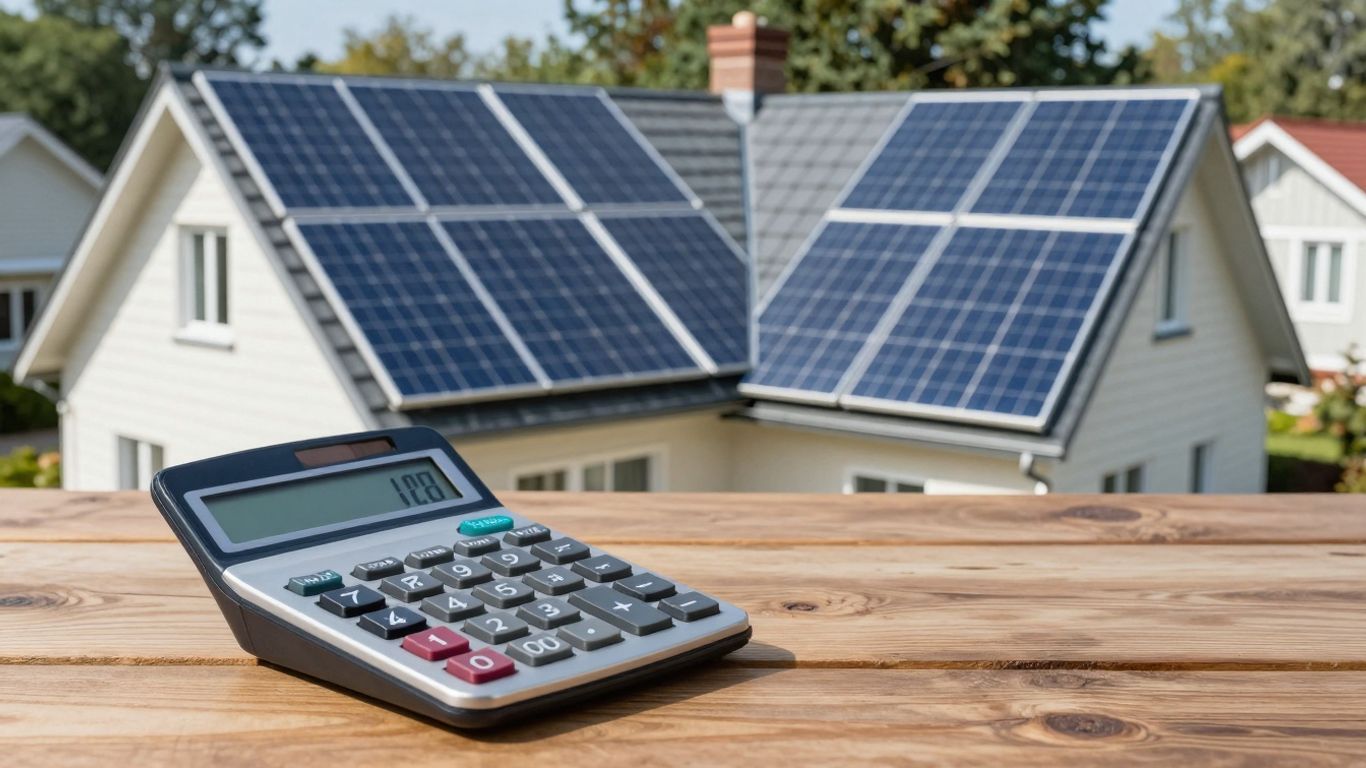
So, you’re thinking about solar panels, and the big question is, ‘How much will this actually cost me each month?’ That’s where understanding your loan payments comes in. It’s not just about the sticker price of the panels; it’s about how you’re financing them.
Calculating Principal and Interest
At its core, your monthly payment is made up of two parts: the principal (the actual amount you borrowed) and the interest (the cost of borrowing that money). The calculator helps break this down. You’ll see how much of your payment goes towards paying down the loan itself and how much is just interest. The goal is to have as much of your payment as possible go towards the principal over time.
The Impact of Loan Term on Payments
This is a big one. The loan term, or how many years you have to pay back the loan, directly affects your monthly payment. A shorter term means higher monthly payments but less interest paid overall. A longer term means lower monthly payments, which might be easier on your budget right now, but you’ll end up paying more in interest over the life of the loan. It’s a trade-off.
Here’s a quick look at how term length can change things, assuming a $30,000 loan at 5% interest:
| Loan Term (Years) | Estimated Monthly Payment | Total Interest Paid |
|---|---|---|
| 10 | R5225.51 | R126492.09 |
| 15 | R3697.42 | R164959.65 |
| 20 | R2903.17 | R196185.55 |
Adjusting for Down Payments and Fees
Don’t forget about the down payment! Putting more money down upfront reduces the amount you need to borrow, which lowers your monthly payments and the total interest you’ll pay. Also, keep an eye out for any loan origination fees or other charges. These can add to the total cost, so it’s good to know what they are upfront. A good solar loan calculator will let you input these details to get a more realistic picture. You can use a tool like this to estimate the financial commitment associated with installing solar panels .
When you’re looking at loan options, it’s easy to get caught up in just the monthly payment. But remember to also consider the total interest you’ll pay over the entire loan period. Sometimes, a slightly higher monthly payment on a shorter loan can save you a significant amount of money in the long run.
Assessing the Total Cost of Solar Financing
Total Interest Paid Over the Loan’s Life
When you take out a loan for solar panels, the sticker price isn’t the whole story. You’ve got to think about the interest you’ll be paying for years to come. This is the extra money the lender makes on top of the original amount you borrowed. The longer your loan term, the more interest you’ll likely end up paying, even if your monthly payments seem lower. It’s like buying a car on a 7-year loan versus a 4-year loan – the monthly payments are less on the longer term, but you pay way more interest overall. Understanding the total interest is key to seeing the true cost of your solar investment.
Accounting for Installation and System Costs
Beyond the loan itself, remember that the price of the solar system includes more than just the panels. You’re paying for the equipment, sure, but also for the design, the installation labor, permits, and sometimes even things like battery storage. These costs get rolled into the loan amount. So, when you’re looking at the total cost, make sure you know what’s included in that initial system price. Sometimes, there are also ongoing maintenance costs or potential repair expenses down the line that aren’t part of the loan but add to the overall expense of owning a solar system.
Understanding the Role of Incentives
This is where things can get a bit more interesting, and potentially cheaper! Government incentives, like tax credits and local rebates, can significantly reduce the amount you actually pay for your solar system. For example, a federal tax credit might let you deduct a percentage of the system’s cost from your taxes. These incentives can either lower the upfront cost of the system (meaning you borrow less) or be applied later to reduce your overall out-of-pocket expenses. It’s really important to factor these in because they can change the total cost picture dramatically.
Here’s a quick look at how incentives might affect your total cost:
- Federal Solar Tax Credit: Typically covers a percentage of the system cost. This reduces your taxable income.
- State and Local Rebates: These vary widely by location and can offer a direct cash rebate or a reduction in your system’s price.
- Performance-Based Incentives (PBIs): Some areas pay you based on the amount of electricity your system generates.
It’s easy to get caught up in the monthly payment number, but looking at the total cost over the life of the loan, including all the fees and interest, gives you a much clearer picture of your financial commitment. Don’t forget to subtract any incentives you’ll receive, as they directly lower your actual expense.
Leveraging the Solar Loan Calculator for Decision Making
Ready to take the next step? solar loan calculator and see your personalized options.
Projecting Long-Term Energy Savings
This is where it gets exciting. Your solar panels aren’t just a big purchase; they’re an investment. The calculator can help you estimate how much you’ll save on your electricity bills each month. Then, you can compare that saving to your estimated monthly loan payment. The goal is for your solar savings to eventually outweigh your loan costs.
Here’s a simple way to think about it:
- Estimate your current monthly electricity bill.
- Use the calculator to find your estimated monthly solar loan payment.
- Estimate your new monthly electricity bill after solar (this will be much lower).
- Calculate the difference between your old and new bills – that’s your estimated monthly savings.
If your monthly savings are higher than your monthly loan payment, you’re likely on the right track. You can also project this out over the life of the loan to see the total potential savings.
Validating Financial Feasibility
Ultimately, the calculator helps you answer the big question: “Can I afford this, and is it worth it?” It takes the guesswork out of the financial side of going solar. By plugging in all the numbers – system cost, loan details, potential savings, and even incentives – you get a clearer picture of the overall financial impact.
It’s easy to get caught up in the idea of clean energy, which is great, but you still need to make sure it makes financial sense for your household. The calculator provides concrete numbers, not just hopes and dreams, to help you make a sound decision. It shows you the actual cost over time and how it stacks up against your energy savings.
Navigating Solar Loan Variables
When you’re looking at solar loans, it’s not just a one-size-fits-all situation. Several factors can really change the numbers, so understanding them helps you make a smarter choice. Think of it like adjusting the settings on a thermostat – small changes can make a big difference in comfort, or in this case, your wallet.
Interest Rate Fluctuations
The interest rate is a big one. It’s the cost of borrowing the money. Even a small difference in the percentage can add up over the life of the loan. For example, a 5% rate on a $30,000 loan over 20 years will cost you less in total interest than a 7% rate on the same loan amount and term. It’s always worth shopping around for the best rate you can get, as lenders offer different terms based on your creditworthiness and market conditions.
Here’s a quick look at how different rates can affect your total interest paid:
| Loan Amount | Loan Term | Interest Rate | Total Interest Paid |
|---|---|---|---|
| R500575.49 | 20 years | 5% | R295639.89 |
| R500575.49 | 20 years | 7% | R427107.70 |
| R500575.49 | 20 years | 9% | R575912.11 |
Remember, the advertised interest rate isn’t always the final rate you’ll get. Lenders consider your credit score, income, and debt-to-income ratio. A higher credit score usually means a lower interest rate, saving you money.
Loan Term Flexibility
The loan term is simply how long you have to pay back the loan. You can usually choose terms ranging from 5 to 25 years. A shorter term means higher monthly payments, but you’ll pay less interest overall because you’re borrowing the money for less time. A longer term means lower monthly payments, which can be easier on your budget, but you’ll end up paying more interest over the years.
Consider these options for a $30,000 loan at 7% interest:
- Shorter Term (e.g., 10 years): Higher monthly payments, but significantly less total interest paid.
- Medium Term (e.g., 15 years): A balance between monthly payment affordability and total interest.
- Longer Term (e.g., 25 years): Lower monthly payments, but the highest total interest paid.
Impact of Tax Credits and Rebates
Don’t forget about incentives! The federal solar tax credit, for instance, can significantly reduce your tax liability, effectively lowering the overall cost of your solar system. Many states and local utilities also offer rebates or performance-based incentives. These can sometimes be applied directly to reduce the amount you need to finance, or they can be claimed later to pay down the loan principal faster or offset your monthly payments.
- Federal Solar Tax Credit: Currently, this allows you to deduct a percentage of the system cost from your federal taxes.
- State and Local Rebates: These vary widely by location and can offer upfront discounts or cash back.
- Performance-Based Incentives (PBIs): You get paid for the energy your system produces over time.
Understanding how these incentives work and when you’ll receive them is key to accurately calculating your true out-of-pocket cost and the overall financial picture of your solar investment.
Wrapping Up Your Solar Investment
So, you’ve crunched the numbers with the solar loan calculator. Hopefully, it gave you a clearer picture of what going solar might actually cost you each month and over the long haul. Remember, these calculators are great for getting a ballpark idea, but they aren’t a crystal ball. Your actual loan terms and energy savings could be a bit different. Still, using this tool is a smart first step to see if solar fits your budget and if it’s a good move for your home. It helps you get ready for those conversations with installers and lenders, armed with a better understanding of the financial side of things. Good luck with your solar journey!
Frequently Asked Questions
What exactly does a solar loan calculator do?
Think of a solar loan calculator as your financial GPS for going solar. It’s a super helpful online tool that helps you figure out how much installing solar panels will cost if you take out a loan. You plug in some basic info, like the total price of the solar setup and the loan’s interest rate, and it gives you a good idea of what your monthly payments might look like and the total amount you’ll end up paying over time. It’s a great way to get a clear picture before you commit.
What information do I need to use a solar loan calculator?
To get the most accurate estimate, you’ll want to have a few key details ready. This usually includes the total cost of your solar panel system, the amount you plan to borrow, the interest rate you expect to get on the loan, and how long you want the loan to last (like 10, 15, or 20 years). Sometimes, you might also need to know about any down payment you plan to make or any upfront fees.
How does the loan term affect my monthly payments?
The loan term is basically how long you have to pay back the loan. If you choose a longer loan term, your monthly payments will be lower because you’re spreading the cost over more months. However, a longer term also means you’ll pay more interest overall. On the flip side, a shorter loan term means higher monthly payments, but you’ll save money on interest in the long run.
Can incentives like tax credits change my loan cost?
Absolutely! Government incentives, like tax credits and rebates, can significantly lower the total cost of your solar system. Many calculators can factor these in. For example, a 30% federal tax credit can reduce the amount you need to finance or pay back, which in turn can lower your total loan cost and potentially your monthly payments. It’s smart to see how these savings play into your calculations.
Is a solar loan calculator accurate for my specific situation?
These calculators are fantastic for giving you a really good estimate and helping you compare options. However, they’re usually for estimation purposes only. The actual loan offer you get from a lender might have slightly different numbers based on your credit history, specific loan terms, and any additional fees. It’s always best to get a personalized quote from a lender once you have a solid idea of what you’re looking for.
How can I use the calculator to decide if solar is right for me?
The calculator is a powerful tool for making smart decisions! You can use it to compare different loan offers side-by-side, see how changing the loan term or interest rate affects your budget, and even estimate how much you might save on your electricity bills over time. By comparing your estimated loan payments with your projected energy savings, you can figure out if going solar makes financial sense for your household.
Ready to Start Saving on Your Energy Bills?
Get a free, no-obligation quote from trusted local providers in under 2 minutes.
No obligation • Free estimates • Takes under 2 minutes
Recent Comments
Recent Posts
- Essential Factors to Consider Before Hiring an Energy Broker: Power to Choose is Choose My Power
- How to Choose a Power Company and a Broker: Power to Choos is Choose My Power
- How Does Choosing the Right Energy Broker Can Help You Save Money
- Commercial Solar Financing: Best Options for Businesses (Loans, PPAs, Leases)
- Solar Financing Near Me: How to Find Local Lenders & the Best Deals