Solar Lease vs Loan: Which Saves More Over 5–25 Years?

Thinking about getting solar panels for your home? That’s great! But before you jump in, you’ve got a big decision to make: should you lease them or buy them? It sounds simple, but there’s a lot to consider, especially when you look at the money side of things over the long haul. We’re talking about 5, 10, even 25 years down the road. This isn’t just about what your monthly bill looks like right now; it’s about which choice actually puts more money back in your pocket over time. Let’s break down the solar lease vs loan options so you can figure out what makes the most sense for your wallet and your home.
Key Takeaways
- Buying solar panels generally saves you more money over 25 years compared to leasing, often by tens of thousands of dollars. This is because you own the system and benefit from tax credits.
- Leasing solar panels can be a good option if you have limited upfront cash, a lower credit score, or aren’t sure how long you’ll stay in your home, offering immediate savings with no down payment.
- The 30% federal solar tax credit is a major financial advantage for buyers. If you don’t pay enough in taxes, you might not be able to use this credit, making leasing more appealing.
- Monthly payments for a solar loan might be similar to lease payments initially, but the loan payments end after a set term (like 10-15 years), after which you get free electricity, while lease payments often continue for 20-25 years and can increase annually.
- When comparing solar lease vs loan, consider your long-term plans, tax situation, and credit score. Owning adds value to your home, while leased systems can sometimes complicate a sale.
Understanding Solar Lease vs Loan: Key Financial Differences
When you’re looking into solar panels for your home, you’ll quickly run into two main ways to pay for them: leasing or buying with a loan. They sound similar, but the financial picture they paint over the years is pretty different. It’s not just about the monthly bill; it’s about who actually owns the system and what that means for your wallet down the road.
Ownership Versus Leasing: A Financial Overview
The biggest difference boils down to ownership. With a lease, you’re essentially renting the solar panels. You get the benefit of lower electricity bills, but you don’t own the equipment. The solar company owns it, installs it, and maintains it. On the flip side, buying solar panels, whether with cash or a loan, means you own the system outright. This ownership is where the potential for greater long-term savings really kicks in.

Here’s a quick look at how they stack up:
- Leasing: No upfront cost, predictable monthly payments (though they often go up over time), and the leasing company handles maintenance. You don’t get the tax credits.
- Buying (with a loan): Requires a down payment or a loan, but you own the system. You can claim the federal tax credit, which is a big chunk of savings. You’re responsible for maintenance, but modern panels are pretty low-maintenance.
The core financial distinction is that a lease payment is an ongoing operational cost, much like your electricity bill. A loan payment, however, is an investment in an asset that you own, which can appreciate in value and generate savings beyond the loan term.
The Impact of Tax Credits on Your Decision
This is a huge one. The federal solar tax credit can significantly reduce the cost of buying a solar system. Right now, it’s a 30% credit on the total system cost. If you buy your panels, you can claim this credit. If you lease, the leasing company claims it, and that benefit is usually factored into their pricing, not passed directly to you. For many homeowners, this tax credit alone makes buying a much more attractive option. You need to have enough tax liability to benefit from it, though.
Property Value Considerations with Solar
What happens to your home’s value when you have solar? Owned solar systems are generally seen as an upgrade that adds value to your home. Buyers often see it as a positive feature. Leased systems can be a bit trickier. When you sell your house, you typically have to transfer the lease to the new owner, which can complicate the sale. They’ll need to qualify for the lease, and it might deter some buyers. Some leases also have hefty early termination fees if you need to sell.
- Owned systems can increase home value.
- Leased systems might complicate a home sale.
- Transferring a lease requires the buyer’s approval.
Choosing between a lease and a loan involves weighing these immediate and long-term financial implications. For many, the long-term financial returns of owning are hard to ignore, especially when considering the tax benefits and potential home value increase. But if upfront costs are a major hurdle, a loan can still offer ownership benefits that leasing doesn’t. It’s all about what fits your situation best.
Analyzing the Long-Term Savings of Solar Ownership
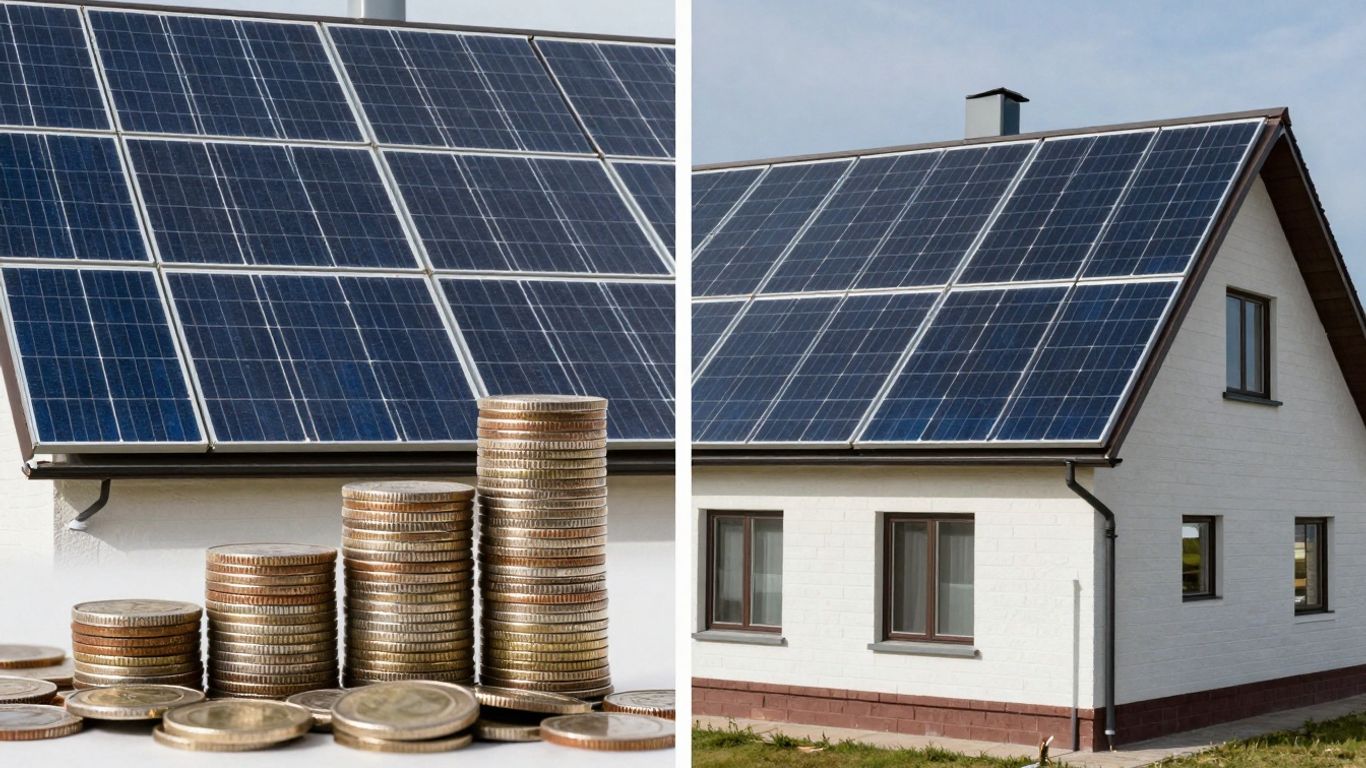
A 2026 Side-By-Side Comparison: Solar Loans Lead To Asset Ownership, While Leases Offer A Maintenance-Free Subscription Model.
When you buy solar panels, you’re essentially investing in your home and your future energy costs. Unlike leasing, where you’re paying for the use of someone else’s equipment, owning your system means all the savings and benefits accrue directly to you. This is where the real financial advantage of solar really shines over the long haul.
Lifetime Returns: Buying vs. Leasing Solar
Let’s get down to brass tacks. The numbers consistently show that owning your solar system, whether you pay cash or finance it with a loan, leads to significantly more savings over its lifespan compared to leasing. Think of it like buying a house versus renting one. You build equity and benefit from appreciation when you own. With solar, you’re essentially buying your electricity at a fixed, lower rate for decades, and that’s a huge win.
Here’s a general idea of what you might see over 25 years:
| Financing Method | Average Lifetime Savings (25 Years) |
|---|---|
| Cash Purchase | R35,000 – R45,000 |
| Solar Loan | R25,000 – R35,000 |
| Solar Lease | R15,000 – R25,000 |
As you can see, buying generally puts more money back in your pocket. Even with a loan, the total savings are often higher than what you’d get from a lease, especially when you factor in the tax credits you can claim as an owner.
The Benefit of Owning Your Solar System
Owning your solar panels comes with a few key advantages that leasing just can’t match. First off, you get to claim the federal solar tax credit, which is a big chunk of change – currently 30% of the system cost. That alone can save you thousands right off the bat. Plus, when you own your system, it adds value to your home. Studies show that homes with owned solar systems tend to sell for more and often sell faster.
- Claiming Tax Credits: You get to take advantage of the 30% federal investment tax credit (ITC). This is a direct reduction in your tax liability.
- Increased Home Value: Owned systems are seen as an upgrade, potentially boosting your home’s market price.
- Energy Independence: You’re not tied to a third-party company for your power generation. You control your system.
- No Lease Payments: Once a loan is paid off, your electricity costs are drastically reduced, often just the cost of your utility’s connection fee.
When you own your solar panels, you’re not just reducing your electricity bill; you’re making a tangible asset that appreciates your property and provides long-term financial security. It’s an investment that pays dividends for years to come.
Maximizing Savings Over 25 Years
To really get the most out of owning your solar system, it’s about looking at the entire 25-year lifespan, or even longer, as most panels last beyond that. While a solar loan might have monthly payments for 10-15 years, after that, your electricity is essentially free. Lease payments, on the other hand, often continue for the full 20-25 years, and they can even go up each year due to escalation clauses. This means that while a lease might seem cheaper month-to-month initially, owning your system usually results in much lower overall costs and higher net savings by the time the system is fully paid off and continues to produce free electricity.
When Leasing Solar Panels Might Be Advantageous
Okay, so we’ve talked a lot about how buying solar panels usually saves you more money in the long run. And that’s generally true. But sometimes, leasing can actually be the smarter move, especially if your situation doesn’t quite line up with the typical homeowner who buys.
Leasing for Immediate Savings and Simplicity
Let’s be real, buying solar panels often means a pretty big chunk of change upfront, even with loans. If you’re not sitting on a pile of cash or don’t want to take out a loan, a lease can feel like a breath of fresh air. You get to start saving on your electricity bills right away, often with zero money down. It’s like getting a discount on your power without having to pay for the equipment itself. This can be a big deal if you’re trying to manage your budget tightly.
Leasing with Limited Tax Liability
This is a big one. The federal solar tax credit is a fantastic incentive, but you have to actually owe taxes to take advantage of it. If your household income is on the lower side, you might not have enough tax liability to claim the full credit, or even any of it, in a given year. While credits can roll over, it can still be complicated. If you’re in this boat, leasing might be better because you don’t need to worry about claiming those credits. The leasing company handles all that, and you still get a lower electricity rate. It simplifies things considerably when you can’t fully benefit from the tax incentives. For many, this makes solar leasing a worthwhile option solar pros cons-advantages and disadvantages benefits drawbacks.
Addressing Credit Score Limitations with Leasing
Getting approved for a solar loan, especially one with a good interest rate, often requires a decent credit score. If your credit isn’t where you’d like it to be, getting a loan can be tough, or the interest rates might be so high that they eat up most of your potential savings. Solar leases, on the other hand, are often more accessible to people with lower credit scores. The leasing company is essentially selling you power, not lending you money for equipment, so their approval process can be less stringent. It opens the door to solar savings for a wider range of homeowners.
Here’s a quick look at who might lean towards leasing:
- Low upfront cost: You can start saving immediately without a large down payment.
- Limited tax liability: You don’t need to worry about claiming tax credits.
- Credit score concerns: Leasing can be an option when loan approval is difficult.
- Uncertainty about staying put: If you might move in less than 7-10 years, a lease can offer more flexibility (though you’ll need to check your contract for moving policies).
While buying solar panels generally leads to greater long-term financial gains, leasing offers a practical entry point for those who can’t take full advantage of tax credits or who have credit limitations. It’s about finding the solar solution that best fits your current financial picture and goals, even if it means slightly less overall savings down the road.
It’s worth noting that some companies offer $0 down solar loans, which can provide similar upfront benefits to leasing but still allow you to own the system and claim tax credits. Always compare these options carefully.
Comparing Monthly Payments: Loan vs. Lease
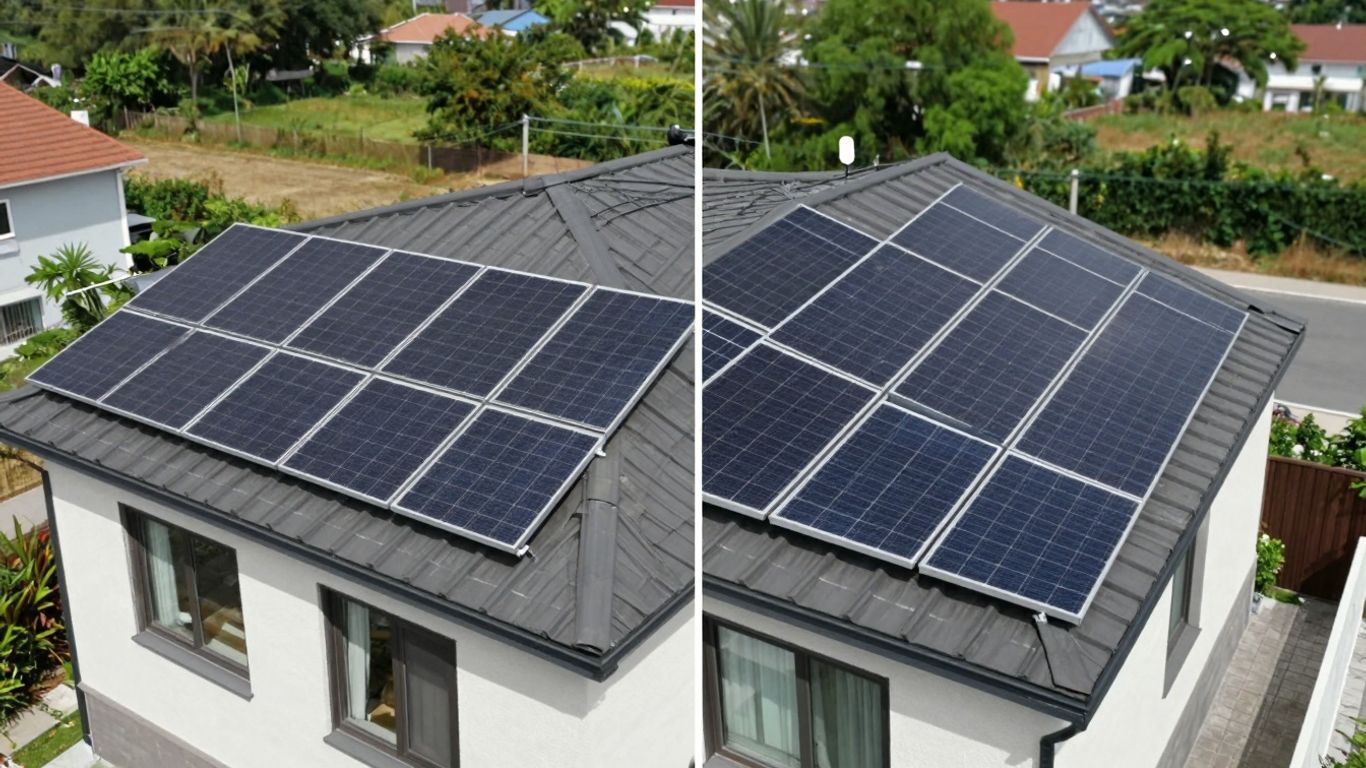
Choosing Between Solar Ownership Through A Loan Or A Maintenance-Free Lease Subscription.
When you’re looking at solar, the monthly payment is often the first thing people focus on. It’s easy to see why – it directly impacts your budget. But here’s the thing: not all monthly payments are created equal. One is an investment that eventually ends, and the other is an ongoing cost.
Solar Loan Payments: A Temporary Investment
With a solar loan, you’re essentially borrowing money to buy your system outright. You make monthly payments for a set period, usually 10 to 15 years. Once that loan is paid off, your electricity from the sun is completely free. Think of it like paying off a car loan; eventually, the car is yours, free and clear. The payments might seem a bit higher initially compared to a lease, but the long-term payoff is huge because you own the system and all the energy it produces.
- Loan Term: Typically 10-15 years.
- Ownership: You own the system from day one.
- End of Payments: Free electricity for the remaining life of the system (often 25+ years).
- Tax Credits: You can claim the federal solar tax credit.
Solar Lease Payments: Ongoing Costs and Escalations
A solar lease is more like renting. You pay a monthly fee to use the solar panels installed on your roof. The company that owns the panels handles installation and maintenance. While this can mean a lower upfront cost and potentially a lower initial monthly payment than a loan, there’s a catch. These payments usually last for 20 to 25 years, and often come with an annual increase, called an escalation clause. This means your monthly payment goes up a little bit each year.
- Lease Term: Typically 20-25 years.
- Ownership: The leasing company owns the system.
- End of Payments: You continue paying for the system, or have to pay to have it removed.
- Escalation Clause: Payments typically increase annually (e.g., 3% per year).
The Break-Even Point for Solar Loans
This is where the numbers really start to tell a story. For a solar loan, the “break-even” point isn’t about when you start saving money (you usually save from day one compared to your old utility bill), but when the total savings from your system significantly outweigh the total amount you’ve paid in loan payments. Because you eventually own the system and get free electricity, this point is reached much sooner than you might think, often within 7-10 years. After that, every bit of electricity generated is pure savings. Leases, on the other hand, don’t have a break-even point in the same way because you’re always making a payment.
It’s important to look beyond just the initial monthly cost. A slightly higher loan payment now can mean tens of thousands of dollars in savings later, especially when you factor in the elimination of electricity bills after the loan is paid off and the value of owning an asset.
Here’s a simplified look at how monthly costs might compare over time:
| Year | Solar Loan Payment (Est.) | Solar Lease Payment (Est. w/ 3% Escalator) | Notes |
|---|---|---|---|
| 1 | R120 | R100 | Loan payment is fixed, lease payment starts lower |
| 5 | R120 | R111 | Lease payment increases annually |
| 10 | R120 | R129 | Loan payments may end soon, lease payment continues to rise |
| 15 | R0 (Loan Paid Off) | R150 | Free electricity with loan, lease payment still ongoing |
| 20 | R0 | R174 | Free electricity with loan, lease payment continues |
As you can see, the loan payment disappears, while the lease payment keeps going up. This difference really adds up over the 20-25 year lifespan of solar panels.
Navigating Solar Financing Options: Purchase vs. Lease
So, you’re thinking about going solar, which is awesome! But then comes the big question: do you buy the system outright, get a loan, or lease it? It’s not a simple choice, and honestly, it depends a lot on your personal situation. Let’s break down the main ways you can finance solar panels.
Ready to take the next step? solar lease vs loan and see your personalized options.
Cash Purchase: The Ultimate Return on Investment
This is pretty straightforward. You pay the whole system cost upfront. The biggest perk here is that you get to claim the full 30% federal tax credit, which can save you thousands. Plus, once it’s paid off, your electricity from the sun is basically free. It usually takes about 6 to 8 years to recoup your initial investment, and over 25 years, you’re looking at the highest overall savings compared to other options. It’s the best way to go if you have the cash and want the most bang for your buck.
Solar Loan Financing: Ownership Benefits with Monthly Payments
If dropping a huge chunk of cash isn’t in the cards, a solar loan is a really popular alternative. Many companies offer loans with zero down, so you can still get solar installed without paying anything upfront. You’ll make monthly payments, kind of like a car loan, but the good news is you still own the system. This means you still get to take advantage of those sweet tax credits. The interest rates can vary, but they’re often pretty reasonable. The monthly payments might look similar to a lease payment at first, but remember, with a loan, you’re building equity and will eventually own the system free and clear.
Home Equity Loans for Solar Purchases
Another way to finance buying your solar system is by using your home’s equity. If you have a good amount of equity built up, you might be able to get a home equity loan or a HELOC (Home Equity Line of Credit). These often come with lower interest rates than other types of loans, and sometimes the interest you pay can even be tax-deductible, though you should definitely check with a tax advisor on that. It’s a solid option if you want to own your system and can get a good rate through your home’s equity.
Choosing the right financing method is a big deal. It’s not just about the monthly payment; it’s about the total cost over the years, who owns the system, and what benefits you can actually claim. Take your time to look at all the angles before you sign anything.
Here’s a quick look at how the costs can stack up:
| Cost Factor | Solar Purchase (Cash) | Solar Loan (0% Down) | Solar Lease ($0 Down) |
|---|---|---|---|
| Initial Cost | R12,600 (after credit) | R0 | R0 |
| Monthly Payment | $0 (after payoff) | Varies (10-25 yrs) | R89-129 (escalates) |
| 25-Year Savings | R38,900 | R25,000-35,000 | R15,600 |
It’s worth noting that while leasing might seem appealing for its low entry cost, the long-term savings just don’t compare to owning. If you’re looking to maximize your savings and increase your home’s value, owning your system through a cash purchase or a loan is generally the way to go. If you’re interested you can look up and seeing how leasing works in different areas,
for examples of how it’s offered elsewhere.
Hidden Costs and Considerations in Solar Agreements
So, you’re looking into solar, which is great! But before you sign on the dotted line, let’s talk about the stuff that doesn’t always make the headlines. Both buying and leasing have their own little quirks, and knowing them can save you a headache down the road.
Understanding Lease Escalation Clauses
This is a big one for leases. Think of it like rent going up each year, but for your solar system. Most lease agreements have what’s called an escalation clause. This means your monthly payment will increase over time, usually by a set percentage each year. While it’s often pitched as being less than utility rate hikes, it still adds up. A seemingly small 3% annual increase on a R99/month lease can significantly boost your total cost over 20 or 25 years. Always ask for the exact escalation rate and calculate the total cost over the life of the lease.
Potential Penalties for Early Lease Termination
Life happens, right? You might need to move, or maybe your financial situation changes. If you have a solar lease and need to end it early, be prepared for potential penalties. These can be substantial, sometimes running into thousands of dollars. Some leases allow you to transfer the lease to a new homeowner, but that requires the buyer to qualify, which can complicate a home sale. Others might let you buy out the system, but that cost can be quite high, especially in the early years.
Maintenance Responsibilities: Ownership vs. Lease
Who fixes it if something goes wrong? With a purchased system, you’re generally responsible for maintenance and repairs. This might mean budgeting for things like inverter replacement (they usually last 10-15 years) or occasional cleaning. However, you also get to claim any tax credits and keep the equipment. With a lease, the leasing company typically handles maintenance. This sounds simpler, but it can get tricky if you need roof repairs. You might have to pay to have the panels removed and reinstalled, which can be a significant expense.
Here’s a quick look at what you might expect:
- Purchased Systems: You handle maintenance, potential repairs, and inverter replacement. Budget around R200-$400 annually for upkeep after warranties, plus larger costs for inverter swaps.
- Leased Systems: Maintenance is usually included, but roof repair responsibilities can be a hidden cost. Early termination fees can also be steep.
When considering any solar agreement, read the fine print very carefully. What seems like a straightforward deal can have clauses that impact your finances significantly over the long term. Don’t be afraid to ask your installer to walk you through worst-case scenarios, like needing to move or if the system underperforms.
Making the Right Choice: Solar Lease vs Loan for Your Home
Assessing Your Residency Timeline
So, you’re thinking about going solar, which is awesome! But before you sign on the dotted line, let’s talk about how long you plan to stay put. This is a big one, honestly. If you’re pretty sure you’ll be in your home for at least 10 to 15 years, buying your solar system, either with cash or a loan, usually makes more financial sense. You’ll have more time to recoup your investment and really see those long-term savings pile up. On the flip side, if you think you might move in, say, the next 5 to 7 years, a lease might seem more appealing. It often has a lower barrier to entry, and you won’t have to worry about transferring or buying out the system when you sell your house. It’s all about matching the solar plan to your life’s timeline.
Evaluating Your Financial Situation and Goals
Your bank account and what you want to achieve with solar are super important here. If you’ve got some savings tucked away and want the absolute best return on your investment over the next couple of decades, buying is probably your best bet. You get to claim those sweet tax credits, which can knock a good chunk off the price, and you own the system outright. That means more money in your pocket over the system’s lifespan, usually quite a bit more than with a lease. But maybe you’re not flush with cash right now, or you’re worried about your credit score limiting your loan options. In that case, a lease can be a good way to start saving on electricity bills right away without a big upfront cost. It’s a trade-off: less money saved long-term, but more flexibility now.
The Importance of Reviewing Contract Terms
This is where things can get a little tricky, so pay attention! Whether you’re looking at a lease or a loan, you absolutely have to read the fine print. For leases, watch out for those annual price increases, often called escalation clauses. They might seem small at first, but they can add up over 20 years. Also, check out what happens if you need to move or want to end the lease early – there can be hefty penalties. With loans, make sure you understand the interest rate, the loan term, and what happens if you miss a payment. It’s also worth knowing who’s responsible for maintenance and repairs for both options. Sometimes, a lease includes maintenance, which is nice, but you’re still paying for it through your monthly fee. Owning means you’re generally responsible, but you might have warranties.
Ultimately, the “best” choice isn’t a one-size-fits-all answer. It really depends on your personal circumstances. Think about your homeownership plans, your current financial picture, and what you value most – maximum savings, flexibility, or simplicity. Don’t be afraid to ask installers lots of questions and compare offers carefully. Getting a few quotes for both buying and leasing will give you a clearer picture of what works for your specific situation.
Here’s a quick rundown to help you decide:
- Buying (Cash or Loan):
- Best for long-term savings (often 2-3 times more than leasing over 25 years).
- You benefit from federal tax credits.
- Increases your home’s value.
- Requires a larger upfront investment or a loan.
- Leasing:
- Low or no upfront cost.
- Immediate electricity bill savings.
- The solar company handles maintenance.
- Lower lifetime savings compared to buying.
- Can complicate home sales.
- Consider a R0 Down Loan: This option can offer the accessibility of a lease with the benefits of ownership, including tax credits and higher long-term savings. It’s often a great middle ground.
So, Which Way to Go?
Alright, so we’ve looked at the numbers, and it’s pretty clear: owning your solar panels, whether you pay cash or get a loan, usually ends up saving you a lot more money over the long haul, like 25 years or more. You get to keep those sweet tax credits, and your system becomes an asset that adds value to your home. Leasing can be tempting, especially if you want zero upfront costs and immediate savings on your electricity bill, and it might be the better choice if you don’t have much tax liability or if you’re not sure how long you’ll be in your home. But remember, those lease payments often go up over time, and you don’t get the big savings that come with owning. Ultimately, the best choice really depends on your own financial situation and what you want to get out of going solar. Just make sure you read all the fine print before you sign anything.
Frequently Asked Questions
What’s the main difference between buying and leasing solar panels?
When you buy solar panels, you own them outright. This means you get to keep all the savings and any benefits from tax credits. When you lease, you’re essentially renting the panels from a company. You pay a monthly fee, and the company owns the system and usually keeps the tax credits. Buying usually saves you more money over the long run, while leasing might offer lower upfront costs.
Does buying solar panels really save more money over time?
Yes, generally buying solar panels saves significantly more money over a 25-year period. While leasing might have lower monthly payments initially, the total savings from owning your system, especially after paying off a loan, can be much higher. Plus, when you own your system, it can add more value to your home.
When might leasing solar panels be a better choice for me?
Leasing can be a good option if you have a lower credit score and can’t get a good loan, or if you don’t plan to stay in your home for many years (typically less than 7-10 years). It’s also appealing if you don’t have much tax liability to take advantage of tax credits, or if you prefer a simple, hands-off approach where the leasing company handles maintenance.
How do monthly payments compare between a solar loan and a lease?
Solar loan payments can be similar to lease payments at first, but with a loan, you’re building equity. Once the loan is paid off (usually in 10-15 years), your electricity costs drop significantly because you own the system. Lease payments, on the other hand, often continue for 20-25 years and can increase each year due to escalation clauses, meaning you’ll keep paying for the system indefinitely.
What are some hidden costs or things to watch out for with solar leases?
Be aware of escalation clauses, which allow the leasing company to raise your monthly payments each year, sometimes by 2-4%. Also, check for penalties if you need to end the lease early, which can be quite expensive. If you need roof repairs, you might have to pay to have the panels removed and reinstalled, which can also cost a lot.
Can I still get tax credits if I lease solar panels?
Usually, no. The federal solar tax credit, which can save you a significant amount of money (like 30% of the system cost), is typically claimed by the company that owns the solar panels when you lease. If you buy the system (with cash or a loan), you get to claim those valuable tax credits yourself.
Ready to Start Saving on Your Energy Bills?
Get a free, no-obligation quote from trusted local providers in under 2 minutes.
No obligation • Free estimates • Takes under 2 minutes
Recent Comments
Recent Posts
- Essential Factors to Consider Before Hiring an Energy Broker: Power to Choose is Choose My Power
- How to Choose a Power Company and a Broker: Power to Choos is Choose My Power
- How Does Choosing the Right Energy Broker Can Help You Save Money
- Commercial Solar Financing: Best Options for Businesses (Loans, PPAs, Leases)
- Solar Financing Near Me: How to Find Local Lenders & the Best Deals