Maryland Solar Tax Credit: Incentives, Eligibility & How to Claim

Thinking about putting solar panels on your Maryland home? That’s smart. Maryland has some pretty good deals to help you out, especially when it comes to the Maryland solar tax credit and other incentives. It can really bring down the cost of going solar. But, you gotta know, some of these deals, like the big federal tax credit, have deadlines. So, it’s a good idea to get the lowdown on what’s available and when you need to act.
Key Takeaways
- The federal Residential Clean Energy Tax Credit can cut your solar system cost by 30%, but it’s only for systems installed by December 31, 2025.
- Maryland offers a rebate program, with applications needing to be in before November 30, 2024, and grants for income-eligible homes through the Solar Access Program.
- You can sell Solar Renewable Energy Certificates (SRECs) generated by your system for extra cash, typically earning around $330 annually for a standard system.
- Maryland provides a sales tax exemption on solar systems and some counties offer property tax exemptions for the added value from solar.
- It’s important to understand if you purchase your system or lease it, as this affects your eligibility for certain tax credits like the federal ITC.
Understanding The Maryland Solar Tax Credit Landscape
A Rooftop Solar Panel Array Installed On A Flat Roof In A Leafy Neighborhood.
So, you’re thinking about going solar in Maryland? That’s awesome! It’s a big step, and thankfully, the state and federal governments have put some pretty sweet incentives in place to help you out. It can feel a little confusing at first with all the different programs and credits, but let’s break it down.

Federal Residential Clean Energy Tax Credit
First off, there’s the big one: the Federal Residential Clean Energy Tax Credit. This is often called the Investment Tax Credit, or ITC. It lets you deduct a good chunk of your solar system’s cost right off your federal taxes. For systems installed before the end of 2025, that’s a 30% credit. It applies to the whole system – panels, installation, everything. Just remember, you have to actually buy your system to get this credit; leasing doesn’t count. Also, you need to have enough tax liability to use the credit, though you can usually roll over unused amounts. It’s a really good deal, but the clock is ticking on this one.
The federal tax credit is a significant financial incentive, but it’s important to be aware of its expiration. Acting sooner rather than later can mean locking in substantial savings on your solar investment.
Maryland’s Renewable Portfolio Standard
Maryland has this thing called a Renewable Portfolio Standard (RPS). Basically, it’s a goal for the state to get a certain percentage of its electricity from clean, renewable sources. Right now, they’re aiming for half by 2030. To help make that happen, they’ve created a system that encourages solar energy production.
The Role of Solar Renewable Energy Certificates (SRECs)
This is where Solar Renewable Energy Certificates, or SRECs, come in. Think of them as credits you earn for generating clean energy. For every megawatt-hour of electricity your solar panels produce, you get one SREC. You can then sell these SRECs on a special market or to energy companies. Prices can vary, but they typically bring in a decent amount of money over time, adding another layer of savings to your solar setup. It’s a smart way Maryland is pushing for more clean energy and helping homeowners like you benefit directly. You can find more details about commercial solar projects and grants on the Maryland Commercial and Canopy Solar Program page.
Here’s a quick look at how the federal credit has been structured:
| Year(s) | Residential Credit | Commercial Credit |
|---|---|---|
| Through 2022 | 26% | 26% |
| 2023 | 22% | 22% |
| 2024 | 0% | 10% |
| 2025 | 30% | 30% |
| After 2025 | N/A | N/A |
Note: The information above reflects the law as it stood previously. Current legislation has extended the 30% credit through 2025 for residential systems.
Key State-Specific Solar Incentives Available
Maryland really rolls out the red carpet for solar energy, offering several programs that make going solar more affordable. Beyond the federal tax credit, there are some fantastic state-level incentives designed to help you out.
Maryland Residential Clean Energy Rebate Program
This is a pretty straightforward program. If you install a solar system on your primary home, you can get a $1,000 rebate. There are a couple of conditions, though: the system needs to be at least 1 kilowatt (kW) in size, and the installation has to be done by someone certified by the North American Board of Certified Energy Practitioners (NABCEP). It’s important to get your application in before November 30, 2024, as this program has a deadline.
Maryland Solar Access Program Grants
This program is specifically for homeowners who meet certain income requirements. It offers grants to help make solar more accessible to a wider range of residents. It operates on a first-come, first-served basis, so if you think you might qualify, it’s a good idea to look into it sooner rather than later. The Maryland Solar Access Program can provide up to $7,500 in assistance.
Local County and Municipal Solar Programs
Don’t forget to check what your specific county or even your town might offer. Some local governments have their own incentives, like property tax credits for solar installations. These can add up and make a real difference in your overall savings. It’s worth asking your solar installer about any local programs you might be eligible for.
While state and federal incentives are great, local programs can sometimes be the cherry on top. They often target specific community needs or encourage adoption in particular areas, so they’re definitely worth investigating.
Maximizing Your Solar Investment Through Tax Exemptions
So, you’re thinking about going solar in Maryland? That’s awesome! Besides the obvious benefit of lower electricity bills, the state has some pretty sweet tax breaks that can make your solar setup even more affordable. It’s like getting a little thank you from the state for choosing clean energy.
Maryland Solar Property Tax Exemption
One of the cool things about solar panels is that they can actually boost your home’s value. Pretty neat, right? But sometimes, an increase in home value can mean a bump in your property taxes. Maryland gets this, and they’ve got your back. They won’t hike up your property taxes just because you added solar panels. This means you get to enjoy the added home value without the extra tax burden. It’s a win-win.
Exemption from State Sales Tax on Solar Systems
Buying a solar system is a big purchase, and nobody likes paying extra taxes on big purchases. Good news: Maryland exempts solar energy systems from the state sales tax. This means you save a good chunk of money right off the bat, usually around 6% of the system’s cost. So, that money you save on sales tax can go towards other things, or just make your overall investment feel even better.
Here’s a quick look at what you can expect:
- Sales Tax Exemption: You won’t pay state sales tax on your new solar system.
- Property Tax Exemption: In certain counties, the added value from your solar installation won’t increase your property taxes.
It’s always a good idea to double-check with your local county assessor’s office to confirm the specifics of the property tax exemption in your area. Rules can sometimes vary a bit from place to place.
These exemptions, combined with other incentives, really help make solar a smart financial move in Maryland.
Navigating The Claiming Process For Solar Credits
So, you’ve decided to go solar in Maryland – that’s fantastic! Now comes the part where you actually get those tax credits and incentives you’ve earned. It might seem a little daunting, but it’s really just a few steps. The most significant federal incentive is the Residential Clean Energy Tax Credit, often called the ITC. This credit lets you deduct a percentage of your solar system’s cost right off your federal taxes.
Eligibility Requirements for the Federal ITC
Before you start filling out forms, let’s make sure you qualify. The main thing to remember is that this credit is for homeowners who purchase their solar system. This means paying with cash or taking out a solar loan. If you’re leasing your system, you won’t be able to claim the federal credit because you don’t own the equipment.
Here are the key points:
- Ownership is Key: You must own the solar energy system. Leased systems don’t qualify.
- New Systems Only: The credit applies to new solar energy systems installed on your home.
- Primary Residence: The system needs to be installed at your main home in the United States.
- Tax Liability: You need to have a federal tax liability (meaning you owe taxes) to take advantage of the credit. If the credit is more than what you owe in taxes for that year, you can carry over the unused portion to future tax years. The IRS doesn’t set a limit on how long you can carry it over, but it’s always a good idea to check with a tax professional about the latest rules, especially as tax forms can change.
Steps to Claim the Federal Solar Tax Credit
Claiming the federal ITC is done when you file your annual federal income tax return. You’ll need a specific form for this.
- Get Your Documentation: Your solar installer should provide you with all the necessary paperwork detailing the cost of your system and its components. Keep this safe!
- Fill Out IRS Form 5695: This form is specifically for residential energy credits. You’ll report the cost of your solar system and calculate the credit amount. You can usually download this form from the IRS website.
- File Your Taxes: Submit the completed Form 5695 along with your federal tax return (like Form 1040). If you’re using tax software or a tax preparer, they will guide you through this process.
Remember, the federal ITC has an expiration date. To claim the full credit, your system generally needs to be installed and placed in service by December 31, 2025. After that, the credit percentage might decrease or the credit itself could expire, so timing is important.
It’s really about making sure you have the right paperwork from your installer and then correctly reporting it on your taxes. Don’t stress too much if you don’t use the full credit in one year; the IRS lets you roll it over. Just keep an eye on those deadlines!
Understanding System Purchase vs. Leasing
This is a big one when it comes to claiming incentives. When you purchase a solar system, whether outright with cash or through a loan, you own the equipment. This ownership is what allows you to claim tax credits like the federal ITC and potentially other state or local incentives. You’re essentially investing in an asset for your home.
On the other hand, when you lease a solar system, you’re paying a monthly fee to a company that owns and maintains the panels on your roof. Because you don’t own the system, you can’t claim the federal tax credit. The leasing company, as the system owner, is the one eligible for those incentives. While leasing can offer lower upfront costs and predictable monthly payments, it means giving up the direct financial benefits of ownership, like tax credits. It’s a trade-off to consider carefully based on your financial situation and goals.
Ready to take the next step? Maryland solar tax credit and see your personalized options.
Important Deadlines and Future Considerations
When you’re thinking about going solar in Maryland, keeping an eye on deadlines is pretty important. It’s not just about getting the best deal right now, but also about making sure you don’t miss out on any incentives that might change or expire. Plus, knowing what’s coming down the pipeline can help you plan your installation for maximum benefit.
Expiration of the Federal Solar Tax Credit
The federal solar tax credit, officially known as the Residential Clean Energy Tax Credit, has been a big deal for homeowners. It allows you to deduct a percentage of your solar system’s cost from your federal taxes. This credit is currently set to step down in the coming years, so acting sooner rather than later can mean a bigger tax savings. While there’s a possibility of extensions or changes, it’s wise to plan based on the current schedule.
Timing Your Installation for Maximum Benefit
Timing is everything, right? For Maryland homeowners, this means considering a few things:
- Federal Tax Credit Schedule: As mentioned, the federal credit percentage decreases over time. Check the current percentage and the schedule for future reductions to see how it impacts your potential savings.
- State Program Cycles: Programs like the Maryland Solar Access Program (MSAP) often operate on fiscal years with specific application windows. For example, the FY26 MSAP had application periods that have now closed or are closing soon, with new ones opening later. You’ll want to check the MEA website for the most up-to-date information on when applications open and close for the current and upcoming fiscal years.
- Contractor Availability: Popular solar installers can get booked up, especially during peak seasons. Applying early can help you secure a spot with your preferred company and potentially get your system installed within the same calendar or fiscal year for tax and incentive purposes.
Future State-Level Solar Initiatives
Maryland is committed to renewable energy, and that means new programs and updates are always a possibility. The Maryland Energy Administration (MEA) is continually working on initiatives to make solar more accessible. Keep an eye on:
- Updates to Existing Programs: Programs like MSAP are reviewed and updated annually. New funding amounts, eligibility criteria, or application processes might be introduced.
- New Incentive Programs: The state legislature may introduce new bills or programs aimed at further supporting solar adoption, energy storage, or other clean energy technologies.
- Policy Changes: Regulations regarding net metering, grid access, or solar permitting can evolve, potentially affecting the economics of solar installations.
Staying informed about these deadlines and future considerations is key to making the most of your solar investment. It’s a good idea to regularly check the Maryland Energy Administration’s website and consult with your solar installer about the latest program details and timelines. Planning ahead can save you money and ensure a smoother installation process.
Additional Solar Benefits in Maryland
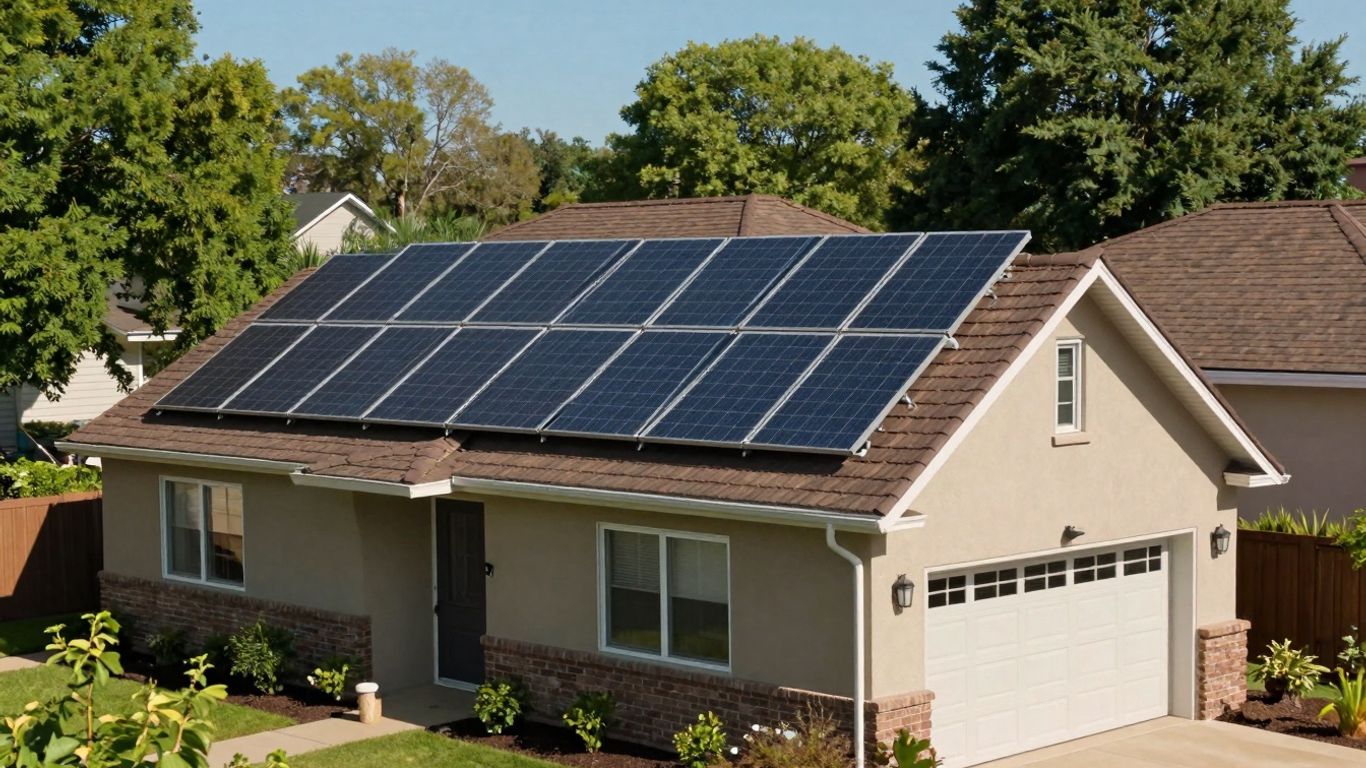
This Image Shows A Home With A Rooftop Solar Array In A Suburban Neighborhood. It Supports Content Explaining How The Maryland Solar Tax Credit Can Reduce The Cost Of Going Solar For Homeowners
Net Metering Policy Explained
So, you’ve got solar panels up and running, and they’re doing a fantastic job generating electricity. But what happens when your panels produce more power than your home can use, especially on those super sunny days? That’s where Maryland’s net metering policy comes in. It’s a pretty neat system that lets you send that excess energy back to the local power grid. And the best part? The utility company will credit you for that electricity at the full retail rate. Think of it as selling your extra sunshine back to the grid. Over time, especially during months with lots of sun, this can really help offset the initial cost of your solar system. It’s a smart way to make sure every bit of energy your panels create is put to good use.
Energy Storage Tax Credits
Beyond just generating solar power, storing it is becoming increasingly important for a stable energy future. If you’re thinking about adding battery storage to your solar setup, Maryland offers a tax credit to help with that. For residential energy storage systems, you can claim a credit for up to 30% of the installation cost. However, there’s a cap on this credit, which is $5,000 for homes. This incentive is designed to encourage homeowners to invest in storage solutions, making their solar power more reliable, even when the sun isn’t shining.
Property Value Increase and Solar
Installing solar panels can be a good investment, not just for your monthly electricity bills, but also for your home’s overall value. Studies have shown that homes with solar systems often sell for more than comparable homes without them. Now, you might be thinking, ‘Will a higher home value mean higher property taxes?’ In Maryland, the state helps ease that concern. The increase in your property’s value that comes specifically from the solar installation is exempt from property taxes. This means you get to enjoy the benefit of a potentially higher home value without the added tax burden. It’s a nice little perk that makes going solar even more appealing.
It’s worth noting that while Maryland offers these great incentives, it’s always a good idea to check the specifics with your installer or the relevant state agencies. Incentive programs can change, and understanding the exact requirements and deadlines is key to maximizing your savings. Don’t leave money on the table because you missed a deadline or didn’t meet a small requirement!
Here’s a quick look at some of the benefits:
- Net Metering: Get credited at the full retail rate for excess energy sent back to the grid.
- Energy Storage Tax Credit: A credit of up to 30% (capped at $5,000) for residential battery storage systems.
- Property Tax Exemption: Your property taxes won’t increase due to the added value from your solar panel system.
- Sales Tax Exemption: You don’t pay state sales tax on the purchase of your solar system.
Wrapping Up Your Maryland Solar Journey
So, going solar in Maryland definitely has its perks. You’ve got a bunch of incentives, like tax credits and rebates, that can really help bring down the initial cost. It’s a smart move for your wallet and the environment. Just remember, some of the best deals, especially that federal tax credit, have deadlines. So, if you’re thinking about making the switch, now’s the time to really look into it and get the ball rolling. Don’t miss out on saving some money while helping the planet.
Frequently Asked Questions
What is the main federal tax credit for solar panels, and when does it end?
The main federal tax credit is called the Residential Clean Energy Tax Credit. It lets you subtract 30% of the cost of your solar panel system from your federal taxes. However, this credit is only for systems put into service before January 1, 2026. So, if you want to get this big discount, you need to have your system installed this year!
Are there state-specific rebates or grants for solar in Maryland?
Yes, Maryland offers a few ways to save! There was a $1,000 rebate program, but it has ended. Now, there’s the Maryland Solar Access Program, which provides grants of up to $7,500 for homes with lower incomes to help make solar more affordable. It’s first-come, first-served, so it’s good to check if you qualify.
Can I sell the extra solar energy my panels produce?
Absolutely! Maryland has a great program called Net Metering. If your solar panels make more electricity than your home uses, the extra power goes back to the electric grid. Your utility company will then give you credit for that energy, which can significantly lower your electricity bill. You can even carry over credits or cash them out once a year.
Do I have to pay sales tax or property tax on my solar system?
Good news! Maryland exempts solar energy systems from sales tax, so you save about 6% right away. Also, in some counties, the increase in your home’s value from adding solar panels is not taxed, meaning your property taxes won’t go up just because you went solar.
What are Solar Renewable Energy Certificates (SRECs) and how do they work?
SRECs are like credits you earn for every megawatt-hour of clean energy your solar panels produce. You can sell these credits to energy companies. It’s a way for the state to encourage more renewable energy. While the price can change, a typical 5 kW system could earn an extra few hundred dollars a year from SRECs.
What’s the difference between buying solar panels and leasing them when it comes to tax credits?
If you want to claim the federal solar tax credit, you generally need to buy your solar panel system outright with cash or a loan. If you choose to lease your panels, you usually won’t be eligible for these tax credits because the leasing company owns the system.
Ready to Start Saving on Your Energy Bills?
Get a free, no-obligation quote from trusted local providers in under 2 minutes.
No obligation • Free estimates • Takes under 2 minutes
Recent Comments
Recent Posts
- Essential Factors to Consider Before Hiring an Energy Broker: Power to Choose is Choose My Power
- How to Choose a Power Company and a Broker: Power to Choos is Choose My Power
- How Does Choosing the Right Energy Broker Can Help You Save Money
- Commercial Solar Financing: Best Options for Businesses (Loans, PPAs, Leases)
- Solar Financing Near Me: How to Find Local Lenders & the Best Deals