
Justin
Illinois Solar Tax Credit: Incentives, Eligibility & How to Claim
Thinking about putting solar panels on your Illinois home? That’s great! It’s a big step towards saving money and helping the environment. But let’s be real, the initial cost can seem pretty high. The good news is, there are ways to make it more affordable. This article is all about the Illinois solar tax credit and other incentives that can really help bring down the price. We’ll break down what’s available, who qualifies, and how you can actually get these savings. It’s not as complicated as it sounds, and it’s definitely worth looking into if you’re considering going solar.
Key Takeaways
- There isn’t a specific ‘Illinois solar tax credit,’ but the federal government offers a significant tax credit that applies to Illinois homeowners. This credit covers 30% of your solar installation costs and is claimed using IRS Form 5695.
- The federal solar tax credit is set to expire for systems installed after December 31, 2025, making it important to act quickly if you want to take advantage of this major incentive.
- Beyond the federal credit, Illinois has programs like ‘Illinois Shines’ and ‘Solar For All’ that offer additional financial benefits, such as upfront payments or reduced costs, especially for income-eligible residents.
- Homeowners in Illinois can also benefit from property tax exemptions, meaning the added value of your solar system won’t increase your property taxes, and net metering policies that provide credits for excess energy sent back to the grid.
- To claim the federal tax credit, you must own your solar system (not lease it) and file the correct form with your federal tax return. Keeping detailed records of your installation costs is also important.
Understanding the Illinois Solar Tax Credit Landscape
When you’re thinking about putting solar panels on your Illinois home, there’s a few different ways the state and federal government help you out with the cost. It’s not just one single ‘Illinois Solar Tax Credit,’ but rather a mix of programs and credits that can really add up. Let’s break down the main ones you’ll likely run into.
The Federal Residential Clean Energy Credit
This is probably the biggest one. The federal government offers a tax credit that covers a good chunk of what you spend on a solar energy system for your home. Right now, it’s 30% of the total installation cost. This credit applies to things like the panels themselves, the inverters, wiring, and even battery storage if you add that. It’s a one-time credit, meaning you claim it in the tax year after your system is installed. If the credit is more than what you owe in taxes that year, you can usually roll the leftover amount over to future tax years. To claim it, you’ll fill out IRS Form 5695 when you file your federal taxes.
Here’s a rough idea of how the federal credit might look based on system size:
| System Size | Estimated Cost | Estimated Federal Tax Credit (30%) |
|---|---|---|
| 5 kW | $15,000 | $4,500 |
| 7 kW (IL Average) | $21,000 | $6,750 |
| 10 kW | $28,500 | $8,550 |
| 15 kW | $40,500 | $12,150 |
Keep in mind these are just estimates, and actual costs can vary. Also, this credit is for systems you own, not lease. You’ll need to have a tax liability to benefit from it, meaning you owe taxes to begin with.
Illinois Shines Program Overview
Illinois Shines, also known as the Adjustable Block Program, is a state-run incentive program designed to make solar more affordable. Instead of a direct tax credit, this program works by providing payments to approved solar installers, who then pass those savings on to you, the homeowner, at the time of installation. It’s essentially a way to reduce the upfront cost of your solar system.
The program aims to encourage solar adoption across the state by offering incentives that are adjusted based on the size of the solar installation and the energy it’s expected to produce. This helps ensure that the incentives are distributed fairly and effectively.
Approved installers are paid based on the expected energy output of the system they install. The incentive amounts can change, so it’s important to work with an installer who is up-to-date on the current rates. This program is a significant factor in making solar a more accessible option for many Illinois residents.
Illinois Solar For All Program Details
This program is specifically aimed at making solar energy accessible to low-income households and communities that have historically been left out of the clean energy transition. If your household income is at or below 80% of the Area Median Income (AMI), you might qualify for significant savings through Solar For All.
This program often provides the largest savings, potentially covering a substantial portion of the solar installation costs. It’s designed to ensure that the benefits of solar energy, like lower electricity bills and cleaner air, are available to everyone in Illinois, not just those who can afford the higher upfront investment. The specifics of how the savings are applied can vary, but it generally works to drastically reduce the out-of-pocket expense for eligible homeowners. It’s definitely worth looking into if you think you might qualify based on your income.
Eligibility Requirements for Solar Incentives
So, you’re thinking about going solar in Illinois and want to know who gets to take advantage of all those sweet tax credits and programs? It’s not a one-size-fits-all situation, unfortunately. There are a few key things you’ll need to check off the list.
Homeownership and Residency Criteria
First off, you generally need to own your home. Renters might be able to get in on some community solar deals, but if you’re looking at installing panels on your own roof, owning the place is usually a must. And it has to be your primary residence – sorry, vacation homes don’t count for most of these incentives. You’ll need to be living in Illinois, too, obviously.
System Ownership and Financing Options
Who owns the solar system matters. If you’re buying the system outright, whether with cash or a loan, you’re typically eligible for the federal tax credit and state incentives. If you’re going the lease or Power Purchase Agreement (PPA) route, the company that owns the system usually claims the tax credits. However, some programs, like Illinois Solar For All, are set up so that even with a lease or PPA, you can still see savings, often through guaranteed bill reductions.
Income Qualifications for Specific Programs
This is where things get a bit more specific. The big federal tax credit doesn’t have income limits, which is great news for most homeowners. But, programs like Illinois Solar For All are specifically designed for lower-income households. To qualify for these, your household income usually needs to be at or below 80% of the Area Median Income (AMI). They’ll likely ask for proof of income, like tax returns or pay stubs, to verify you meet the requirements.
It’s always a good idea to double-check the specific details for each program you’re interested in. Requirements can change, and sometimes there are nuances that could make you eligible or ineligible. Talking directly to the program administrators or a reputable solar installer is the best way to get the most accurate information for your situation.
Maximizing Your Illinois Solar Tax Credit Savings
So, you’re thinking about going solar in Illinois? That’s awesome! It’s a big step, but the good news is there are ways to make it way more affordable. We’re talking about saving a good chunk of change, not just on your electric bills, but upfront too. Let’s break down how to get the most bang for your buck.
Calculating the Value of the Federal Tax Credit
First off, the big one: the Federal Residential Clean Energy Credit. This is a pretty sweet deal. It lets you deduct 30% of the total cost of your solar system right off your federal taxes. Think of it like getting a discount on your entire solar setup, including the panels, inverters, and even the installation labor. This credit is a game-changer, but remember, it’s only for systems installed by December 31, 2025. So, if you’re on the fence, now’s the time to jump.
To claim it, you’ll fill out IRS Form 5695 when you file your taxes. It’s important to know that you need to own your system outright or have a solar loan to qualify; leases don’t count. Also, you need to have enough tax liability to use the credit, but the good news is any leftover credit can usually be rolled over to future years. It’s a solid way to bring down that initial investment.
Understanding SREC Payments and Value
Beyond the federal credit, Illinois has its own programs, like Illinois Shines. This program is all about Solar Renewable Energy Credits, or SRECs. Basically, for every megawatt-hour of electricity your solar panels produce, you earn an SREC. The Illinois Shines program pays you upfront for the SRECs your system is expected to generate over 15 years. The amount you get depends on your utility company and your system’s size. Since the value of these credits can change and there’s a limited amount available each year, getting in sooner rather than later means a potentially higher payment. It’s another layer of savings that makes solar even more attractive.
Leveraging Utility Rebates and Other Incentives
Don’t stop at the federal and state programs! Your local utility company might have its own incentives. For example, Ameren and ComEd sometimes offer rebates, especially if your system includes a smart inverter or battery storage. These can add up to significant savings. It’s worth checking with your specific utility provider to see what’s available. Plus, Illinois offers a property tax exemption for solar systems, meaning the increased value of your home from the solar installation won’t be taxed. It’s all about stacking these different incentives to make your solar investment as financially rewarding as possible. You might even qualify for extra support if your project is located in specific areas, like low-income communities.
When you’re looking at the total cost of going solar, it’s easy to get overwhelmed. But by breaking down each incentive – the federal tax credit, SREC payments, utility rebates, and property tax breaks – you can see a clearer picture of your actual out-of-pocket expenses. It’s about smart planning to maximize your savings over the life of your system.
How to Claim Your Illinois Solar Tax Credit
So, you’ve gone solar in Illinois – that’s fantastic! Now comes the part where you actually get to claim that sweet federal tax credit. It’s not super complicated, but you do need to pay attention to the details. Think of it like following a recipe; miss a step, and things might not turn out quite right.
Completing IRS Form 5695
The main document you’ll need is IRS Form 5695, Residential Energy Credits. You can usually find this on the IRS website. This form is where you’ll report the costs associated with your solar installation. Make sure you have all your paperwork from the solar company before you start filling it out. This includes invoices, proof of payment, and details about the equipment installed.
Here’s a quick rundown of what you’ll typically report:
- Cost of the solar panels and related equipment: This includes things like the panels themselves, inverters, mounting hardware, and wiring.
- Installation labor costs: The cost of the professionals who put it all together.
- Any associated sales tax: Don’t forget this part!
It’s important to note that this credit is for the energy-generating equipment itself. It doesn’t cover things like structural improvements to your roof that aren’t directly part of the solar setup.
Submitting Your Tax Return
Once Form 5695 is filled out, you’ll attach it to your annual federal income tax return. This is how you tell the IRS you’re claiming the credit. The credit reduces your overall tax liability, meaning you owe less in taxes. If the credit is more than what you owe, you can carry over the unused portion to future tax years. This is a big plus because it means you won’t necessarily lose out on any of the credit if your tax bill isn’t high enough in the year you install the system.
Remember, the federal tax credit is a one-time thing for your solar installation. While you can carry over unused amounts, the initial claim happens in the tax year following your system’s installation. So, if your panels were installed in 2024, you’ll claim the credit when you file your 2024 taxes in early 2025.
Record Keeping for Solar Installations
This is probably the most important part, and honestly, it’s not that hard if you stay organized. You need to keep good records of everything related to your solar purchase and installation. This is your proof if the IRS ever has questions. What kind of records, you ask?
- Invoices and receipts: Keep every single bill and receipt from your solar installer. These should clearly show the costs of the system and installation.
- Contracts: Your original contract with the solar company is also important.
- Proof of payment: Bank statements or credit card statements showing you paid for the system.
- IRS Form 5695: Keep a copy of the form you submitted, along with your tax return for that year.
Basically, if it has anything to do with your solar project and money, hold onto it. It’s better to have too many records than not enough. This documentation is key to successfully claiming the credit and having it stand up to any scrutiny.
Important Deadlines and Program Changes
When you’re looking into solar tax credits and incentives in Illinois, it’s super important to keep an eye on the clock and any program updates. Things can change, and missing a deadline or a program shift could mean leaving money on the table. It’s not like a one-and-done deal; these programs have timelines and sometimes get tweaked.
The Federal Tax Credit Expiration Date
The big one for most homeowners is the Federal Residential Clean Energy Credit. Right now, it lets you deduct 30% of your solar system’s cost from your federal taxes. However, this credit is scheduled to decrease to 26% starting in 2026, and then to 22% in 2027. If you’re thinking about going solar, getting it installed by the end of 2025 is the best way to get the full 30% benefit. After that, the savings shrink. Remember, you need to buy your system outright or finance it with a loan to qualify; leasing doesn’t count for this federal credit. You can carry over unused credit amounts to future tax years, but it’s wise to check with a tax professional about how long that applies, especially as tax forms can change.
Impact of Program Updates on Savings
Illinois’s own programs, like Illinois Shines (also known as the Adjustable Block Program) and Illinois Solar For All, have their own schedules and rate structures. For Illinois Shines, the rates for Solar Renewable Energy Credits (SRECs) are set for specific blocks of time and tend to decrease slightly each year. This means the sooner you get your system installed and registered, the better the rate you’ll likely secure for the 15-year payment period. The Illinois Solar For All program also has funding cycles and specific rates that can be adjusted. It’s a good idea to check the Illinois Power Agency’s website or contact program administrators regularly for the latest information on rates and availability.
Acting Quickly to Secure Incentives
Because program funding can be limited each year and rates often decline over time, acting promptly is usually the best strategy. For instance, some blocks of funding for Illinois Shines can fill up quickly. If you’re interested in the Illinois Solar For All program, especially for community solar subscriptions or distributed generation projects, there might be waitlists for future funding cycles. Getting your application in or working with an approved vendor sooner rather than later can help ensure you don’t miss out on current incentives before they change or run out. It’s a bit like trying to get concert tickets – the popular ones go fast!
It’s always a good practice to get quotes from multiple installers and understand their timelines for installation and application submission. This way, you can align your project with the most beneficial program deadlines and avoid any last-minute rushes that might lead to mistakes or missed opportunities.
Additional Solar Benefits in Illinois
Beyond the tax credits and direct incentives, Illinois offers a few other perks that make going solar even more appealing. These can add up to significant long-term savings and make your solar investment even sweeter.
Property Tax Exemptions for Solar Systems
When you install solar panels, your home’s value generally goes up. Normally, this increase in value would also mean a higher property tax bill. However, Illinois has a special rule for solar installations. You won’t have to pay extra property tax on the added value your solar system brings to your home. To take advantage of this, you’ll need to file a specific form with your local county assessor. It’s a straightforward way to keep more money in your pocket over the years.
Net Metering Policies in Illinois
Net metering is a billing arrangement that helps you get credit for the extra electricity your solar panels produce. When your system generates more power than your home is using, that excess energy is sent back to the grid. Your utility company then gives you credits for this power, which can be used to offset your electricity bill when your panels aren’t producing enough, like at night or on cloudy days. It’s a great way to maximize the value of the solar energy you generate. Keep in mind that as of January 1, 2025, Illinois has moved to a supply-only net metering model for new installations, which is less beneficial than the previous system. However, if your system was interconnected before that date, you’re grandfathered in for the lifetime of your system. Understanding these net metering policies in Illinois is key to maximizing your savings.
Smart Inverter and Battery Storage Rebates
If you’re looking to add a bit more tech to your solar setup, Illinois offers additional incentives. Customers of Ameren or ComEd can get rebates for installing solar panel systems or battery storage systems that come with smart inverter technology. These rebates are typically a set amount per kilowatt (kW) of solar capacity or per kilowatt-hour (kWh) of energy storage. For example, you might get $300 per kW for a solar inverter and $300 per kWh for battery storage. These systems allow utilities to manage energy flow more effectively, and you get rewarded for it. It’s a nice bonus if you’re considering battery backup or a more advanced system.
While the upfront cost of solar can seem like a lot, these additional benefits, combined with tax credits and programs like Illinois Shines, really help bring the overall cost down. It makes solar a much more accessible and financially sound choice for many homeowners across the state. The state’s commitment to clean energy is evident in these varied support systems.
Here’s a quick look at potential savings from these additional benefits:
| Benefit | Estimated Savings (Varies) |
|---|---|
| Property Tax Exemption | Avoids tax increase on added home value |
| Net Metering | Credits for excess energy sent to the grid |
| Smart Inverter/Battery Rebate | Up to $300/kW (solar) or $300/kWh (battery storage) per system |
Wrapping It Up
So, going solar in Illinois is definitely a big step, but it looks like there are some solid ways to make it easier on your wallet. The federal tax credit is a huge help, but remember, it’s set to change at the end of 2025, so acting sooner rather than later could save you a good chunk of change. Plus, programs like Illinois Shines and others can really bring down the initial cost. It’s worth looking into all your options to see what fits best for your home and your budget. Making the switch to solar is a big decision, but with these incentives, it’s more achievable than you might think.
Frequently Asked Questions
What is the main solar tax credit available in Illinois?
Illinois doesn’t have its own specific solar tax credit. However, you can take advantage of the Federal Residential Clean Energy Credit. This credit lets you deduct 30% of the cost of your solar panel system from your federal taxes. It’s a one-time credit, but if you don’t use it all in one year, you can roll the remaining amount over to future tax years. Just remember, this credit is set to expire at the end of 2025, so acting fast is key!
Who can get the federal solar tax credit?
To get the federal solar tax credit, you generally need to own your home and the solar panel system. You also need to have a federal tax liability, meaning you owe federal income tax. The system needs to be installed on your main home or a second home. Leasing a solar system usually means you can’t claim this credit.
Are there other ways to save money on solar in Illinois besides the federal tax credit?
Yes, absolutely! Illinois offers other programs like ‘Illinois Shines,’ which provides payments based on the solar energy your system is expected to produce. There’s also the ‘Illinois Solar For All’ program, which offers significant savings for lower-income households. Plus, some utility companies, like Ameren and ComEd, offer rebates for installing solar panels and battery storage systems, especially if they have smart inverters.
How do I claim the federal solar tax credit?
Claiming the federal solar tax credit is done when you file your yearly federal income tax return. You’ll need to fill out a specific form called IRS Form 5695. Make sure you keep all your receipts and documents from your solar installation, as you’ll need them to complete the form accurately. It’s a good idea to talk to a tax professional to ensure you do it correctly.
What happens to my property taxes when I install solar panels?
Good news! Illinois offers a property tax exemption for solar energy systems. This means that the increase in your home’s value due to the solar panels won’t be counted when your property taxes are calculated. You’ll need to file a specific form with your local county assessor to make sure you get this benefit.
What is Net Metering in Illinois?
Net metering is a program where your utility company gives you credit for the extra electricity your solar panels send back to the power grid. If you generate more power than you use during sunny times, that excess energy is sent to the grid, and you get a credit on your electricity bill for it. For new installations after January 1, 2025, Illinois has a ‘supply-only’ net metering model, which is a bit different and less valuable than the previous system. However, if your system was connected before that date, you’re likely ‘grandfathered in’ to the older, more beneficial policy.
Maryland Solar Tax Credit: Incentives, Eligibility & How to Claim

Thinking about putting solar panels on your Maryland home? That’s smart. Maryland has some pretty good deals to help you out, especially when it comes to the Maryland solar tax credit and other incentives. It can really bring down the cost of going solar. But, you gotta know, some of these deals, like the big federal tax credit, have deadlines. So, it’s a good idea to get the lowdown on what’s available and when you need to act.
Key Takeaways
- The federal Residential Clean Energy Tax Credit can cut your solar system cost by 30%, but it’s only for systems installed by December 31, 2025.
- Maryland offers a rebate program, with applications needing to be in before November 30, 2024, and grants for income-eligible homes through the Solar Access Program.
- You can sell Solar Renewable Energy Certificates (SRECs) generated by your system for extra cash, typically earning around $330 annually for a standard system.
- Maryland provides a sales tax exemption on solar systems and some counties offer property tax exemptions for the added value from solar.
- It’s important to understand if you purchase your system or lease it, as this affects your eligibility for certain tax credits like the federal ITC.
Understanding The Maryland Solar Tax Credit Landscape
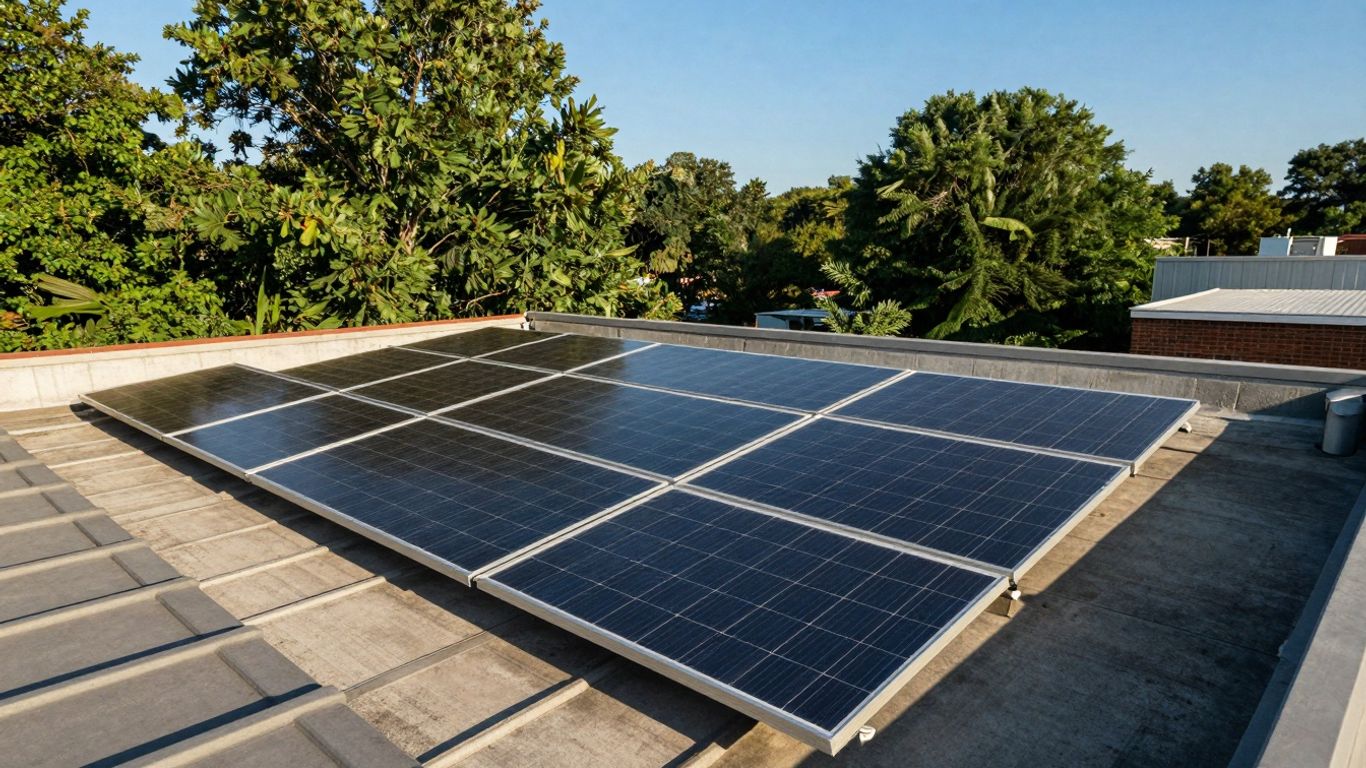
A Rooftop Solar Panel Array Installed On A Flat Roof In A Leafy Neighborhood.
So, you’re thinking about going solar in Maryland? That’s awesome! It’s a big step, and thankfully, the state and federal governments have put some pretty sweet incentives in place to help you out. It can feel a little confusing at first with all the different programs and credits, but let’s break it down.
Federal Residential Clean Energy Tax Credit
First off, there’s the big one: the Federal Residential Clean Energy Tax Credit. This is often called the Investment Tax Credit, or ITC. It lets you deduct a good chunk of your solar system’s cost right off your federal taxes. For systems installed before the end of 2025, that’s a 30% credit. It applies to the whole system – panels, installation, everything. Just remember, you have to actually buy your system to get this credit; leasing doesn’t count. Also, you need to have enough tax liability to use the credit, though you can usually roll over unused amounts. It’s a really good deal, but the clock is ticking on this one.
The federal tax credit is a significant financial incentive, but it’s important to be aware of its expiration. Acting sooner rather than later can mean locking in substantial savings on your solar investment.
Maryland’s Renewable Portfolio Standard
Maryland has this thing called a Renewable Portfolio Standard (RPS). Basically, it’s a goal for the state to get a certain percentage of its electricity from clean, renewable sources. Right now, they’re aiming for half by 2030. To help make that happen, they’ve created a system that encourages solar energy production.
The Role of Solar Renewable Energy Certificates (SRECs)
This is where Solar Renewable Energy Certificates, or SRECs, come in. Think of them as credits you earn for generating clean energy. For every megawatt-hour of electricity your solar panels produce, you get one SREC. You can then sell these SRECs on a special market or to energy companies. Prices can vary, but they typically bring in a decent amount of money over time, adding another layer of savings to your solar setup. It’s a smart way Maryland is pushing for more clean energy and helping homeowners like you benefit directly. You can find more details about commercial solar projects and grants on the Maryland Commercial and Canopy Solar Program page.
Here’s a quick look at how the federal credit has been structured:
| Year(s) | Residential Credit | Commercial Credit |
|---|---|---|
| Through 2022 | 26% | 26% |
| 2023 | 22% | 22% |
| 2024 | 0% | 10% |
| 2025 | 30% | 30% |
| After 2025 | N/A | N/A |
Note: The information above reflects the law as it stood previously. Current legislation has extended the 30% credit through 2025 for residential systems.
Key State-Specific Solar Incentives Available
Maryland really rolls out the red carpet for solar energy, offering several programs that make going solar more affordable. Beyond the federal tax credit, there are some fantastic state-level incentives designed to help you out.
Maryland Residential Clean Energy Rebate Program
This is a pretty straightforward program. If you install a solar system on your primary home, you can get a $1,000 rebate. There are a couple of conditions, though: the system needs to be at least 1 kilowatt (kW) in size, and the installation has to be done by someone certified by the North American Board of Certified Energy Practitioners (NABCEP). It’s important to get your application in before November 30, 2024, as this program has a deadline.
Maryland Solar Access Program Grants
This program is specifically for homeowners who meet certain income requirements. It offers grants to help make solar more accessible to a wider range of residents. It operates on a first-come, first-served basis, so if you think you might qualify, it’s a good idea to look into it sooner rather than later. The Maryland Solar Access Program can provide up to $7,500 in assistance.
Local County and Municipal Solar Programs
Don’t forget to check what your specific county or even your town might offer. Some local governments have their own incentives, like property tax credits for solar installations. These can add up and make a real difference in your overall savings. It’s worth asking your solar installer about any local programs you might be eligible for.
While state and federal incentives are great, local programs can sometimes be the cherry on top. They often target specific community needs or encourage adoption in particular areas, so they’re definitely worth investigating.
Maximizing Your Solar Investment Through Tax Exemptions
So, you’re thinking about going solar in Maryland? That’s awesome! Besides the obvious benefit of lower electricity bills, the state has some pretty sweet tax breaks that can make your solar setup even more affordable. It’s like getting a little thank you from the state for choosing clean energy.
Maryland Solar Property Tax Exemption
One of the cool things about solar panels is that they can actually boost your home’s value. Pretty neat, right? But sometimes, an increase in home value can mean a bump in your property taxes. Maryland gets this, and they’ve got your back. They won’t hike up your property taxes just because you added solar panels. This means you get to enjoy the added home value without the extra tax burden. It’s a win-win.
Exemption from State Sales Tax on Solar Systems
Buying a solar system is a big purchase, and nobody likes paying extra taxes on big purchases. Good news: Maryland exempts solar energy systems from the state sales tax. This means you save a good chunk of money right off the bat, usually around 6% of the system’s cost. So, that money you save on sales tax can go towards other things, or just make your overall investment feel even better.
Here’s a quick look at what you can expect:
- Sales Tax Exemption: You won’t pay state sales tax on your new solar system.
- Property Tax Exemption: In certain counties, the added value from your solar installation won’t increase your property taxes.
It’s always a good idea to double-check with your local county assessor’s office to confirm the specifics of the property tax exemption in your area. Rules can sometimes vary a bit from place to place.
These exemptions, combined with other incentives, really help make solar a smart financial move in Maryland.
Navigating The Claiming Process For Solar Credits
So, you’ve decided to go solar in Maryland – that’s fantastic! Now comes the part where you actually get those tax credits and incentives you’ve earned. It might seem a little daunting, but it’s really just a few steps. The most significant federal incentive is the Residential Clean Energy Tax Credit, often called the ITC. This credit lets you deduct a percentage of your solar system’s cost right off your federal taxes.
Eligibility Requirements for the Federal ITC
Before you start filling out forms, let’s make sure you qualify. The main thing to remember is that this credit is for homeowners who purchase their solar system. This means paying with cash or taking out a solar loan. If you’re leasing your system, you won’t be able to claim the federal credit because you don’t own the equipment.
Here are the key points:
- Ownership is Key: You must own the solar energy system. Leased systems don’t qualify.
- New Systems Only: The credit applies to new solar energy systems installed on your home.
- Primary Residence: The system needs to be installed at your main home in the United States.
- Tax Liability: You need to have a federal tax liability (meaning you owe taxes) to take advantage of the credit. If the credit is more than what you owe in taxes for that year, you can carry over the unused portion to future tax years. The IRS doesn’t set a limit on how long you can carry it over, but it’s always a good idea to check with a tax professional about the latest rules, especially as tax forms can change.
Steps to Claim the Federal Solar Tax Credit
Claiming the federal ITC is done when you file your annual federal income tax return. You’ll need a specific form for this.
- Get Your Documentation: Your solar installer should provide you with all the necessary paperwork detailing the cost of your system and its components. Keep this safe!
- Fill Out IRS Form 5695: This form is specifically for residential energy credits. You’ll report the cost of your solar system and calculate the credit amount. You can usually download this form from the IRS website.
- File Your Taxes: Submit the completed Form 5695 along with your federal tax return (like Form 1040). If you’re using tax software or a tax preparer, they will guide you through this process.
Remember, the federal ITC has an expiration date. To claim the full credit, your system generally needs to be installed and placed in service by December 31, 2025. After that, the credit percentage might decrease or the credit itself could expire, so timing is important.
It’s really about making sure you have the right paperwork from your installer and then correctly reporting it on your taxes. Don’t stress too much if you don’t use the full credit in one year; the IRS lets you roll it over. Just keep an eye on those deadlines!
Understanding System Purchase vs. Leasing
This is a big one when it comes to claiming incentives. When you purchase a solar system, whether outright with cash or through a loan, you own the equipment. This ownership is what allows you to claim tax credits like the federal ITC and potentially other state or local incentives. You’re essentially investing in an asset for your home.
On the other hand, when you lease a solar system, you’re paying a monthly fee to a company that owns and maintains the panels on your roof. Because you don’t own the system, you can’t claim the federal tax credit. The leasing company, as the system owner, is the one eligible for those incentives. While leasing can offer lower upfront costs and predictable monthly payments, it means giving up the direct financial benefits of ownership, like tax credits. It’s a trade-off to consider carefully based on your financial situation and goals.
Important Deadlines and Future Considerations
When you’re thinking about going solar in Maryland, keeping an eye on deadlines is pretty important. It’s not just about getting the best deal right now, but also about making sure you don’t miss out on any incentives that might change or expire. Plus, knowing what’s coming down the pipeline can help you plan your installation for maximum benefit.
Expiration of the Federal Solar Tax Credit
The federal solar tax credit, officially known as the Residential Clean Energy Tax Credit, has been a big deal for homeowners. It allows you to deduct a percentage of your solar system’s cost from your federal taxes. This credit is currently set to step down in the coming years, so acting sooner rather than later can mean a bigger tax savings. While there’s a possibility of extensions or changes, it’s wise to plan based on the current schedule.
Timing Your Installation for Maximum Benefit
Timing is everything, right? For Maryland homeowners, this means considering a few things:
- Federal Tax Credit Schedule: As mentioned, the federal credit percentage decreases over time. Check the current percentage and the schedule for future reductions to see how it impacts your potential savings.
- State Program Cycles: Programs like the Maryland Solar Access Program (MSAP) often operate on fiscal years with specific application windows. For example, the FY26 MSAP had application periods that have now closed or are closing soon, with new ones opening later. You’ll want to check the MEA website for the most up-to-date information on when applications open and close for the current and upcoming fiscal years.
- Contractor Availability: Popular solar installers can get booked up, especially during peak seasons. Applying early can help you secure a spot with your preferred company and potentially get your system installed within the same calendar or fiscal year for tax and incentive purposes.
Future State-Level Solar Initiatives
Maryland is committed to renewable energy, and that means new programs and updates are always a possibility. The Maryland Energy Administration (MEA) is continually working on initiatives to make solar more accessible. Keep an eye on:
- Updates to Existing Programs: Programs like MSAP are reviewed and updated annually. New funding amounts, eligibility criteria, or application processes might be introduced.
- New Incentive Programs: The state legislature may introduce new bills or programs aimed at further supporting solar adoption, energy storage, or other clean energy technologies.
- Policy Changes: Regulations regarding net metering, grid access, or solar permitting can evolve, potentially affecting the economics of solar installations.
Staying informed about these deadlines and future considerations is key to making the most of your solar investment. It’s a good idea to regularly check the Maryland Energy Administration’s website and consult with your solar installer about the latest program details and timelines. Planning ahead can save you money and ensure a smoother installation process.
Additional Solar Benefits in Maryland
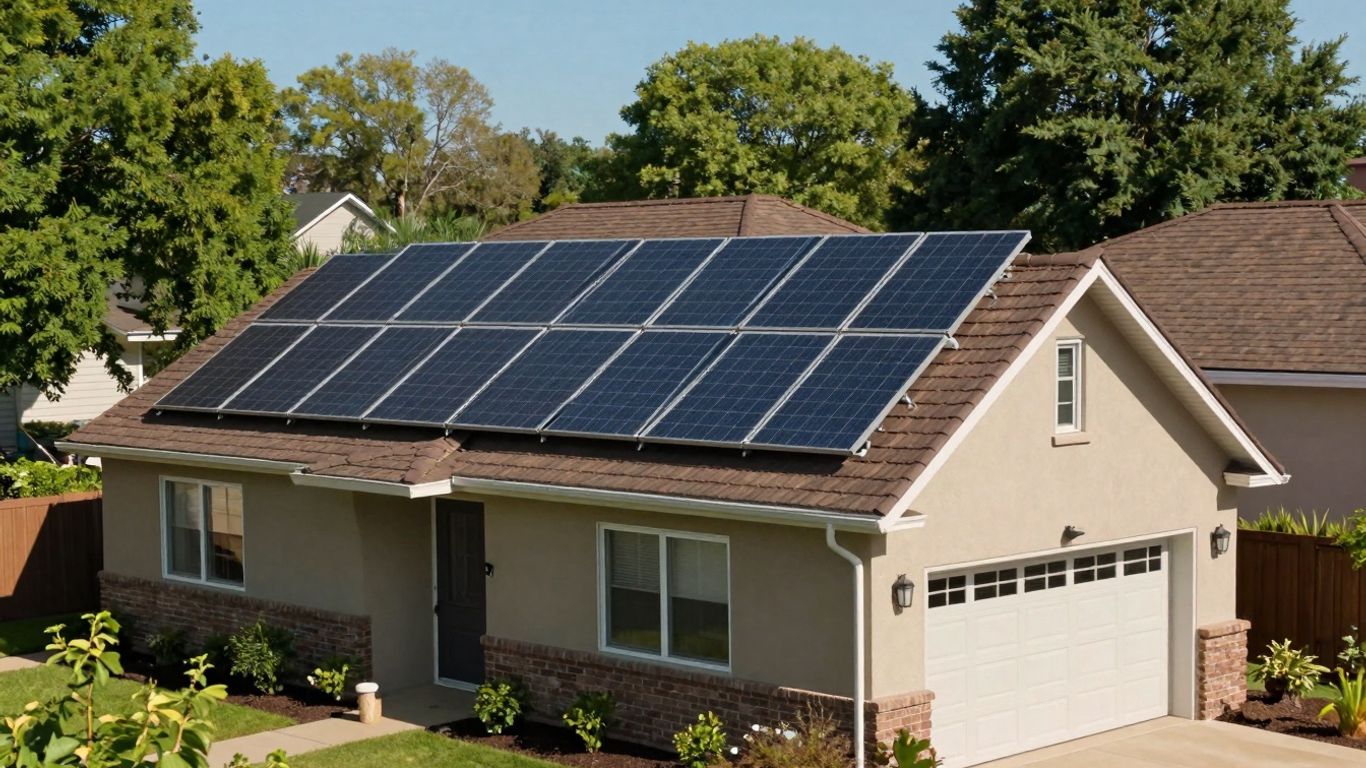
This Image Shows A Home With A Rooftop Solar Array In A Suburban Neighborhood. It Supports Content Explaining How The Maryland Solar Tax Credit Can Reduce The Cost Of Going Solar For Homeowners
Net Metering Policy Explained
So, you’ve got solar panels up and running, and they’re doing a fantastic job generating electricity. But what happens when your panels produce more power than your home can use, especially on those super sunny days? That’s where Maryland’s net metering policy comes in. It’s a pretty neat system that lets you send that excess energy back to the local power grid. And the best part? The utility company will credit you for that electricity at the full retail rate. Think of it as selling your extra sunshine back to the grid. Over time, especially during months with lots of sun, this can really help offset the initial cost of your solar system. It’s a smart way to make sure every bit of energy your panels create is put to good use.
Energy Storage Tax Credits
Beyond just generating solar power, storing it is becoming increasingly important for a stable energy future. If you’re thinking about adding battery storage to your solar setup, Maryland offers a tax credit to help with that. For residential energy storage systems, you can claim a credit for up to 30% of the installation cost. However, there’s a cap on this credit, which is $5,000 for homes. This incentive is designed to encourage homeowners to invest in storage solutions, making their solar power more reliable, even when the sun isn’t shining.
Property Value Increase and Solar
Installing solar panels can be a good investment, not just for your monthly electricity bills, but also for your home’s overall value. Studies have shown that homes with solar systems often sell for more than comparable homes without them. Now, you might be thinking, ‘Will a higher home value mean higher property taxes?’ In Maryland, the state helps ease that concern. The increase in your property’s value that comes specifically from the solar installation is exempt from property taxes. This means you get to enjoy the benefit of a potentially higher home value without the added tax burden. It’s a nice little perk that makes going solar even more appealing.
It’s worth noting that while Maryland offers these great incentives, it’s always a good idea to check the specifics with your installer or the relevant state agencies. Incentive programs can change, and understanding the exact requirements and deadlines is key to maximizing your savings. Don’t leave money on the table because you missed a deadline or didn’t meet a small requirement!
Here’s a quick look at some of the benefits:
- Net Metering: Get credited at the full retail rate for excess energy sent back to the grid.
- Energy Storage Tax Credit: A credit of up to 30% (capped at $5,000) for residential battery storage systems.
- Property Tax Exemption: Your property taxes won’t increase due to the added value from your solar panel system.
- Sales Tax Exemption: You don’t pay state sales tax on the purchase of your solar system.
Wrapping Up Your Maryland Solar Journey
So, going solar in Maryland definitely has its perks. You’ve got a bunch of incentives, like tax credits and rebates, that can really help bring down the initial cost. It’s a smart move for your wallet and the environment. Just remember, some of the best deals, especially that federal tax credit, have deadlines. So, if you’re thinking about making the switch, now’s the time to really look into it and get the ball rolling. Don’t miss out on saving some money while helping the planet.
Frequently Asked Questions
What is the main federal tax credit for solar panels, and when does it end?
The main federal tax credit is called the Residential Clean Energy Tax Credit. It lets you subtract 30% of the cost of your solar panel system from your federal taxes. However, this credit is only for systems put into service before January 1, 2026. So, if you want to get this big discount, you need to have your system installed this year!
Are there state-specific rebates or grants for solar in Maryland?
Yes, Maryland offers a few ways to save! There was a $1,000 rebate program, but it has ended. Now, there’s the Maryland Solar Access Program, which provides grants of up to $7,500 for homes with lower incomes to help make solar more affordable. It’s first-come, first-served, so it’s good to check if you qualify.
Can I sell the extra solar energy my panels produce?
Absolutely! Maryland has a great program called Net Metering. If your solar panels make more electricity than your home uses, the extra power goes back to the electric grid. Your utility company will then give you credit for that energy, which can significantly lower your electricity bill. You can even carry over credits or cash them out once a year.
Do I have to pay sales tax or property tax on my solar system?
Good news! Maryland exempts solar energy systems from sales tax, so you save about 6% right away. Also, in some counties, the increase in your home’s value from adding solar panels is not taxed, meaning your property taxes won’t go up just because you went solar.
What are Solar Renewable Energy Certificates (SRECs) and how do they work?
SRECs are like credits you earn for every megawatt-hour of clean energy your solar panels produce. You can sell these credits to energy companies. It’s a way for the state to encourage more renewable energy. While the price can change, a typical 5 kW system could earn an extra few hundred dollars a year from SRECs.
What’s the difference between buying solar panels and leasing them when it comes to tax credits?
If you want to claim the federal solar tax credit, you generally need to buy your solar panel system outright with cash or a loan. If you choose to lease your panels, you usually won’t be eligible for these tax credits because the leasing company owns the system.
Solar Panel Financing Options Explained: $0-Down, Loans, Leases & PPAs

Thinking about putting solar panels on your roof? It’s a great way to save on electricity bills, but the upfront cost can be a real head-scratcher. Luckily, there are several solar panel financing options to consider, even if you don’t have a lot of cash saved up. We’re going to break down the most common solar panel financing options, like zero-down deals, loans, leases, and power purchase agreements. It’s not as complicated as it sounds, and understanding these solar panel financing options can help you make the best decision for your home and your wallet.
Key Takeaways
- Zero-down solar panel financing options mean you can install solar without paying anything upfront, but you’ll still pay over time through loans, leases, or per-kilowatt-hour charges.
- Consider the various solar panel financing options available, as they can accommodate different financial situations and preferences.
- Solar loans let you own the system, qualify for tax credits, and potentially see the most savings long-term, but require good credit.
- Research your local solar panel financing options to ensure you find the best deals and terms.
- Solar leases allow you to use solar power for a fixed monthly fee without owning the system, which can be simpler but offers fewer financial benefits.
- Solar panel financing options can vary widely, so it’s crucial to compare multiple offers before making a decision.
- Power Purchase Agreements (PPAs) mean you pay for the actual electricity the panels produce, often at a set rate, with payments fluctuating based on sunlight and usage.
- Always compare total costs over 20 years, understand contract terms, and get multiple quotes from reputable installers to avoid misleading sales tactics and find the best solar panel financing options for you.
- Explore renewable energy credits and incentives as part of your solar panel financing options.
Understanding Zero-Down Solar Panel Financing Options
So, you’re thinking about solar panels but the big upfront cost is making you pause. You’ve probably heard the term “zero down solar” and wondered if it’s for real. Well, it can be, but it’s super important to know what you’re actually getting into.
What “Zero Down” Truly Means for Solar
Understanding the different solar panel financing options available is essential for making an informed decision regarding solar energy investments.
When a company says “zero down” for solar, it doesn’t mean the panels are free. It just means you don’t have to pay anything out of pocket to get them installed. You’ll still be paying for the system, but it’s spread out over time. Think of it like buying a car with no down payment – you still have to make monthly payments. The big difference here is that you’re paying for electricity generation or the system itself, not just a car. The promise of “zero down” simply shifts the payment from the start to later on.
In addition, familiarizing yourself with the various solar panel financing options can help you maximize savings and benefits.
Distinguishing Legitimate Offers from Scams
- Make sure to evaluate all solar panel financing options before committing to a specific plan.
It’s a jungle out there, and some folks try to pull a fast one. There’s no such thing as truly “free solar” from the government. If someone tells you that, run the other way. Legitimate zero-down options usually fall into a few categories:
The market for solar panel financing options is evolving, with new solutions emerging all the time, so stay informed.
- Solar Loans: You borrow money to buy the system and own it. You make monthly payments, and you can claim tax credits. This is often the best way to go long-term.
- Solar Leases: You pay to use a system installed on your roof, but you don’t own it. The company that owns it gets the tax benefits.
- Consider factors like interest rates and repayment terms when comparing solar panel financing options.
- Power Purchase Agreements (PPAs): Similar to a lease, you agree to buy the electricity the system produces at a set rate, but you don’t own the panels.
Be wary of anyone pushing hard or making unbelievable claims. Always get everything in writing and read it carefully. You can explore different payment plans that can maximize your savings.
Key Structures of No-Money-Down Solar
Familiarizing yourself with available solar panel financing options can empower you to make better financial decisions.
Most legitimate “no-money-down” solar setups fall into one of these main structures:
- By understanding your solar panel financing options, you can negotiate better deals and terms.
- Solar Loans with No Upfront Payment: This is where you get a loan to buy the system, but you don’t pay anything when it’s installed. You start making payments later, often after the system is up and running. You own the system and can take advantage of the federal solar tax credit. As of 2025, interest rates can range from 6% to 16% APR. For example, a 7kW system costing $25,200 might be financed this way. Some lenders might even offer deferred payment periods, so you don’t pay for a few months. It’s a good idea to look into options like TD’s Green Mortgage if you’re looking for incentives.
- Solar Leases: You’re essentially renting the solar panels. You pay a monthly fee to use the electricity they generate. You don’t own the system, so you don’t get the tax credits. The company that owns the panels gets those. It’s simpler upfront but might cost you more over the life of the system.
- Power Purchase Agreements (PPAs): This is like a lease, but instead of paying a flat monthly fee, you pay for the actual amount of electricity the panels produce. The rate is usually fixed or has a small annual increase. Again, you don’t own the system and don’t get the tax benefits.
- Research local solar panel financing options to find the most competitive rates available.
The biggest thing to remember is that “no-cost solar” is usually a misleading term. While you might not pay anything upfront, you will pay over time through loans, leases, or PPAs. Understanding the total cost and who owns the system is key to making the right choice for your home and your wallet.
Ultimately, understanding solar panel financing options is essential for maximizing your investment in solar energy.
It’s important to know that the federal solar tax credit is a big deal, and it’s set to change in the coming years. If you’re looking to install solar, especially with a zero-down option, understanding these financing structures is your first step to saving money on your electricity bills.
Solar panel financing options can also include innovative solutions like community solar programs.
Exploring Solar Loans: Ownership and Savings
Solar loans offer a way to own your solar panel system outright, even if you don’t have a pile of cash ready to go. Think of it like getting a mortgage for your solar setup. You borrow money to buy the system, and then you pay back that loan over time, usually with interest. The big upside here is that you actually own the panels. This means you’re eligible for all the tax credits and incentives out there, which can really cut down on the overall cost. Plus, once the loan is paid off, the electricity those panels generate is basically free for you.
Many homeowners are exploring various solar panel financing options to make clean energy more accessible.
How Solar Loans Function
When you get a solar loan, a lender pays for the solar system upfront. You then make monthly payments to the lender to pay back that amount, plus interest. These loans typically have terms ranging from 10 to 25 years. The interest rate you get depends a lot on your credit score and the current market conditions. It’s important to look at the total cost over the life of the loan, not just the monthly payment. Some loans might have “dealer fees” baked in, which can increase the total amount you borrow without being super clear about it.
By understanding the nuances of solar panel financing options, you can ensure you’re well-prepared for the future.
Eligibility and Credit Requirements
Getting approved for a solar loan usually means you’ll need a decent credit score. Most lenders look for scores of 640 or higher. They’ll also check your debt-to-income ratio and your overall credit history. If your credit isn’t perfect, you might still qualify, but the interest rates could be higher. Some companies might offer loans with lower credit score requirements, but it’s worth investigating if those come with less favorable terms.
Loan Terms, Interest Rates, and Long-Term Value
Here’s a quick look at what you might expect with a solar loan:
- Ownership: You own the system from day one.
- Tax Credits: You can claim the federal solar tax credit (currently 30%) and any state or local incentives.
- Home Value: Owned solar systems can increase your home’s market value.
- Savings: After the loan is paid off, your electricity costs drop significantly.
- Predictable Payments: Your monthly loan payment stays the same (unless you refinance).
Let’s say you get a $20,000 solar system financed with a 25-year loan at 8.99% APR. Your monthly payment might be around $198. Over 25 years, you’d pay back about $59,400. But, if you claim the 30% federal tax credit ($6,000 in this case), your net cost drops to around $53,400. This is a significant investment, but owning the system means you reap all the long-term benefits.
When considering a solar loan, always ask for the “cash price” of the system. This helps you understand if there are hidden markups or “dealer fees” included in the loan amount. Transparency is key to making sure you’re getting a fair deal and maximizing your long-term savings.
Navigating Solar Leases: Renting Your System
So, you’re thinking about solar, but the idea of buying a whole system upfront feels like a lot? That’s where solar leases come in. Think of it like renting an apartment instead of buying a house. A solar company installs the panels on your roof, and you pay them a monthly fee to use the electricity they generate. The company owns the system, handles the maintenance, and you get to enjoy lower electricity bills without the big upfront cost.
The Mechanics of a Solar Lease Agreement
When you sign a lease, you’re essentially agreeing to rent the solar equipment for a set period, usually 20 to 25 years. You don’t own the panels, and you don’t get to claim the federal tax credits – the leasing company does. Your payment is typically a fixed monthly amount, though some leases include an “escalator” clause. This means your monthly payment might go up a small percentage each year, usually around 2-3%. It’s important to know this upfront because those small increases add up over two decades.
- Ownership: The solar company owns the system.
- Payment: You pay a fixed monthly fee, potentially with annual increases.
- Maintenance: Usually covered by the leasing company.
- Tax Credits: Claimed by the leasing company, not you.
- Term Length: Typically 20-25 years.
- Evaluate multiple solar panel financing options to determine your best course of action.
Benefits and Drawbacks of Leasing
Your choice of solar panel financing options can have a significant impact on your overall savings.
Leasing is popular because it makes solar accessible without a large initial investment. You can start saving on your electricity bills right away. Plus, you don’t have to worry about repairs or upkeep; that’s the leasing company’s job. It’s a pretty hands-off approach.
However, there are downsides. Since you don’t own the system, you miss out on the significant savings from federal tax credits. Over the life of the lease, especially with those annual increases, you might end up paying more than if you had bought the system. Also, selling your home can get complicated. A new buyer might have to agree to take over your lease, which can sometimes be a hurdle.
The biggest advantage of a lease is the low barrier to entry, making solar a possibility for more homeowners.
When a Solar Lease Might Be Suitable
A lease could be a good fit if:
-
- Explore all available solar panel financing options to ensure you find the best fit for your budget.
- You want to go solar but don’t have the cash for a down payment or a loan.
- You’re not eligible for or don’t want to deal with the complexities of tax credits.
- You prefer predictable monthly payments and don’t want the responsibility of system maintenance.
Educating yourself about solar panel financing options can lead to better financial decisions.
- You don’t plan on moving within the next 20-25 years, or you’re comfortable with the process of transferring the lease to a new homeowner.
It’s really important to read the lease agreement carefully. Understand the total cost over the entire term, including any annual payment increases. Compare this to how much you’d pay for electricity from your utility, and also consider what you might pay with a solar loan or outright purchase. Sometimes, what looks like a good deal upfront can end up costing more in the long run.
Understanding the solar panel financing options available can simplify your decision-making process.
Power Purchase Agreements (PPAs): Paying for Production
Alright, let’s talk about Power Purchase Agreements, or PPAs for short. Think of this as a way to get solar power without actually owning the equipment. A solar company installs and owns the panels on your roof, and you agree to buy the electricity they produce at a set price. It’s like having your own mini power plant, but someone else handles all the heavy lifting and upfront costs.
Understanding PPA Pricing Structures
- Make sure you are aware of all solar panel financing options before signing any contracts.
The main draw of a PPA is that you’re paying for the actual electricity generated, usually at a rate that’s lower than what your local utility company charges. This means your monthly bill should go down. However, it’s not always a simple fixed price. Some PPAs have what’s called an “annual escalator.” This is basically a small, pre-planned increase in the price per kilowatt-hour (kWh) each year. The idea is that this rate will still be lower than the utility’s projected rate increases over time, but it’s something to watch out for.
- Pay-as-you-go: You’re billed based on the actual amount of electricity your solar system produces.
- Predetermined Rate: The price per kWh is set in the contract, often lower than utility rates.
- Be sure to compare the solar panel financing options available in your area before making a decision.
- Annual Escalators: Some contracts include small, yearly price increases to account for inflation and future utility rate hikes.
Variable Payments and Geographic Limitations
Because you’re paying for production, your monthly bill can fluctuate. If your system produces more electricity in a sunny month, you might pay a bit more (though still likely less than your utility bill would have been). Conversely, a cloudy month means less production and a lower bill. It’s a direct link between sunshine and your payment. Also, PPAs aren’t available everywhere. While they’re becoming more common, you’ll need to check if they’re offered in your specific state and even your local area. Utility regulations and local policies play a big role here.
Reviewing your solar panel financing options regularly can help you stay informed about potential savings.
Contractual Terms and Considerations
PPAs usually come with long-term contracts, often 20 to 25 years. This is how the solar company recoups its investment in the system. During this time, the company is responsible for maintaining the system. If something breaks, they fix it. You also won’t get to claim any federal tax credits or incentives, because you don’t own the system – the company does. It’s a trade-off: no upfront cost and no maintenance headaches, but you also don’t build equity in the system or get those immediate tax benefits.
When considering a PPA, it’s really important to read the fine print. Understand the escalator clause, the contract length, and what happens if you decide to sell your home. Some agreements allow you to transfer the PPA to the new owner, while others might require you to buy out the system. Make sure you’re comfortable with the long-term commitment.
Here’s a quick look at what you might expect:
Consider all aspects of solar panel financing options to ensure you make the most informed choice.
| Feature | PPA Details |
|---|---|
| Ownership | Solar company owns the system |
| Upfront Cost | Typically $0 |
| Payment Structure | Pay per kWh produced |
| Maintenance | Covered by the solar company |
| Savings | Usually lower than utility rates |
| Incentives | Not available to homeowner |
| Contract Length | Typically 20-25 years |
| Price Changes | May include annual escalators |
Comparing Solar Panel Financing Options
- Many homeowners are benefiting from exploring different solar panel financing options.
So, you’ve looked into the different ways to get solar panels on your roof without shelling out a ton of cash upfront. Now comes the big question: which one is actually the best fit for you? It’s not a one-size-fits-all situation, and understanding the nitty-gritty details can save you a lot of headaches and money down the road.
Financial Analysis: Cost Over Time
When you’re comparing these options, it’s easy to get caught up in the monthly payment. But honestly, you need to look at the bigger picture – the total cost over the life of the system, usually 20 to 25 years. This is where things get interesting, especially when you factor in things like tax credits and how much electricity you’ll actually be saving.
Let’s break down a hypothetical scenario for a 7kW system in California, producing about 10,500 kWh per year. Keep in mind these numbers are estimates and can change based on your location, system size, and current utility rates.
- Understanding the different solar panel financing options available to you can help maximize savings.
- Exploring various solar panel financing options can lead to better long-term savings.
- Understanding the terms of solar panel financing options is crucial for financial planning.
Being well-informed about solar panel financing options can lead to more educated decisions.
| Financing Option | Estimated Monthly Payment | 20-Year Total Cost | After Tax Credits (if applicable) | Estimated Electricity Savings (20 Yrs) | Net Cost (20 Yrs) |
|---|---|---|---|---|---|
| Solar Loan (8.99% APR) | $198 | $47,520 | $39,960 | $52,500 | $12,540 savings |
| Solar Lease (3% escalator) | $110 – $150 | $30,800 | $30,800 | $52,500 | $21,700 savings |
| PPA ($0.11/kWh, 2% escalator) | $96 – $125 | $26,400 | $26,400 | $52,500 | $26,100 savings |
| Utility Electricity | $175 – $280 | $52,500 | $52,500 | $0 | $0 savings |
As you can see, owning the system through a loan, especially when you can use the federal tax credit, often leads to the most savings over two decades. Leases and PPAs offer lower upfront costs and predictable payments, but you don’t build equity in the system, and the long-term savings are generally less than owning.
Investing time in understanding solar panel financing options can yield significant long-term benefits.
Break-Even Points for Each Option
Knowing when your system starts paying for itself is a big deal. This is the point where the money you’ve saved on electricity bills finally outweighs the total cost you’ve spent on the system and its financing.
- Solar Loans: Typically reach break-even between 10 to 12 years. This is often faster if you can take advantage of tax credits and incentives.
- Solar Leases: Usually take a bit longer, around 12 to 15 years, to break even. Since you’re not paying for the system itself, the “break-even” is more about when your lease payments plus the remaining utility costs are less than what you would have paid without solar.
- Power Purchase Agreements (PPAs): Similar to loans, PPAs often hit the break-even mark between 10 to 12 years. Your payments are tied to production, so as rates increase, your savings become more apparent.
It’s important to remember that these break-even points are estimates. Actual performance can be affected by system degradation, changes in utility rates, and how well the system is maintained. Always ask for projections specific to your home and the equipment being installed.
Choosing the Right Solar Financing for You
So, how do you pick? It really boils down to your personal financial situation, your goals, and how long you plan to stay in your home.
- Go for a Solar Loan if:
- You have a good credit score (usually 640+).
- You want to own your system and build equity.
- You can benefit from federal tax credits and other incentives.
- You plan to stay in your home for at least 10-15 years to see the full savings.
- You don’t mind being responsible for system maintenance (though many loans include warranties).
- Consider a Solar Lease if:
- You don’t qualify for a loan or prefer not to take one on.
- You can’t use tax credits (e.g., low tax liability).
- You want a low or $0 upfront cost and predictable monthly payments.
- You don’t want to worry about system maintenance or repairs.
- You might move within the next 10-15 years (leases are often transferable).
- Understanding the unique solar panel financing options tailored to your needs is essential.
- Look into a PPA if:
-
- They are available in your area (not all states allow them).
- You want $0 upfront cost and prefer to pay only for the electricity produced.
Solar panel financing options are available to suit many different financial situations.
- You don’t mind that your monthly bill can fluctuate based on sunlight and weather.
- You want a lower per-kilowatt-hour rate than your utility offers, without the hassle of ownership.
-
Ultimately, the best way to decide is to get detailed quotes for each option from reputable installers. Compare the total costs, savings projections, and contract terms side-by-side. Don’t be afraid to ask questions until you’re completely comfortable with your choice.
A thorough understanding of your solar panel financing options can enhance your savings potential.
Avoiding Misleading Solar Sales Tactics
Recognizing “No-Cost Solar” Deceptions
Lots of ads talk about “no-cost solar” or “zero-down solar,” and it sounds pretty great, right? Who wouldn’t want free solar panels? But honestly, there’s usually more to it than that. These “no-cost” offers often mean someone else owns the system, like in a lease or a Power Purchase Agreement (PPA). You’re not paying for the panels themselves upfront, but you are paying for the electricity they produce, or for using the system. It’s not truly free; it’s just a different way of paying for power. Always ask who owns the system and what exactly you’re paying for each month.
The Importance of Transparency in Contracts
- Make sure you assess all available solar panel financing options thoroughly before proceeding.
When you’re looking at solar, the contract is everything. If a salesperson is pushing you to sign right away, claiming a deal is ending, or saying you’ll miss out on a rebate that doesn’t exist, that’s a big red flag. A good company will give you time to actually read the contract, ask questions, and understand everything. They should be able to clearly explain who owns the system, who gets the federal tax credit (that 30% Investment Tax Credit), and how your monthly payments work. If they get cagey or give you vague answers about ownership or incentives, that’s a sign they might be hiding something.
Always get everything in writing. Verbal promises don’t hold up, and you need a clear record of what you’re agreeing to, especially when it comes to costs, ownership, and long-term obligations.
Strategies for Obtaining Multiple, Honest Quotes
Don’t just go with the first company that knocks on your door or calls you. It’s smart to shop around and get quotes from at least three different solar providers. This helps you compare not just prices, but also the types of financing they offer, the equipment they use, and their warranties. When you get quotes, pay attention to these details:
Regularly reviewing your solar panel financing options can ensure you make the most informed decision possible.
- System Ownership: Do you own the panels, or is it a lease/PPA?
- Total Cost: What’s the full price of the system if you buy it, and what are the monthly payments for loans, leases, or PPAs?
- Incentives: Who claims the federal tax credit and any state/local rebates? Make sure you understand how these affect your overall cost.
- Contract Length: How long are you locked into a lease or PPA?
- Escalation Clauses: Do lease or PPA payments go up each year? If so, by how much?
Getting multiple quotes helps you spot offers that seem too good to be true and ensures you’re making an informed decision based on solid information, not just sales pressure.
Making the Right Solar Choice for You
So, we’ve looked at the different ways to get solar panels on your roof without paying a ton upfront. Whether you’re leaning towards owning your system with a loan, renting it with a lease, or paying for the power you use through a PPA, each has its own set of pros and cons. It really comes down to what fits your budget, your long-term plans for your home, and how much you want to be involved. Take your time, get a few quotes, and really read the fine print. Choosing the right financing is a big step, but it can lead to years of saving money and using cleaner energy. Good luck!
Ultimately, exploring your solar panel financing options is a key part of the solar purchasing process.
Frequently Asked Questions
What does “$0-down solar” really mean?
When you hear about “$0-down solar,” it means you can get solar panels installed on your home without paying any money upfront. However, it doesn’t mean the panels are free. You’ll still pay for them over time through monthly payments, like a loan, or by paying for the electricity they produce through a lease or a Power Purchase Agreement (PPA).
- It’s important to compare different solar panel financing options to find the best fit for your needs.
What’s the difference between a solar loan, lease, and PPA?
With a solar loan, you borrow money to buy the panels and own them. You get to claim tax credits and keep all the savings after paying off the loan. A solar lease is like renting the panels; you pay a monthly fee to use them, but you don’t own them and can’t claim tax credits. A Power Purchase Agreement (PPA) is similar to a lease, but you pay for the actual electricity the panels make, usually at a set price per kilowatt-hour.
Are there any hidden costs with $0-down solar options?
Sometimes. While $0-down options mean no upfront payment, it’s crucial to read the fine print. Some loans might have higher interest rates, and leases or PPAs often have yearly payment increases (escalators) built into the contract. Always understand the total cost over the life of the agreement.
- Always consider your solar panel financing options carefully before making a decision.
Who benefits most from a solar loan?
Solar loans are often best for homeowners with good credit who want to own their system. Owning the panels means you can take advantage of tax credits, which can significantly lower your costs. Plus, once the loan is paid off, all the energy savings are yours, and owning the system can increase your home’s value.
- Evaluating solar panel financing options can help you determine the best way to maximize your investment.
When might a solar lease or PPA be a better choice?
Leases and PPAs can be good options if you don’t qualify for a loan, can’t use the tax credits (perhaps due to low tax liability), or simply prefer not to own the system. They offer predictable monthly costs (leases) or payments based on energy produced (PPAs) and usually include maintenance, taking the responsibility off your shoulders.
- Understanding your solar panel financing options can clarify your financial responsibilities moving forward.
How can I avoid being tricked by solar sales tactics?
Be wary of offers that sound too good to be true, like “free solar” with no strings attached. Always get quotes from multiple reputable companies, ask for everything in writing, and carefully read all contracts before signing. Understanding the different financing options and what they truly cost over time will help you make a smart decision.
Recent Comments
Recent Posts
- Essential Factors to Consider Before Hiring an Energy Broker: Power to Choose is Choose My Power
- How to Choose a Power Company and a Broker: Power to Choos is Choose My Power
- How Does Choosing the Right Energy Broker Can Help You Save Money
- Arizona Solar Tax Credit: Incentives, Eligibility & How to Claim
- Commercial Solar Financing: Best Options for Businesses (Loans, PPAs, Leases)