Arizona Solar Tax Credit: Incentives, Eligibility & How to Claim

See What Solar Costs at Your Arizona Address
The 30% federal credit ended for systems installed after 31 December 2025, so a 2026 purchase is priced on the Arizona state credit, your roof and your utility. A local quote shows what you would actually pay.
Disclosure: we may earn a commission if you switch or request a quote through this link, at no extra cost to you. It never changes which plan or company we recommend. How we make money.
Thinking about putting solar panels on your roof in Arizona? That’s a smart move, especially with all the ways you can save money. Besides the sunshine, Arizona offers some pretty good financial breaks to help you out. We’re talking about tax credits and other incentives that can really lower the cost of going solar. Let’s break down what you need to know about the arizona solar tax credit and other programs that can make your solar investment even better.
Key Takeaways
- The Arizona solar tax credit lets you deduct 25% of your solar system’s cost from your state taxes, up to $1,000. You can carry over any unused credit for up to five years.
- To claim the state credit, you’ll need to fill out Arizona Form 310 and send it in with your state tax return.
- The federal Residential Clean Energy Credit is no longer available to Arizona homeowners who buy. It gave 30% of the system cost, but it was repealed for anything installed after 31 December 2025. Build a 2026 budget on the state credit and the exemptions below.
- You can also benefit from a sales tax exemption on solar equipment purchases and a property tax exemption on the added value of your solar system.
- Make sure your solar system components qualify and that you meet the ownership requirements for the Arizona state credit. There is no federal residential credit to claim on a 2026 install, so the timing that matters now is your state return for the year the system is placed in service.
Understanding the Arizona Solar Tax Credit
So, you’re thinking about going solar in Arizona? That’s awesome, especially with all that sunshine we get. Besides the obvious benefit of lower electricity bills, there are some pretty sweet tax credits that can make the whole thing even more affordable. Let’s break down the main one you’ll want to know about: the Arizona Credit for Solar Energy Devices.
The federal credit has gone. Your Arizona incentives have not.
The 30% federal solar credit ended on 31 December 2025, so a system you buy or finance in 2026 does not qualify for it. Arizona’s own incentives still apply, and they are what a 2026 quote should be built on. A lease or PPA is the one route that still carries the federal credit, because the solar company owns the system and claims it.
Credit for Solar Energy Devices Explained
This state-level incentive is designed to give Arizona homeowners a little extra nudge towards adopting solar power. It basically lets you subtract a portion of your solar system’s cost from your state income taxes. It’s a one-time credit, offering 25% of the total cost of your solar or wind energy system, but it’s capped at $1,000. So, even if your system costs a lot, the maximum you can get back from the state is a grand. This credit applies to qualifying solar and wind energy devices installed on your primary or secondary residence within Arizona. Think solar water heaters, photovoltaic panels, and even wind turbines. It’s a nice chunk of change that helps offset the initial investment.
Eligibility for the Arizona Solar Tax Credit
To snag this credit, you’ve got to be an Arizona taxpayer who actually paid for the qualifying solar or wind energy upgrades. It’s pretty straightforward: if you bought and installed a system that meets the state’s criteria, you’re likely eligible. The system needs to be installed on your residence, and there are specific definitions for what counts as a qualifying device. Generally, anything that directly uses solar or wind power for your home’s energy needs is on the table. It’s always a good idea to check the specifics on Arizona Title 44, Chapter 11, Article 11 if you’re unsure about your particular setup.
How the Credit Reduces Your Tax Liability
This is where it gets interesting. The Credit for Solar Energy Devices doesn’t put cash back in your pocket directly like a rebate. Instead, it lowers the amount of state income tax you owe. So, if your tax bill for the year you installed the system is, say, $1,500, and you qualify for the full $1,000 solar credit, you’d only owe $500. What if your tax bill is less than the credit amount? No worries. Any unused portion of the credit can be carried forward for up to five years. This means if you owe $300 in taxes and have a $1,000 credit, you use $300, and the remaining $700 can be applied to your taxes in the following years. This carry-forward feature is a big deal, especially for folks who might not have a large tax liability in the year of installation. It ensures you eventually get the full benefit of the credit. Remember, this state credit is separate from the federal incentive, which also has its own rules and end date, with the current 30% Residential Clean Energy Credit set to expire after December 31, 2025. Federal solar tax credit details are important to consider alongside this state benefit.
It’s important to remember that tax laws and incentives can change. While the Arizona Credit for Solar Energy Devices doesn’t currently have a set end date, other incentives, like the federal credit, do. Staying informed about these changes is key to making the most of your solar investment.
Here’s a quick rundown:
- What it is: A state tax credit for solar or wind energy systems.
- Value: 25% of system cost, capped at $1,000.
- Who gets it: Arizona taxpayers who pay for qualifying installations.
- How it works: Reduces your state income tax liability.
- Unused credit: Can be carried forward for up to five years.
Claiming Your Arizona Solar Tax Credit
So, you’ve gone solar in Arizona, awesome! Now, let’s talk about actually getting that state tax credit. It’s not super complicated, but you do need to fill out the right paperwork. Think of it like this: you wouldn’t try to cash a check without signing it, right? Same idea here.
Required Arizona Tax Forms
To claim the Arizona Credit for Solar Energy Devices, you’ll need to use a specific form. This form is where you’ll report the cost of your solar system and calculate the credit amount. The primary form you’ll need is Arizona Form 310. You can usually find this form on the Arizona Department of Revenue’s website. Make sure you’re downloading the most current version for the tax year you’re filing.
Here’s a quick rundown of what you’ll typically need:
- Arizona Form 310: This is the main form for claiming the solar tax credit. It’s where you’ll detail your solar system’s cost and figure out your credit.
- Proof of Purchase: Keep all your invoices and receipts for the solar system components, installation, and any related costs. The state might ask for these.
- Your Federal Tax Return: Keep your federal return handy for your records. There is no federal residential solar credit to claim on a 2026 install, so for most people this is now an Arizona-only filing.
When to File for the Solar Tax Credit
Timing is pretty important when it comes to tax credits. For the Arizona Credit for Solar Energy Devices, you claim it for the tax year in which your solar energy system was installed and placed in service. This means the year your system was up and running, not necessarily the year you signed the contract or paid for it.
- Installation Date: The clock starts ticking from when your solar system is installed and operational. Check your installer’s paperwork or your utility’s
The Federal Solar Tax Credit Has Ended
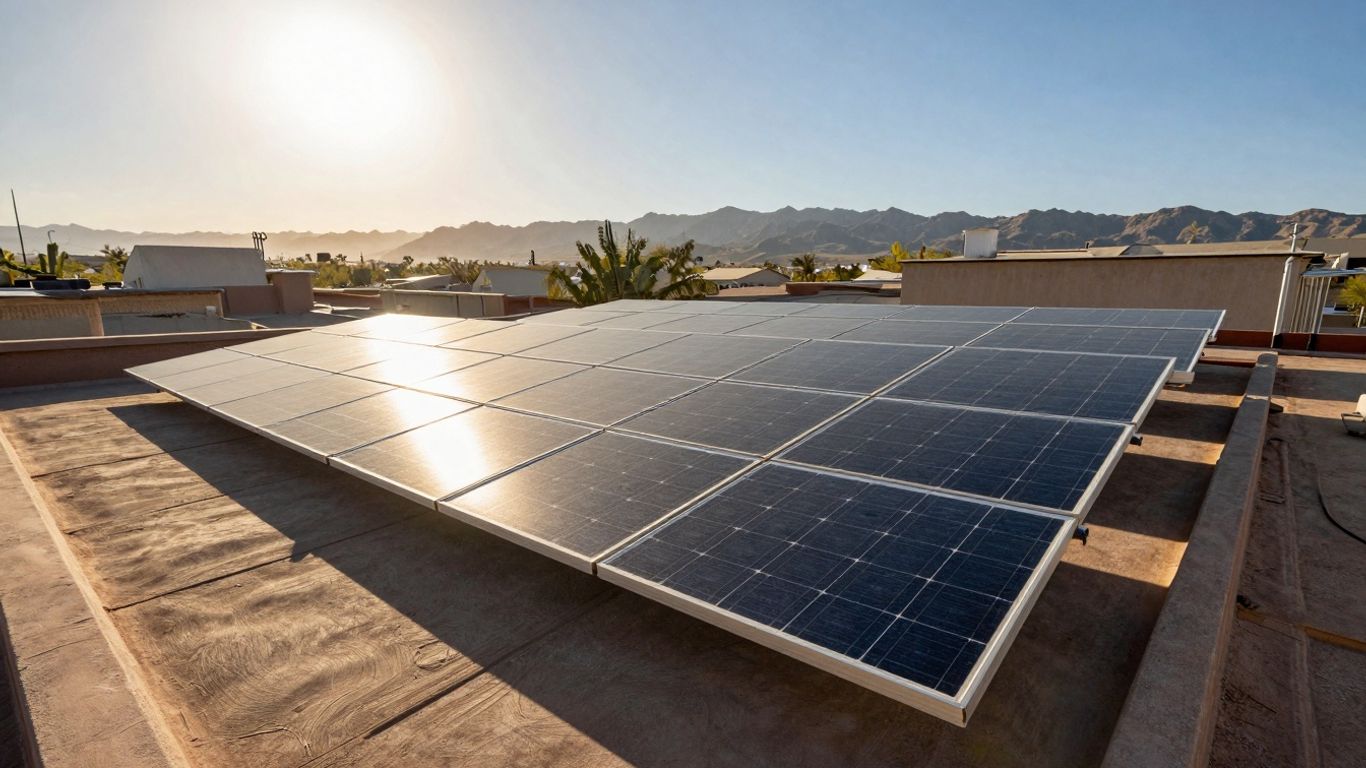
For years the big one from Uncle Sam was the Residential Clean Energy Credit. It is gone for people who buy a system now. Congress repealed it for any residential solar system installed after 31 December 2025, so a 2026 purchase gets no federal credit at all. Arizona’s own incentives were not repealed, and they are what a 2026 budget should be built on.
Residential Clean Energy Credit Details
This credit was 30% of your total solar system expenses. That counted the panels, inverters, batteries, installation labor, permitting fees, and even sales tax on those items. On a $20,000 system it was about $6,000 off your federal tax bill. It ended for systems installed after 31 December 2025. If your system was placed in service in 2025, you can still claim it on your 2025 federal return. Buy a system in 2026 and you get no federal credit.
One route still carries a federal credit: a lease or a power purchase agreement (PPA). There the company owns the system, claims the commercial credit itself, and can price that saving into what it charges you. You do not claim anything on your own return.
Here’s a quick rundown of what qualified while the credit ran:
- Solar electric panels (photovoltaics): The main event, obviously.
- Solar water heaters: If your system heats your water using the sun, that counts too.
- Battery storage technology: Yes, adding a battery to store excess energy is eligible.
- Labor costs: The folks who install it get paid, and that’s part of the credit.
- Permitting and inspection fees: All the necessary paperwork and checks are included.
While the credit ran you had to own the system outright, through a cash purchase or a solar loan. Leased systems and power purchase agreements (PPAs) never qualified for the homeowner’s version of this credit, though under a lease or PPA the owner can still claim the commercial credit and pass the benefit through in your rate.
Claiming the Federal Solar Tax Credit for a 2025 Install
This section only applies if your system was placed in service on or before 31 December 2025. A 2026 install has no federal credit to claim. If you did finish in 2025, you did not need to apply beforehand: when you file your federal taxes for that year, you use IRS Form 5695. This form helps you calculate the exact credit amount. After filling out Form 5695, you’ll then add that credit information to your main tax return, usually on Form 1040 or Schedule 3.
Here are the basic steps:
- Gather all your solar installation receipts: Keep records of every expense related to your system. This is your proof.
- Complete IRS Form 5695: This is where you’ll calculate your credit amount based on your eligible expenses.
- Attach Form 5695 to your federal tax return (Form 1040/Schedule 3): File it like you normally would.
If your tax bill for the year isn’t high enough to use the full credit amount, don’t sweat it. The great news is that any unused portion of the credit can be carried forward for up to five years. This means you can still get the full benefit, even if it takes a few years to apply it all.
Federal Credit End Date and Implications
The 30% federal solar tax credit expired at the end of 2025. Any residential system placed in service on or after 1 January 2026 gets no federal credit. If your system was fully installed and operational by 31 December 2025, you can still claim the full 30% on your 2025 federal return. If you are quoting a system now, build the budget on the Arizona state credit and the sales and property tax exemptions below, and treat any quote that still prices in a 30% federal credit as out of date.
Other Arizona Solar Incentives
Beyond the main tax credit, Arizona offers a few other ways to save money when you decide to go solar. These can really add up and make your solar investment even more appealing.
Solar and Wind Equipment Sales Tax Exemption
This is a pretty straightforward one. When you buy solar panels, inverters, racking, and other qualifying equipment for your home, you won’t have to pay state sales tax on those purchases. It’s a 100% exemption from state sales tax, which can shave a noticeable amount off the total cost of your system. This applies to anyone buying eligible equipment in Arizona, making it a broad incentive for homeowners.
Ready to take the next step? compare Arizona solar quotes and see your personalized options.
Energy Equipment Property Tax Exemption
Once your solar system is installed, you might worry about your property taxes going up because your home’s value increased. Well, good news! Arizona has an exemption for this. The added value to your home from a solar installation is generally not included when your property taxes are assessed. This means you get the benefit of a more valuable home without the increased tax burden. It’s a 100% exemption on the added system value, which is a nice perk.
Local Utility Rebate Programs
While not statewide, some local utility companies in Arizona offer their own rebate programs. These can vary quite a bit. For example, Mohave Electric Cooperative has a program that offers a certain amount per watt installed, up to a cap. It’s always a good idea to check with your specific utility provider to see if they have any incentives available. Sometimes these require you to apply before installation, so do your homework!
It’s worth noting that incentives can change. What’s available today might not be tomorrow, so it’s smart to look into all these options when you’re planning your solar project. Getting all the details ironed out upfront can save you a lot of hassle and money down the line.
Here’s a quick rundown of what to look for:
- Sales Tax Exemption: Saves you money on the initial purchase of equipment.
- Property Tax Exemption: Prevents your property taxes from increasing due to the solar installation.
- Utility Rebates: Direct financial incentives from your local power company, if available.
Check with the Arizona Department of Revenue for the Solar and Wind Equipment Sales Tax Exemption details, or check your Arizona solar eligibility to see how it applies to your purchase.
Maximizing Your Solar Investment in Arizona
So, you’re thinking about putting solar panels on your roof here in Arizona. That’s a smart move, especially with all the sunshine we get. But to really make it pay off, you’ve got to think about a few things beyond just the panels themselves. It’s not just about buying the cheapest system; it’s about making sure everything works together and that you’re getting all the benefits you’re entitled to.
Qualifying Solar System Components
When you’re looking at tax credits and incentives, not every single piece of your solar setup might count. Generally, the main things that qualify are:
- Solar Panels: These are the big ones, obviously. They’re what capture the sunlight.
- Inverters: These convert the direct current (DC) electricity from your panels into the alternating current (AC) that your home uses.
- Racking and Mounting Equipment: This is what holds your panels in place on your roof or on the ground.
- Battery Storage Systems: If you’re adding batteries to store excess energy, these often qualify too, which is great for backup power and using your solar energy even when the sun isn’t shining.
- Labor Costs: Sometimes, the costs associated with installing these qualifying components can also be included.
It’s always a good idea to double-check with your installer or the relevant tax forms to be sure exactly what’s covered. You don’t want to miss out on claiming something that should count.
Ownership Requirements for Tax Credits
This is a big one that trips people up. To claim the Arizona solar tax credit (and the federal one while it still ran) you generally need to own the solar energy system. This means if you’re leasing your panels or have a Power Purchase Agreement (PPA) where a third party owns the system and you just buy the electricity it produces, you typically can’t claim the tax credits yourself. The system owner is the one who gets to take advantage of those savings. So, if you’re looking to get the tax benefits directly, buying your system outright is the way to go.
When you’re looking at solar, think about the long game. The upfront cost is one thing, but how you structure the ownership and what components you choose can really change how much you save over the years. It’s worth taking the time to get it right from the start.
Importance of Timely Installation
Incentives and tax credits don’t last forever. The rules can change, and programs can expire. The federal Residential Clean Energy Credit is the clearest example: it was extended several times over the years and then repealed outright for systems installed after 31 December 2025. Similarly, state-level programs or utility rebates might have specific deadlines or limited funding. Installing your system sooner rather than later means you’re more likely to capture these valuable financial benefits before they disappear or change. It’s like catching a sale. You want to get in while the deals are good. Plus, the sooner you install, the sooner you start saving money on your electricity bills and generating your own clean energy.
Wrapping Up Your Solar Savings
So, going solar in Arizona comes with some pretty good perks. The 30% federal credit is gone for anyone buying a system now, but Arizona’s own breaks are not. You still have the state credit worth 25% of your system cost up to $1,000, the sales tax exemption, and the property tax exemption, and those can add up. If you finished an install in 2025, claim the federal credit on your 2025 return while you still can. For a 2026 project, get quotes priced on the Arizona incentives alone, and check that nobody is still quoting you a 30% federal discount that no longer exists.
Frequently Asked Questions
How much is the Arizona solar tax credit?
The Arizona solar tax credit, called the Credit for Solar Energy Devices, lets you deduct 25% of the cost of your solar system from your state income taxes. However, there’s a limit, and you can get a maximum credit of $1,000. It’s a great way to lower your tax bill when you install solar!
Who can get the Arizona solar tax credit?
To get this credit, you need to be an Arizona taxpayer who installs a qualifying solar or wind energy system on your home. This applies to both your main house and any second homes you own in Arizona. You must also be the one paying for the solar setup.
Can I use the Arizona solar tax credit if I don’t owe a lot in taxes?
Yes, you can! If the solar tax credit amount is more than the taxes you owe for that year, you can carry over the extra credit to the next five years. This means you won’t lose out on any of the savings, even if your tax bill is small.
What kind of solar equipment qualifies for the Arizona tax credit?
The credit covers a range of solar and wind energy devices. This includes things like solar panels for electricity (photovoltaic systems), solar water heaters, solar pool heaters, and even small wind turbines. Basically, anything that helps harness solar or wind power for your home can potentially qualify.
How do I claim the Arizona solar tax credit?
Claiming the credit is straightforward. When you file your Arizona state income taxes for the year you installed your solar system, you’ll need to fill out and submit Arizona Form 310 to the Arizona Department of Revenue. It’s usually filed along with your regular tax return.
Is the Arizona solar tax credit different from the federal one?
Yes, they are separate, and only one of them is still running. The Arizona credit is for your state taxes and is still available: 25% of your system cost up to $1,000. The federal one (the Residential Clean Energy Credit) was 30% of your system cost and ended for systems installed after 31 December 2025. If you installed in 2025 you can claim both on the relevant returns. If you are buying in 2026, only the Arizona credit applies.
Ready to Start Saving on Your Energy Bills?
Get a free, no-obligation quote from trusted local providers in under 2 minutes.
No obligation • Free estimates • Takes under 2 minutes
Get a Second Quote for Your Arizona Home
Installer pricing can vary a lot, even in the same state. A second quote gives you a number to compare before you sign.
Recent Posts
- Pennsylvania electricity supplier complaints: How to document, file, and resolve a billing dispute
- What happens when my electricity contract ends in Pennsylvania? A practical guide
- Pennsylvania electricity early termination fees: what to check before canceling your contract
- Power to Choose in Texas: How to compare electricity plans and rates
- How to read your Texas energy bill: A plain-English guide to every charge and fee