Solar Panel Financing Options Explained: $0-Down, Loans, Leases & PPAs

Turn These Financing Options Into Real Numbers
$0-down loans, leases, and PPAs each shift what you pay and what you own. A quote for your home shows the actual system cost so you can compare financing options side by side.
Disclosure: we may earn a commission if you switch or request a quote through this link, at no extra cost to you. It never changes which plan or company we recommend. How we make money.
Thinking about putting solar panels on your roof? It’s a great way to save on electricity bills, but the upfront cost can be a real head-scratcher. Luckily, there are several solar panel financing options to consider, even if you don’t have a lot of cash saved up. We’re going to break down the most common solar panel financing options, like zero-down deals, loans, leases, and power purchase agreements. It’s not as complicated as it sounds, and understanding these solar panel financing options can help you make the best decision for your home and your wallet.
Key Takeaways
- Zero-down solar panel financing options mean you can install solar without paying anything upfront, but you’ll still pay over time through loans, leases, or per-kilowatt-hour charges.
- Consider the various solar panel financing options available, as they can accommodate different financial situations and preferences.
- Solar loans let you own the system, qualify for tax credits, and potentially see the most savings long-term, but require good credit.
- Research your local solar panel financing options to ensure you find the best deals and terms.
- Solar leases allow you to use solar power for a fixed monthly fee without owning the system, which can be simpler but offers fewer financial benefits.
- Solar panel financing options can vary widely, so it’s crucial to compare multiple offers before making a decision.
- Power Purchase Agreements (PPAs) mean you pay for the actual electricity the panels produce, often at a set rate, with payments fluctuating based on sunlight and usage.
- Always compare total costs over 20 years, understand contract terms, and get multiple quotes from reputable installers to avoid misleading sales tactics and find the best solar panel financing options for you.
- Explore renewable energy credits and incentives as part of your solar panel financing options.
Understanding Zero-Down Solar Panel Financing Options
So, you’re thinking about solar panels but the big upfront cost is making you pause. You’ve probably heard the term “zero down solar” and wondered if it’s for real. Well, it can be, but it’s super important to know what you’re actually getting into.
What “Zero Down” Truly Means for Solar
Understanding the different solar panel financing options available is essential for making an informed decision regarding solar energy investments.
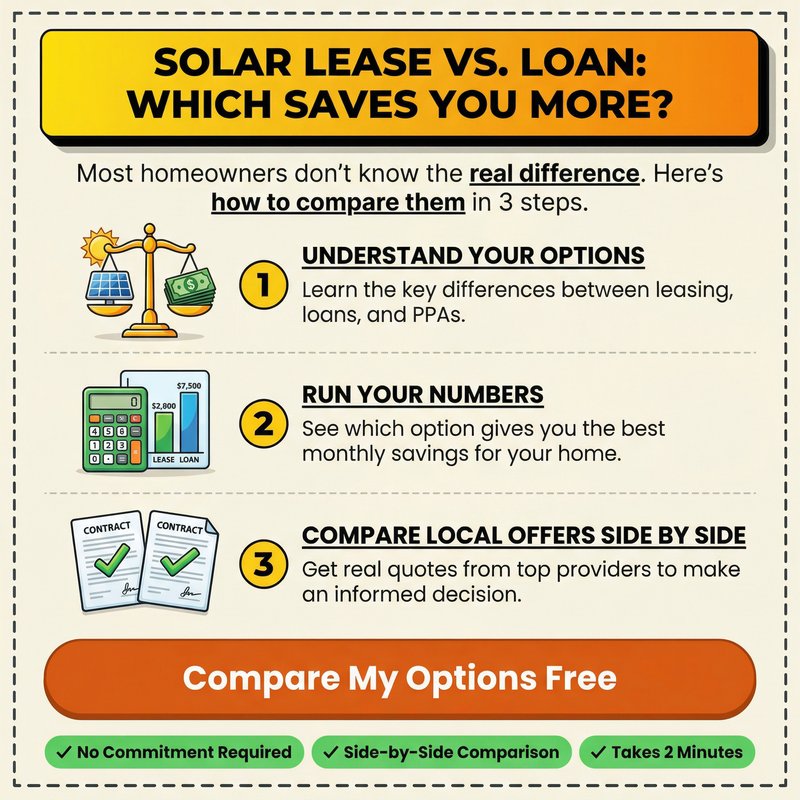
When a company says “zero down” for solar, it doesn’t mean the panels are free. It just means you don’t have to pay anything out of pocket to get them installed. You’ll still be paying for the system, but it’s spread out over time. Think of it like buying a car with no down payment. You still have to make monthly payments. The big difference here is that you’re paying for electricity generation or the system itself, not just a car. The promise of “zero down” simply shifts the payment from the start to later on.
In addition, familiarizing yourself with the various solar panel financing options can help you maximize savings and benefits.
Distinguishing Legitimate Offers from Scams
- Make sure to evaluate all solar panel financing options before committing to a specific plan.
It’s a jungle out there, and some folks try to pull a fast one. There’s no such thing as truly “free solar” from the government. If someone tells you that, run the other way. Legitimate zero-down options usually fall into a few categories:
The market for solar panel financing options is evolving, with new solutions emerging all the time, so stay informed.
- Solar Loans: You borrow money to buy the system and own it. You make monthly payments, and you can claim tax credits. This is often the best way to go long-term.
- Solar Leases: You pay to use a system installed on your roof, but you don’t own it. The company that owns it gets the tax benefits.
- Consider factors like interest rates and repayment terms when comparing solar panel financing options.
- Power Purchase Agreements (PPAs): Similar to a lease, you agree to buy the electricity the system produces at a set rate, but you don’t own the panels.
Be wary of anyone pushing hard or making unbelievable claims. Always get everything in writing and read it carefully. You can explore different payment plans that can maximize your savings.
Key Structures of No-Money-Down Solar
Familiarizing yourself with available solar panel financing options can empower you to make better financial decisions.
Most legitimate “no-money-down” solar setups fall into one of these main structures:
- By understanding your solar panel financing options, you can negotiate better deals and terms.
- Solar Loans with No Upfront Payment: This is where you get a loan to buy the system, but you don’t pay anything when it’s installed. You start making payments later, often after the system is up and running. You own the system and can take advantage of the federal solar tax credit. As of 2025, interest rates can range from 6% to 16% APR. For example, a 7kW system costing $25,200 might be financed this way. Some lenders might even offer deferred payment periods, so you don’t pay for a few months. It’s a good idea to look into options like TD’s Green Mortgage if you’re looking for incentives.
- Solar Leases: You’re essentially renting the solar panels. You pay a monthly fee to use the electricity they generate. You don’t own the system, so you don’t get the tax credits. The company that owns the panels gets those. It’s simpler upfront but might cost you more over the life of the system.
- Power Purchase Agreements (PPAs): This is like a lease, but instead of paying a flat monthly fee, you pay for the actual amount of electricity the panels produce. The rate is usually fixed or has a small annual increase. Again, you don’t own the system and don’t get the tax benefits.
- Research local solar panel financing options to find the most competitive rates available.
The biggest thing to remember is that “no-cost solar” is usually a misleading term. While you might not pay anything upfront, you will pay over time through loans, leases, or PPAs. Understanding the total cost and who owns the system is key to making the right choice for your home and your wallet.
Ultimately, understanding solar panel financing options is essential for maximizing your investment in solar energy.
It’s important to know that the federal solar tax credit is a big deal, and it’s set to change in the coming years. If you’re looking to install solar, especially with a zero-down option, understanding these financing structures is your first step to saving money on your electricity bills.
Solar panel financing options can also include innovative solutions like community solar programs.
Exploring Solar Loans: Ownership and Savings
Solar loans offer a way to own your solar panel system outright, even if you don’t have a pile of cash ready to go. Think of it like getting a mortgage for your solar setup. You borrow money to buy the system, and then you pay back that loan over time, usually with interest. The big upside here is that you actually own the panels. This means you’re eligible for all the tax credits and incentives out there, which can really cut down on the overall cost. Plus, once the loan is paid off, the electricity those panels generate is basically free for you.
If you want to see what one lender’s terms look like in full, our review covers Credit Human’s solar loan rates, repayment terms and eligibility.
Many homeowners are exploring various solar panel financing options to make clean energy more accessible.
How Solar Loans Function
When you get a solar loan, a lender pays for the solar system upfront. You then make monthly payments to the lender to pay back that amount, plus interest. These loans typically have terms ranging from 10 to 25 years. The interest rate you get depends a lot on your credit score and the current market conditions. It’s important to look at the total cost over the life of the loan, not just the monthly payment. Some loans might have “dealer fees” baked in, which can increase the total amount you borrow without being super clear about it.
By understanding the nuances of solar panel financing options, you can ensure you’re well-prepared for the future.
Eligibility and Credit Requirements
Getting approved for a solar loan usually means you’ll need a decent credit score. Most lenders look for scores of 640 or higher. They’ll also check your debt-to-income ratio and your overall credit history. If your credit isn’t perfect, you might still qualify, but the interest rates could be higher. Some companies might offer loans with lower credit score requirements, but it’s worth investigating if those come with less favorable terms.
Loan Terms, Interest Rates, and Long-Term Value
Here’s a quick look at what you might expect with a solar loan:
- Ownership: You own the system from day one.
- Tax Credits: The 30% federal solar tax credit ended on 31 December 2025 and does not apply to a 2026 purchase. State and local incentives may still apply.
- Home Value: Owned solar systems can increase your home’s market value.
- Savings: After the loan is paid off, your electricity costs drop significantly.
- Predictable Payments: Your monthly loan payment stays the same (unless you refinance).
Let’s say you get a $20,000 solar system financed with a 25-year loan at 8.99% APR. Your monthly payment might be around $198. Over 25 years, you’d pay back about $59,400. Before 2026 a 30% federal tax credit would have taken $6,000 off that. It ended on 31 December 2025, so budget the full amount. This is a significant investment, but owning the system means you reap all the long-term benefits.
When considering a solar loan, always ask for the “cash price” of the system. This helps you understand if there are hidden markups or “dealer fees” included in the loan amount. Transparency is key to making sure you’re getting a fair deal and maximizing your long-term savings.
Navigating Solar Leases: Renting Your System
So, you’re thinking about solar, but the idea of buying a whole system upfront feels like a lot? That’s where solar leases come in. Think of it like renting an apartment instead of buying a house. A solar company installs the panels on your roof, and you pay them a monthly fee to use the electricity they generate. The company owns the system, handles the maintenance, and you get to enjoy lower electricity bills without the big upfront cost.
The Mechanics of a Solar Lease Agreement
When you sign a lease, you’re essentially agreeing to rent the solar equipment for a set period, usually 20 to 25 years. You don’t own the panels, and you don’t get to claim the federal tax credits, the leasing company does. Your payment is typically a fixed monthly amount, though some leases include an “escalator” clause. This means your monthly payment might go up a small percentage each year, usually around 2-3%. It’s important to know this upfront because those small increases add up over two decades.
- Ownership: The solar company owns the system.
- Payment: You pay a fixed monthly fee, potentially with annual increases.
- Maintenance: Usually covered by the leasing company.
- Tax Credits: Claimed by the leasing company, not you.
- Term Length: Typically 20-25 years.
- Evaluate multiple solar panel financing options to determine your best course of action.
Benefits and Drawbacks of Leasing
Your choice of solar panel financing options can have a significant impact on your overall savings.
Leasing is popular because it makes solar accessible without a large initial investment. You can start saving on your electricity bills right away. Plus, you don’t have to worry about repairs or upkeep; that’s the leasing company’s job. It’s a pretty hands-off approach.
However, there are downsides. Since you don’t own the system, you miss out on the significant savings from federal tax credits. Over the life of the lease, especially with those annual increases, you might end up paying more than if you had bought the system. Also, selling your home can get complicated. A new buyer might have to agree to take over your lease, which can sometimes be a hurdle.
The biggest advantage of a lease is the low barrier to entry, making solar a possibility for more homeowners.
When a Solar Lease Might Be Suitable
A lease could be a good fit if:
-
- Explore all available solar panel financing options to ensure you find the best fit for your budget.
- You want to go solar but don’t have the cash for a down payment or a loan.
- You’re not eligible for or don’t want to deal with the complexities of tax credits.
- You prefer predictable monthly payments and don’t want the responsibility of system maintenance.
Educating yourself about solar panel financing options can lead to better financial decisions.
- You don’t plan on moving within the next 20-25 years, or you’re comfortable with the process of transferring the lease to a new homeowner.
It’s really important to read the lease agreement carefully. Understand the total cost over the entire term, including any annual payment increases. Compare this to how much you’d pay for electricity from your utility, and also consider what you might pay with a solar loan or outright purchase. Sometimes, what looks like a good deal upfront can end up costing more in the long run.
Understanding the solar panel financing options available can simplify your decision-making process.
Power Purchase Agreements (PPAs): Paying for Production
Alright, let’s talk about Power Purchase Agreements, or PPAs for short. Think of this as a way to get solar power without actually owning the equipment. A solar company installs and owns the panels on your roof, and you agree to buy the electricity they produce at a set price. It’s like having your own mini power plant, but someone else handles all the heavy lifting and upfront costs.
Understanding PPA Pricing Structures
- Make sure you are aware of all solar panel financing options before signing any contracts.
The main draw of a PPA is that you’re paying for the actual electricity generated, usually at a rate that’s lower than what your local utility company charges. This means your monthly bill should go down. However, it’s not always a simple fixed price. Some PPAs have what’s called an “annual escalator.” This is basically a small, pre-planned increase in the price per kilowatt-hour (kWh) each year. The idea is that this rate will still be lower than the utility’s projected rate increases over time, but it’s something to watch out for.
- Pay-as-you-go: You’re billed based on the actual amount of electricity your solar system produces.
- Predetermined Rate: The price per kWh is set in the contract, often lower than utility rates.
- Be sure to compare the solar panel financing options available in your area before making a decision.
- Annual Escalators: Some contracts include small, yearly price increases to account for inflation and future utility rate hikes.
Variable Payments and Geographic Limitations
Because you’re paying for production, your monthly bill can fluctuate. If your system produces more electricity in a sunny month, you might pay a bit more (though still likely less than your utility bill would have been). Conversely, a cloudy month means less production and a lower bill. It’s a direct link between sunshine and your payment. Also, PPAs aren’t available everywhere. While they’re becoming more common, you’ll need to check if they’re offered in your specific state and even your local area. Utility regulations and local policies play a big role here.
Reviewing your solar panel financing options regularly can help you stay informed about potential savings.
Ready to take the next step? solar panel financing and see your personalized options.
Contractual Terms and Considerations
PPAs usually come with long-term contracts, often 20 to 25 years. This is how the solar company recoups its investment in the system. During this time, the company is responsible for maintaining the system. If something breaks, they fix it. You also won’t get to claim any federal tax credits or incentives, because you don’t own the system, the company does. It’s a trade-off: no upfront cost and no maintenance headaches, but you also don’t build equity in the system or get those immediate tax benefits.
When considering a PPA, it’s really important to read the fine print. Understand the escalator clause, the contract length, and what happens if you decide to sell your home. Some agreements allow you to transfer the PPA to the new owner, while others might require you to buy out the system. Make sure you’re comfortable with the long-term commitment.
Here’s a quick look at what you might expect:
Consider all aspects of solar panel financing options to ensure you make the most informed choice.
| Feature | PPA Details |
|---|---|
| Ownership | Solar company owns the system |
| Upfront Cost | Typically $0 |
| Payment Structure | Pay per kWh produced |
| Maintenance | Covered by the solar company |
| Savings | Usually lower than utility rates |
| Incentives | Not available to homeowner |
| Contract Length | Typically 20-25 years |
| Price Changes | May include annual escalators |
Comparing Solar Panel Financing Options
- Many homeowners are benefiting from exploring different solar panel financing options.
So, you’ve looked into the different ways to get solar panels on your roof without shelling out a ton of cash upfront. Now comes the big question: which one is actually the best fit for you? It’s not a one-size-fits-all situation, and understanding the nitty-gritty details can save you a lot of headaches and money down the road.
Financial Analysis: Cost Over Time
When you’re comparing these options, it’s easy to get caught up in the monthly payment. But honestly, you need to look at the bigger picture, the total cost over the life of the system, usually 20 to 25 years. This is where things get interesting, especially when you factor in things like tax credits and how much electricity you’ll actually be saving.
Let’s break down a hypothetical scenario for a 7kW system in California, producing about 10,500 kWh per year. Keep in mind these numbers are estimates and can change based on your location, system size, and current utility rates.
- Understanding the different solar panel financing options available to you can help maximize savings.
- Exploring various solar panel financing options can lead to better long-term savings.
- Understanding the terms of solar panel financing options is crucial for financial planning.
Being well-informed about solar panel financing options can lead to more educated decisions.
| Financing Option | Estimated Monthly Payment | 20-Year Total Cost | After Tax Credits (if applicable) | Estimated Electricity Savings (20 Yrs) | Net Cost (20 Yrs) |
|---|---|---|---|---|---|
| Solar Loan (8.99% APR) | $198 | $47,520 | $39,960 | $52,500 | $12,540 savings |
| Solar Lease (3% escalator) | $110 to $150 | $30,800 | $30,800 | $52,500 | $21,700 savings |
| PPA ($0.11/kWh, 2% escalator) | $96 to $125 | $26,400 | $26,400 | $52,500 | $26,100 savings |
| Utility Electricity | $175 to $280 | $52,500 | $52,500 | $0 | $0 savings |
As you can see, owning the system through a loan, especially when you can use the federal tax credit, often leads to the most savings over two decades. Leases and PPAs offer lower upfront costs and predictable payments, but you don’t build equity in the system, and the long-term savings are generally less than owning.
Investing time in understanding solar panel financing options can yield significant long-term benefits.
Break-Even Points for Each Option
Knowing when your system starts paying for itself is a big deal. This is the point where the money you’ve saved on electricity bills finally outweighs the total cost you’ve spent on the system and its financing.
- Solar Loans: Typically reach break-even between 10 to 12 years. This is often faster if you can take advantage of tax credits and incentives.
- Solar Leases: Usually take a bit longer, around 12 to 15 years, to break even. Since you’re not paying for the system itself, the “break-even” is more about when your lease payments plus the remaining utility costs are less than what you would have paid without solar.
- Power Purchase Agreements (PPAs): Similar to loans, PPAs often hit the break-even mark between 10 to 12 years. Your payments are tied to production, so as rates increase, your savings become more apparent.
It’s important to remember that these break-even points are estimates. Actual performance can be affected by system degradation, changes in utility rates, and how well the system is maintained. Always ask for projections specific to your home and the equipment being installed.
Choosing the Right Solar Financing for You
So, how do you pick? It really boils down to your personal financial situation, your goals, and how long you plan to stay in your home.
- Go for a Solar Loan if:
- You have a good credit score (usually 640+).
- You want to own your system and build equity.
- You can benefit from federal tax credits and other incentives.
- You plan to stay in your home for at least 10-15 years to see the full savings.
- You don’t mind being responsible for system maintenance (though many loans include warranties).
- Consider a Solar Lease if:
- You don’t qualify for a loan or prefer not to take one on.
- You can’t use tax credits (e.g., low tax liability).
- You want a low or $0 upfront cost and predictable monthly payments.
- You don’t want to worry about system maintenance or repairs.
- You might move within the next 10-15 years (leases are often transferable).
- Understanding the unique solar panel financing options tailored to your needs is essential.
- Look into a PPA if:
-
- They are available in your area (not all states allow them).
- You want $0 upfront cost and prefer to pay only for the electricity produced.
Solar panel financing options are available to suit many different financial situations.
- You don’t mind that your monthly bill can fluctuate based on sunlight and weather.
- You want a lower per-kilowatt-hour rate than your utility offers, without the hassle of ownership.
-
Ultimately, the best way to decide is to get detailed quotes for each option from reputable installers. Compare the total costs, savings projections, and contract terms side-by-side. Don’t be afraid to ask questions until you’re completely comfortable with your choice.
A thorough understanding of your solar panel financing options can enhance your savings potential.
Avoiding Misleading Solar Sales Tactics
Recognizing “No-Cost Solar” Deceptions
Lots of ads talk about “no-cost solar” or “zero-down solar,” and it sounds pretty great, right? Who wouldn’t want free solar panels? But honestly, there’s usually more to it than that. These “no-cost” offers often mean someone else owns the system, like in a lease or a Power Purchase Agreement (PPA). You’re not paying for the panels themselves upfront, but you are paying for the electricity they produce, or for using the system. It’s not truly free; it’s just a different way of paying for power. Always ask who owns the system and what exactly you’re paying for each month.
The Importance of Transparency in Contracts
- Make sure you assess all available solar panel financing options thoroughly before proceeding.
When you’re looking at solar, the contract is everything. If a salesperson is pushing you to sign right away, claiming a deal is ending, or saying you’ll miss out on a rebate that doesn’t exist, that’s a big red flag. A good company will give you time to actually read the contract, ask questions, and understand everything. They should be able to clearly explain who owns the system, who gets the federal tax credit (that 30% Investment Tax Credit), and how your monthly payments work. If they get cagey or give you vague answers about ownership or incentives, that’s a sign they might be hiding something.
Always get everything in writing. Verbal promises don’t hold up, and you need a clear record of what you’re agreeing to, especially when it comes to costs, ownership, and long-term obligations.
Strategies for Obtaining Multiple, Honest Quotes
Don’t just go with the first company that knocks on your door or calls you. It’s smart to shop around and get quotes from at least three different solar providers. This helps you compare not just prices, but also the types of financing they offer, the equipment they use, and their warranties. When you get quotes, pay attention to these details:
Regularly reviewing your solar panel financing options can ensure you make the most informed decision possible.
- System Ownership: Do you own the panels, or is it a lease/PPA?
- Total Cost: What’s the full price of the system if you buy it, and what are the monthly payments for loans, leases, or PPAs?
- Incentives: Who claims the federal tax credit and any state/local rebates? Make sure you understand how these affect your overall cost.
- Contract Length: How long are you locked into a lease or PPA?
- Escalation Clauses: Do lease or PPA payments go up each year? If so, by how much?
Getting multiple quotes helps you spot offers that seem too good to be true and ensures you’re making an informed decision based on solid information, not just sales pressure.
Making the Right Solar Choice for You
So, we’ve looked at the different ways to get solar panels on your roof without paying a ton upfront. Whether you’re leaning towards owning your system with a loan, renting it with a lease, or paying for the power you use through a PPA, each has its own set of pros and cons. It really comes down to what fits your budget, your long-term plans for your home, and how much you want to be involved. Take your time, get a few quotes, and really read the fine print. Choosing the right financing is a big step, but it can lead to years of saving money and using cleaner energy. Good luck!
Ultimately, exploring your solar panel financing options is a key part of the solar purchasing process.
Frequently Asked Questions
What does “$0-down solar” really mean?
When you hear about “$0-down solar,” it means you can get solar panels installed on your home without paying any money upfront. However, it doesn’t mean the panels are free. You’ll still pay for them over time through monthly payments, like a loan, or by paying for the electricity they produce through a lease or a Power Purchase Agreement (PPA).
- It’s important to compare different solar panel financing options to find the best fit for your needs.
What’s the difference between a solar loan, lease, and PPA?
With a solar loan, you borrow money to buy the panels and own them. You get to claim tax credits and keep all the savings after paying off the loan. A solar lease is like renting the panels; you pay a monthly fee to use them, but you don’t own them and can’t claim tax credits. A Power Purchase Agreement (PPA) is similar to a lease, but you pay for the actual electricity the panels make, usually at a set price per kilowatt-hour.
Are there any hidden costs with $0-down solar options?
Sometimes. While $0-down options mean no upfront payment, it’s crucial to read the fine print. Some loans might have higher interest rates, and leases or PPAs often have yearly payment increases (escalators) built into the contract. Always understand the total cost over the life of the agreement.
- Always consider your solar panel financing options carefully before making a decision.
Who benefits most from a solar loan?
Solar loans are often best for homeowners with good credit who want to own their system. Owning the panels means you can take advantage of tax credits, which can significantly lower your costs. Plus, once the loan is paid off, all the energy savings are yours, and owning the system can increase your home’s value.
- Evaluating solar panel financing options can help you determine the best way to maximize your investment.
When might a solar lease or PPA be a better choice?
Leases and PPAs can be good options if you don’t qualify for a loan, can’t use the tax credits (perhaps due to low tax liability), or simply prefer not to own the system. They offer predictable monthly costs (leases) or payments based on energy produced (PPAs) and usually include maintenance, taking the responsibility off your shoulders.
- Understanding your solar panel financing options can clarify your financial responsibilities moving forward.
How can I avoid being tricked by solar sales tactics?
Be wary of offers that sound too good to be true, like “free solar” with no strings attached. Always get quotes from multiple reputable companies, ask for everything in writing, and carefully read all contracts before signing. Understanding the different financing options and what they truly cost over time will help you make a smart decision.
Two companion pieces go further on where to borrow: getting a solar loan from a credit union and local banks, credit unions and online lenders compared.
Ready to Start Saving on Your Energy Bills?
Get a free, no-obligation quote from trusted local providers in under 2 minutes.
No obligation • Free estimates • Takes under 2 minutes
Want real quotes before you decide how to pay for it?
A loan only makes sense once you know what the system will actually cost. If your electric bill runs above $150 a month and your roof gets decent sun, a personalized quote gives you real numbers to put into any loan comparison. Quotes are available nationwide.
Recent Posts
- Pennsylvania electricity supplier complaints: How to document, file, and resolve a billing dispute
- What happens when my electricity contract ends in Pennsylvania? A practical guide
- Pennsylvania electricity early termination fees: what to check before canceling your contract
- Cost of electricity in Houston: what your rate and electric bill really include
- How to Compare Electricity Plans Without Picking the Wrong One