Commercial Solar Financing: Best Options for Businesses (Loans, PPAs, Leases)
Get Commercial Solar Numbers for Your Building
PPAs, loans, and leases each change the numbers differently for a business owner. A quote for your property lays out real installed cost and payment options before you commit to a structure.
Disclosure: we may earn a commission if you switch or request a quote through this link, at no extra cost to you. It never changes which plan or company we recommend. How we make money.
Thinking about putting solar panels on your business property? That’s great! But the big question is usually how to pay for it all. It’s not like you can just pull out your wallet for a massive solar setup. Luckily, there are several ways to finance commercial solar projects, and each one changes how you pay, who owns the equipment, and what kind of savings you’ll see. We’ll walk through the main options for commercial solar financing so you can figure out what makes the most sense for your company.
Key Takeaways
- A Power Purchase Agreement (PPA) lets you buy solar power at a set rate, often lower than utility prices, without paying for installation upfront. You don’t own the system, though.
- A Solar Lease means you pay a fixed monthly fee to use the solar system installed on your roof. Like a PPA, there’s no upfront cost, but you’re paying for the equipment use, not the electricity generated.
- Solar Loans allow your business to own the solar system while spreading the cost over time with monthly payments. You get to claim tax benefits and incentives, potentially leading to better long-term returns.
- A Cash Purchase means you pay for the entire solar system upfront. This gives you full ownership, the best long-term savings, and allows you to take advantage of all available tax credits and incentives.
- Commercial Property Assessed Clean Energy (C-PACE) offers loans for energy upgrades that are repaid through property tax assessments, making it accessible even for businesses with less-than-perfect credit.
Power Purchase Agreement (PPA)
A Power Purchase Agreement, or PPA, is a pretty popular way for businesses to go solar without having to shell out a ton of cash upfront. Basically, a solar company or investor puts up all the money for the solar system (the panels, the inverters, all of it) and installs it on your business’s property. Your business then agrees to buy the electricity that the system generates over a set period, usually 10 to 25 years.
The big draw here is that you typically pay a lower rate per kilowatt-hour (kWh) for this solar electricity than you would for power from the utility company. This means you start saving money on your electricity bills from day one. It also gives you a predictable energy cost for years to come, which is nice for budgeting and planning.
Here’s a quick rundown of how it generally works:
- Developer Owns and Operates: The solar company owns the system, handles all the installation costs, and takes care of maintenance and repairs. You don’t have to worry about fixing anything.
- You Buy the Power: Your business buys the electricity produced by the panels at a pre-agreed rate. This rate is usually lower than your current utility rate.
- Long-Term Contract: You sign a contract for a specific term, like 20 years, agreeing to purchase the power generated.
It’s important to know that with a PPA, you don’t own the solar system. This means you can’t claim things like the Investment Tax Credit (ITC) or depreciation benefits. Those go to the system owner. However, for organizations that can’t take advantage of tax incentives, like some non-profits or government entities, a PPA can still be a really smart move because the savings are passed on through the lower electricity rate.
Think of it like leasing a car. You get to use the car and enjoy the benefits of driving it, but you don’t own it. The leasing company handles the big maintenance stuff, and you pay a monthly fee for the use. With a PPA, you’re essentially ‘leasing’ the solar power generated, not the equipment itself, and the payment is based on how much power you use.
Solar Lease
A solar lease is another way for businesses to go solar without shelling out a ton of cash upfront. Think of it like renting the solar panel system for your building. You pay a set monthly fee to use the equipment, and the company that owns it handles the installation and upkeep.
The main difference from a Power Purchase Agreement (PPA) is that with a lease, you’re paying a fixed amount each month for the system itself, not for the actual amount of electricity it produces. This can make budgeting a bit simpler, as you know exactly what your solar payment will be, regardless of how sunny it is.
Here’s a quick rundown of how it generally works:
- Installation: A third-party company installs the solar panels on your property.
- Monthly Payments: You pay a consistent monthly lease payment for a set term, usually between 6 to 10 years.
- Maintenance: The lease provider typically covers all maintenance and repairs.
- Ownership: You don’t own the system, and you can’t claim tax credits or depreciation benefits. Those usually go to the system owner.
- End of Term: At the end of the lease, you might have options to renew the lease, buy the system at a pre-determined price, or have the system removed.
While leases offer predictable monthly costs and zero upfront investment, they might not always be the most popular choice for businesses compared to PPAs. It can sometimes be trickier to directly compare lease payments to your current utility bills, especially since the payment isn’t tied to your actual energy usage.
One thing to keep in mind is that the financial incentives, like tax credits, usually go to the company that owns the solar system, not to your business. So, while you get the benefit of using the solar power and potentially lower electricity bills, you miss out on those direct tax advantages. It’s worth checking if solar leases are even allowed in your specific state, as not all jurisdictions permit them.
Solar Loans
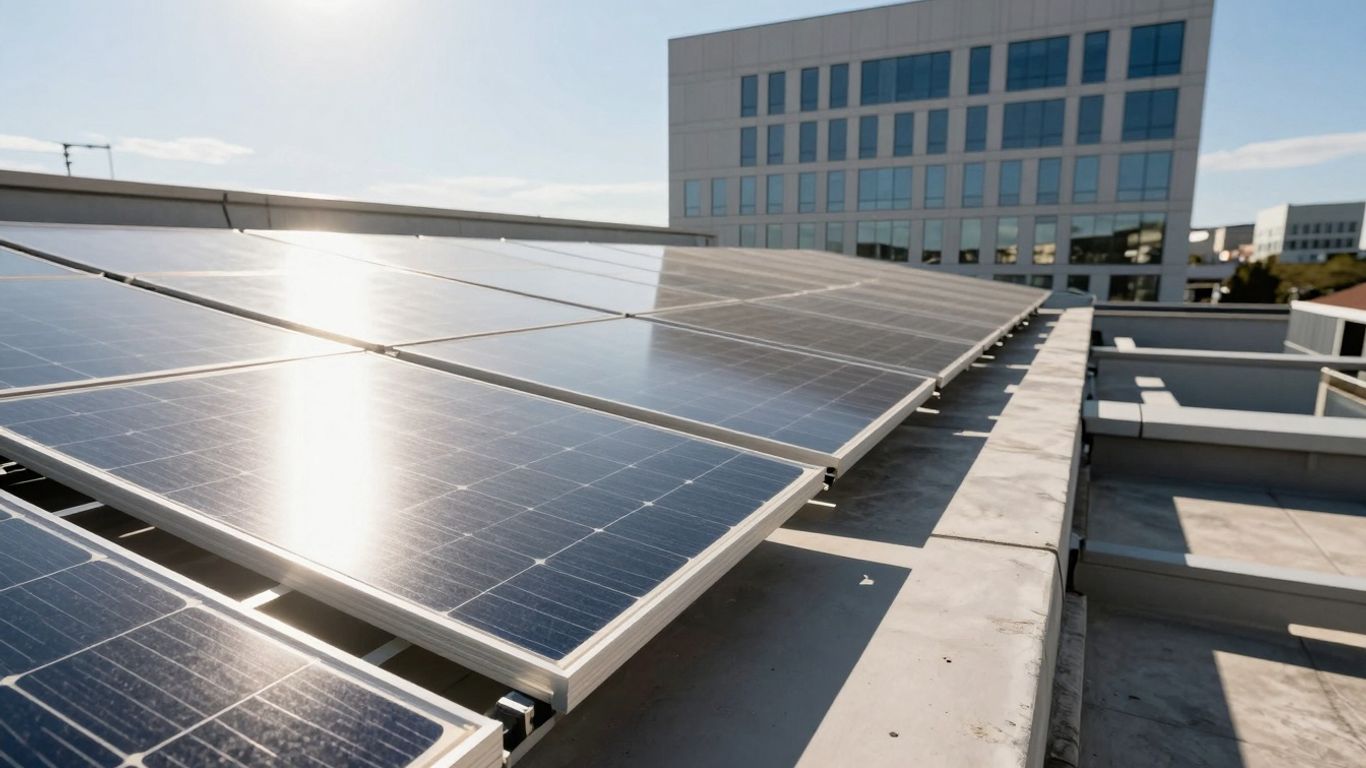
When you go with a solar loan, your business basically takes out a loan to buy a solar energy system, much like you might get a loan for a new piece of equipment or a building upgrade. The lender puts a lien on the solar system itself, but you, the business owner, are the direct owner of everything. This means you get to claim all the good stuff that comes with owning a solar setup.
The biggest perk here is that you own the system outright and can take advantage of the federal Investment Tax Credit (ITC), which lets you deduct a good chunk of the system’s cost from your federal taxes. Other benefits include any state rebates and the income you might get from selling Solar Renewable Energy Credits (SRECs). You’ll also see savings on your electricity bills, of course.
There are a couple of ways these loans can work, especially when it comes to using that ITC refund:
- Split Loan: You get a short-term, interest-free loan for about 30% of the project cost. You pay this off in full once you get your tax refund. The rest of the loan is a standard, longer-term loan with interest.
- Re-amortized Loan: After you get your ITC refund, you make a big payment towards the principal. The loan is then recalculated with a lower monthly payment for the rest of its term.
When you’re shopping around for a solar loan, you’ll find options with fixed or variable interest rates. Fixed rates give you predictable payments, while variable rates can change if the market rates go up or down. Some loans are secured, meaning you’ll need to put up an asset as collateral, while others are unsecured, with the solar equipment itself acting as the guarantee.
Remember, with a solar loan, you’re responsible for the system’s upkeep and any future maintenance costs. If managing that sounds like a hassle, you might want to look at other options like leases or PPAs where someone else handles the operations.
Interest rates and how long you have to pay the loan back can vary a lot. Lenders might include what they call ‘dealer fees’ to cover their administrative work or the risk they’re taking. It’s super important to read all the fine print and understand every single fee before you sign anything. You want to make sure the savings on your electricity bill are more than your monthly loan payment, especially after you factor in all the incentives.
Cash Purchase
So, you’ve got the capital and you’re thinking about going solar. Buying a solar system outright with cash is pretty much the most straightforward way to do it, and honestly, it often ends up being the most profitable in the long run. You pay for the whole thing upfront, and bam. It’s yours. No monthly payments to worry about, just pure energy savings from day one.
What’s really cool about this is you get to claim all the good stuff, like the federal tax credits. That’s a big chunk of the cost right back in your pocket. Plus, there’s depreciation, which is another way to cut down on your business taxes. It’s like the government is giving you a pat on the back for going green. And hey, owning the system outright adds real value to your property. It’s a tangible asset that makes your building worth more.
Here’s a quick rundown of why it’s a solid choice:
- Maximum Long-Term Savings: You’re not paying interest or lease fees, so your savings just keep adding up over the system’s lifespan.
- Full Ownership & Control: It’s your system. You own everything it produces and can decide what to do with any excess energy.
- Tax Advantages: You can take advantage of the Investment Tax Credit (ITC) and accelerated depreciation.
- Increased Property Value: A solar installation is a physical asset that boosts your building’s worth.
Of course, it’s not all sunshine and rainbows. The biggest hurdle is that initial investment. It’s a significant amount of money to put down all at once. You’ll also be the one responsible for any maintenance, though solar systems are pretty low-maintenance these days, and the costs are usually minimal over the years. Most businesses find the payback period is pretty reasonable, often somewhere between 4 to 7 years, after which all the energy is essentially free.
This method is best suited for businesses that have the available cash and want to maximize their return on investment while also taking full advantage of all available tax incentives. It’s a commitment, for sure, but one that pays off handsomely over time.
Commercial Property Assessed Clean Energy (C-PACE)
Commercial Property Assessed Clean Energy, or C-PACE, is a financing tool that lets businesses pay for solar installations and other energy upgrades through their property tax bill. It’s available in many states, and the idea is pretty straightforward: instead of taking out a traditional loan with upfront payments and credit checks, you get a voluntary assessment added to your property taxes. This assessment covers the cost of the solar project, including interest, and is repaid over a long period, often 20 to 30 years.
The biggest draw of C-PACE is that it often requires no money down and can be repaid over a much longer term than typical business loans, making solar more accessible. Because the repayment is tied to the property itself, it can be a good option even if your business has a less-than-perfect credit history. Plus, the assessment automatically transfers to the new owner if you sell the property, which can make it more attractive to buyers.
Here’s a quick look at how it generally works:
- Project Approval: Your solar project gets the green light.
- Financing Secured: A third-party lender provides the capital for the project.
- Installation: The solar system is installed on your property.
- Repayment via Property Taxes: The project cost is added as a special assessment to your annual property tax bill, which you then pay to the lender.
It’s worth noting that C-PACE programs are still relatively new in some areas, so availability and specific rules can vary by state and even by local municipality. If you own your commercial property and plan to stay put for a while, C-PACE is definitely worth looking into.
C-PACE financing is tied to the property, not the business owner. This means if you sell your building, the C-PACE assessment transfers to the new owner. This can be a benefit, as it makes the property more attractive by including a pre-paid energy upgrade.
Wrapping It Up
So, picking the right way to pay for solar for your business really matters. It’s not just about getting panels on the roof; it’s about how it fits your budget now and in the future. Whether you go with a PPA where you just pay for the power, a lease for predictable monthly costs, or buy it outright for the best long-term savings, the main thing is to match it to what your business needs. Think about your money goals, if you can use tax breaks, and what you plan to do down the road. Getting some expert advice can really help sort through the options and make sure you’re making a smart move for your company’s bottom line and its future.
Frequently Asked Questions
What is a Power Purchase Agreement (PPA) for businesses?
A PPA lets your business use solar power without buying the equipment. A company installs and owns the solar panels on your roof. You then buy the electricity they make, usually at a lower price than what your regular power company charges. It’s like paying for the electricity, not the panels themselves.
How is a Solar Lease different from a PPA?
With a solar lease, you pay a set monthly fee to use the solar system that’s installed on your property. Unlike a PPA where you pay for the actual electricity used, a lease payment is fixed, regardless of how much power the system generates. Think of it like renting the solar equipment.
Residential readers weighing the same own-versus-rent question have a more direct comparison available: our review of what a Credit Human solar loan actually costs over its full term.
What are Solar Loans for businesses?
A solar loan is like a regular loan but specifically for buying a solar energy system. Your business owns the system from the start, and you pay back the loan over time, usually with interest. This means you can take advantage of tax breaks and own the system outright once the loan is paid off.
Can my business buy solar panels outright with cash?
Yes, a cash purchase means your business pays for the entire solar system upfront. This is the most direct way to own the system and get the best long-term savings because you avoid interest payments and can claim all tax benefits and incentives immediately.
What is C-PACE financing?
C-PACE stands for Commercial Property Assessed Clean Energy. It’s a special type of loan that helps businesses pay for energy-saving upgrades, including solar. The loan is repaid through an extra charge on your property’s tax bill, which can make it easier to qualify for, even with a less-than-perfect credit history.
Which financing option is best for my business?
The best option depends on your business’s financial situation and goals. If you want no upfront costs and immediate savings, a PPA or lease might be good. If you want to own the system and get the highest long-term return, a solar loan or cash purchase is better. C-PACE is a helpful option if you need easier financing terms.
On the commercial side, the two companion pieces are pricing and negotiating a commercial solar PPA and how C-PACE financing works for building owners. It is worth running your own numbers through the solar loan calculator first.
Want real quotes before you decide how to pay for it?
A loan only makes sense once you know what the system will actually cost. If your electric bill runs above $150 a month and your roof gets decent sun, a personalized quote gives you real numbers to put into any loan comparison. Quotes are available nationwide.
Recent Posts
- Are competitive electricity suppliers worth it in Massachusetts? A practical guide
- Ohio electricity supplier scams: how to spot red flags before you switch
- What happens when my electricity contract ends in Ohio? A practical guide to your next bill and options
- Should I opt out of NOPEC? How to decide before your next energy bill
- Indiana Solar Incentives: A Homeowner’s Guide