Best Solar Loan Companies: Compare Lenders, Rates & Approval Requirements
Bring a Real Number to Any Lender on This List
Every lender here will ask for the loan amount before quoting a rate. A quote for your home gives you that number so you can compare offers on equal footing.
Disclosure: we may earn a commission if you switch or request a quote through this link, at no extra cost to you. It never changes which plan or company we recommend. How we make money.
Thinking about getting solar panels for your home? That’s awesome! It’s a big step towards saving money and helping the environment. But, like most big projects, it often means figuring out the financing. Luckily, there are a bunch of solar loan companies out there ready to help. We’ve checked out some of the top solar loan companies to give you a clearer picture of what they offer, so you can make a smart choice for your home.
Key Takeaways
- Solar loans are a popular way to pay for solar panel systems, often arranged through your installer.
- When comparing solar loan companies, look at loan amounts, repayment times, interest rates (APR), and any fees involved.
- Check the lender’s requirements, like minimum credit scores, and if they allow co-signers or joint applications.
- Consider solar-specific loan products or those offered by solar manufacturers and installers.
- Always read the loan terms carefully and research available tax incentives and rebates to lower your overall cost.
1. Sunlight Financial
Sunlight Financial is another big player in the solar loan game. They work with a pretty wide network of installers, so there’s a good chance you’ll run into them when you’re getting quotes for your solar setup. They don’t just do solar, though; their loans can also cover battery systems and even roof replacements, which is pretty handy if you’re doing a whole home energy overhaul.
They’ve got a reputation for offering some really competitive rates, including zero and low-interest options. This can make a big difference in your overall costs.
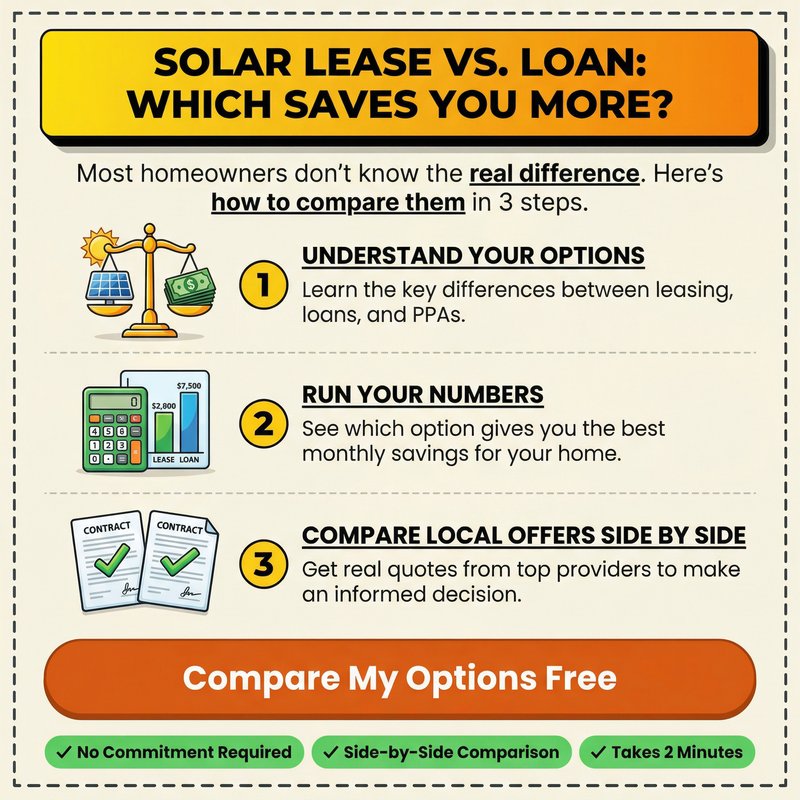
Here’s a quick look at what they generally offer:
- Loan Types: Primarily solar loans, but also covers batteries and roofing.
- Availability: Available nationwide in all 50 states and Washington D.C.
- Typical Loan Term: Just over 20 years.
- Interest Rates: Around 3.3% is often cited, but they also have zero and low-interest options.
- Minimum Credit Score: Generally around 650.
It’s worth noting that Sunlight Financial has a solid rating on the Better Business Bureau (BBB) with a B+ and a high customer review score, often around 4.6 out of 5 stars. This suggests most people have a good experience working with them.
When you’re looking at solar financing, it’s easy to get bogged down in the numbers. But remember, the goal is to make solar affordable for your home. Companies like Sunlight Financial aim to simplify that process with various loan structures and competitive rates, helping you get the system you need without breaking the bank.
2. Mosaic
Mosaic is a big name when it comes to solar loans, and for good reason. They’ve been around for a while and have funded a ton of projects, over $10 billion worth, which is pretty impressive.
One of the best things about Mosaic is how many solar installers they work with. Chances are, if you’re getting quotes from different companies, at least one of them will offer Mosaic financing. This makes it easier to compare loan options without having to hunt down a lender separately.
Mosaic offers solar loans that can range from $10,000 up to $100,000, with repayment periods typically between 10 and 25 years. They have a program called PowerSwitch that gives you a few different ways to structure your loan. While interest rates can change, some people have seen rates as low as 3.99%. They’re also known to approve loans for folks with credit scores around 640, which is lower than some other lenders require.
Here’s a quick look at what they offer:
- Loan Amounts: $10,000 to $100,000
- Loan Terms: 10-25 years
- Interest Rates: Can be as low as 3.99% (varies)
- Minimum Credit Score: Around 640 (not a strict requirement, but a common approval point)
- Availability: All 50 states and Washington D.C.
When you’re looking at solar loans, it’s not just about the interest rate. Think about the loan term too. A longer term might mean lower monthly payments, but you’ll likely pay more interest over the life of the loan. It’s a trade-off to consider based on your budget and how long you plan to stay in your home.
They don’t have a BBB rating right now, but customer reviews are generally decent, sitting around 3.77 out of 5 stars. It seems like they’re a solid choice for many homeowners looking to finance their solar setup.
3. GoodLeap
GoodLeap, which used to be called Loanpal, is a company that directly lends money for solar setups. They offer loans with fixed interest rates that can cover not just solar panels but also battery storage. Plus, they can help finance other energy-saving home improvements, like new windows or smart thermostats. They’re available in all 50 states and Washington D.C.
Their solar loans typically have terms ranging from seven to 25 years. Interest rates can be as low as 2.98%, but what you qualify for really depends on your credit score. For instance, if your FICO score is between 600 and 649, you might get up to $45,000. Scores from 650 to 699 could qualify for $50,000, and if you’re over 700, you could get up to $100,000.
Here’s a quick look at how loan amounts might break down based on credit score:
- FICO 600-649: Up to $45,000
- FICO 650-699: Up to $50,000
- FICO 700+: Up to $100,000
GoodLeap has a solid presence in the solar financing market, working with many installers. This means it’s quite likely that one of the contractors you get quotes from will offer their financing options. It’s worth checking out their financing services if you’re considering solar.
They have a B+ rating with the Better Business Bureau and generally get customer reviews around 3.96 out of 5 stars. While they focus on solar, remember they can also bundle in other home efficiency upgrades, which can be a nice bonus.
4. Dividend
Dividend is another company that helps homeowners finance their solar panel installations. They work with a pretty big network of solar installers, over 700 of them, which is nice because your installer will usually present you with Dividend’s financing options right alongside their quote for the solar system. This makes it pretty straightforward to see how much everything will cost and how you can pay for it.
Their main solar loan product is called the EmpowerLoan. It’s a secured loan, meaning your solar system acts as collateral, and the good news is you don’t need a down payment. You can borrow up to $120,000, which should cover most residential systems. They do have a minimum credit score requirement of 660. The interest rates can vary based on your credit and the installer, but they generally fall between 3.49% and 6.99%. You can choose between a 12 or 20-year repayment term.
Here’s a quick look at the EmpowerLoan:
- Loan Amount: Up to $120,000
- Minimum Credit Score: 660
- Interest Rates: Typically 3.49% to 6.99%
- Loan Terms: 12 or 20 years
- Down Payment: None required
Dividend is available in 45 states and Washington D.C., though they aren’t an option in Alaska, Montana, North Dakota, South Dakota, or Vermont. If you’re looking for a simple way to finance your solar project without a down payment, Dividend is definitely worth checking out. You can complete the entire application and approval process online, which is a big plus for getting solar financing.
The process with Dividend is designed to be user-friendly. Since your chosen installer presents the financing options, it integrates smoothly into the quoting process. This means you’re not hunting around for loans separately; it’s all part of the same conversation about your solar project.
5. Energy Loan Network (ELN)
Energy Loan Network, or ELN, is a bit different from some of the other companies we’ve looked at. Instead of being a direct lender, ELN acts more like a connector. They work with a bunch of credit unions to help homeowners get the funding they need for solar projects. This network approach often means they can find pretty competitive rates for you.
Credit Human takes the opposite approach to a network like ELN, lending to its own members directly. We cover Credit Human’s solar loan rates and membership requirements in a separate review.
So, how does it work? You apply through their website, and ELN connects you with lenders in their network. They also work with contractors who install solar systems. It’s a streamlined process designed to make getting a solar loan a bit easier.
Here’s a quick rundown of what ELN offers:
- Loan Availability: They cover all 50 states and Washington D.C., which is pretty broad.
- Loan Types: Primarily solar loans, but they also help with other energy-efficient home upgrades like new HVAC systems or better insulation.
- Interest Rates: While they don’t set the rates themselves, their partners typically offer fixed rates that average around 5.24%. Keep in mind this can change based on your credit, the installer, and the specific lender.
- Loan Terms: You can usually expect payback periods ranging from 8 to 20 years.
- Credit Score: There isn’t a hard minimum credit score listed on their site, but it’s safe to assume it will be in line with what most lenders look for.
ELN has a really good reputation, with an A+ rating from the Better Business Bureau and very high customer review scores. It seems like a solid option if you’re looking for a financing partner that has a wide reach and a focus on connecting you with the right credit union for your solar needs.
ELN’s model is built on partnerships. By working with credit unions and installers, they aim to simplify the financing process for homeowners interested in solar energy and other green home improvements. Their broad availability and strong BBB rating make them a noteworthy contender in the solar loan space.
6. Lightstream Financial
Lightstream Financial, a division of Truist Bank, is an online lender that offers personal loans for a variety of projects, including home improvements like solar panel installations. They’re known for their competitive rates and flexible loan terms.
Lightstream’s unsecured personal loans can range from $5,000 up to $100,000, depending on what you need the money for. This makes them a solid option if you’re looking for a substantial amount to cover your solar system and installation costs.
One of the big draws with Lightstream is their fee structure. They don’t charge origination fees, late payment fees, or prepayment penalties. This means the interest rate you see is pretty much what you’ll pay, without a lot of hidden costs popping up later. Plus, they offer a 0.50% discount on your interest rate if you sign up for automatic payments.
Here’s a quick look at what they offer:
- Loan Amounts: $5,000 to $100,000
- APR Range: Typically starts around 6.49% with autopay (rates vary based on creditworthiness and loan term)
- Minimum Credit Score: Generally requires a score of 660 or higher
- Loan Terms: Flexible, often between 2 to 12 years for home improvement loans
- Fees: No origination, late, or prepayment fees
While Lightstream offers attractive rates and no fees, they do require a good credit score to qualify. If your credit isn’t quite there yet, you might need to explore other options or work on improving your score first. They also don’t offer prequalification without a hard credit check, so be prepared for that if you decide to apply.
Getting funding can be quick with Lightstream. If you complete all the necessary paperwork and verification before 2:30 p.m. ET, you might even be able to get same-day funding. This can be a real advantage if you’re on a tight schedule with your solar installation.
7. Discover
Discover is a well-known name in financial services, and their personal loans can be an option for solar financing. They’re particularly noted for their straightforward application process, especially if you’re already a Discover customer. You might even get your funds as quickly as the next business day after approval, which is pretty handy if you’re eager to get your solar project moving.
One thing that stands out is that Discover doesn’t charge origination fees or prepayment penalties. This can save you some money in the long run. However, they do have a minimum credit score requirement, typically around 660, and you’ll need to show a household income of at least $25,000 annually. They also don’t allow co-borrowers or co-signers, so you’ll need to qualify on your own.
Here’s a quick look at some key details:
- Loan Amounts: $2,500 to $40,000
- APR Range: 7.99% to 24.99%
- Minimum Credit Score: 660
- Minimum Annual Income: $25,000
- Co-borrowers/Co-signers: Not permitted
- Funding Speed: As soon as the next business day
Discover’s personal loans can be a good fit if you have a decent credit score and prefer a lender with a strong online presence and quick funding. It’s worth comparing their rates to other lenders, especially since zero-interest solar loans might have different structures and fees after an introductory period.
While Discover offers a familiar and generally positive customer experience, it’s always a good idea to shop around. Different lenders have varying requirements and rates, and what works best for one person might not be ideal for another. Taking the time to compare can lead to significant savings over the life of your loan.
8. Credible.com
Credible.com isn’t a direct lender, but more like a marketplace where you can compare offers from different solar loan providers all in one spot. Think of it as a comparison tool to help you find a loan that fits your needs without having to fill out a bunch of separate applications.
They work with a variety of lenders, which can give you a good range of options.
Here’s a general idea of what you might find when looking for solar loans through Credible:
- Loan Amounts: Typically range from $1,000 up to $100,000, depending on the lender.
- APR Ranges: Can vary quite a bit, often starting around 6.49% and going up to 35.99% or even higher, especially if you don’t qualify for discounts.
- Minimum Credit Score: This is a big one. Some lenders on the platform might require a score of 700 or higher, while others might go as low as 600, or even lower in some cases.
Using a platform like Credible can save you time and effort. Instead of visiting each lender’s website individually, you can get a snapshot of potential loan terms and rates quickly. This makes it easier to see who might be the best fit for your solar project budget.
It’s important to remember that the exact terms you see are just estimates until you complete a full application with a specific lender. Also, keep an eye out for any potential fees associated with the loans, as these can affect the overall cost of your solar installation.
Ready to take the next step? best solar loan companies and see your personalized options.
9. MoneyLion
MoneyLion is a financial technology company that offers a range of services, including personal loans. They aim to provide accessible financing options, and their solar loan product can be a way to fund your solar panel installation. They offer loan amounts from $1,000 up to $50,000, which could cover a good portion of a solar project, depending on its size and complexity.
When looking at MoneyLion for a solar loan, here’s a quick rundown of what you might expect:
- APR Range: Typically falls between 11.69% and 35.99%. This is a pretty wide range, so your actual rate will depend a lot on your creditworthiness.
- Loan Amounts: You can borrow anywhere from $1,000 to $50,000.
- Minimum Credit Score: Generally, you’ll need a credit score of at least 660 to be considered.
It’s worth noting that MoneyLion also has a mobile app that provides tools for managing your finances, which could be handy when you’re tracking your solar loan payments alongside your other financial goals. They also have another loan product with a different APR range and loan amounts, so it’s good to check which one best fits your needs.
Applying for a solar loan involves a few steps. You’ll typically need to provide personal information, details about your income, and information about the solar project you’re financing. The lender will then review your application, looking at your credit history and ability to repay the loan. Getting pre-qualified first can give you an idea of what rates you might get without impacting your credit score.
If you’re considering MoneyLion, it’s a good idea to compare their rates and terms with other lenders. You can often check your pre-qualification status on their website to see what you might be eligible for. Remember, understanding the total cost of the loan, including interest and any fees, is important before you commit.
10. Home Loan Investment Bank
Home Loan Investment Bank (HLIB) is a lender that offers financing options for solar installations. They work with homeowners to provide loans that can cover the cost of going solar. It’s worth looking into if you’re considering a solar project and want to explore different financing avenues.
They primarily offer equipment loans and mortgages for solar projects.
Here’s a general idea of what they might offer, though specific terms can vary:
- Loan Types: Equipment loans, Mortgages
- Term Lengths: Can range from a few years up to 20 years, depending on the loan type and specific agreement.
- Service Areas: They operate in various states, including California, Hawaii, Maryland, Michigan, New Jersey, New York, and others.
When you’re looking into solar financing, it’s always a good idea to compare what different lenders provide. For instance, some state green banks and utility programmes offer very low or zero interest financing for energy upgrades, which is worth weighing against private lenders.
Applying for a solar loan involves understanding the repayment terms, interest rates, and any associated fees. It’s important to get all the details upfront to make sure the loan fits your budget and financial goals for your home.
Home Loan Investment Bank is one of many companies in the solar financing space. Checking their specific requirements and comparing their rates with other lenders will help you find the best fit for your solar energy needs.
Wrapping It Up
So, you’ve looked at the different solar loan companies out there, checking out their rates, what you need to qualify, and all the other details. It can feel like a lot, but remember, taking the time to compare is totally worth it. Think about what works best for your budget and your home goals. Whether you go with a big lender or a smaller one, the main thing is to find a loan that makes sense for you. Don’t forget to look into any tax breaks or incentives too, because those can really help lower the overall cost. Good luck with your solar journey!
Frequently Asked Questions
Is getting a solar loan a good idea?
Whether a solar loan is a smart choice depends on a few things. You’ll want to think about the total cost of the solar panels, how much you’ll save on your electricity bills each year, and how long you plan to stay in your home. If you plan to be in your home long enough to make back the cost of the panels and then some, it’s likely a good deal. Just remember to factor in interest costs when you do the math.
What’s a typical interest rate for a solar loan?
Interest rates for solar loans usually fall somewhere between 4% and 17%. However, the rate you get can change based on your credit score, how long you plan to repay the loan, and how big your solar system is.
How long do I have to pay back a solar loan?
Most solar loans have a payback period of 10 to 20 years. Some special lenders might offer longer terms, up to 25 or even 30 years. The exact length often depends on the cost of the solar system, the interest rate, and your credit history.
What is a solar loan?
A solar loan is a loan you get specifically to pay for a solar panel system for your home. It’s a popular way to finance going solar, and you usually get it through the company that installs your solar panels. You then make monthly payments to the loan company until the loan is paid off.
What’s the difference between a solar loan and a lease?
With a solar loan, you own the solar panels and get the tax benefits. With a lease, you’re essentially renting the panels from a company. Leases can be good if you don’t qualify for a loan or tax credits, but loans generally offer a better return on your investment if you can get one.
Are there any hidden costs with solar loans?
You should watch out for things like high interest rates and dealer fees. Sometimes, a low interest rate might come with a higher dealer fee, so it’s important to look at the total cost. Also, be wary of any company advertising ‘free’ solar panels. There’s no such thing, and it’s usually a sales trick.
Once you have a shortlist, it is worth reading the Dividend solar loan reviewed and what happened to the Mosaic solar loan before you apply.
Ready to Start Saving on Your Energy Bills?
Get a free, no-obligation quote from trusted local providers in under 2 minutes.
No obligation • Free estimates • Takes under 2 minutes
Want real quotes before you decide how to pay for it?
A loan only makes sense once you know what the system will actually cost. If your electric bill runs above $150 a month and your roof gets decent sun, a personalized quote gives you real numbers to put into any loan comparison. Quotes are available nationwide.
Recent Posts
- Pennsylvania electricity supplier complaints: How to document, file, and resolve a billing dispute
- What happens when my electricity contract ends in Pennsylvania? A practical guide
- Pennsylvania electricity early termination fees: what to check before canceling your contract
- Cost of electricity in Houston: what your rate and electric bill really include
- How to Compare Electricity Plans Without Picking the Wrong One