Indiana Solar Tax Credit: Incentives, Eligibility & How to Claim

See What Solar Costs at Your Indiana Address
Indiana homeowners can use the federal tax credit toward a system. A local quote shows the real starting price for your roof before the credit is applied.
Disclosure: we may earn a commission if you switch or request a quote through this link, at no extra cost to you. It never changes which plan or company we recommend. How we make money.
Thinking about putting solar panels on your Indiana home? That’s cool. It’s a big step, and thankfully, there are ways to make it a bit easier on your wallet. We’re talking about the federal tax credit, plus some other breaks Indiana offers. It can seem a little confusing, but let’s break down what you need to know to get those savings. It’s all about understanding the rules and how to claim what’s yours.
Key Takeaways
- [2026 Update] The 30% federal Residential Clean Energy Tax Credit (IRC § 25D) was repealed by the One Big Beautiful Bill Act (signed July 4, 2025). Indiana homeowners who purchase solar after December 31, 2025 are no longer eligible. A lease or PPA still offers indirect savings via the installer’s § 48E commercial ITC. See the update box below for details.
- You’ll use IRS Form 5695 to claim the federal solar tax credit. Your installer will give you the info you need for this form.
- Indiana also offers a property tax exemption, meaning the added value from your solar panels won’t increase your property taxes.
- You can also get an exemption from sales tax on most solar panel equipment in Indiana, saving you money right when you buy it.
- To get the federal tax credit, you must own your solar system, not lease it. Loans count as ownership, but leases don’t.
⚠️ 2026 Update: Federal Solar Tax Credit Repealed for Purchases
The 30% federal Residential Clean Energy Tax Credit (IRC § 25D) was repealed by the One Big Beautiful Bill Act, signed July 4, 2025. If you purchase a solar system outright (cash or loan) after December 31, 2025, you are no longer eligible for this federal credit. It wasn’t phased out gradually; it was repealed outright for new residential purchases.
Is there still a federal solar benefit in 2026? Yes, indirectly, through a lease or Power Purchase Agreement (PPA). The installer can still claim the § 48E commercial Investment Tax Credit (30%) and typically passes those savings to you through lower monthly rates, often 20 to 40% below your current utility rate, with no money down. Just keep in mind that with a lease/PPA you won’t own the system, so state tax credits and property tax exemptions that require ownership won’t apply to you.
For most Indiana homeowners buying solar in 2026, the real incentives are the state-level programs outlined below.
Understanding the Federal Solar Tax Credit
Saving On Indiana Solar Through State-Mandated Property And Sales Tax Exemptions.
So, you’re thinking about going solar? That’s awesome! One of the biggest helpers in making that happen is the Federal Solar Tax Credit. It’s been around since 2006, and it’s a pretty big deal for anyone looking to put solar panels on their home. Originally called the Solar Investment Tax Credit, or ITC, it got a nice extension thanks to the Inflation Reduction Act, so it’s sticking around for a while.
The federal credit has gone. Your Indiana incentives have not.
The 30% federal solar credit ended on 31 December 2025, so a system you buy or finance in 2026 does not qualify for it. Indiana’s own incentives still apply, and they are what a 2026 quote should be built on. A lease or PPA is the one route that still carries the federal credit, because the solar company owns the system and claims it.
Eligibility Requirements for the Federal Solar Tax Credit
To get this credit, you’ve got to meet a few basic rules. First off, you need to own the home where the solar system is installed, and it has to be in the United States. This applies to regular houses, condos, even mobile homes, as long as it’s your residence. You also have to be the one who actually owns the solar system itself. If you’re leasing your panels, you won’t qualify for this credit. Oh, and you’ve got to have a tax liability, basically, you need to owe some taxes to be able to use the credit. If you buy a new home that already has solar panels, you can claim the credit in the year you move in, as long as you’re the legal owner of the property and the system.
How the Federal Solar Tax Credit Reduces Your Tax Liability
The credit let you deduct part of your solar system cost from your federal income taxes, at 30%, so a $20,000 setup meant $6,000. It ended on 31 December 2025 and a 2026 purchase does not qualify. It’s important to know that this is a non-refundable credit. That means it can reduce your tax bill to zero, but you won’t get any of the remaining credit back as a refund. However, if the credit is more than what you owe in taxes, you can carry over the unused amount to the following years. This rollover can continue for five years, or until the credit is fully used up.
The federal credit is a fantastic way to make solar more affordable, but remember it directly reduces your tax bill, not your overall tax liability. If your tax bill is lower than the credit amount, you’ll only get to use enough credit to bring your tax bill down to zero. The good news is, any leftover credit can be used in future years.
The Declining Value of the Federal Solar Tax Credit
[2026 Update, Now Repealed] The 30% residential solar tax credit (IRC § 25D) was repealed by the One Big Beautiful Bill Act, signed July 4, 2025, ahead of the previously scheduled phase-down. Indiana homeowners who installed solar before January 1, 2026 may still claim the credit for that system. Homeowners purchasing solar in 2026 are no longer eligible for this federal credit.
| Year | Credit Percentage |
|---|---|
| Through 31 Dec 2025 | 30% |
| 2026 onwards | 0%, repealed |
Claiming the Indiana Solar Tax Credit
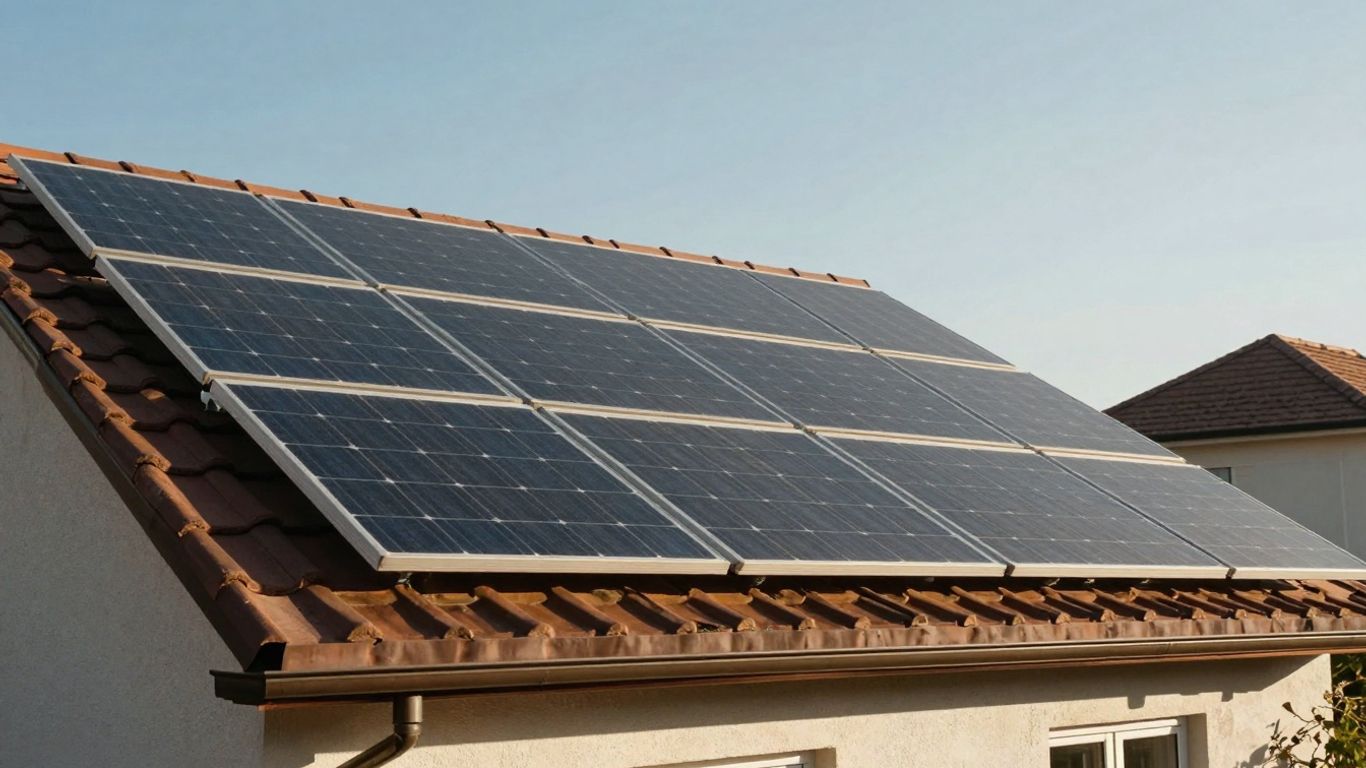
Saving On Indiana Solar Through State-Mandated Property And Sales Tax Exemptions.
So, you’ve gone solar in Indiana, awesome! Now, let’s talk about getting that federal tax credit. It’s not automatic, you know. You’ve got to actually file for it. Think of it like this: you wouldn’t expect your favorite pizza place to just know you want extra cheese, right? You gotta ask for it. Same deal here, but with the IRS.
Gathering Necessary Documentation from Your Installer
First things first, you’ll need some paperwork from the company that put your solar panels up. They’re the ones who know all the nitty-gritty details about your system. You’ll want things like:
- The total cost of your solar energy system.
- Information about the equipment itself, like its capacity and model numbers.
- Proof that the system was installed and placed in service during the tax year you’re claiming the credit for.
Your installer should be pretty used to this, so don’t be shy about asking for what you need. This documentation is your golden ticket to claiming the credit.
Completing IRS Form 5695
This is where the actual claiming happens. You’ll need to fill out IRS Form 5695, which is called the “Residential Clean Energy Credit” form. It might sound a bit intimidating, but it’s really just a way for the IRS to track who’s getting these credits. You’ll use the info from your installer to fill in the blanks. It asks about the cost of your system and other details. Just take your time and fill it out as accurately as possible. If you’re unsure about anything, it’s always a good idea to check the IRS website for their instructions or even chat with a tax professional.
Remember, this credit is for the year the system was installed and placed in service. So, if you got your panels up in late 2024, you’ll claim it on your 2024 taxes, which are usually due in April 2025.
Submitting Form 5695 with Your Tax Return
Once you’ve got Form 5695 all filled out, you don’t just mail it off on its own. Nope, you’ve got to attach it to your main federal tax return, like your Form 1040. Whether you file electronically or send in a paper return, make sure that Form 5695 is tucked in there. It’s like sending in a whole package. You can’t just send a single piece of mail and expect it to count. Double-check everything before you hit send or mail it out. You want to make sure you get that credit applied correctly!
Indiana’s Solar Property Tax Exemption
So, you’ve gone solar in Indiana. That’s awesome! You might be wondering if adding those shiny panels to your roof will bump up your property taxes. Good news: Indiana has a pretty sweet deal for you. The state offers a property tax exemption specifically for the added value your solar system brings to your home. This means that even if your home’s value goes up because of the solar installation, you won’t pay extra property taxes on that increase. It’s a nice little perk that helps make going solar even more affordable in the long run.
Exemption on Increased Property Value
When you install a solar energy system, it’s generally accepted that it can increase your home’s market value. Think about it, who wouldn’t want a home that generates its own clean energy? Studies have shown that homes with solar panels can sell for more than comparable homes without them. In Indiana, the law recognizes this added value but says you shouldn’t be penalized with higher property taxes for making an environmentally friendly upgrade. So, that boost in your home’s worth from the solar panels? It’s exempt from property taxes. This exemption applies year after year, as long as your system is up and running.
Ensuring Unobstructed Sunlight Access
It’s not just about the tax breaks; Indiana also has laws in place to help protect your solar investment. These are often called solar easement laws. Basically, they help make sure that your solar panels can actually get the sunlight they need to work efficiently. Sometimes, a neighbor’s new tree or a planned construction project could cast a shadow over your panels, cutting down on how much electricity you generate. Indiana’s laws allow homeowners to work with their neighbors to create voluntary agreements, called solar easements, to prevent shading issues. This can also be helpful if your homeowner’s association (HOA) has rules that might interfere with your solar setup. It’s all about making sure your solar system can do its job without unnecessary obstacles.
Indiana’s Solar Sales Tax Exemption
When you’re looking at the total cost of going solar, it’s easy to get bogged down in the numbers. But Indiana has a pretty sweet deal that can help shave off a chunk of that price tag right from the start: the solar sales tax exemption. This exemption means you won’t pay the state’s 7% sales tax on many of the key parts that make up your solar energy system.
Think about it, that 7% can add up quickly, especially on a system that might cost thousands of dollars. For instance, on a $28,000 system, avoiding that sales tax could save you close to $2,000. That’s money you can put towards other home improvements or just keep in your pocket.
Which Solar Components Are Exempt
So, what exactly gets a pass on the sales tax? Generally, the items directly involved in generating electricity are exempt. This typically includes:
- Solar modules (the panels themselves)
- Racking systems (what holds the panels in place)
- Inverters (which convert the DC power from the panels to AC power your home can use)
Understanding Limitations of the Sales Tax Exemption
While the exemption is a great perk, it’s not a free-for-all on every single item related to your solar setup. Some components, while necessary for a complete system, might not be covered. These can sometimes include:
- Transformers (though often integrated into inverters, separate ones might be taxed)
- Monitoring equipment (devices that track your system’s performance)
- Battery storage systems (these are usually treated separately and may not be included in this specific exemption)
It’s always a good idea to chat with your solar installer about which specific parts of your chosen system qualify for the exemption. They’ll know the ins and outs and can help you fill out the necessary paperwork, like the Indiana General Sales Tax Exemption Certificate (Form ST-105), to make sure you get the full benefit.
Ready to take the next step? Indiana solar incentives and see your personalized options.
Navigating Solar Ownership and Leases
So, you’re thinking about going solar in Indiana, but maybe you’re not sure if you want to buy the system outright or go with a lease or a loan. It’s a big decision, and how you own your solar setup can really affect whether you can take advantage of those sweet tax credits. Let’s break it down.
Eligibility for System Owners
If you’re buying your solar system with cash or through a loan, you’re generally in a good spot to claim the federal solar tax credit. The key thing is that you must own the system. This means you’re the one on the hook for installation and maintenance, but you also get to reap all the benefits, including the tax credit. It doesn’t matter if you own a house, a condo, or even a mobile home, as long as you own the property where the panels are installed and you have a tax liability to offset. If you’re buying a new home with solar already installed, you can claim the credit too, as long as you’re the legal owner of the property and the system.
Tax Credits for Homeowners and Landlords
Now, what if you’re renting out a property with solar? Things get a little trickier. Generally, if you’re renting out a property, you can’t claim the residential solar tax credit. That credit is for the person living in and owning the home. However, there are some workarounds. If you own a vacation home that you also rent out, you might be able to claim the credit as a business expense. Also, sometimes a renter and landlord can work something out. Maybe the landlord installs solar, and the tenant agrees to a small rent increase to help cover the cost, while the landlord gets the tax credit and the tenant gets lower electricity bills. It’s a win-win if you can make it happen.
Loan Agreements as Proof of Ownership
What if you’re not paying cash for your solar system? Don’t worry, a loan doesn’t automatically disqualify you. A loan agreement from a bank or other lender is perfectly acceptable proof that you own the system. The important part is that you’re taking on the financial responsibility for the system, not just leasing it. Companies that offer solar leases or rental agreements usually retain ownership of the panels, which means you, as the lessee or renter, can’t claim the tax credit. Always check the fine print of any agreement to make sure you understand who owns the system and who is eligible to claim the incentives.
When looking into solar options, it’s smart to compare different companies. Ask about their warranties, how long they’ve been in business, and if their installers are certified. Getting quotes from a few places can help you spot a good deal and avoid one that seems too good to be true. Also, make sure you’re comparing apples to apples, don’t let one company quote you on fancy panels while another quotes you on basic ones and calls it a better deal.
Here’s a quick rundown of ownership types and tax credit eligibility:
- System Ownership:
- Cash Purchase: You own the system. Eligible for tax credits.
- Solar Loan: You own the system. Eligible for tax credits.
- Solar Lease: The solar company owns the system. Not eligible for tax credits by the homeowner.
- Power Purchase Agreement (PPA): The solar company owns and maintains the system, and you pay for the electricity it generates. Not eligible for tax credits by the homeowner.
Remember, even if you’re eligible for the credit, you need to have a tax liability to claim it against. If the credit is more than what you owe in taxes, you can usually roll the unused portion over to the next year for a limited time.
Future of Solar Incentives in Indiana
So, where do Indiana solar incentives stand in 2026? The big federal tax credit that helped so many homeowners go solar has already been repealed. The One Big Beautiful Bill Act (signed July 4, 2025) eliminated the 30% residential solar tax credit (IRC § 25D) for systems installed after December 31, 2025. Indiana homeowners purchasing solar in 2026 will not have access to a direct federal credit, but state-level incentives still apply. Starting January 1, 2026, the federal residential solar tax credit will no longer be available. This means if you’re thinking about going solar and want to take advantage of that 30% credit, you really need to get your system installed before the end of 2025. It’s a pretty significant shift, and it’s why a lot of people are looking to make the move this year.
The Impact of Legislation on Tax Credits
Legislation plays a big role in how these incentives work, and it can change things up. The federal credit, as we just mentioned, is on a scheduled decline. It was set to phase out gradually, but recent legislative actions have accelerated that. This means the landscape for solar savings is shifting faster than some expected. It’s not just about the federal level, either. While Indiana has been pretty consistent with its property and sales tax exemptions for solar, the state government could always adjust these policies down the road. It’s always a good idea to stay informed about any new bills or changes that might affect solar energy in the state.
Potential Changes to Net Metering Policies
Net metering is another area where things could evolve. Right now, net metering policies in Indiana can be a bit tricky, and some argue they make solar less accessible for average homeowners. Basically, net metering is how you get credited for the extra electricity your solar panels send back to the grid. If these policies change, it could affect how much you save on your electricity bills after installing solar. There’s ongoing discussion about how to best compensate solar owners, and future legislation might bring changes. Some groups are pushing for more favorable net metering rules, and there’s also talk about potential rebate programs, especially for lower-income households, possibly through initiatives like the EPA’s Solar For All program. Keep an eye on these developments, as they could significantly impact the financial side of owning solar panels in Indiana.
It’s a good idea to talk to a few different solar installers. They usually know the latest on incentives and can help you figure out exactly what savings you might be looking at based on your specific situation and the current rules. Getting multiple quotes is just smart planning.
Here’s a quick look at the federal tax credit schedule:
| Year | Credit Percentage |
||
| 2024-2032 | 30% ||
| 2033 | 26% ||
| 2034 | 22% ||
| 2035 | 0% ||
Remember, these are federal changes. Indiana’s own property and sales tax exemptions are separate and have their own rules, though they haven’t seen major shifts recently. Still, it pays to stay updated!
Wrapping It Up
So, going solar in Indiana can definitely save you some cash, especially with that federal tax credit. Remember, it’s a 30% credit, but you gotta have a tax bill to use it, and it’s not a refund if it’s more than you owe. Keep an eye on those deadlines, especially for the federal credit which is set to change after 2025. Filling out the right forms, like IRS Form 5695, is key, and your installer can help with that. Plus, Indiana offers some sweet tax exemptions that take the sting out of sales tax and added property value. It might seem like a lot to figure out, but taking advantage of these incentives makes switching to solar a much smarter financial move for your home.
Frequently Asked Questions
What is the Federal Solar Tax Credit and how does it work in Indiana?
The Federal Solar Tax Credit let you subtract 30% of your solar system cost from your federal taxes. It ended on 31 December 2025, so an Indiana homeowner buying in 2026 does not get it. If the credit is more than what you owe in taxes, you can carry over the extra amount to the next year for up to five years. This credit is available for systems installed by the end of 2032.
Do I have to pay extra property tax if my home’s value goes up after installing solar panels in Indiana?
No, you don’t have to worry about that! Indiana has a special rule that says you won’t pay extra property tax on the increased value of your home that comes from having solar panels. It’s a way to encourage people to use solar energy.
Does Indiana charge sales tax on solar panel equipment?
Good news! Most of the parts you need for a solar panel system, like the panels themselves and the equipment that holds them up, are exempt from Indiana’s sales tax. This means you’ll save money right when you buy your system.
Who can claim the Federal Solar Tax Credit?
To get the Federal Solar Tax Credit, you generally need to own your home and have a tax bill to reduce. You also need to own the solar system itself, which means systems you lease usually don’t qualify. If you buy your system with cash or a loan, you can claim the credit.
What happens if my solar tax credit is more than the taxes I owe?
If your solar tax credit is bigger than the amount of taxes you owe for that year, you don’t lose out on the extra amount. You can carry it over to the next year and use it to reduce your taxes then. This can continue for up to five years, helping you get the full benefit of the credit.
Is net metering available for new solar installations in Indiana?
Unfortunately, for new solar panel systems installed after January 2021, Indiana doesn’t offer net metering in the same way it used to. Net metering is a system where you get credits for extra solar energy you send back to the power grid. While it’s not available for new setups now, the state’s rules could change in the future.
Ready to Start Saving on Your Energy Bills?
Get a free, no-obligation quote from trusted local providers in under 2 minutes.
No obligation • Free estimates • Takes under 2 minutes
Get a Second Quote for Your Indiana Home
Installer pricing can vary a lot, even with the same credit available. A second quote gives you a number to compare before the federal credit is applied.
Recent Posts
- Are competitive electricity suppliers worth it in Massachusetts? A practical guide
- Ohio electricity supplier scams: how to spot red flags before you switch
- What happens when my electricity contract ends in Ohio? A practical guide to your next bill and options
- Should I opt out of NOPEC? How to decide before your next energy bill
- Indiana Solar Incentives: A Homeowner’s Guide