Illinois Solar Tax Credit: Incentives, Eligibility & How to Claim

See What Solar Costs at Your Illinois Address
Illinois has incentives that stack with the federal tax credit. A local quote shows the real starting price for your home before those numbers are applied.
Disclosure: we may earn a commission if you switch or request a quote through this link, at no extra cost to you. It never changes which plan or company we recommend. How we make money.
Thinking about putting solar panels on your Illinois home? That’s great! It’s a big step towards saving money and helping the environment. But let’s be real, the initial cost can seem pretty high. The good news is, there are ways to make it more affordable. This article is all about the Illinois solar tax credit and other incentives that can really help bring down the price. We’ll break down what’s available, who qualifies, and how you can actually get these savings. It’s not as complicated as it sounds, and it’s definitely worth looking into if you’re considering going solar.
Key Takeaways
- [2026 Update] The 30% federal Residential Clean Energy Tax Credit (IRC § 25D) was repealed by the One Big Beautiful Bill Act (signed July 4, 2025). Illinois homeowners who purchase solar after December 31, 2025 are no longer eligible. A lease or PPA still offers indirect savings via the installer’s § 48E commercial ITC. See the update box below for details.
- [2026 Update] The 30% federal Residential Clean Energy Tax Credit (IRC § 25D) was repealed by the One Big Beautiful Bill Act (signed July 4, 2025). Illinois homeowners who purchase solar after December 31, 2025 are no longer eligible. A lease or PPA still offers indirect savings via the installer’s § 48E commercial ITC. See the update box below for details.
- Beyond the federal credit, Illinois has programs like ‘Illinois Shines’ and ‘Solar For All’ that offer additional financial benefits, such as upfront payments or reduced costs, especially for income-eligible residents.
- Homeowners in Illinois can also benefit from property tax exemptions, meaning the added value of your solar system won’t increase your property taxes, and net metering policies that provide credits for excess energy sent back to the grid.
- To claim the federal tax credit, you must own your solar system (not lease it) and file the correct form with your federal tax return. Keeping detailed records of your installation costs is also important.
⚠️ 2026 Update: Federal Solar Tax Credit Repealed for Purchases
The 30% federal Residential Clean Energy Tax Credit (IRC § 25D) was repealed by the One Big Beautiful Bill Act, signed July 4, 2025. If you purchase a solar system outright (cash or loan) after December 31, 2025, you are no longer eligible for this federal credit. It wasn’t phased out gradually; it was repealed outright for new residential purchases.
Is there still a federal solar benefit in 2026? Yes, indirectly, through a lease or Power Purchase Agreement (PPA). The installer can still claim the § 48E commercial Investment Tax Credit (30%) and typically passes those savings to you through lower monthly rates, often 20 to 40% below your current utility rate, with no money down. Just keep in mind that with a lease/PPA you won’t own the system, so state tax credits and property tax exemptions that require ownership won’t apply to you.
For most Illinois homeowners buying solar in 2026, the real incentives are the state-level programs outlined below.
Understanding the Illinois Solar Tax Credit Landscape
When you’re thinking about putting solar panels on your Illinois home, there are a few different ways the state helps you out with the cost. It’s not just one single ‘Illinois Solar Tax Credit,’ but rather a mix of programs and credits that can add up. Note that as of 2026, the federal 30% Residential Clean Energy Tax Credit (IRC § 25D) has been repealed for new purchases. See the update box below for details. Let’s break down the main incentives you’ll find in Illinois today.
The Federal Residential Clean Energy Credit
This is probably the biggest one. The federal government offers a tax credit that covers a good chunk of what you spend on a solar energy system for your home. [2026 Update: Repealed] The 30% federal residential solar tax credit was repealed for purchases after December 31, 2025. See the update box above for current options. This credit applies to things like the panels themselves, the inverters, wiring, and even battery storage if you add that. It’s a one-time credit, meaning you claim it in the tax year after your system is installed. If the credit is more than what you owe in taxes that year, you can usually roll the leftover amount over to future tax years. To claim it, you’ll fill out IRS Form 5695 when you file your federal taxes.
The federal credit has gone. Your Illinois incentives have not.
The 30% federal solar credit ended on 31 December 2025, so a system you buy or finance in 2026 does not qualify for it. Illinois’s own incentives still apply, and they are what a 2026 quote should be built on. A lease or PPA is the one route that still carries the federal credit, because the solar company owns the system and claims it.
Here’s a rough idea of how the federal credit might look based on system size:
| System Size | Estimated Cost | Estimated Federal Tax Credit (30%) |
|---|---|---|
| 5 kW | $15,000 | $4,500 |
| 7 kW (IL Average) | $21,000 | $6,750 |
| 10 kW | $28,500 | $8,550 |
| 15 kW | $40,500 | $12,150 |
Keep in mind these are just estimates, and actual costs can vary. Also, this credit is for systems you own, not lease. You’ll need to have a tax liability to benefit from it, meaning you owe taxes to begin with.
Illinois Shines Program Overview
Illinois Shines, also known as the Adjustable Block Program, is a state-run incentive program designed to make solar more affordable. Instead of a direct tax credit, this program works by providing payments to approved solar installers, who then pass those savings on to you, the homeowner, at the time of installation. It’s essentially a way to reduce the upfront cost of your solar system.
The program aims to encourage solar adoption across the state by offering incentives that are adjusted based on the size of the solar installation and the energy it’s expected to produce. This helps ensure that the incentives are distributed fairly and effectively.
Approved installers are paid based on the expected energy output of the system they install. The incentive amounts can change, so it’s important to work with an installer who is up-to-date on the current rates. This program is a significant factor in making solar a more accessible option for many Illinois residents.
Illinois Solar For All Program Details
This program is specifically aimed at making solar energy accessible to low-income households and communities that have historically been left out of the clean energy transition. If your household income is at or below 80% of the Area Median Income (AMI), you might qualify for significant savings through Solar For All.
This program often provides the largest savings, potentially covering a substantial portion of the solar installation costs. It’s designed to ensure that the benefits of solar energy, like lower electricity bills and cleaner air, are available to everyone in Illinois, not just those who can afford the higher upfront investment. The specifics of how the savings are applied can vary, but it generally works to drastically reduce the out-of-pocket expense for eligible homeowners. It’s definitely worth looking into if you think you might qualify based on your income.
Eligibility Requirements for Solar Incentives
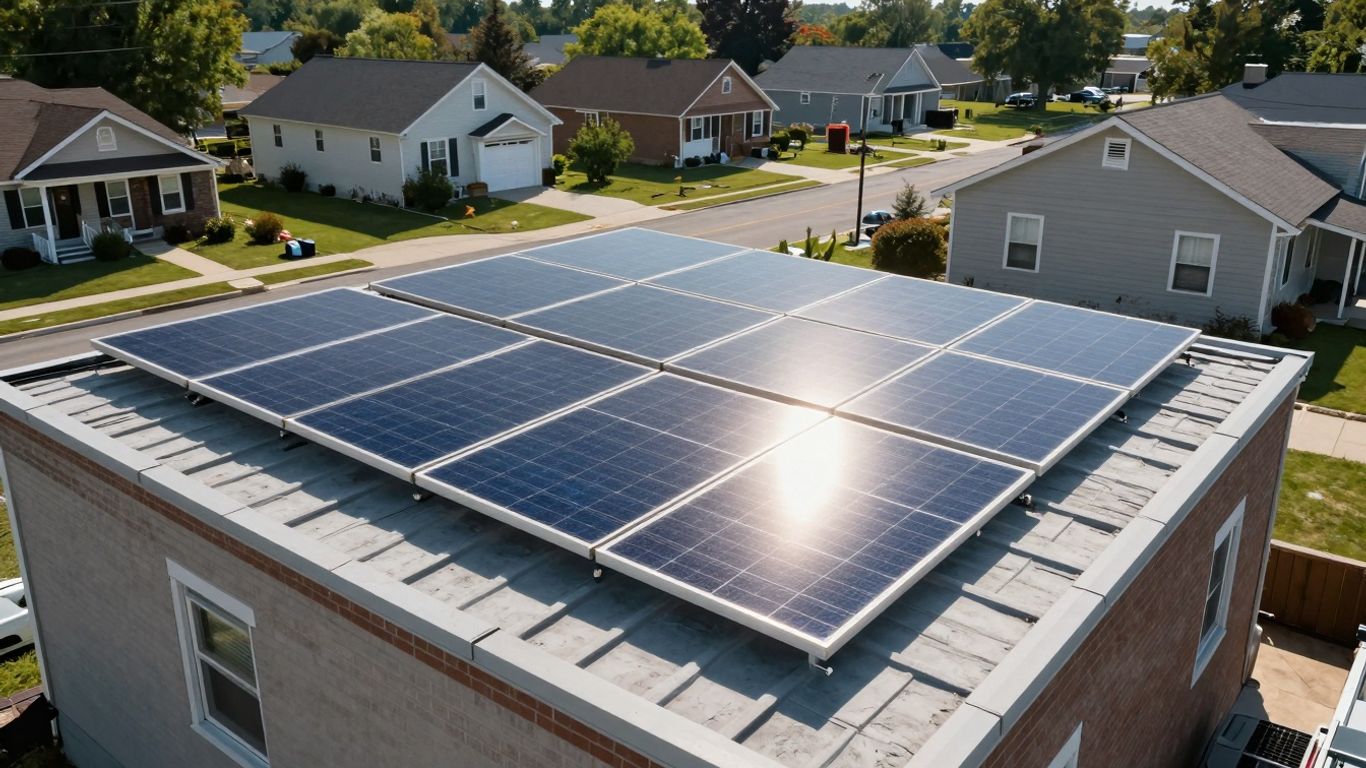
So, you’re thinking about going solar in Illinois and want to know who gets to take advantage of all those sweet tax credits and programs? It’s not a one-size-fits-all situation, unfortunately. There are a few key things you’ll need to check off the list.
Homeownership and Residency Criteria
First off, you generally need to own your home. Renters might be able to get in on some community solar deals, but if you’re looking at installing panels on your own roof, owning the place is usually a must. And it has to be your primary residence, sorry, vacation homes don’t count for most of these incentives. You’ll need to be living in Illinois, too, obviously.
System Ownership and Financing Options
Who owns the solar system matters. If you’re buying the system outright, whether with cash or a loan, you’re typically eligible for the federal tax credit and state incentives. If you’re going the lease or Power Purchase Agreement (PPA) route, the company that owns the system usually claims the tax credits. However, some programs, like Illinois Solar For All, are set up so that even with a lease or PPA, you can still see savings, often through guaranteed bill reductions.
Income Qualifications for Specific Programs
This is where things get a bit more specific. The big federal tax credit doesn’t have income limits, which is great news for most homeowners. But, programs like Illinois Solar For All are specifically designed for lower-income households. To qualify for these, your household income usually needs to be at or below 80% of the Area Median Income (AMI). They’ll likely ask for proof of income, like tax returns or pay stubs, to verify you meet the requirements.
It’s always a good idea to double-check the specific details for each program you’re interested in. Requirements can change, and sometimes there are nuances that could make you eligible or ineligible. Talking directly to the program administrators or a reputable solar installer is the best way to get the most accurate information for your situation.
Maximizing Your Illinois Solar Tax Credit Savings
So, you’re thinking about going solar in Illinois? That’s awesome! It’s a big step, but the good news is there are ways to make it way more affordable. We’re talking about saving a good chunk of change, not just on your electric bills, but upfront too. Let’s break down how to get the most bang for your buck.
Calculating the Value of the Federal Tax Credit
[2026 Update] The Federal Residential Clean Energy Credit (IRC § 25D) was repealed by the One Big Beautiful Bill Act for systems installed after December 31, 2025. Illinois homeowners purchasing solar in 2026 are no longer eligible for this 30% federal credit. The state-level Illinois Shines SRECs and utility rebates below are now the main financial drivers for new solar installations. This credit is a game-changer, but remember, it’s only for systems installed by December 31, 2025. So, if you’re on the fence, now’s the time to jump.
To claim it, you’ll fill out IRS Form 5695 when you file your taxes. It’s important to know that you need to own your system outright or have a solar loan to qualify; leases don’t count. Also, you need to have enough tax liability to use the credit, but the good news is any leftover credit can usually be rolled over to future years. It’s a solid way to bring down that initial investment.
Understanding SREC Payments and Value
Beyond the federal credit, Illinois has its own programs, like Illinois Shines. This program is all about Solar Renewable Energy Credits, or SRECs. Basically, for every megawatt-hour of electricity your solar panels produce, you earn an SREC. The Illinois Shines program pays you upfront for the SRECs your system is expected to generate over 15 years. The amount you get depends on your utility company and your system’s size. Since the value of these credits can change and there’s a limited amount available each year, getting in sooner rather than later means a potentially higher payment. It’s another layer of savings that makes solar even more attractive.
Leveraging Utility Rebates and Other Incentives
Don’t stop at the federal and state programs! Your local utility company might have its own incentives. For example, Ameren and ComEd sometimes offer rebates, especially if your system includes a smart inverter or battery storage. These can add up to significant savings. It’s worth checking with your specific utility provider to see what’s available. Plus, Illinois offers a property tax exemption for solar systems, meaning the increased value of your home from the solar installation won’t be taxed. It’s all about stacking these different incentives to make your solar investment as financially rewarding as possible. You might even qualify for extra support if your project is located in specific areas, like low-income communities.
When you’re looking at the total cost of going solar, it’s easy to get overwhelmed. But by breaking down each incentive, the federal tax credit, SREC payments, utility rebates, and property tax breaks. You can see a clearer picture of your actual out-of-pocket expenses. It’s about smart planning to maximize your savings over the life of your system.
How to Claim Your Illinois Solar Tax Credit
So, you’ve gone solar in Illinois. That’s fantastic! Now comes the part where you actually get to claim that sweet federal tax credit. It’s not super complicated, but you do need to pay attention to the details. Think of it like following a recipe; miss a step, and things might not turn out quite right.
Completing IRS Form 5695
The main document you’ll need is IRS Form 5695, Residential Energy Credits. You can usually find this on the IRS website. This form is where you’ll report the costs associated with your solar installation. Make sure you have all your paperwork from the solar company before you start filling it out. This includes invoices, proof of payment, and details about the equipment installed.
Here’s a quick rundown of what you’ll typically report:
- Cost of the solar panels and related equipment: This includes things like the panels themselves, inverters, mounting hardware, and wiring.
- Installation labor costs: The cost of the professionals who put it all together.
- Any associated sales tax: Don’t forget this part!
It’s important to note that this credit is for the energy-generating equipment itself. It doesn’t cover things like structural improvements to your roof that aren’t directly part of the solar setup.
Submitting Your Tax Return
Once Form 5695 is filled out, you’ll attach it to your annual federal income tax return. This is how you tell the IRS you’re claiming the credit. The credit reduces your overall tax liability, meaning you owe less in taxes. If the credit is more than what you owe, you can carry over the unused portion to future tax years. This is a big plus because it means you won’t necessarily lose out on any of the credit if your tax bill isn’t high enough in the year you install the system.
Remember, the federal tax credit is a one-time thing for your solar installation. While you can carry over unused amounts, the initial claim happens in the tax year following your system’s installation. So, if your panels were installed in 2024, you’ll claim the credit when you file your 2024 taxes in early 2025.
Ready to take the next step? Illinois solar rebates and see your personalized options.
Record Keeping for Solar Installations
This is probably the most important part, and honestly, it’s not that hard if you stay organized. You need to keep good records of everything related to your solar purchase and installation. This is your proof if the IRS ever has questions. What kind of records, you ask?
- Invoices and receipts: Keep every single bill and receipt from your solar installer. These should clearly show the costs of the system and installation.
- Contracts: Your original contract with the solar company is also important.
- Proof of payment: Bank statements or credit card statements showing you paid for the system.
- IRS Form 5695: Keep a copy of the form you submitted, along with your tax return for that year.
Basically, if it has anything to do with your solar project and money, hold onto it. It’s better to have too many records than not enough. This documentation is key to successfully claiming the credit and having it stand up to any scrutiny.
Important Deadlines and Program Changes
When you’re looking into solar tax credits and incentives in Illinois, it’s super important to keep an eye on the clock and any program updates. Things can change, and missing a deadline or a program shift could mean leaving money on the table. It’s not like a one-and-done deal; these programs have timelines and sometimes get tweaked.
The Federal Tax Credit Expiration Date
[2026 Update, Repealed] The Federal Residential Clean Energy Credit (IRC § 25D) was repealed by the One Big Beautiful Bill Act (signed July 4, 2025) for systems installed after December 31, 2025. The scheduled phase-down to 26%/22% never took effect, instead, the credit was eliminated outright for new residential purchases. Illinois homeowners purchasing solar in 2026 are not eligible. If you’re thinking about going solar, getting it installed by the end of 2025 is the best way to get the full 30% benefit. After that, the savings shrink. Remember, you need to buy your system outright or finance it with a loan to qualify; leasing doesn’t count for this federal credit. You can carry over unused credit amounts to future tax years, but it’s wise to check with a tax professional about how long that applies, especially as tax forms can change.
Impact of Program Updates on Savings
Illinois’s own programs, like Illinois Shines (also known as the Adjustable Block Program) and Illinois Solar For All, have their own schedules and rate structures. For Illinois Shines, the rates for Solar Renewable Energy Credits (SRECs) are set for specific blocks of time and tend to decrease slightly each year. This means the sooner you get your system installed and registered, the better the rate you’ll likely secure for the 15-year payment period. The Illinois Solar For All program also has funding cycles and specific rates that can be adjusted. It’s a good idea to check the Illinois Power Agency’s website or contact program administrators regularly for the latest information on rates and availability.
Acting Quickly to Secure Incentives
Because program funding can be limited each year and rates often decline over time, acting promptly is usually the best strategy. For instance, some blocks of funding for Illinois Shines can fill up quickly. If you’re interested in the Illinois Solar For All program, especially for community solar subscriptions or distributed generation projects, there might be waitlists for future funding cycles. Getting your application in or working with an approved vendor sooner rather than later can help ensure you don’t miss out on current incentives before they change or run out. It’s a bit like trying to get concert tickets, the popular ones go fast!
It’s always a good practice to get quotes from multiple installers and understand their timelines for installation and application submission. This way, you can align your project with the most beneficial program deadlines and avoid any last-minute rushes that might lead to mistakes or missed opportunities.
Additional Solar Benefits in Illinois
Beyond the tax credits and direct incentives, Illinois offers a few other perks that make going solar even more appealing. These can add up to significant long-term savings and make your solar investment even sweeter.
Property Tax Exemptions for Solar Systems
When you install solar panels, your home’s value generally goes up. Normally, this increase in value would also mean a higher property tax bill. However, Illinois has a special rule for solar installations. You won’t have to pay extra property tax on the added value your solar system brings to your home. To take advantage of this, you’ll need to file a specific form with your local county assessor. It’s a straightforward way to keep more money in your pocket over the years.
Net Metering Policies in Illinois
Net metering is a billing arrangement that helps you get credit for the extra electricity your solar panels produce. When your system generates more power than your home is using, that excess energy is sent back to the grid. Your utility company then gives you credits for this power, which can be used to offset your electricity bill when your panels aren’t producing enough, like at night or on cloudy days. It’s a great way to maximize the value of the solar energy you generate. Keep in mind that as of January 1, 2025, Illinois has moved to a supply-only net metering model for new installations, which is less beneficial than the previous system. However, if your system was interconnected before that date, you’re grandfathered in for the lifetime of your system. Understanding these net metering policies in Illinois is key to maximizing your savings.
Smart Inverter and Battery Storage Rebates
If you’re looking to add a bit more tech to your solar setup, Illinois offers additional incentives. Customers of Ameren or ComEd can get rebates for installing solar panel systems or battery storage systems that come with smart inverter technology. These rebates are typically a set amount per kilowatt (kW) of solar capacity or per kilowatt-hour (kWh) of energy storage. For example, you might get $300 per kW for a solar inverter and $300 per kWh for battery storage. These systems allow utilities to manage energy flow more effectively, and you get rewarded for it. It’s a nice bonus if you’re considering battery backup or a more advanced system.
While the upfront cost of solar can seem like a lot, these additional benefits, combined with tax credits and programs like Illinois Shines, really help bring the overall cost down. It makes solar a much more accessible and financially sound choice for many homeowners across the state. The state’s commitment to clean energy is evident in these varied support systems.
Here’s a quick look at potential savings from these additional benefits:
| Benefit | Estimated Savings (Varies) |
|---|---|
| Property Tax Exemption | Avoids tax increase on added home value |
| Net Metering | Credits for excess energy sent to the grid |
| Smart Inverter/Battery Rebate | Up to $300/kW (solar) or $300/kWh (battery storage) per system |
Wrapping It Up
So, going solar in Illinois is definitely a big step, but it looks like there are some solid ways to make it easier on your wallet. The federal tax credit is a huge help, but remember, it’s set to change at the end of 2025, so acting sooner rather than later could save you a good chunk of change. Plus, programs like Illinois Shines and others can really bring down the initial cost. It’s worth looking into all your options to see what fits best for your home and your budget. Making the switch to solar is a big decision, but with these incentives, it’s more achievable than you might think.
Frequently Asked Questions
What is the main solar tax credit available in Illinois?
[2026 Update] Illinois doesn’t have its own specific solar tax credit. The federal Residential Clean Energy Credit (IRC § 25D) that used to cover 30% of system costs was repealed by the One Big Beautiful Bill Act (signed July 4, 2025) for systems installed after December 31, 2025. Illinois homeowners purchasing solar in 2026 are no longer eligible for this federal credit. The main financial incentives now are Illinois Shines (SRECs), utility rebates, and the property tax exemption. See the sections above for details.
Who can get the federal solar tax credit?
To get the federal solar tax credit, you generally need to own your home and the solar panel system. You also need to have a federal tax liability, meaning you owe federal income tax. The system needs to be installed on your main home or a second home. Leasing a solar system usually means you can’t claim this credit.
Are there other ways to save money on solar in Illinois besides the federal tax credit?
Yes, absolutely! Illinois offers other programs like ‘Illinois Shines,’ which provides payments based on the solar energy your system is expected to produce. There’s also the ‘Illinois Solar For All’ program, which offers significant savings for lower-income households. Plus, some utility companies, like Ameren and ComEd, offer rebates for installing solar panels and battery storage systems, especially if they have smart inverters.
How do I claim the federal solar tax credit?
Claiming the federal solar tax credit is done when you file your yearly federal income tax return. You’ll need to fill out a specific form called IRS Form 5695. Make sure you keep all your receipts and documents from your solar installation, as you’ll need them to complete the form accurately. It’s a good idea to talk to a tax professional to ensure you do it correctly.
What happens to my property taxes when I install solar panels?
Good news! Illinois offers a property tax exemption for solar energy systems. This means that the increase in your home’s value due to the solar panels won’t be counted when your property taxes are calculated. You’ll need to file a specific form with your local county assessor to make sure you get this benefit.
What is Net Metering in Illinois?
Net metering is a program where your utility company gives you credit for the extra electricity your solar panels send back to the power grid. If you generate more power than you use during sunny times, that excess energy is sent to the grid, and you get a credit on your electricity bill for it. For new installations after January 1, 2025, Illinois has a ‘supply-only’ net metering model, which is a bit different and less valuable than the previous system. However, if your system was connected before that date, you’re likely ‘grandfathered in’ to the older, more beneficial policy.
Ready to Start Saving on Your Energy Bills?
Get a free, no-obligation quote from trusted local providers in under 2 minutes.
No obligation • Free estimates • Takes under 2 minutes
Get a Second Quote for Your Illinois Home
Installer pricing can vary a lot, even with the same incentives available. A second quote gives you a number to compare before those incentives are applied.
Recent Posts
- Pennsylvania electricity supplier complaints: How to document, file, and resolve a billing dispute
- What happens when my electricity contract ends in Pennsylvania? A practical guide
- Pennsylvania electricity early termination fees: what to check before canceling your contract
- Cost of electricity in Houston: what your rate and electric bill really include
- How to Compare Electricity Plans Without Picking the Wrong One